There are museums that ask you to stand back and look. The Swiss Museum of Transport asks you to climb aboard, take control, press a button, turn a wheel and imagine what it meant to travel before the journey became ordinary. In Lucerne, on the shore of Lake Lucerne, the country's most expansive museum of mobility gathers locomotives, automobiles, aircraft, ships, spacecraft, communication devices and energy technologies under one large idea: movement is never only about machines. It is about work, distance, aspiration, trade, leisure, migration and the quiet remaking of everyday life.
A museum about more than transport
The German name, Verkehrshaus der Schweiz, is often translated simply as Swiss Museum of Transport. But the institution is broader than that English title suggests. Its galleries cover road, rail, water, air and space, while adjoining attractions explore energy, media, cinema, astronomy, art and even the global journey of chocolate. The result feels less like a conventional collection arranged in glass cases than a compact city of movement: part railway station, part hangar, part garage, part classroom and part dream factory.
That breadth is central to the museum's character. A railway carriage and a family car may appear to belong to separate histories, yet both altered the scale of a human life. The train made long-distance travel predictable. The car made departure personal. The aeroplane compressed continents. The telephone and the radio made presence possible across distance without moving the body at all. The museum's most interesting subject, then, is not technology in isolation but the changing relationship between people and distance.
Begin with the railway: time becomes a timetable
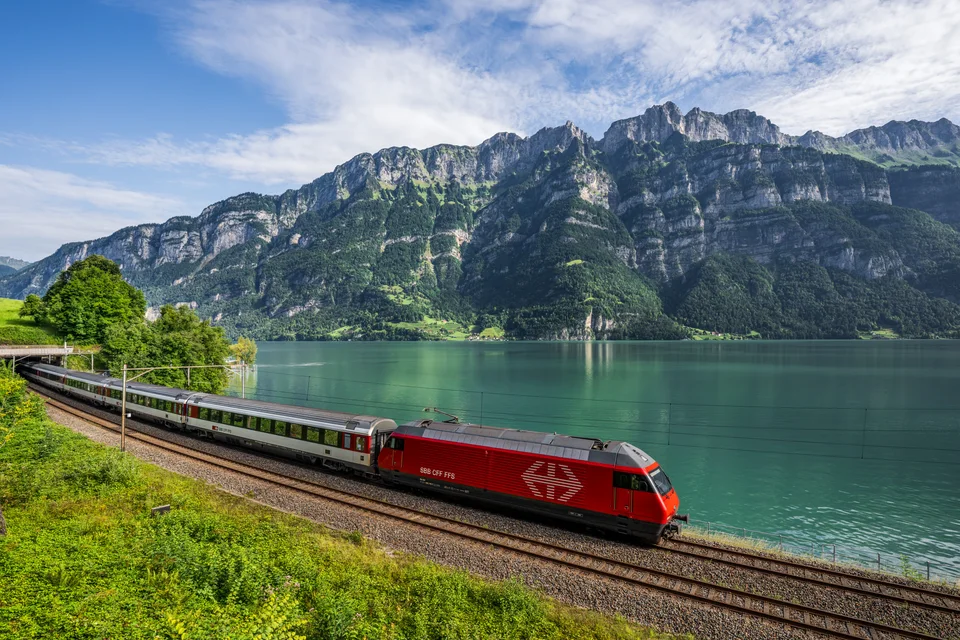
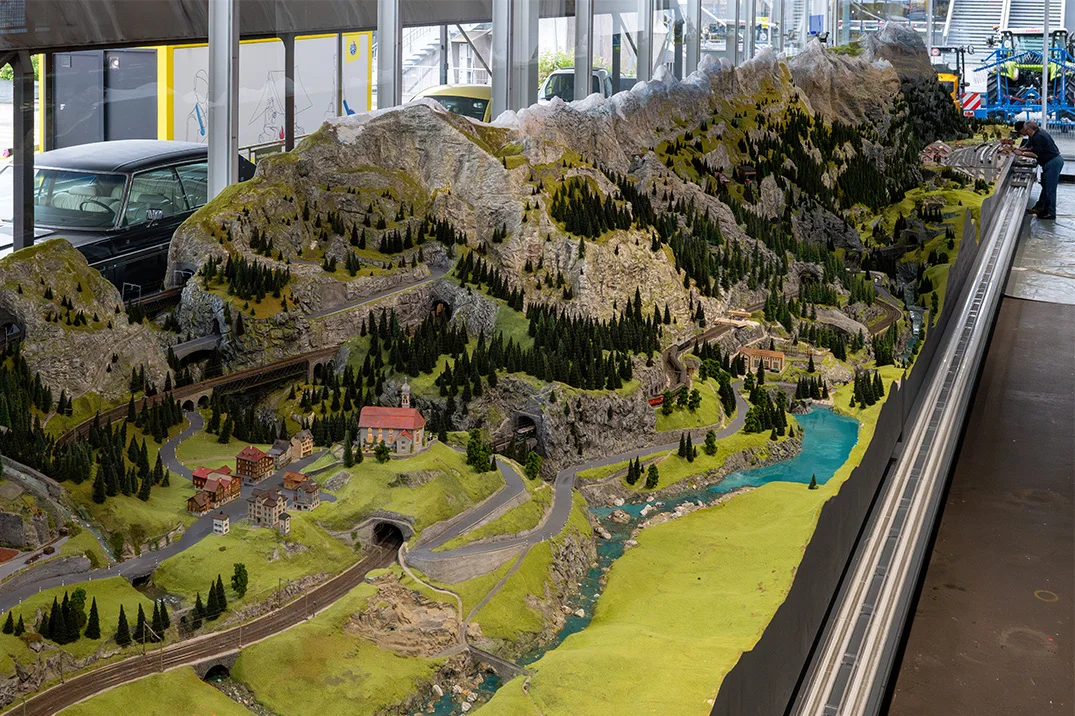
Railway collections naturally invite a historical reading. Switzerland's mountains, valleys and lakes made transport an engineering challenge, and the country's railways became one of the clearest ways to see infrastructure turning landscape into connection. Locomotives and carriages preserve the physical drama of that transformation: iron, rivets, polished wood, signal systems and the accumulated logic of stations, tunnels and schedules.
A newer railway experience gives the subject a more distinctly Swiss frame. Rather than presenting trains as isolated machines, it encourages visitors to think about the railway network as a national system—one that links urban centres with alpine communities, workplaces with homes and tourists with landscapes that once demanded considerable effort to reach. The railway is not merely a vehicle. It is an agreement about time, reliability and shared space.
Standing among historic railway technology also reveals how quickly the familiar becomes strange. A manual control, a compartment layout or a station clock can look almost theatrical to contemporary eyes, even though these objects once belonged to an ordinary commute. That is one of the museum's recurring pleasures: the future is displayed through the remains of somebody else's present.
Road travel and the invention of private distance
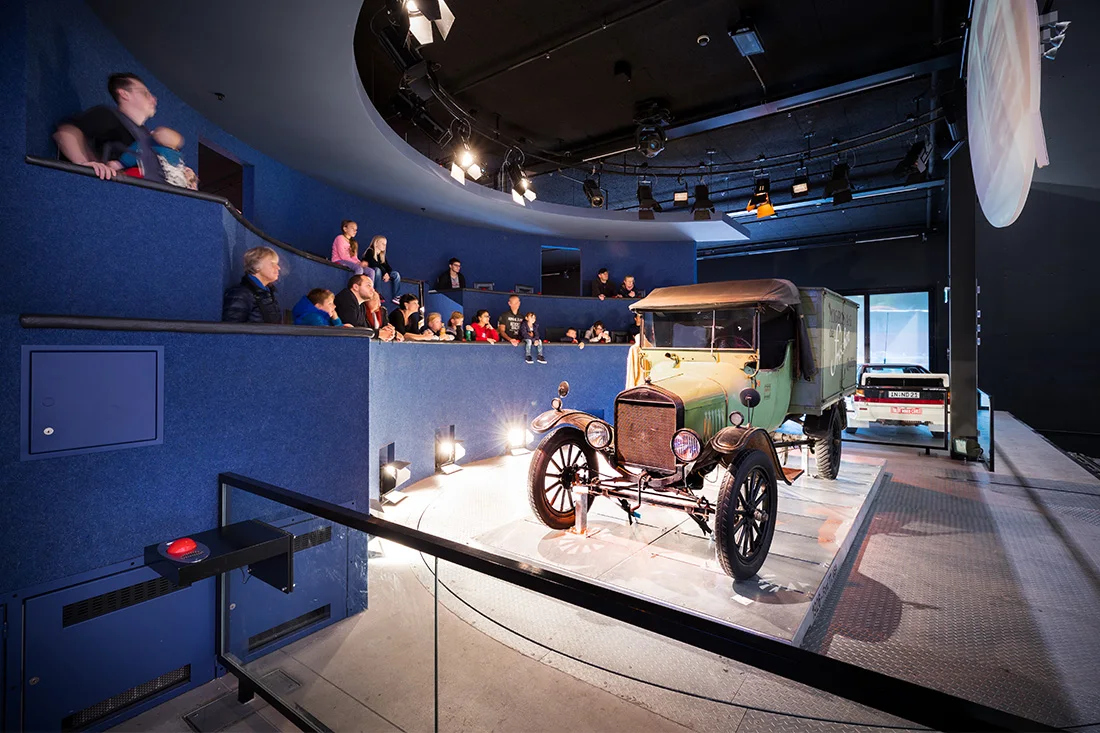
The road-and-motor-vehicle displays tell a different story. Railways organise movement collectively; cars promise autonomy. They carry the romance of the open road, but also the infrastructure of modern convenience: petrol stations, tyres, traffic signs, repair tools, safety systems and the expanding geography of the suburb, the weekend and the family holiday.
Here, the ordinary becomes as revealing as the spectacular. A small everyday car may say more about social change than a glamorous sports model. It suggests who could travel, how far people could live from work, what counted as leisure and how shopping, schooling and visiting relatives became reorganised around roads. Motor vehicles brought freedom, but they also produced congestion, noise, accidents and an appetite for land. The museum does not need to deliver a lecture for those contradictions to become visible.
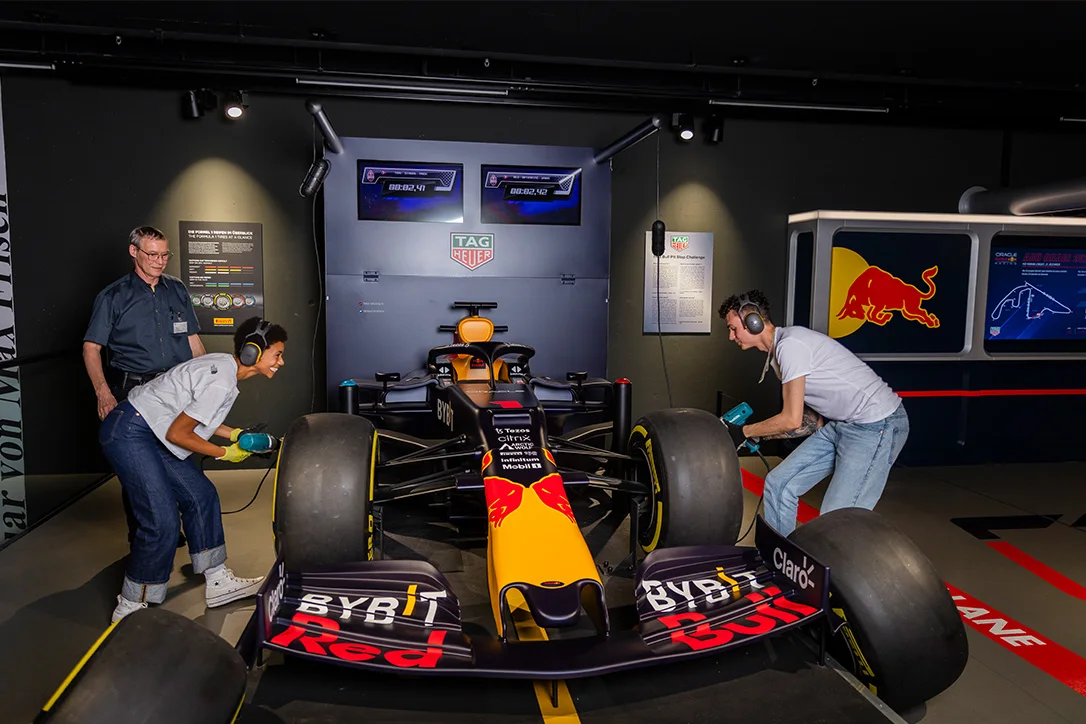
Interactive elements make the road section especially approachable for families, but adults may find themselves lingering over the details: the design of a dashboard, the changing shape of a driver's seat, the gradual arrival of safety features or the visual language of road culture. These are not just industrial objects. They are artefacts of behaviour, carrying traces of how people learned to understand speed, risk and independence.
In the aviation halls, the body becomes light
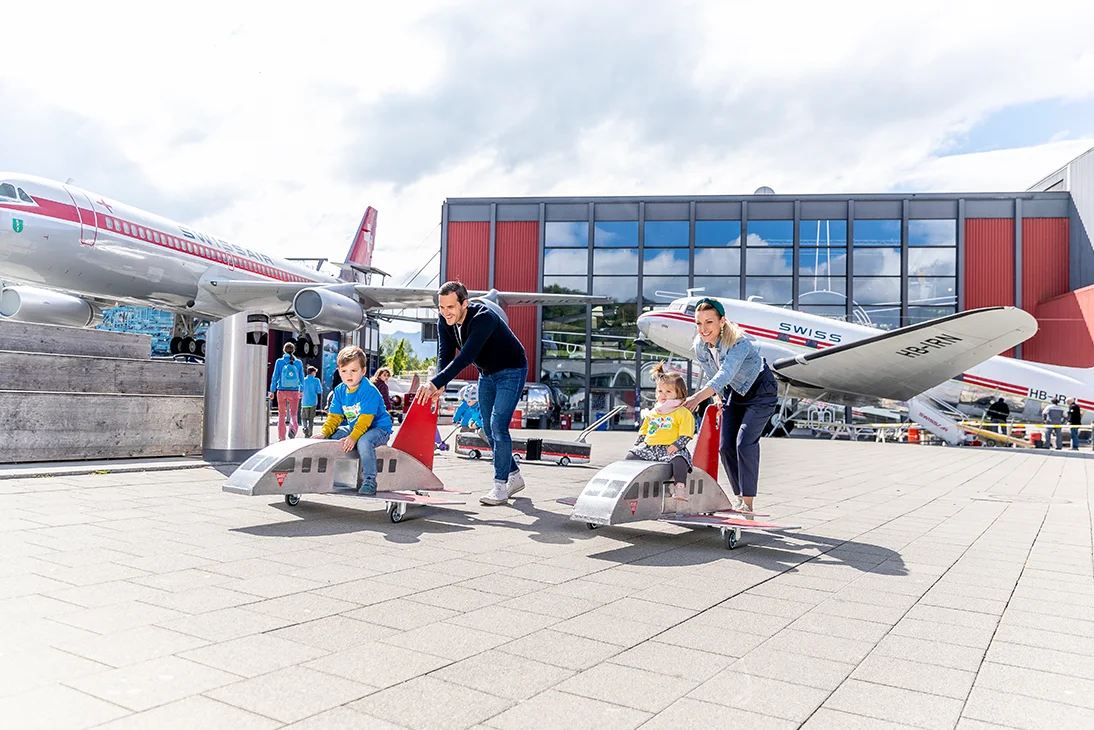
Aircraft introduce a more dramatic break with the past. The railway changes the ground beneath us; aviation changes the ground's authority. Suspended planes and flight-related exhibits make visible an old human desire—to turn distance into altitude and to make the world appear continuous from above.
The aviation displays can be read as a history of confidence. Early aircraft look fragile, improvised and intensely mechanical. Later machines suggest standardisation, comfort, military power and mass tourism. The progression is not only technical. It charts a change in expectation. Flying moves from an extraordinary feat to a normal way of crossing borders, visiting family and spending a few days somewhere far away.
There is also a useful tension between the romance of flight and its material reality. Aircraft are elegant from a distance, yet up close they are packed with systems: engines, instruments, controls, landing gear and carefully engineered surfaces. The museum restores some of the wonder that commercial aviation can flatten. It reminds visitors that every apparently effortless flight depends on an enormous chain of design, labour, regulation and trust.
Water, trade and the patience of the lake
Waterborne transport tends to be quieter in the imagination than rail or aviation, but it belongs to a much older story. Boats and ships connect mobility with trade, fishing, industry, defence and the simple necessity of crossing water. In a city shaped by Lake Lucerne, the presence of water transport feels especially relevant: the lake is not just scenery but part of the region's practical geography.
The maritime displays broaden the meaning of a journey. A train carries people along a fixed corridor; a ship can carry people and goods across a changing surface, often at a slower pace and with a stronger awareness of weather. Looking at boats beside trains and aircraft also makes the museum's central theme clearer. Every form of transport is a compromise between speed, capacity, control, cost and the landscape it enters.
Communication: travelling without moving
One of the museum's most important expansions is the move from transport into communication and media. Once messages can travel, human movement is no longer the only way to overcome distance. Letters, telephones, radio, television, photography and digital media all change the experience of elsewhere. They allow people to coordinate journeys, maintain relationships, circulate images and make distant events feel immediate.
Media World gives this idea an interactive form. Visitors encounter the technologies and habits that shape how information moves, from older broadcast systems to contemporary digital communication. The exhibits invite a question that is easy to overlook in a transport museum: if mobility is the ability to move through space, what happens when space itself becomes less of an obstacle to attention?
The answer is not necessarily greater freedom. Faster communication can make travel easier to organise, but it can also make escape more difficult. A person may cross an ocean yet remain continuously reachable. A landscape may feel remote while being photographed, mapped and streamed from every angle. The museum's communication displays therefore belong naturally beside its vehicles. Both technologies alter the boundary between here and elsewhere.
Energy beneath every journey
Mobility has always depended on energy, and the museum's energy-focused exhibits provide a useful layer beneath the more glamorous objects. Coal, electricity, fuel, batteries and renewable sources each bring their own infrastructure and consequences. A locomotive, car or aircraft is never self-contained; it belongs to a network of extraction, generation, distribution and maintenance.
This is where a visit can move beyond nostalgia. Historic machines are often displayed with an aura of ingenuity, but they also represent choices about resources and priorities. Seeing transport history in an energy context makes today's questions about electrification, efficiency and climate more legible. The museum cannot turn a visitor into an expert in one afternoon, but it can make the systems behind convenience harder to ignore.
The attractions that extend the visit
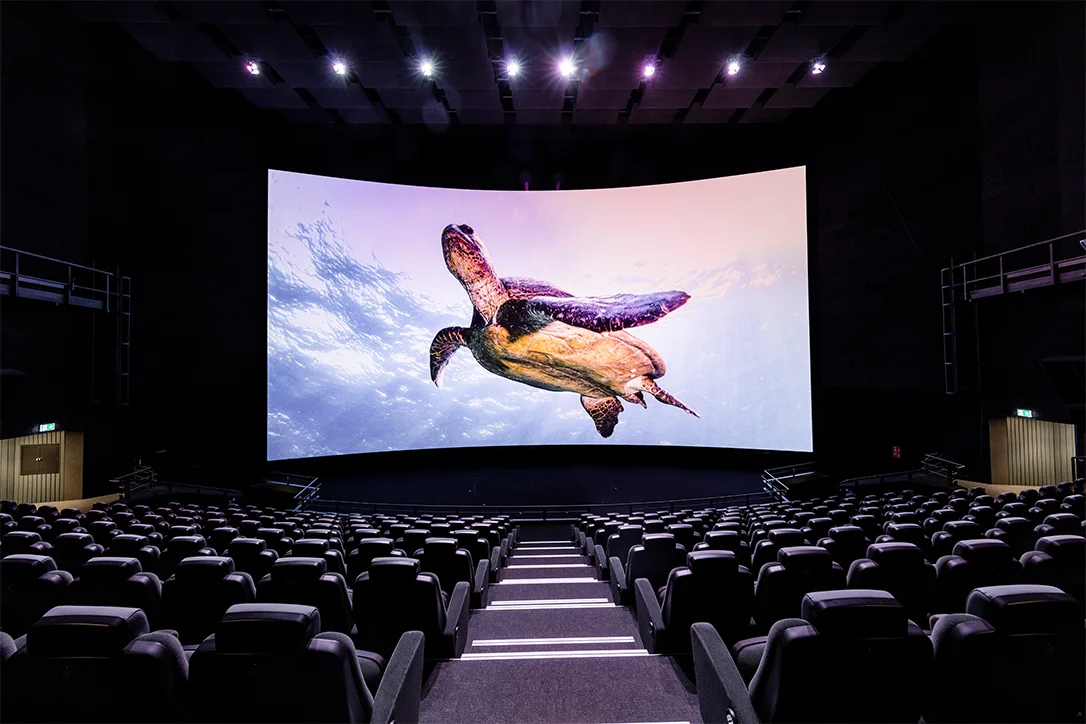
The Swiss Museum of Transport is designed to reward different kinds of attention. A visitor interested in collections can spend hours with original vehicles and technical objects. Families can move between hands-on stations and large-scale exhibits. Film lovers can add a screening at the Filmtheatre, while the Planetarium shifts the idea of travel from terrestrial movement to a journey through the universe.
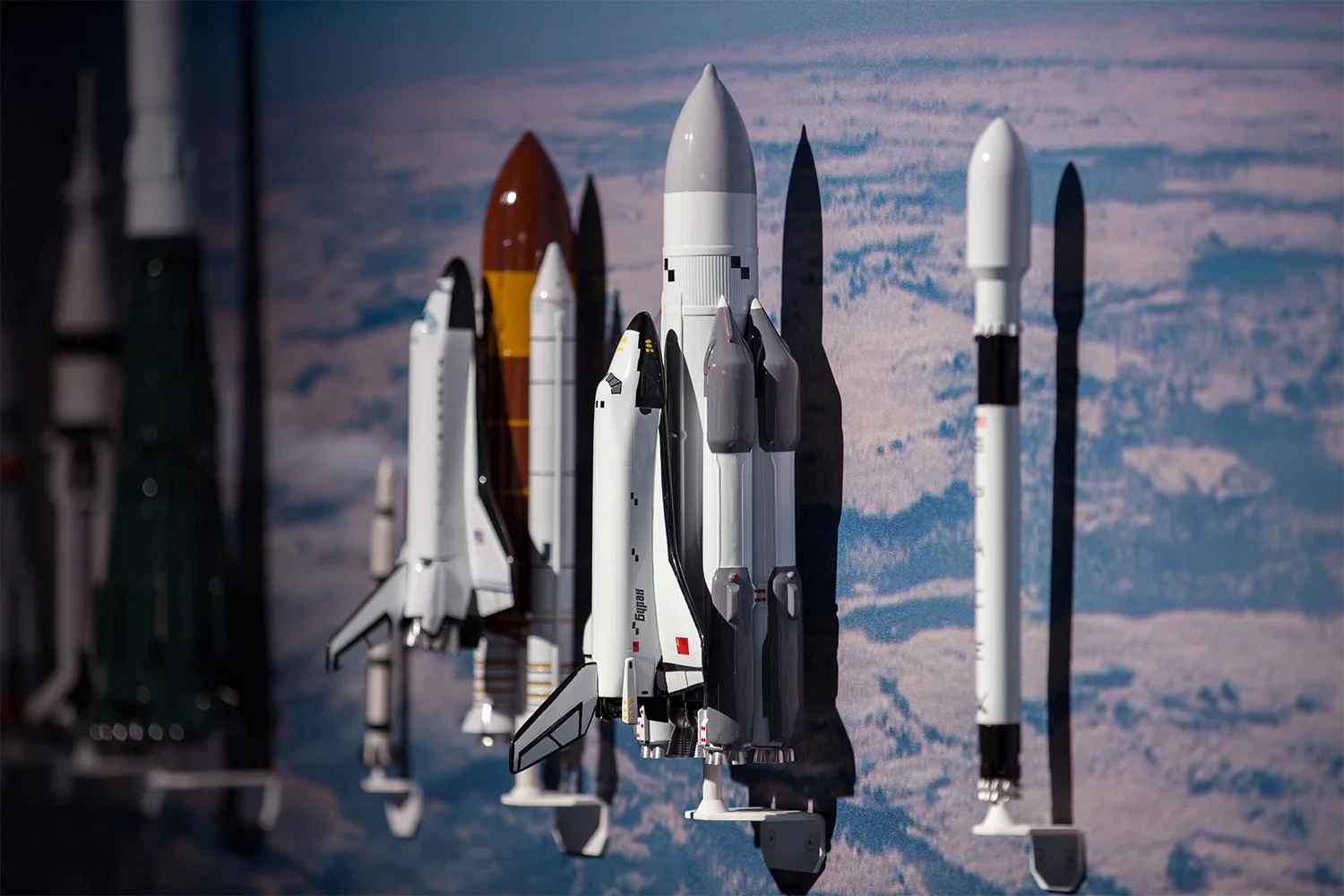
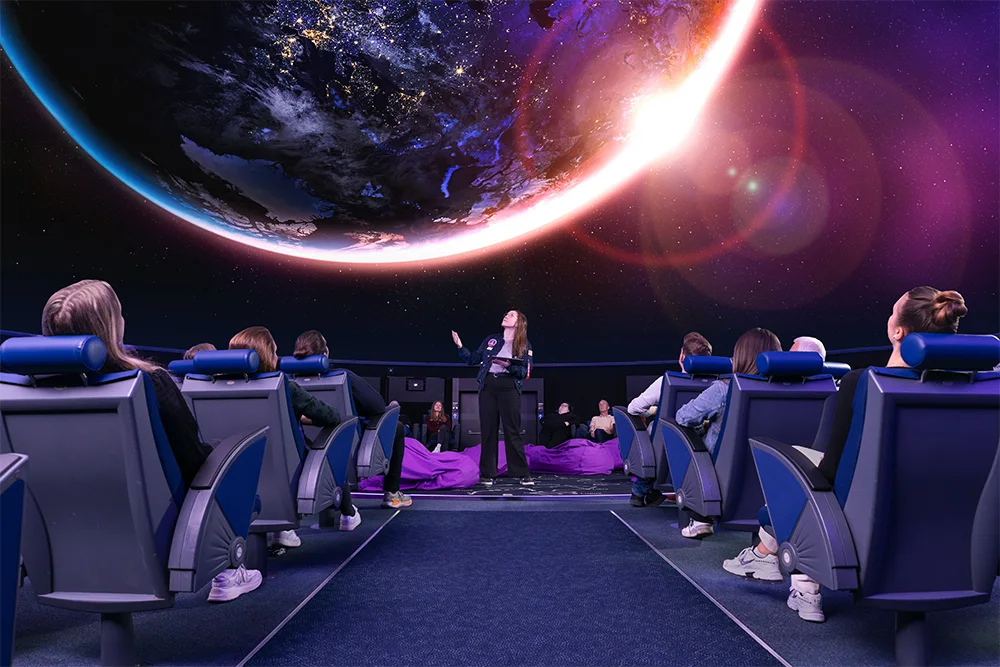
The Planetarium is particularly fitting within the wider museum. Space travel is the most literal expression of transport as aspiration: leaving the planet, extending the range of the human body and turning the cosmos into a destination. Its full-dome programmes offer a change of pace from the galleries, replacing the physical weight of locomotives and engines with projected motion, darkness and scale.
The Swiss Chocolate Adventure may appear, at first, to be an interlude. In fact, it returns the visitor to the logistics of movement. Its short, multisensory journey follows chocolate from origin and production to transport and consumption. The subject is sweet, but the underlying story is serious: almost every object we enjoy depends on a chain of journeys, often spanning continents before it reaches a local shop.
A museum for children, and for the child who remembers
The museum's interactive design makes it an easy choice for families, but its appeal is not limited to children. Adults often arrive with private associations: a first train journey, a parent who drove an old model of car, the excitement of an airport departure, the sound of a radio in a kitchen or the particular smell of a station platform.
That emotional dimension matters because transport is unusually entangled with memory. Vehicles are encountered during thresholds—leaving home, beginning work, going on holiday, returning after absence. A bus or carriage can become part of a family story without being remarkable in itself. The museum preserves these objects at the point where personal recollection meets public history.
A thoughtful visit therefore does not require seeing everything. It may be more rewarding to choose a few themes and notice what they reveal about ordinary life. Follow the railway from timetable to landscape. Compare the car with the aeroplane as instruments of freedom. Spend time in Media World considering what it means to remain connected while travelling. The museum is large enough to encourage wandering, but it is also rich enough to reward a slower, more selective gaze.
Planning a visit to the Swiss Museum of Transport
The museum is at Haldenstrasse 44 in Lucerne, close to the lake and within easy reach of the city. It is open throughout the year, though individual attractions follow their own schedules. The main museum, Filmtheatre, Planetarium and Swiss Chocolate Adventure do not necessarily share identical opening hours, and programmes can change by date, season or event. Check the official timetable before travelling, particularly if a specific film, planetarium show or special exhibition is part of the plan.
Allow at least two to three hours for a brisk introduction. A half day gives more room for the themed halls and several interactive stations; a full day is appropriate if you want to add a film, planetarium programme or Swiss Chocolate Adventure. The site is substantial, and the museum's popularity means that busy periods can feel lively rather than hushed.
- Wear comfortable shoes: the exhibition areas are extensive and invite unplanned detours.
- Check attraction times before arrival, especially for the Planetarium, Filmtheatre and Swiss Chocolate Adventure.
- Consider a day pass if you want to combine the main museum with several additional attractions; ticket inclusions and prices should be confirmed before purchase.
- Families may prefer to begin with the large transport halls, then use a scheduled show as a quieter change of rhythm.
- Visitors with access requirements should consult the museum directly about current arrangements for individual exhibits and attractions.
What the museum leaves behind
The Swiss Museum of Transport is at its best when it resists being only a celebration of progress. Its machines are impressive, but their deeper interest lies in the lives arranged around them. Railways changed punctuality and settlement. Cars changed privacy and land use. Aircraft changed the scale of holidays and business. Communication technologies changed what it meant to be absent. Energy systems made all of this possible while creating new responsibilities.
By placing these histories together, the museum makes movement feel newly visible. We tend to notice transport when it fails—a delayed train, a cancelled flight, a traffic jam, a message that does not arrive. A visit reverses that habit. It asks us to look at the enormous, mostly invisible achievement of being able to cross a country, speak across an ocean or receive goods from the other side of the world.
And then it asks a more difficult question: where should movement take us next? The answer will not be found in one historic locomotive or one futuristic display. It lies in the choices made between speed and patience, access and impact, convenience and care. In that sense, the Swiss Museum of Transport is not a museum of the past. It is a place for thinking about the future by looking closely at the journeys that made the present.