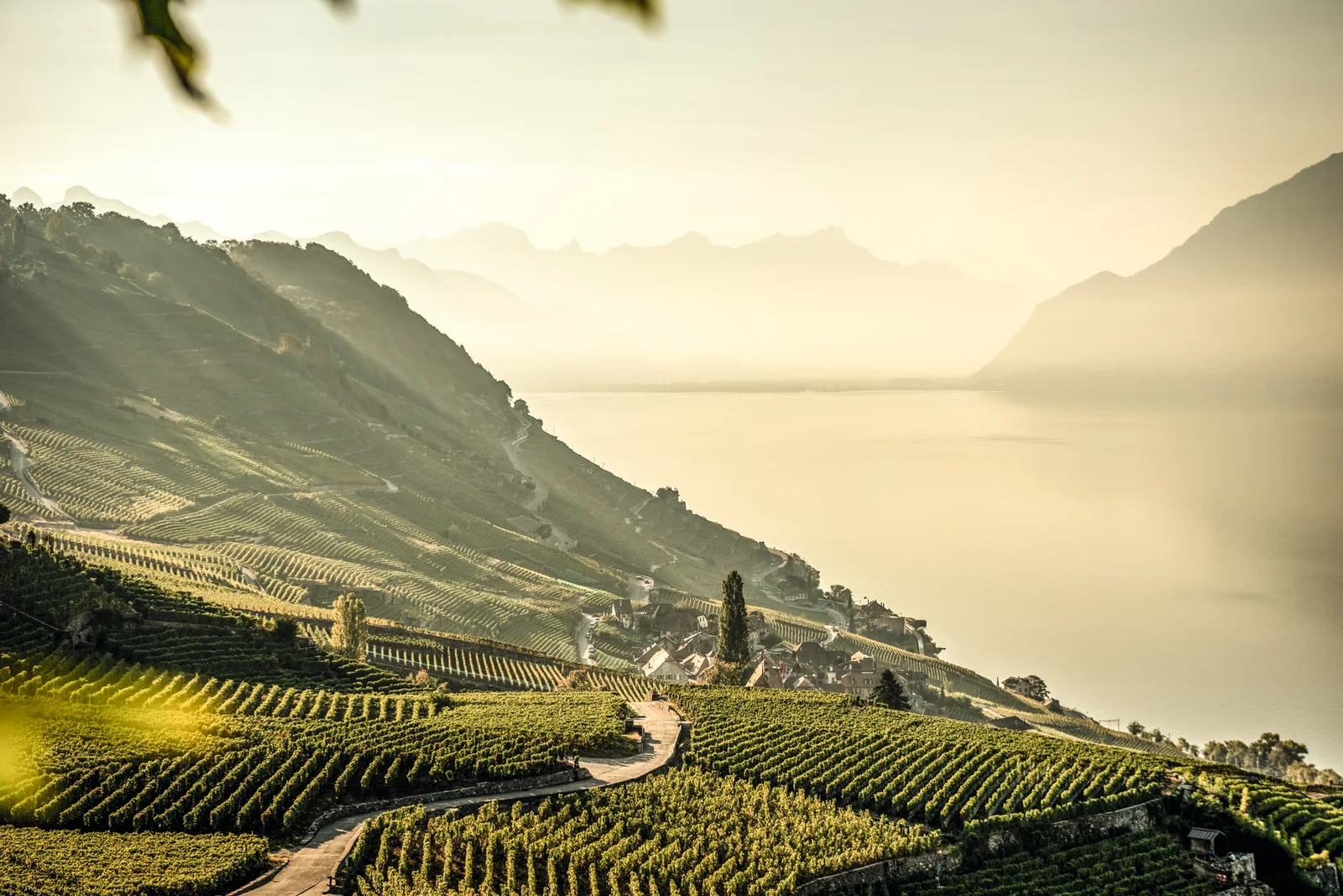
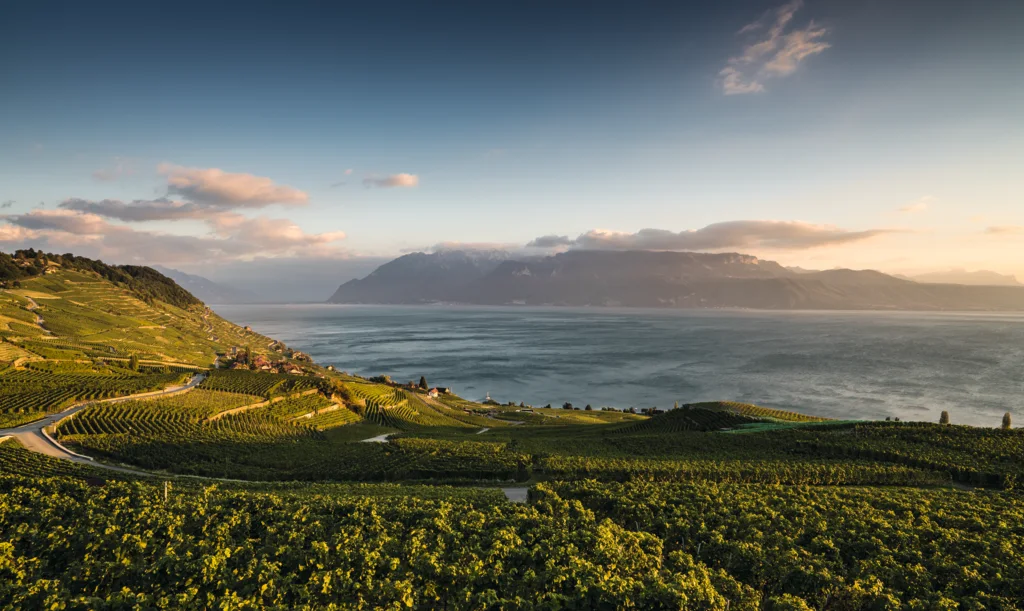
The Lavaux vineyards are best understood at walking pace. From the lakeside towns of Lutry and Cully, paths climb through a monumental landscape of dry-stone walls, narrow terraces, working vineyards, and small wine villages. Above them, Lake Geneva opens into a blue horizon, with the French Alps rising beyond it. The route is beautiful, but it is not simply a scenic promenade: Lavaux is a living agricultural landscape, shaped by generations of winegrowers and still dependent on their work.
This Lavaux vineyards walking route is designed as a full but flexible day, moving from Lutry towards St-Saphorin and allowing time for village pauses, viewpoints, and one carefully chosen tasting. The entire journey is roughly 11 kilometres on the classic St-Saphorin–Lutry trail, with sustained uphill and downhill walking. Rather than treating that distance as a challenge to complete quickly, think of it as a framework. You can shorten the day at Cully, Rivaz, or another railway station, or concentrate on a smaller section and leave the rest for another visit.
Why Lavaux deserves a slow itinerary
Lavaux’s terraces were developed over centuries, with the most important construction associated with medieval monastic communities and the winegrowing traditions that followed. The region now encompasses about 800 hectares of contiguous vineyards and has been listed as a UNESCO World Heritage site since 2007. Its significance lies in the relationship between land, labour, settlement, and lake: the walls hold the slopes, the villages provide homes and cellars, and the water and reflected sunlight help define the growing conditions.
The famous names—Lutry, Cully, Epesses, Rivaz, Dézaley, and St-Saphorin—are not interchangeable viewpoints. Each has a slightly different character. Lutry feels like a small historic town at the western edge of the vineyards. Cully is a practical and sociable base beside the lake. Epesses and Riex sit more deeply within the wine country, while Rivaz and St-Saphorin bring the terraces close to the water and the railway.
The route at a glance
The classic signposted trail runs between St-Saphorin and Lutry. Switzerland Tourism lists it at approximately 11 kilometres, around 3 hours 15 minutes of walking time, with about 440 metres of ascent and 420 metres of descent. Those figures describe walking rather than sightseeing. Add time for photographs, village detours, food, and tasting appointments; a relaxed day will take considerably longer.
- Start: Lutry, reached from Lausanne by local public transport or train.
- Early section: Lutry’s historic centre and the vineyards above Villette and Cully.
- Middle section: Cully, Riex, and Epesses, with the most concentrated vineyard scenery.
- Later section: Rivaz and the Vinorama area, followed by the descent towards the lake.
- Finish: St-Saphorin, with a railway station and lakeside access for an easy return.
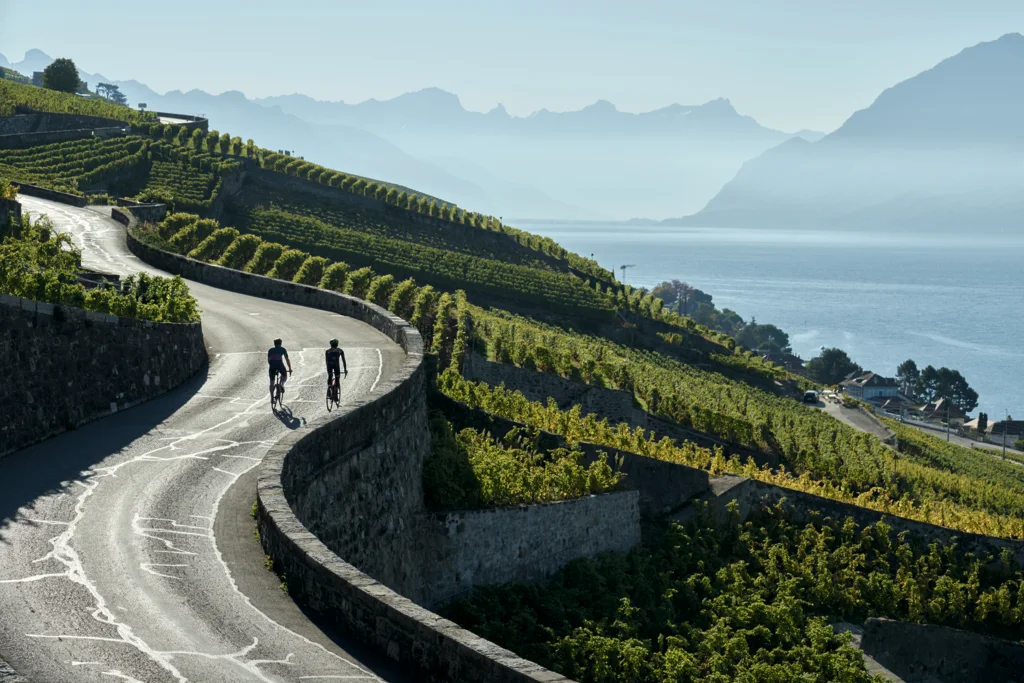
The route is not technically difficult, but it is physically moderate because the terraces create repeated climbs and descents. Surfaces vary from paved village lanes to vineyard tracks and steps. Comfortable walking shoes with good grip are more useful than heavy hiking boots. In hot weather, the exposed slopes can feel strenuous, while wet conditions may make stone paths slick.
Beginning in Lutry: town before terraces
Lutry is an excellent starting point because it gives the day a gradual introduction. Begin near the old town and allow time to look at its medieval street pattern, church, waterfront, and wine-growing identity before climbing into the slopes. The first ascent is a useful reminder that Lavaux is not flat lakeside country: the best views arrive because the path earns them.
As you leave the town, the perspective changes quickly. Roofs and church towers settle below you; the lake becomes a broad sheet rather than a narrow strip; and the vineyard walls begin to organise the landscape into horizontal bands. Follow official waymarks rather than improvising across the terraces. Some tracks that look like natural shortcuts are work routes, service lanes, or private access.
Cully and the first real pause
Cully is the route’s most useful mid-morning pause. Its lakeside position makes it a natural place to stop for coffee, provisions, or an early meal, and its railway station allows walkers to turn the outing into a shorter half-day. The village also offers a chance to see how closely everyday life and wine production coexist here: cellars, homes, restaurants, and public paths occupy the same compact landscape.
If you are walking the itinerary in the opposite direction, Cully can be an inviting finish: descend through the vineyards, eat beside the lake, and take the train onward. For a first visit, however, starting in Lutry and continuing east gives the walk a satisfying progression from town to village to terrace and finally to lakeside wine country.
Riex and Epesses: the heart of the vineyard walk
Beyond Cully, the path enters the compact wine villages of Riex and Epesses. This is the section in which the terraces feel most immersive. Stone walls rise beside the path; vines occupy almost every available slope; and the route alternates between lanes through the villages and open stretches with uninterrupted views.
Epesses is a natural place to learn how the landscape is read by local winegrowers. Look for the geometry of the walls, the small stairways connecting levels, and the way buildings cluster where the slope permits. The village is also associated with local wine and farm-product shops, but opening days and tasting arrangements vary. Do not assume that a cellar is available for walk-in visitors simply because its doors are visible from the street.
The vineyards around Dézaley are among the most renowned parts of Lavaux. Even without a formal tasting, the walk offers a useful visual lesson: the region’s wines are inseparable from the steep terrain and the labour required to maintain it. The view is not merely a backdrop to the wine; it is part of the wine’s story.
Rivaz: a place to add context
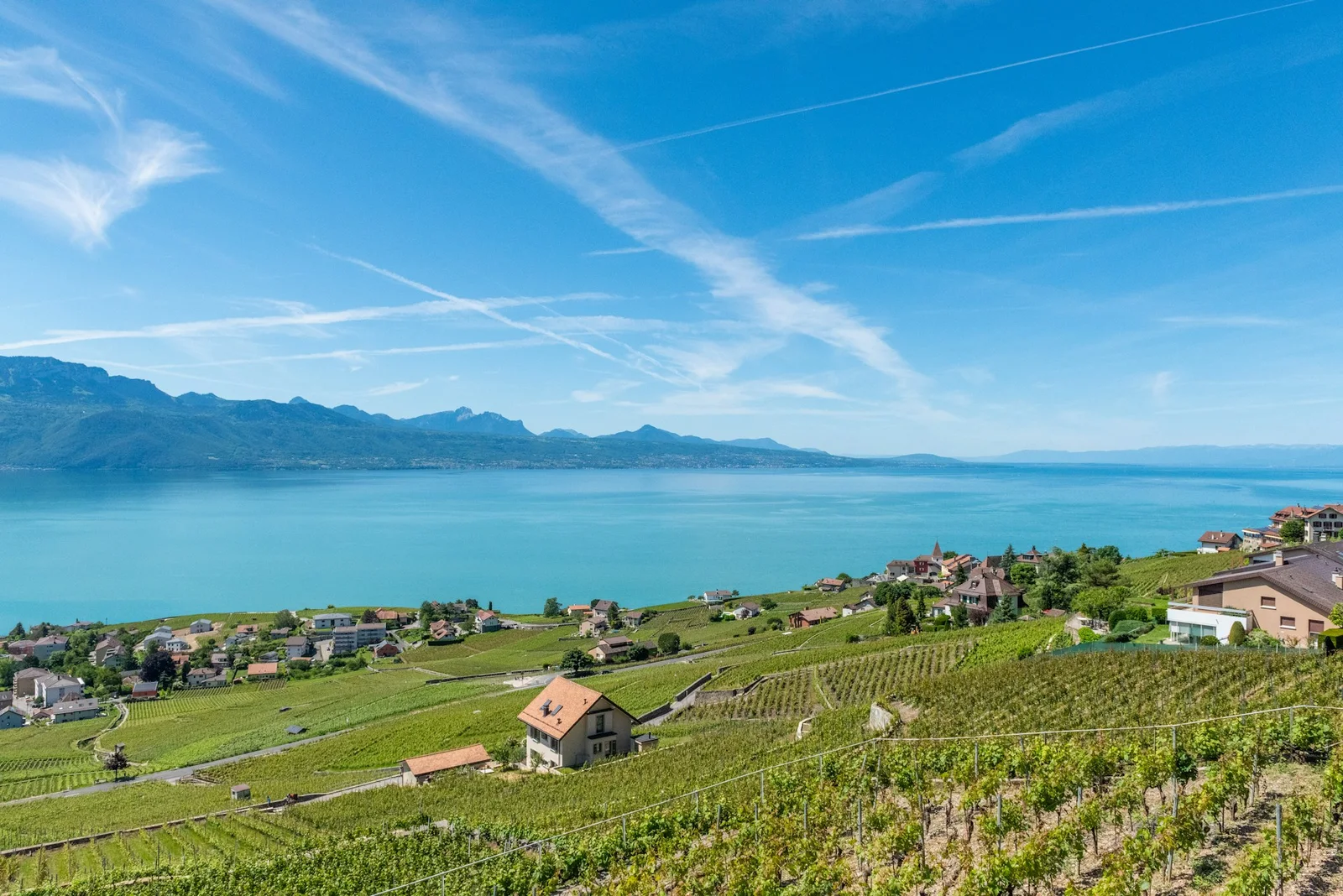
Rivaz sits close to Lake Geneva and is one of the smallest communes in Switzerland. It makes a good stopping point because the scale shifts again: after the elevated intimacy of the terraces, the lake feels suddenly near, and the railway provides a practical exit if heat, weather, or tired legs change the plan.
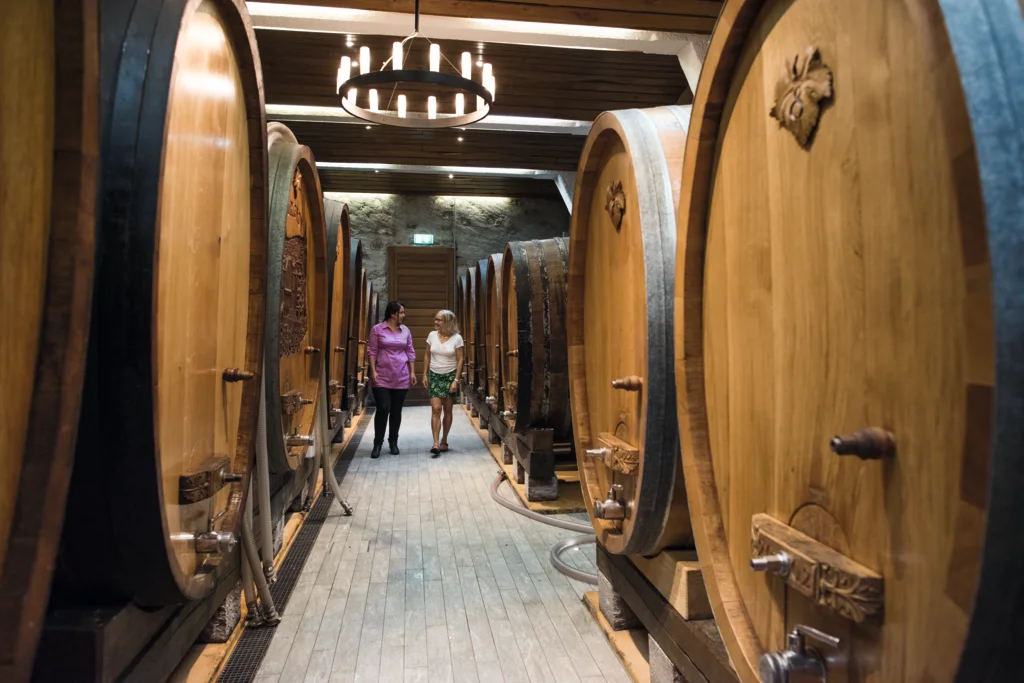
The Lavaux Vinorama, located in Rivaz, is devoted to the wines and winegrowing culture of the region. It can be a worthwhile alternative to moving from cellar to cellar, particularly for visitors who want orientation before tasting. Check current opening hours and access arrangements before building the day around it. A museum or interpretation centre can also help explain the work behind the landscape without asking individual growers to provide an impromptu tour.
Finishing in St-Saphorin
St-Saphorin is one of Lavaux’s most evocative villages, with narrow lanes, historic winegrowers’ houses, and a church whose steeple has become an emblem of the area. It is a fitting endpoint because the village gathers many of the themes encountered on the walk: medieval settlement, wine cellars, lake access, and the close relationship between architecture and slope.
Rather than rushing straight to the station, wander carefully through the village and descend towards the lake if conditions and time allow. The water is close enough to change the mood of the day, but swimming should be treated as a separate activity: use recognised access points, be cautious around boat traffic, and do not assume every shoreline is public or suitable for bathing.
Public transport: make the route one-way
Lavaux is unusually well suited to a one-way walking day. Railway stations serve Lutry, Cully, Epesses, Rivaz, and St-Saphorin, while regional services connect the vineyard slopes with Lausanne, Vevey, and nearby towns. The Train des Vignes links Vevey with Puidoux-Chexbres and provides a scenic way to reach the higher part of the region. Local buses also serve selected approaches, including connections from Lausanne, Pully, and Vevey.
Check the Swiss Federal Railways journey planner on the day of travel. Timetables, engineering works, seasonal services, and connections can change, and the final walk from a station may involve steep lanes. Save the details of your intended exit before setting out, especially if you are planning a late tasting or visiting outside the busiest season.
- For the full traverse, use Lutry as the western start and St-Saphorin as the eastern finish, or reverse the direction.
- For a shorter outing, begin or end at Cully, Rivaz, or Epesses.
- For higher viewpoints, consider the Train des Vignes to Chexbres-Village, then walk downhill through the terraces.
- Avoid driving between villages unless necessary: roads are narrow, parking is limited, and vineyard traffic has priority.
How to taste responsibly in Lavaux
Wine tasting belongs in this landscape, but it should be approached as a planned encounter rather than a reward station every few kilometres. The terraces are steep, the sun can be intense, and alcohol changes how safely you negotiate narrow paths and roads. One substantial tasting, accompanied by food and water, is often more memorable than several hurried stops.
Contact growers in advance when possible. Ask whether tastings require an appointment, whether the host can accommodate English, and whether the visit takes place at a cellar, shop, or private estate. Buy a bottle if you find one you value; purchasing directly from a producer is a tangible way to support the continued maintenance of this costly cultural landscape. If you are travelling by train or carrying a daypack, ask about shipping or arrange a practical way to transport your purchases.
Chasselas is central to the identity of the canton of Vaud, while Lavaux also produces distinctive wines from other grape varieties and blends. Taste with curiosity rather than a checklist. Notice how producers describe exposure, walls, slope, vintage, and village, and remember that a tasting room is a place of work as well as hospitality.
Village etiquette and conservation
The most important etiquette is quiet attentiveness. Lavaux villages are lived-in communities, not theatrical sets. Keep voices low near homes, do not block narrow lanes for photographs, and give way to residents, delivery vehicles, and vineyard machinery. Close gates behind you where a marked path passes through them, keep dogs under control, and take all rubbish with you.
Never pick grapes, lean on dry-stone walls, climb onto private terraces, or walk between rows for a better photograph. The vines and walls are working infrastructure. A respectful visitor stays on the official route, follows temporary diversions, and accepts that a perfect viewpoint may not be accessible.
- Use marked hiking paths and official route maps.
- Do not enter vineyard rows or private property.
- Keep clear of tractors, carts, hoses, and other equipment.
- Carry water and pack out food packaging.
- Keep dogs leashed or closely controlled where required.
- Avoid drones unless you have confirmed that their use is permitted.
- Choose public transport whenever practical.
When to go and what to carry
The vineyard walking season is broad, but the experience changes with the calendar. Spring brings fresh growth and cooler walking conditions. Summer offers long light and open terraces, though shade is limited. Early autumn is especially atmospheric, with ripening grapes and the possibility of harvest activity; it can also be a busy working period, so keep well away from crews and equipment. In late autumn and winter, views may remain excellent, but shorter daylight, rain, ice, and route interruptions require more caution.
Before leaving, check the weather, route status, public transport, and opening hours of any cellar or museum you hope to visit. Pack water, sun protection, a light layer, sturdy shoes, and a small picnic or snack. A phone with offline mapping is useful, but it should support—not replace—the official waymarks.
Shorter alternatives for a gentler day
The full Lutry–St-Saphorin walk is rewarding but not obligatory. A shorter route from Grandvaux to Cully takes approximately two and a half hours according to local tourism information and concentrates on broad vineyard and lake panoramas. Another option is the educational Route des Grands Crus between the Epesses and Rivaz sides of the vineyard. It is approximately 2.8 kilometres, takes around 90 minutes, and includes interpretive stations designed to connect the landscape with local wine culture.
For a route with more structure, the circular ‘Stroll through the Vineyards’ experience covers about 10.4 kilometres and uses a digital guide to explain winegrowers, crafts, vineyard features, and viewpoints. Availability, app details, and associated offers should be checked before departure. These alternatives work well for travellers who want time for a museum, a longer lunch, or an unhurried tasting.
A final view of Lavaux
The pleasure of walking Lavaux is cumulative. At first, the lake draws the eye. Then the walls, villages, vines, and work routes begin to matter equally. By the time you reach St-Saphorin, the view has become more than a panorama: it is evidence of an agricultural culture that remains active, fragile, and dependent on careful stewardship.
Plan the route around public transport, leave space for a proper meal, and make tasting a thoughtful part of the day rather than its sole purpose. The most responsible visit is also the most rewarding one: walk where you are welcome, buy directly when you can, and allow Lavaux’s terraces to reveal themselves slowly.