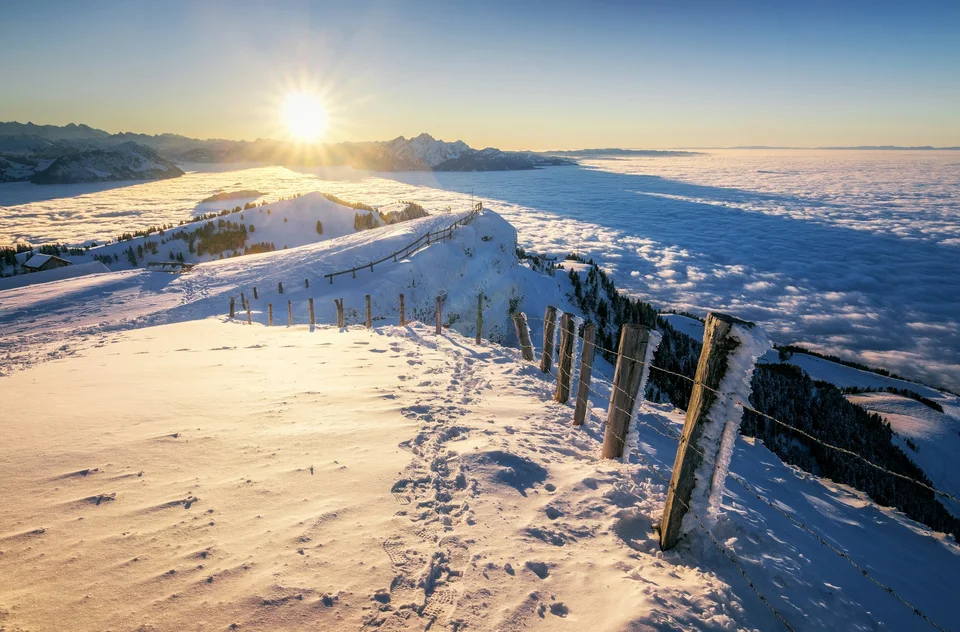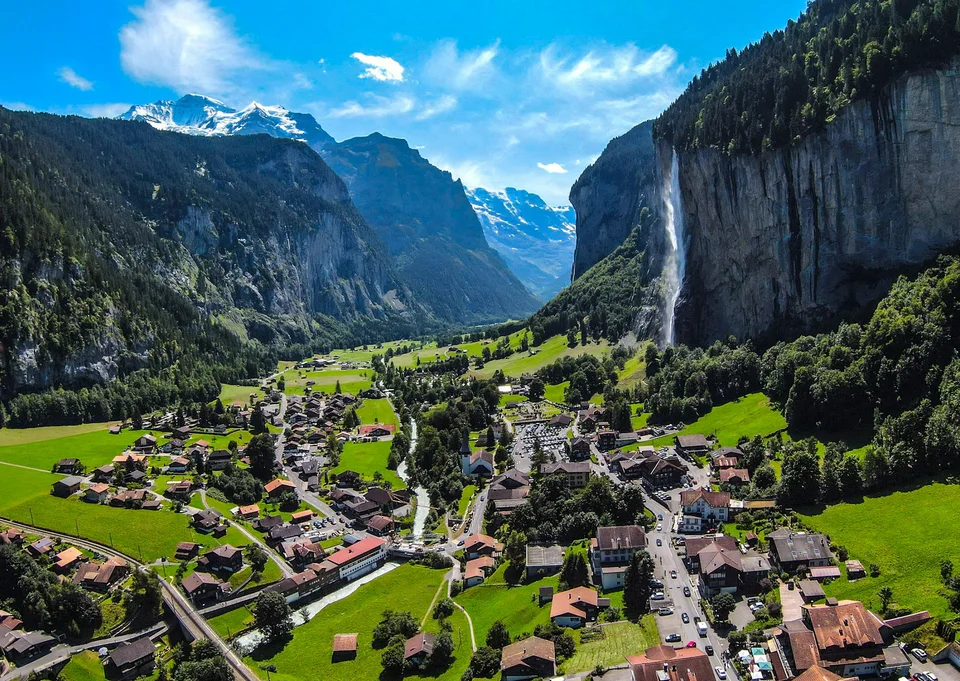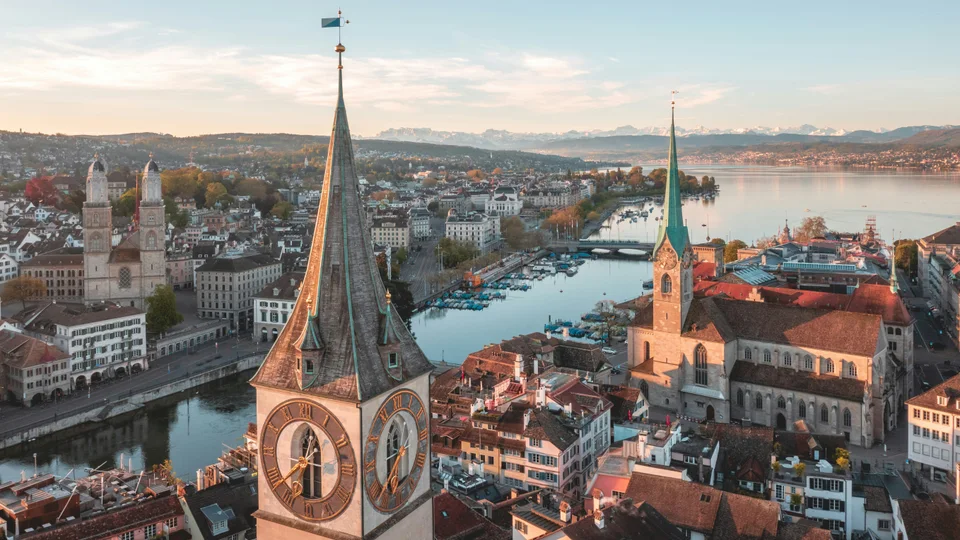
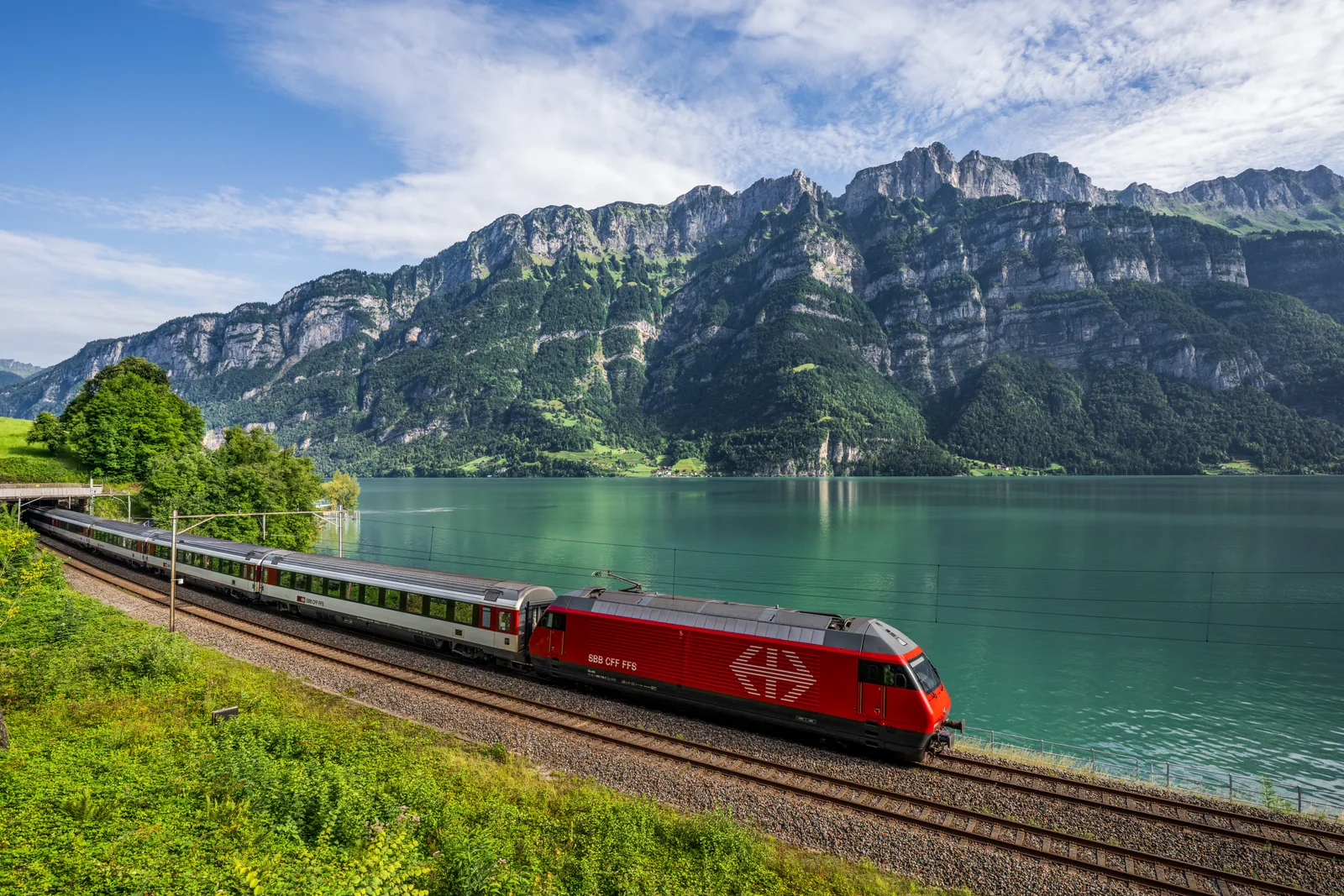
Some mountain journeys begin with a dramatic departure: a station beneath snow peaks, a whistle in the high valley, a sudden plunge into the landscape. The train from Chur to Arosa takes a less obvious route. It starts in the middle of the city.
At Chur, Switzerland’s oldest city, the red train initially runs like a tram. It shares the streets with local traffic, passes close to historic buildings and turns through the city before the landscape gradually opens. Then, almost without ceremony, it leaves the built-up streets behind and begins climbing into the Schanfigg valley.
Over roughly 26 kilometres, the railway gains about 1,000 metres in altitude. The journey takes a little over an hour, depending on the service, but its value lies less in speed than in the change of scenery. City walls give way to wooded slopes, valley settlements to ravines, and the final approach to Arosa feels like arriving in a different climate and at a different pace.
Why take the Chur to Arosa train?
Arosa is accessible by road, but driving there can make the destination feel like a conventional mountain resort: pack the car, follow the bends, watch the weather and search for somewhere to leave the vehicle. The train removes that sequence. You board in Chur, settle beside a window and let the geography unfold in front of you.
The route is also unusually expressive. Many scenic railways are spectacular only once they reach the high mountains. The Arosa line is interesting almost from the first minute because it shows the transition itself. You see how a railway threads together a city, a valley and a resort, rather than simply transporting passengers between two postcard locations.
For travellers trying to reduce car use, this makes Arosa an appealing choice. You can arrive without arranging parking, carry only what you need, and continue on foot or by local bus once you reach the resort. The journey becomes part of the holiday rather than an obstacle before it.
Starting in Chur: leave room for the city
The natural starting point is Chur’s main station, where the Arosa railway has its own presence near the station forecourt. If you are arriving from elsewhere in Switzerland, the connection is straightforward in principle: Chur is a major rail hub, with onward links across Graubünden and to cities including Zürich. Check the current Swiss and Rhätische Bahn timetables before travelling, particularly if you are making an international connection.
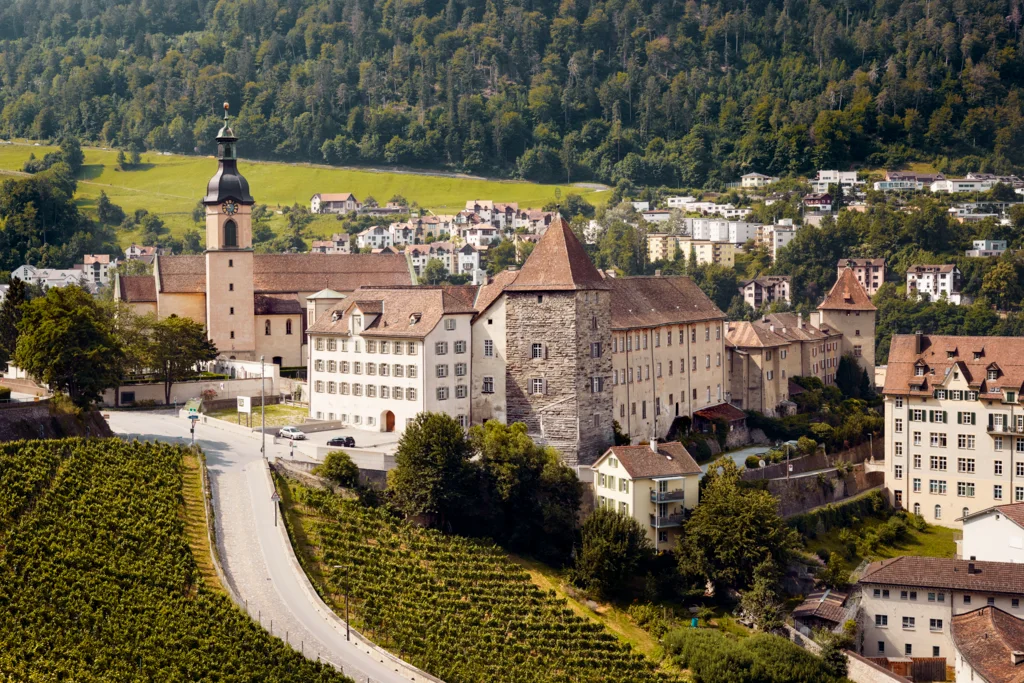
Chur deserves more than a platform change. Its compact old town is easy to explore on foot, with narrow lanes, historic squares and a medieval urban character that contrasts beautifully with the mountain scenery to come. A slow itinerary might include a night in the city, a morning coffee and a short walk through the old town before boarding the train.
This pause matters. Arosa is not best approached as a place to reach as quickly as possible. Beginning in Chur allows the journey to have a proper first chapter: urban Graubünden before rural Graubünden, stone streets before spruce forests, anticipation before altitude.
The unusual beginning: a train through the streets
The first section is one of the line’s defining pleasures. Rather than sweeping immediately into open country, the train moves through Chur’s urban fabric. It passes historic landmarks and follows streets at a measured pace, creating the curious sensation of being both on a railway and inside the life of the city.
This is a useful reminder that scenic travel does not always begin with wilderness. Landscape is cumulative. The city’s walls, traffic lights and apartment buildings establish a baseline from which the climb can be felt. When the train finally leaves Chur, the change is perceptible because you have watched it happen.
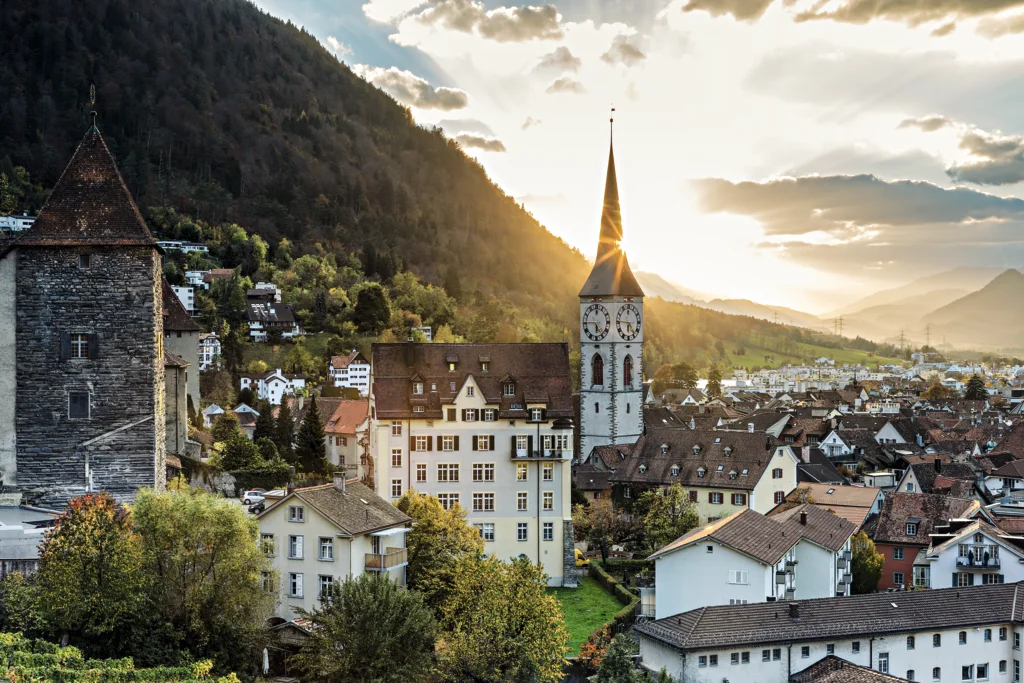
Choose a window seat if you can, but do not spend the entire ride trying to photograph every bend. The train is not a sightseeing bus with a fixed panorama. Views appear briefly, often on one side and then the other, while tunnels and wooded sections create natural intervals. The best approach is to look up frequently and let the scenery arrive on its own terms.
Into the Schanfigg valley
Beyond the city, the line begins to feel like a mountain railway. It winds into the Schanfigg, a valley shaped by the Plessur River and marked by steep slopes, scattered villages, pasture and forest. The railway’s engineering is inseparable from the scenery: curves, bridges and tunnels are not interruptions to the landscape but the means by which the train negotiates it.
The view changes gradually rather than theatrically. First come the near slopes and the deepening valley. Then the train gains enough height for broader perspectives, revealing ridgelines and mountain faces beyond. Traditional settlements appear in pockets on the hillsides, their presence softened by distance and the surrounding green.
The line includes numerous tunnels and bridges, with the exact sensation changing from one section to the next. A dark tunnel may open suddenly onto a ravine; a curve through the trees may reveal a distant summit; a village platform may appear with little warning. The rhythm is part of the experience: emerge, look, absorb, disappear, repeat.
The Langwieser Viaduct: the journey’s great reveal
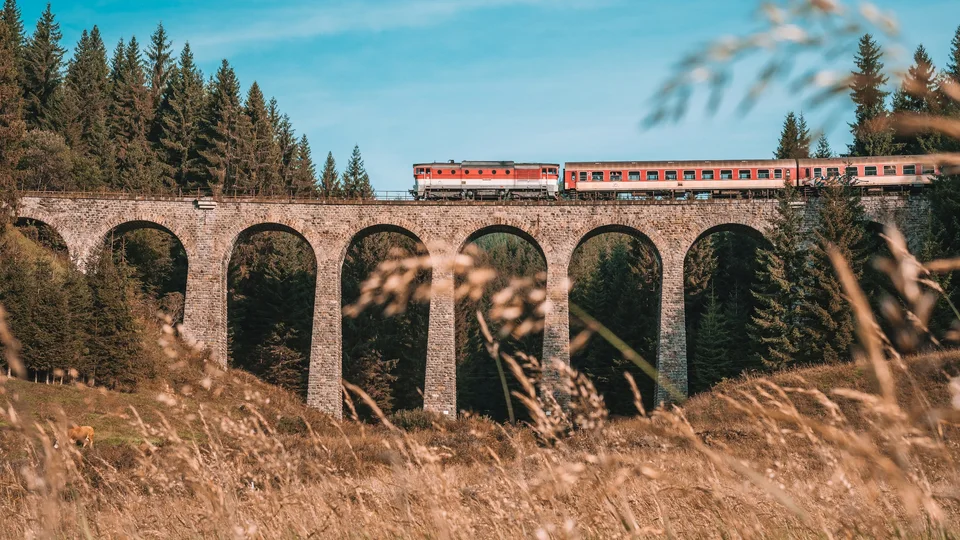
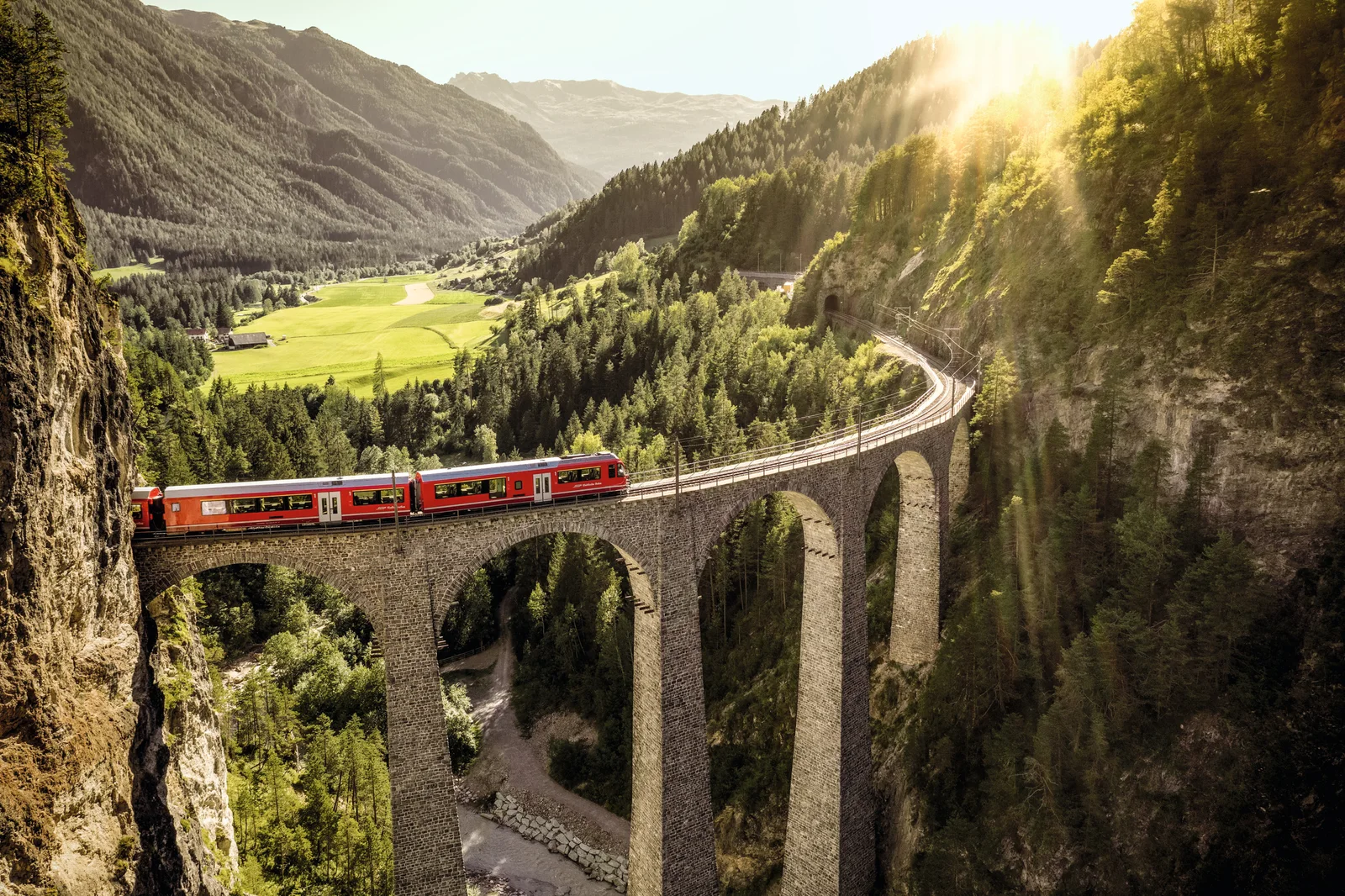
The most celebrated structure on the route is the Langwieser Viaduct, built in 1914 and carried high above the valley. Its pale concrete arches make a strong visual contrast with the dark forest and rugged mountain surroundings.
Crossing the viaduct is brief, but it changes the perspective of the journey. For a moment, the train is suspended above the Plessur valley, with the slopes dropping away on either side. The sensation is less about speed than exposure: the railway seems to pause in open air before slipping back into the mountains.
Langwies is also a reminder that this line is not merely a tourist attraction. It serves communities along the valley as well as visitors travelling to Arosa. The train’s value lies in that dual role. It is scenic because it is useful, and useful because it follows the contours of a lived-in landscape.
Stations worth noticing along the way
The principal intermediate stops include Lüen-Castiel, St Peter-Molinis, Peist, Langwies and Litzirüti, although some services and stops may be subject to timetable conditions. For a first journey, the most rewarding plan is usually to ride directly to Arosa. On a longer visit, however, the stations offer possibilities for short walks and village-based excursions.
Langwies is particularly associated with the viaduct and the surrounding mountain scenery. Litzirüti, closer to Arosa, has a quieter valley character and can work as a starting point for walking itineraries. Before getting off anywhere other than a principal station, check whether the train stops on request and understand the local boarding procedure.
The railway encourages a different idea of distance. A stop that looks close on a map may involve a steep walk, a change in altitude or a trail that is seasonal. Ask the local tourist office for current route conditions, especially after snowfall, heavy rain or early-season weather.
Arriving in Arosa without a car
Arosa station sits within the resort rather than far outside it. That makes the arrival unusually gentle. You step down from the train into a mountain settlement already arranged around walking, lodging, cafés, shops and access to trails.
The village is spread along the valley, so the exact walk to your accommodation depends on where you are staying and how much luggage you have. Some hotels and apartments are close to the station; others are uphill or farther along the resort. Confirm the route in advance, and ask your accommodation whether it offers a luggage service or collection from the station.
Arosa also operates local bus services, including routes connecting key parts of the resort. Some local services are offered free of charge, while particular routes or night services may have different conditions. Treat the bus as a useful supplement, not a reason to over-plan. Many of the central journeys are perfectly manageable on foot.
The practical advantage is immediate: there is no car to retrieve, no parking arrangement to make and no need to return to a vehicle before setting out for a walk. Arrival can flow directly into a lakeside stroll, a meal or an afternoon on the trails.
Arosa at walking pace
Arosa is best understood not as a single viewpoint but as a collection of walks. Lake Obersee, near the centre, provides an easy first orientation. From there, paths and roads lead towards quieter corners of the valley, forest edges and higher trails with wider views.
In summer, the resort is a base for hikes across the surrounding mountains, with routes ranging from straightforward walks to demanding high-altitude excursions. Conditions vary with weather, snow and seasonal maintenance. A trail that is comfortable in late summer may be unsuitable earlier in the season, so use current local advice rather than relying on an old itinerary.
The Arosa Bear Sanctuary is another possible destination, reached via mountain transport and walking routes depending on the season and the facilities in operation. For a quieter day, remain at valley level: follow the lake, explore the village, sit outside with a view and allow the landscape to do less work.
Winter changes the texture of the place rather than eliminating the car-free option. Snow makes the train journey especially atmospheric, while local buses and lifts help connect accommodation, ski areas and restaurants. Mountain railway operating dates and weather-dependent services should always be checked before committing to a particular plan.
How to plan the journey well
The route is simple, but a few details make it more comfortable.
- Check the live RhB or Swiss Federal Railways timetable on the day of travel. Departure patterns, engineering works and replacement buses can change, particularly at the edges of the day or during construction.
- Allow a generous connection in Chur if you are arriving from another Swiss city. A short transfer may be possible, but the Arosa service is worth boarding calmly rather than rushing across the station.
- Pack food and water if you want them for the journey. The train is a regional service, not a restaurant train, and onboard catering should not be assumed.
- Keep a jacket within reach. Chur and Arosa can have noticeably different temperatures, even on the same day.
- If you need step-free access, are travelling with a pushchair or require assistance, check the current rolling stock and register support in advance where recommended by the railway.
- For bicycles, large luggage and sports equipment, confirm the current carriage rules before departure. Capacity and acceptance can vary by service and season.
- Use the train as the fixed spine of the itinerary, then keep the rest flexible. Weather may determine whether your best day is on a high trail, beside the lake or in the old town of Chur.
The return journey is not an afterthought
The trip back to Chur deserves its own attention. Seen in reverse, the line becomes a long descent through changing light. Arosa’s high, open surroundings gradually close into forest and valley, then broaden again as Chur approaches.
If your schedule allows, leave Arosa after spending part of the day outdoors rather than treating the return as a logistical necessity. The train is a natural decompression chamber. Boots come off, conversation quietens and the mountain day recedes in stages.
For travellers continuing onward from Chur, remember that the return connection may be as important as the outbound one. Check the final train, allow for delays and keep an eye on seasonal timetable variations. The slower approach works best when it is also a reliable one.
A small journey with a larger lesson
The Chur to Arosa train is not Switzerland’s longest or most famous railway experience. That is precisely why it is so satisfying. It does not require an elaborate itinerary, a panoramic carriage or a full day set aside for a grand crossing. It offers something more intimate: a direct encounter with how a mountain region is connected.
You begin among city streets and finish among alpine peaks. Between those points, the train climbs steadily through a valley that remains inhabited, working and recognisable. The bridges and tunnels are impressive, but so are the ordinary details: a village platform, a pasture on a steep slope, a house glimpsed between trees.
Travelling without a car does not make the journey austere. Here, it makes the journey more complete. You can watch the landscape instead of navigating it, arrive without the fatigue of mountain driving and begin walking as soon as the train stops.
That is the quiet promise of the route from Chur to Arosa: not simply a way to reach the mountains, but a reminder that the transition into them can be the heart of the escape.