The most interesting rail journeys in Europe do not always end at a grand city station. Some arrive at the edge of a gorge, a mountain valley or a national park where roads are limited and parking is part of the problem. In these places, the train is not simply a cleaner substitute for the car. It shapes the visit itself.
That distinction matters as protected landscapes deal with rising visitor numbers, erosion, congestion and the practical difficulty of moving large numbers of people through sensitive terrain. A railway can carry visitors towards a landscape without widening roads, filling every valley with parked cars or concentrating arrivals at a single busy entrance. It can also make a more considered journey possible: city, train, small town, walking route.
Why rail matters in protected landscapes
Europe’s railway network reaches far beyond the main capitals. Stations sit in regional towns, valley settlements and places that function as gateways to hiking areas, wetlands, forests and mountain parks. This gives travellers something a flight cannot: a gradual change of scale. The city recedes, the landscape becomes more dominant, and the final arrival is often close to the point where a walk actually begins.
The environmental argument is only part of the story. Rail also gives destination managers a clearer way to channel visitors. A station is a defined arrival point. From there, local buses, footpaths, ferries and visitor centres can distribute people more carefully than a road network that allows thousands of cars to arrive at different places at different times.
This does not make every train journey automatically sustainable. The final connection may still depend on a bus, boat or short taxi ride, and popular rail lines need their own capacity management. But where car access is restricted or discouraged, rail becomes part of the conservation infrastructure. It helps make access possible without treating every landscape as a road-building opportunity.
Calanques National Park, France
The Calanques are one of Europe’s clearest examples of a protected landscape pressed against a major city. The park stretches between Marseille, Cassis and La Ciotat, combining steep limestone cliffs, pine forest, narrow inlets and a large marine area. Its proximity is part of its appeal, but also the reason visitor management is so important.
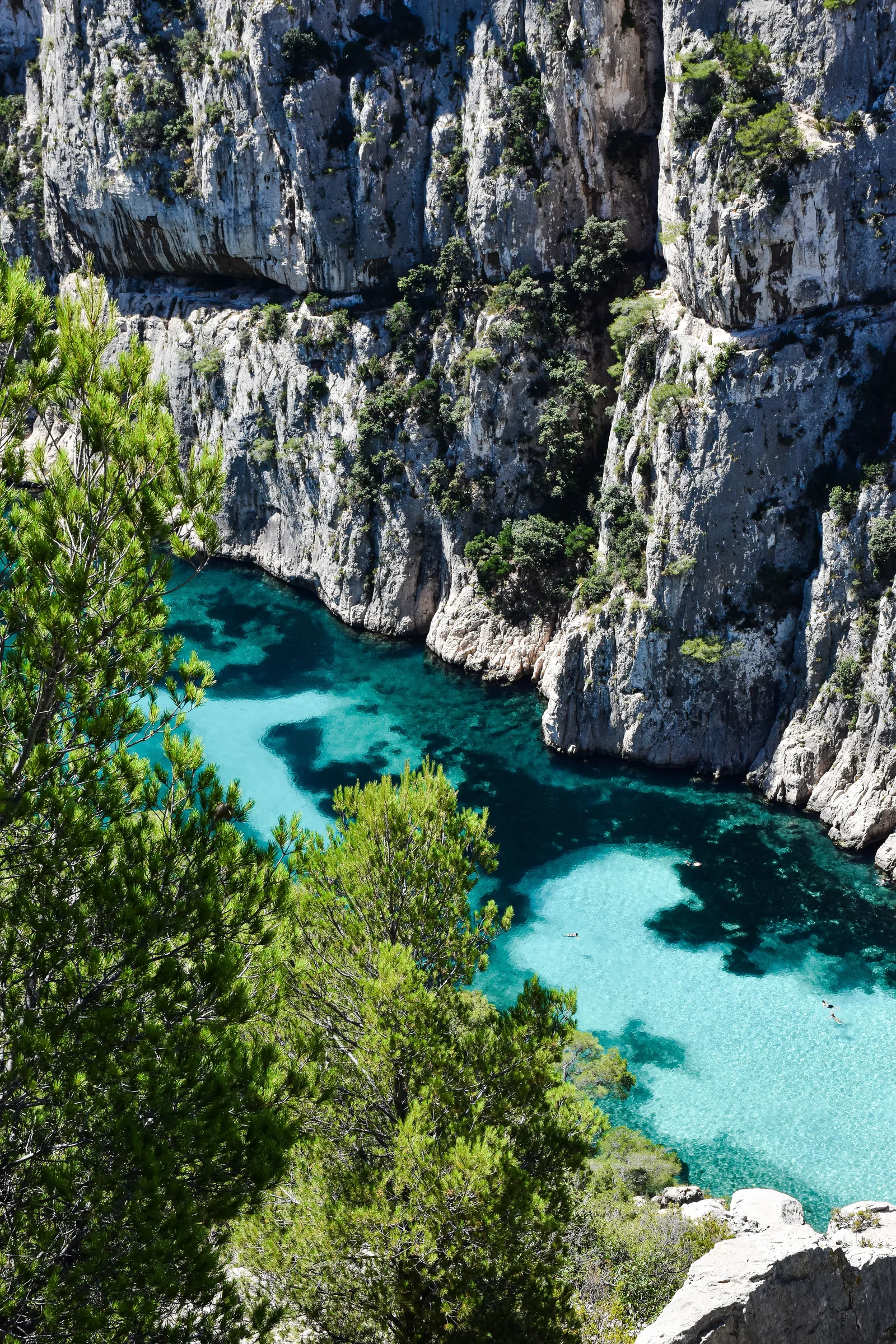
Park authorities estimate more than three million annual visits across land and sea. The most popular coves experience intense pressure, and some areas have introduced advance reservations during the summer season to limit numbers and slow erosion. The wider lesson is simple: access may remain open while the way people arrive and move through the park becomes more carefully controlled.
Rail is particularly useful here because the park works best as part of a Marseille or Cassis stay rather than as an isolated driving excursion. From Marseille, visitors can combine regional transport with walking routes and local connections towards the park’s western approaches. Cassis provides access to some of the most recognisable calanques, but the final stretch still requires careful planning and may involve walking, a shuttle or a boat depending on the route and season.
The Calanques deserve two or three nights, especially if the visit is paired with Marseille. A full day can be enough for one walking route or boat-based perspective, but the park is not a place to collect several coves in quick succession. Its value lies in choosing one area and giving it time.
Saxon Switzerland National Park, Germany
Saxon Switzerland is one of the easiest protected landscapes in Europe to reach without a car. The sandstone formations of the Elbe valley rise just outside Dresden, with paths leading through forests, cliffs and viewpoints that feel considerably more remote than the journey suggests.
Bad Schandau station sits at the centre of the region’s public transport network and is served by international trains. From the station, visitors can continue by local connections towards the park and the surrounding villages. The national park itself advises using parking facilities in nearby communities rather than relying on hiking car parks, which can fill quickly.
This is rail as visitor management in a very practical form. The station gives the region a strong arrival point, while buses and ferries spread visitors along the Elbe and towards different trailheads. The result is less dependence on narrow roads and fewer cars competing for limited spaces near the most popular walks.
The famous Bastei viewpoint is worth seeing, but it does not need to define the entire visit. It is often busiest at the most obvious times of day. A better plan is to pair it with a quieter trail, a village visit or a stretch of the river where the landscape can be experienced at a less crowded rhythm.
Hohe Tauern National Park, Austria
Austria’s Hohe Tauern National Park covers a vast high-Alpine landscape across Carinthia, Salzburg and East Tyrol. There is no single entrance or compact park centre. Instead, the park is experienced through a series of valleys, villages, trails and interpretation sites, each with its own character.
That dispersed geography makes transport especially important. Rail does not take visitors directly into every corner of the park, but it provides several structured gateways. Mallnitz-Obervellach is the clearest example: the station is served by long-distance trains and connects with local buses and seasonal services into the Mallnitz valley. Zell am See and Lienz provide other useful bases for exploring different parts of the region.
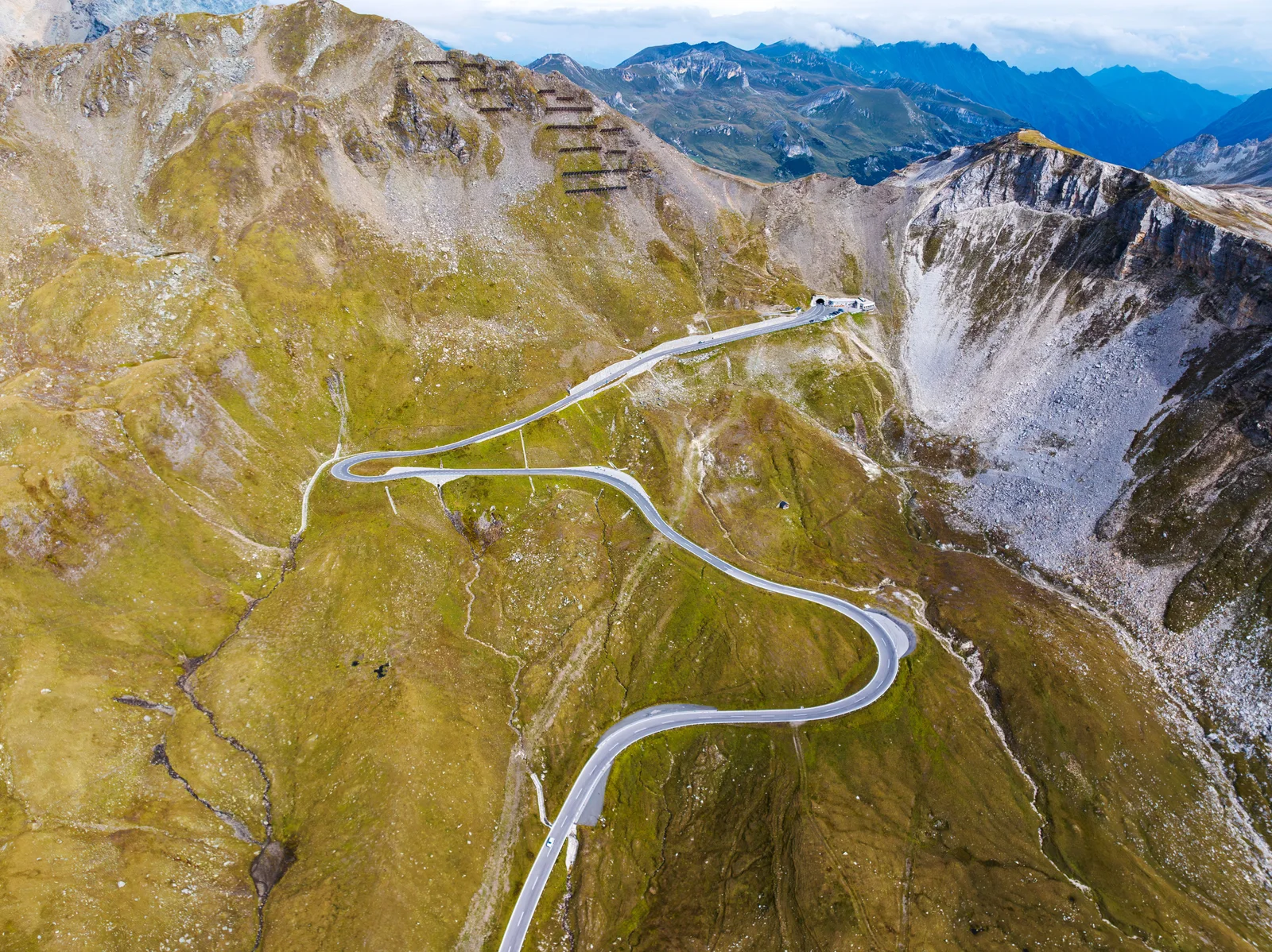
Mallnitz is the most convincing choice for a rail-first stay. The village has a strong relationship with the national park, hiking routes begin within reach of the settlement and local connections continue towards mountain areas. The train arrival feels like part of the geography rather than a transfer to be endured before the real trip begins.
Hohe Tauern also shows why rail can support more than sightseeing. Guided activities, interpretation centres and school programmes give the park a managed and educational form of access. Visitors are not simply released into a large landscape; they are directed towards places and experiences that can accommodate them without treating the entire park as equally available.
The Bernina Railway, Switzerland and Italy
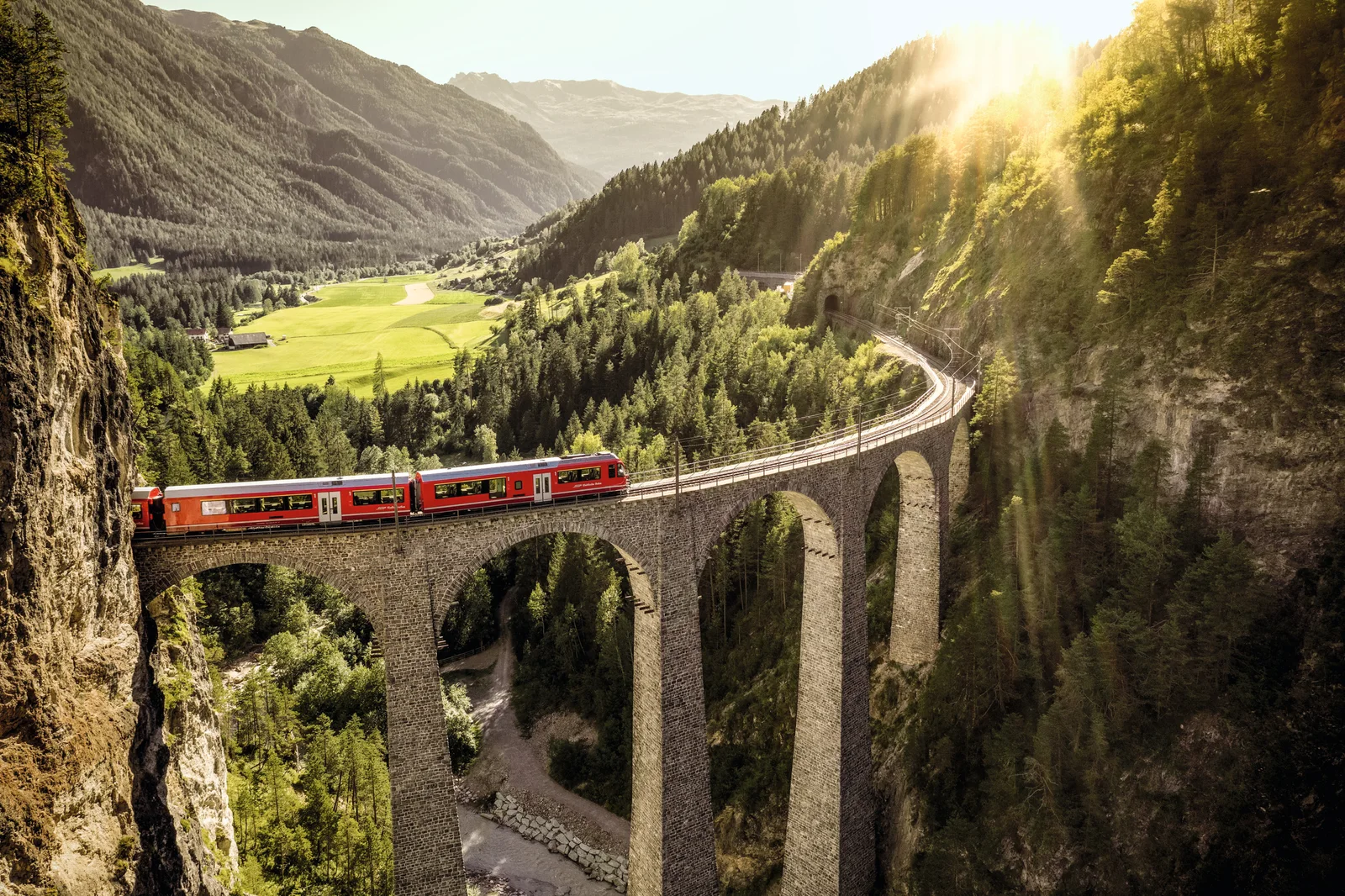
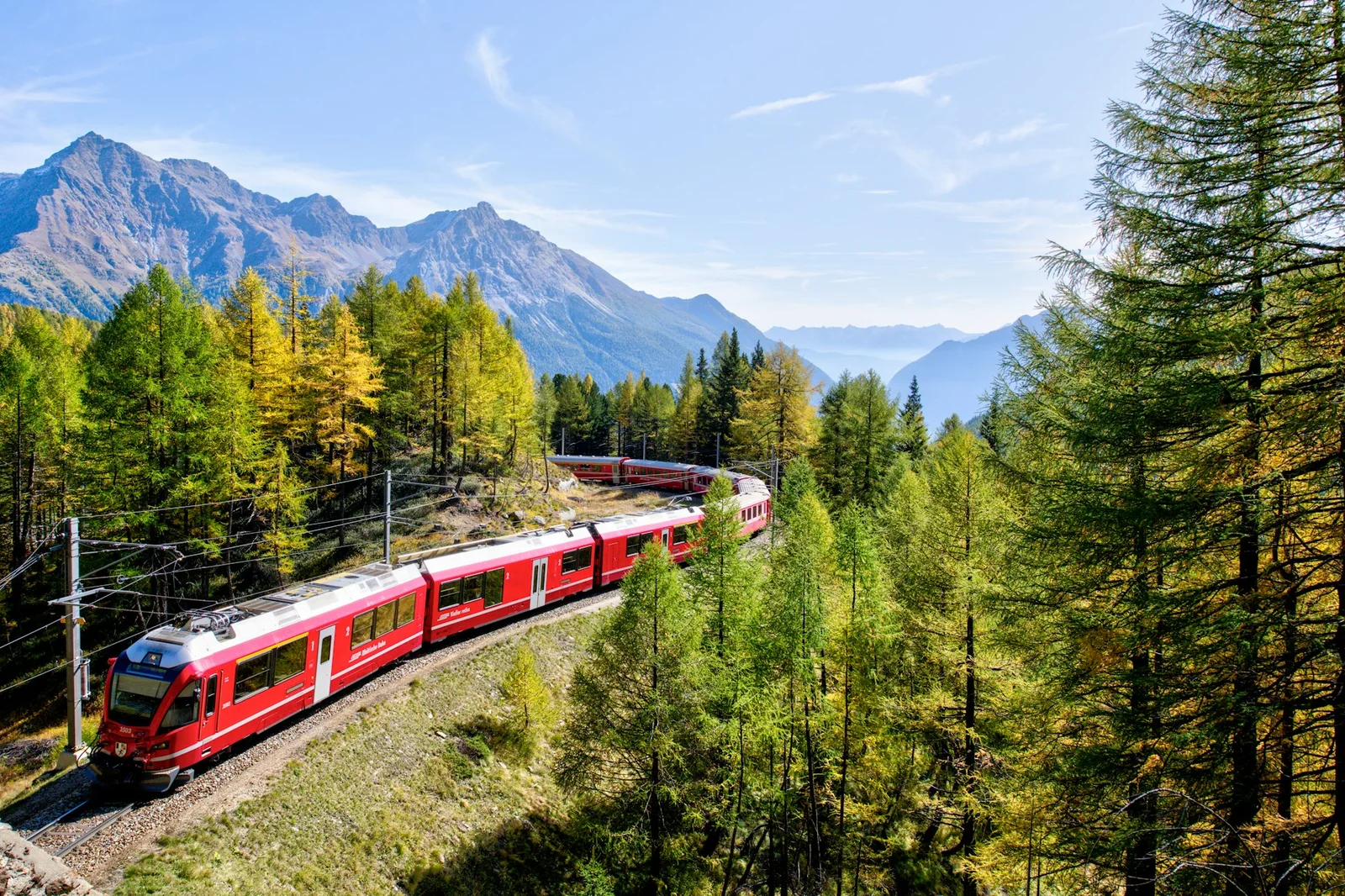
The Bernina Railway is different from the other examples because the railway is itself the defining experience. The line crosses the Alps between the Swiss canton of Graubünden and Tirano in northern Italy, passing through high mountain landscapes, lakes, glaciers and steep valleys.
The Rhaetian Railway in the Albula and Bernina Landscapes has UNESCO World Heritage status. The designation recognises both the engineering achievement and the way the railway forms a carefully integrated ensemble with its surroundings. Viaducts, tunnels, stations and mountain scenery belong to the same story.
This is a useful reminder that conservation is not always about keeping infrastructure out. In some Alpine landscapes, a well-designed railway can be part of the cultural and environmental character of the place. It provides access while making the journey legible: the train slows the passage through the mountains and connects settlements that would otherwise be approached mainly by road.
Capacity still matters. Scenic trains and popular departures can be busy, particularly in summer, and some services require reservations or have different arrangements from ordinary regional trains. Check the current timetable and booking conditions before travelling, especially if you are building a cross-border itinerary.
The wider pattern: stations as gateways
These landscapes differ in scale and character, but the underlying pattern is similar. The most successful rail-accessible nature destinations are not simply places with a station somewhere nearby. They have a chain of connections: rail to a gateway town, local transport to a valley or trailhead, and clear information about how visitors should continue.
- Bad Schandau makes Saxon Switzerland accessible from Dresden and links rail with local buses, ferries and walking routes.
- Mallnitz-Obervellach gives Hohe Tauern a direct Alpine rail gateway with onward regional connections.
- Marseille and Cassis allow visitors to reach the Calanques without making a car the organising principle of the trip.
- The Bernina Railway turns the transport corridor itself into part of the protected landscape experience.
The strongest journeys also make the car less necessary after arrival. A good base has accommodation, food, local transport and several walks within reach. This is where small towns and regional stations become more valuable than the nearest major airport. They allow the visitor to arrive gradually and stay close to the landscape without adding another layer of traffic.
How to plan a rail-based nature trip
Begin with the gateway, not the attraction. Choose the station or town that gives you the most useful combination of accommodation, local transport and access to several routes. Then check the final connection carefully. A train may arrive in a valley, while the trailhead is still a bus ride away.
Build in time for disruption and seasonal changes. Mountain buses may run less frequently outside peak periods, summer services can change from one year to the next, and fire risk or weather can close walking routes at short notice. Protected landscapes are not fixed attractions with guaranteed access.
- Check park regulations and access reservations before booking a walking day.
- Confirm the final bus, ferry or shuttle connection rather than assuming it will be frequent.
- Reserve popular scenic train services where required.
- Choose accommodation within walking distance of the station or a reliable local connection.
- Avoid planning several distant valleys in one short stay.
- Keep a flexible alternative for poor weather or temporary closures.
Our take
Rail is often presented as the more responsible way to reach Europe’s natural landscapes. That is true, but it undersells its practical role. In the best destinations, the train does more than replace a car journey. It determines where visitors arrive, how they disperse and how much infrastructure a fragile place needs.
For travellers, the benefit is equally clear. The journey becomes quieter, the transition from city to landscape more gradual and the choice of where to stay more deliberate. Saxon Switzerland is the easiest introduction, Hohe Tauern offers the richest Alpine stay, the Calanques work beautifully as part of a Marseille itinerary, and the Bernina Railway is worth choosing for its own sake.
The most thoughtful European nature trips may therefore begin with a different question. Instead of asking whether it is possible to drive there, ask which railway brings you closest to the landscape without overwhelming it. In these places, that is often the route that makes the most sense.