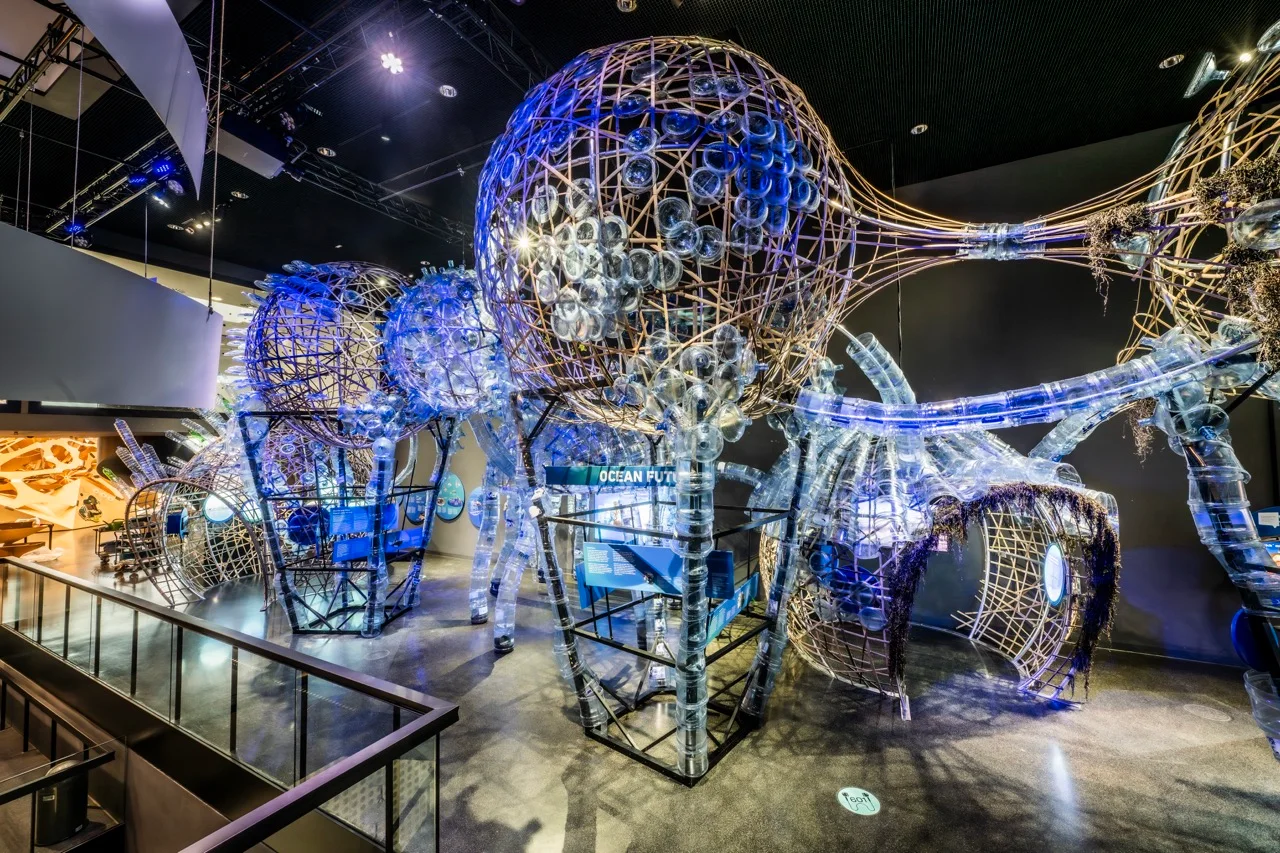
Berlin has no shortage of museums devoted to what has already happened. Futurium, near the Hauptbahnhof on the banks of the Spree, takes a different approach: it asks what might happen next—and, more importantly, what kind of future people want to help create.
This is not a museum of predictions in the conventional sense. There is no single promised future waiting behind the glass, polished and inevitable. Instead, Futurium presents possible directions shaped by choices about technology, nature, politics, economics, work, health and everyday life. Its exhibitions are designed to be explored rather than simply read, with interactive stations that invite visitors to compare alternatives, make decisions and consider the consequences.
The result is a rare kind of city museum: part exhibition, part workshop, part public forum. It is especially rewarding for travellers who prefer their sightseeing with a question attached.
A house built around a question
Futurium’s guiding question is simple enough to remember and broad enough to keep unfolding: how do we want to live in the future? The museum does not treat this as a question reserved for scientists, policymakers or technology companies. It is addressed to everyone who uses a city, eats food, relies on energy, moves through digital systems or imagines a life for the next generation.
That democratic spirit shapes the tone of the visit. Futurium is not arranged as a linear history of inventions. Visitors move between ideas and scenarios, encountering examples of how human decisions interact with natural systems and technological change. The emphasis is less on admiring novelty than on recognising that every innovation carries social and environmental consequences.
The museum’s three central forces—Human, Nature and Technology—provide a useful framework. They are not sealed-off departments. Rather, they overlap constantly, reflecting the way real-world problems work. A question about food may become a question about land use, biotechnology, labour and culture. A question about transport may lead to urban design, energy consumption, public space and access.
The exhibition: possible futures, not fixed answers
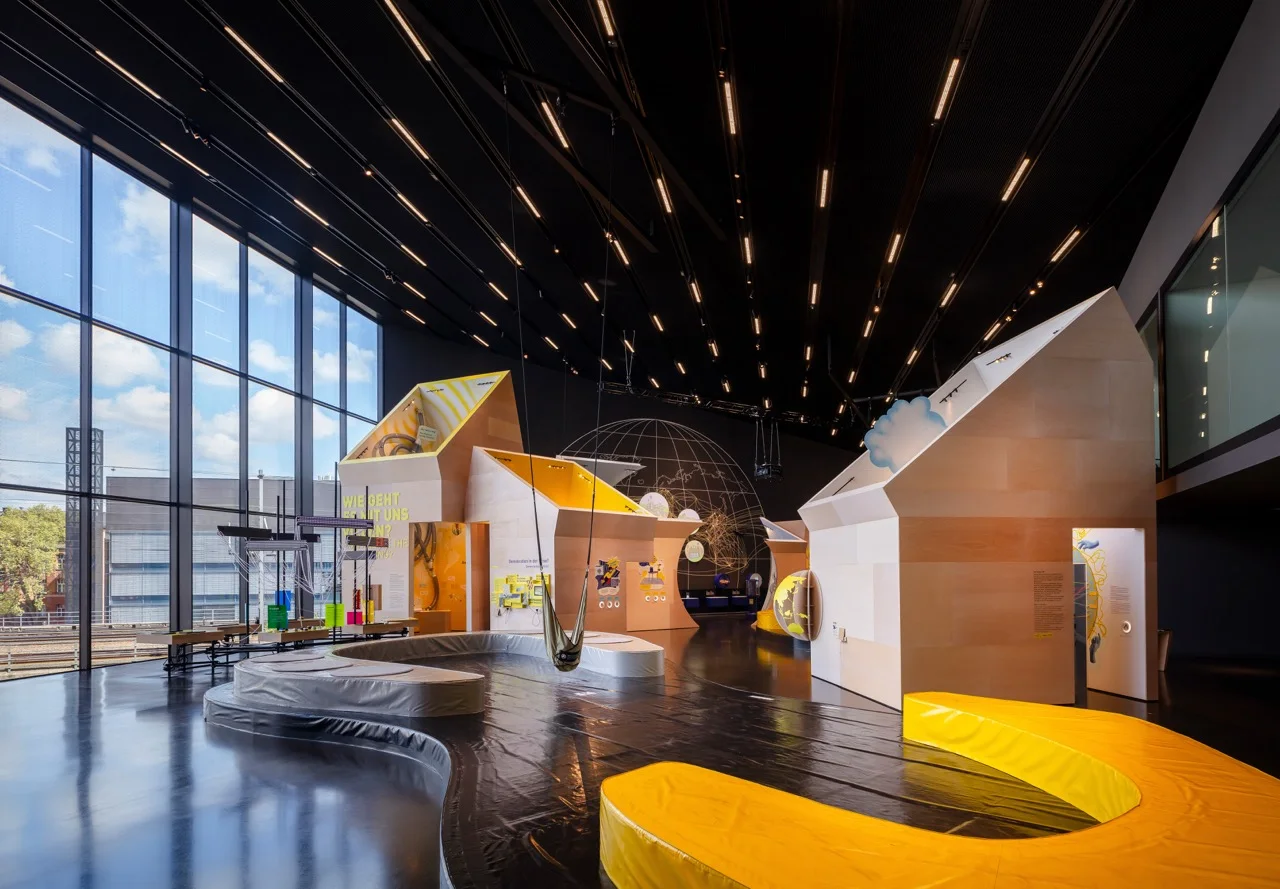
The main exhibition occupies the upper level and is organised into three large thinking spaces. Each one approaches the future from a different angle, while encouraging visitors to move between them.
In the space devoted to Human, the focus is on how individuals and communities might live, work, learn and make decisions. The displays consider questions of identity, health, relationships, participation and social organisation. Some scenarios feel close enough to recognise; others are deliberately unsettling. That mixture matters. Futurium’s most useful observations often begin with something familiar and then shift it slightly, revealing how much of everyday life depends on assumptions that may not hold forever.
The Nature space widens the frame. Here, the future is not presented as a purely human project but as a negotiation with soils, water, plants, animals, climate and ecosystems. The exhibition considers how cities might become greener, how food systems could change and how people might work with natural processes rather than treating nature as an endlessly available backdrop.
Technology forms the third major space, but it is not presented as a parade of gadgets. Genetic engineering, artificial intelligence, robotics, digital networks and new forms of production appear as tools whose meaning depends on how societies choose to use them. Futurium repeatedly returns to a central distinction: technical possibility is not the same thing as social desirability.
Across the exhibition, the displays move between large-scale questions and intimate choices. There may be a city-scale scenario beside an object that could one day enter an ordinary household. This keeps the future from becoming too abstract. It is always connected to bodies, routines, resources and power.
Why the interactive elements matter
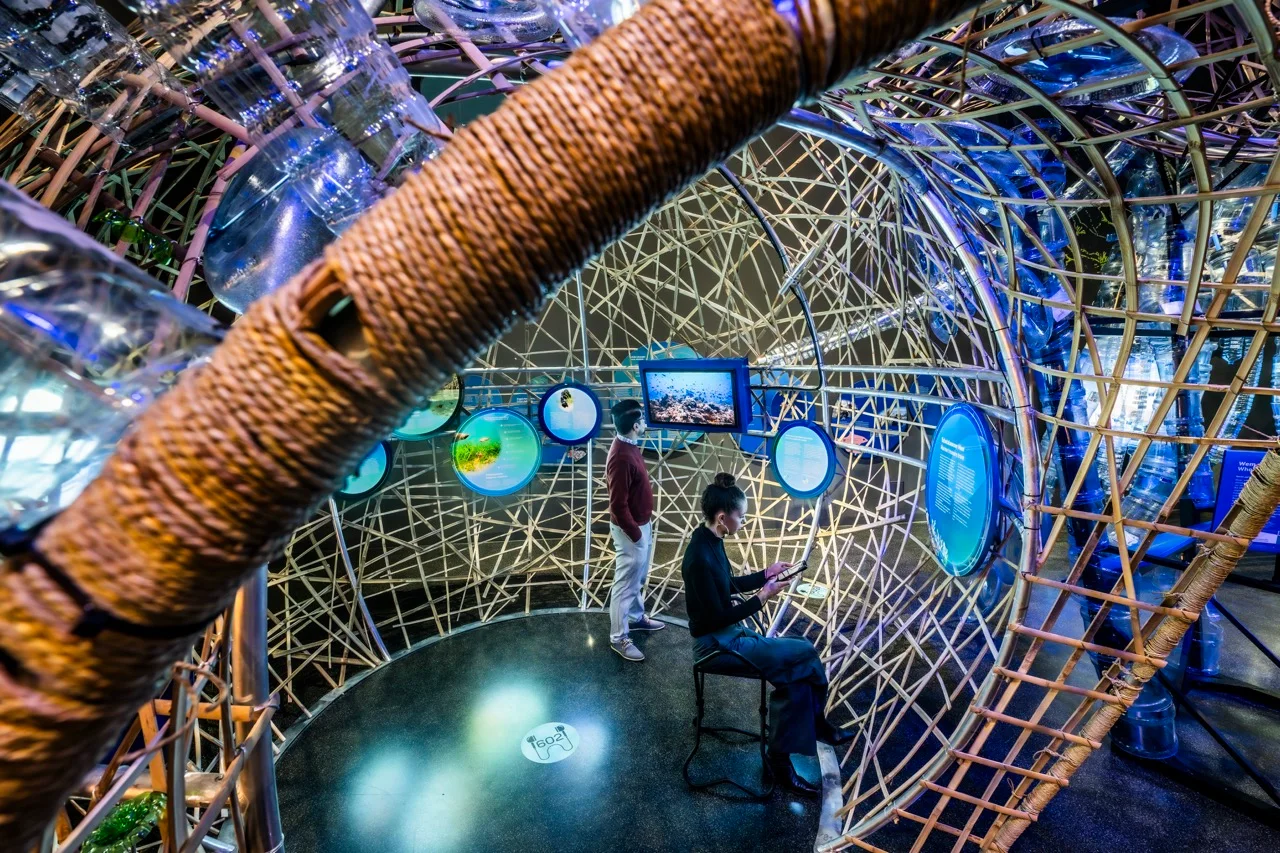
Futurium is hands-on, but not in the sense of pressing buttons simply to make an exhibit light up. Its interactive design is intended to make visitors think through choices. You may be asked to weigh competing priorities, explore a system or imagine how a decision affects other people and the environment.
That approach changes the rhythm of a museum visit. Instead of moving quickly from label to label, it is worth pausing at the stations that ask for a response. The most memorable displays are often those that refuse a neat conclusion. They show that an apparently beneficial solution can create new dependencies, inequalities or ecological pressures.
The interactivity also makes Futurium suitable for mixed-age groups. Children can engage with the physical and visual elements, while older visitors may linger over the ethical or political implications. Families do not have to experience the same museum: the exhibition accommodates several levels of attention at once.
Visitors who prefer a quieter, more reflective experience should not feel obliged to interact with everything. Futurium works best when approached selectively. Choose a few stations, follow the questions that genuinely interest you and allow time for discussion rather than trying to complete the entire exhibition like a checklist.
The Futurium Lab: from ideas to experiments
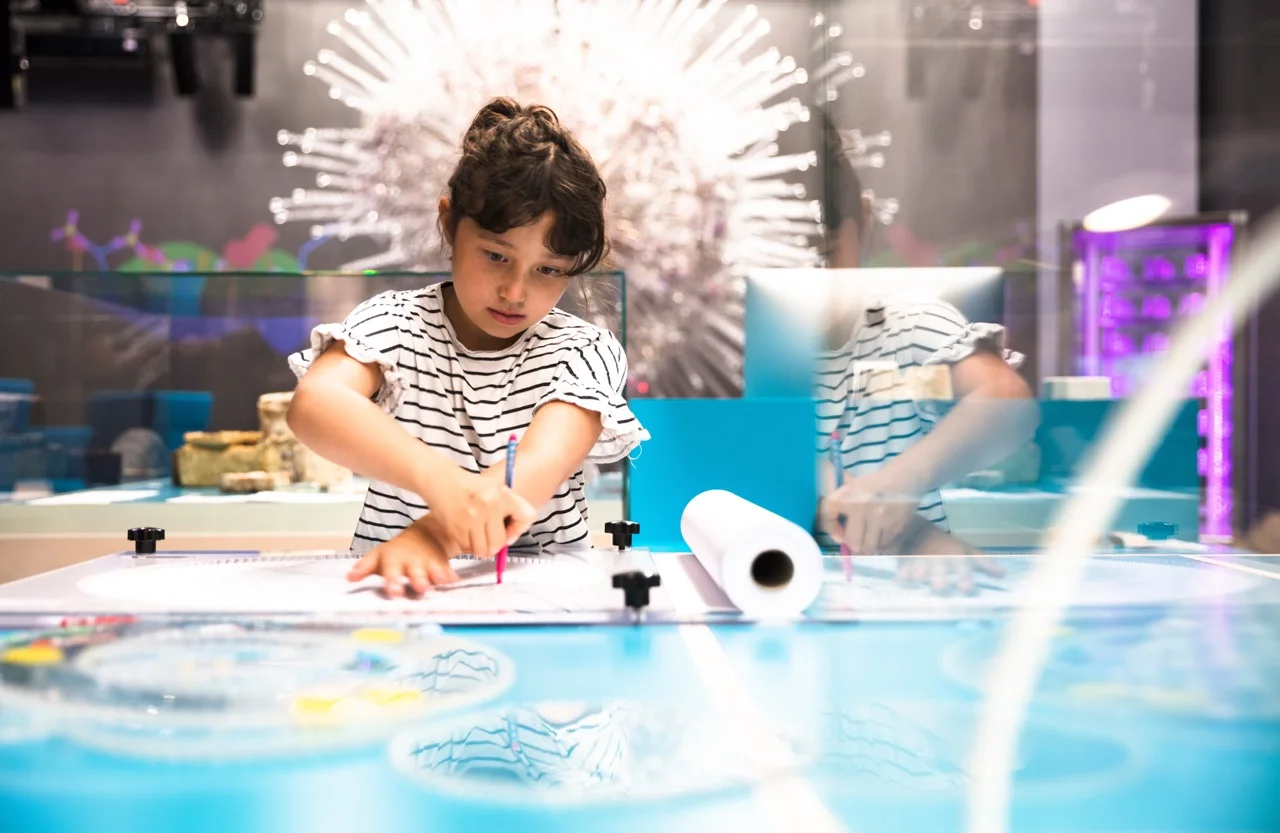
Downstairs, the Futurium Lab gives the museum a more practical, experimental character. The lab is a place to test ideas, develop prototypes and encounter tools associated with making and fabrication. Depending on the programme, activities may involve electronics, design, digital production, 3D printing or other future-oriented experiments.
The Lab is important because it turns the museum’s central question into an activity. It is one thing to consider a different way of producing an object; it is another to sketch, build, alter and test one. The process is necessarily imperfect, which is precisely the point. Futures are not only imagined from a distance—they are made through trial, failure, revision and collaboration.
The programme changes, and not every workshop or open session is available on every day. Families and visitors with a specific interest should consult the current calendar before arriving. Some activities may require registration, have limited places or be offered only in German, while others are designed as drop-in sessions.
A museum that welcomes disagreement
Futurium’s Forum extends the museum beyond its exhibition spaces. It hosts discussions, talks, workshops and other public events about ways toward a liveable future. This is where the institution’s role as a civic space becomes most visible.
The programming reflects the fact that futures are contested. There is no universal agreement about what progress means, who should benefit from innovation or how much risk a society should accept. A museum concerned with the future can therefore never be only about objects. It must also be about debate, evidence, imagination and the ability to listen across different forms of expertise.
If an event is taking place during your visit, it may be worth building the day around it. A talk can give the exhibition a sharper context, while the exhibition can make a complex discussion more tangible. The event programme changes regularly, so check the official listings for language, timing and booking information.
The building and the Skywalk
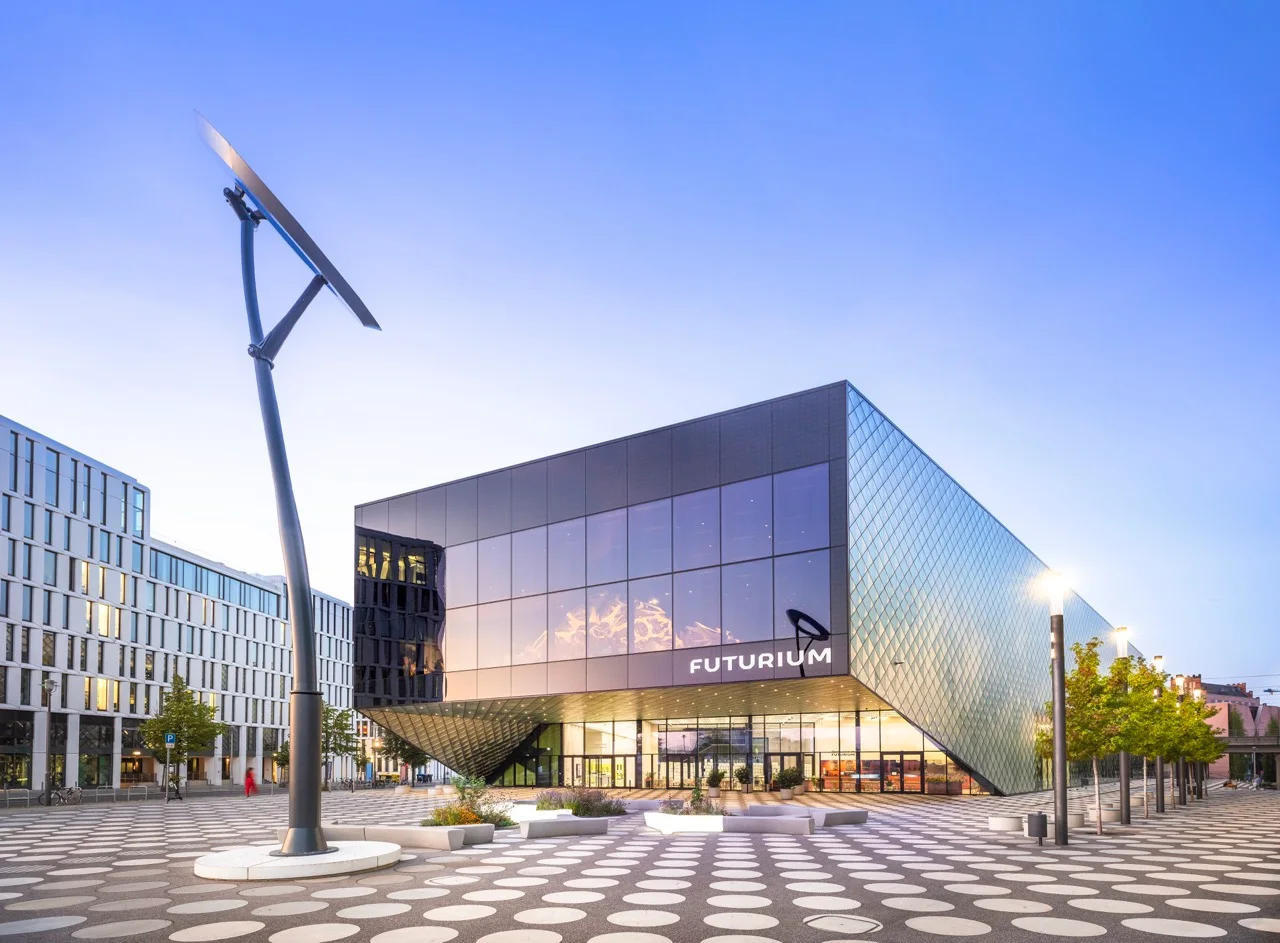
Futurium’s architecture reinforces its subject without turning the building into a theatrical prop. Its bright, contemporary spaces sit within Berlin’s government district, close to the Hauptbahnhof and the Reichstag. The location creates an apt contrast: the museum’s speculative scenarios are housed in a real civic landscape where decisions about infrastructure, policy and public life are made.
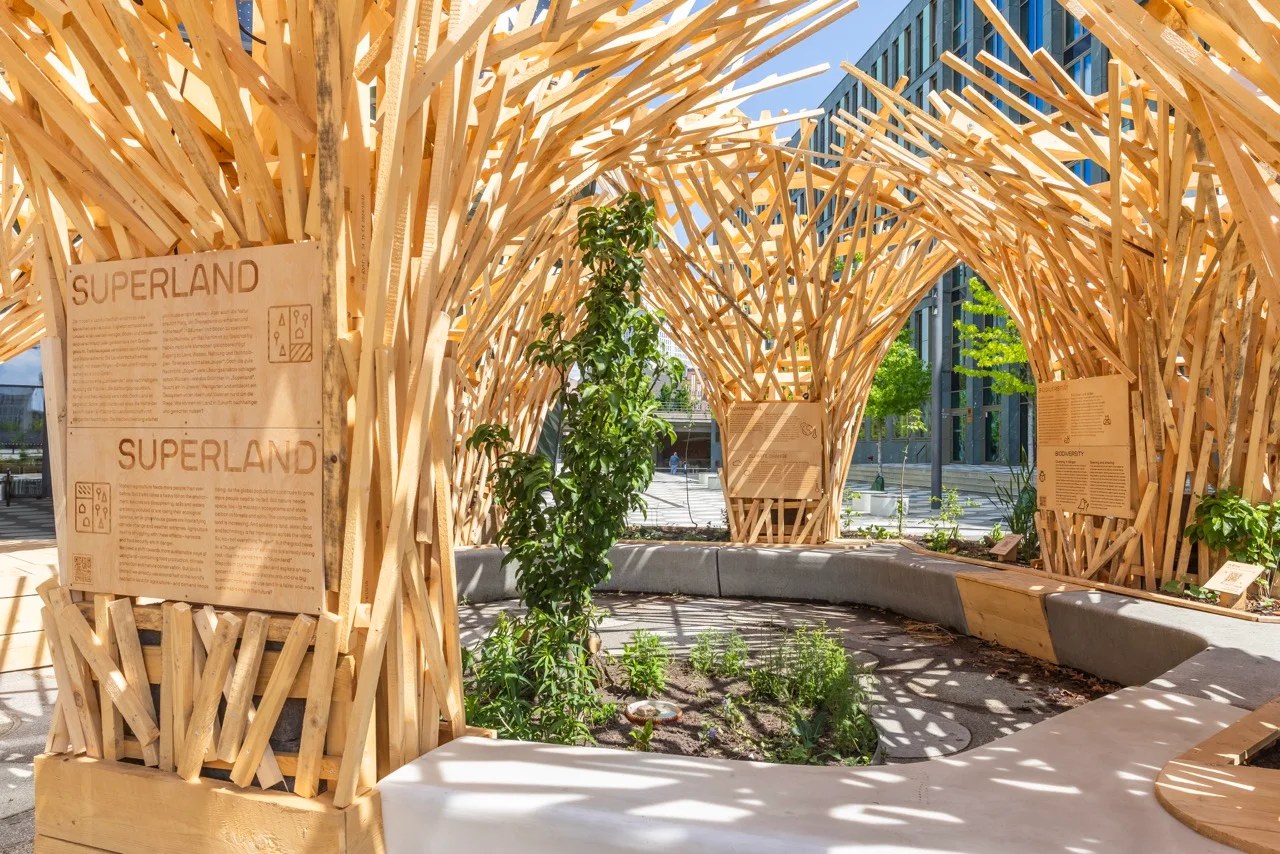
The rooftop Skywalk offers a different kind of perspective. Rather than looking at a model of the city’s future, visitors can look out over the city as it exists now. The route provides views across the surrounding urban landscape and helps connect the exhibition’s broad themes—mobility, density, energy and public space—to the built environment outside.
The Skywalk is seasonal and may close because of weather conditions. It should be treated as an appealing addition to the visit rather than the sole reason to go.
How to plan a thoughtful visit
Futurium is close to Berlin Central Station: the museum is roughly a short walk from the Washingtonplatz side of the station. It is convenient to reach by public transport, and bicycle parking is available nearby. There is no general visitor parking at the museum, so arriving by train, tram, bus, bicycle or on foot is generally the simplest option.
Admission to the museum is free. Special workshops, guided tours and events may have their own arrangements, including registration or charges, so visitors should check the details of the particular programme.
A first visit can comfortably occupy several hours, especially if you include the Lab, a break and time to revisit the exhibits that provoke the most questions. Those with limited time can concentrate on the main exhibition and Skywalk, while returning visitors may prefer to come for a particular event or workshop.
- Wear shoes suitable for standing and walking; the exhibition rewards unhurried exploration.
- Allow more time than the entrance fee might suggest. Free admission makes a short visit possible, but the content is better approached slowly.
- Check the event calendar for current workshops, guided tours, language information and booking requirements.
- Large bags and backpacks may need to be stored in the foyer lockers; suitcases cannot be stored at the museum.
- For groups of more than 15 people, advance registration is recommended.
- If accessibility is important to your planning, contact the museum in advance about current facilities and programme-specific arrangements.
Accessibility and different ways of engaging
Futurium describes its building as accessible for wheelchair users and provides lifts to the exhibition, Lab and rooftop walkway. The foyer includes tactile guidance, accessible lockers and seating options, while additional resources are available for visitors with visual or hearing impairments. Assistance dogs are permitted.
The museum also offers different ways to encounter the content, including a free multimedia audio guide and programme formats intended for families and visitors with learning difficulties. Because accessibility can vary between individual events and workshops, advance contact with the Visitor Service is sensible for anyone who needs specific support.
Where Futurium fits in a Berlin itinerary
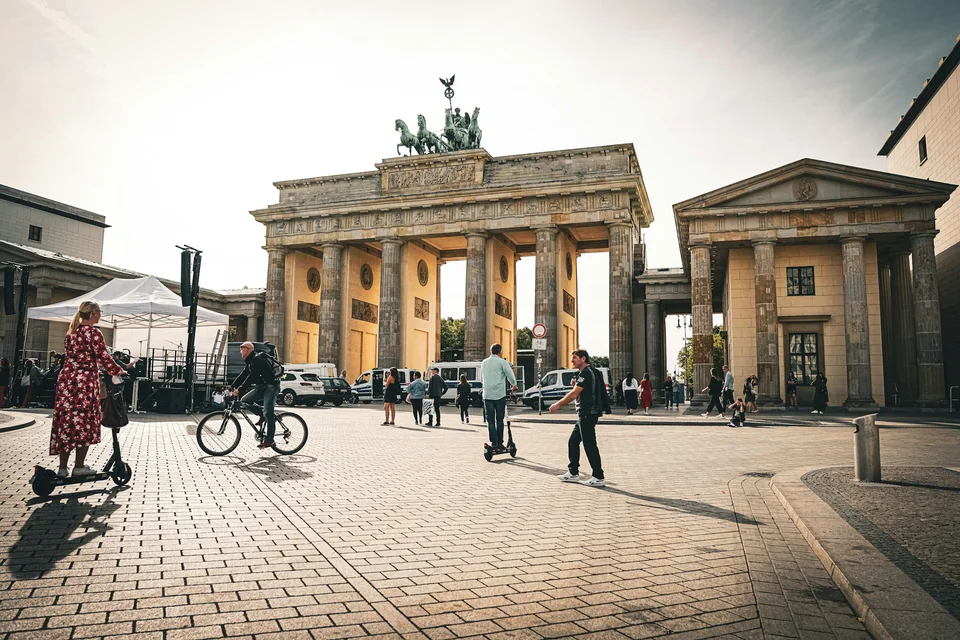
Futurium works particularly well as part of a day around Berlin’s central museums and government quarter. Its neighbours include the Hamburger Bahnhof, the Museum of Natural History and the Berlin Museum of Medical History at Charité. Together, these institutions create an unusual route through time: natural history and medicine, art and society, then possible futures.
The museum can also be paired with a walk along the Spree or through the Tiergarten. Seen from outside, the surrounding railway infrastructure, bridges, offices and public buildings become an informal continuation of the questions raised inside. How should a city move? Who gets access to its spaces? What should be preserved, redesigned or shared?
For travellers who have already visited Berlin’s major historical museums, Futurium offers a change of register. It does not replace the city’s historical memory, but it adds a forward-looking dimension: history becomes a reminder that the present was once someone’s uncertain future.
The value of leaving without an answer
A museum about the future could easily become a showroom for optimism or a catalogue of anxieties. Futurium is more interesting when it avoids both extremes. Its scenarios acknowledge risks without suggesting that technological innovation alone will resolve them, and they invite imagination without pretending that every possibility is equally desirable or attainable.
The best outcome of a visit is not a list of inventions to expect. It is a more alert sense of responsibility. The future appears less like a distant destination and more like a collection of choices already taking shape—in energy systems, urban planning, food, health, work, data and democratic life.
A final thought
Futurium is not a museum that asks visitors to admire the future from a safe distance. It asks them to participate in imagining it, to notice the trade-offs inside attractive solutions and to consider whose voices are missing from a vision of progress.
That makes it a distinctly Berlin experience. In a city shaped by dramatic political reversals, technological ambition, ecological pressure and arguments about how public life should be organised, the future is never merely decorative. At Futurium, it becomes a subject for conversation—and a responsibility shared by everyone who walks through the door.