Berlin is easy to underestimate. The famous sights are spread across a large, loose city, while its best moments often happen between them: a long walk through a former border zone, lunch in a market hall, an afternoon in a park or a night that begins in a bar and ends on a dance floor. This is a city to approach selectively. Choose a few museums, leave room for neighbourhoods and do not plan every hour.
Landmarks and the history of Berlin
1. Start at the Brandenburg Gate
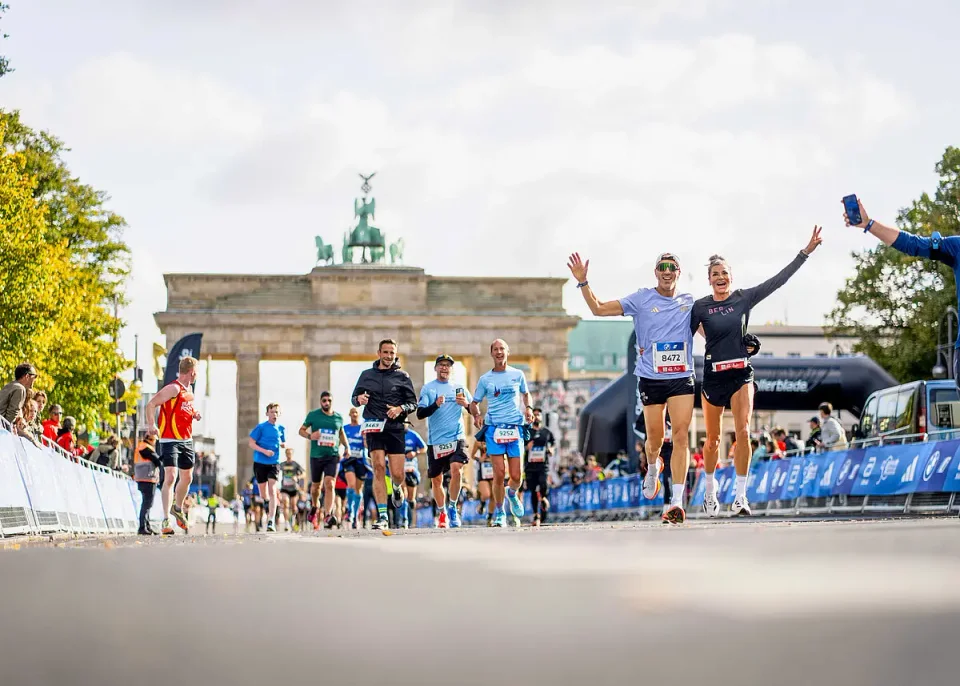
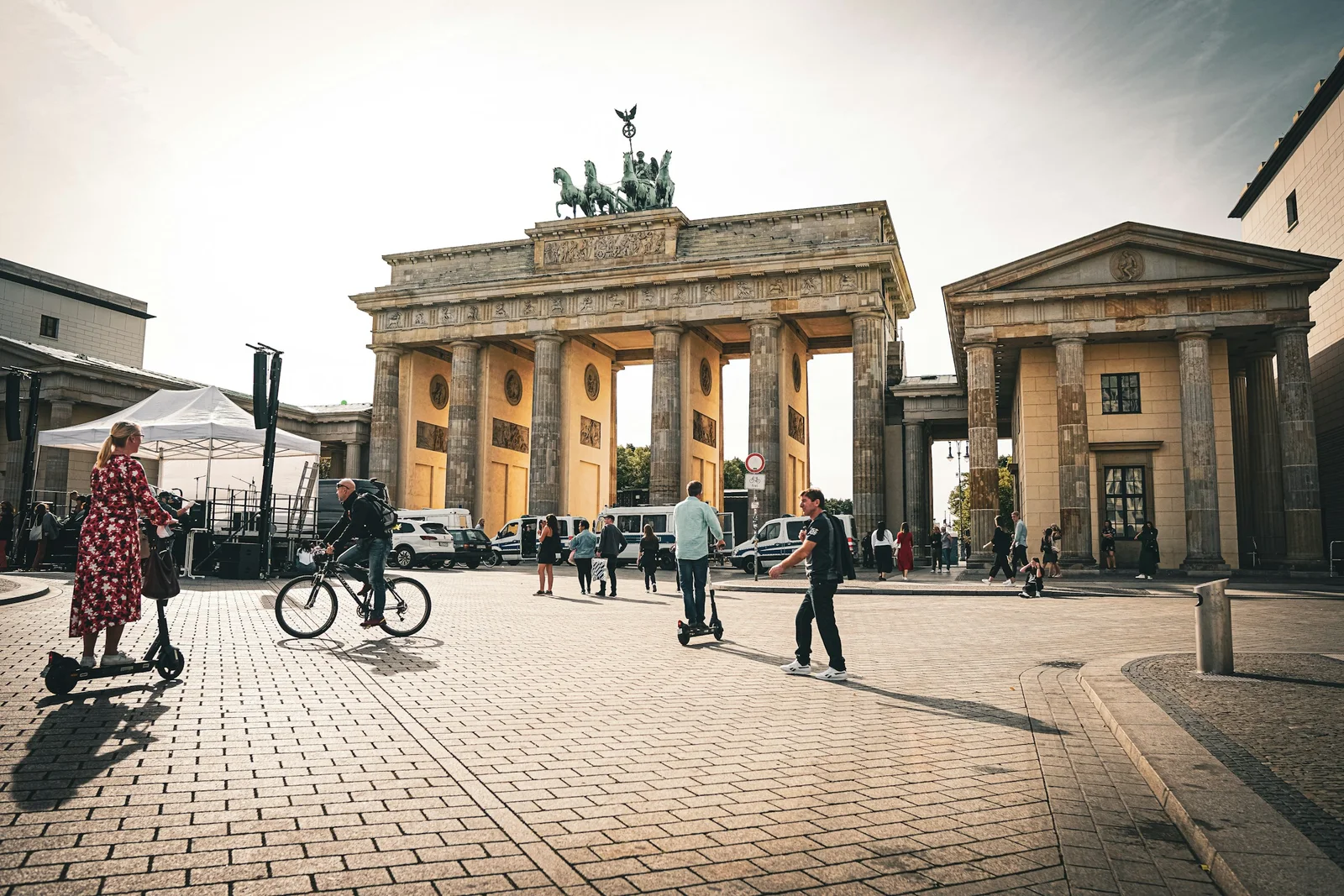
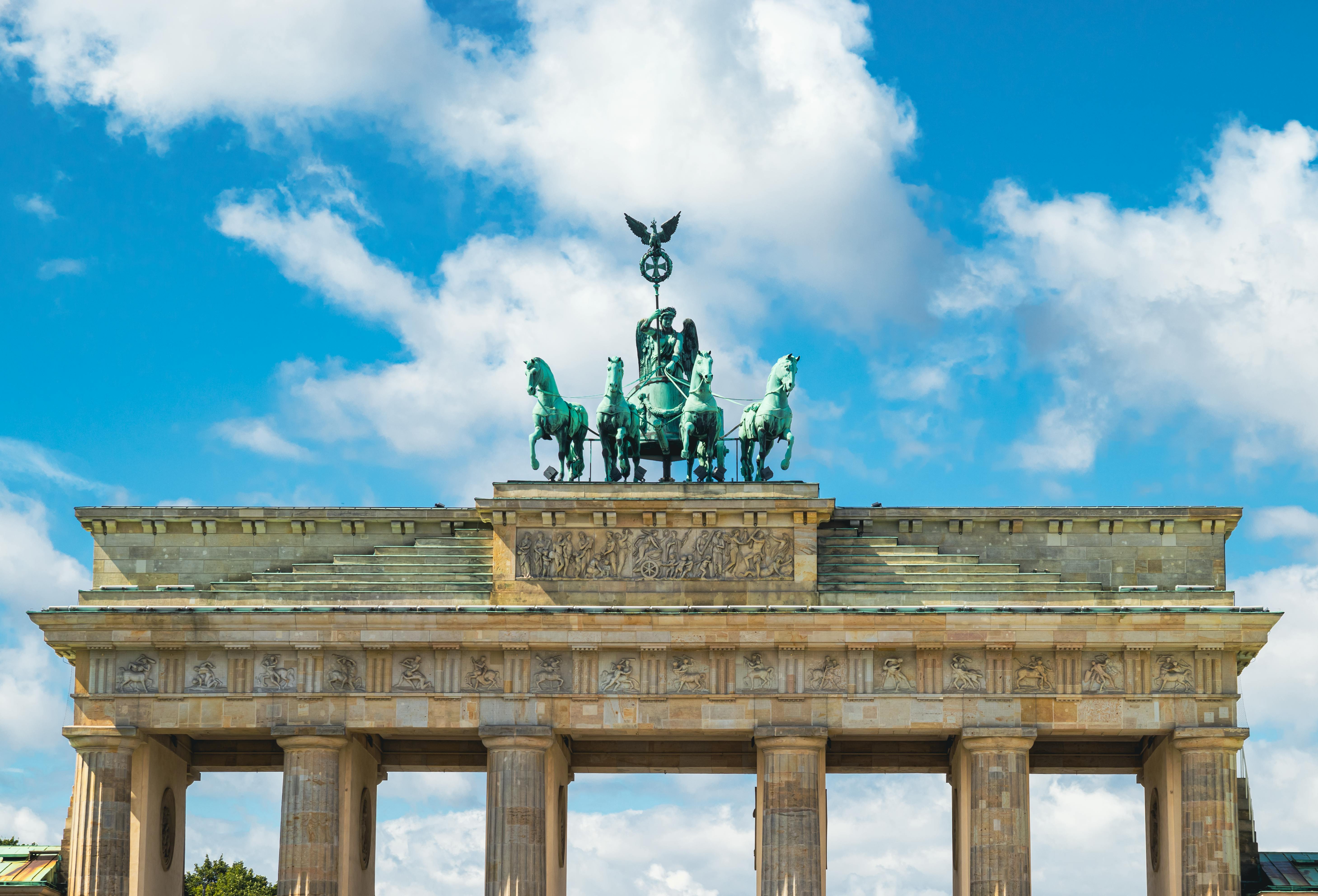
The Brandenburg Gate is Berlin’s most recognisable landmark, but it is best understood as the beginning of a walk rather than a destination in itself. From here, follow Unter den Linden towards Museum Island, or walk west into the government district and Tiergarten. Early morning is the calmest time to see it. On a short visit, half an hour is enough unless you are combining it with the Reichstag and the Memorial to the Murdered Jews of Europe.
2. Visit the Reichstag dome
The glass dome above the Reichstag offers a clear view across the parliamentary district and is one of Berlin’s more worthwhile free experiences. The architecture is modern, bright and quietly theatrical, with a ramp spiralling around the central cone. Admission is free, but advance registration is required. Reserve before your trip rather than relying on a last-minute opening.
3. Spend time at the Memorial to the Murdered Jews of Europe
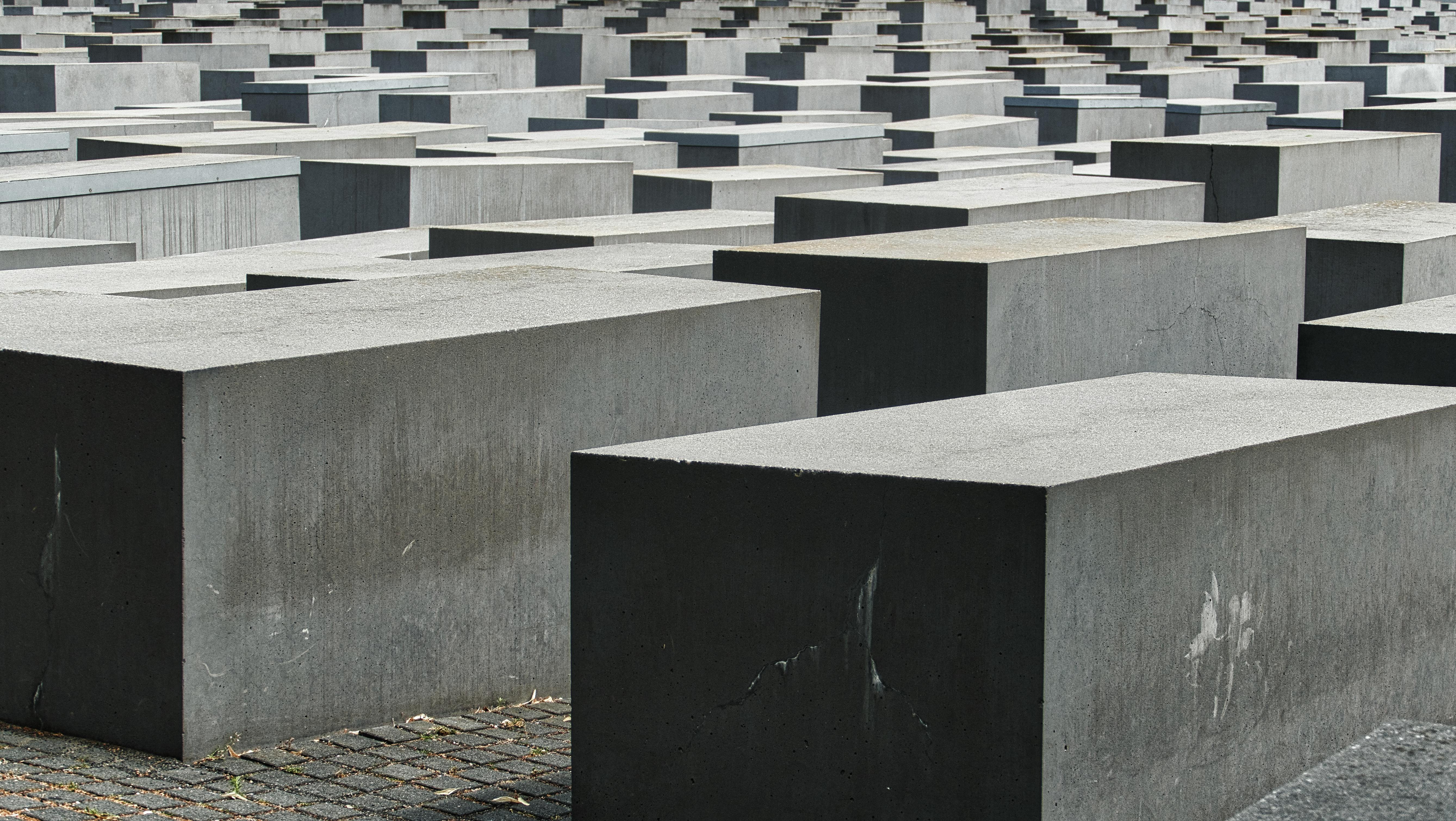
The field of concrete stelae near the Brandenburg Gate is intentionally open to interpretation. Walk through it without rushing, then visit the underground information centre for personal stories and family histories. The memorial is central and easy to combine with the Reichstag, Brandenburg Gate and Potsdamer Platz. It deserves more attention than a quick photograph.
4. Walk the Berlin Wall Memorial at Bernauer Strasse
Bernauer Strasse is the most useful place to understand how the Berlin Wall altered everyday life. The preserved border strip, watchtower, documentation centre, Chapel of Reconciliation and memorial windows make the history tangible without reducing it to a single dramatic image. Allow at least two hours. It is more instructive than Checkpoint Charlie, which is convenient but heavily commercialised.
5. See the East Side Gallery
The East Side Gallery is a long surviving section of the Wall covered with murals, including the famous painted kiss. It is worth seeing for the scale and symbolism, although the setting is busier and less reflective than Bernauer Strasse. Walk the full stretch if you have time, then continue towards the Spree or Oberbaum Bridge.

Museums and architecture
6. Choose carefully on Museum Island
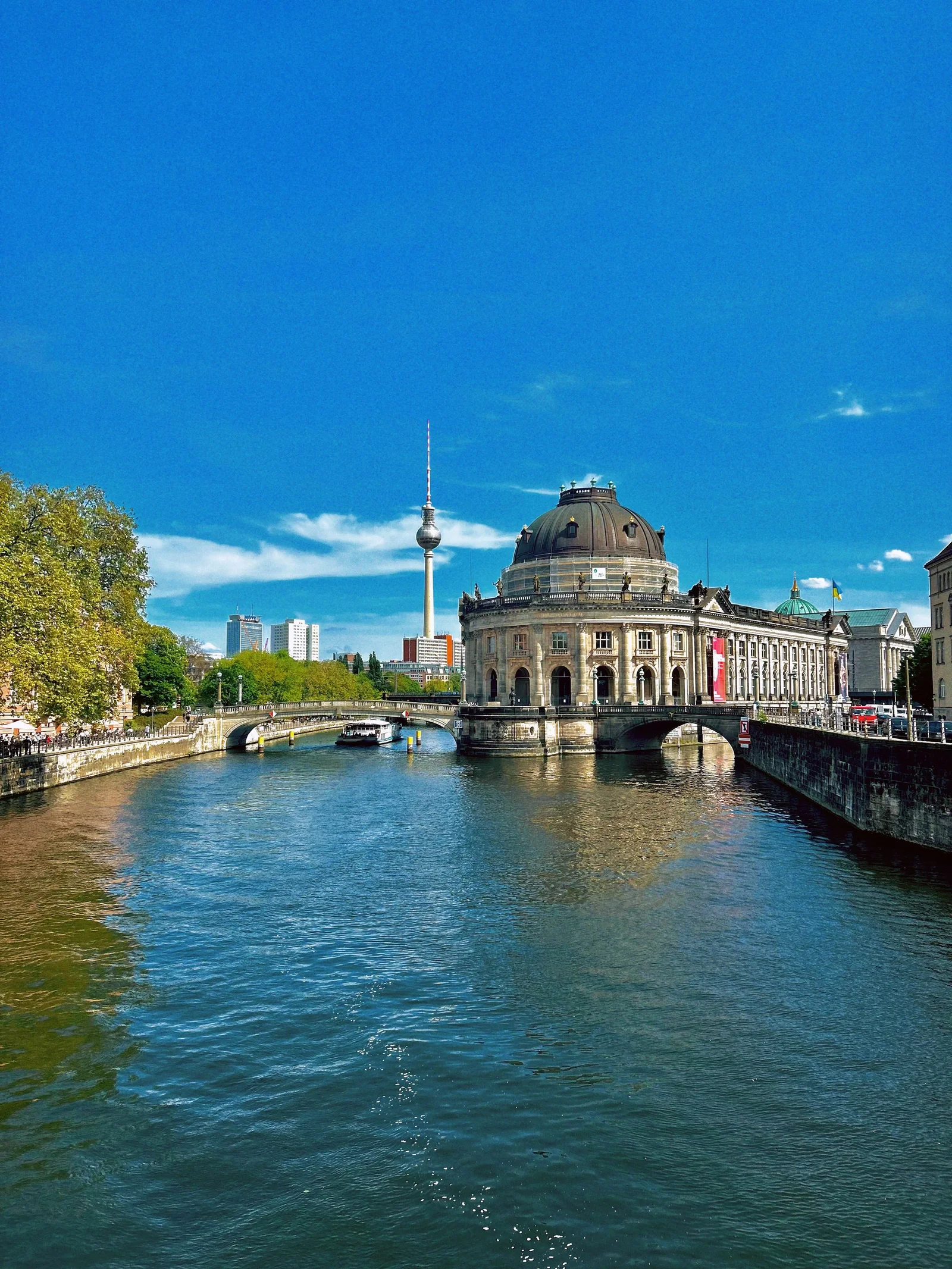
Museum Island contains several of Berlin’s major museums, but trying to visit them all in one day is a reliable way to remember very little. Choose one or two. The Neues Museum is the strongest choice for ancient history and the Nefertiti bust; the Alte Nationalgalerie suits visitors interested in nineteenth-century art; the Bode Museum is particularly good for sculpture and Byzantine collections. Check current opening arrangements before planning around the Pergamonmuseum, which is undergoing extensive renovation and is scheduled to reopen in stages from June 2027.
7. Visit the Neues Museum
The Neues Museum is one of Berlin’s most satisfying museum experiences because the building itself is part of the story. Restored historic fabric sits alongside modern interventions, while the collections move from ancient Egypt to prehistory and early history. It is a strong rainy-day choice and a better use of limited time than trying to collect every museum on the island.
8. Make time for the Jewish Museum
Daniel Libeskind’s building remains one of Berlin’s most powerful pieces of architecture. The permanent exhibition traces Jewish life in Germany through objects, documents and personal histories, while the building’s voids and uneven circulation create a deliberately unsettled atmosphere. Allow two to three hours and do not schedule it as a quick stop between other attractions.
9. See contemporary art at Hamburger Bahnhof
Hamburger Bahnhof is the museum to choose when you want a break from Berlin’s imperial and wartime history. Housed in a former railway station, it focuses on modern and contemporary art, with large-scale installations and changing exhibitions. The experience depends heavily on the current programme, so check what is showing before you go.
10. Visit Charlottenburg Palace
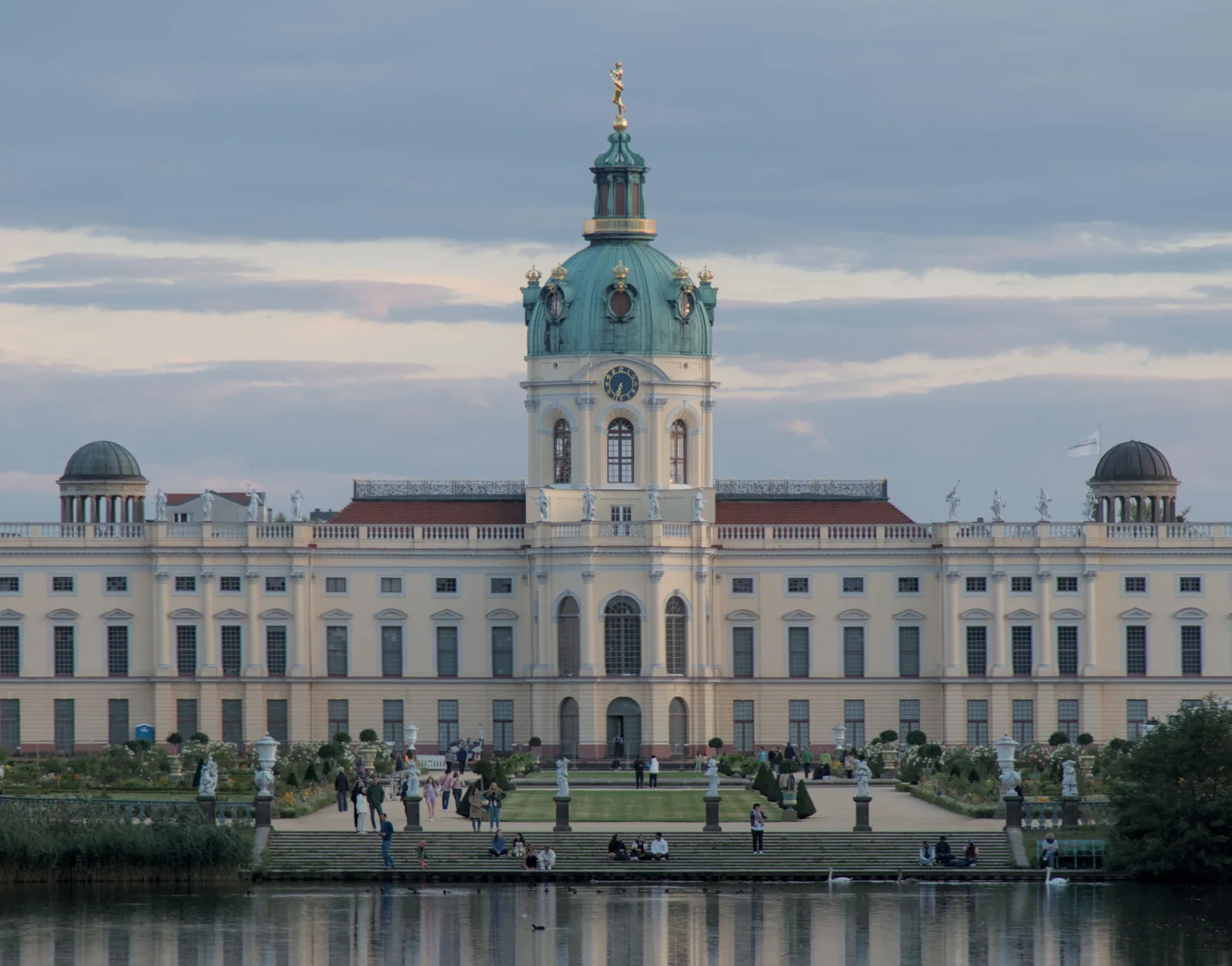
Charlottenburg Palace offers a different Berlin: formal, historic and unmistakably Prussian. The palace rooms are worth seeing, but the surrounding gardens are the main reason to travel west. Combine the visit with a walk through Charlottenburg or a meal in the nearby Savignyplatz area. It is best for visitors who want architecture and a slower afternoon away from Mitte.
Parks, water and open space
11. Walk through the Tiergarten
The Tiergarten is Berlin’s central green pause, stretching between the Brandenburg Gate, the Victory Column and the Zoological Garden. It is large enough to make the city feel distant within minutes. Walk without a fixed route, or use it as the scenic link between the government district and Charlottenburg. The park is especially useful after a morning of museums.
12. Spend an afternoon on Tempelhofer Feld
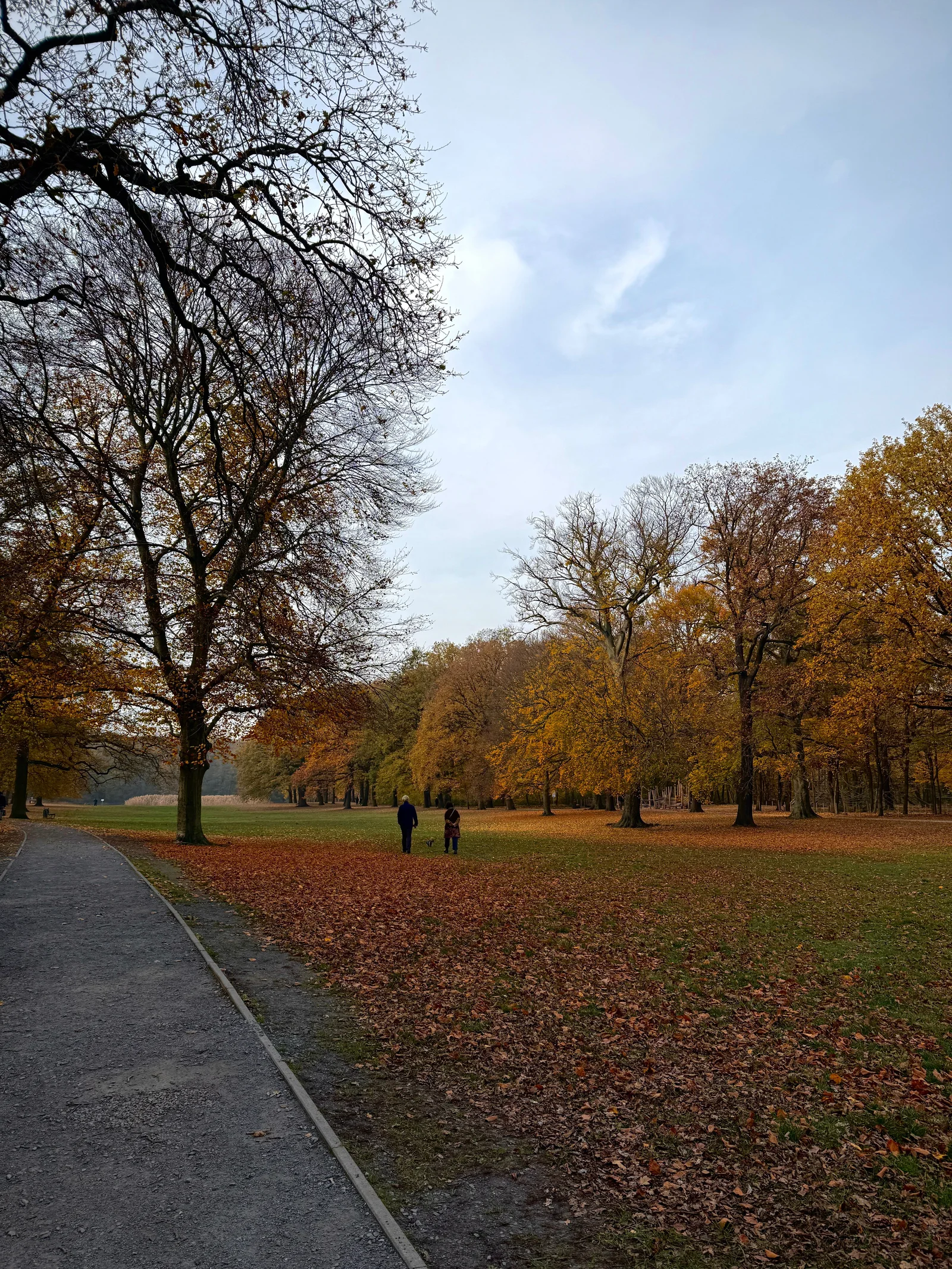
The former Tempelhof airfield is one of Berlin’s defining public spaces. The runways are now used by cyclists, skaters, walkers and kite flyers, while community gardens and wide grasslands fill the edges. It is exposed, informal and unusually spacious for a capital city. Go near sunset if the weather is clear, but check seasonal closing times before you arrive.
13. Climb Viktoriapark
Viktoriapark gives Kreuzberg a little topography. A path rises to a small waterfall and the hilltop National Monument, with broad views over the southern city. It is not a major sightseeing attraction, which is precisely why it works. Bring something to drink, take the view and continue downhill into the surrounding streets.
14. Take a boat along the Spree
A Spree cruise gives Berlin a useful change of scale. From the water, the government district, Museum Island, former industrial sites and newer riverside developments form a more coherent picture. It is not essential on a first visit, but it suits travellers who want a restful hour after several days of walking. Compare current routes and departure points before booking.
Neighbourhoods worth wandering
15. Explore Kreuzberg beyond the postcard version
Kreuzberg is still one of the best areas for an unplanned afternoon. Walk from Landwehrkanal towards Görlitzer Park, then continue through the streets around Wrangelkiez or along Oranienstrasse. The appeal lies in the mixture of Turkish bakeries, independent shops, bars, courtyards and long-established local businesses. It is lively, sometimes scruffy and more interesting when approached without a list of stops.
16. Spend time in Neukölln and Kreuzkölln
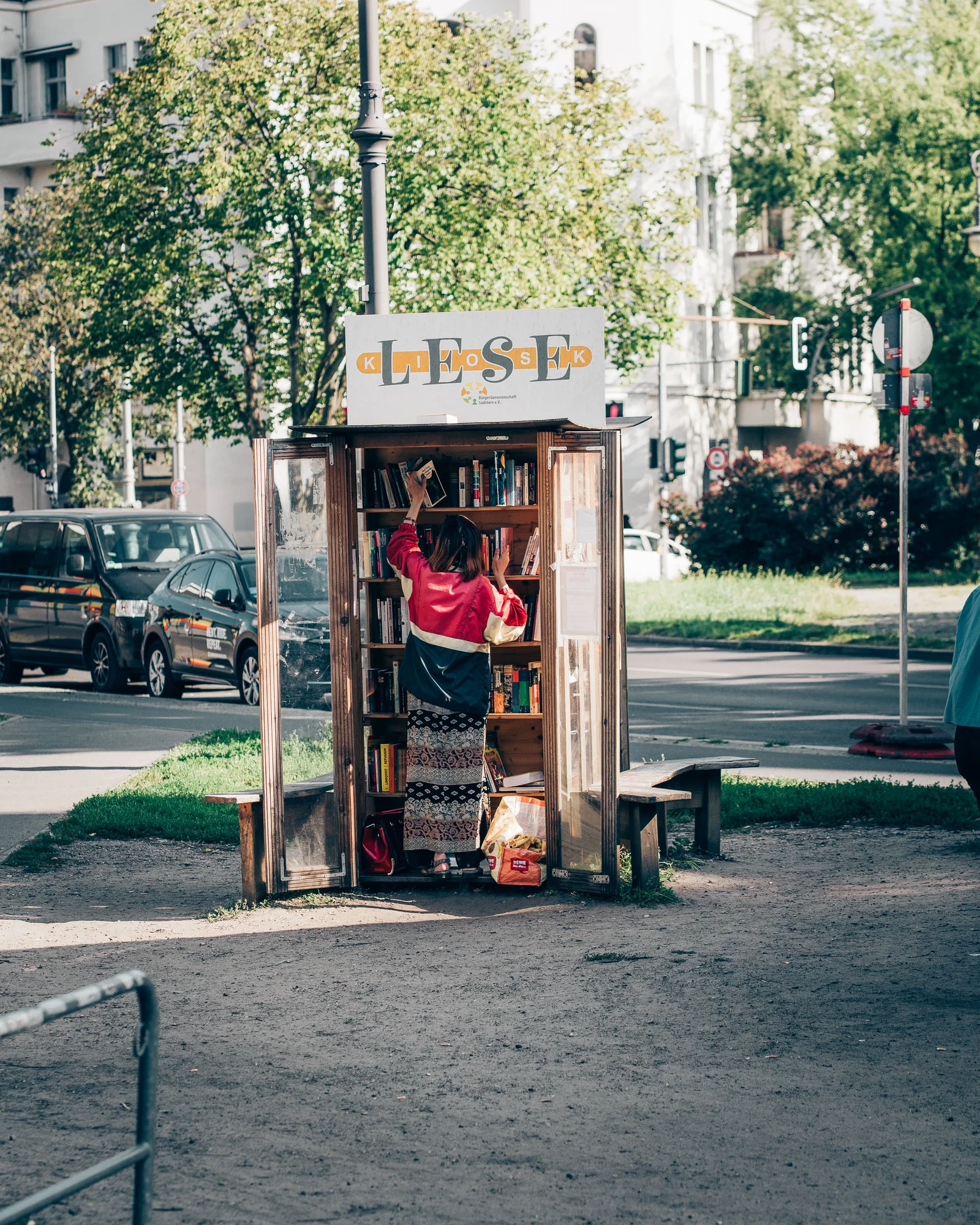
The area around Weserstrasse, Reuterkiez and Maybachufer is one of the best places to see Berlin’s contemporary café, bar and restaurant culture. Come for a late breakfast or afternoon coffee, then stay for drinks. The neighbourhood has changed quickly, so its strongest places are usually the ones with a clear identity rather than the most heavily photographed interiors.
17. Walk through Prenzlauer Berg
Prenzlauer Berg is calmer and more polished than Kreuzberg, with handsome nineteenth-century buildings, leafy streets, independent boutiques and a strong café culture. The area around Kollwitzplatz is pleasant for a slow morning, while Helmholtzkiez offers a more compact wander. It is a good choice for families, design-conscious travellers and anyone who wants Berlin at a gentler pace.
Food and markets
18. Eat your way through Markthalle Neun
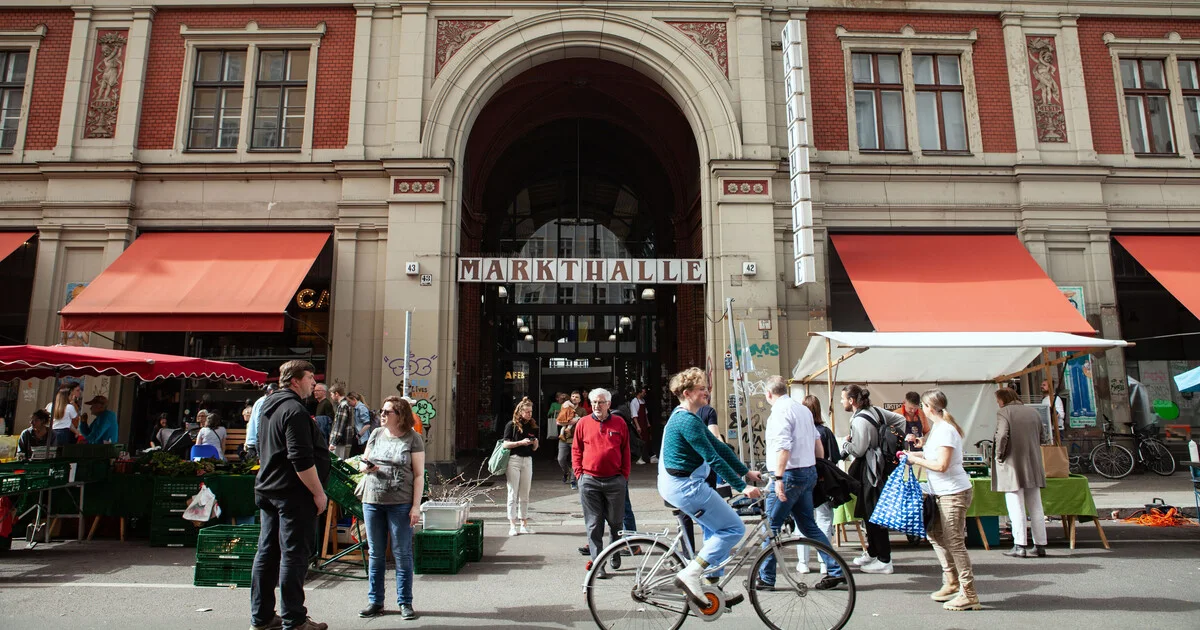
Markthalle Neun is the most useful single stop for understanding Berlin’s international food scene. On Street Food Thursday, the Kreuzberg market hall fills with stalls serving everything from dumplings and tacos to Nigerian dishes, Korean buns and seasonal specialities. It is busiest at peak times, so arrive with an appetite and a little patience. The weekly market programme changes, which is part of the appeal.
19. Browse the Turkish Market at Maybachufer
The market along Maybachufer is a good way to combine food shopping with a walk beside the canal. Look for herbs, vegetables, olives, cheese, bread and inexpensive snacks, then continue towards the cafés and bars of Neukölln. It is more atmospheric than an organised food attraction and works best when you are happy to browse rather than follow a fixed itinerary.
20. Try Berlin classics, with a little selectivity
Berlin’s essential food list is short: currywurst, a good döner or dürüm, a bakery breakfast and something sweet from one of the city’s many international pastry shops. The best choice depends on where you are staying, so avoid crossing the city for a single snack unless a particular place genuinely matters to you. A market hall or neighbourhood meal usually gives a better sense of Berlin than a restaurant built around tourist expectations.
Nightlife and Berlin after dark
21. Spend an evening in a Berlin bar
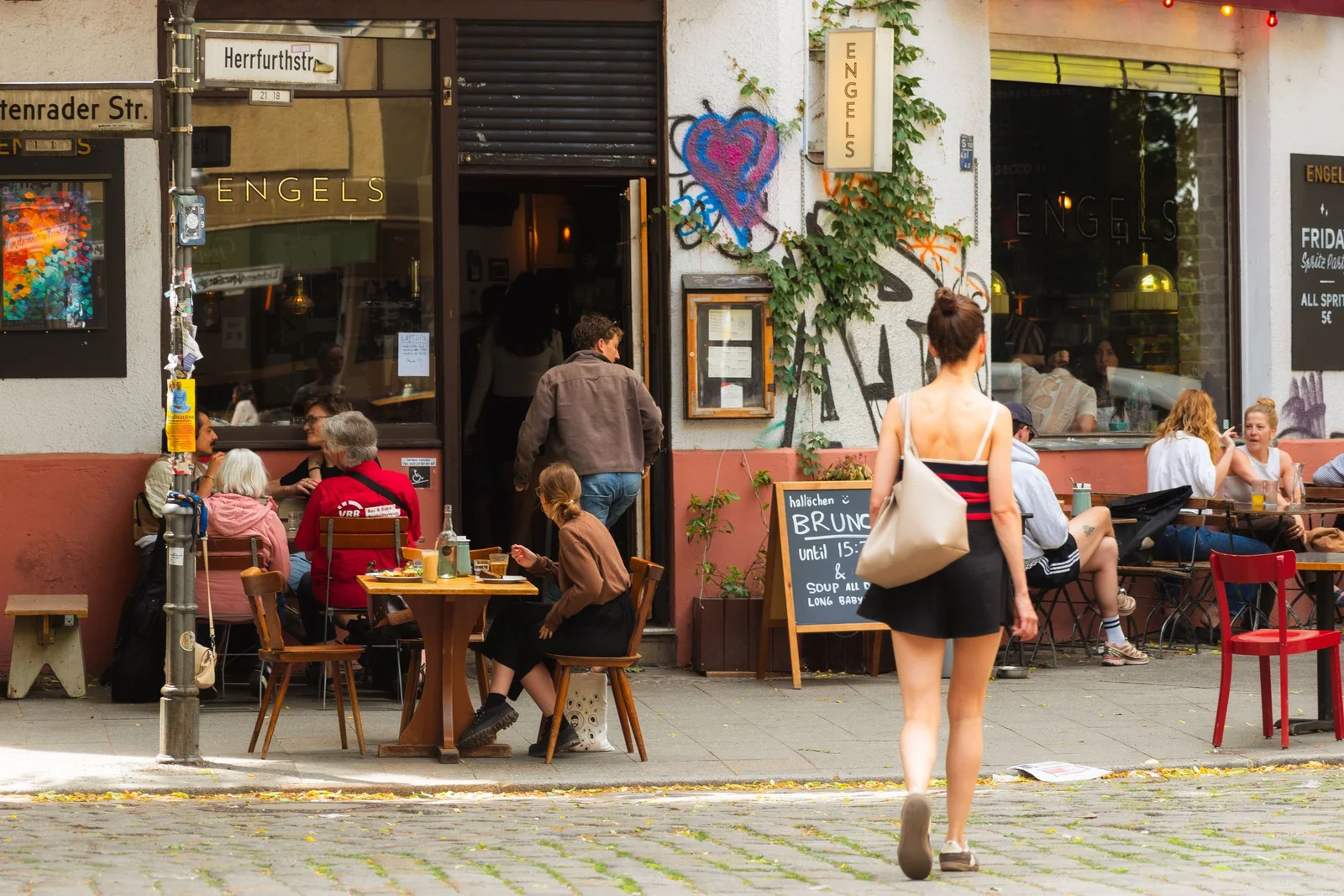
Berlin’s bars are often more memorable for their atmosphere than their design. Look around Kreuzberg, Neukölln, Schöneberg or Mitte for places with strong music, serious drinks and little interest in rushing customers through. Start later than you might elsewhere, and do not plan a long chain of venues. One good bar followed by a late meal is usually enough.
22. Go dancing, but choose the club carefully
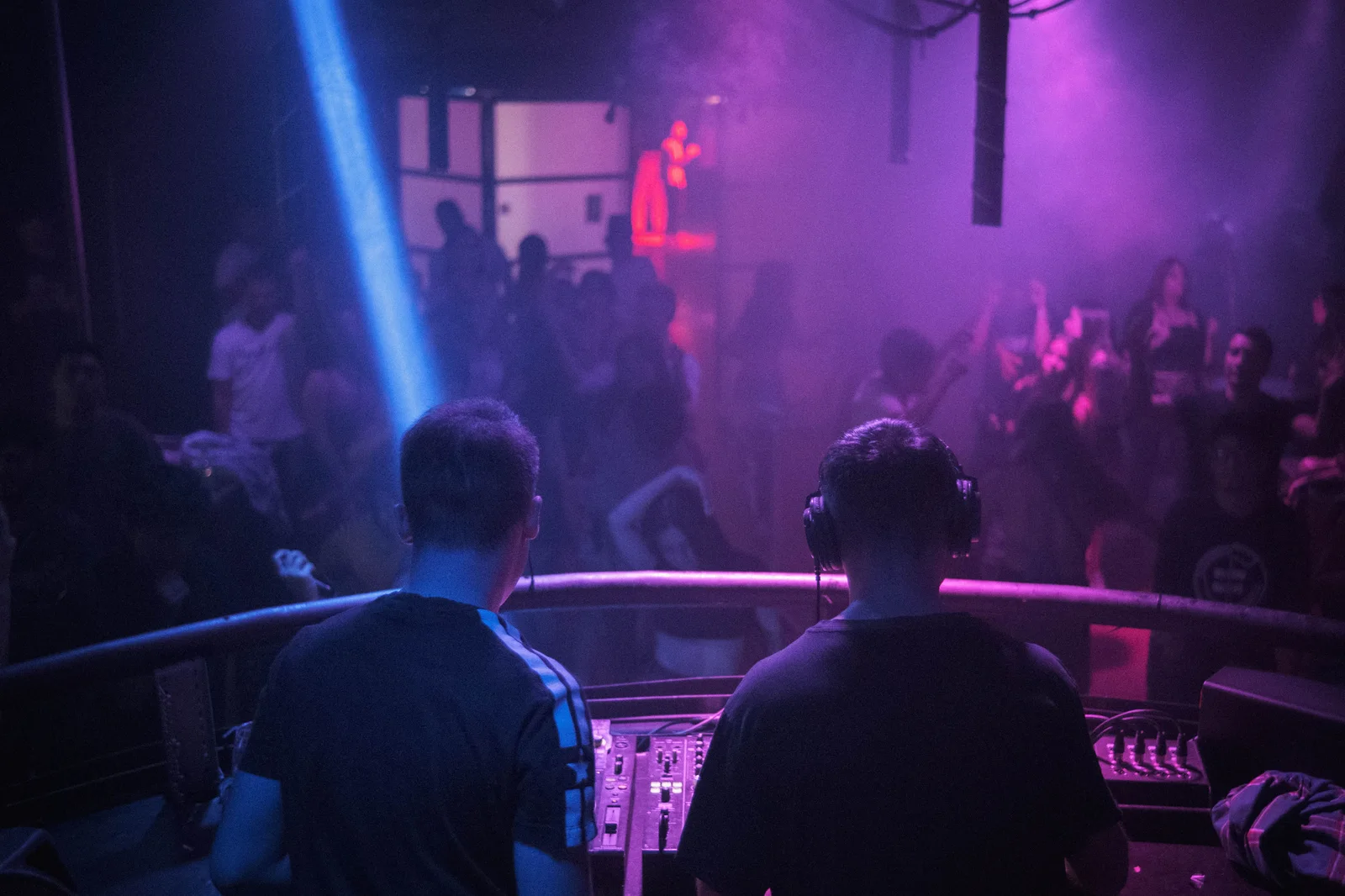
Techno is part of Berlin’s cultural history, not simply a nightlife category. Berghain remains the best-known name, while Tresor connects the current scene to the city’s early techno history. Other clubs offer different atmospheres, sounds and approaches to the night. Check the programme, door policy and current visitor information before you go; queues, entry decisions and opening arrangements are part of the experience and cannot be planned like a museum visit.
How to spend your time in Berlin
For a first visit of three days, combine one day of central landmarks and history with one museum-focused day and one neighbourhood day. Add Tempelhofer Feld or Tiergarten when you need space, and keep at least one evening free for food and nightlife. Berlin is better when the itinerary has gaps. The city’s scale, contradictions and changing rhythms are easier to understand when you leave room for them.