A short journey from Düsseldorf, Museum Insel Hombroich offers a different idea of what a museum can be. There is no grand entrance sequence, no prescribed route through numbered galleries, and no clear separation between the artwork and the landscape around it. Instead, visitors move through meadows, orchards, reed beds, paths, and small wooded areas, encountering sculpture, architecture, and objects almost as if they had been discovered rather than displayed.
The museum is located in Neuss-Holzheim, in North Rhine-Westphalia, but its name—Insel Hombroich, or Hombroich Island—describes less a literal island than a state of mind. The grounds sit within a former floodplain landscape near the Erft, where art is experienced in changing light, weather, and seasons. The result is an unusually quiet cultural destination: part sculpture park, part architectural experiment, part garden walk.
A museum designed as a walk
Museum Insel Hombroich opened in 1986 through the vision of collector and patron Karl-Heinrich Müller. Rather than building a conventional gallery, Müller developed an environment in which art, architecture, and nature could be encountered together. The museum’s buildings were conceived in close collaboration with the sculptor Erwin Heerich, whose geometric forms became inhabitable structures.
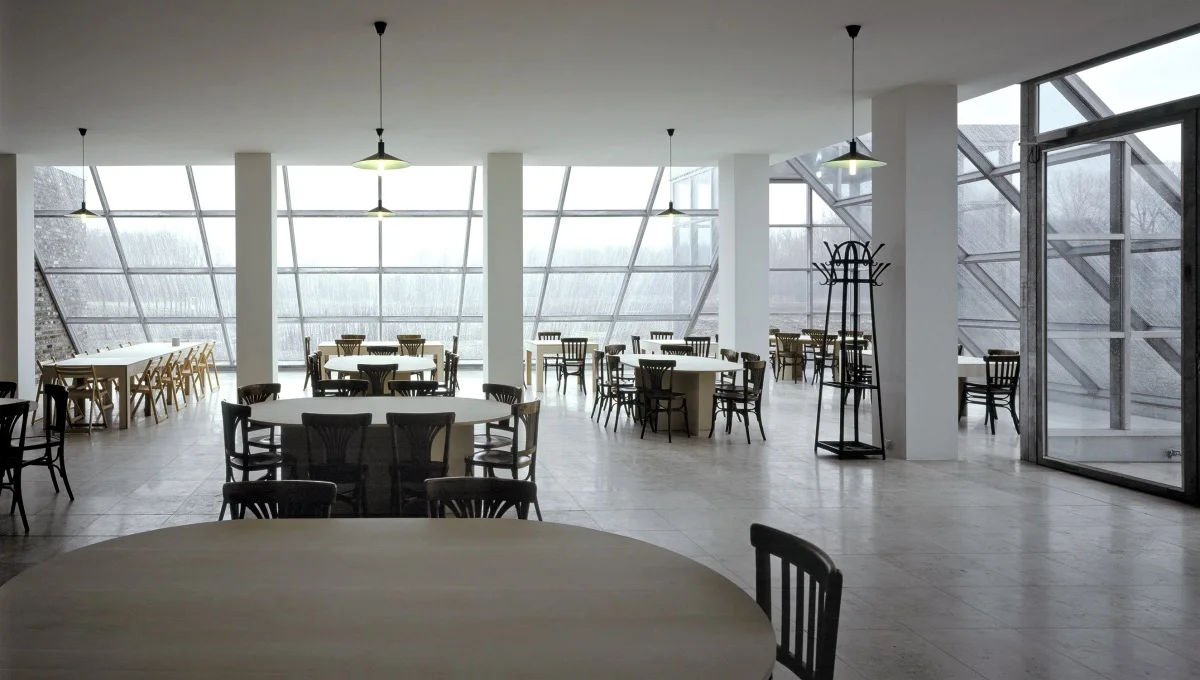
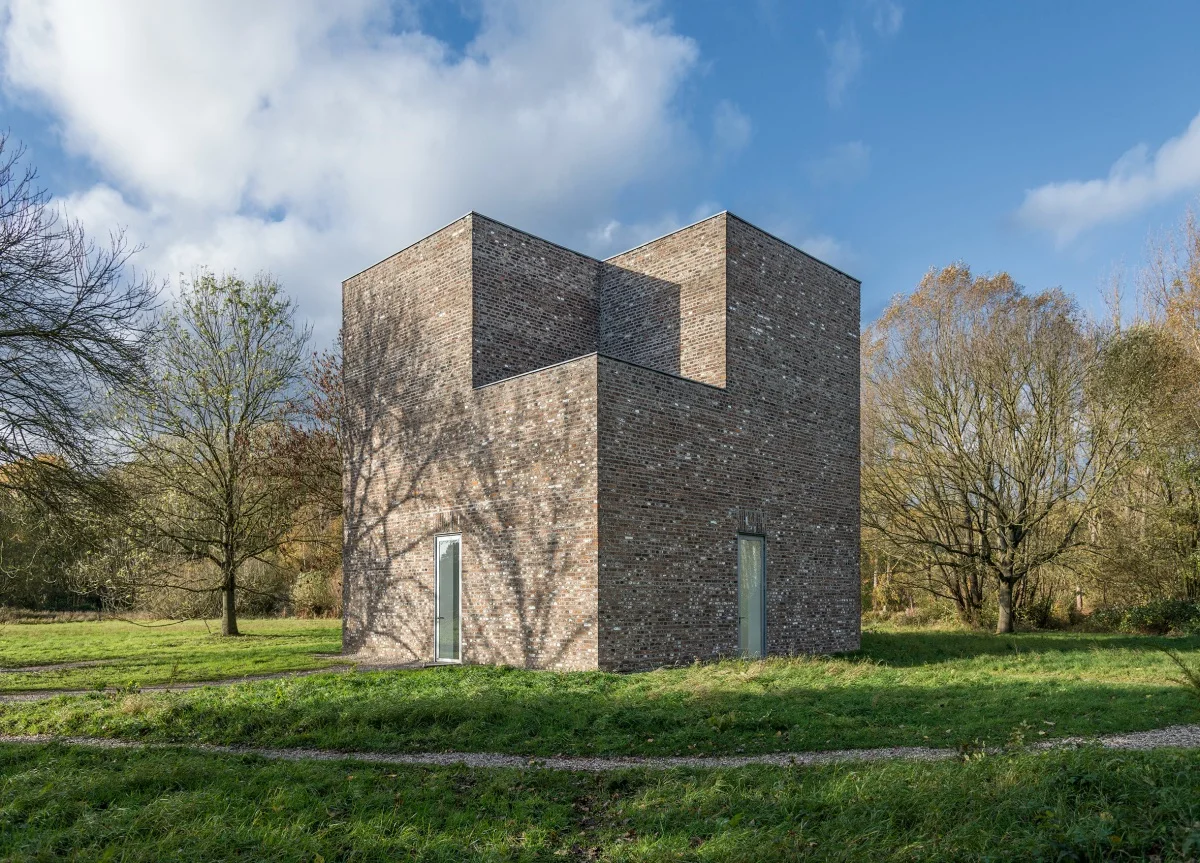
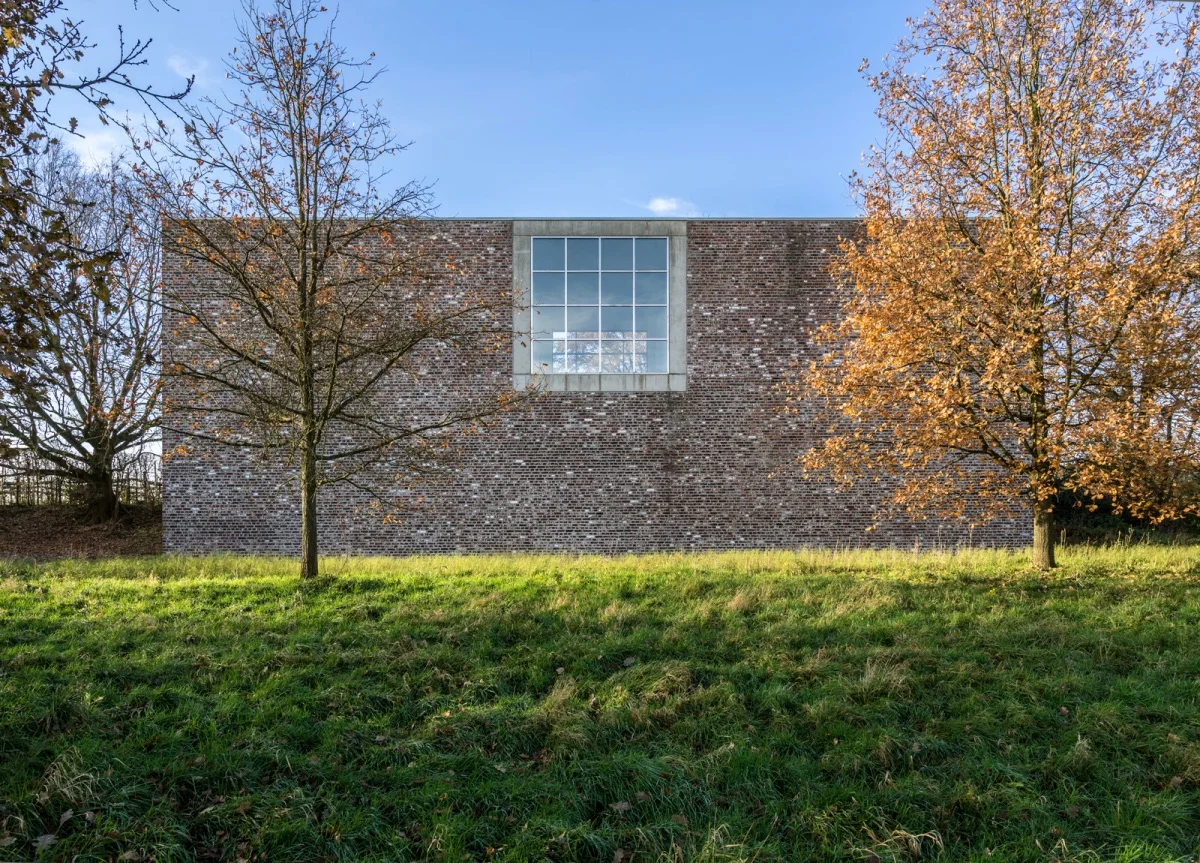
Heerich’s buildings are often described as walk-in sculptures. Constructed largely from reclaimed Dutch brick, they appear as austere geometric volumes set against the softer forms of the landscape. Some resemble monolithic cubes; others are elongated, faceted, or unexpectedly narrow. Their purpose is not simply to contain art. They shape movement, compress and release space, frame views, and make the act of entering a physical part of the exhibition.
Inside, displays are deliberately restrained. Works from different cultures and periods may appear together, without the extensive wall texts or chronological explanations expected in a traditional museum. This can initially feel disorienting, but it is central to the experience. Museum Insel Hombroich asks visitors to look before they categorize, and to allow relationships between objects, rooms, and surroundings to emerge gradually.
The landscape is not a backdrop
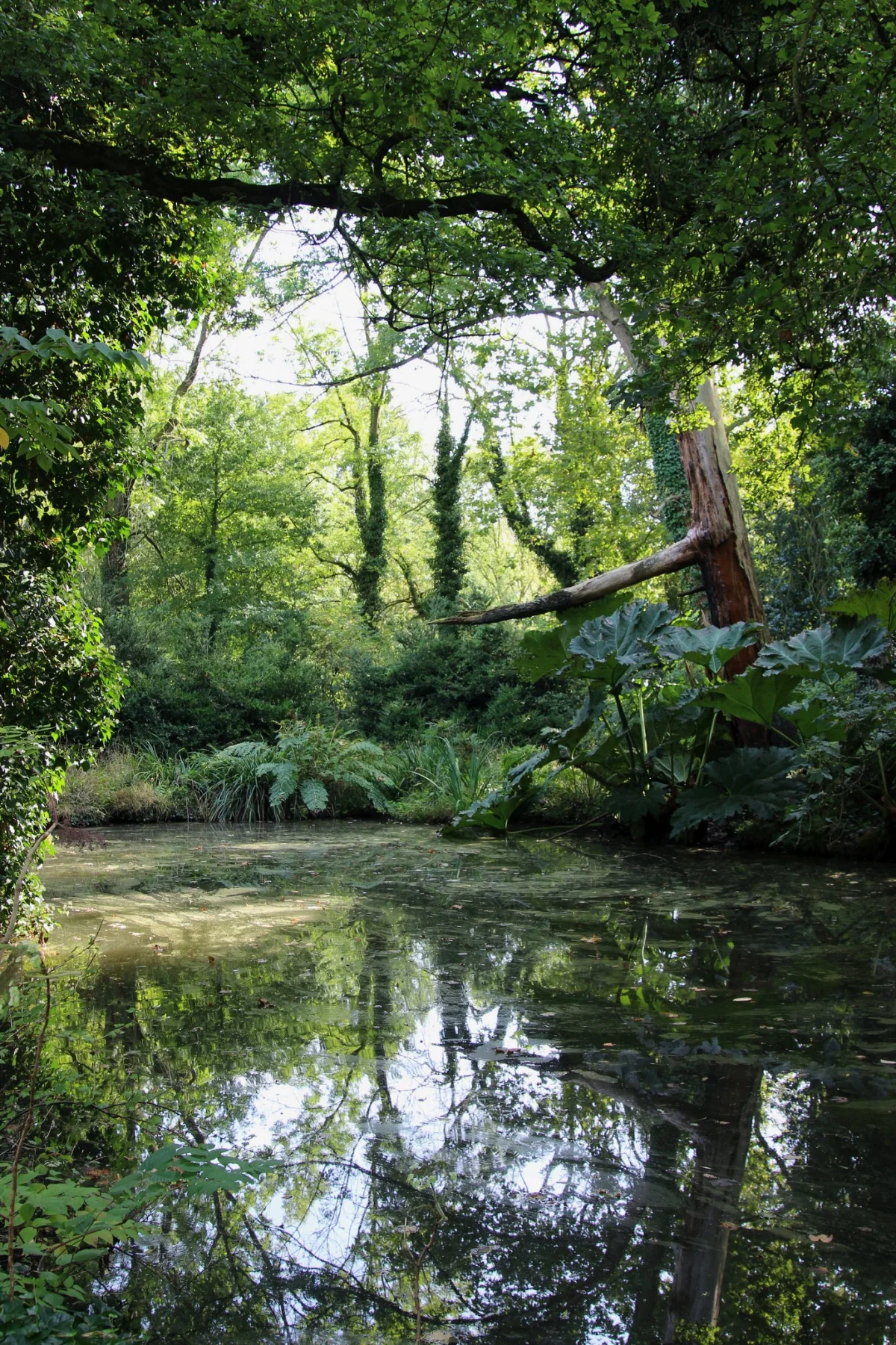
The grounds cover approximately 21 hectares of protected landscape. Garden and landscape architect Bernhard Korte shaped the site as a kind of cultivated floodplain, working with existing vegetation and water rather than imposing a formal garden grid. The result is neither wilderness nor ornamental park. It feels composed, but not rigid; tended, but not overly controlled.
Paths pass through long grass, beside ponds, under mature trees, and across open areas where a building may suddenly appear at the edge of the view. A sculpture can be partly hidden by foliage. A brick wall may echo the color of the soil. In summer, the vegetation can make the architecture seem embedded in the garden; in winter, bare branches reveal the geometry more starkly.
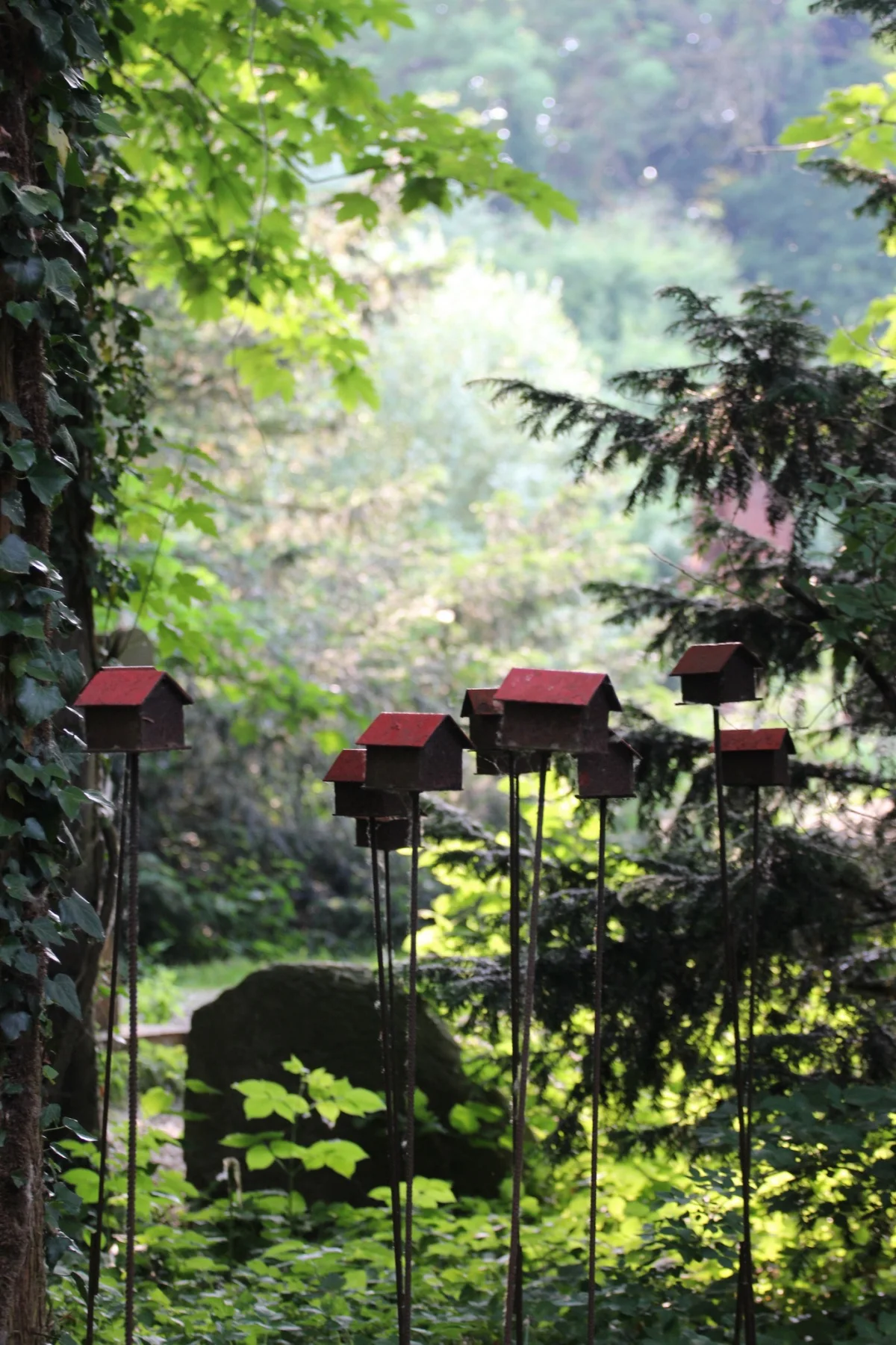
This changing balance is one reason to resist rushing. Museum Insel Hombroich is best understood through accumulation: a shadow on a wall, the sound of gravel underfoot, the distance between two pavilions, or the way a small object looks different after several minutes of walking. The landscape creates intervals between works, allowing attention to settle rather than constantly redirecting it.
What to look for inside the pavilions
The museum’s collection is broad and international, including works associated with ancient, Asian, African, and European traditions. The presentation is intentionally non-hierarchical. A familiar name may appear beside an anonymous object; an apparently modest artifact may hold a room with as much presence as a celebrated painting.
Rather than searching for a single masterpiece, look for visual conversations. Notice how a sculpture responds to the proportions of its room, how a painting’s color changes against brick or white plaster, or how an object’s scale affects your sense of the building around it. The absence of dense interpretation encourages a more personal form of attention, although visitors who prefer historical context may want to read about the collection before arriving.
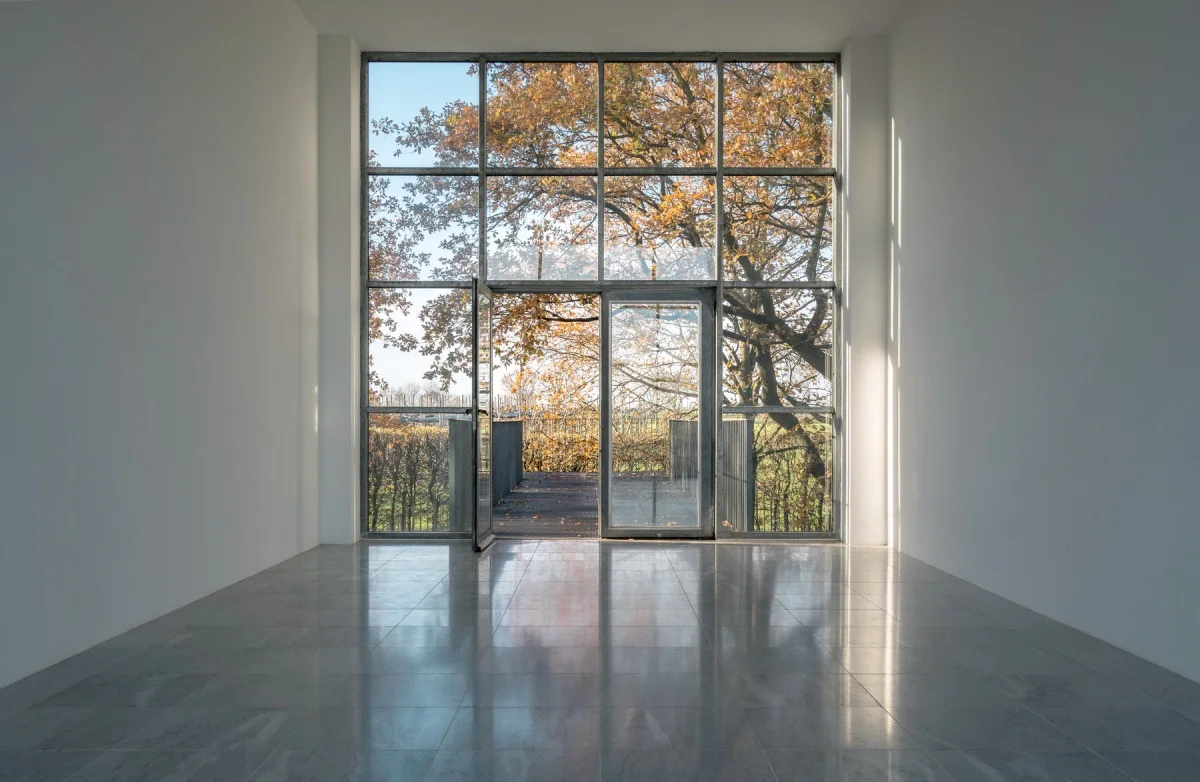
The architecture itself deserves as much concentration as the art. Heerich’s interiors can be spare and quietly theatrical. Narrow entrances open into unexpectedly tall rooms; small windows isolate fragments of landscape; repeated shapes create a rhythm that is felt physically before it is understood intellectually. The pavilions are not neutral containers. They are part of the museum’s argument that looking is an embodied act.
A suggested route for a slow visit
Begin at the entrance without trying to orient yourself too completely. Take the first stretch of the path as a transition from the city and its timetable into the museum’s slower rhythm. Allow the first pavilion to establish the relationship between enclosure and openness, then continue at a pace that leaves room for detours.
A useful visit usually alternates between concentrated looking indoors and unstructured walking outdoors. After spending time with a group of objects, step back into the landscape rather than moving immediately to another room. The pause is not empty time: it changes the way the next building and its contents are perceived.
- Allow at least three hours for a considered visit, and longer if you intend to explore the wider Hombroich grounds.
- Choose a few buildings for close attention instead of attempting to see every room quickly.
- Pause beside water, under trees, or in an open meadow to observe how the site’s atmosphere changes.
- Keep your phone away for portions of the walk; the museum rewards uninterrupted attention.
- Wear shoes suitable for uneven paths and changing weather.
The wider Kulturraum Hombroich
Museum Insel Hombroich is part of a larger cultural landscape known as Kulturraum Hombroich. The nearby sites include the Kirkeby-Feld, the former Raketenstation Hombroich, the Langen Foundation, and other architectural and artistic institutions. These places are connected conceptually and, in part, by walking routes, but they should not be mistaken for one single museum building.
The route toward the Raketenstation crosses a large meadow orchard, passes Anatol’s stone sculptures, and continues toward the brick buildings of the Kirkeby-Feld. The walk from Museum Insel Hombroich to the Raketenstation takes roughly 20 minutes, while the Kirkeby-Feld is closer. Because the sites have different opening arrangements and admissions, check current details before planning to visit them all in one day.
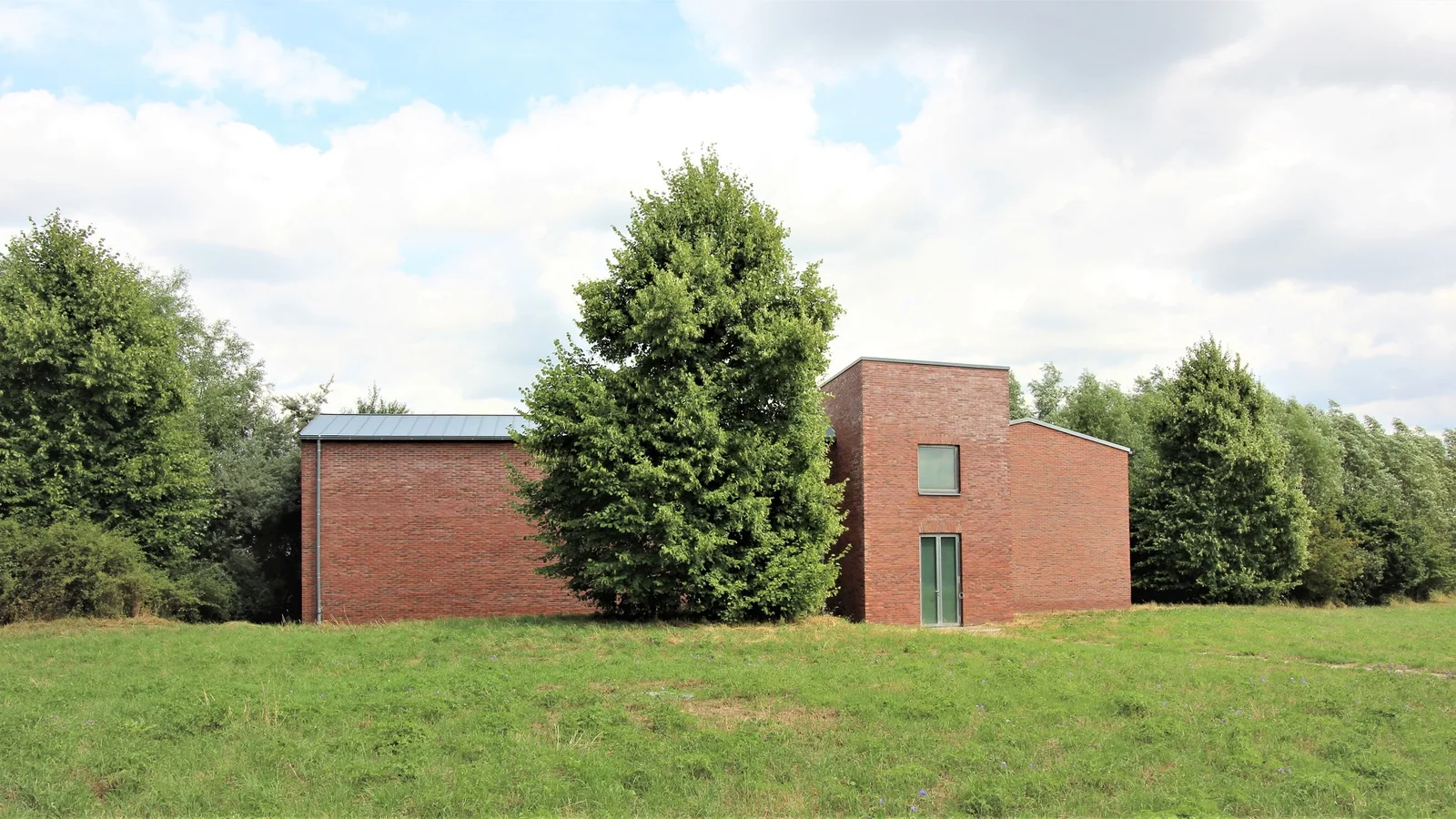
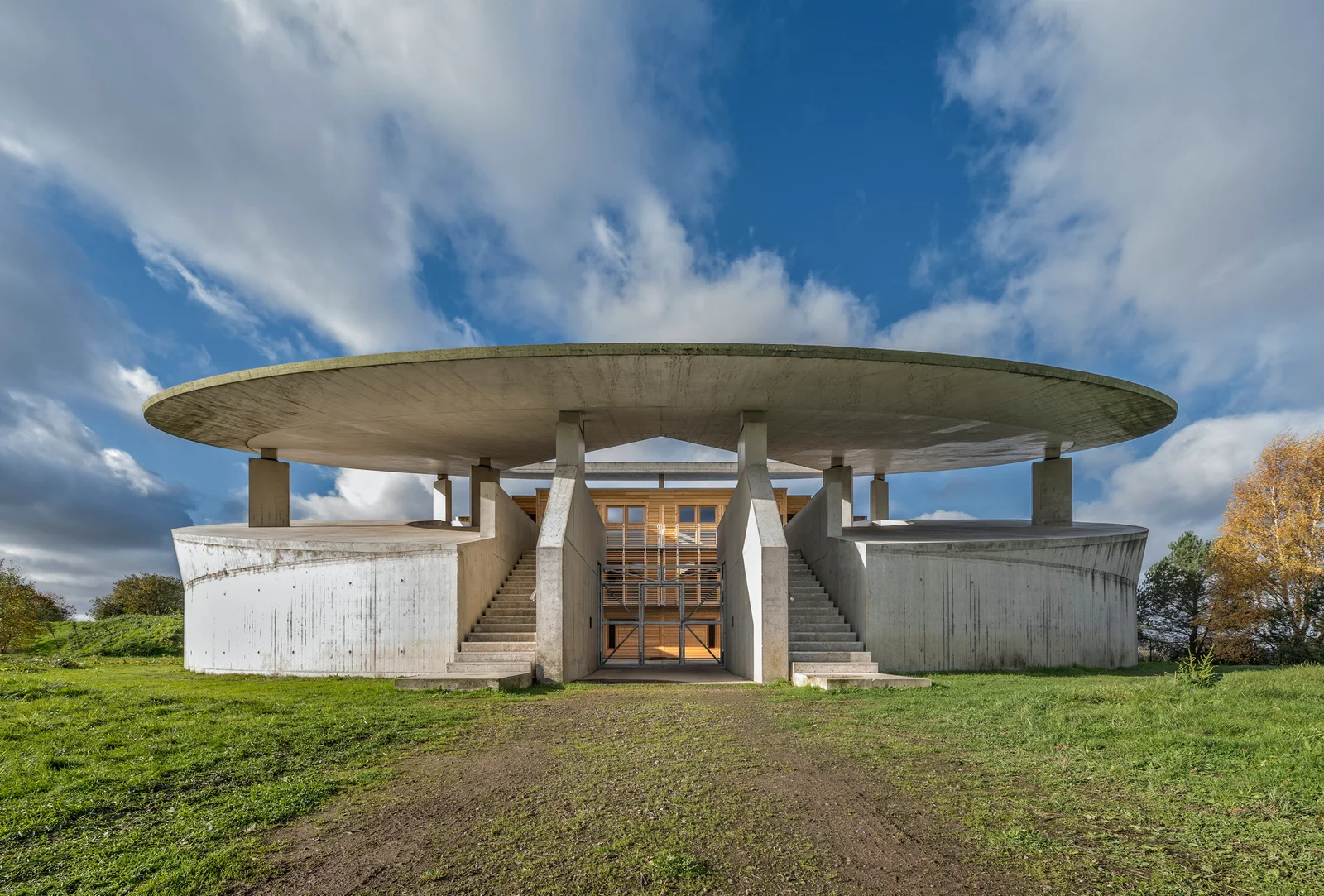
The Raketenstation adds a contrasting note. Acquired in the 1990s as a former NATO missile base, it has been transformed into a place for artistic production, exhibitions, research, and architecture. Its buildings involve major modern and contemporary figures including Erwin Heerich, Álvaro Siza, Raimund Abraham, and Tadao Ando. Where the museum’s central experience is intimate and garden-like, the Raketenstation feels more expansive, austere, and architectural.
For visitors with an interest in architecture, the Langen Foundation is an especially significant addition, with its building designed by Tadao Ando. The Skulpturenhalle Neuss and the Kirkeby buildings further extend the area’s exploration of how art can inhabit a landscape. Together, the sites make Hombroich unusually rewarding for anyone interested in the meeting point between sculpture, building, and terrain.
Silence, hospitality, and the pace of the day
Silence is not enforced as a solemn rule, but it is one of the site’s most memorable qualities. The grounds are spacious enough for visitors to disperse, and the absence of a conventional exhibition narrative reduces the pressure to move as a group. This makes the museum suitable for solitary visits, quiet conversations, and unhurried cultural days.
The on-site cafeteria provides a simple buffet with seasonal food and an emphasis, where possible, on local producers and ecological conditions. It is useful to think of this as part of the museum’s rhythm rather than merely a convenient place to eat. A break between walks can help restore attention, particularly on a warm day or when visiting the wider grounds.
Visitors should not assume that the site functions like a city museum with extensive retail, indoor seating, or constant services. Its pleasures are primarily spatial and sensory. Bring patience, practical clothing, and a willingness to let the day remain somewhat open-ended.
When to visit
Every season offers a different version of Museum Insel Hombroich. Spring emphasizes fresh growth and water; summer brings dense planting, long daylight, and strong contrasts between brick and foliage; autumn adds color and texture; winter exposes the architecture and gives the grounds a more contemplative austerity.
Weather matters. Much of the experience takes place outdoors, and rain can transform the paths and the atmosphere at once. Wind can be more than an inconvenience: the museum may partially or entirely close the park when severe-weather warnings are issued. Check the official visitor information on the day of your visit, particularly during storms or periods of extreme weather.
Weekdays may suit visitors seeking maximum quiet, while weekends can bring a livelier cultural atmosphere and additional activity across the Hombroich sites. Whatever the day, arriving near opening time or allowing a later afternoon visit can help avoid the sense of having to move through the grounds in a rush.
Getting to Museum Insel Hombroich from Düsseldorf
The museum’s address is Minkel 2, 41472 Neuss. From Düsseldorf Central Station, the official route uses tram 709 toward Neuss, followed by bus 877. The journey generally takes around 50 to 60 minutes, depending on connections. The relevant bus stop for the museum is Neuss Insel Hombroich.
Another option is to travel by regional train to Neuss-Holzheim and continue on foot or by bicycle. The walk from Holzheim station to the museum or the Raketenstation takes approximately 30 minutes, according to the foundation’s visitor information. Cycling can be an appealing choice in good weather, especially for travelers who want to connect the museum with the surrounding landscape rather than treating it as a door-to-door excursion.
Public transport schedules in the Düsseldorf and Neuss area can change, so check the current Deutsche Bahn or Verkehrsverbund Rhein-Ruhr information before setting out. If visiting more than one Hombroich site, confirm which stop is most convenient: the museum and the Raketenstation are served by different nearby stops.
Practical information before you go
Museum Insel Hombroich is generally open daily from 10 a.m. to 7 p.m. from April through September, and from 10 a.m. to 5 p.m. from October through March. Admission is accepted until one hour before closing. The museum is normally closed on December 24, December 25, December 31, and January 1.
The foundation currently lists regular admission at €19, with reduced categories and other ticket options available. A combined Hombroich ticket may provide access to multiple institutions and exhibitions, but its precise scope and price should be checked before travel because arrangements can change.
- Check opening hours, ticket categories, and temporary closures on the official website before departure.
- Expect a substantial amount of outdoor walking and plan for uneven or wet ground.
- Do not bring outside food or picnic equipment into the museum grounds; use the on-site cafeteria instead.
- Confirm whether individual buildings are open, particularly at the Raketenstation, where access can vary with exhibitions and events.
- Allow extra time if you want to include the Kirkeby-Feld, Langen Foundation, or Raketenstation.
Who will appreciate it—and who may not
Museum Insel Hombroich is especially suited to travelers who enjoy architecture, sculpture, gardens, contemporary art, and destinations that resist a fixed interpretation. It is also a strong choice for anyone looking for a restorative day outside Düsseldorf without giving up cultural substance.
It may be less satisfying for visitors who want a conventional museum experience with a clearly ordered collection, extensive labels, famous works presented as highlights, or a compact itinerary that can be completed in an hour. The museum asks for time and a degree of openness. Its rewards are cumulative rather than immediate.
The art of leaving room for discovery
The most distinctive feature of Museum Insel Hombroich is not any single building, object, or view. It is the way the site creates conditions for attention. Art is encountered without being isolated from weather, distance, vegetation, or the body’s movement through space. Architecture does not simply point toward the collection; it becomes part of the collection’s meaning.
That is why the museum is best approached as a slow encounter rather than a cultural attraction to be efficiently consumed. Walk without rushing. Enter buildings because their forms draw you in. Look again at objects that seemed quiet the first time. Let the path between two pavilions count as part of the visit.
Near a major city known for its galleries and design culture, Museum Insel Hombroich offers a different kind of sophistication: one grounded in restraint, landscape, and the freedom to wander. It is a place where the absence of noise becomes part of the exhibition—and where simply paying attention can feel like the day’s central activity.