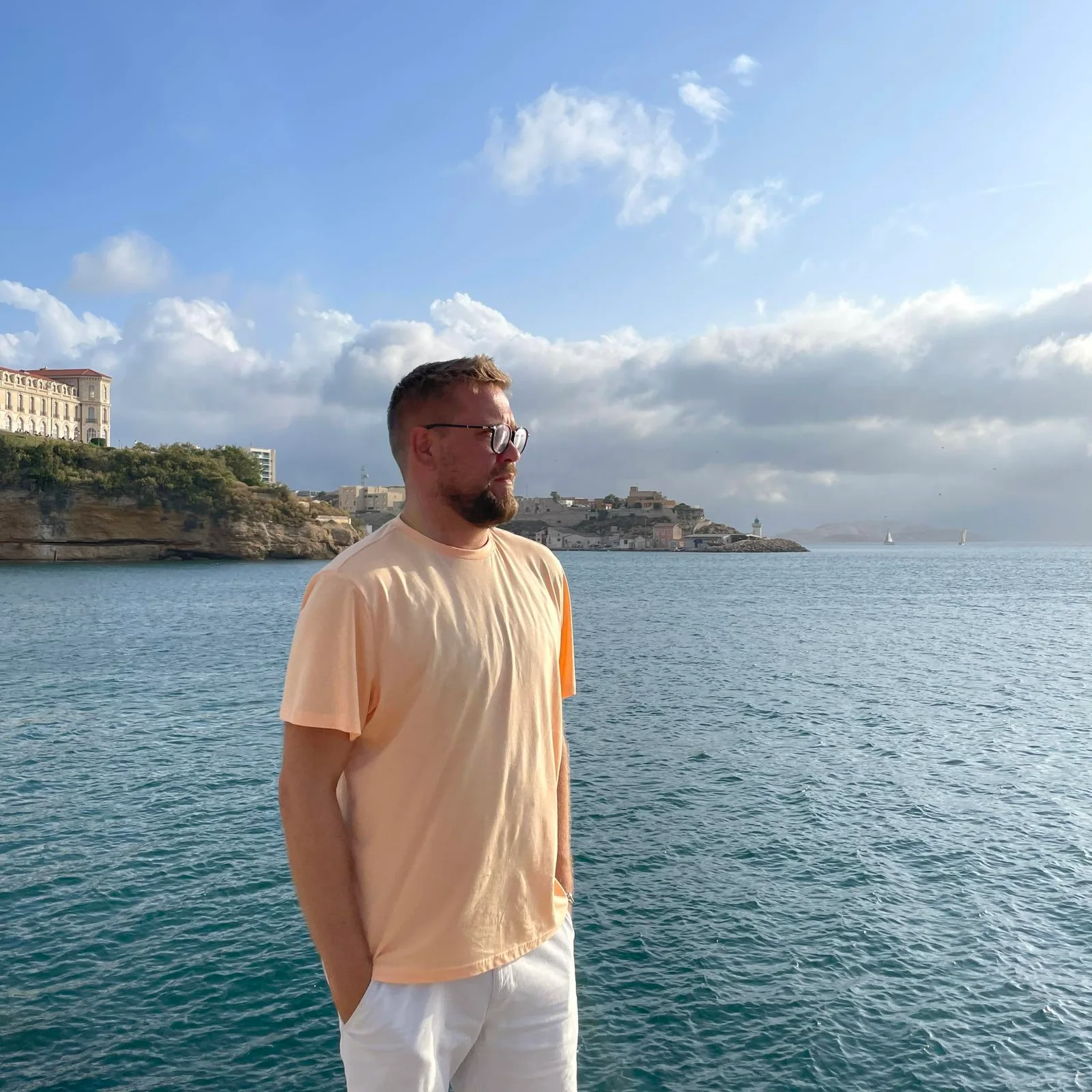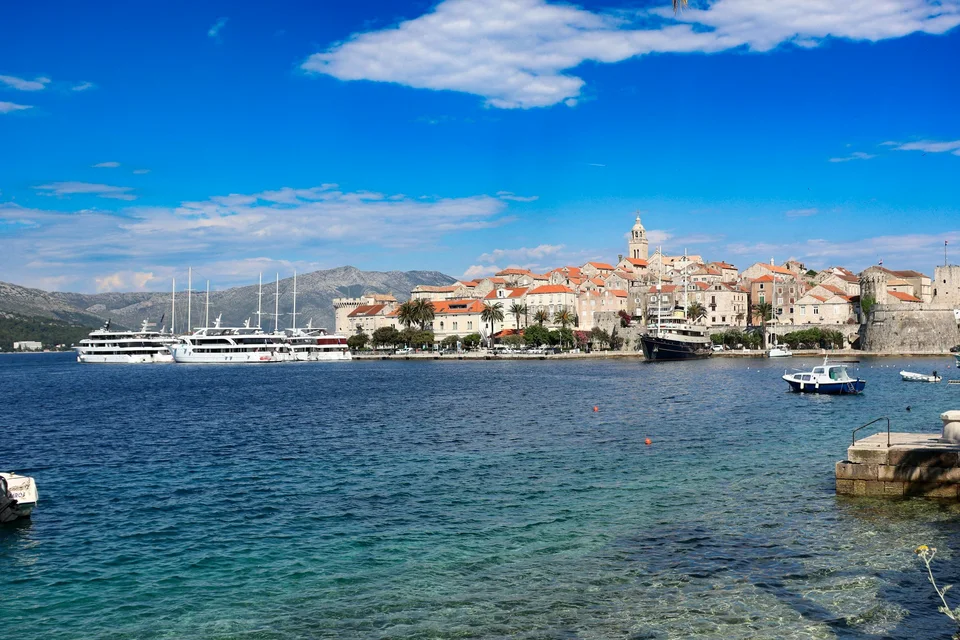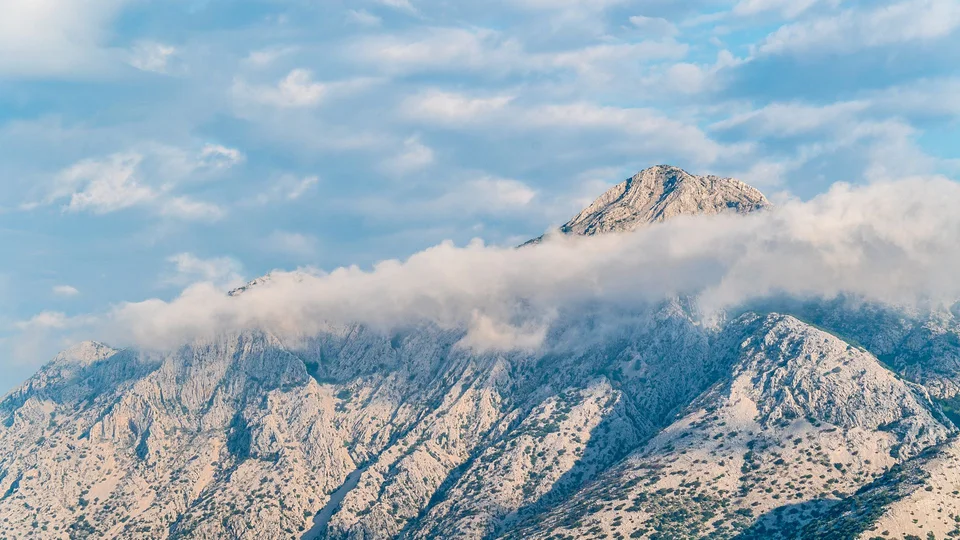
Murter is one of the few Croatian islands where you can almost forget the moment you left the mainland. There is no ferry to catch and no wait at the port: cross the narrow channel at Tisno by bridge and the road continues between stone houses, dry-stone walls, pine trees and occasional views of the sea.
Perhaps that is why Murter is sometimes unfairly dismissed as a straightforward summer destination. You come for Slanica, swim for a few days, perhaps take a trip to the Kornati and then head home. Once the summer crowds begin to thin, particularly in September, the island shows a more interesting side. This is when it makes sense to walk from one cove to the next, hire a bicycle, stop in Betina, continue towards Jezera or simply look for a stretch of rock where nobody else is sitting that day.
Murter is small enough to get your bearings quickly, yet its coastline, history and four distinct settlements give it more depth than you might expect. The Kornati are part of much of the island’s story — sometimes clearly visible from the beach, sometimes no more than a line of blue-grey shapes on the horizon.
September changes the way you experience Murter
In summer, a day on Murter often revolves around one question: where can we find a spot on the beach? Outside the height of the season, the question becomes much more interesting: where shall we go today?
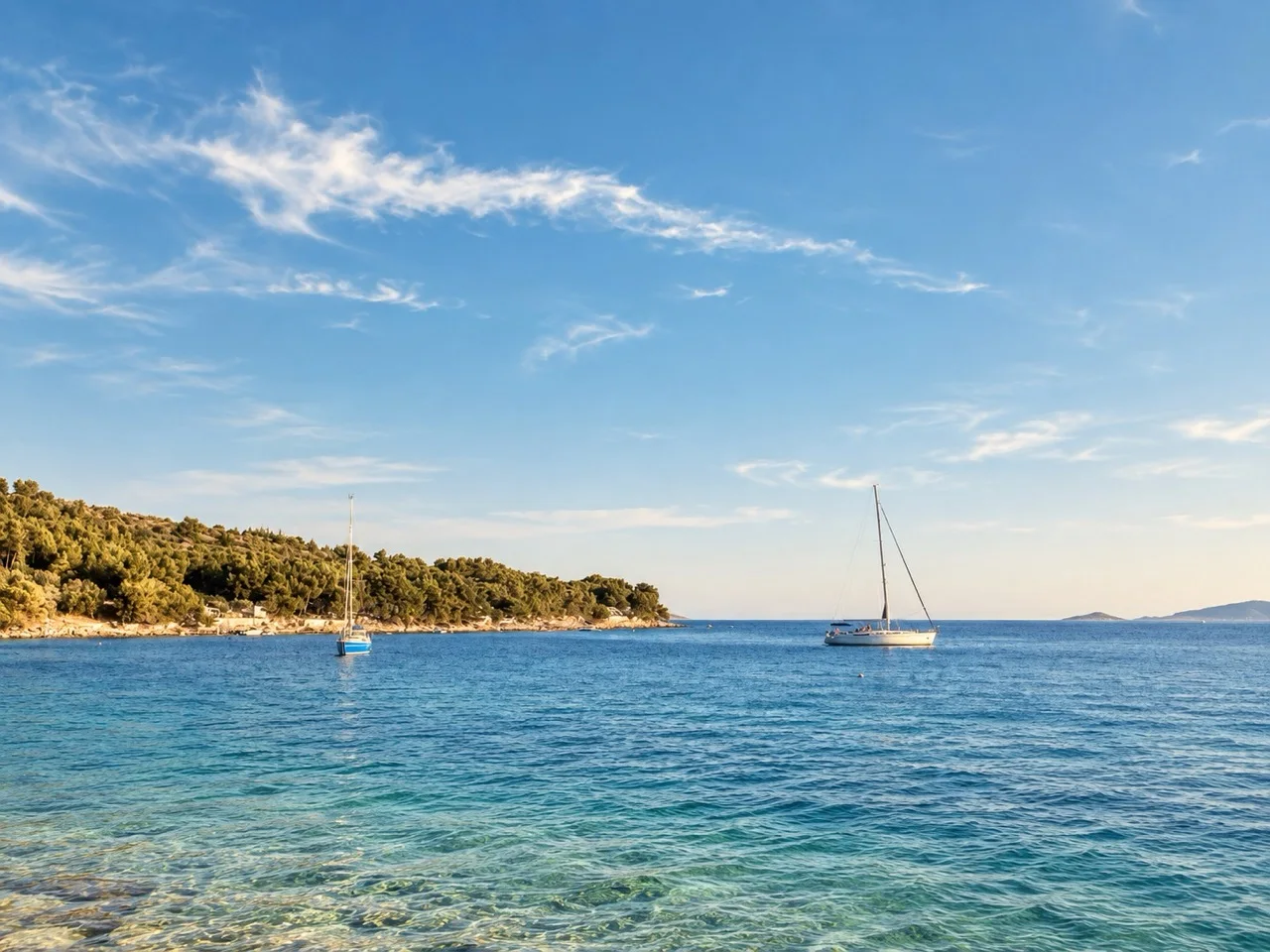
Temperatures are more comfortable for walking and cycling, the best-known beaches have more space, and there is no longer any need to organise the day around the midday heat. September does not necessarily mean the end of island life, either. The Museum of Betina Wooden Shipbuilding, for example, is open from Monday to Saturday until 9pm throughout September, while Slanica Campsite has a separate September season and remains open through part of the autumn.
That does not mean you should expect August without the crowds. Some seasonal businesses gradually close, the days grow shorter and the weather becomes less predictable. That is also what makes slow travel appealing: you are no longer trying to recreate summer. You are getting to know the island at a more natural pace.
Start by the sea: Slanica, Podvrške and Čigrađa
Slanica is Murter’s best-known beach, and there is no reason to avoid it simply because it is popular. The cove is shallow, the seabed partly sandy, and the shallows extend around 30 metres from the shore. That makes it particularly popular with families in summer. In September, the same qualities give it a different character: calm, shallow water and enough room to spend the whole morning moving between a swim and a coffee.
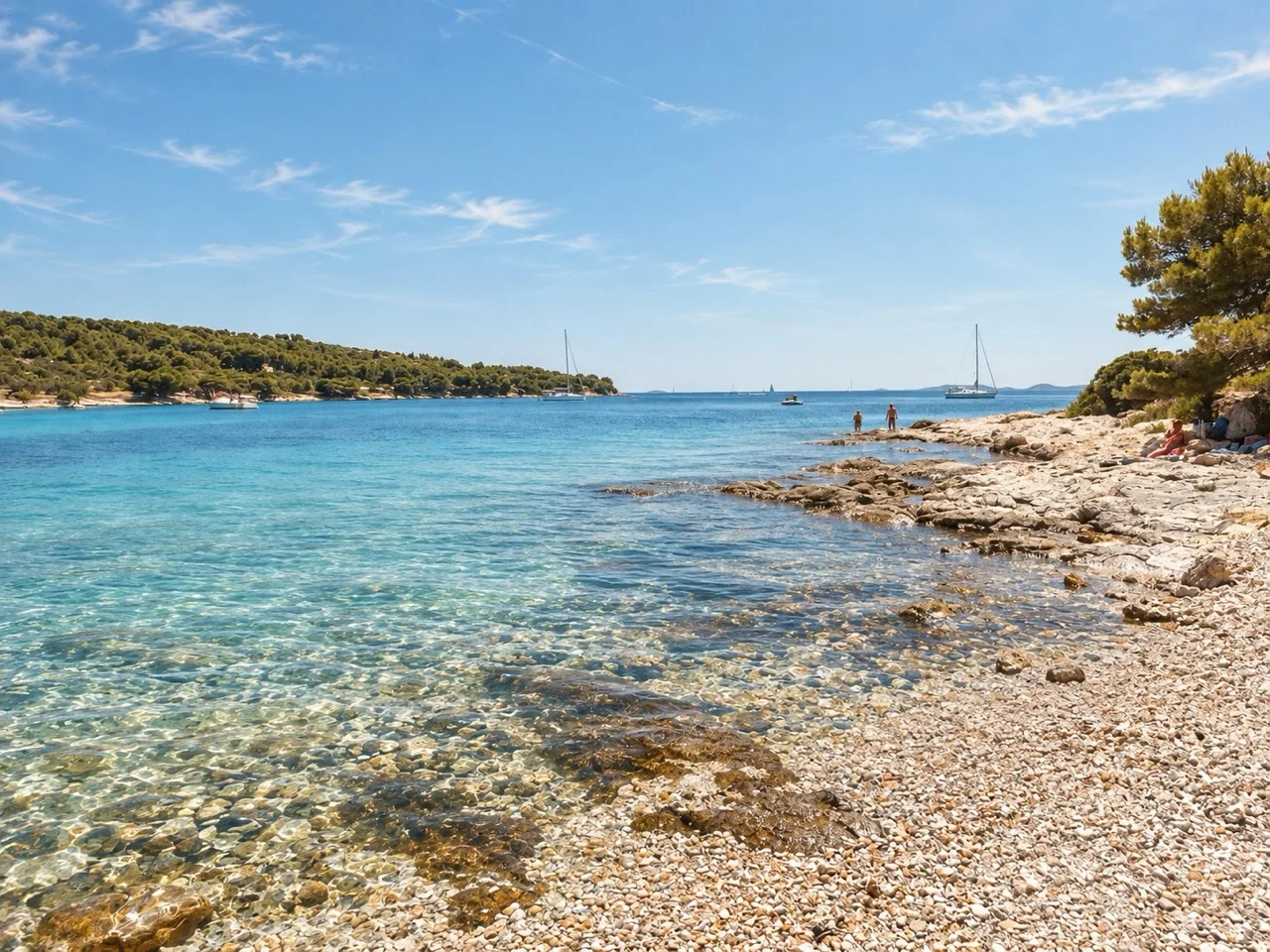
Continue along the coast and you reach Podvrške. This is the beach I would single out as my favourite on the island. The pale seabed gives the water an almost unreal turquoise colour, while the combination of clear water, rocky shore and open horizon means you are unlikely to start searching for an even better beach after an hour.
The third choice is Čigrađa, a small pebble-and-rock cove roughly two kilometres from the centre of Murter. The seabed becomes sandy as you enter the water, and the cove is also popular with people who enjoy snorkelling and exploring below the surface. Compared with Slanica, it feels more enclosed and intimate, particularly once the summer traffic eases.
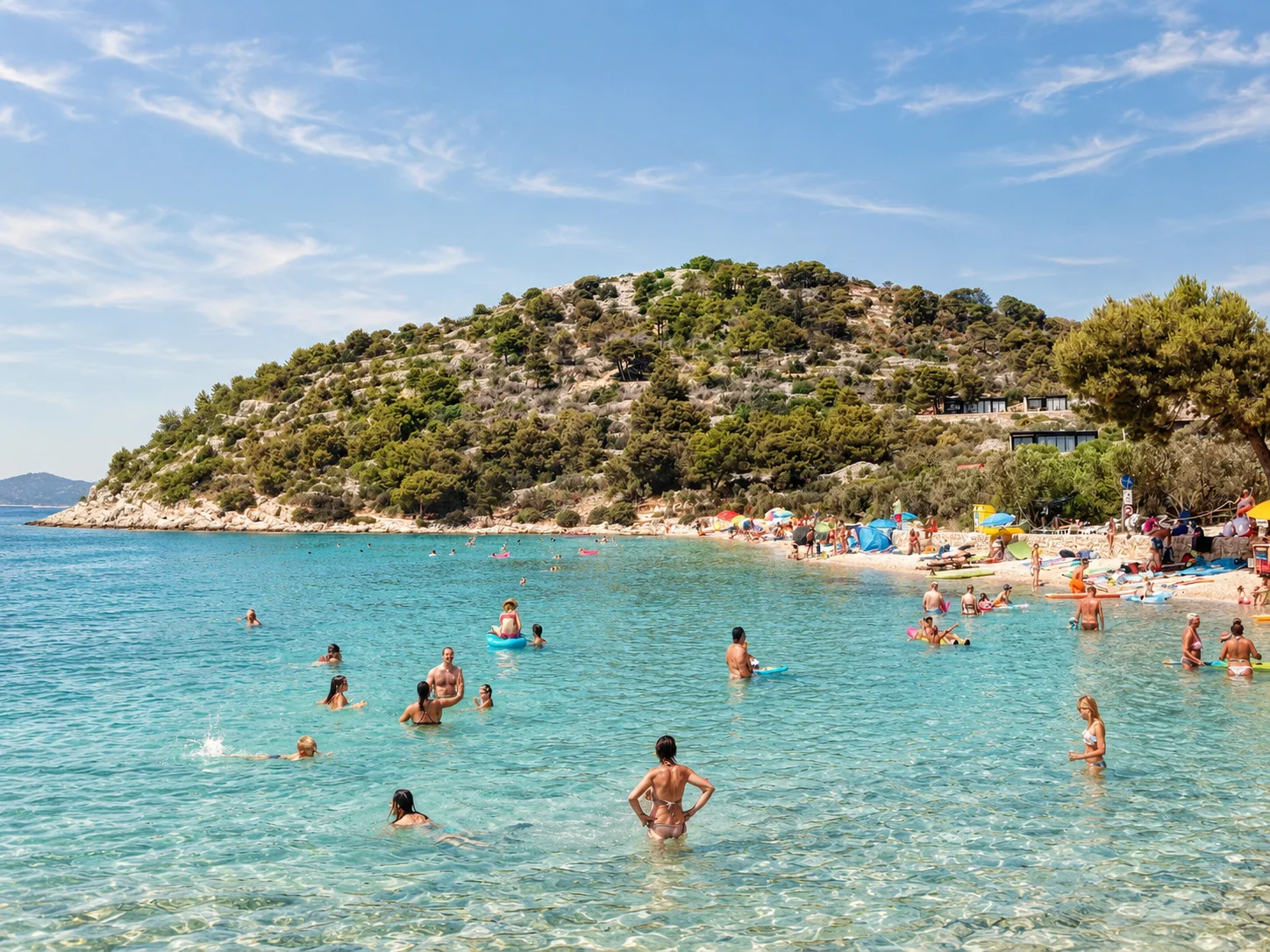
If you have a car or bicycle, it is worth continuing towards Kosirina. Set between Jezera and Betina, this cove looks towards the Kornati and has a sandy-pebble shore, pine woodland and enough shelter to appeal to boaters too. Kosirina is a good example of why Murter should not be reduced to its two best-known beaches.
Slanica Campsite: when the sea is ten steps from your bed
Slanica Campsite lies between Slanica and Podvrške. Compared with Croatia’s large camping resorts, it feels almost intimate: it covers around two hectares and has 200 camping units, with some pitches and mobile homes just ten metres from the sea.
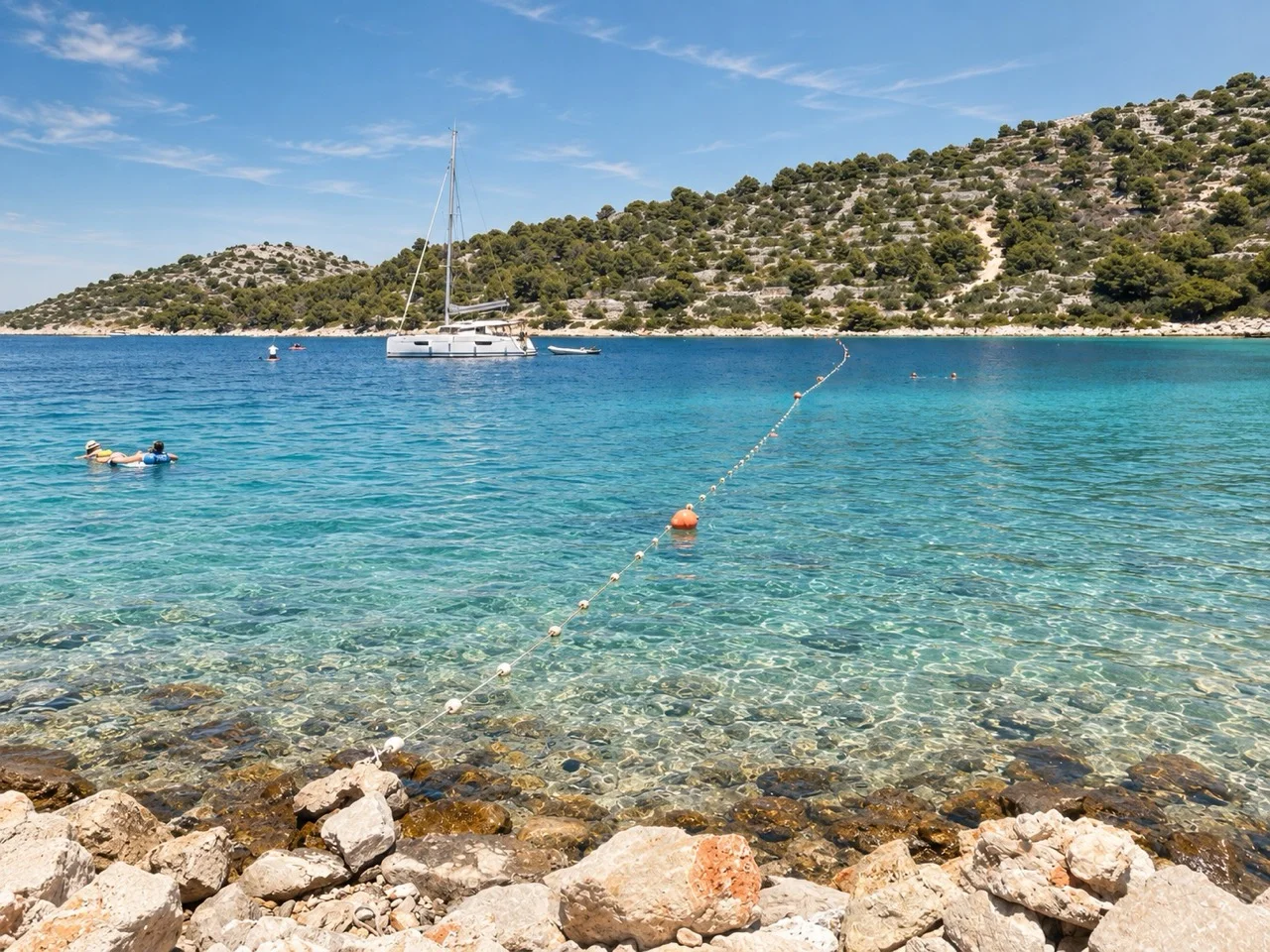
I can add a personal recommendation here. I stayed at Slanica Campsite for three consecutive years, and its greatest advantage for me was never the facilities but its size and location. It is difficult to beat waking beneath the pines and taking your first swim without packing a beach bag or getting into a car.
Its position between two very different beaches is particularly useful. Head one way towards the livelier Slanica, the other towards Podvrške, or swim directly from the rocky shoreline beside the campsite.
Murter is more than the town of Murter
One of the island’s pleasures is how quickly the atmosphere changes over a short distance.
Betina, practically joined to Murter, has a much stronger connection with traditional boatbuilding. Here, a wooden boat is not a piece of decoration installed for visitors but part of the village’s identity. The Betina gajeta developed as a sturdy working boat, used by islanders to transport people, animals and goods to their properties on the Kornati, the surrounding islands and Modrave. The craft of building it is now protected as part of Croatia’s intangible cultural heritage.
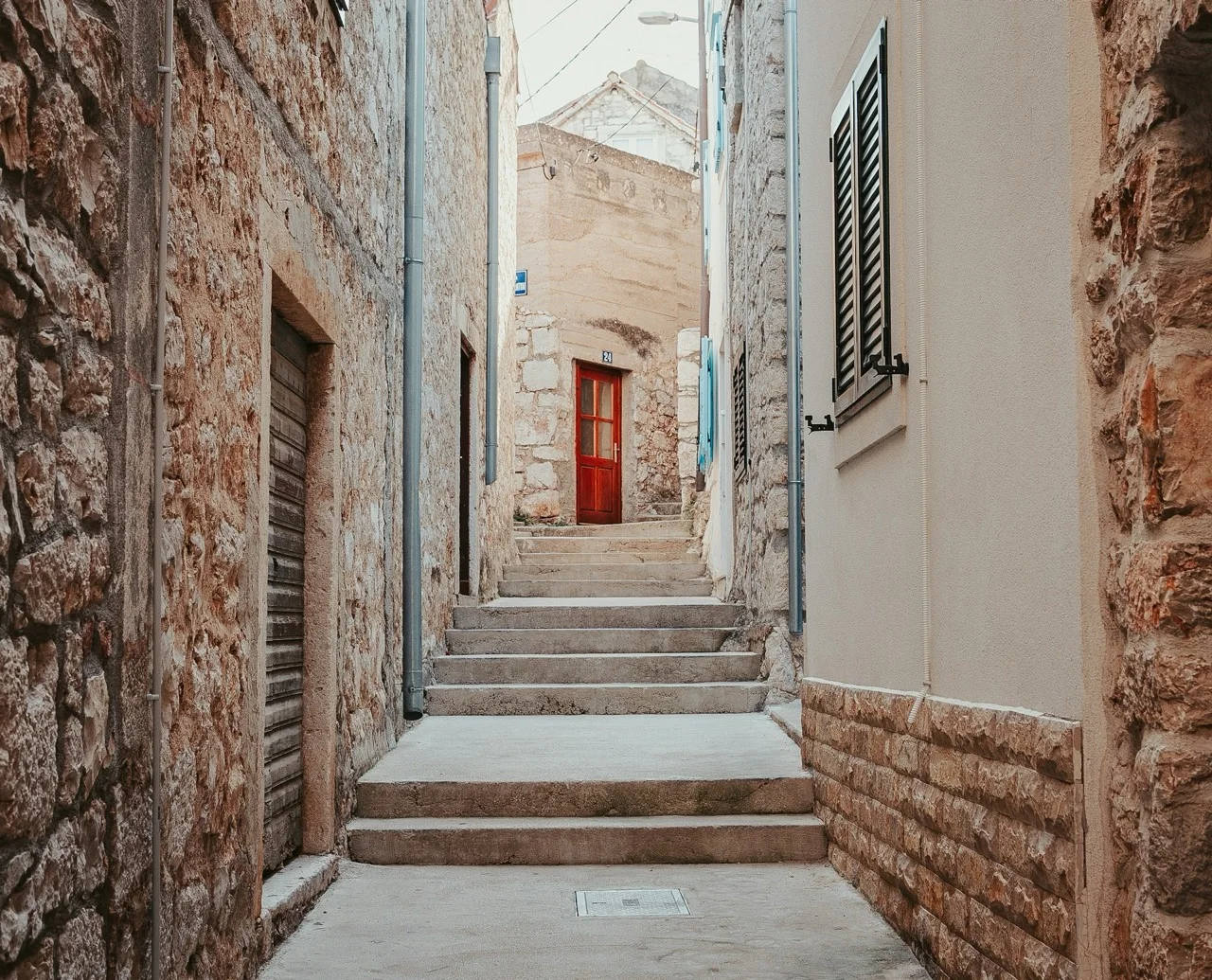
The Museum of Betina Wooden Shipbuilding is worth visiting even if boats are not usually your subject. Through them, you come to understand a different Murter: an island of farmers, fishermen, boatbuilders and families whose lives did not end at the shoreline but extended across the sea to their fields and olive groves. Several dozen traditional wooden boats are now displayed in Betina harbour, so part of the museum’s story continues literally on the water.
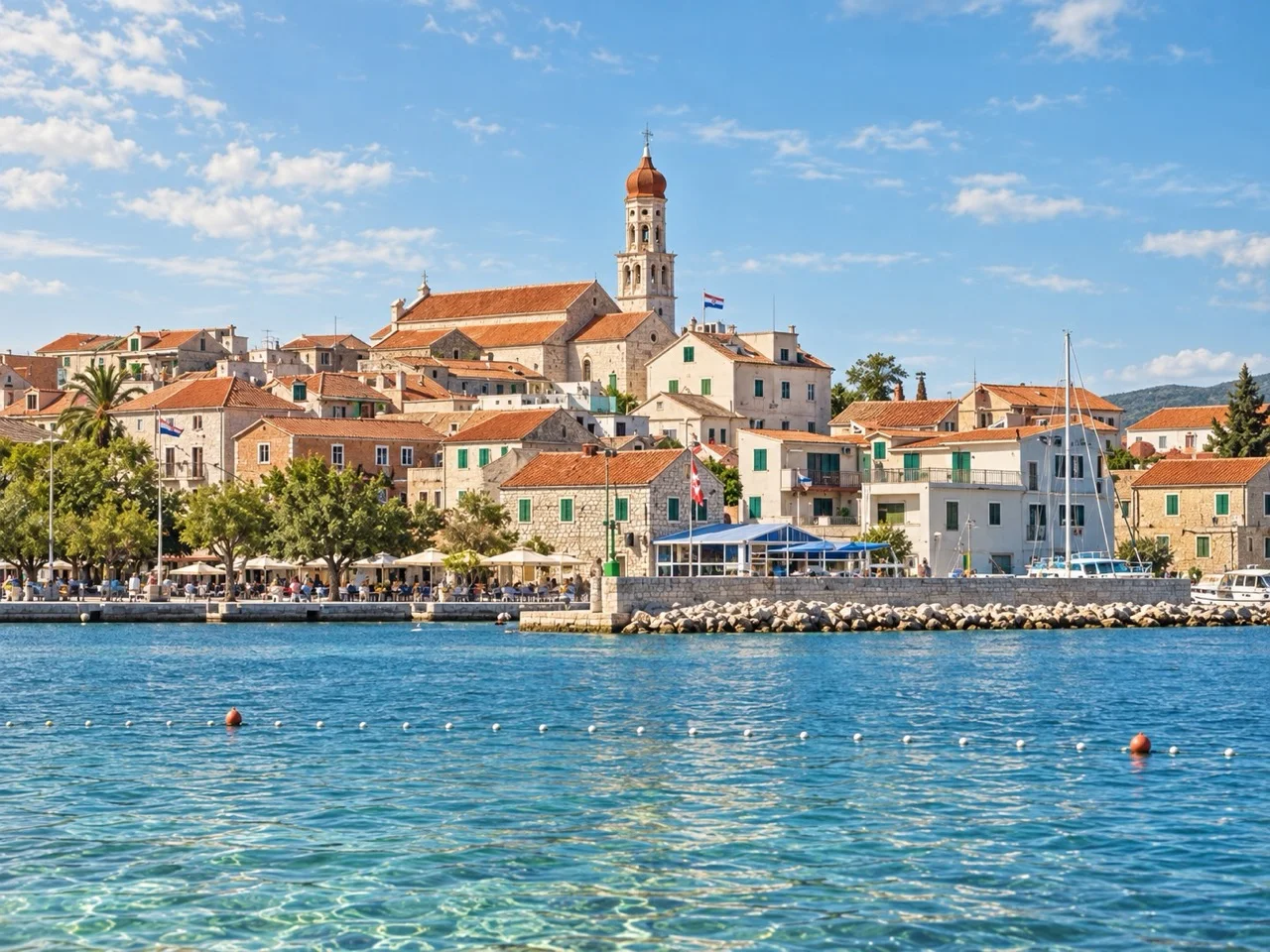
Tisno is more than the place you cross by bridge
Tisno is easy to treat as the gateway to the island, but it deserves at least half a day. One part of the town lies on the mainland and the other on Murter, joined by a narrow channel crossed by a lifting bridge. The setting creates a distinctly different atmosphere from the open coves on the island’s western side.
Tisno is also a sensible base, particularly if you plan to explore the mainland as well. The one detail to bear in mind is the terrain: many apartments are above the waterfront, so returning from town may involve a few uphill stretches. The views usually make the effort worthwhile.
For swimming, I would choose Jazina for its very shallow, warm water, but the route towards Jezera is more interesting to me. The Tisno–Jezera ecological and educational trail follows the coast through pine trees, maquis and sea, introducing visitors to the local flora and fauna. Along the way are natural rocks, small coves and swimming spots without the familiar layout of an organised beach.
Near St Andrew’s Cove is Croatia’s first educational underwater trail, with submerged panels introducing the local marine life. It is exactly the kind of detail that is easy to miss if you visit Murter only for a few days at Slanica.
Jezera and a life shaped by the sea
Continue along the trail and you reach Jezera, set in a naturally protected, horseshoe-shaped bay. The village has traditionally been associated with sailors, fishermen and divers. Even its name has an unexpected story: because of the impermeable ground, larger pools of fresh water once formed here after rain, and local people called them lakes.
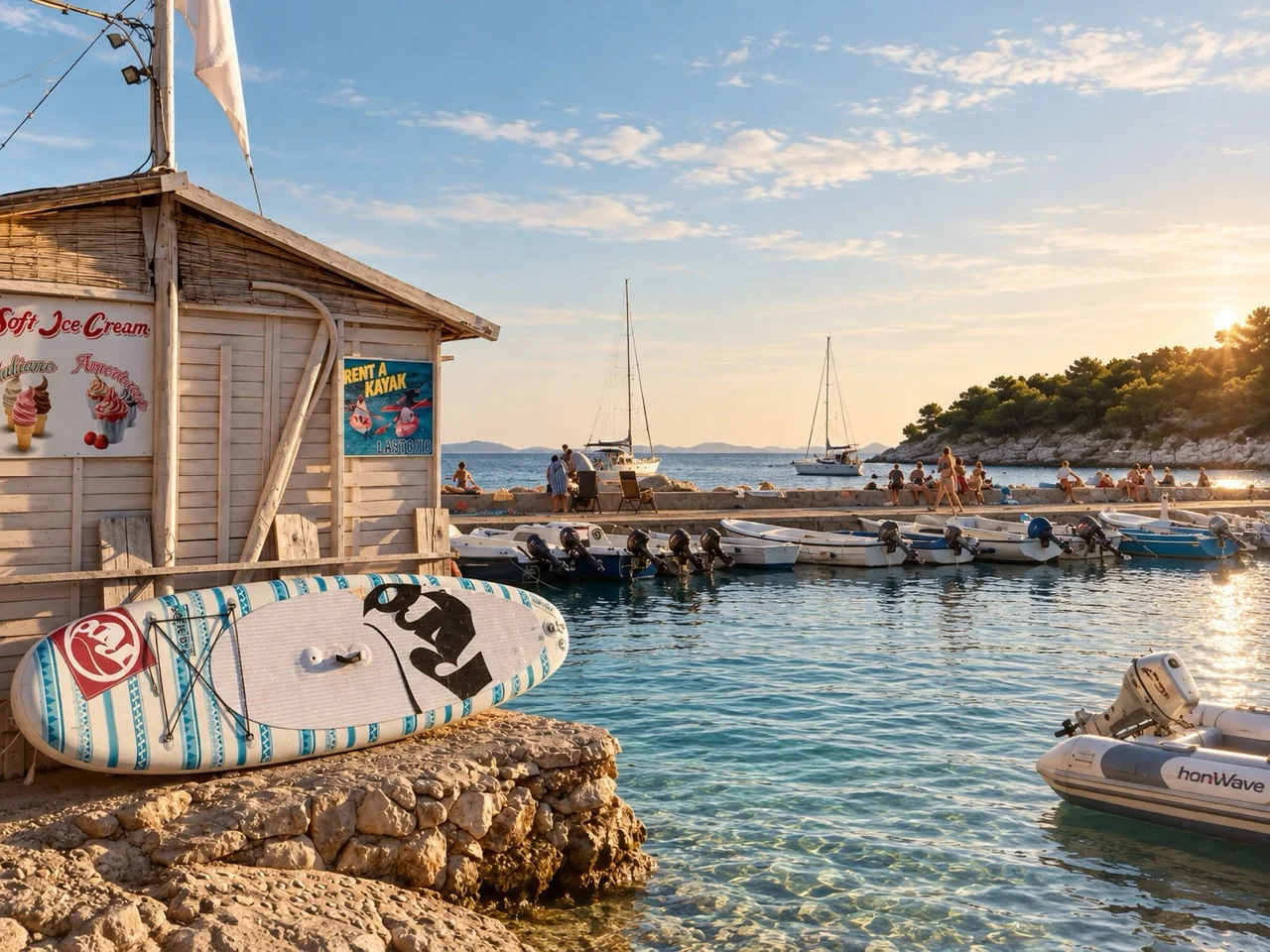
Jezera is a good choice for a late afternoon. You do not need a list of attractions: walk around the harbour, watch the boats returning from the sea and sit down to dinner somewhere. In September, evenings like these often become more rewarding than trying to find a new must-see location every day.
Murter is best explored at the table, too
Food is an important part of the island’s story, but it is best approached without searching for one obligatory speciality. The traditional cooking of Betina and Murter is based mainly on fish and seafood, alongside meat dishes and old-fashioned Dalmatian desserts. Menus feature tuna, shellfish, octopus, grilled fish, pasta and simple dishes in which a few good ingredients make more sense than an overworked presentation.
Ask what has come in from the sea that day instead of automatically choosing the most expensive fish on the menu. Murter still has family-run konobas that serve fish with their own olive oil, vegetables and wine. Skalinada in Murter, for example, lists its own olive oil, wine and some vegetables among the ingredients it uses.
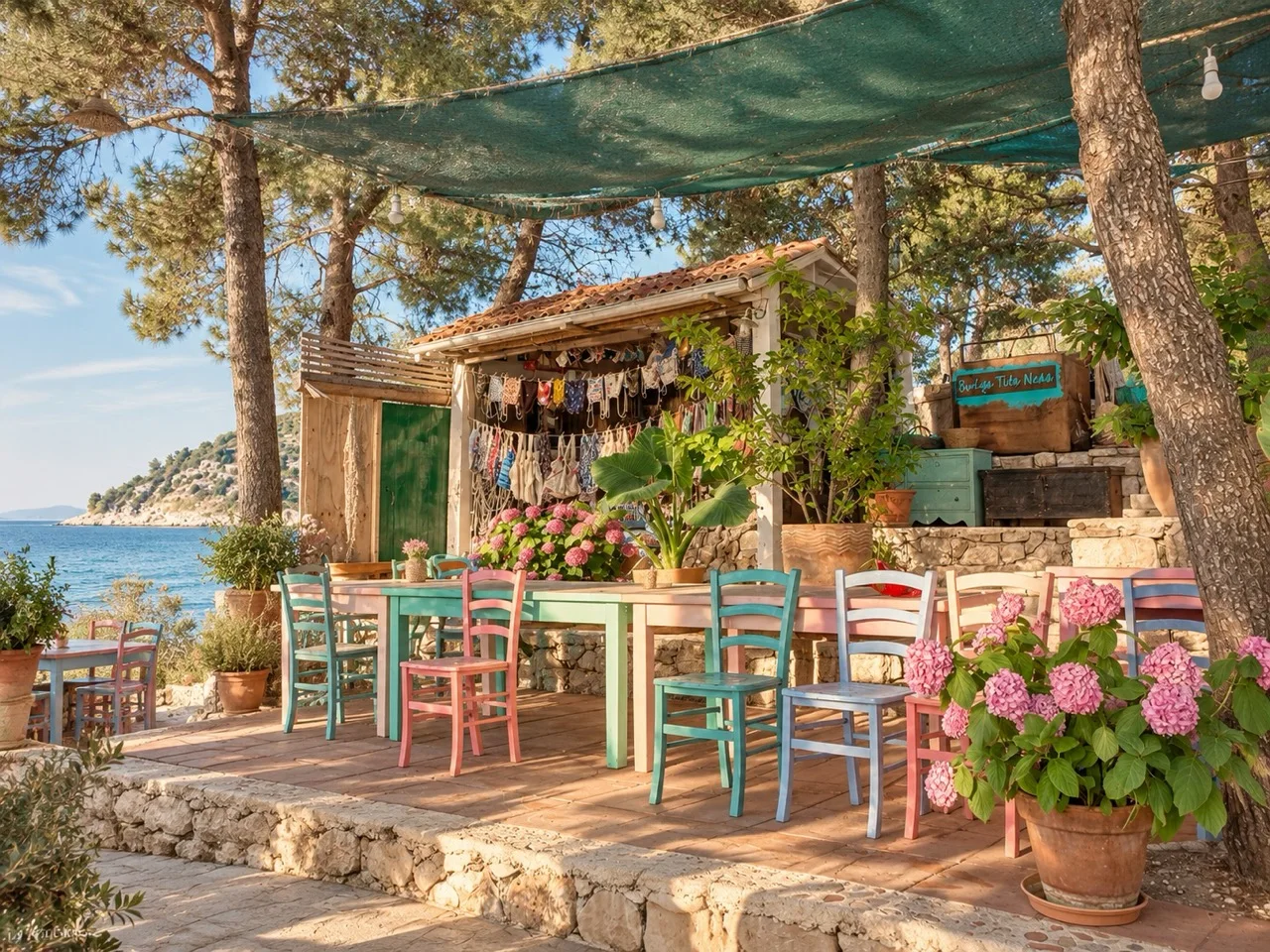
Outside the main season, there is another advantage: dinner can simply be dinner again. You do not need to reserve a table just because it is 8pm, the staff have a little more time, and a walk through a quieter harbour after the meal may become the best part of the evening.
Colentum and Murter before tourism
To understand how much older the island’s history is than today’s seaside holidays, head towards Gradina. Here are the remains of ancient Colentum, a settlement from the Roman period whose story continues towards the shore and beneath the water.
The ancient settlement also lends its name to Colentum Resort Murter beside Slanica. The hotel opened in 1968 and has 78 rooms, while the history of tourism on this site reaches back to the 1930s. One unusual detail is the hotel pool, filled with circulating seawater brought from around 400 metres away.
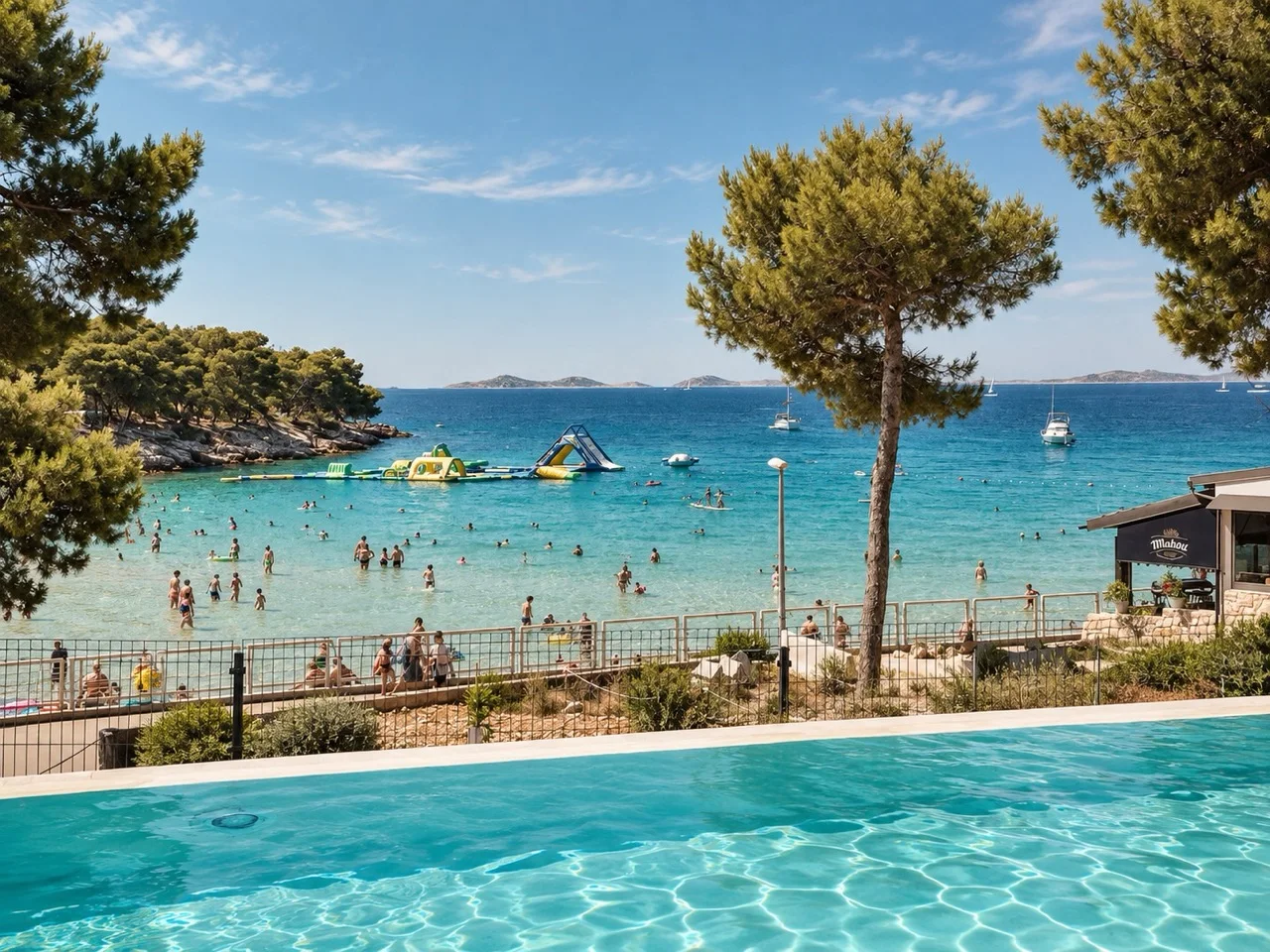
Colentum is a good choice if you want a classic hotel stay beside one of the island’s best-known beaches without having to rely on a car every time you go out. Slanica is on the doorstep, Podvrške is close enough to walk to, and Murter is small enough for the rest of the island to be explored on short day trips.
An island made for cycling
Murter seems almost designed for exploring on two wheels. It is not a large island where you spend half the day trying to get from one end to the other. It is compact enough to link several villages, coves and landscapes by bicycle in a single day.
For people who cycle occasionally rather than train for races, that is the main advantage. Set out from Murter towards Betina, continue to Jezera and Tisno, turn towards the coast whenever a cove catches your attention and stop for a swim without feeling that you have ruined the day’s training plan.
Outside the main season, a day like this makes even more sense. It is cooler, the roads are quieter and the island stops being a backdrop viewed through a car window.
The Kornati explain much about Murter
The Kornati are not simply an excursion sold to visitors staying on Murter. For centuries, they were part of the islanders’ economic and everyday lives. Betina gajetas emerged from the need to reach properties across the sea, carrying tools, food, animals and everything else required for work.
That is why the view towards the Kornati takes on a different meaning after visiting Betina. They are no longer just photogenic islands on the horizon.
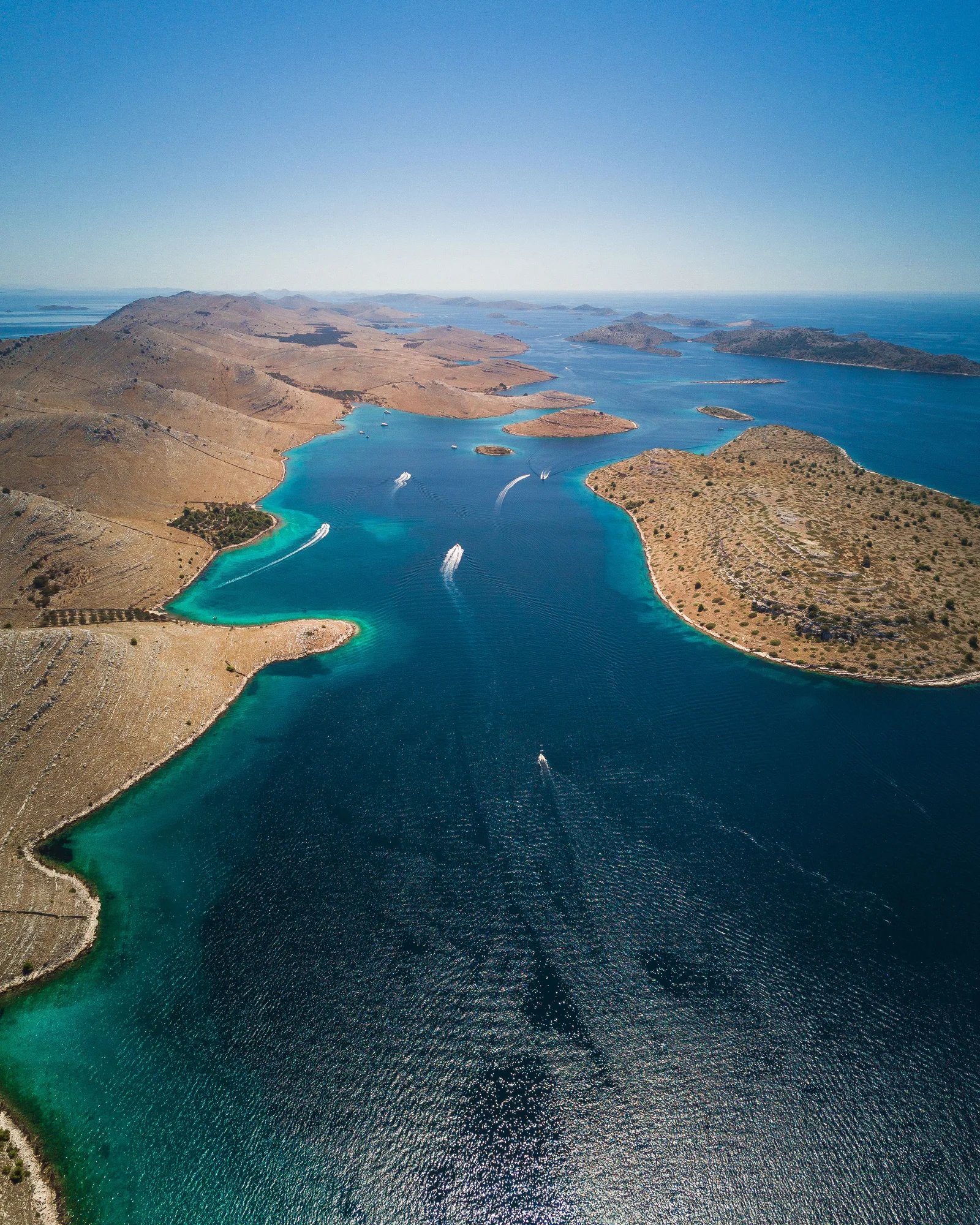
If you have enough time, set aside a day for a boat trip. Choose one that allows you to spend time in several places, swim and have lunch without constantly checking the clock. The Kornati can easily become another item on a tourist checklist, yet a slower approach suits the landscape far better.
The best Murter may be the one you do not try to see all at once
On an island this small, it is easy to assume that you can see everything. Technically, you probably can. But you would miss what makes Murter work so well as a slow travel destination.
It is better to choose a few places. Spend the morning at Podvrške. Head towards Betina after lunch. Take a bicycle one day and make your way to Tisno and Jezera. Leave another day entirely for swimming. Eat fish in the evening, walk around the harbour and do not search your phone for the next attraction.
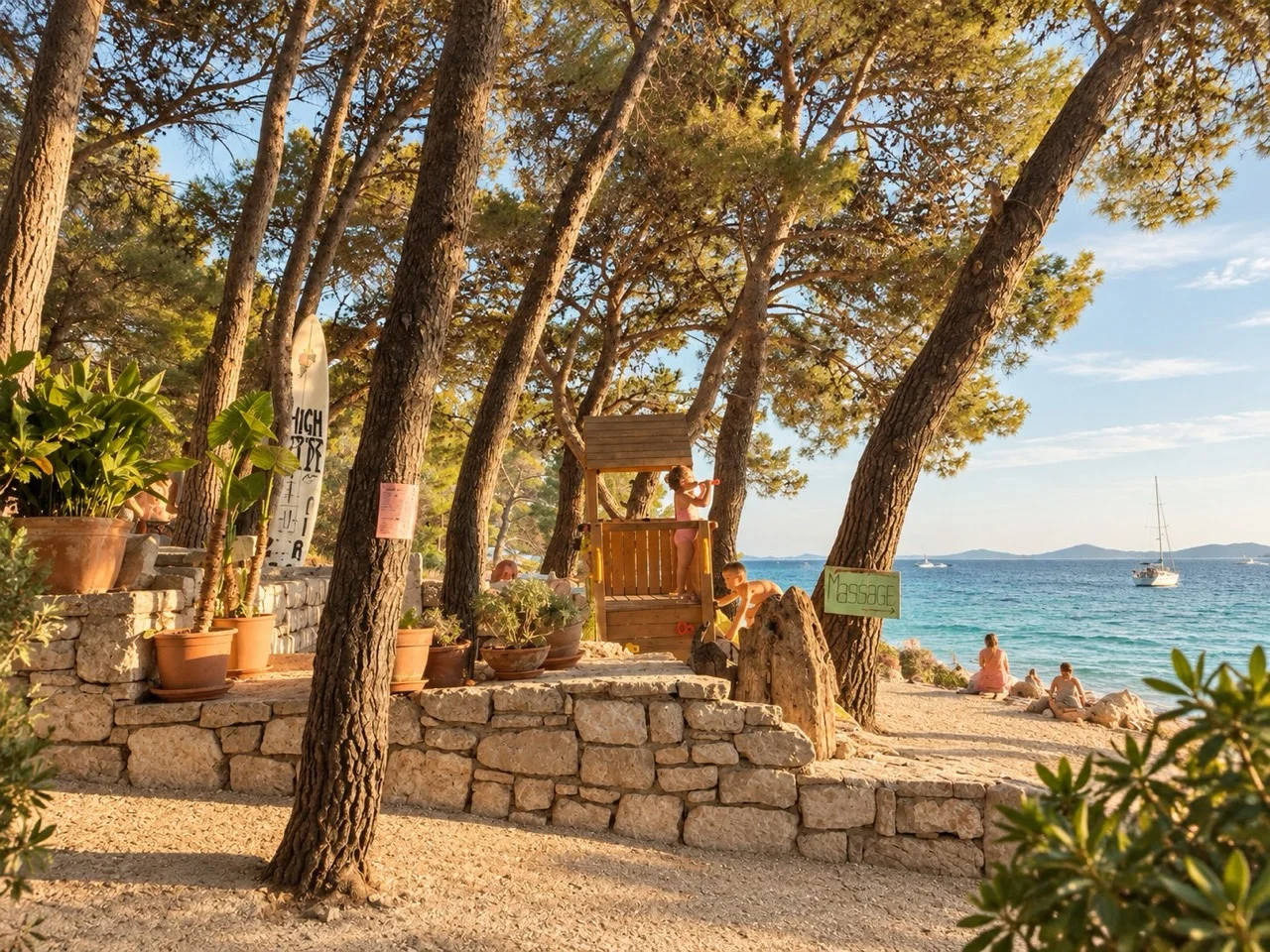
Murter is not a dramatic island. There is no single view that overwhelms everything else or makes you cross half the world to see it.
Its appeal is quieter: pine trees meeting the sea, small villages a few minutes apart, turquoise coves, old wooden boats, the smell of food cooking over a grill and the Kornati appearing on the horizon when you least expect them.
All of this is still there in July and August, but the summer bustle can sometimes cover it.
In September, it is much easier to notice.