In eastern Croatia, where the Drava River meets the Danube, the land does not end at the riverbank. It loosens, divides and gathers again into channels, reed beds, willow forests, mudflats and shallow lakes. This is Kopački Rit Nature Park, a vast floodplain in the Baranja region and one of Europe’s most important wetland landscapes.
The park is best understood through movement at water level and at walking pace. A boat slips through channels where the banks seem to fold into one another; a wooden boardwalk crosses wet ground without disturbing it; a levee opens a long view across the reserve. There is no single grand spectacle. Instead, Kopački Rit rewards attention: a white-tailed eagle high above the trees, the sudden lift of herons from a reed bed, or the quiet geometry of water shaped by seasonal flooding.
A living landscape between two rivers
Kopački Rit occupies the natural triangle formed by the Danube and Drava. Covering roughly 231 square kilometres, it is an internal delta and floodplain rather than a conventional lake or marsh. Its character changes with the rivers: water rises into depressions, spreads through old channels, retreats from meadows and leaves behind newly exposed shallows.
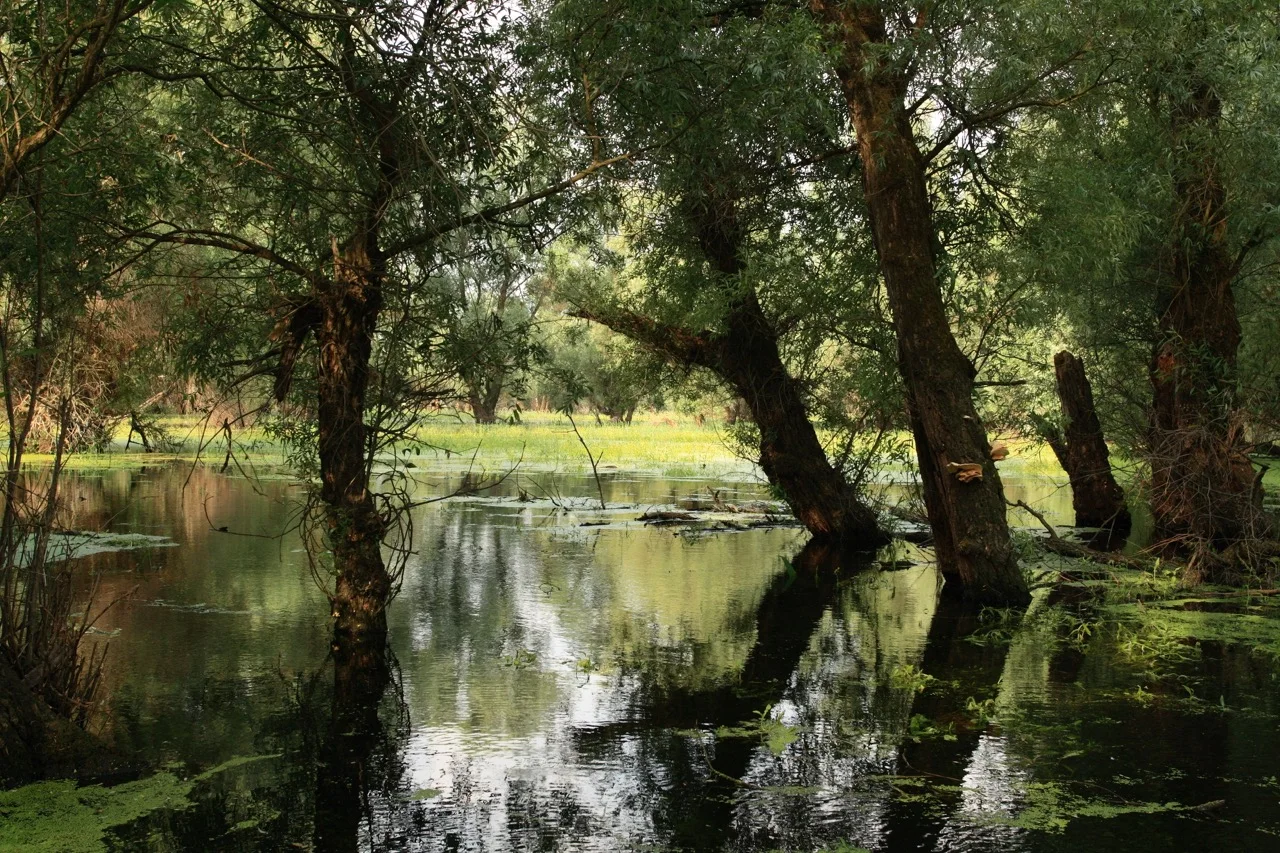
That pulse is the foundation of the park’s ecology. Floods carry nutrients, connect habitats and create nursery grounds for fish. Willow forests tolerate the wettest conditions, while oak grows on slightly higher ground. Between them are sandbanks, islands, backwaters and reed-fringed pools, each offering different conditions for plants and wildlife.
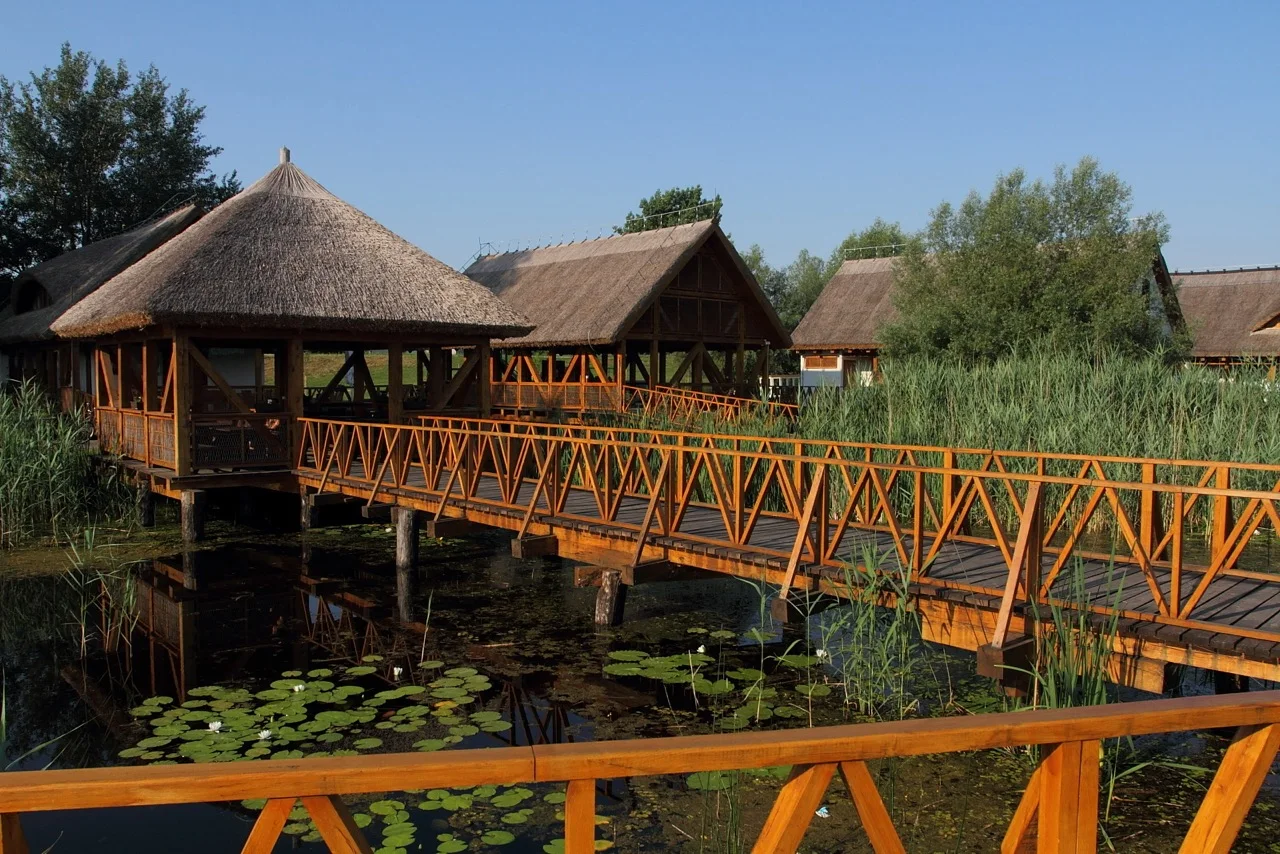
The landscape can appear almost still, but it is not static. Kopački Rit is a system of exchanges: river and forest, open water and silt, breeding season and migration, drought and flood. Visitors see only a portion of this process, yet even a short visit makes clear that the wetland is shaped as much by water levels as by the calendar.
Why the birds come
Kopački Rit is renowned for its birdlife, with hundreds of species recorded in the park and many using the floodplain as a breeding, feeding or resting ground. Around 300 bird species have been recorded in Kopački Rit — roughly 80% of the species recorded in Croatia.
The mixture of habitats is the reason. Open water supports ducks, geese, terns and gulls; shallow margins attract waders; reed beds shelter smaller birds; mature trees provide nesting sites for herons, cormorants and birds of prey.
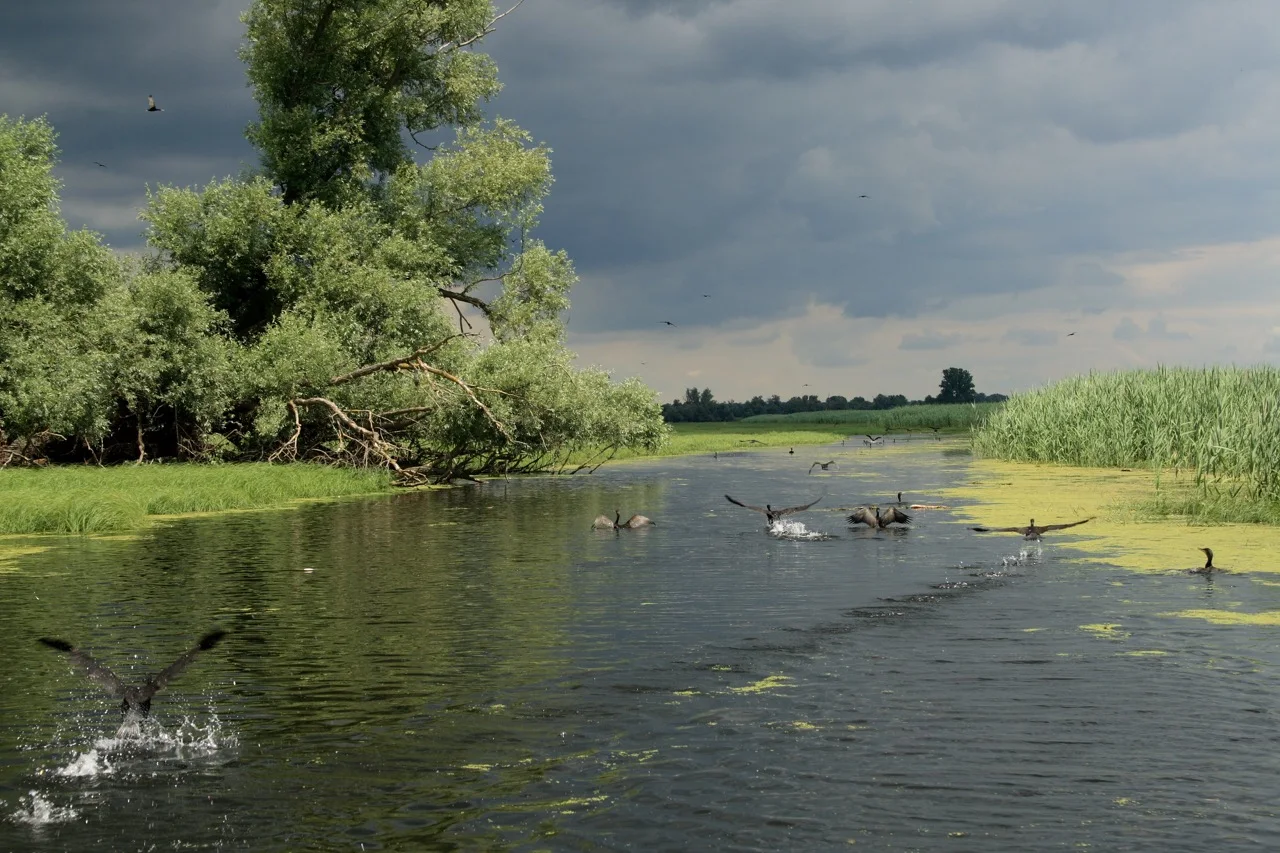
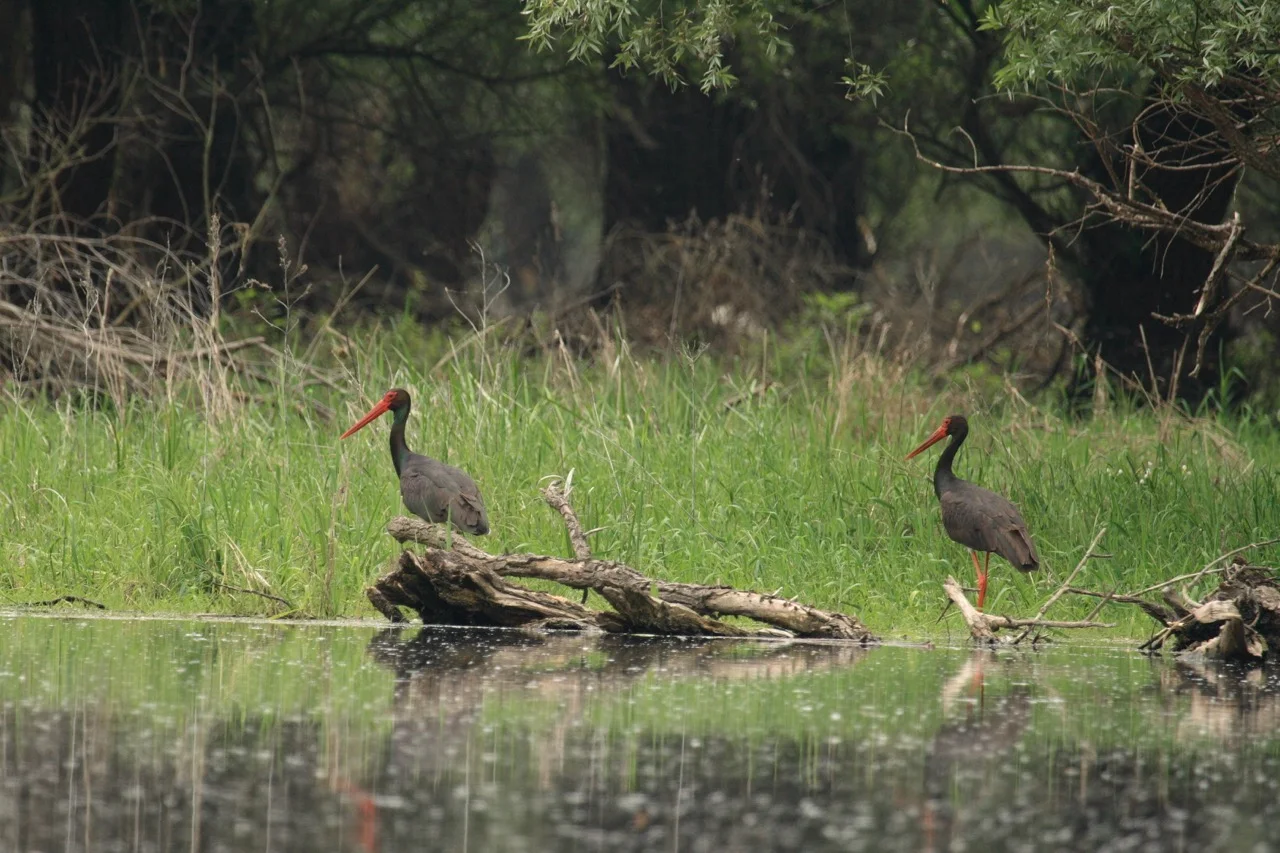
The white-tailed eagle is the park’s emblematic presence. The white-tailed eagle, the symbol of Kopački Rit, is more than an occasional spectacle: the park is home to what it describes as the largest nesting population of the species in the entire Danube Basin. It is possible to see one perched in a riverside tree or circling over the floodplain, although wildlife sightings are never guaranteed. Great cormorants are another defining species, particularly around nesting colonies where dark birds crowd the branches above the water. Depending on the season and conditions, visitors may also encounter grey herons, great egrets, kingfishers, black storks, marsh harriers and a constantly shifting cast of migratory waterbirds.
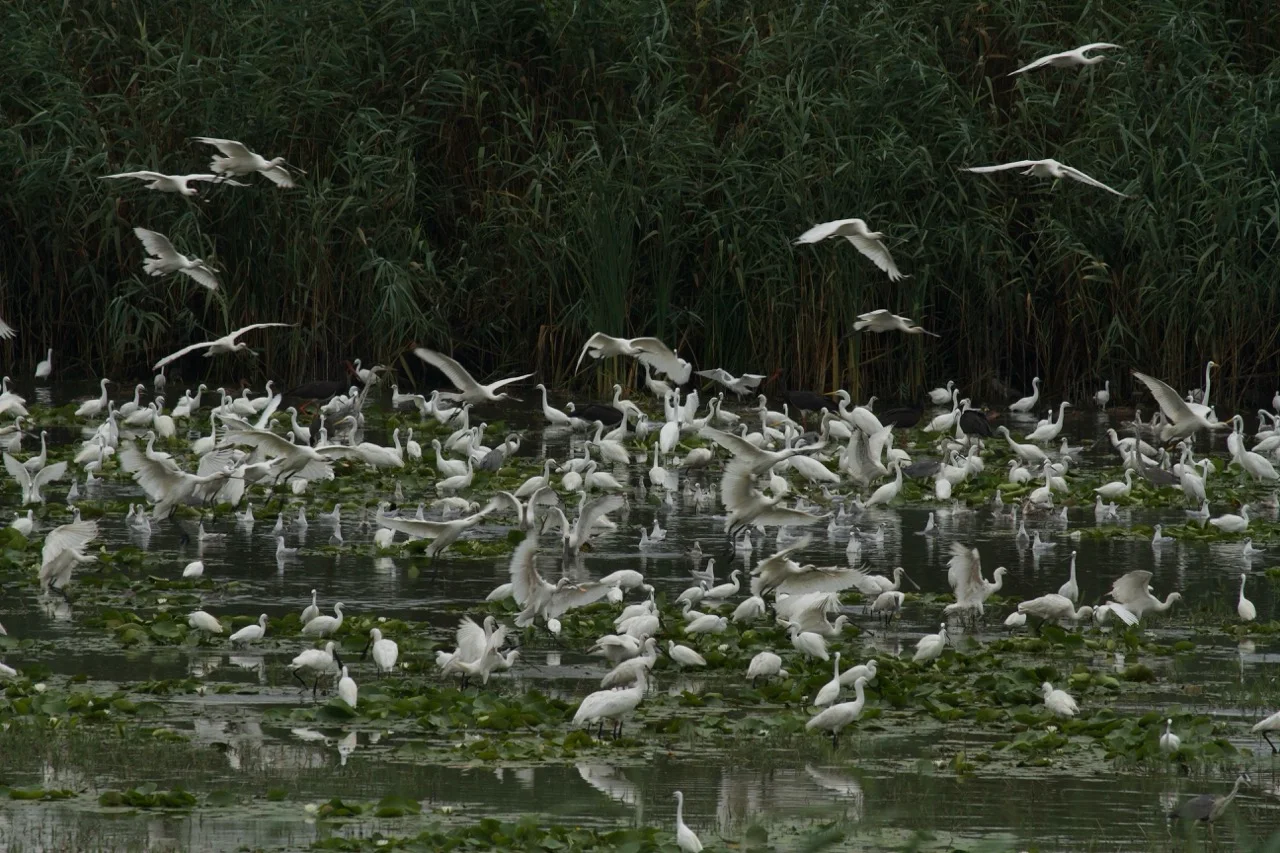
The most rewarding approach is not to treat the park as a checklist. Pause at the edge of a lake. Watch the direction in which birds are moving. Listen for calls from the reeds before reaching for binoculars. In a wetland, the small signs often come first: ripples in a channel, a branch bending under an unseen bird, or a line of shapes appearing and disappearing beyond the grass.
The boat: the park’s natural perspective
A guided boat excursion offers access to parts of Kopački Rit that cannot be reached on foot. From the pier, the route may follow the waters around Lake Sakadaš and into the floodplain’s channels, with the exact itinerary influenced by water levels, weather and park operations. The boat is not simply transport. It is a way of reading the wetland from within its own structure.
The best tours are deliberately unhurried. A professional guide can explain why a channel has formed, identify birds at a distance and describe how flooding connects the park’s habitats. You may pass beneath willow branches, glide beside dense reeds or emerge into a broad sheet of water where the horizon feels unexpectedly spacious.
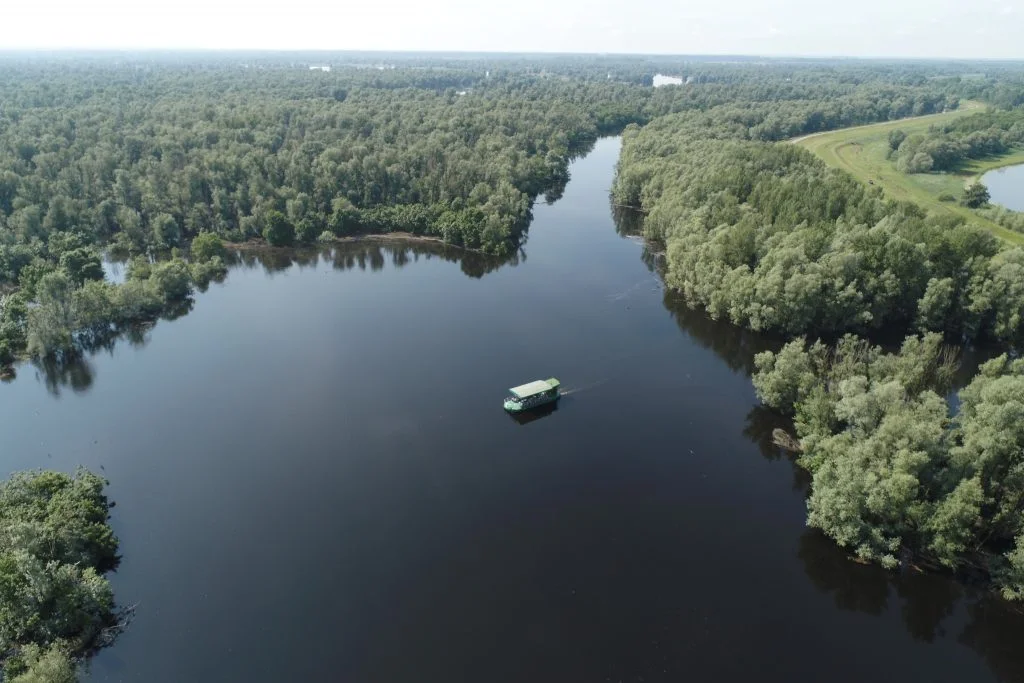
The park's standard guided boat excursion lasts around 45 minutes and departs from the pier at Lake Sakadaš, entering the Special Zoological Reserve with a professional guide. Published departure times can change, and the park currently requires reservations for its programmes, so check the official schedule and book before travelling.
The boardwalk and the White Water-Lily Trail
The White Water-Lily educational trail is the park’s most accessible introduction to wetland life. Its wooden walkway leads through marshy terrain near Lake Sakadaš, allowing visitors to experience the floodplain without stepping into fragile ground. Interpretive panels help explain the plants, animals and hydrological processes that can otherwise be easy to overlook.
The trail is especially satisfying for travellers who prefer observation to exertion. The boardwalk creates changing frames: a close view of water plants, a reed-filled opening, then a wider glimpse across the lake. In warm months, water lilies bring a delicate surface detail to the scene, while the surrounding vegetation remains dense and layered.
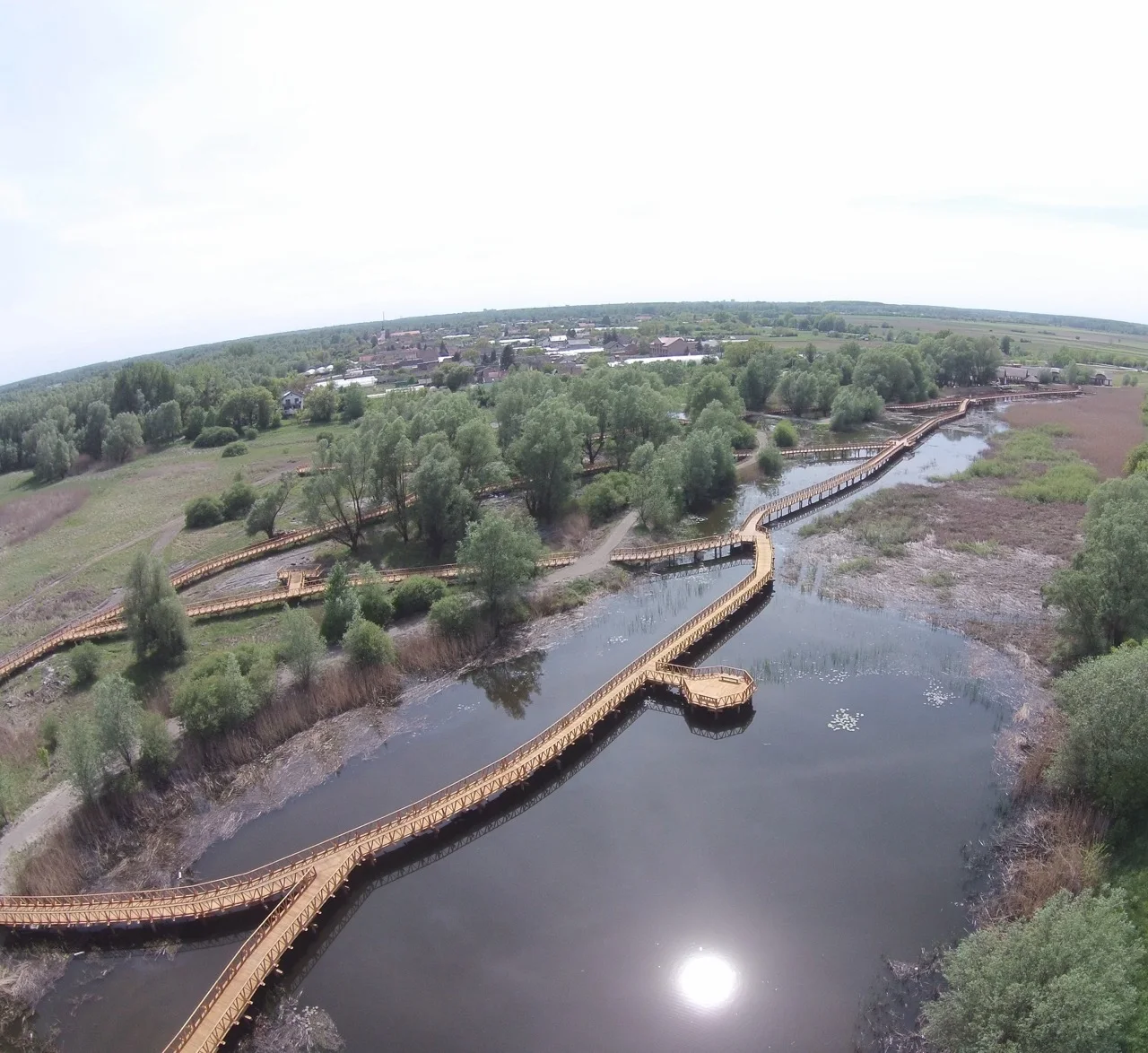
Bring binoculars if you have them, but do not assume that more equipment means more wildlife. A patient ten minutes at one viewing point can reveal more than a hurried circuit. Early morning and late afternoon are often comfortable times for walking and can offer softer light, though bird activity varies by season and weather.
Levees, lakes and longer walks
Kopački Rit’s levees provide some of its broadest views. The Veliki Sakadaš trail follows an elevated route from the pier toward the edge of the reserve, with water and fishponds on one side and protected floodplain habitats on the other. It is a useful complement to the boardwalk: less enclosed, more expansive and well suited to scanning the tree line for raptors.
Another educational route lies near the Tikveš castle complex. The Old Elm trail passes along the forest edge and focuses on the park’s woodland ecology, with information about trees, plants and animals. The trail is a reminder that Kopački Rit is not only a watery landscape. Its higher ground supports mature forest, while the transition between forest and marsh creates another rich zone for wildlife.
- White Water-Lily educational trail: a short boardwalk and natural-path experience around wetland habitats.
- Veliki Sakadaš trail: an elevated walk with views over water, fishponds and the reserve.
- Old Elm trail: a forest-edge route near the Tikveš complex.
- Levee viewpoints: useful places for wide floodplain views and distant bird observation.
Floodplain ecology in plain language
A floodplain is land shaped by a river’s periodic overflow. Rather than treating flooding only as a hazard, floodplain ecosystems depend on it. Water spreads beyond the main river channel, deposits nutrients, fills side arms and temporarily links habitats that may be separated during drier periods.
For fish, these seasonal connections can create sheltered spawning and nursery areas. For birds, shallow water and exposed mud offer feeding grounds. For forests, repeated wetting selects species adapted to saturated soils and changing water levels. When the flood recedes, the landscape is not simply restored to its previous state; it has been refreshed and rearranged.
This is why Kopački Rit can look different from one visit to the next. A channel may be open or choked with vegetation, a lake may appear broad or reduced to a series of pools, and bird concentrations may shift with food and water. The uncertainty is part of the experience, not a failure of planning.
When to visit
Spring is a compelling season for fresh vegetation, returning migrants and increased activity around breeding habitats. Summer brings long daylight hours and lush growth, but heat can be intense on exposed levees and insects are part of the wetland experience. Autumn offers changing foliage and migration, while winter can bring a spare, atmospheric landscape with open views through leafless trees.
There is no universally perfect month. Water levels, access, temperature and bird behaviour all vary. If a boat trip is central to your plans, the period when excursions are typically offered is especially important, and departures may remain weather-dependent. Check the park’s current visitor information close to the date of travel.
Planning a low-impact visit
Kopački Rit is reached primarily by car or organised transfer. The Kopačevo visitor area is the principal starting point for many visits, while Tikveš provides access to the castle complex and nearby walking routes. Public transport options are limited, so travellers without a car should arrange a transfer or consider a guided excursion from Osijek.
Allow at least several hours if you want to combine a walk with a boat trip. A longer day gives you time to move slowly, wait at viewing points and include the Tikveš area without turning the visit into a sequence of rushed stops. Wear shoes suitable for uneven or damp surfaces, even when using maintained trails.
- Check official opening information, trail access and boat departures before setting out.
- Carry water, sun protection, insect repellent and binoculars if available.
- Bring layers: open levees can feel hot, while shaded waterways and boat rides may be cooler.
- Stay on marked paths and follow instructions around protected areas.
- Keep dogs under control and do not allow them to enter water or reed beds.
- Take all rubbish with you and avoid playing music or making unnecessary noise.
- Use a long lens rather than approaching nests, colonies or resting animals.
The ethics of watching a wetland
Wetlands invite curiosity, but they are also places where small disturbances can have large effects. Birds may abandon a feeding spot when repeatedly flushed; nesting colonies can be stressed by close approaches; trampling can damage plants that stabilise shallow shores. The most responsible visitor accepts distance as part of the encounter.
That principle is particularly important in a park whose value depends on functioning natural processes. The boardwalk, levee and guided boat route are not restrictions designed to keep visitors away from nature. They are ways of entering the landscape while leaving its essential spaces intact.
Beyond the reserve: Baranja and Osijek
Kopački Rit makes most sense as part of a broader eastern Croatian journey. Osijek, the region’s main urban centre, is a practical base for reaching the park and offers riverfront promenades, historic streets and the Tvrđa fortress district. Nearby Baranja adds a rural dimension, with vineyard country, village roads and a food culture shaped by Central European and Pannonian influences.
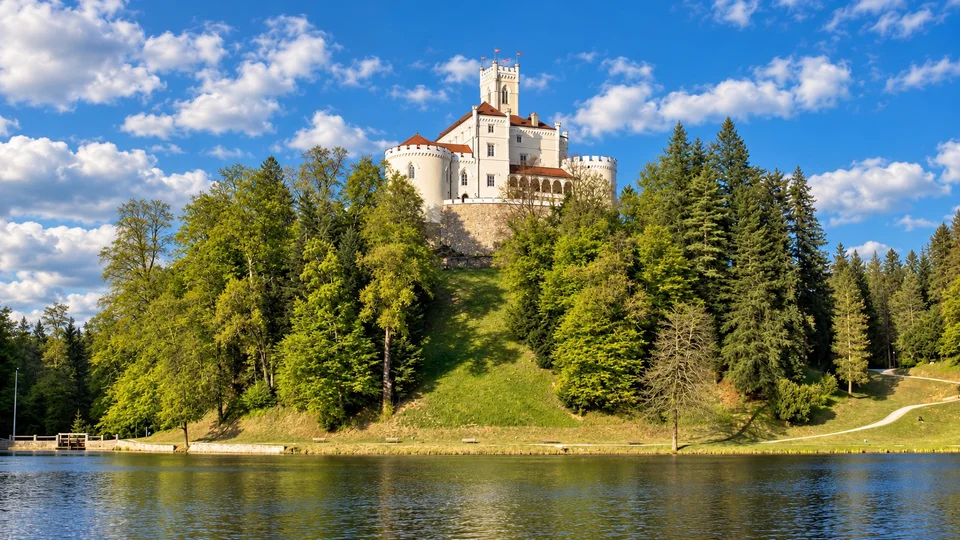
The Tikveš castle complex, within the wider park area, adds a historical counterpoint to the wetlands. Its architecture and setting reflect the region’s layered past, while the surrounding trails return attention to the forest and floodplain. Combining these elements creates a day that is not only about seeing birds, but about understanding the landscape in which people, rivers and wildlife have long coexisted.

A different idea of Croatian nature
Croatia’s best-known natural attractions are often defined by dramatic relief: waterfalls, karst mountains and a brilliant Adriatic coast. Kopački Rit offers another kind of beauty. Its drama is horizontal and seasonal, expressed through distance, reflection, wind in the reeds and the steady movement of water.
To visit well is to resist the urge to conquer the landscape. Take the boat, walk the boardwalk, listen to the guide and leave room for silence. The reward is not a guaranteed rare sighting, but a clearer sense of how a river can build an entire world at its edge.