At first glance, Međimurska gibanica might look like an ordinary homemade cake. Cut into it, however, and you discover something quite different: four generous fillings, each with its own flavour and texture, separated by thin layers of pastry.
There is the earthy richness of poppy seeds, the softness of fresh cheese, the nuttiness of ground walnuts and the gentle sweetness of apples. Together, they create a dessert that is rich, moist and unmistakably connected to the culinary traditions of Međimurje, Croatia’s northernmost region.
For anyone exploring this part of Croatia, trying Međimurska gibanica is an excellent introduction to the region's traditional cooking.
Best for: Food lovers, culinary travellers and anyone interested in regional Croatian specialities.
What to expect: A substantial baked dessert with four different fillings and a golden pastry crust.
Where to try it: Traditional restaurants and regional dining establishments around Čakovec, Mačkovec and the Međimurje wine-growing hills.
Our tip: Enjoy it after a traditional meal, but save some room. Even a modest slice can be surprisingly filling.
What exactly is Međimurska gibanica?
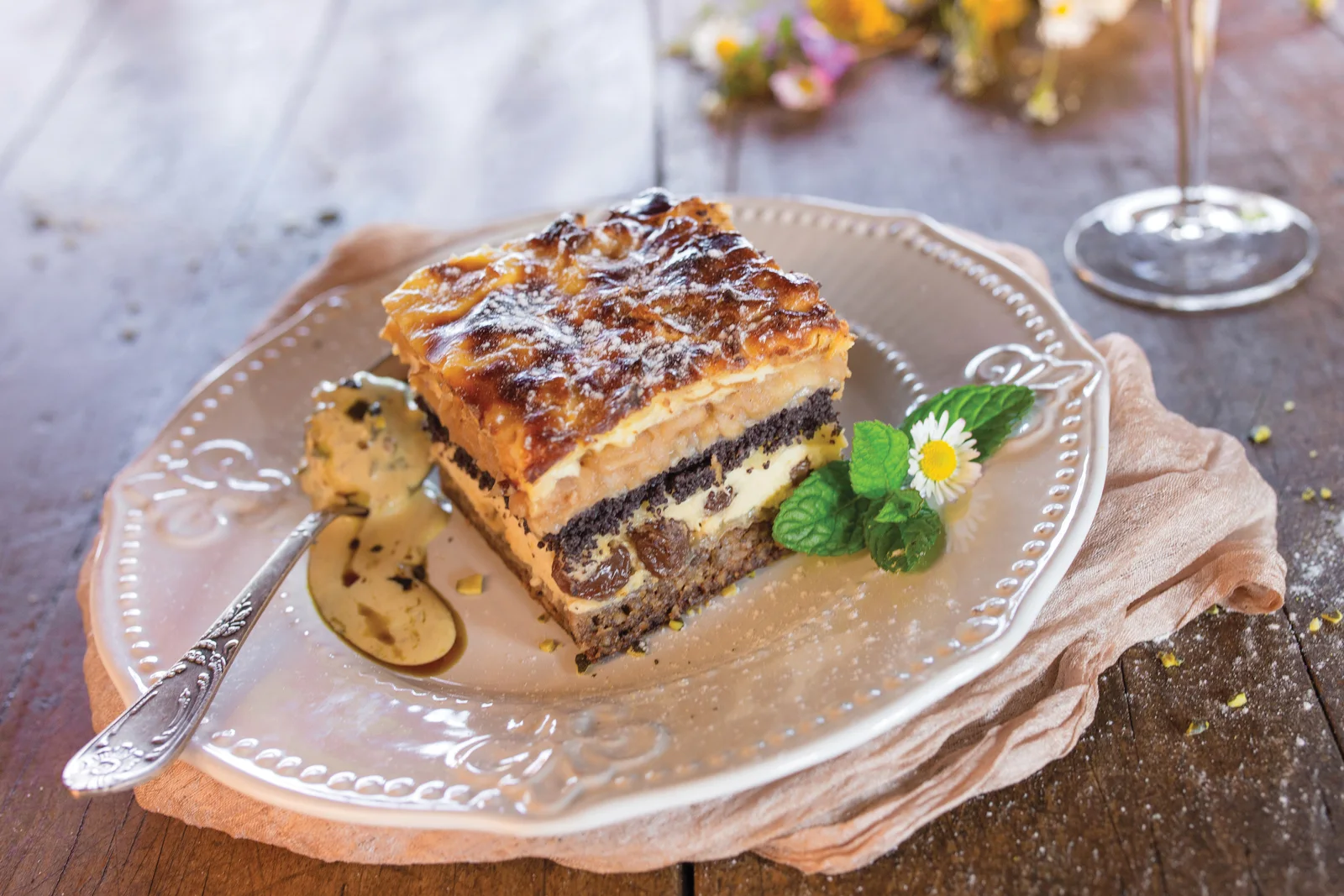
Međimurska gibanica is a traditional layered pastry from Međimurje in northern Croatia, a region situated between the Mura and Drava rivers, close to the borders with Slovenia and Hungary.
Its defining feature is the combination of four fillings, traditionally prepared from ingredients commonly found in local households: ground poppy seeds, fresh cow's cheese, ground walnuts and grated apples.
The fillings are layered between thin sheets of pastry, usually stretched or filo-style dough. Before baking, the top may be covered with a mixture containing cream and eggs, which helps create its characteristic golden surface.
Unlike a light sponge cake or creamy restaurant dessert, gibanica is substantial. It is baked in a large tray, cut into square or rectangular portions and traditionally served at family gatherings, holidays and celebrations.
Although the ingredients are relatively simple, preparing a good gibanica takes patience, particularly when making the pastry and balancing the four fillings.
Four fillings, four different flavours
What makes Međimurska gibanica particularly interesting is that every layer contributes something different.
Poppy seeds: the distinctive dark layer
The dark filling comes from ground poppy seeds, usually mixed with sugar and milk.
Poppy seeds have an earthy, nutty flavour with a slightly bitter edge that prevents the dessert from becoming overwhelmingly sweet. Their dark colour also makes this layer one of the easiest to recognise when looking at a cut slice.
Fresh cheese: the creamy balance
The white layer is made with fresh cow's cheese, often combined with eggs and sugar.
It provides a soft, slightly tangy contrast to the stronger flavour of the poppy seeds and walnuts.
Depending on the family recipe, the cheese filling may also contain vanilla, lemon zest or raisins.
Walnuts: the rich, nutty layer
Finely ground walnuts form another important part of the dessert.
They are commonly mixed with sugar and sometimes milk to create a moist, textured filling.
Walnuts bring a warm, slightly toasted flavour that is especially characteristic of traditional cakes from continental Croatia.
Apples: the natural sweetness
The apple filling is typically made from grated apples, sometimes seasoned with cinnamon and sugar.
Apples add natural sweetness and moisture, helping balance the richer ingredients.
Their flavour can be subtle, but their role is important: without the fruit, the combination of cheese, walnuts and poppy seeds would feel considerably heavier.
What should a good slice look like?
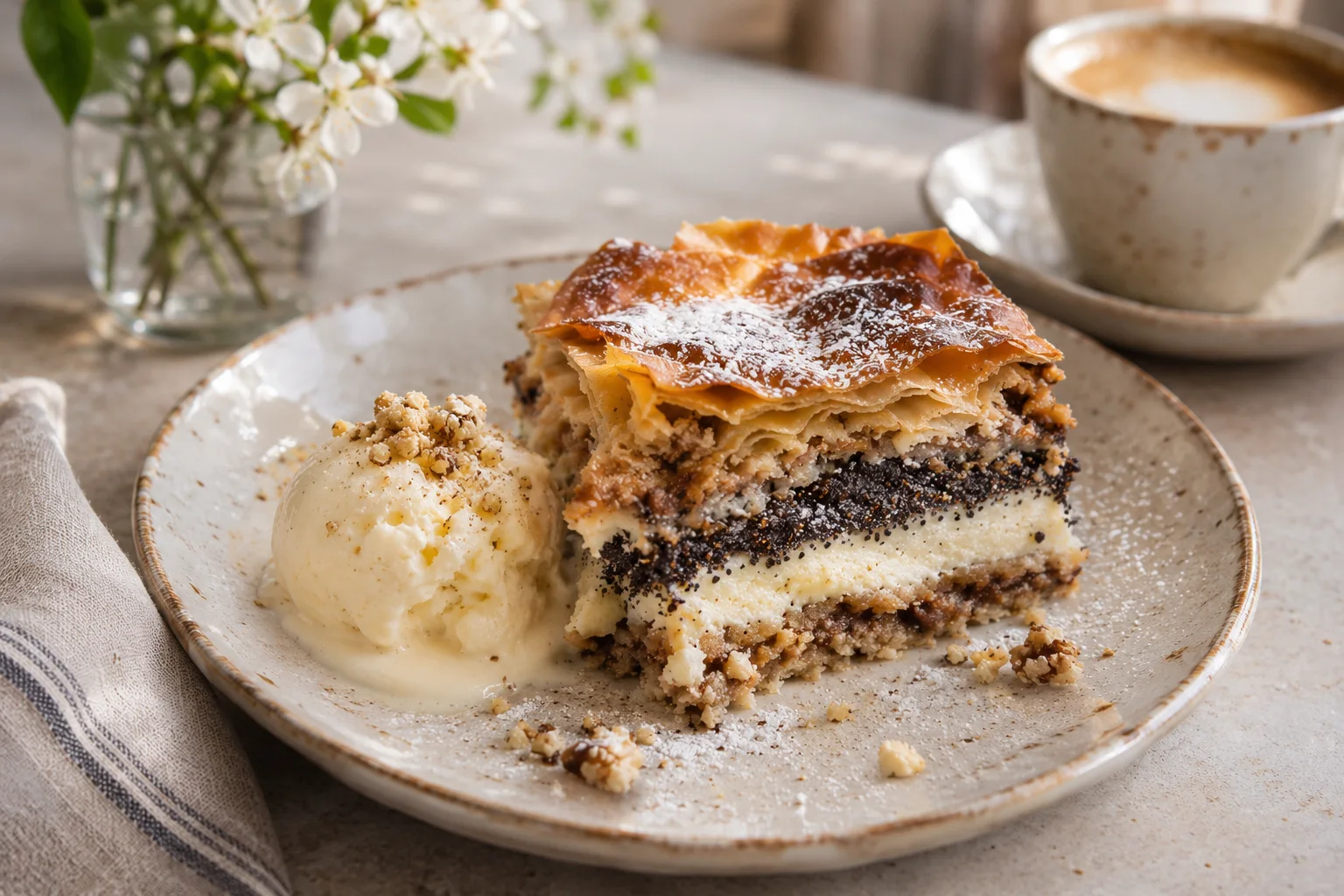
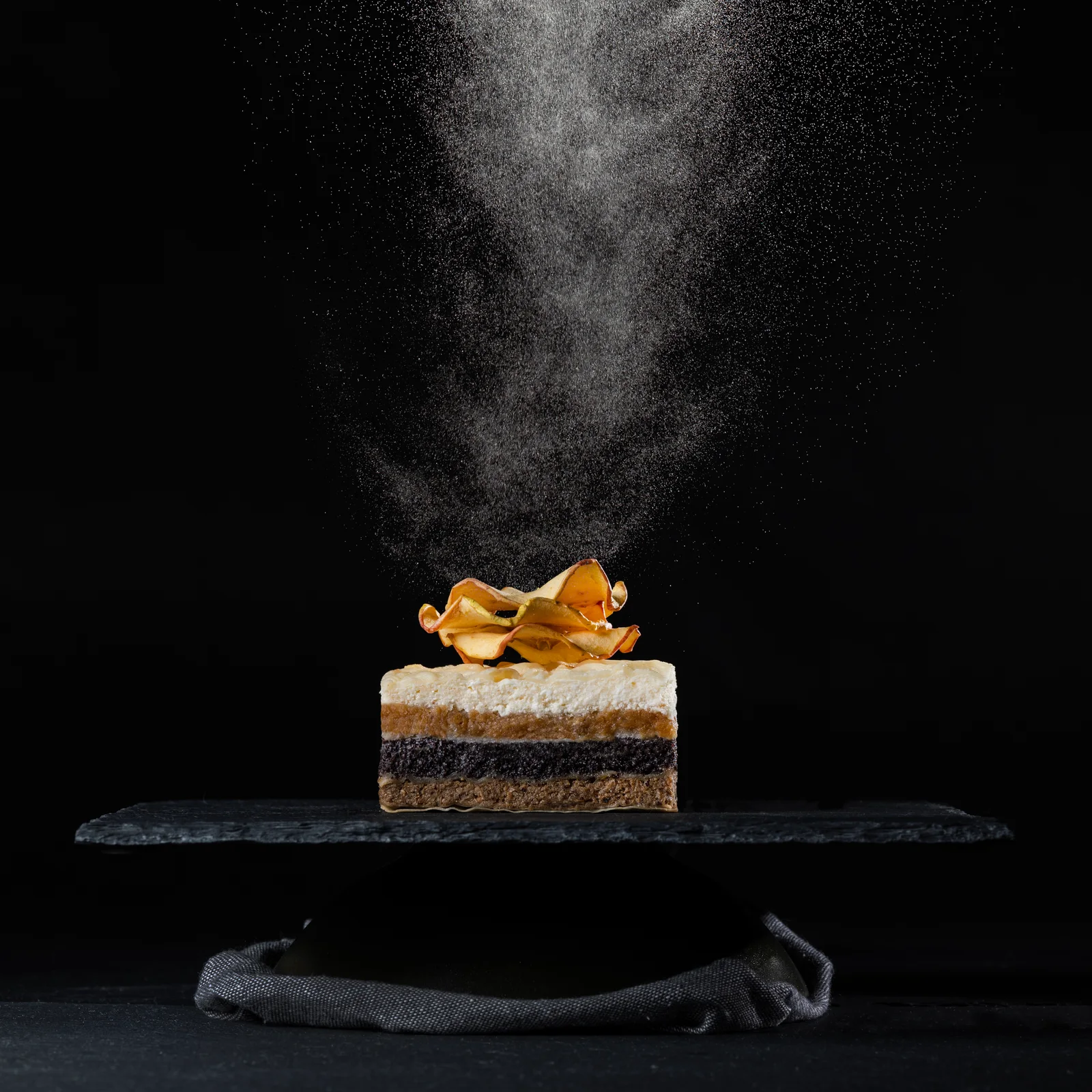
The four fillings should be recognisable when the cake is cut. Their order can vary, but the contrast between the dark poppy seeds, pale cheese, brown walnuts and apple filling is part of the dessert's appeal.
The interior should be moist without becoming watery, while the pastry should retain enough structure to hold the fillings together.
A slightly irregular appearance is perfectly normal. This is, after all, a dessert with strong roots in home baking.
How is Međimurska gibanica made?
Traditional preparation begins with the pastry and four separate fillings.
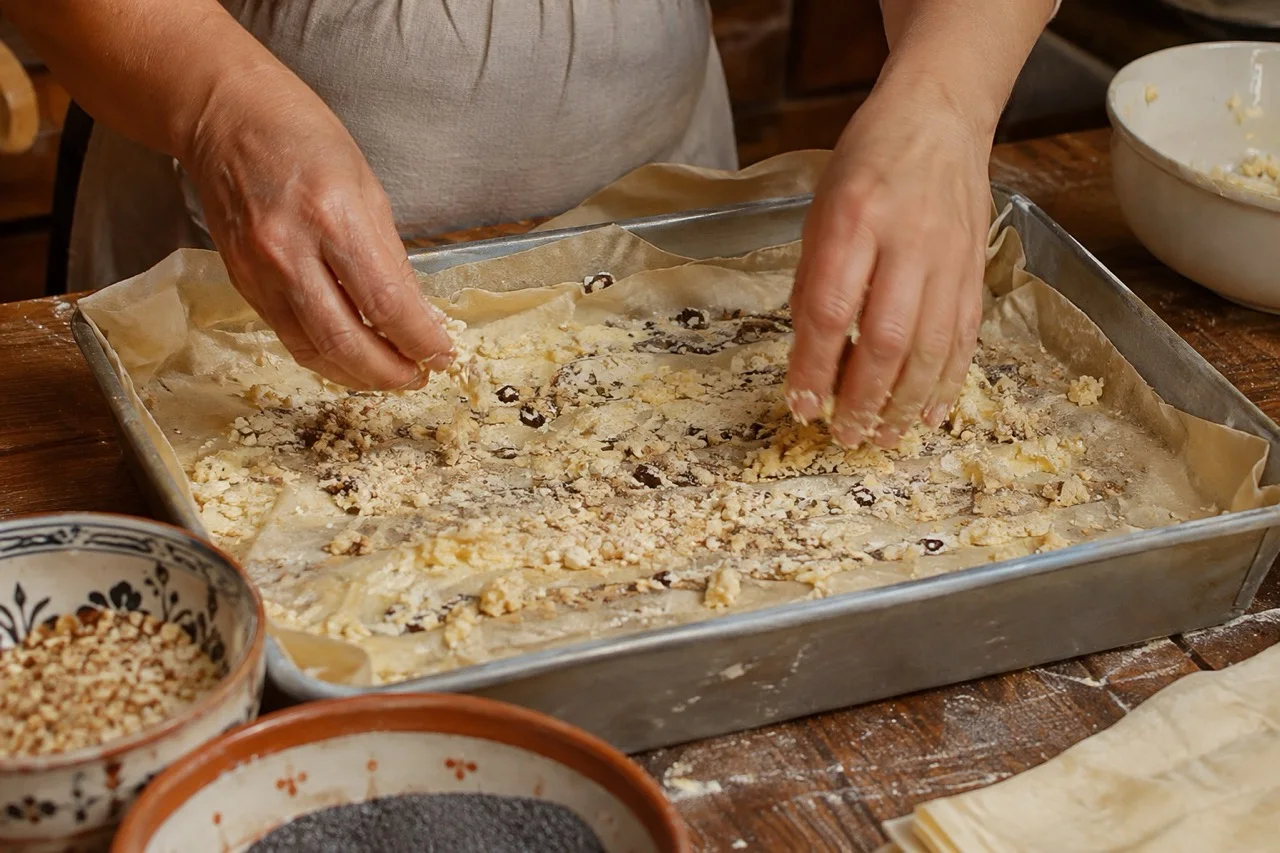
A common method starts by lining a baking tray with several thin sheets of dough. The fillings are then added one after another, separated by more sheets of pastry.
Traditionally, Međimurska gibanica combines four fillings — poppy seeds, fresh cheese, walnuts and apples — arranged in layers of thin pastry. There is no single prescribed order: different families and traditional recipes arrange the fillings differently, making each version slightly unique.
Once assembled, the gibanica is topped with pastry and often brushed or covered with cream and egg before baking until golden.
The finished cake is usually allowed to rest before cutting so that the fillings settle and the portions hold their shape.
Some families serve it slightly warm, while others prefer it cooled.
The methods and proportions vary from kitchen to kitchen. That is part of the tradition: family recipes are often passed down through generations, with small differences in sweetness, thickness and the order of the fillings.
Although Međimurska gibanica is now one of the region's best-known culinary specialities, its history is less straightforward than many visitors might expect. According to a monograph published by the Međimurje Tourist Board and local action groups, relatively few written recipes and records survive from before the second half of the 20th century. The dessert became increasingly common in regional restaurants during the 1970s, gradually establishing itself as one of Međimurje's culinary symbols.
Međimurska vs Prekmurska gibanica: what is the difference?
Visitors travelling between northern Croatia and neighbouring Slovenia may encounter another dessert with a remarkably similar name: Prekmurska gibanica.
The resemblance is no coincidence. Međimurje and Slovenia's Prekmurje region share a geographical border, closely connected culinary traditions and many familiar ingredients.
Both desserts use the same four main fillings: poppy seeds, fresh cheese, walnuts and apples.
The main differences concern the pastry, the number of layers and how the fillings are arranged.
Međimurska gibanica, the Croatian version, traditionally contains one layer of each of the four fillings, separated by thin pastry. The order varies between recipes and families.
Prekmurska gibanica, the Slovenian version, traditionally contains two layers of each filling, arranged in a prescribed sequence. It also uses a shortcrust pastry base beneath the thin pastry layers.
The Slovenian dessert has been registered under the European Union's Traditional Speciality Guaranteed scheme, which defines its traditional composition and preparation.
Both deserve to be tried. Comparing them is a particularly enjoyable way to discover how closely related regional food traditions can develop their own identities.
Where to eat Međimurska gibanica in Croatia
If you want to taste the dessert in its home region, start with restaurants that specialise in Međimurje's traditional cuisine.
Three particularly useful places to consider are:
Mala Hiža, Mačkovec – for a refined regional dining experience: Located in Mačkovec, just outside Čakovec, Mala Hiža is one of Međimurje's best-known restaurants for regional cuisine. The restaurant operates in a reconstructed historic wooden house and combines traditional ingredients with a more contemporary, seasonal approach. Međimurska gibanica is among the desserts for which the restaurant is recognised, making it a strong choice for travellers who want to experience the cake as part of a complete regional meal.
Address: Balogovec 1, Mačkovec
Restoran Terbotz, Železna Gora – for gibanica among the vineyards: For a different setting, Restoran Terbotz combines traditional Međimurje cuisine with the region's wine-growing landscape. Located in Železna Gora, in the hills near Štrigova, the restaurant is a convenient stop while exploring the Međimurje wine road. Its published seasonal menu includes Međimurska gibanica served with pumpkin ice cream – a particularly regional combination.
Address: Železna Gora 113, Štrigova
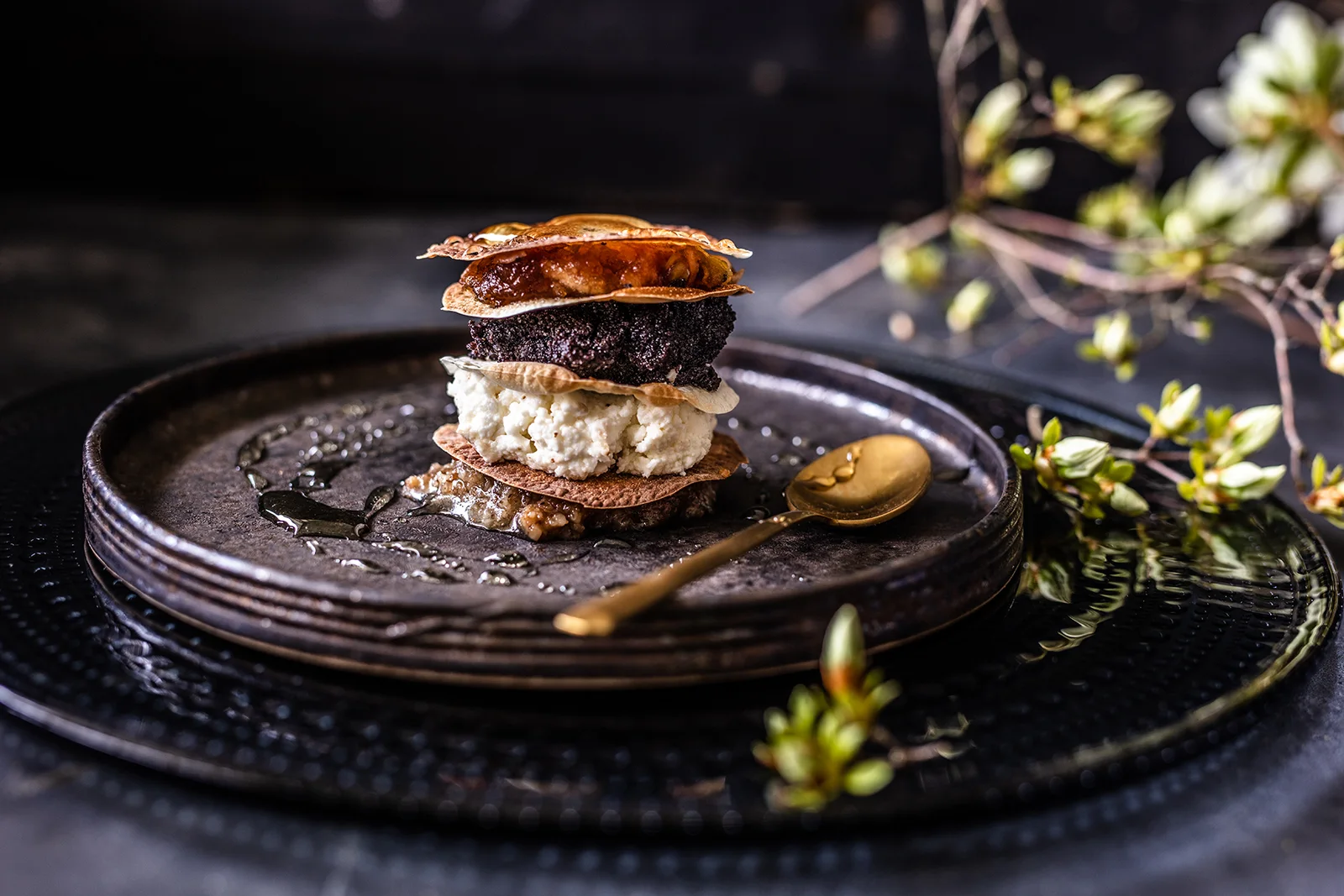
Terme Sveti Martin, Toplice Sveti Martin – for a lighter, healthier twist on traditional gibanica: For travellers looking for a modern interpretation of this traditional dessert, Terme Sveti Martin offers an interesting alternative. Their healthier, deconstructed version of Međimurska gibanica uses local honey instead of refined sugar and offers a lighter take on the traditionally rich dessert. It reflects the resort's philosophy of combining regional culinary heritage with a more health-conscious approach to dining, making it an appealing choice for visitors who want to discover Međimurje's flavours in a contemporary wellness setting.
Address: Izvorska 3, Toplice Sveti Martin, Sveti Martin na Muri
Međimurska hiža, Čakovec – for a traditional meal or takeaway: Međimurska hiža offers another practical option in Čakovec. The restaurant serves familiar Croatian dishes alongside regional specialities and has promoted its Međimurska gibanica for takeaway in specially designed packaging.
Address: Ulica Ljudevita Gaja 35, Čakovec
How to enjoy Međimurska gibanica
There is no complicated ritual involved in eating gibanica, but a few choices can make the experience even better.
Save room after lunch. A traditional slice can be quite filling. If you have already enjoyed a substantial regional meal, sharing a portion may be sufficient.
Try it without additional toppings first. This makes it easier to appreciate the four distinct fillings. Some restaurants serve it with ice cream or other accompaniments, but the cake is flavourful enough on its own.
Enjoy it with coffee. A simple espresso or cappuccino makes an excellent contrast to the sweetness and richness of the dessert.
Explore a local wine pairing. If you are visiting one of Međimurje's wine-focused restaurants, ask the staff to recommend a local wine that works with the cake. An aromatic or gently sweet wine may complement it, although the ideal pairing depends on the sweetness of the particular gibanica.
Don't expect every slice to look identical. Some recipes have thicker cheese layers, others emphasise the apples or walnuts. Differences in appearance and texture are not necessarily signs of inferior quality.
A taste of Međimurje worth remembering
Međimurska gibanica is more than a combination of four fillings. It reflects a regional food tradition built around familiar ingredients, patient preparation and recipes that vary from one household to another.
Whether you discover it in a countryside restaurant overlooking the vineyards or at a family table, the best slice is not necessarily the neatest or most elaborate. Sometimes, it is simply the one that tastes like it was made at home.
And that is precisely why this dessert deserves a place on your Međimurje itinerary.