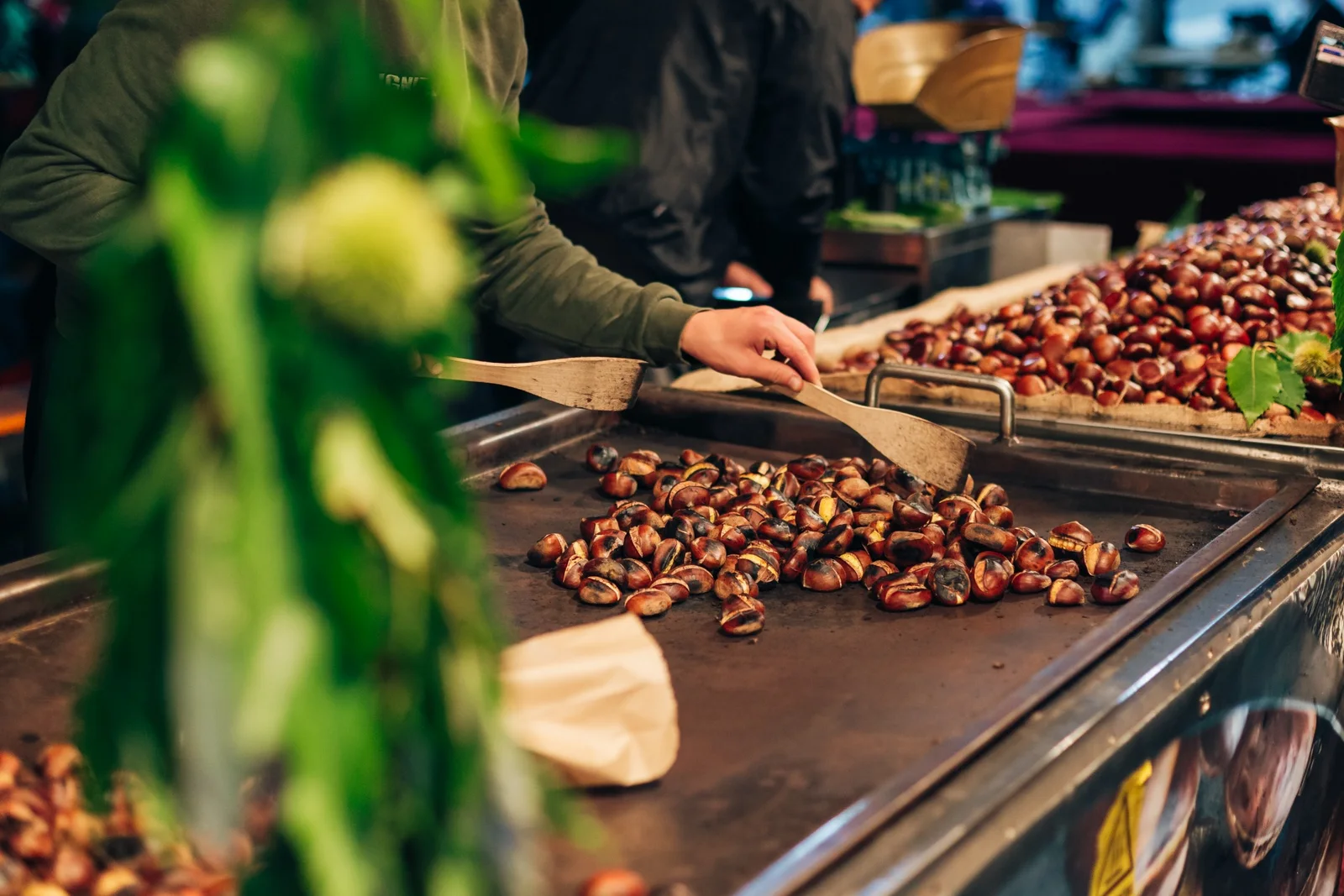
You smell them first. Chestnuts roast over the fire, the streets of Lovran’s old town fill with people, and every few steps bring another reason to stop: a cake, an ice cream or something else made with the season’s sweetest harvest. Marunada isn’t a festival you need to build an entire week around. Its appeal lies in the ease of spending a few hours in Lovran: eating something good, wandering down to the sea and leaving while the day still feels pleasantly full.
Start With the Simplest Taste
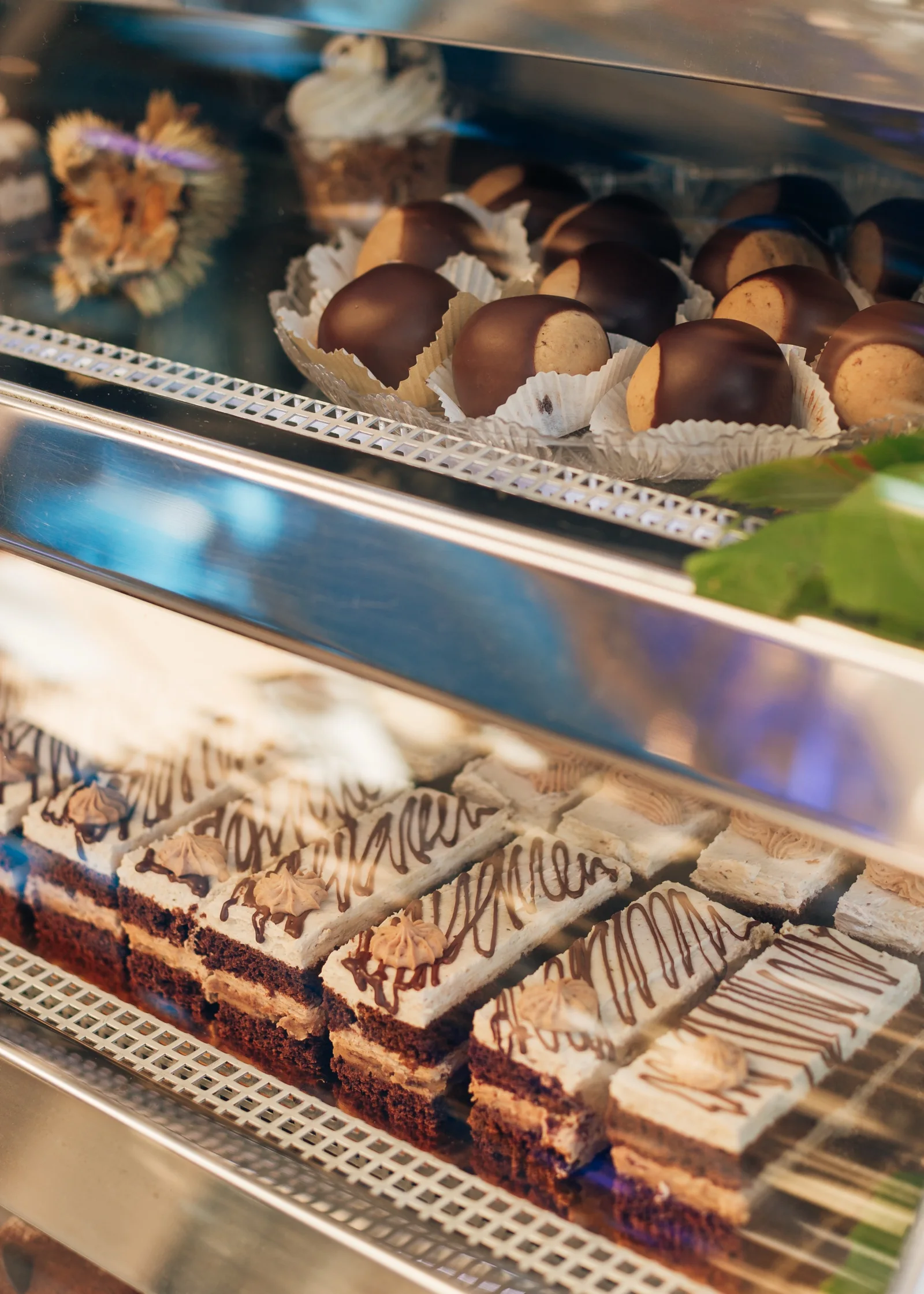
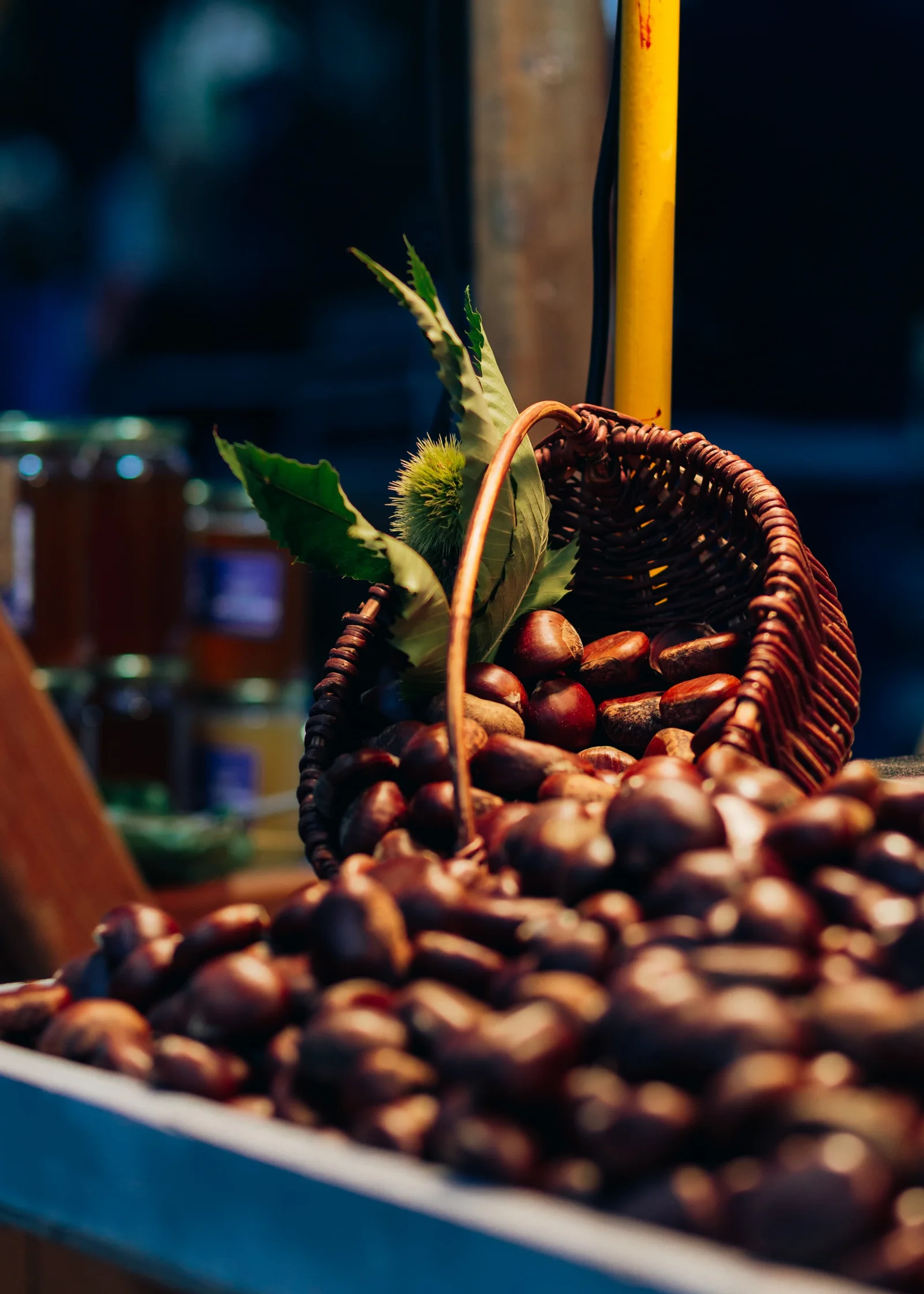
The local marun is at its best when little has been done to it: roasted, warm and soft enough to peel with your fingers. Start with a paper bag of roasted maruni before exploring the other stalls. The festival traditionally brings together chestnut desserts and savoury dishes, so you may come across cakes, fritters, crêpes, ice cream, drinks and more inventive combinations.
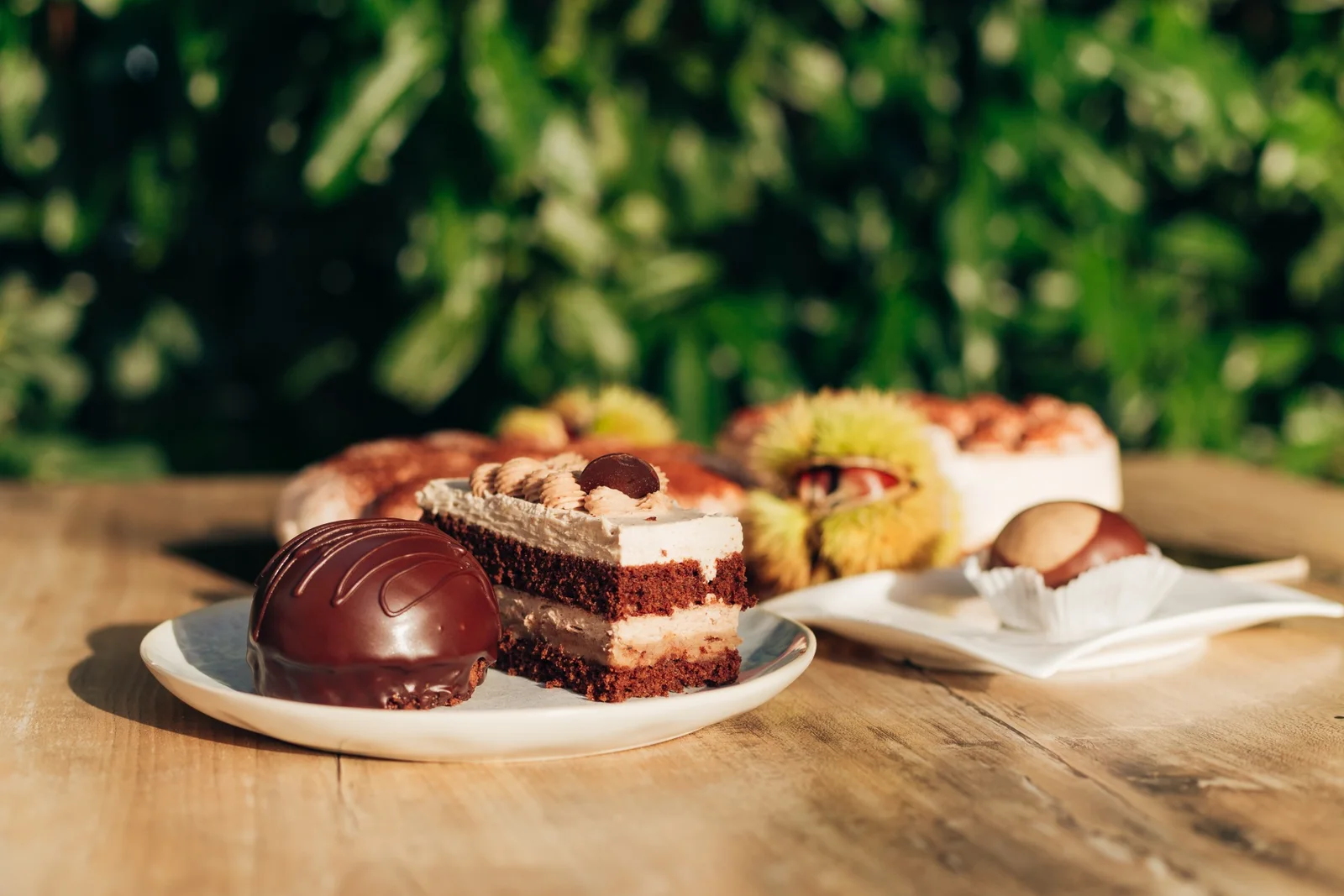
There’s no need to try everything. We’d choose one classic street snack and one dessert, leaving enough time to wander around Trg slobode and the surrounding streets where much of the festival takes place. Expect a lively atmosphere and activities for children. For a gentler pace, arrive earlier in the day.
What Makes a Marun Different From a Chestnut?
A marun is a cultivated variety of sweet chestnut associated with this area. Compared with a typical chestnut, it tends to be larger, with a lighter shell and a sweeter taste. Its outer shell and inner skin are usually easier to remove, too.
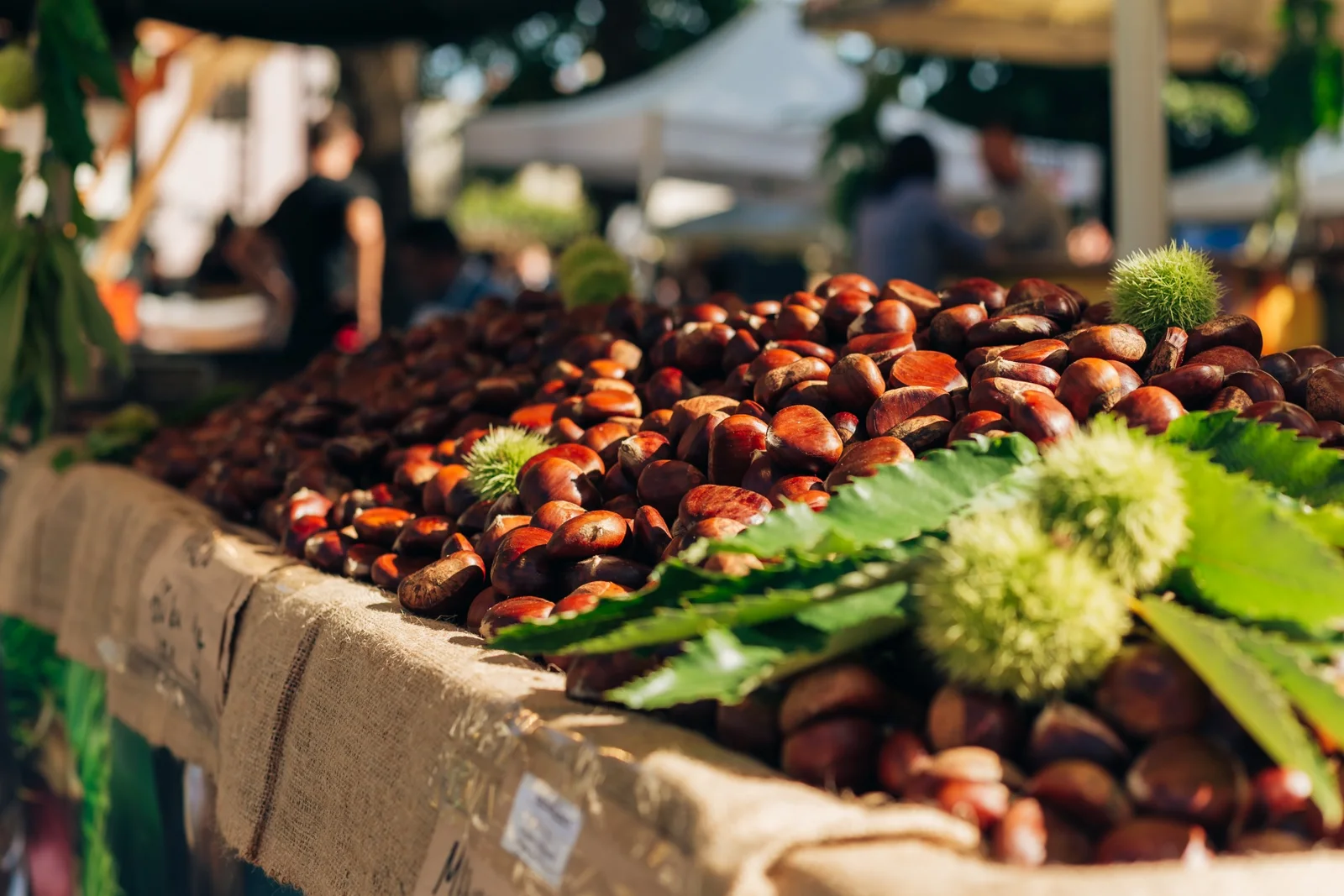
The difference is also in the texture: maruni have a rich, soft flesh that works especially well in desserts. The terminology isn’t always exact, and elsewhere the word marun may simply refer to a particularly large chestnut. In Lovran, though, it carries a more specific connection to local growing traditions.
Why Lovran?
Marunada feels at home here because the chestnut is more than a convenient festival ingredient. Maruni have long been grown in the hills behind Lovran, above the Adriatic coast. Alongside olives, grapes and cherries, they were part of the area’s agricultural life, providing food and income. They were once traded beyond the region, too.
That gives the festival a story deeper than its menu. It keeps alive a growing tradition that shaped the villages above the coast and recalls Lovran’s close relationship with its hinterland. Today, that history comes together in a few simple things: chestnuts, fire, family recipes and the people preparing them.
After the Last Chestnut
When you’ve had your fill, wander through the old town towards the mandrać, Lovran’s small harbour. The town is compact enough to explore at an easy pace. Its stone streets and little squares offer a welcome change of rhythm after the bustle of the stalls, while the harbour is a natural place to pause by the sea.
If you have more time, follow the coastal path for a while. You don’t need to turn it into a long hike: walk as far as you like, then head back when the day feels complete. That’s what makes Lovran so well suited to an autumn visit. Marunada draws you here; the old town and the sea give you a reason to linger.