In Mallorca, sobrassada appears in many forms. It may arrive on dark bread with tomato and olive oil, melt into a pan of vegetables, fill a pastry or sit alongside honey on a contemporary menu. It is unmistakably local, but it belongs to more than one traditional dish.
For a first taste, keep things simple: try it on bread, then warm it gently. The comparison makes its firm, spreadable texture and richer, almost sauce-like quality easier to appreciate. If you have the chance to compare a standard version with one made from porc negre, it can be an interesting exercise, although the black-pig designation alone does not guarantee that every producer’s sobrassada will suit every palate.
What sobrassada is made from
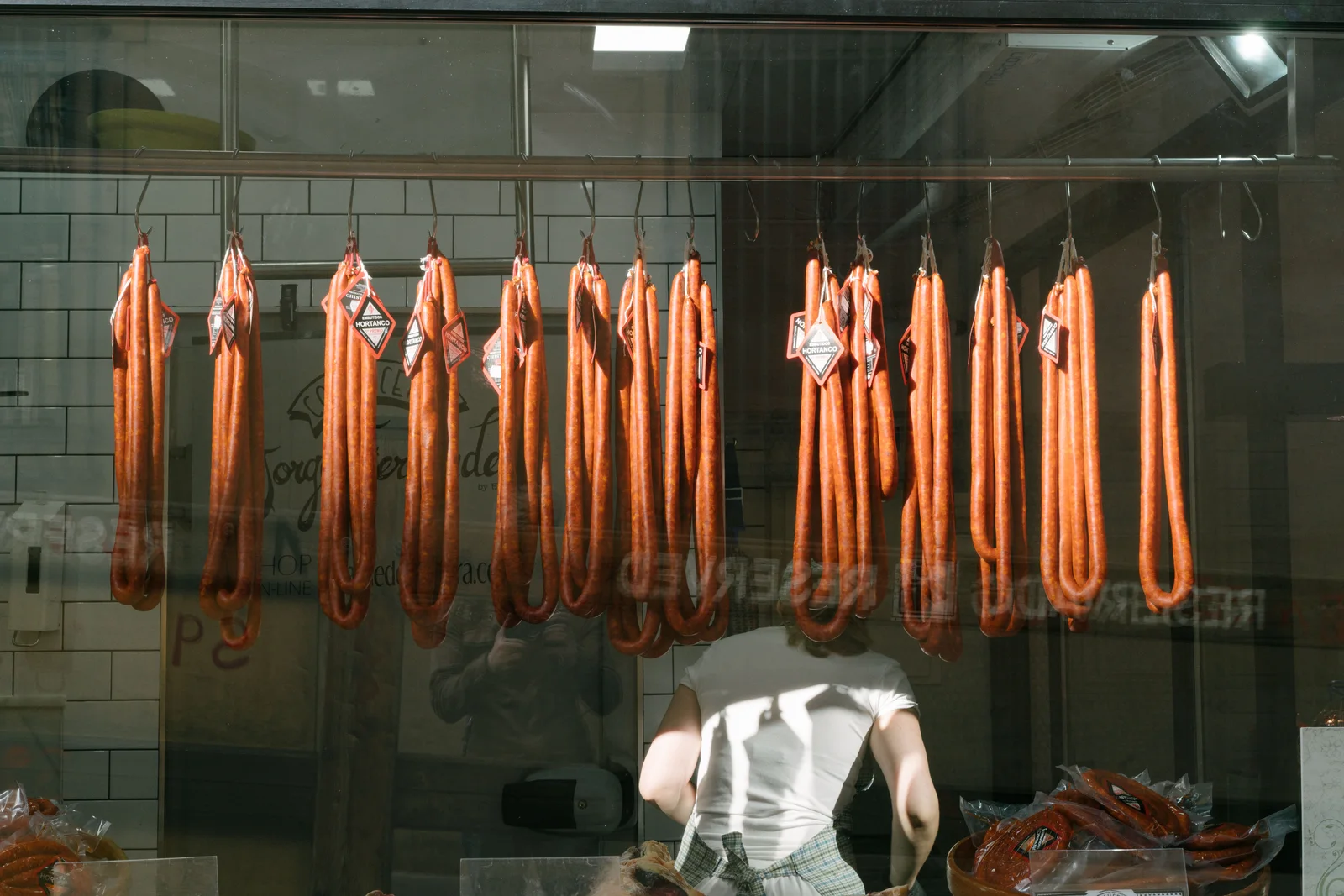
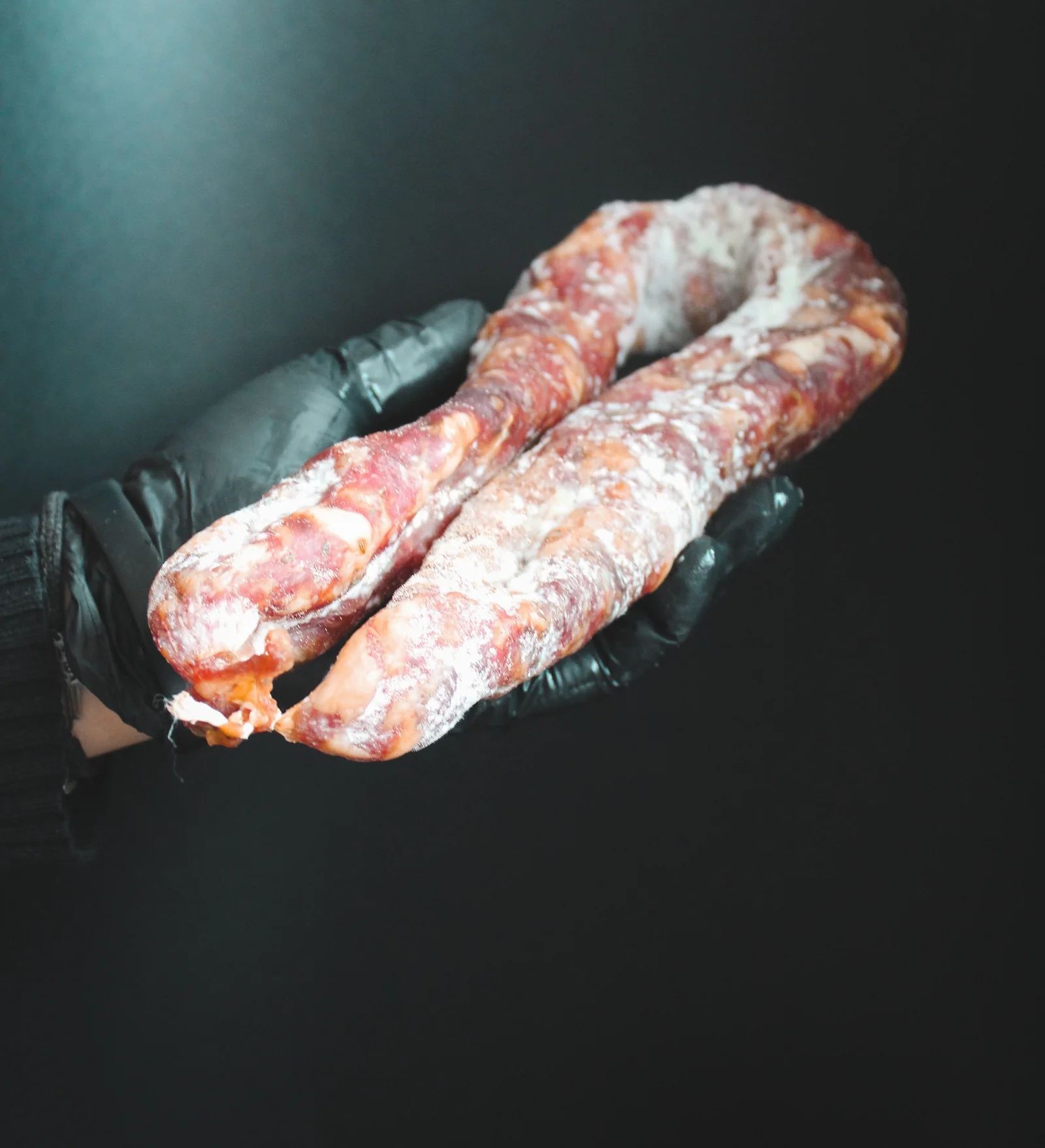
The core recipe is restrained: minced pork, pork fat, salt and paprika, mixed before being filled into a natural casing and left to mature. The balance matters. Fat gives the sausage its soft, yielding texture, while paprika contributes colour, aroma and a rounded savouriness that is not necessarily hot.
Different formats mature at different speeds. A small piece may be ready relatively quickly; a larger one needs more time and develops a deeper flavour. Younger sobrassada is especially useful in cooking because it melts readily. A more mature piece has greater concentration and a firmer exterior, although the centre may still be soft enough to spread.
The recognised Mallorcan product is protected by a geographical designation. When buying, look for the official product name and designation on the label, rather than assuming that every sausage sold on the island is made to the same specification.
A food shaped by preservation
Sobrassada belongs to Mallorca’s tradition of preserving pork after the seasonal slaughter. Before refrigeration and modern food distribution, curing allowed households to make use of the animal over a longer period. The method was practical, but the result became part of the island’s culinary identity.
Paprika is central to the sausage’s present character. Peppers reached Europe from the Americas after the sixteenth century, and paprika eventually became an important seasoning in Iberian charcuterie. In sobrassada, it brings colour as well as fragrance and gentle sweetness. The exact history of the recipe is more complex than a single origin story, but the finished product is unmistakably associated with Mallorca.
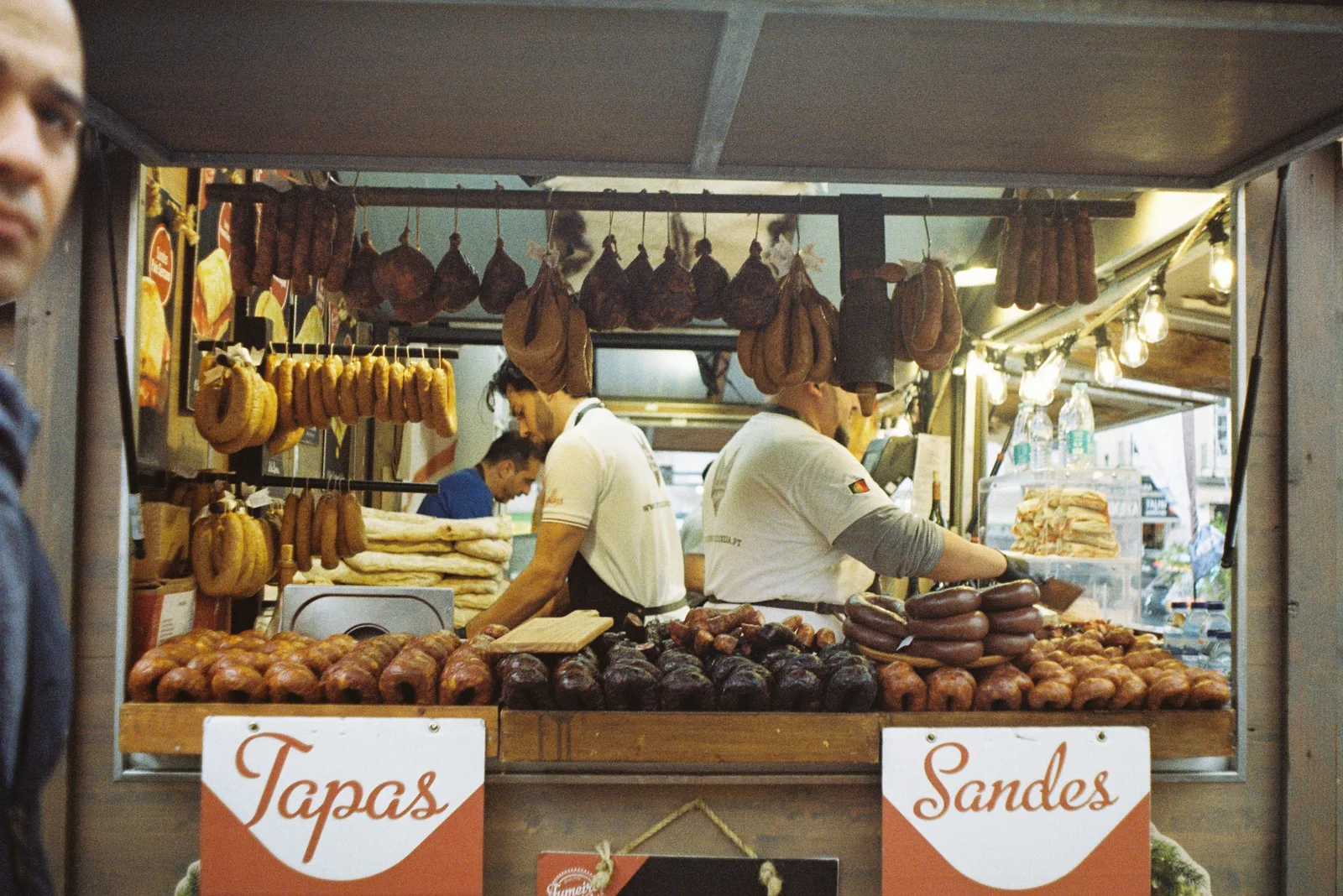
Porc negre and the question of quality
Some of the most sought-after sobrassada is made with porc negre, Mallorca’s native black pig. The breed is part of the island’s agricultural heritage, and its meat and fat can give the sausage a fuller, more pronounced character.
That distinction is worth exploring, but it should not become the only measure of quality. A well-made sobrassada depends on the meat, the proportion of fat, the seasoning and the curing conditions. Ask what you are being served and compare rather than buying solely on reputation.
How to eat it in Mallorca
Pa amb oli is the clearest starting point: bread rubbed with tomato, dressed with olive oil and salt, then topped with something savoury. Sobrassada works particularly well here because the bread provides structure, the tomato adds acidity and the oil carries its paprika-rich fat.
It is also excellent when warmed gently. On hot bread, or folded into eggs or potatoes, it softens and releases enough fat to coat the other ingredients. High heat can make it greasy, so the best preparations use a modest amount and warm it carefully.
In traditional cooking, sobrassada often acts as seasoning rather than the main ingredient. It can enrich vegetables, pulses, fillings, savoury pastries and rice dishes such as arròs brut. Think of it as a concentrated source of salt, fat, colour and depth.
- Pa amb oli with tomato-rubbed bread and olive oil
- Warm sobrassada with eggs or potatoes
- Broad beans and other vegetables enriched with a small amount
- Arròs brut and other rice dishes
- Savoury pastries, pies and filled breads
- A small amount with honey, figs or other fruit
Why the sweet pairings work
Honey and sobrassada are a familiar combination in Mallorca, and the logic is straightforward. Honey softens the sausage’s salt and draws attention to the paprika’s warmth. The quantity matters: this is a savoury pairing with a sweet accent, not a dessert.
Figs, apricots, grapes and lightly sweet breads work in a similar way. The richness of the sausage gives fruit enough contrast, while the fruit provides acidity or sweetness to keep the combination from feeling heavy.
Traditional ingredient, contemporary uses
Modern Mallorcan kitchens have taken sobrassada beyond the breadboard without losing its character. It may be used as a sauce base, folded into a filling, turned into crisp crumbs or added to a dish as a finishing element.
Vegetables such as aubergine, peppers, potatoes, beans, cabbage and fennel provide a natural match. Sobrassada can also be paired with fish, but it needs restraint: its paprika, salt and fat can easily overwhelm a delicate ingredient. The most successful contemporary dishes use it to give focus to a plate, not to cover every other flavour.
Pastry chefs have explored combinations with honey, chocolate and dried fruit. These may look modern on a tasting menu, but the underlying taste principle is older: cured pork has long been comfortable alongside sweetness.
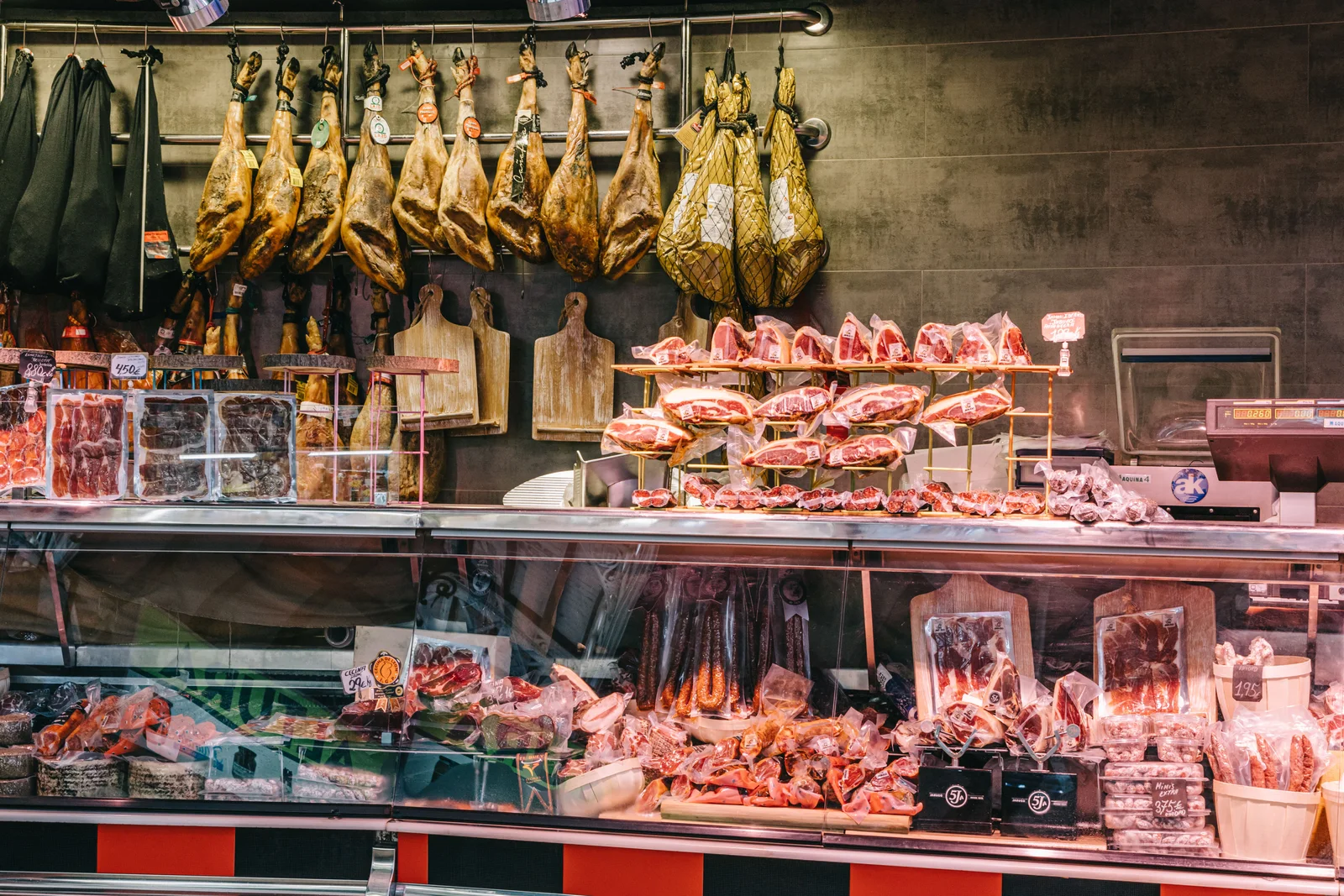
Where to try it
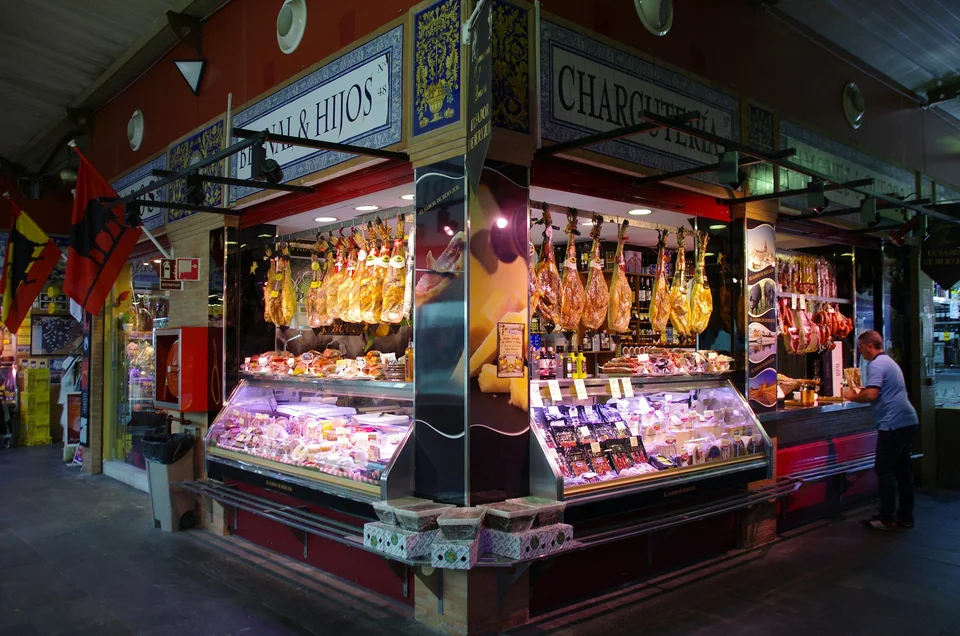
Markets are an easy place to begin. In Palma and towns across the island, specialist counters may sell several formats alongside cheese, olives, bread and other cured foods. Village bakeries and traditional restaurants often use it in pastries or simple plates. Contemporary restaurants may present it in a more restrained dish.
Try it in two settings if time allows. A plain slice on bread shows the texture and seasoning; a warm preparation reveals how readily the fat melts into the surrounding dish. Ask whether the sausage is young, semi-cured or fully mature, and whether it is made with porc negre.
On a short visit, there is no need to build an entire food itinerary around it. One good market tasting and one traditional plate are enough to understand why sobrassada remains so useful in Mallorcan cooking.
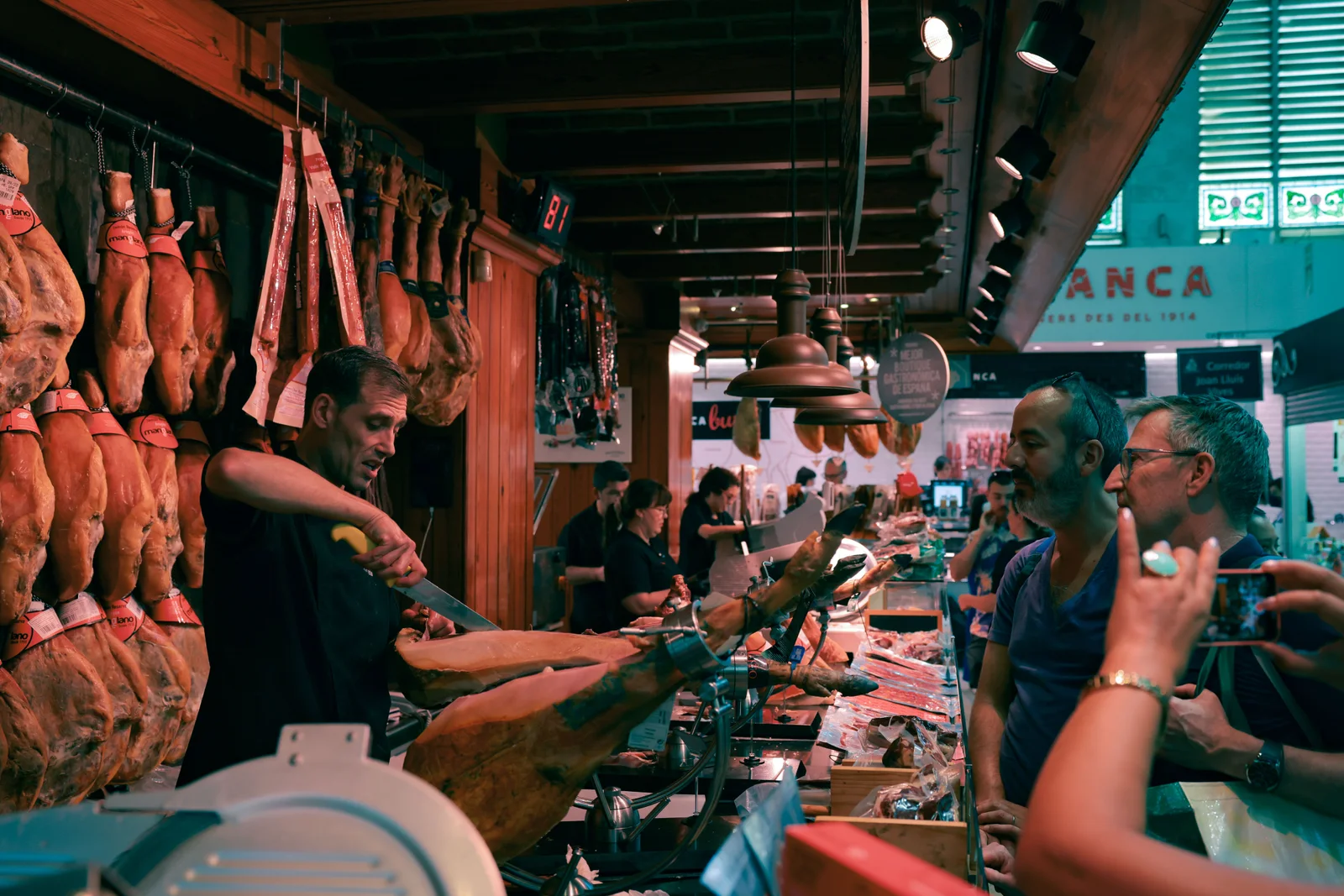
Buying sobrassada to take home
Sobrassada can make a good edible souvenir, provided it suits the journey. Ask the seller how mature the piece is, how it should be stored and whether it is intended to be kept at room temperature before opening. A whole cured piece will generally be easier to transport than a sliced or loosely wrapped portion, but packaging and current travel rules still need to be checked.
Read the label carefully. It should identify the product and producer, while the protected designation can help distinguish recognised Sobrassada de Mallorca from products using similar language. If you want the black-pig version, look specifically for porc negre; Mallorca’s name alone does not imply that breed.
- Choose a clearly labelled Sobrassada de Mallorca product.
- Ask whether it is young, semi-cured or fully mature.
- Check whether the producer identifies porc negre.
- Request storage and serving advice.
- Confirm airline, customs and destination-country rules before travelling with meat.
Why it remains worth trying
Sobrassada offers a compact introduction to Mallorca’s food culture. It carries the practical history of preserving pork, the importance of paprika, the island’s native breed and a preference for food that can move easily between everyday cooking and more ambitious dishes.
For travellers, its appeal is partly its flexibility. Taste it simply on bread, warm it with eggs or vegetables, or look for a more precise version in a contemporary restaurant. The ingredient stays recognisable throughout: pork, fat, salt, paprika and time, handled with varying degrees of tradition and technique.