Where the River Meets the Market
Begin at the Puente de Isabel II, better known as the Puente de Triana, and cross the Guadalquivir as the morning light settles over Seville. The bridge leads directly toward the Plaza del Altozano, where the Mercado de Triana occupies one of the city’s most layered sites. It is a place of practical errands and historic memory: a food market at the threshold of the neighborhood, close to the river, the bridge, the Paseo de la O, and the streets that carry deeper into Triana.
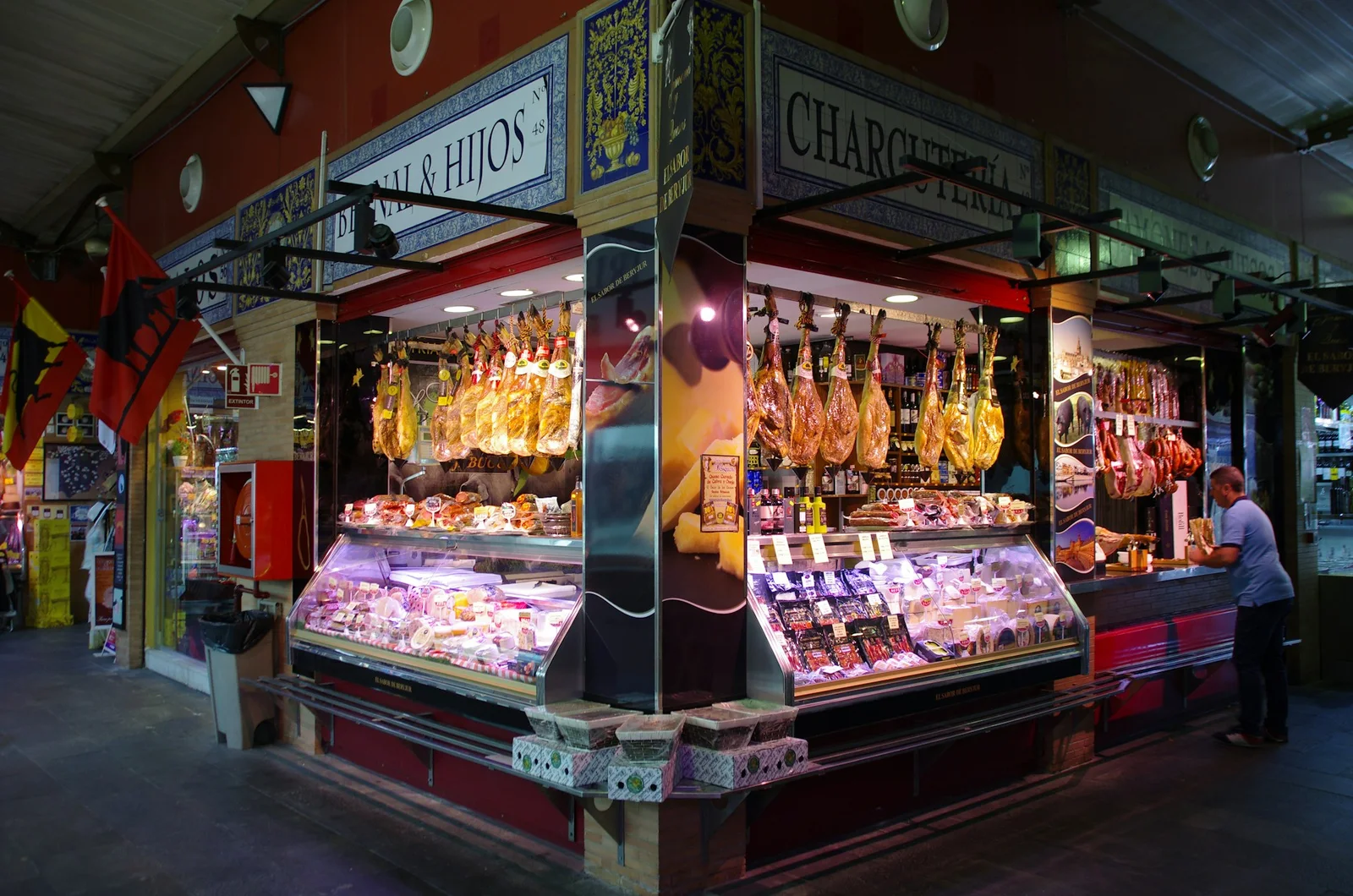
The market is not grand in the monumental sense. Its appeal is more intimate. Inside, the city’s food culture is reduced to a walkable sequence of counters, tiled surfaces, hanging hams, bright fruit, fish laid over ice, and small places where ingredients become breakfast, lunch, or a quick glass at the bar. For travelers, Mercado de Triana Seville offers something especially valuable: a way to observe how the city eats before the day turns fully toward sightseeing.
A Market Built on Difficult History
The present market stands over the remains of the Castillo de San Jorge, a medieval fortress that later became associated with the Spanish Inquisition. The market’s origins date to 1823, although this riverside location had long been tied to movement, exchange, fresh goods, and neighborhood commerce. During the market’s later redevelopment, archaeological remains of the castle and an Almohad cemetery were uncovered and incorporated into an interpretation space beneath the building.
That history changes the way the market is read. The stalls are not arranged in a neutral hall detached from the past; they sit within a place shaped by military power, religious persecution, river traffic, and ordinary domestic life. A visit to the Castillo de San Jorge interpretation area, when open, provides a compact historical counterpoint to the market above. It is worth making time for both: the archaeology explains the ground, while the food explains the neighborhood as it exists now.
The First Pass: See Before You Taste
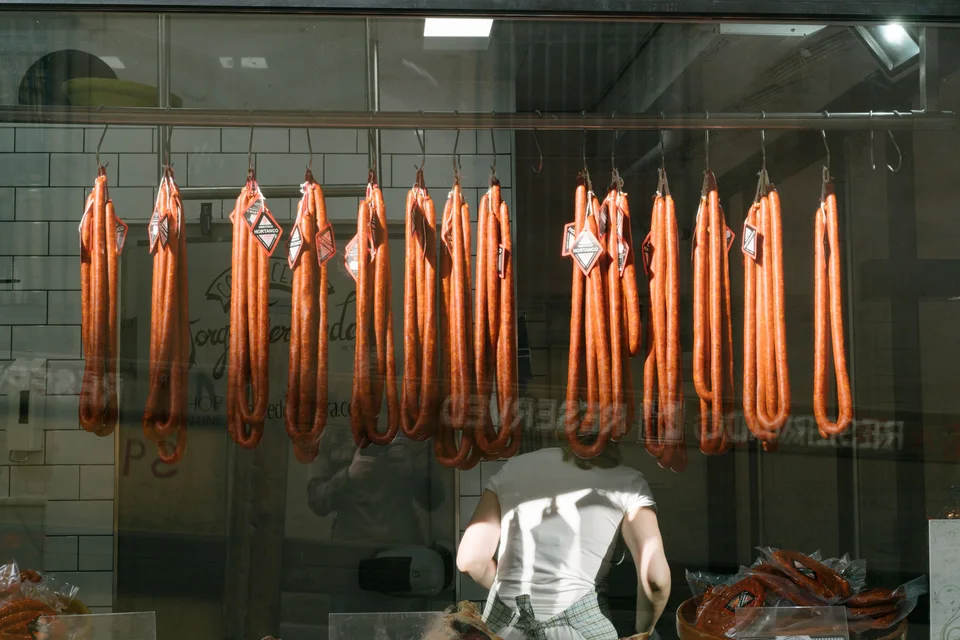
Resist the temptation to stop at the first inviting counter. Walk the market once before deciding what to buy. The building is organized around linear passages and interior courtyards, with natural light filtering into the hall. In the morning, the atmosphere is clearest near the fresh-food stalls: fishmongers preparing their displays, butchers and charcutiers arranging their cuts, and fruit and vegetable sellers making color and abundance do some of the work of decoration.
A market-led visit is less about collecting a checklist of specialties than about noticing relationships. Tomatoes sit beside peppers and onions because they belong to the same domestic vocabulary. Citrus, herbs, and seasonal vegetables suggest the bright, produce-driven cooking of Andalusia. Seafood reflects Seville’s connection to the Atlantic coast and the lower Guadalquivir. Cured meats and cheeses point inland toward the sierras and the wider pantry of southern Spain.
The market’s value lies partly in this compression. Andalusia is a large region with distinct landscapes, but a few aisles can suggest its geography: orchard fruit, greenhouse vegetables, olive oil, cured pork, shellfish, river fish, bread, and preserved goods gathered into one neighborhood room.
Andalusian Produce in Everyday Form
Look first for ingredients rather than finished dishes. Seville’s cooking is often most legible when its components remain visible. Ripe tomatoes may become salmorejo, the thick, cool tomato-and-bread soup associated with Córdoba and widely enjoyed across Andalusia. Peppers, onions, garlic, and olive oil form the basis of countless home preparations. Fresh herbs and citrus sharpen seafood, while seasonal fruit offers a simple ending to a meal—or a portable snack for a day of walking.
The important word is season. A market is not a museum display of fixed Andalusian identity. What appears on the counters varies with weather, harvests, supply, and the individual character of each vendor. Rather than arriving with a rigid list of ingredients, ask what is especially good that morning. Even without buying much, this exchange can reveal more about local food culture than a polished menu.
- Tomatoes, peppers, onions, and cucumbers for cold soups, salads, and garnishes.
- Citrus and seasonal fruit for eating fresh or pairing with cheese and cured meats.
- Fresh fish and shellfish for grilling, frying, rice dishes, or simple preparations.
- Jamón, chacina, and regional cheeses for a small picnic or an informal tasting.
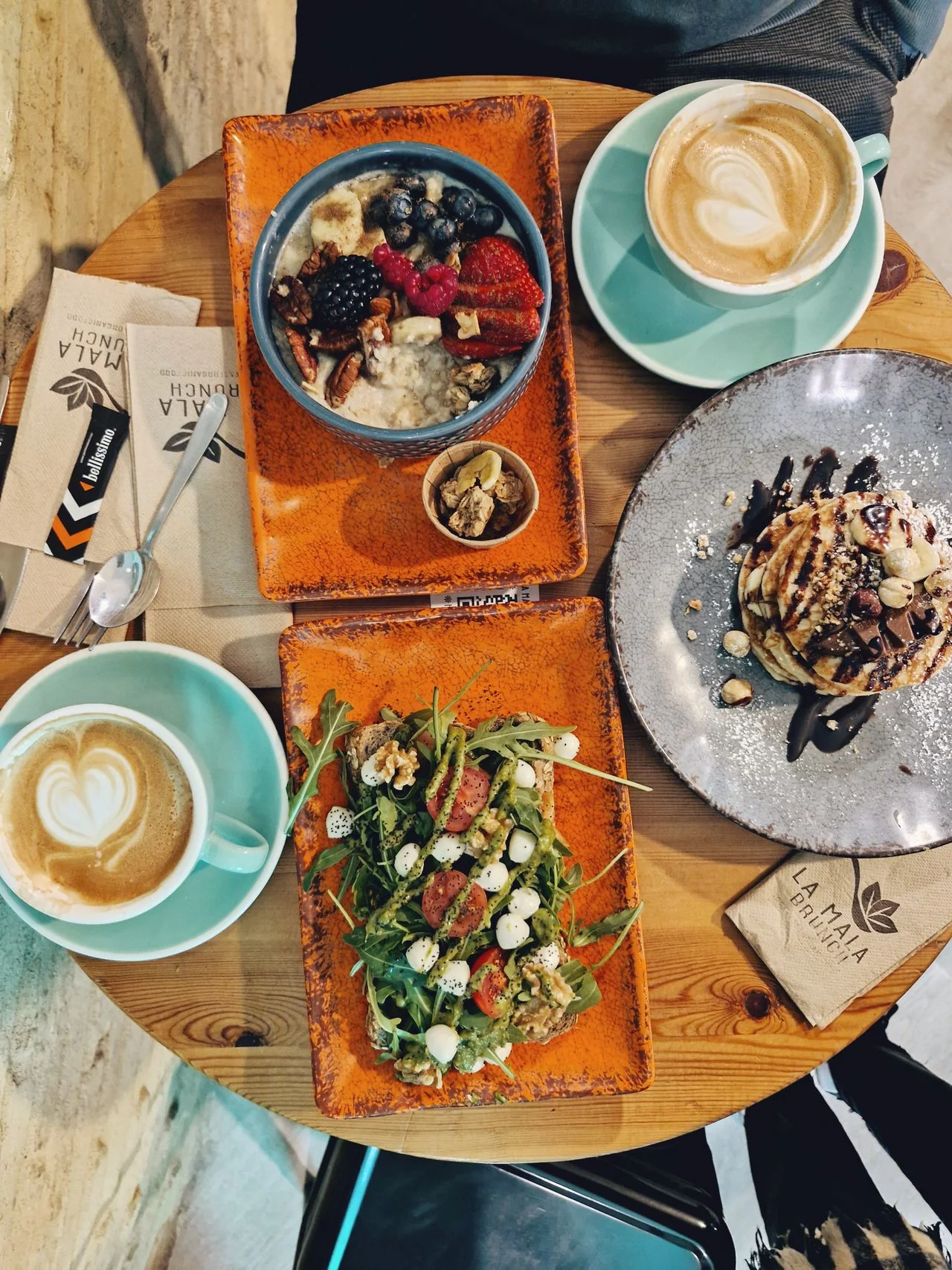
- Bread and pastries to turn market purchases into an easy breakfast.
Seafood, Cured Meats, and the Tapas Pantry
The seafood counters are among the market’s most direct reminders that Seville, although inland, belongs to a maritime food culture. Displays may include fish and shellfish destined for home kitchens, while nearby bars transform similar ingredients into small plates. The connection between stall and table is part of the pleasure: the raw materials are not abstract. They are visible, handled, cleaned, portioned, and then reinterpreted as something ready to eat.
For a traveler, the most approachable route is to taste one or two preparations rather than attempting a complete meal. Look for familiar Andalusian forms such as pescaíto frito, small fish fried until crisp; seafood salads or salpicón; croquettes; or simple plates of ham and cheese. Availability changes by business and day, so treat these as useful categories rather than guarantees.
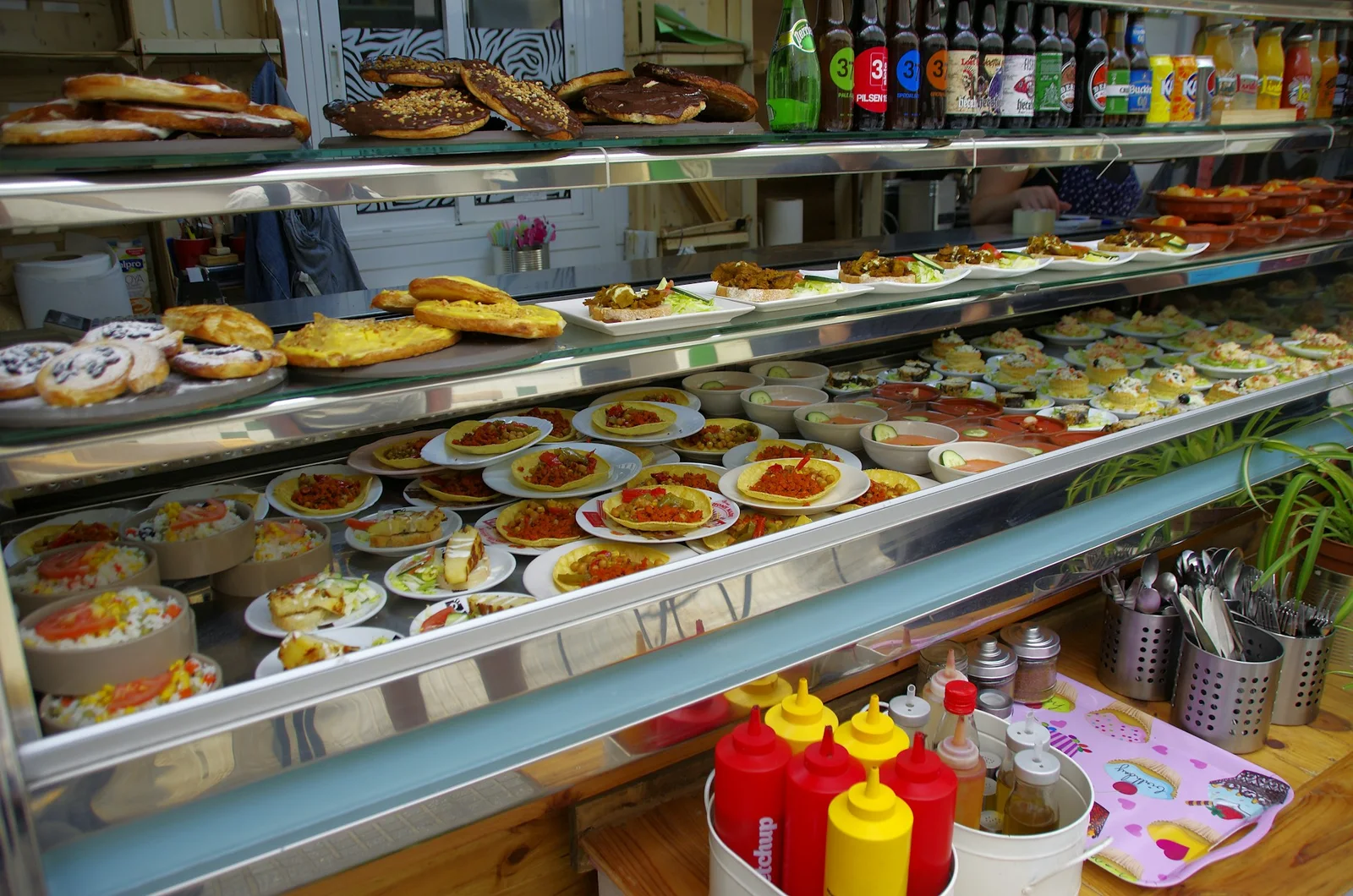
A small market meal also offers a lesson in proportion. Tapas are not necessarily miniature versions of restaurant entrées. They are a way of moving through several flavors without committing to one large plate. One bite of fried fish, a slice of cured ham, a spoonful of salmorejo, and something cold to drink can create a more rounded portrait of Seville than a single elaborate dish.
How to Eat Well Without Turning the Market into a Performance
The market is an appropriate place to be curious, but not to behave as though ordinary commerce were staged for visitors. Order at a bar, make room at shared tables, and avoid photographing people without permission. If you want to buy from a stall, a simple greeting and a clear request are usually more useful than a long explanation. Spanish food words—pescado, marisco, jamón, queso, fruta, pan—are enough to begin.
Morning is generally the best time to see the food businesses operating as a market rather than only as a dining destination. The retail stalls commonly trade from Monday to Saturday in the morning and close on Sundays and public holidays, while hospitality businesses may follow different schedules. Because individual businesses and seasonal hours can vary, check the market’s current information before setting out.
Ceramics and the Visual Language of Triana
Food is only one part of Triana’s material culture. The neighborhood is inseparable from ceramics, particularly the glazed tiles and painted surfaces that give Seville much of its visual vocabulary. In and around the market, notice how tile is used not simply as ornament but as a practical material: durable, washable, reflective, and capable of carrying color into shaded interiors.
For a fuller understanding of the craft, continue along Calle Alfarería and Calle Castilla, where Triana’s pottery traditions have a stronger presence. The Centro Cerámica Triana offers a more focused introduction to the district’s ceramic history and techniques. It is a useful companion to the market because it explains the surfaces that visitors often notice first but may not know how to read.
The connection between ceramics and food is more than visual. Andalusian kitchens have long relied on earthenware, glazed serving dishes, and tiled work areas. Plates, bowls, fountains, and walls all participate in the presentation and preparation of food. At Mercado de Triana, the market hall becomes a place where this craft tradition remains close to its practical purpose.
The Sounds of an Ordinary Morning
Listen for the market’s small negotiations: a greeting, a question about ripeness, the scrape of a knife, the clatter of a coffee cup, the calling of an order from one counter to another. These sounds are easy to miss if the visit is approached as a hunt for photogenic details. They are also the reason to come early. Later in the day, the balance may shift toward prepared food, drinks, and visitors, while the morning retains more of the market’s domestic purpose.
Triana has a strong public identity—associated with flamenco, ceramics, religious traditions, festivals, and its position across the river from Seville’s historic core. Yet its character is not only found in symbols. It is present in the practical choreography of shopping: deciding what to cook, buying a small quantity, greeting a familiar seller, and carrying provisions home. The market makes that everyday life visible without needing to explain it.
From Market to Riverside Walk
When the market has given you enough, step back into the Plaza del Altozano. The Capilla del Carmen, with its distinctive tiled decoration, marks the bridge approach, while the riverfront opens toward the Paseo de la O. This is a natural continuation of the morning: food first, then water, shade, and a slower view of the neighborhood.
Walk beneath or beside the Puente de Triana and follow the river toward the Paseo de la O. From here, the opposite bank offers changing views of Seville, while the Triana side reveals a quieter edge of the district. You can continue toward Calle Castilla and the ceramics center, turn inland toward San Jacinto, or wander through streets such as Pureza and Betis.
The route works because it preserves the market’s sequence. You begin with the ingredients, move through the neighborhood’s craft traditions, and end beside the river that helped shape Triana’s identity. It is a modest itinerary, but it has texture: stone and tile, fish and fruit, coffee and water, history beneath your feet and daily life at eye level.
What to Buy—and What to Leave Behind
If you are staying in an apartment with a kitchen, the market can supply the makings of a simple Andalusian meal: tomatoes dressed with olive oil, bread, cheese, cured meat, fruit, or fish prepared according to the seller’s advice. If you are traveling without cooking facilities, choose items that travel well for a few hours, such as fruit, packaged regional products, or a small selection from a charcuterie counter.
Do not feel obliged to purchase a souvenir from every destination. A market visit can be complete with a coffee, a tapa, and careful attention. If you do want something lasting, ceramics from Triana are more meaningful when chosen with an understanding of the craft: look for a piece you can use, ask about care, and buy from a reputable specialist rather than treating local design as a disposable image.
A Practical Morning Plan
- Cross the Puente de Triana and arrive at the Plaza del Altozano.
- Enter the market and make one complete circuit before ordering food.
- Compare the fresh produce, seafood, meat, bread, and prepared-food counters.
- Choose one or two small tastes rather than trying to sample everything.
- Visit the Castillo de San Jorge interpretation area if it is open.
- Walk along the Paseo de la O or continue toward Triana’s ceramic district.
- Check current hours before visiting, especially on Sundays, public holidays, and during seasonal periods.
The Market’s Lasting Lesson
Mercado de Triana is not valuable because it offers a single definitive Seville experience. It is valuable because several versions of the city remain visible at once. There is the city of produce and provisions, the city of seafood and tapas, the city of painted tile, the city built over contested history, and the city of neighbors moving through a morning with somewhere to be.
For travelers, the market provides a gentle correction to the idea that culture must be spectacular. Here, culture is a tomato chosen for ripeness, a ham sliced to order, a tiled wall worn smooth by years of cleaning, a coffee taken before work, or a short walk beside the Guadalquivir after breakfast. That is the particular pleasure of Mercado de Triana Seville: it invites you to look closely at what a neighborhood does every day, and to understand that the ordinary can be one of the most revealing ways to travel.