A short metro ride from Valencia, Manises feels less like a conventional day-trip destination than a working cultural landscape. Ceramic workshops, specialist shops, tiled façades and traces of former factories are woven into the town rather than gathered behind a single attraction. Here, ceramics are not simply a historical subject or a souvenir category. They are a living trade, a visual language and a way of understanding how this part of the Valencian region has changed.

The best way to approach Manises ceramics is slowly and in sequence: begin with the museum, continue through the streets, enter a working studio and finish with clay under your fingernails. The result is a day that moves from archaeology to design, from observation to participation. It also offers a useful counterpoint to Valencia’s grander cultural institutions: less polished, perhaps, but more intimate and materially direct.

Why Manises became a ceramic town

Manises’ ceramic story reaches back to the medieval period, when Islamic production established the foundations of a craft tradition that would continue to evolve under Christian rule. The town became especially associated with lustreware: ceramics treated to produce metallic golden or coppery reflections, a demanding technique that helped give Manises an international reputation.

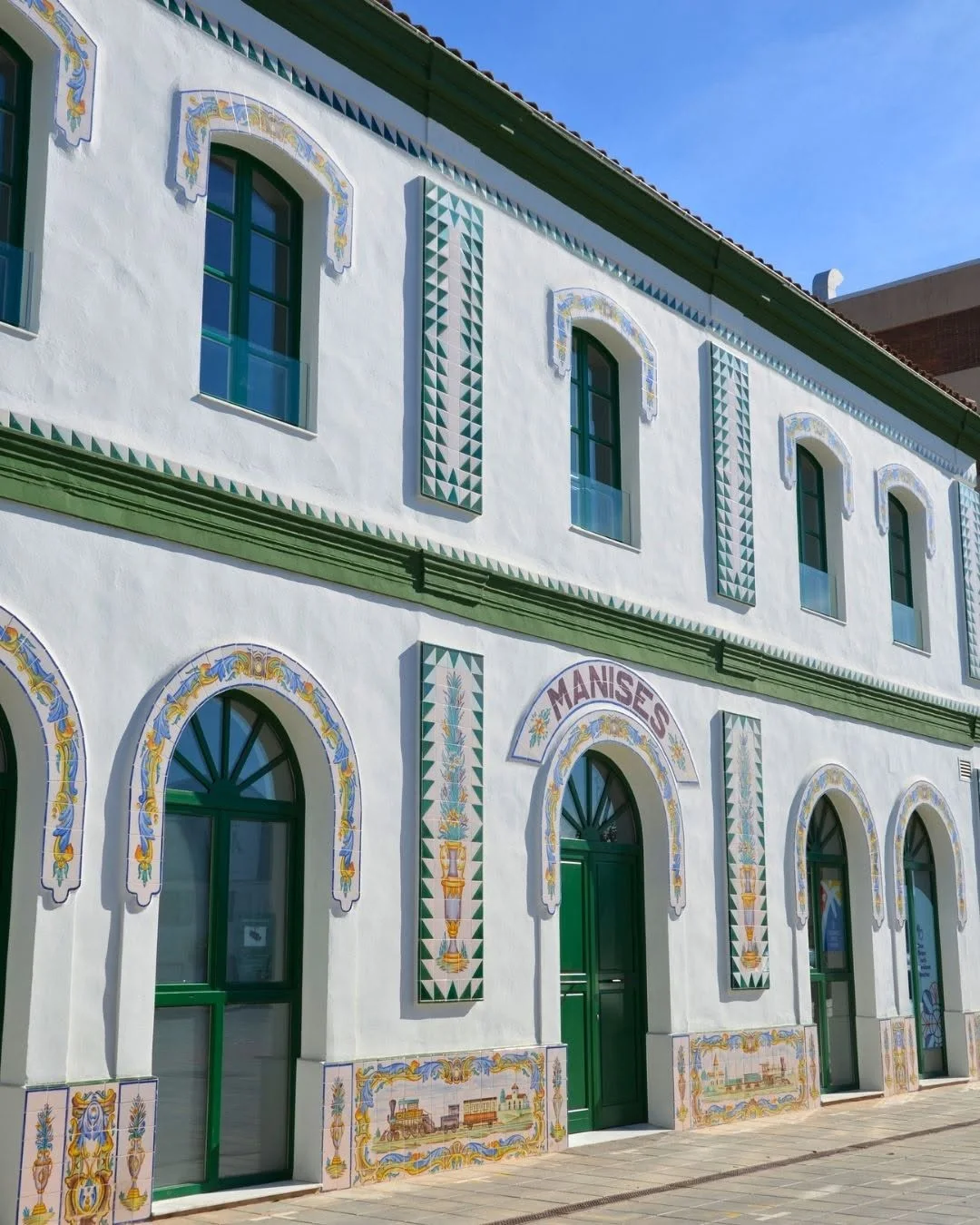
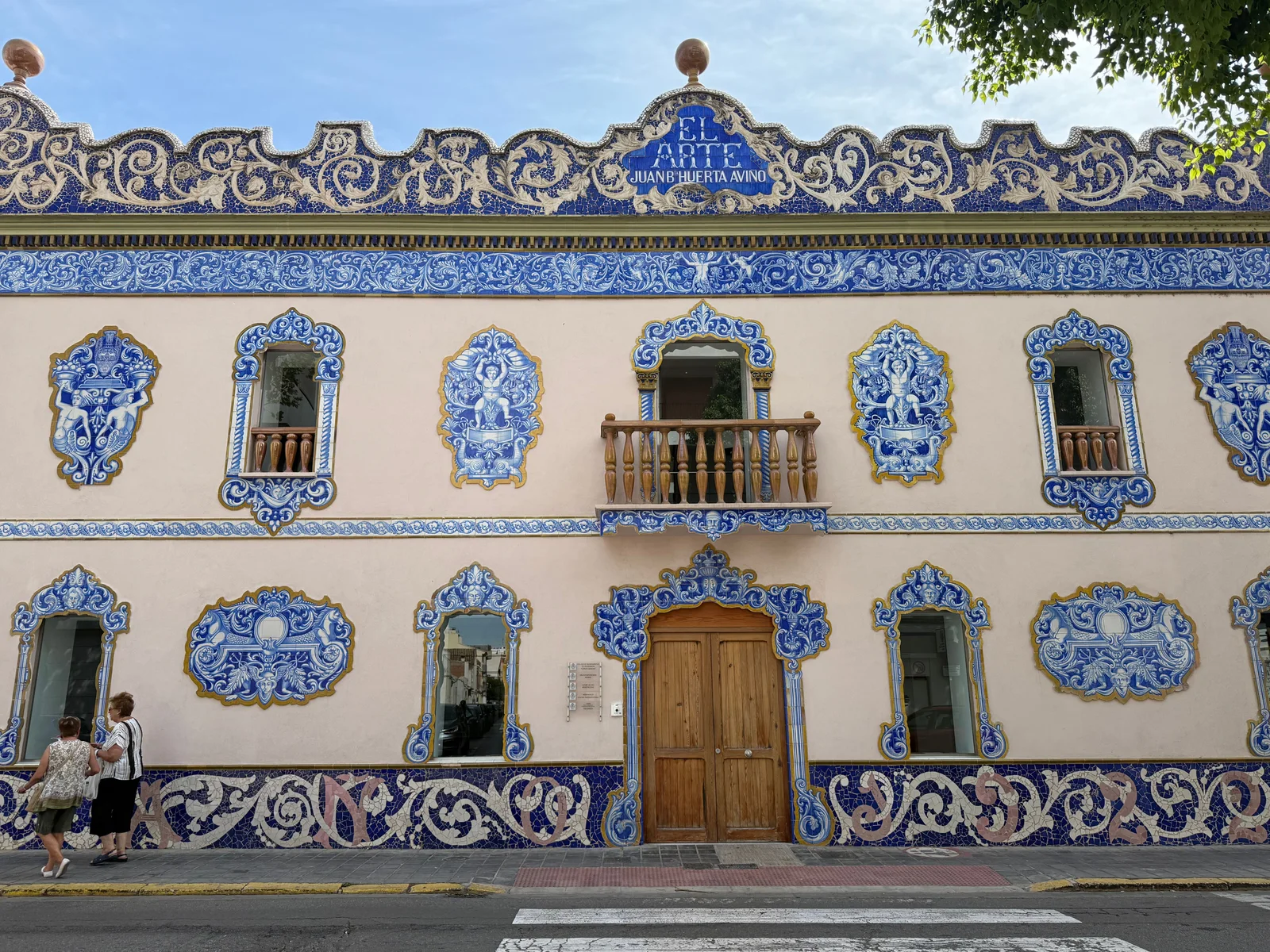
The history is not a simple succession of styles. Local production absorbed changing tastes, technologies and markets. Medieval vessels and tiles were followed by Renaissance forms, revivalist pieces, industrial wares and the exuberant decorative language of the late nineteenth and early twentieth centuries. Art Nouveau, or modernisme, brought ceramic architecture into particular prominence, turning façades, friezes and architectural details into public expressions of the town’s expertise.

Photo: Visita Manines Photo: Visita Manines

That continuity is one reason the town remains compelling. Manises is not a reconstructed medieval quarter where craft survives only as a performance for visitors. It is a place where historical techniques, formal training, contemporary studio practice and commercial production still occupy the same urban territory.

Start at the Museu de Ceràmica de Manises

The Museu de Ceràmica de Manises, usually referred to as the MCM, provides the essential orientation. Housed in a late-eighteenth-century manor house, the museum grew from a bequest received by the town in the 1960s. Its collections were subsequently expanded through archaeological excavations, donations, deposits and purchases, with an increasing focus on ceramics made in or connected to Manises.

Allow enough time to look beyond the most immediately decorative pieces. The museum is valuable not only for its glazed surfaces and intricate ornament but also for the evidence of use, production and changing technique. Fragments recovered from the town’s soil help connect the museum to Manises itself, while later objects show how the local industry responded to fashion, export markets and new ideas about art and design.

Lustreware deserves particular attention. Its reflective surface can appear effortless in a display case, but the effect depends on a carefully controlled sequence of forming, glazing, firing and surface treatment. The museum makes clear why the technique is both visually seductive and historically significant: it links Manises to a wider Mediterranean and Islamic ceramic tradition while also expressing the ingenuity of local makers.

Read the town as an open-air catalogue

After the museum, walk without rushing. Manises’ ceramic heritage appears in places that can be easy to overlook: tiled entrances, decorated door surrounds, commemorative panels, fragments of industrial architecture and façades associated with the town’s manufacturing past. The aim is not to complete a checklist but to understand how ceramics moved from the workbench into ordinary civic and domestic life.

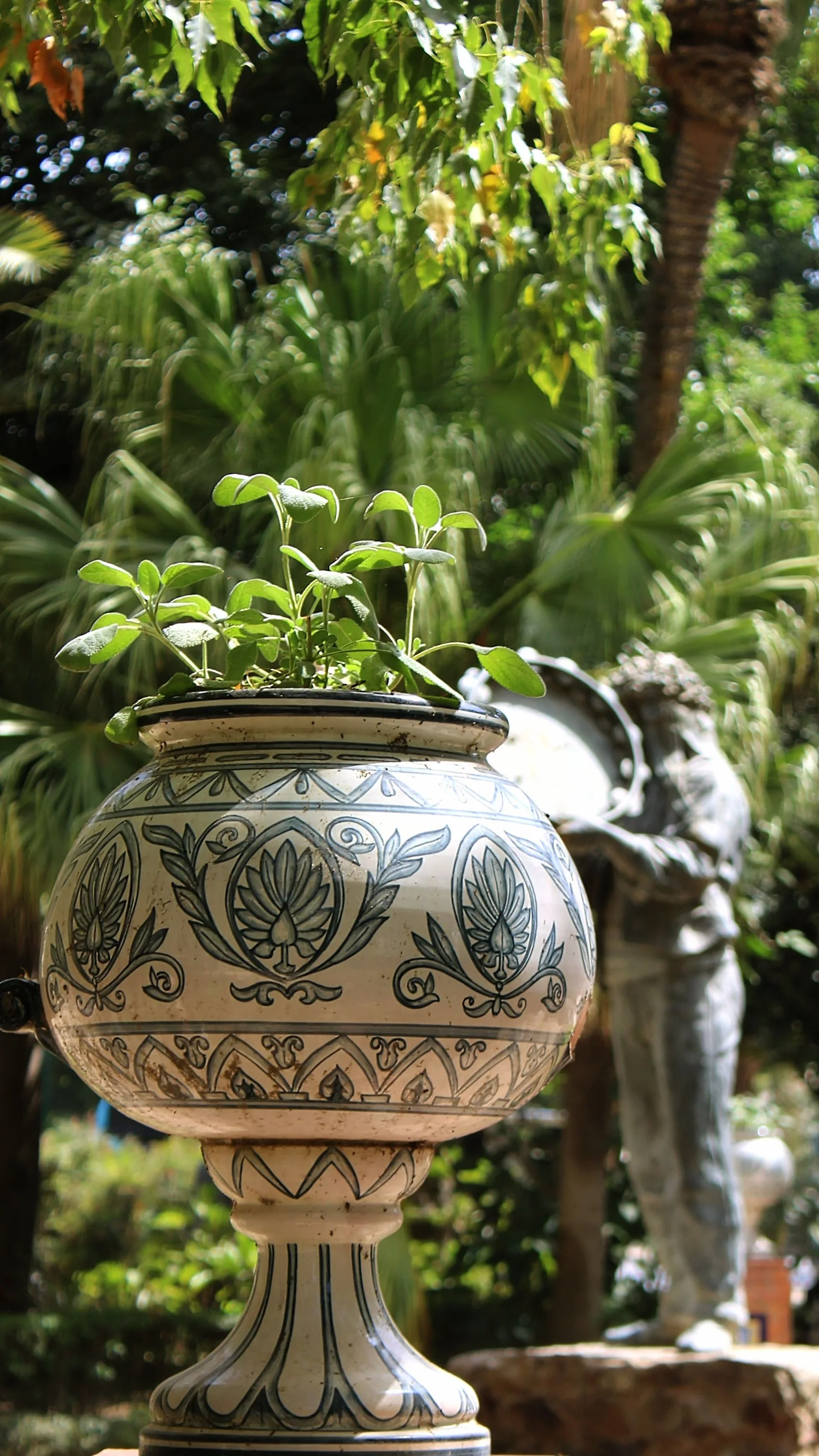
Elegant ceramic planter with greenery in a sunlit Málaga park, Spain.
Photo by Filip Aurel Vlček on Pexels

The former Barri dels Obradors, historically associated with workshops, is central to this reading of the town. Even where buildings have changed, the district helps explain the relationship between production and place. Ceramics required space for clay preparation, forming, drying, glazing, firing, storage and sale. A workshop was therefore not an isolated room but part of a local network of labour, materials and trade.

Look also for the decorative language of the early twentieth century. Floral borders, geometric panels and richly coloured tiles reveal the period when ceramic manufacture became a form of architectural identity. Manises’ streets are especially rewarding for travellers who enjoy details at eye level: a threshold, a balcony panel or a sign may communicate as much about the town as a formal monument.

The streets of workshops and specialist shops

Many ceramic workshops and shops are concentrated around streets including Maestro Guillem, Ribarroja, San Juan and Avenida Blasco Ibáñez. Their character varies. Some spaces are primarily retail showrooms; others combine selling with production, demonstrations or teaching. A shop window may contain practical tableware, sculptural work, traditional reproductions, architectural tiles or contemporary pieces that use the vocabulary of Manises without imitating its past.

Vibrant Gaudi-style mosaic wall in Barcelona showcasing colorful ceramic patterns.
Photo by Süha Boncukçu on Pexels

This is a good place to slow the pace of the day. Ask whether a piece was made locally, whether it is food-safe, how it should be cared for and whether the shop can arrange shipping. In a town with a long industrial and artisan history, “ceramic from Manises” can describe several different kinds of work. A respectful question is more useful than assuming that every colourful object represents the same tradition.

If you are buying, consider the object’s relationship to daily life. A small bowl, tile or cup can be a more meaningful memento than a fragile showpiece, particularly when the maker, technique and intended use are clear. Look for signs of handwork without treating irregularity as the only measure of value: skilled ceramics may be deliberately precise, while a visibly handmade surface may be part of a contemporary design.

What happens inside a ceramic workshop

A workshop visit changes the scale of the story. In a museum, ceramic is an object. In a studio, it becomes a sequence of problems to solve. Clay must be prepared to the right consistency; air pockets must be removed; walls need even thickness; rims require support; handles must be attached at the correct stage. Drying has to be managed patiently, since a piece that looks finished can still crack or warp before firing.

Hands expertly shaping clay on a pottery wheel, illustrating the art of ceramic creation.
Photo by Sóc Năng Động on Pexels

The wheel is only one part of the process. Depending on the studio, visitors may see pinching, coiling, slab-building, moulding, throwing, trimming, carving, painting or the application of slips and glazes. Traditional and contemporary workshops may use different combinations of these methods. The common thread is that each stage affects the next: a hurried form can limit decoration, while an uneven glaze may transform in the kiln in ways that cannot be entirely predicted.

Firing is the invisible interval at the heart of the craft. Once a piece enters the kiln, colour, surface and strength are shaped by heat and atmosphere. The object that emerges is not simply dried clay. It is the result of a material transformation, and the workshop’s accumulated knowledge lies partly in anticipating that transformation.

Choose a hands-on experience

Several local experiences are designed to let visitors make or decorate a piece themselves. Depending on the provider and the date, activities may include trying the potter’s wheel, shaping clay by hand, painting a socarrat, decorating a tile with cuerda seca or experimenting with other surface techniques. Some experiences combine a short introduction to local history with a demonstration, a practical session and time to visit a display or shop.

For a first visit, a one-and-a-half-hour experience is long enough to reveal the basic rhythm of the work without turning the day into a formal course. The point is not to produce a flawless object. It is to feel resistance in the clay, understand how quickly a form can collapse and recognise the concentration required for a painted line or repeated mark.

Book ahead where possible, especially if you want instruction in English, are travelling with children or need a piece shipped after firing. Confirm what is included: materials, firing, collection, postage, protective packaging and the possibility of taking the finished object home. A freshly made piece may need to remain in the studio for drying, glazing and firing, so do not assume that it will be ready at the end of the session.

Traditional lustre and the question of imitation

The golden sheen associated with historic Manises pottery is among the town’s most distinctive visual signatures. It is also a reminder that heritage is not merely a style to reproduce. Lustre techniques require specialist knowledge and careful firing, and the number of workshops practising particular historic methods may be limited.

Colorful medieval tile mural on a historic brick wall in Valencia, Spain.
Photo by Davide Comunian on Pexels

When a demonstration refers to traditional lustre, ask what exactly is being shown. It may be a historical explanation, a contemporary adaptation or a full reproduction of an older process. Each has value, but they are not interchangeable. The distinction helps travellers appreciate living craft on its own terms rather than expecting every workshop to function as a museum of the past.

A practical day-trip rhythm from Valencia

Manises is connected to Valencia by Metrovalencia lines 3, 5 and 9, making public transport a natural choice for a workshop-led day. From the station, allow time to orient yourself before beginning the route; the town’s attractions and studios are spread through its streets rather than gathered around one transport hub.

  • Morning: travel from Valencia, visit the Museu de Ceràmica de Manises and take notes on the techniques or periods you want to recognise later.
  • Late morning: walk through the historic centre and former workshop areas, looking for tiled façades, industrial traces and architectural details.
  • Midday: pause for a Valencian lunch or a simple café stop, leaving enough time for the afternoon studio appointment.
  • Afternoon: join a hands-on workshop or arranged demonstration, then visit local ceramic shops with a clearer sense of what you have seen.
  • Before returning: check whether your purchase can be shipped, and confirm collection arrangements for any piece that must be fired later.

Opening hours vary by institution, shop and studio, and small workshops may close between sessions or operate by appointment. The Tourist Info office is a useful place to check current arrangements, local routes and seasonal programming. It is wise to verify museum hours and workshop availability shortly before travelling rather than relying on an old itinerary.

Photo: Visita Manines Photo: Visita Manines

Go during a ceramics event

If your dates are flexible, look for Manises’ public ceramics programming. The town’s ceramic festivities can bring demonstrations, street activity and opportunities for visitors to try techniques themselves. Ceràmica Oberta, a workshop-focused event, has also been used to open studios, factories and association spaces to the public, sometimes with a tourist train connecting venues.

Events offer an unusually broad view of the sector because they place different kinds of makers in the same frame: traditional potters, contemporary ceramic artists, educational organisations, manufacturers and retailers. They can also be busy, so visitors seeking a quieter conversation or a more sustained lesson may prefer a separate studio booking on an ordinary weekday.

How to be a considerate craft traveller

A working studio is not a stage set. Ask before taking photographs, avoid touching pieces that are drying or awaiting firing and follow instructions around kilns, tools and work surfaces. If a maker is serving customers or concentrating on a technical task, give the visit time to unfold rather than expecting a continuous demonstration.

Buying directly from a workshop is one of the simplest ways to support the local ceramic ecosystem, but it is not the only one. Paying for a class, recommending a maker accurately, returning to collect a fired piece or choosing a locally made object over a generic souvenir all acknowledge the labour behind the town’s reputation.

What Manises leaves you with

The pleasure of Manises is cumulative. The museum supplies the long view; the streets reveal how ceramic became architecture; the shops show its changing commercial life; and the workshop makes the material personal. By the end of the day, a painted border or slightly uneven rim no longer looks like a minor detail. It carries the memory of pressure, timing, drying, heat and the maker’s judgment.

For travellers interested in Valencia beyond its headline sights, Manises offers a rare kind of cultural encounter: close enough to reach easily, substantial enough to reward attention and grounded in a craft that remains active rather than merely commemorated. Come for the history of Manises ceramics in Valencia, but stay with the process. The town’s most persuasive story is still being made.

This article was about
Art & CultureTravel Tips