A pavement became another country. A window became an escape route. At Bernauer Straße, a woman died trying to cross the distance between them.
Elsewhere in Berlin, a painted Trabant bursts through concrete. The barrier that once made escape deadly appears to break apart beneath a small car.
Both images belong to the history of the Berlin Wall. But they do not offer the same comfort.
At Bernauer Straße, the remains expose how a state turned ordinary streets into instruments of control.
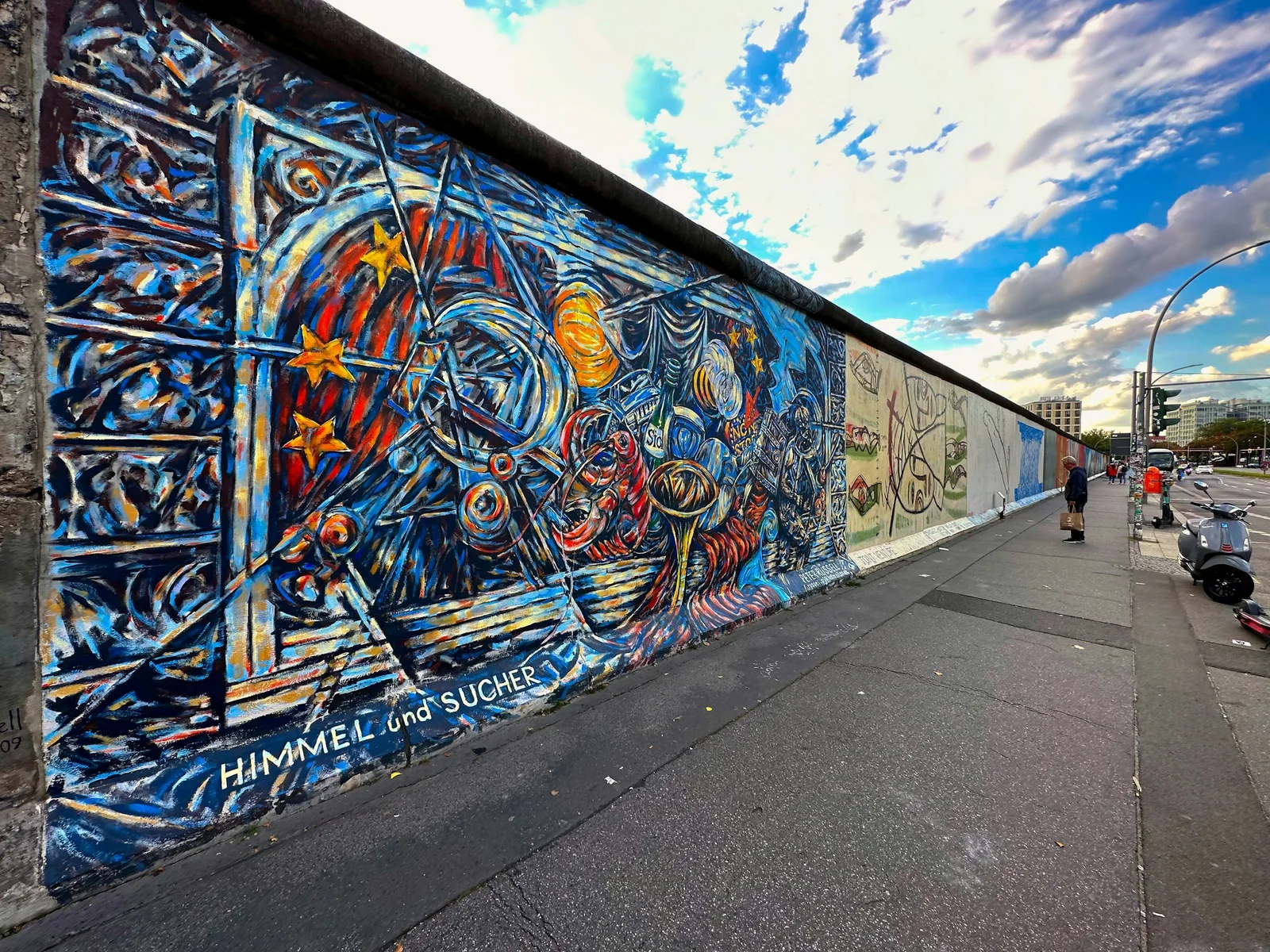
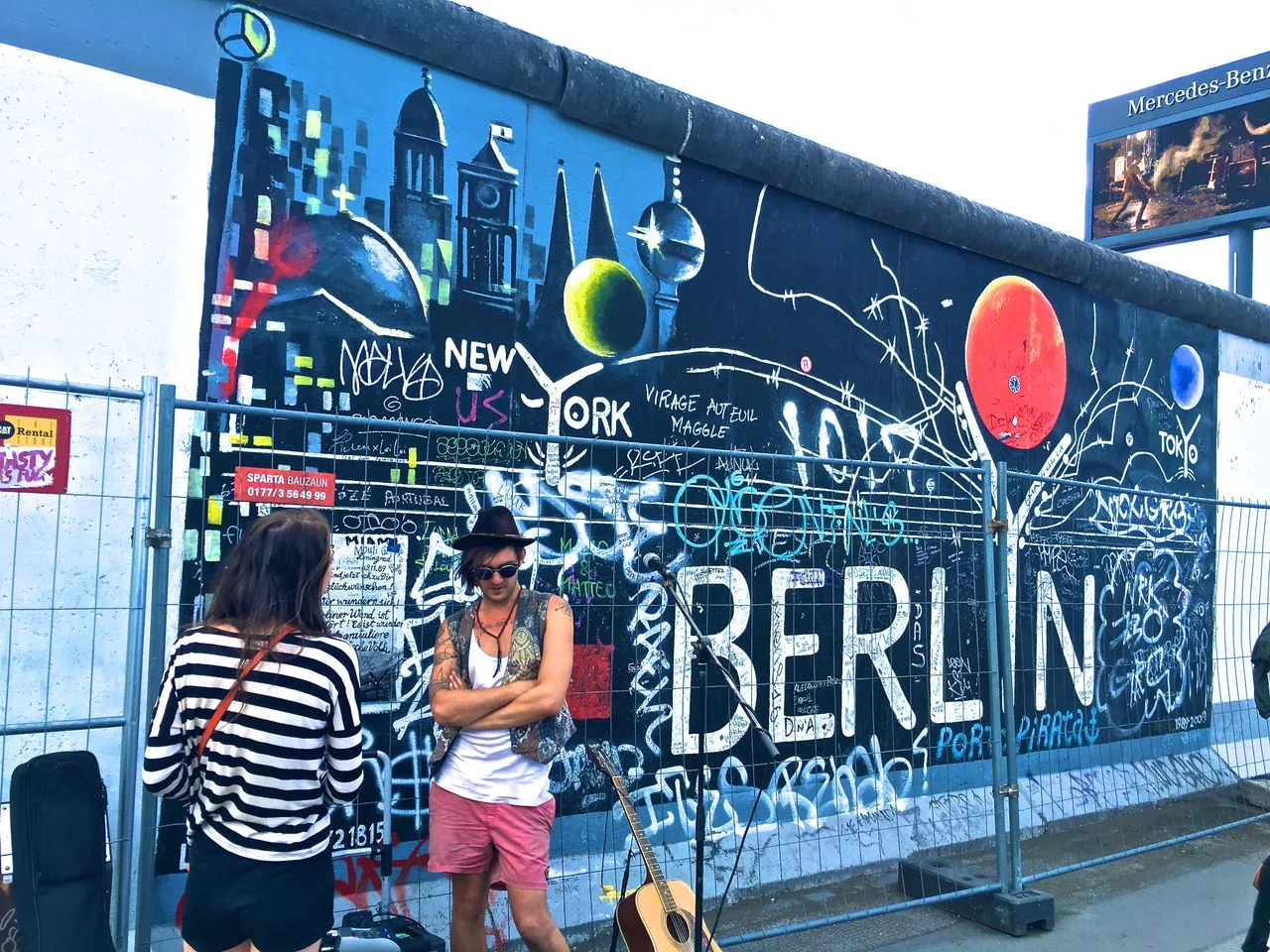
At the East Side Gallery, artists transformed another surviving section into images of freedom, resistance and uncertainty.
One confronts us with what division did to people. The other asks what people can do with its ruins.
The danger is that we might prefer the second story because it is easier to look at.
Bernauer Straße: When home became the border
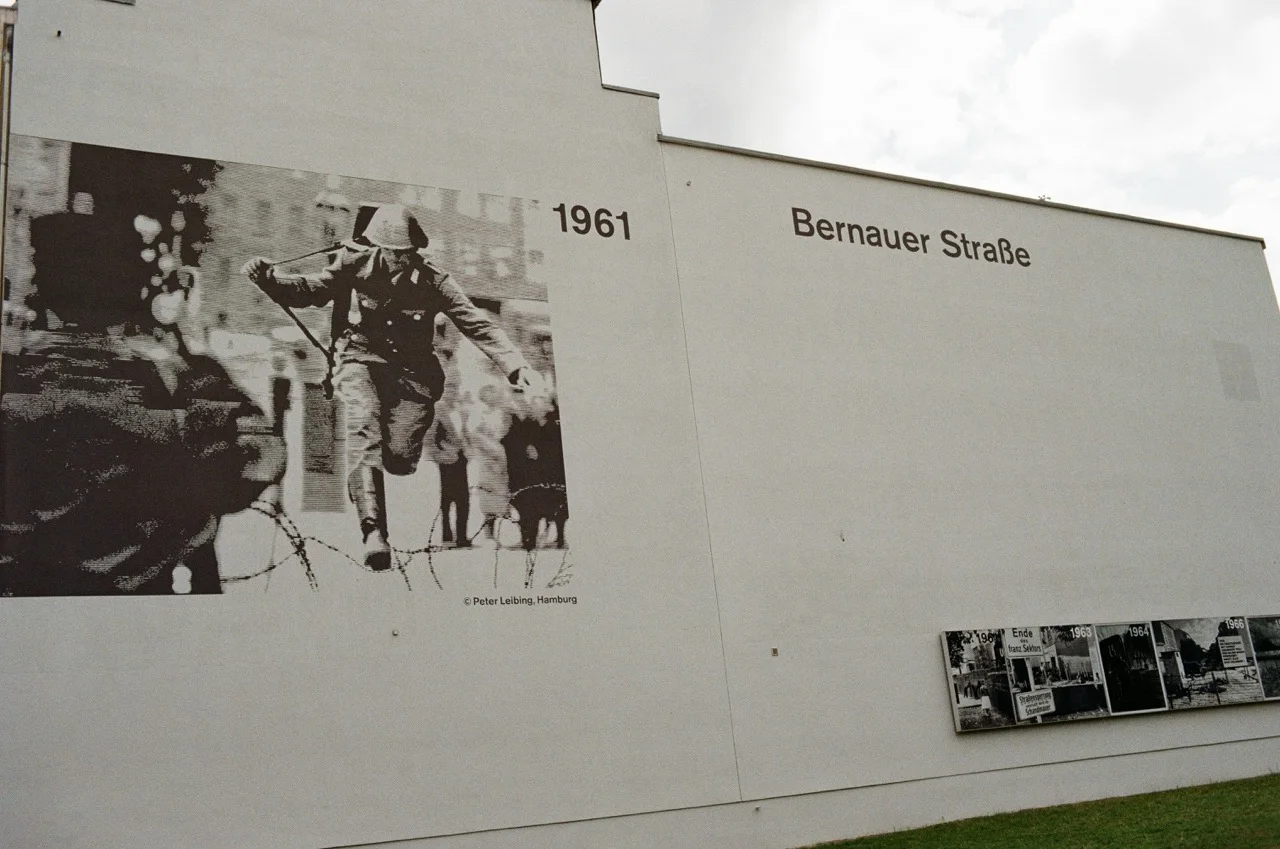
On 13 August 1961, East German authorities began closing the border between East and West Berlin.
At Bernauer Straße, the consequences were immediate.
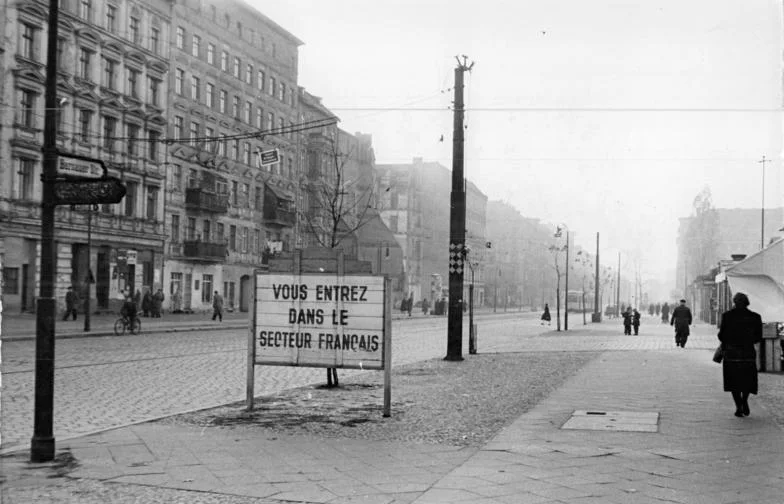
The buildings on one side stood in East Berlin. The pavement outside their doors belonged to West Berlin.
An ordinary street had become an extraordinary trap.
Residents attempted to escape through upper-floor windows. Some used ropes. Others jumped towards rescue equipment held by West Berlin firefighters.
The authorities sealed doors and windows, evacuated residents and eventually demolished buildings to expand the border fortifications.
A doorway was no longer simply an exit.
A home could become part of a prison.
The window at number 48
On 22 August 1961, Ida Siekmann, a resident of Bernauer Straße 48, tried to escape to West Berlin by jumping from her apartment window.
She suffered fatal injuries.
Her death is among the earliest recorded deaths associated with the Berlin Wall.
It is tempting to imagine her final thoughts or the fear she must have felt. But that would turn a documented life into an invented scene.
The facts are terrible enough.
A woman was confronted with a political border that made leaving her own building a potentially fatal act.
The distance was measured in metres.
The consequences were irreversible.
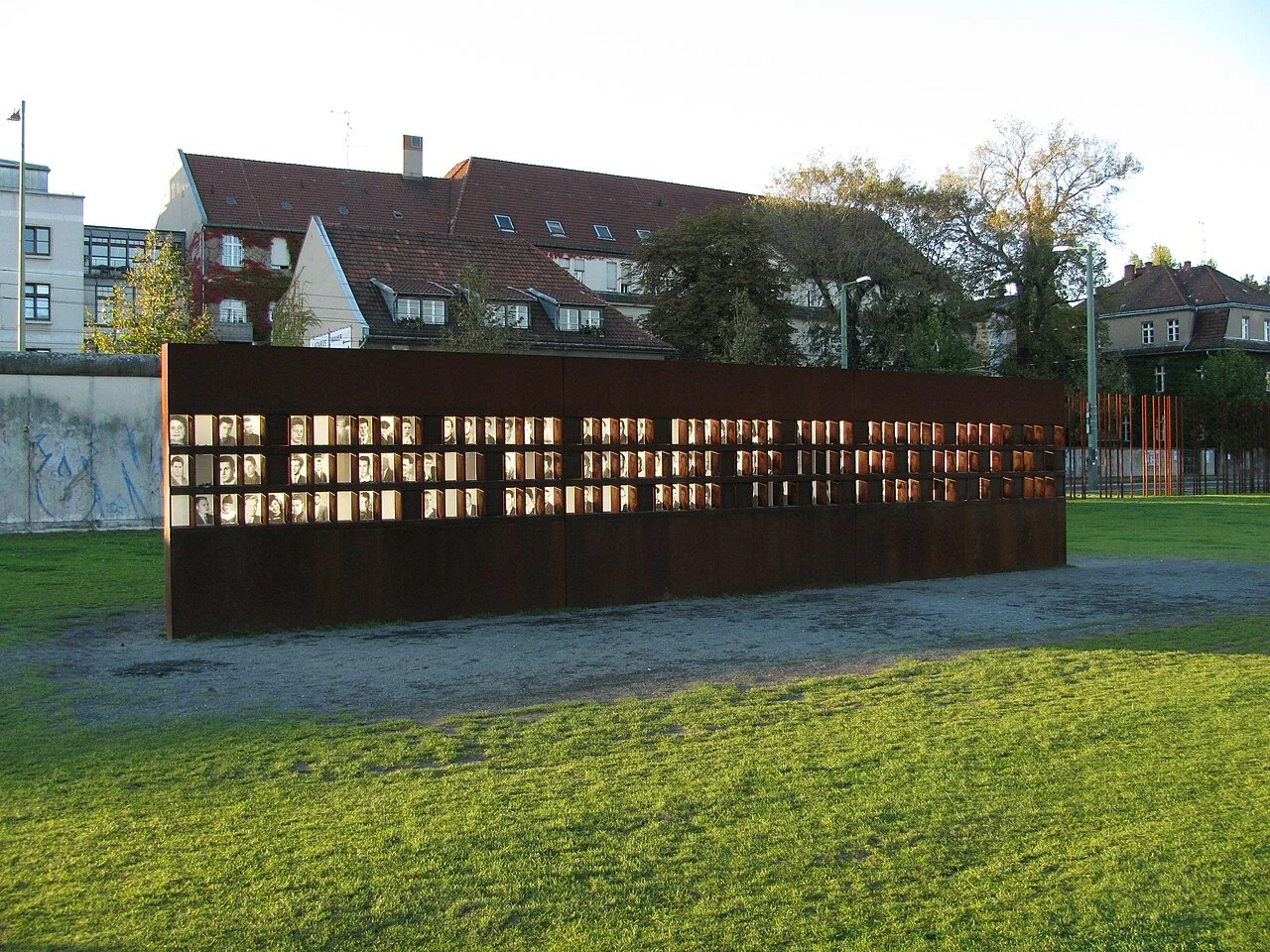
At the Berlin Wall Memorial, her story stands alongside those of others who attempted to escape, resisted the border or lost their lives because of it.
They were not historical symbols when the Wall went up.
They were people whose ordinary lives were interrupted.
And the interruption was deliberate.
The machinery behind the concrete
Ida Siekmann's death did not stop the border from expanding.
The machinery continued.
At Bernauer Straße, barriers and sealed entrances developed into a fortified strip of patrol routes, surveillance installations and controlled ground.
Today, metal markers trace vanished buildings, escape tunnels and former border structures.
The empty spaces are evidence.
A missing building may mark a demolished family home. An open stretch of ground may once have been guarded and inaccessible.
The former Reconciliation Church illustrates that transformation. Cut off from its congregation after the border was established, it stood inside the restricted zone until East German authorities demolished it in 1985.
The Chapel of Reconciliation now occupies the site.
It cannot replace what was destroyed. Nor does it pretend to.
Nearby, the Window of Remembrance restores names and faces to people who died at the Wall.
The architecture explains how the border functioned.
The biographies explain what it cost.
Without those lives, we risk studying the efficiency of the machinery and forgetting what it was built to do.
East Side Gallery: The Wall changes its language
Beside the Spree, another surviving section seems almost unrecognisable.
Colour takes over.
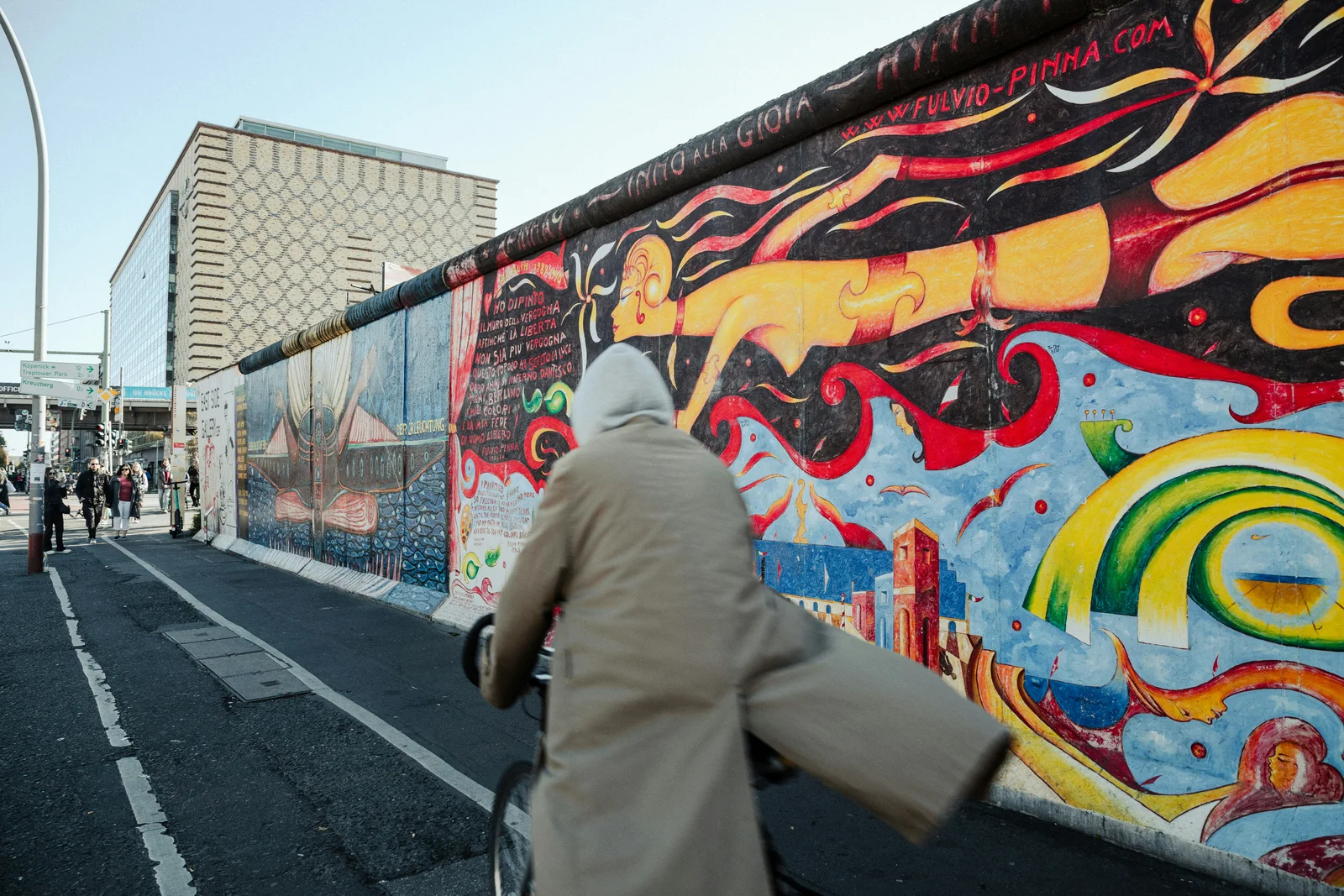
A Trabant breaks through a painted barrier. Human figures, political symbols and abstract forms extend along more than 1.3 kilometres of wall.
Visitors take photographs. Some pause before a mural. Others move quickly towards the next famous image.
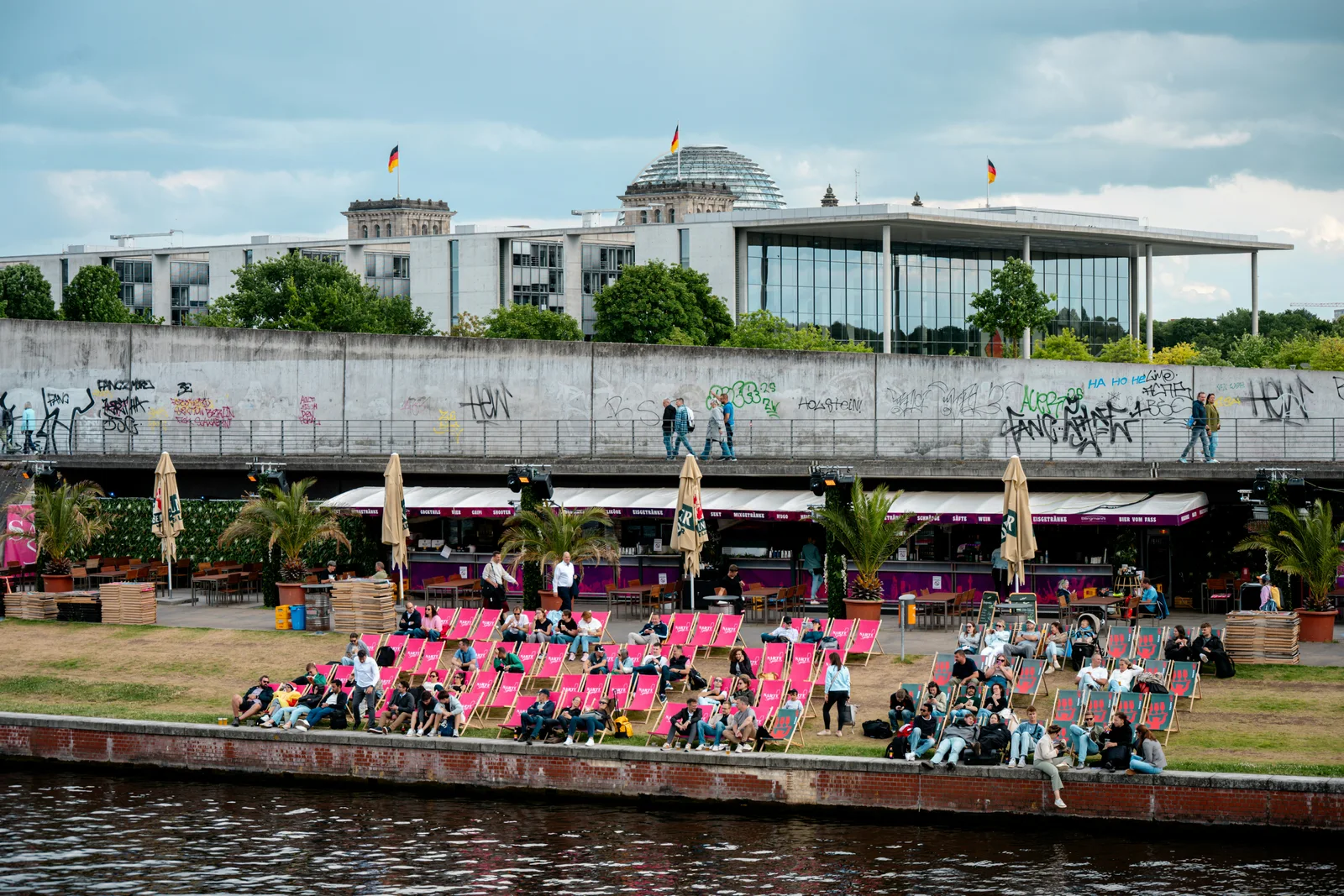
It is easy to experience the East Side Gallery as a celebration.
Yet the surviving structure on Mühlenstraße was once the Hinterlandmauer, the inner barrier facing East Berlin. The Spree formed part of the restricted border area, where attempts to escape could end in death.
The paintings invite us to look. The history demands that we look harder.
After the border opened in November 1989, its meaning began to change.
In 1990, 118 artists from 21 countries painted the surviving structure. The East Side Gallery opened on 28 September that year.
Their works responded to an extraordinary moment.
Germany was changing. Europe was changing. A political order had collapsed, but nobody knew precisely what would follow.
Some paintings celebrated liberation. Others expressed anger, anxiety or scepticism.
The Wall had been built to restrict movement and enforce political control.
Now it carried voices its builders had never intended to hear.
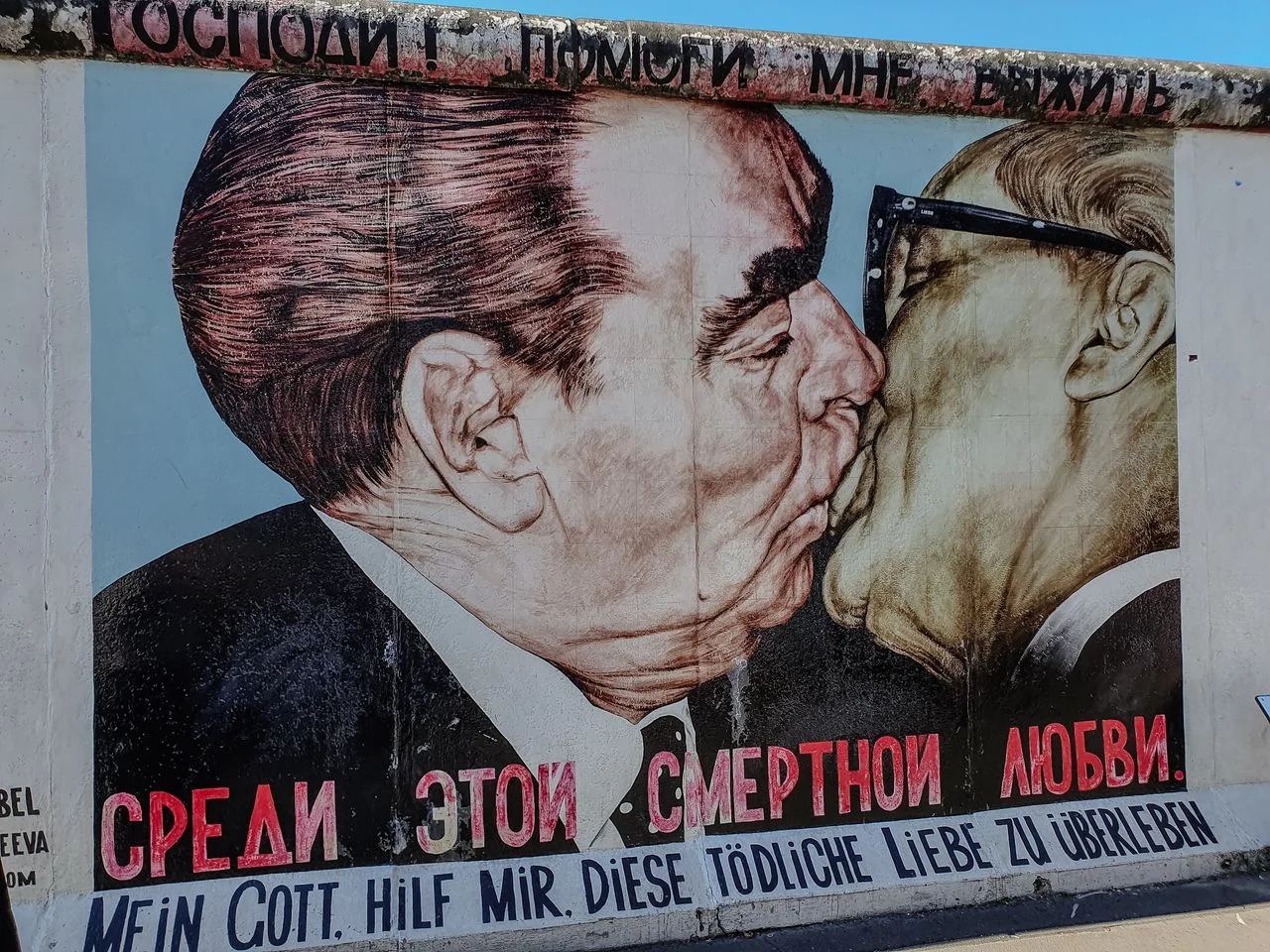
A car breaking through the impossible
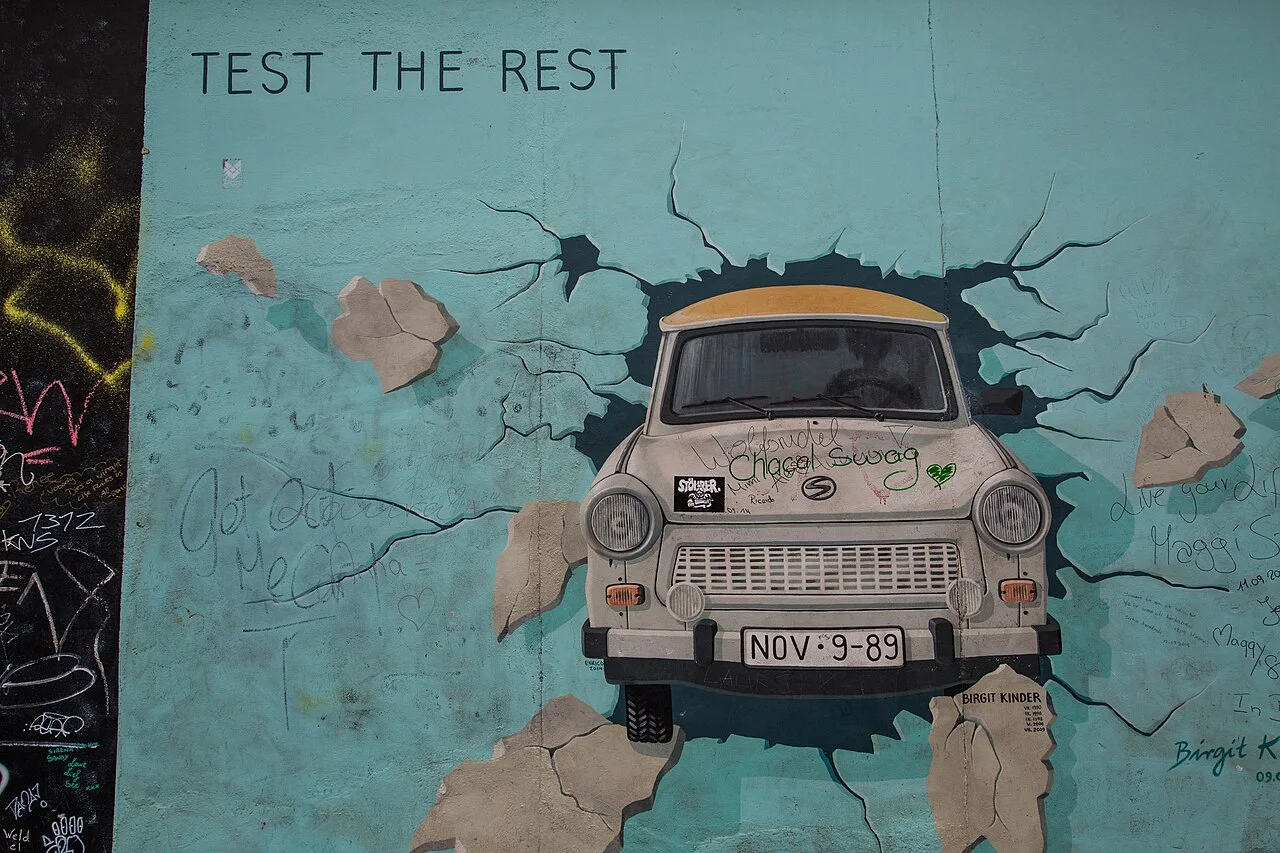
Birgit Kinder's Test the Rest has become one of the East Side Gallery's defining images.
A Trabant, the modest East German car familiar to generations of citizens, appears to crash through a concrete wall.
The image is immediate.
The barrier breaks.
The car moves forward.
Freedom takes the form of an impact.
But after encountering Ida Siekmann's story, the painting becomes more complicated.
At Bernauer Straße, a woman died attempting to cross a few metres.
Here, a car bursts through the barrier as if freedom were an unstoppable force.
The contrast is exhilarating.
It is also uncomfortable.
The painting compresses years of repression, resistance and suffering into a single triumphant image.
Art can do that. It can capture emotions that historical documents cannot.
But celebration has blind spots.
A successful escape does not erase a failed one.
A broken wall does not restore a lost life.
And a beautiful image of freedom can make the cost of reaching it easier to overlook.
Which wall tells the truth?
The most dangerous thing about a powerful image is not that it lies. It is that it can tell one truth so convincingly that we stop looking for the others.
At Bernauer Straße, we encounter suffering, but also resistance and successful escapes.
At the East Side Gallery, we encounter freedom, but also the uncertainty and unresolved questions of the years after 1989.
So which place tells the more truthful story?
The one that shows how people were trapped?
Or the one that shows how people tried to transform what remained?
Neither can answer for the other.
Bernauer Straße confronts us with the decisions and routines through which a government restricted human lives.
The East Side Gallery confronts us with what happened when that power weakened and people reclaimed its symbols.
One exposes oppression.
The other explores the possibility of answering it.
A wall can fall in a night. Understanding what it did takes generations.
When we restore a painting, what are we preserving?
Much of the paint visitors see at the East Side Gallery today is not the original paint from 1990.
Weather, vandalism and deterioration damaged the murals. Major conservation work in 2008–2009 involved extensive repairs, after which many artists recreated their paintings.
Some closely reproduced the originals.
Others introduced changes.
Not every artist participated.
The result is a monument whose appearance belongs partly to 1990 and partly to later decisions about how that moment should be remembered.
This raises a difficult question:
When we restore a painting on a wall that once formed part of a deadly border, are we preserving history or rewriting it?
Allow an artwork to disappear, and we may lose an irreplaceable expression of its time.
Recreate it decades later, and the image may survive while the original physical evidence is lost.
The paint is newer.
The world around it is different.
Even the artist may no longer see the subject in exactly the same way.
One revealing case is Hands, created by Margaret Hunter and Peter Russell.
According to the Berlin Wall Foundation, it is the only artwork at the gallery still preserved with its original paint from 1990.
Its raised hands evoke human presence and connection.
But its importance goes beyond symbolism.
Those layers of paint physically belong to the moment when artists first transformed the surviving border structure into public art.
They endured.
A restored mural may faithfully communicate an artist's original message. It may remain essential to the gallery's identity.
Yet its material history is different.
The most responsible preservation may not be the kind that makes a monument appear untouched.
It may be the kind that tells us where it has changed.
Because authenticity is not always about making something look as it once did.
Sometimes it is about refusing to hide what happened to it afterwards.
The city still argues with its remains
The East Side Gallery has also been drawn into disputes over Berlin's development.
Sections have been moved, and openings created in connection with construction projects and access to the surrounding area.
The controversy extends beyond concrete.
Who has the right to reshape a historical monument?
What happens when development conflicts with public memory?
Who decides how much of the past must remain visible?
The Wall was once imposed on Berlin through political power.
Its surviving sections are now shaped by decisions about preservation, development and public space.
Those decisions are different in nature. But they determine what future generations will see.
A monument is not protected simply because people call it important.
Protection requires choices.
And every choice determines what survives — and what disappears.
Learning to look differently
That responsibility does not belong only to historians, artists or city planners. Visitors have choices, too.
At Bernauer Straße, following the traces of vanished buildings and reading a single personal biography can reveal more than a hurried tour of the entire memorial.
At the East Side Gallery, choose a few murals and discover who created them, what they meant in 1990 and what restoration has changed. The Berlin Wall Foundation's online exhibition offers valuable context.
For practical planning, consult the Berlin Wall Foundation, the VBB journey planner and the Airpiv Berlin travel guide for wider cultural and historical orientation.
But the most important preparation is not logistical.
It is a willingness to look beyond the image that first attracts us.
What remains when the Wall is gone?
At Bernauer Straße, a woman died trying to escape through a window.
At the East Side Gallery, a painted car breaks through concrete.
Between those images lies the distance between lived suffering and the hope of overcoming it.
The Wall has fallen. Its remains have been painted, repaired and argued over.
But preserving concrete is not the same as preserving memory.
The danger is not that Berlin will forget the Wall. It is that we will remember only the version we prefer.
About Author: Ahmed Alhamayda is the founder of Airpiv, a Berlin-based flight search platform. His writing explores travel, cultural heritage and the stories behind the places we visit.