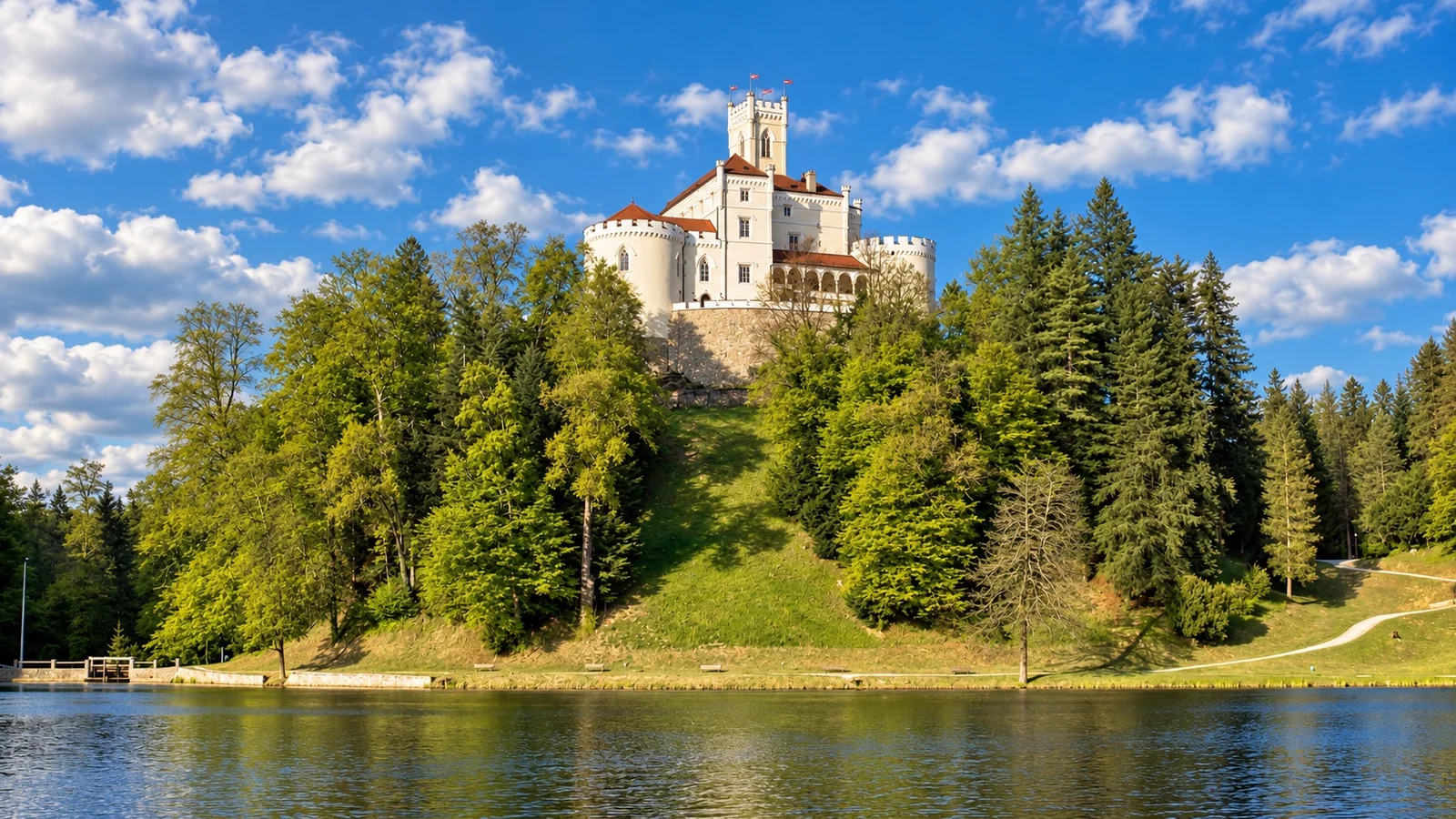
Some Croatian castles are impressive from the outside and rather less interesting once you enter. Trakošćan is different. The setting is handsome, with the castle rising above a lake and wooded park, but the real reason to come is the continuity between the building, its interiors and the family who shaped it. Medieval defensive work, nineteenth-century romanticism, aristocratic domestic life and a carefully arranged museum all remain visible in the same place.
That makes Trakošćan one of the most rewarding historic houses in northern Croatia. It is close enough to work as a day trip from Zagreb or Varaždin, yet the landscape gives the visit a slower rhythm. Allow at least two hours for the castle and grounds. If you enjoy architecture, decorative arts or social history, make it longer.
A fortress that became a family home
The origins of Trakošćan reach back to the second half of the thirteenth century, when a small fortress was built as part of the defensive system of north-western Croatia. Its position was practical: the fort watched over roads and territory in a region where political power and military borders were constantly shifting.
The castle changed hands several times during the Middle Ages. It was associated with the Gisingovac family, the royal castellans, the Counts of Celje and later the Gyulay family. When the Gyulays died out in 1566, the estate returned to the royal treasury. The Drašković family acquired Trakošćan soon afterwards, and their connection with the property lasted for centuries.
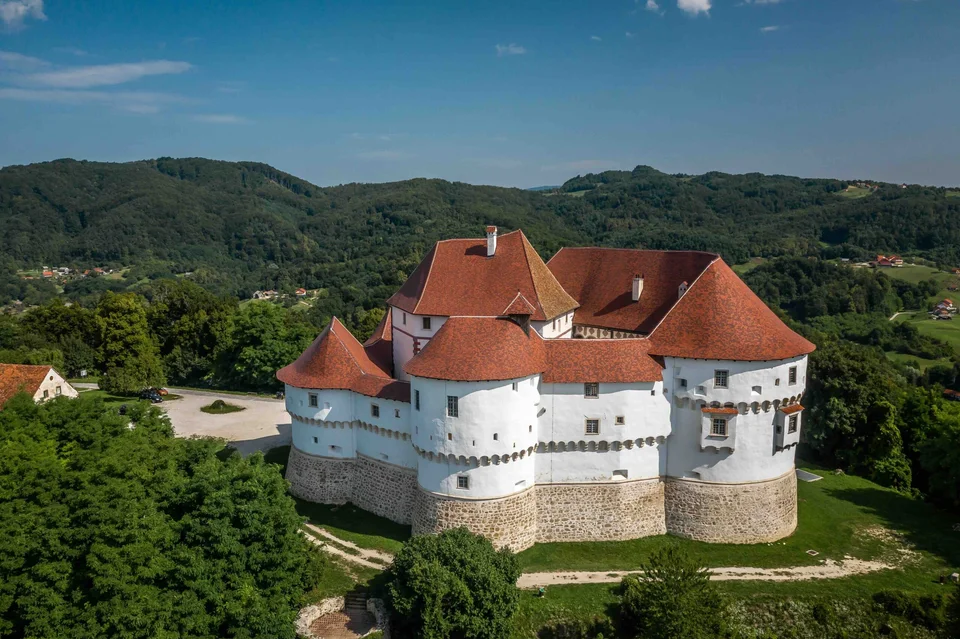
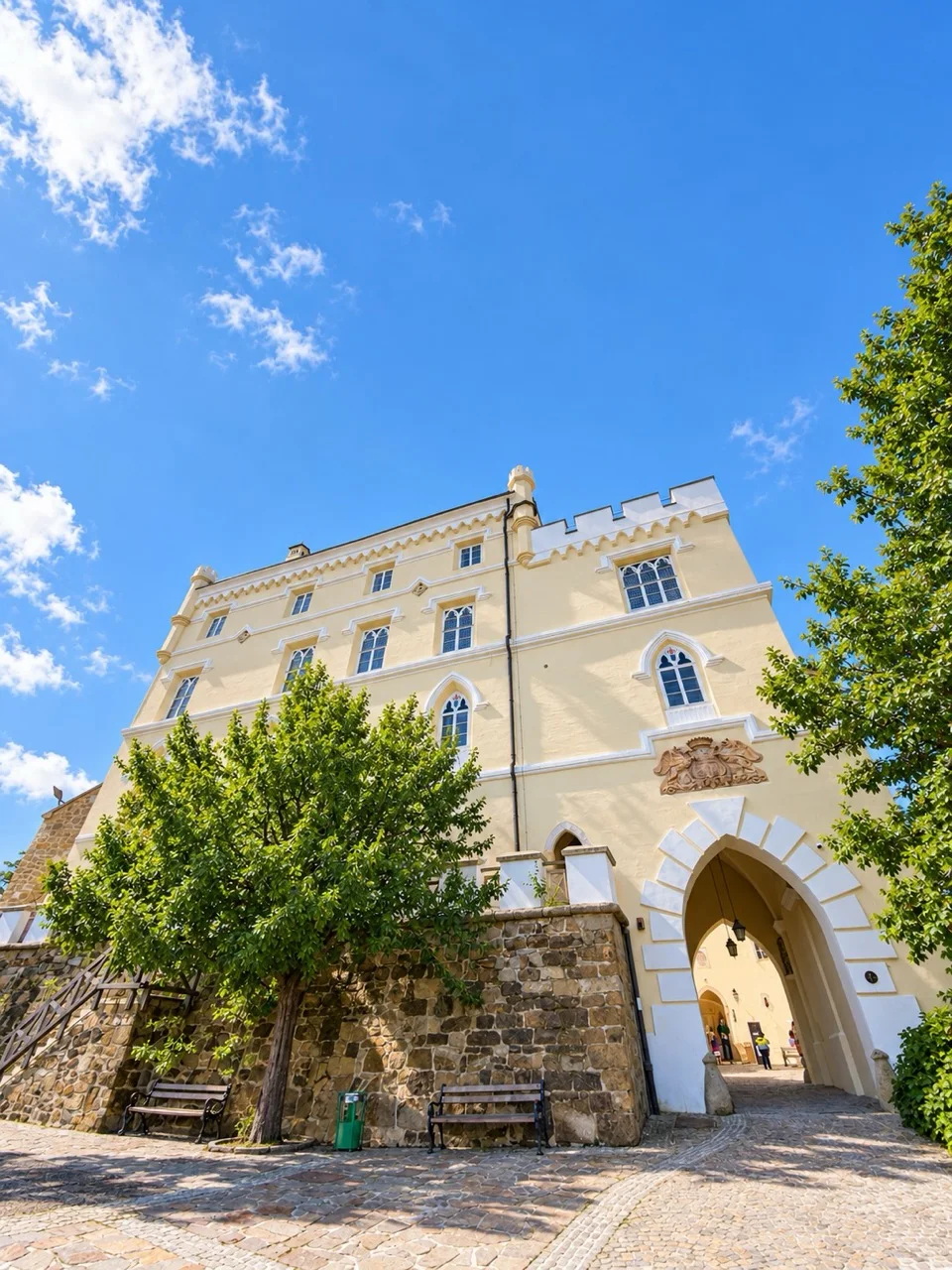
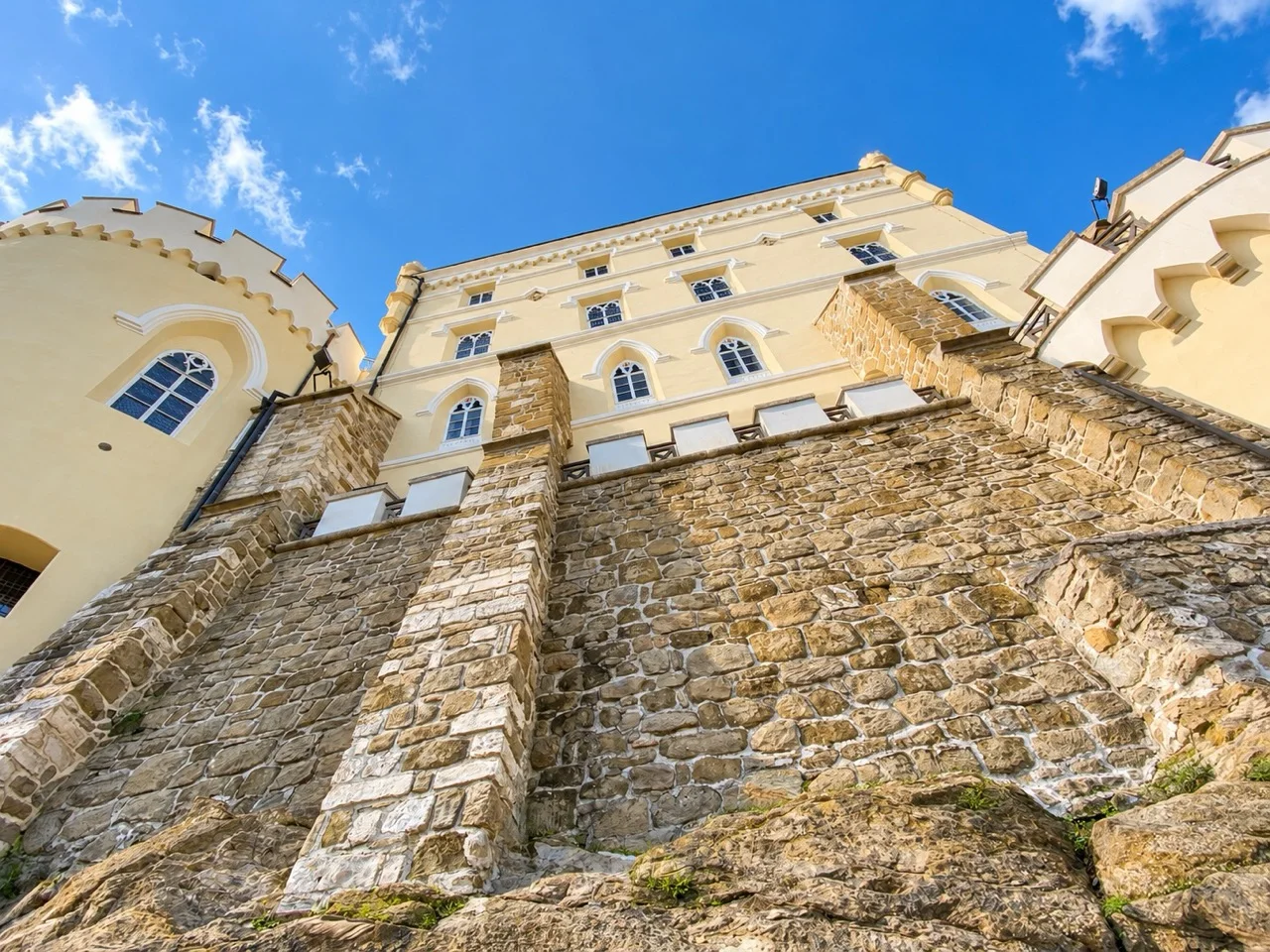
This long ownership is central to the character of the castle. Trakošćan was not simply preserved as an old military structure. It was repeatedly adjusted to suit the family’s changing needs, ambitions and taste. The result is a building in layers: Romanesque and Gothic elements sit beside Renaissance additions, defensive features beside domestic rooms, and medieval forms beside nineteenth-century historicist decoration.
Why the Drašković family matters
The Draškovićs were one of the important noble families of Croatia. Their influence came through military service, royal connections, landholding and marriage alliances with other powerful families. Trakošćan was part of a wider network of estates and relationships, rather than an isolated country residence.
Inside the castle, that world appears in practical details. Coats of arms above doors refer to families connected to the Draškovićs by marriage. Portraits record military and social alliances. The arrangement of rooms shows how an aristocratic household functioned, with separate spaces for formal dining, music, prayer, guests, domestic work and private retreat.
The museum is particularly good at keeping these details connected. Furniture is not displayed as a collection of unrelated objects. It remains in rooms that still suggest how the house was used. A dining room feels like a dining room; a music salon retains the atmosphere of a room designed for lingering; a bedroom reveals both comfort and status.
From medieval fortress to romantic castle
Trakošćan’s most dramatic transformation took place during the nineteenth century. As military technology changed and the castle lost much of its defensive purpose, the building was remodelled as a residence. The work introduced a romantic historicist character, with neo-Gothic and neo-Renaissance features that made the castle look older, more theatrical and more unified than its long construction history actually was.
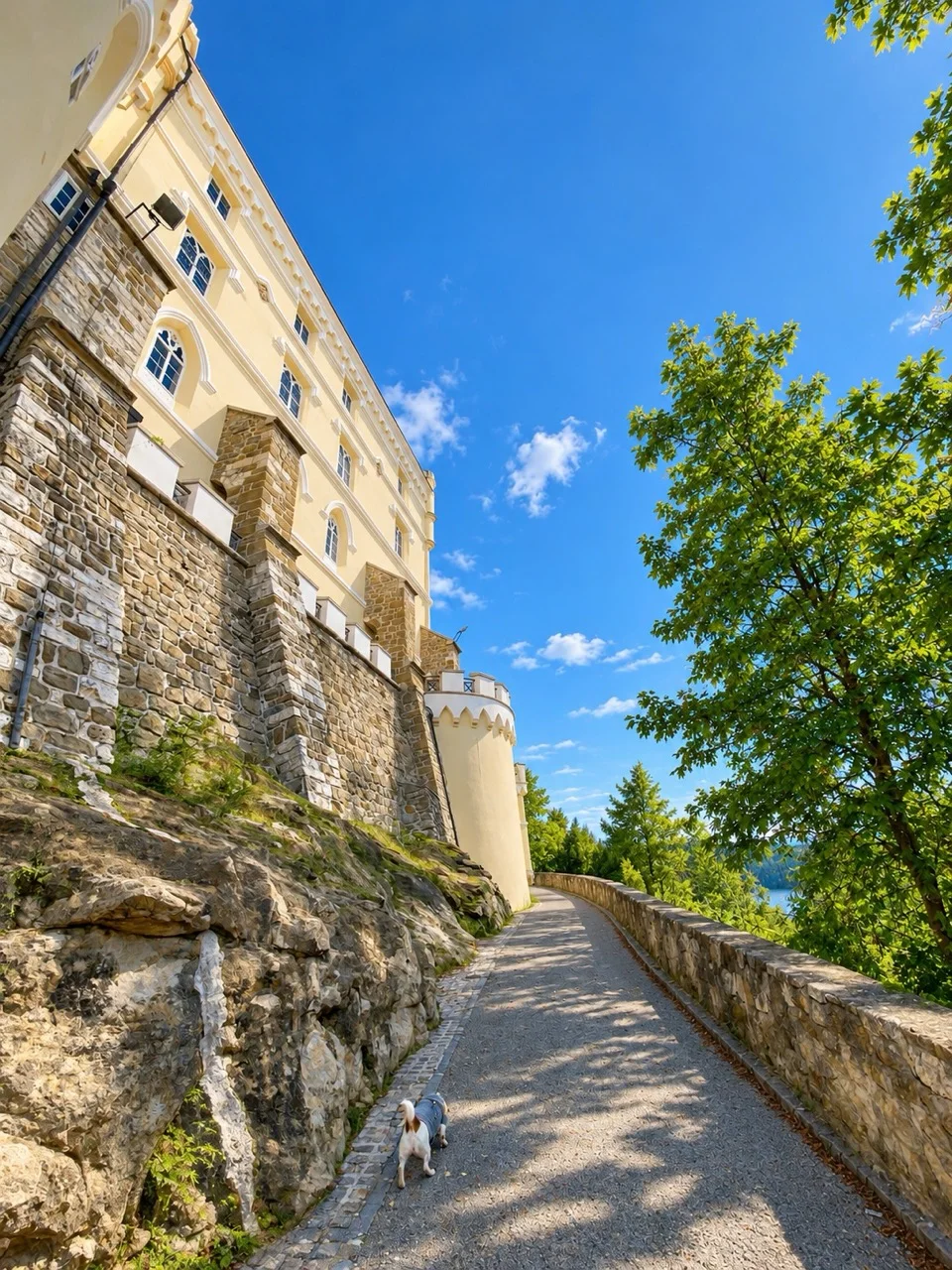
The changes were not limited to the exterior. The estate was reorganised as a comfortable country residence, while the surrounding land was developed as a landscaped park with a lake, paths and carefully placed views. A northern entrance tower with a movable bridge was added, and terraces helped connect the castle to its setting.
This is why Trakošćan should not be read as a perfectly preserved medieval fortress. Its identity comes from the tension between the old structure and the nineteenth-century vision imposed upon it. The castle is historic, but it is also a piece of Romantic imagination: a noble family turning a military stronghold into a picturesque home that expressed lineage, culture and social position.
The rooms worth slowing down for
The permanent exhibition extends across four floors and is arranged around original room functions and historic interiors. You do not need to study every object to appreciate the visit. A more rewarding approach is to concentrate on a handful of rooms and notice how decoration changes according to purpose.
The Knight’s Hall
The Knight’s Hall is the most theatrical space in the castle. Renovated in the nineteenth century, it was designed to evoke a medieval world of military honour and aristocratic ancestry. Neo-Renaissance furniture, an ornamental fireplace, armour and historic weapons establish the mood.
Look closely at the heraldic decoration. The coats of arms of the Drašković and Latour families appear on the panelling, while portraits of Habsburg rulers and military figures reinforce the family’s connection to imperial power. The room tells you as much about nineteenth-century ideas of nobility as it does about the Middle Ages.
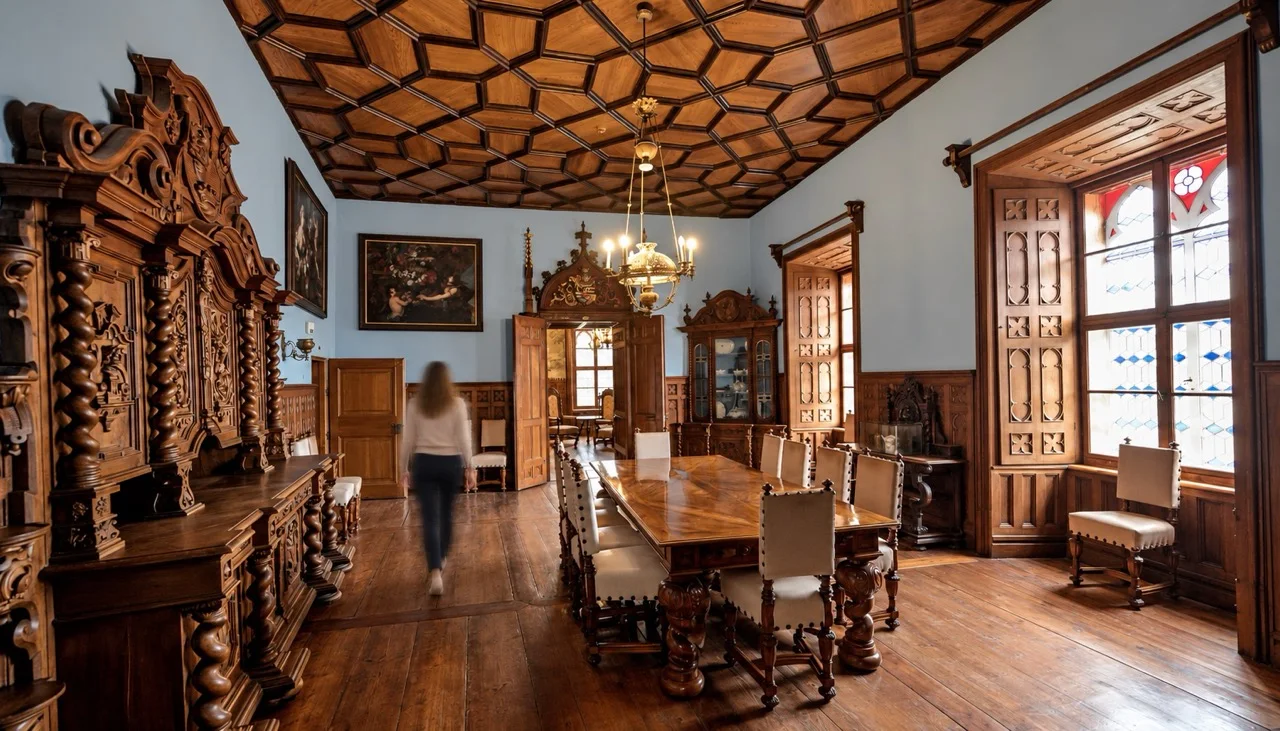
The dining room and small salon
The dining room is a useful reminder that a historic house is also a working household. Neo-style furniture was made for the castle in the 1860s, and surviving porcelain gives a sense of formal domestic life. Food prepared in the kitchen below reached the dining room through an ancillary room concealed within the panelling.
Next door, the small salon was used for relaxation after meals. It was also the only room in the castle where smoking was permitted. Painted decorations inspired by eighteenth-century French tapestries, a gambling table and an oriental brazier create a more intimate and informal atmosphere than the Knight’s Hall.
The music room
The music room was one of the most richly decorated spaces because it was where the household spent much of its leisure time. Gilded carvings, neo-Baroque furniture and portraits by Julijana Drašković give it an unusually personal character.
The room also contains an early nineteenth-century piano made in the workshop of Conrad Graf, one of the best-known Viennese piano makers of the period. Its presence shifts the room from display to domestic life: this was not merely a ceremonial salon, but a place where music formed part of the household’s daily routine.
Julijana Drašković’s studio
The studio of Countess Julijana Drašković is one of the most distinctive rooms in the museum. Julijana, née Erdődy, was a painter whose work was influenced by academic realism. The reconstructed atelier includes her easel, painting equipment, piano and artworks, along with portraits of family members and local women in traditional dress.
This room adds a different dimension to the family story. The castle is often presented through male inheritance, military service and noble status, but Julijana’s studio shows a woman pursuing artistic work within the highly structured world of nineteenth-century aristocracy. It is also one of the few rooms that feels unmistakably individual rather than representative.
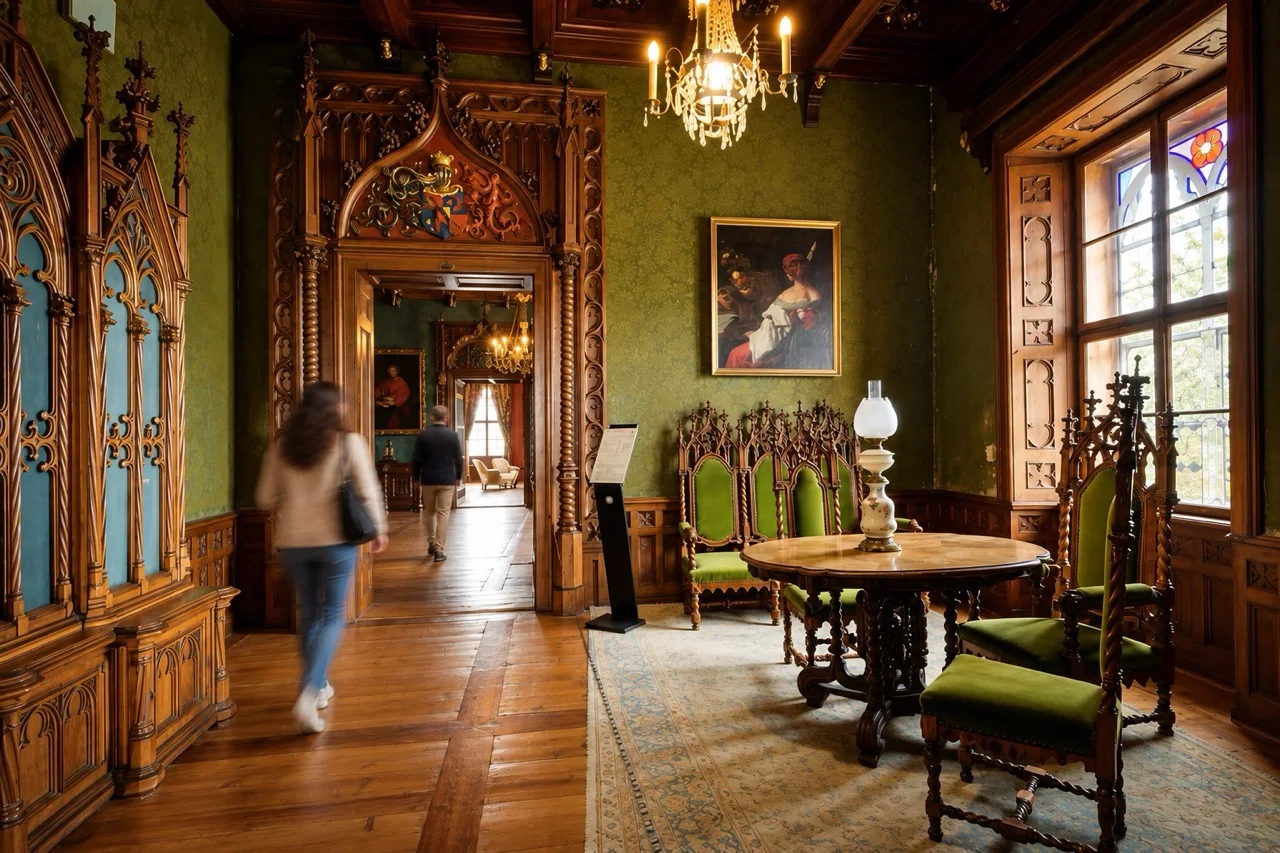
The bedrooms, library and family chapel
The owner’s bedroom is furnished in a neo-Baroque style and includes a striking white tiled heater shaped like a tower. The small library has neo-Gothic furniture, an open fireplace and preserved plush wallpaper. These spaces are quieter than the ceremonial rooms and help explain how the castle functioned as a lived-in residence.
The reconstructed family chapel contains sacred objects from the Drašković legacy, including an eighteenth-century monstrance, chalices, religious paintings and a richly illustrated Bible from 1747. It is a modest room, but an important one: aristocratic life here was organised around private devotion as much as public display.
The park and lake are part of the visit
The castle’s setting is not decorative background. The forest park, lake, meadows and gardens were shaped as part of the estate, and the approach through the landscape is one of the strongest parts of the experience.
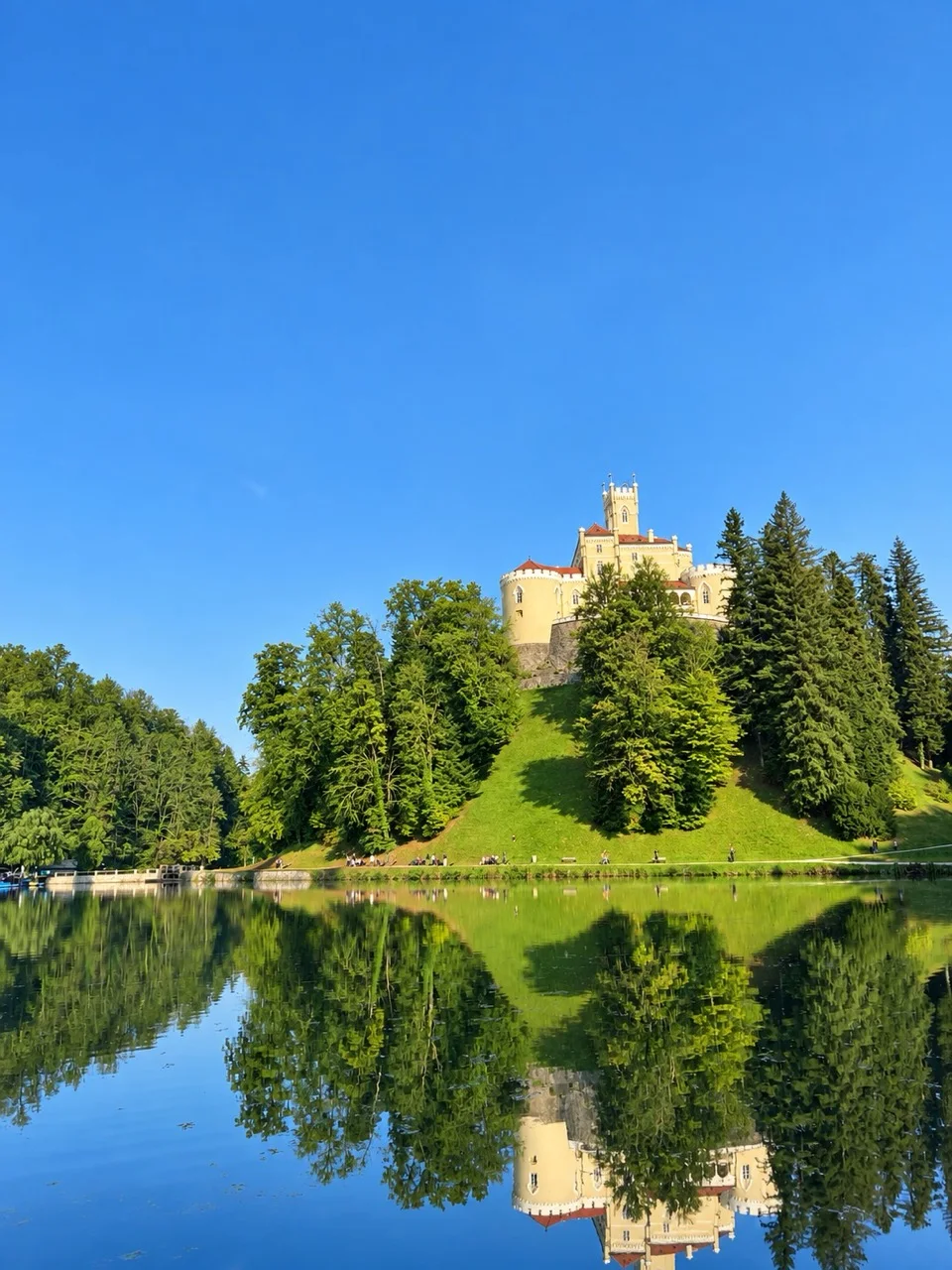
Walk far enough to see the castle from different angles. From the water, it appears compact and almost theatrical, with its towers and pitched roofs reflected in the lake. Closer to the building, the romantic additions become more apparent. The changing views make it easier to understand why the nineteenth-century owners invested so much in the grounds.
How much time do you need?
For a first visit, two hours is a sensible minimum. That allows time for the principal interiors and a short walk around the lake. Three hours feels more comfortable, particularly if you want to read the family history, pause in the rooms and explore the grounds without turning the visit into a checklist.
A short visit should focus on the Knight’s Hall, the music room, Julijana’s studio and the park. The second-floor guest rooms are more simply furnished and can be seen at a quicker pace if your time is limited. The castle is more rewarding for visitors who enjoy looking at details than for those seeking a large collection of famous artworks.
Practical notes for planning a visit
Trakošćan Castle is in north-western Croatia, near Varaždin and close to the main road between Zagreb and Maribor. The official museum information gives the journey from Zagreb as approximately 80 kilometres and around an hour and a half by car, depending on traffic. From Varaždin, the drive is approximately 40 kilometres.
The museum is currently listed as open every day, including weekends and public holidays, except Christmas Day and Easter Sunday. The published summer schedule, from 1 April to 31 October, is 9am to 6pm, with last admission at 5.30pm. The winter schedule, from 1 November to 31 March, is 9am to 4pm, with last admission at 3.30pm. Check the official museum information before travelling, especially around public holidays or special events.
Tickets are purchased at the museum reception. The castle grounds can be enjoyed on foot, but conditions on paths may vary after wet weather. Comfortable shoes are sensible, particularly if you plan to walk beyond the immediate castle approach.
Is Trakošćan worth your time?
Yes, if you care about the relationship between architecture, landscape and family history. Trakošćan is not the place to visit for one spectacular object or a single famous event. Its appeal builds gradually through the combination of the medieval core, romantic restoration, domestic interiors, aristocratic collections and lake landscape.
It is especially well suited to travellers who prefer a measured cultural stop rather than a crowded list of attractions. The castle does not require an entire day, but it deserves more than a hurried look from the car park. Give it a few hours and the building becomes easier to read: first as a fortress, then as a noble residence, and finally as a museum preserving the complicated life of both.
Visit trakoscan.hr for more information.