Bordeaux has no shortage of ways to encounter wine. You can drink it in a polished bar, taste it at a château, follow the river towards the Médoc or simply order a glass with lunch and let the city do the rest. The Cité du Vin occupies a different position. It is less a museum about Bordeaux wine than a large, immersive introduction to wine as a global subject: its history, rituals, landscapes, trade, language and place in everyday life.
That makes it worthwhile for some visitors and surprisingly easy to misunderstand for others. If you are expecting a traditional museum of bottles, vintages and local appellations, the experience may feel broad and occasionally diffuse. If you want context before visiting the vineyards, enjoy interactive design or need a thoughtful indoor afternoon in Bordeaux, it can be one of the city’s more useful stops.
What the Cité du Vin actually offers
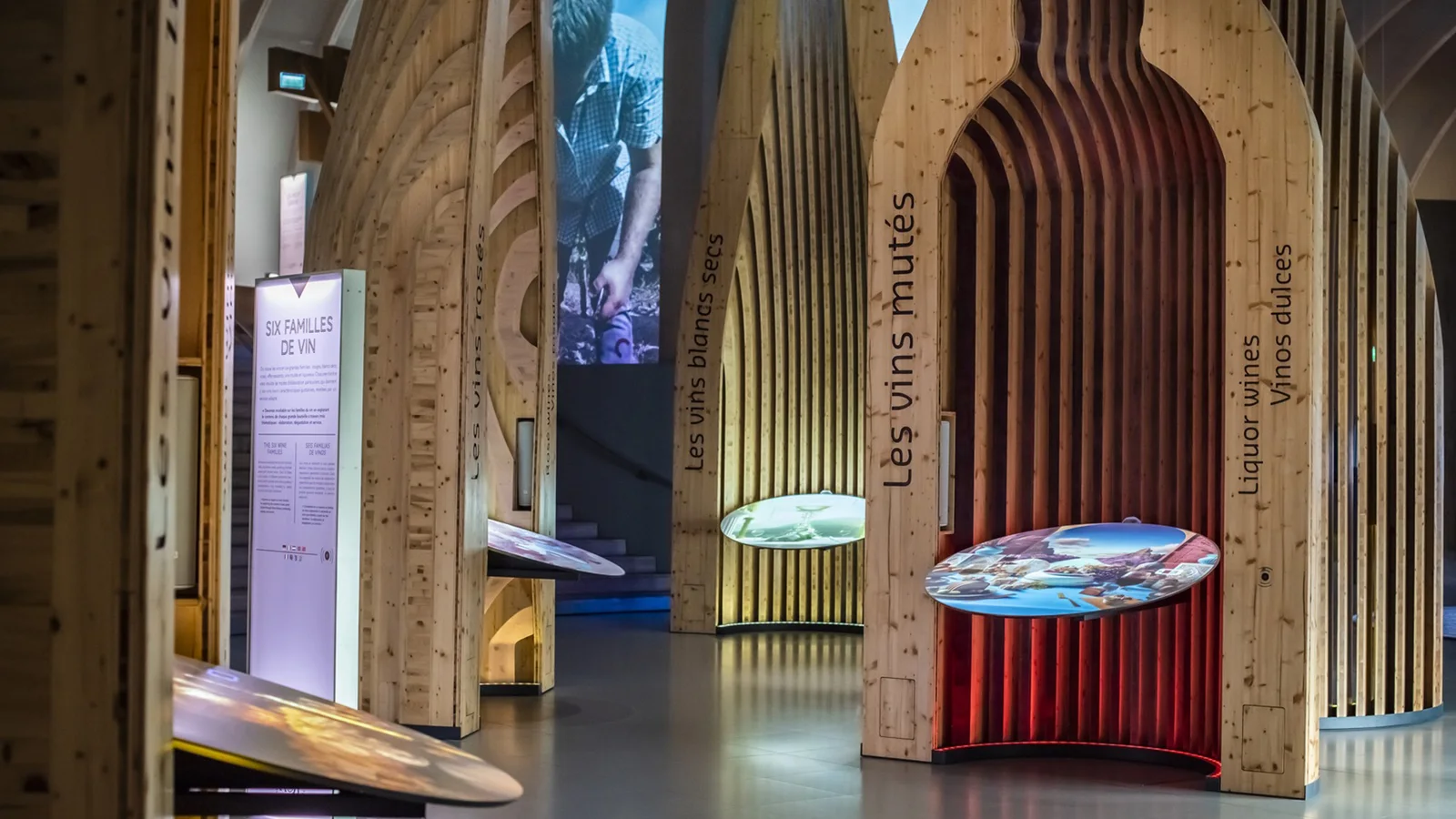
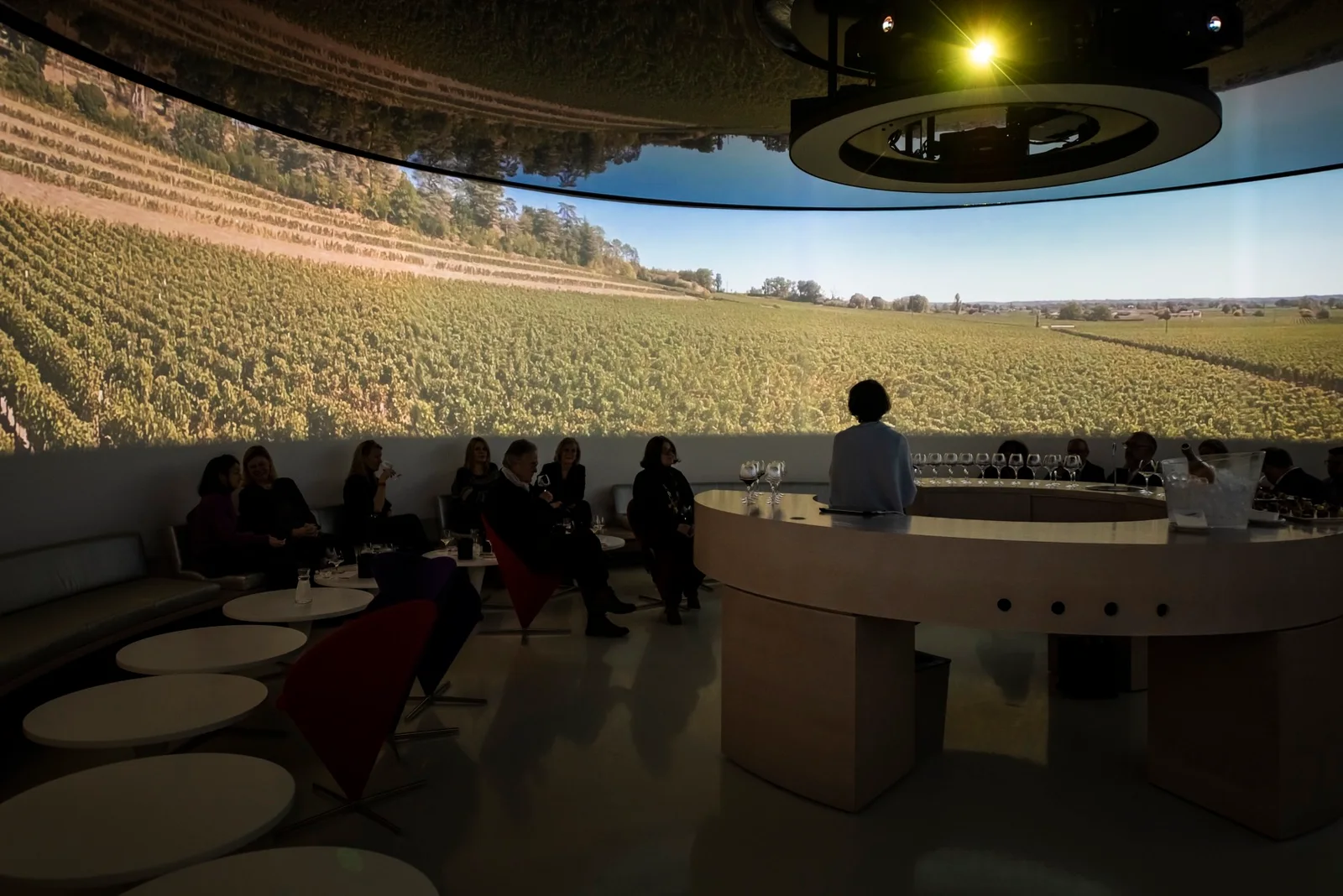
The permanent exhibition is arranged as a multimedia journey through wine cultures around the world. It uses films, sound, visual displays, maps, objects and interactive stations rather than a conventional sequence of labelled cases. The subject moves between ancient civilisations, trade routes, winemaking, landscapes, hospitality and the symbolic role wine has played in different societies.
The approach is deliberately wide. Bordeaux is present, but it is not the sole subject. You will encounter references to vineyards and drinking traditions far beyond France, which is part of the museum’s appeal. It places Bordeaux within a larger story instead of presenting the city as the centre of everything.
The exhibition is also designed to be explored at different speeds. Some visitors will want to stop at nearly every interactive point; others will prefer to follow the main route, watch a few films and move on. The official guidance suggests an average visit of two to three hours, although the content is extensive enough to occupy much longer.
The building is part of the visit
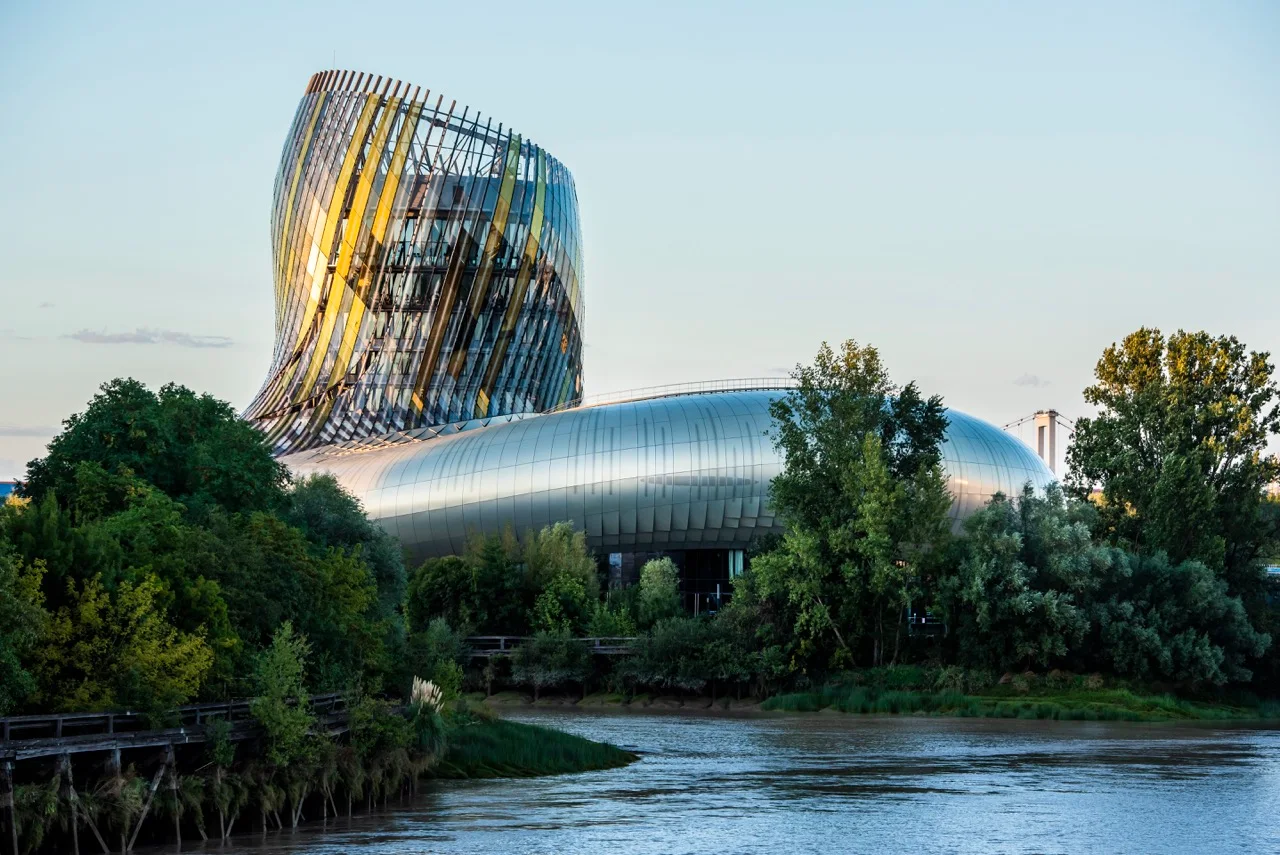
Even before entering, the Cité du Vin makes a strong impression. Designed by XTU architects, the building rises beside the Garonne in the Bassins à Flot district, its curving form catching the light in a way that changes throughout the day. The architects have described the shape through references to a vine stock, wine swirling in a glass and the movement of the river.
That symbolism can sound elaborate on paper, but the building works best when experienced physically. The rounded volumes, reflective surfaces and sense of movement make it feel quite different from the more ordered stone architecture of central Bordeaux. It is contemporary without being sealed off from its surroundings.
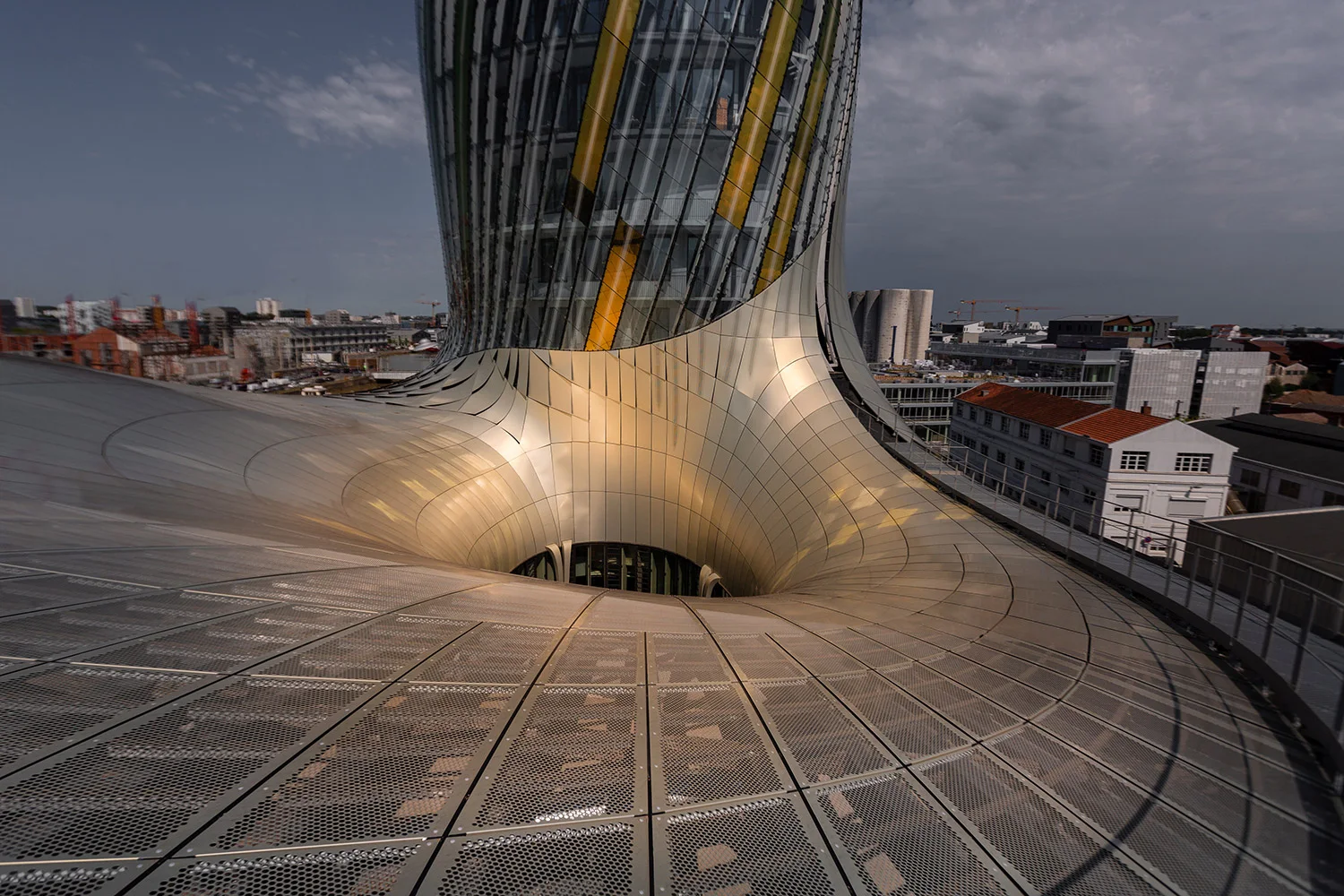
The setting matters too. The Cité du Vin stands beside the river, close to the Chaban-Delmas Bridge and the changing urban landscape of Bacalan. Its gardens and riverfront create a little breathing space around the building. If you are already in the area, it is worth arriving early enough to look at the exterior rather than treating the museum as a purely indoor attraction.
The permanent exhibition: what deserves your attention
The strongest sections are those that connect wine to people and place. Look for displays that explore how vineyards shape landscapes, how wine travels, how it is used in ceremonies and celebrations, and how different cultures have developed their own ways of drinking and sharing it.
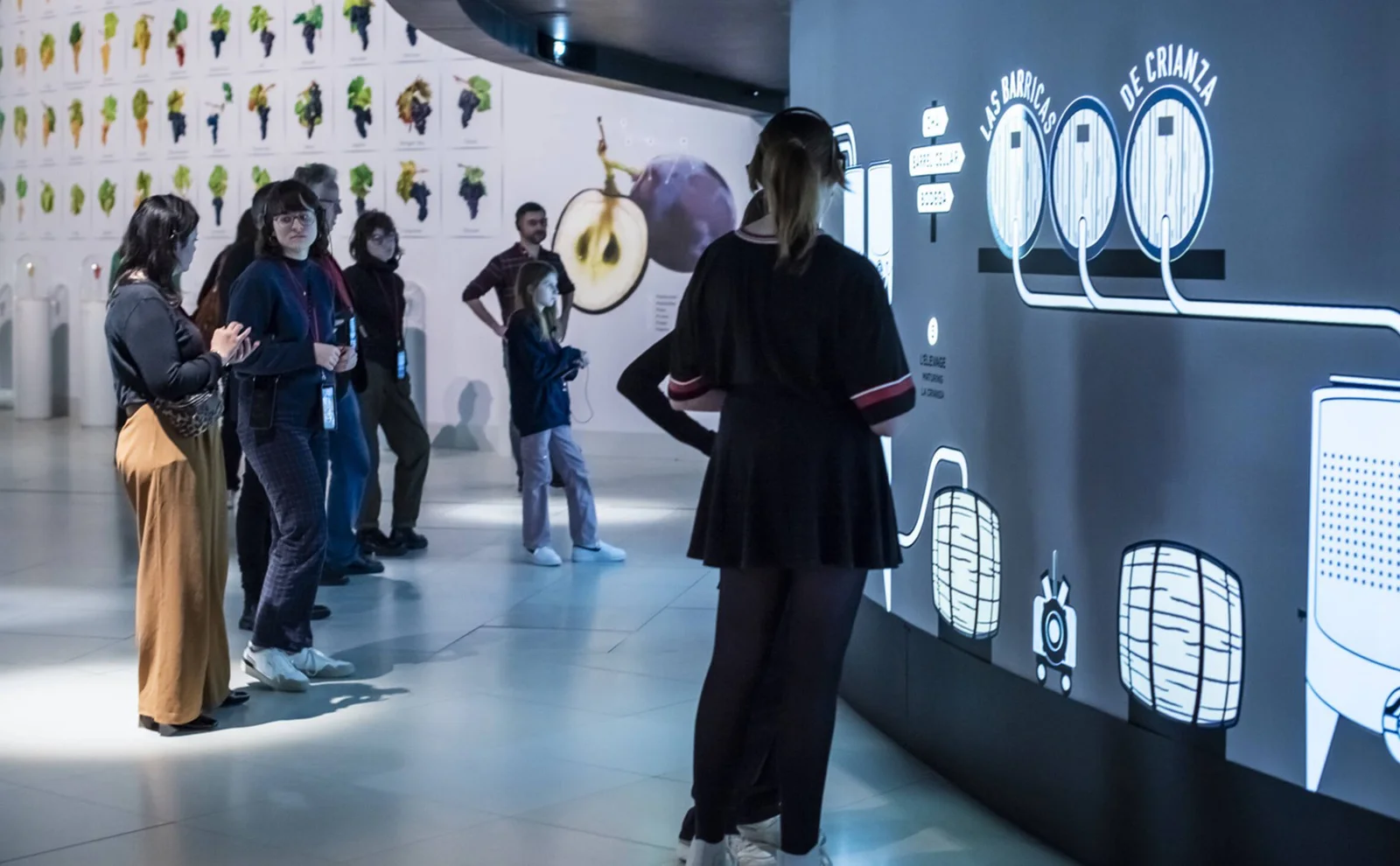
The multimedia elements are varied enough to keep the experience moving, but they are not all equally essential. A selective visit is usually more enjoyable than trying to absorb every screen and listening station. Take time with the larger installations and films, then skim the denser material when your attention begins to fade.
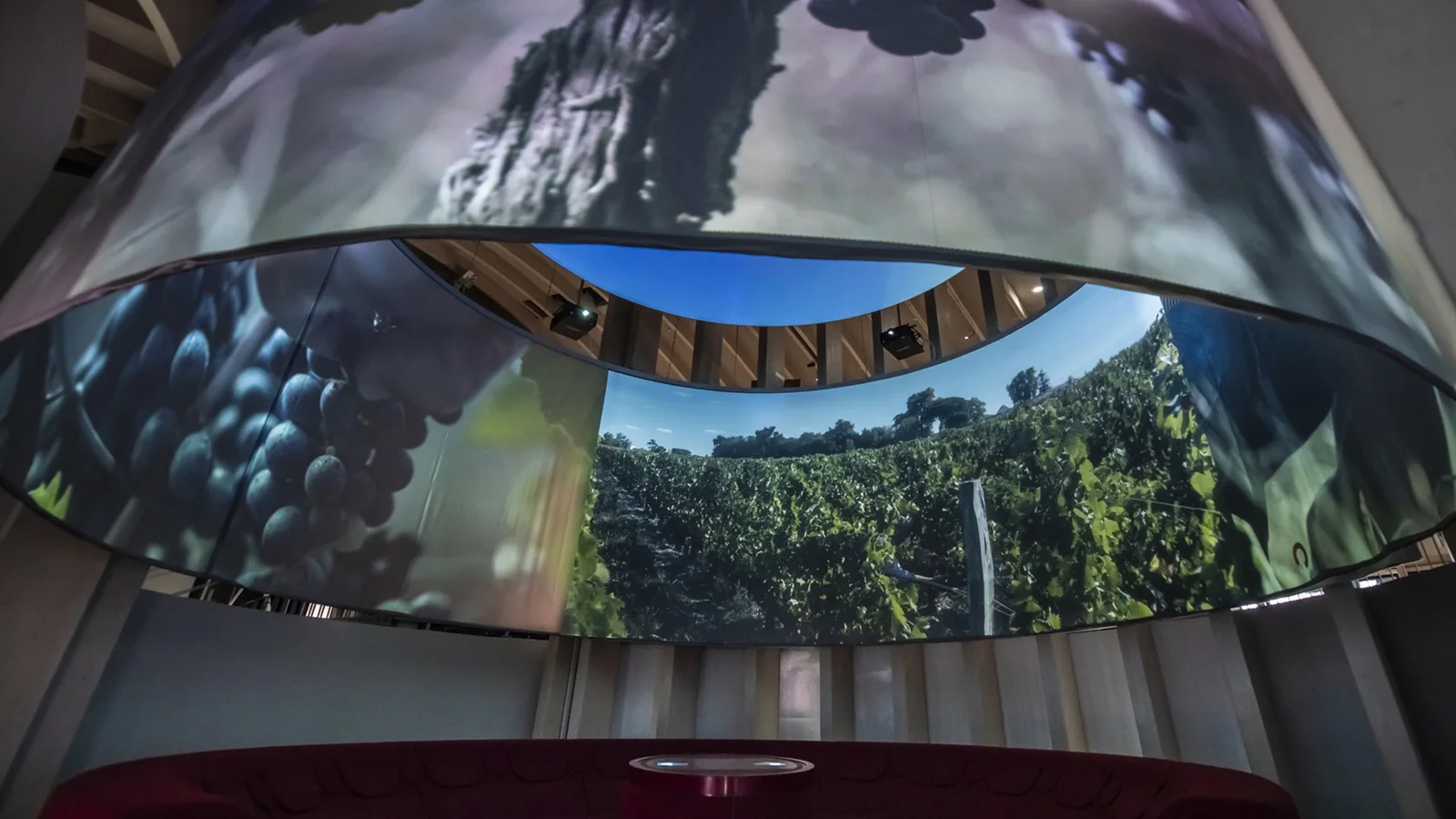
The visit companion, available in several languages, helps give structure to the exhibition. It is useful for visitors who want more explanation, although you do not need to follow every piece of content in order. The museum is better understood as a series of encounters than as a route that demands complete concentration from beginning to end.
- Prioritise the sections on wine cultures, landscapes, trade and the rituals of drinking.
- Use the multimedia guide selectively rather than listening to everything.
- Take a short pause before the final ascent to the Belvedere.
- Do not judge the entire museum by the first few interactive displays; the experience becomes more varied as you continue.
The Belvedere tasting is the part you should not skip
The visit culminates on the eighth floor, 35 metres above the ground, in the Belvedere. Here, a tasting is included with entry to the permanent exhibition. Depending on the ticket chosen, it includes one or two glasses from a selection of wines from France and elsewhere, with an alcohol-free option available.
The tasting is not intended to replace a proper wine workshop. Its value lies in the combination of drink and setting. The glazed room offers wide views over the Garonne, the Chaban-Delmas Bridge, the Chartrons district, the historic centre and the right bank. The city’s relationship with the river becomes clearer from above, as does the contrast between old Bordeaux and the newer northern districts.
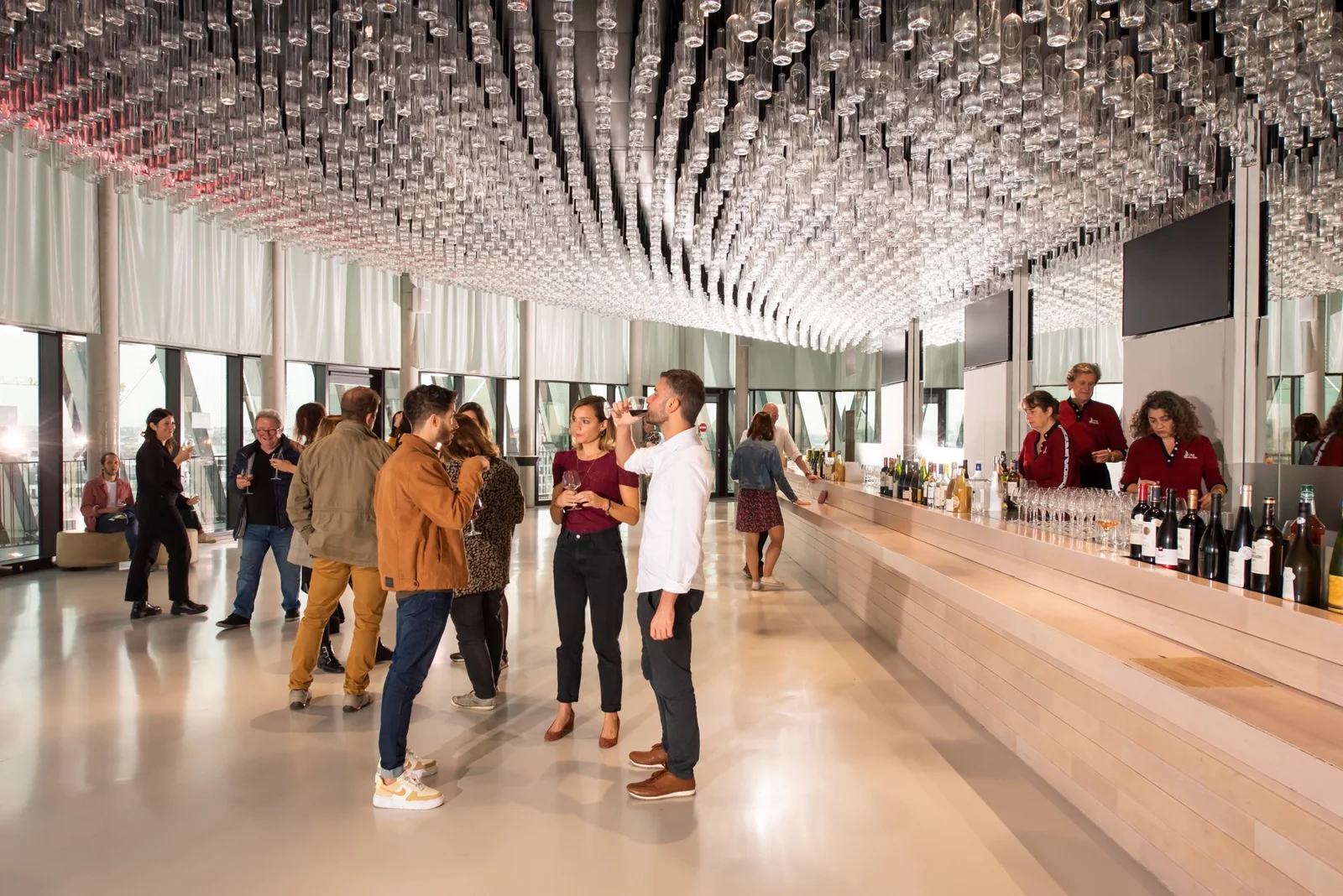
The selection changes, so the tasting should be approached as a chance to try something different rather than a guaranteed introduction to a particular Bordeaux estate. It is also a useful feature for mixed groups: visitors who are less interested in the exhibition may still find the view and the drink worthwhile.
Cité du Vin or a vineyard visit?
This is the most useful decision to make before buying a ticket. The Cité du Vin and the nearby wine regions offer very different experiences, and one does not simply replace the other.
Choose the museum if you want to understand the larger world of wine, if you are travelling without a car, or if your group has mixed interests. It is also the better choice when the weather is poor or when you have only a few hours between other plans. The museum gives you a broad framework and lets you taste without committing to a full-day excursion.
Choose a vineyard visit if what you really want is to see vines, cellars and estates, and to understand how a particular Bordeaux appellation works. A château visit will usually be more focused and more local. You may learn less about global wine culture, but more about the relationship between soil, grape varieties, production and place.
For a first trip with enough time, doing both can make sense. Visit the Cité du Vin early in your stay for context, then use a separate day for the vineyards. After the museum, the differences between Médoc, Saint-Émilion, Pessac-Léognan and other areas are easier to place. If you have only one free afternoon, however, the museum is the more reliable option.
- For a broad introduction: choose the Cité du Vin.
- For château architecture and vineyard landscapes: choose an organised vineyard visit.
- For serious tasting instruction: book a dedicated workshop rather than relying on the museum’s included tasting.
- For a short city break: the Cité du Vin is easier to fit into a Bordeaux itinerary.
- For a dedicated wine holiday: combine the museum with one carefully chosen wine region.
Who will enjoy it most?
The Cité du Vin is best for curious first-time visitors, design-conscious travellers, couples looking for a flexible half-day activity and anyone who wants more context before tasting Bordeaux wines. It is also a sensible choice for visitors who do not drink alcohol, since the Belvedere offers a non-alcoholic alternative and the exhibition itself is not built around drinking.
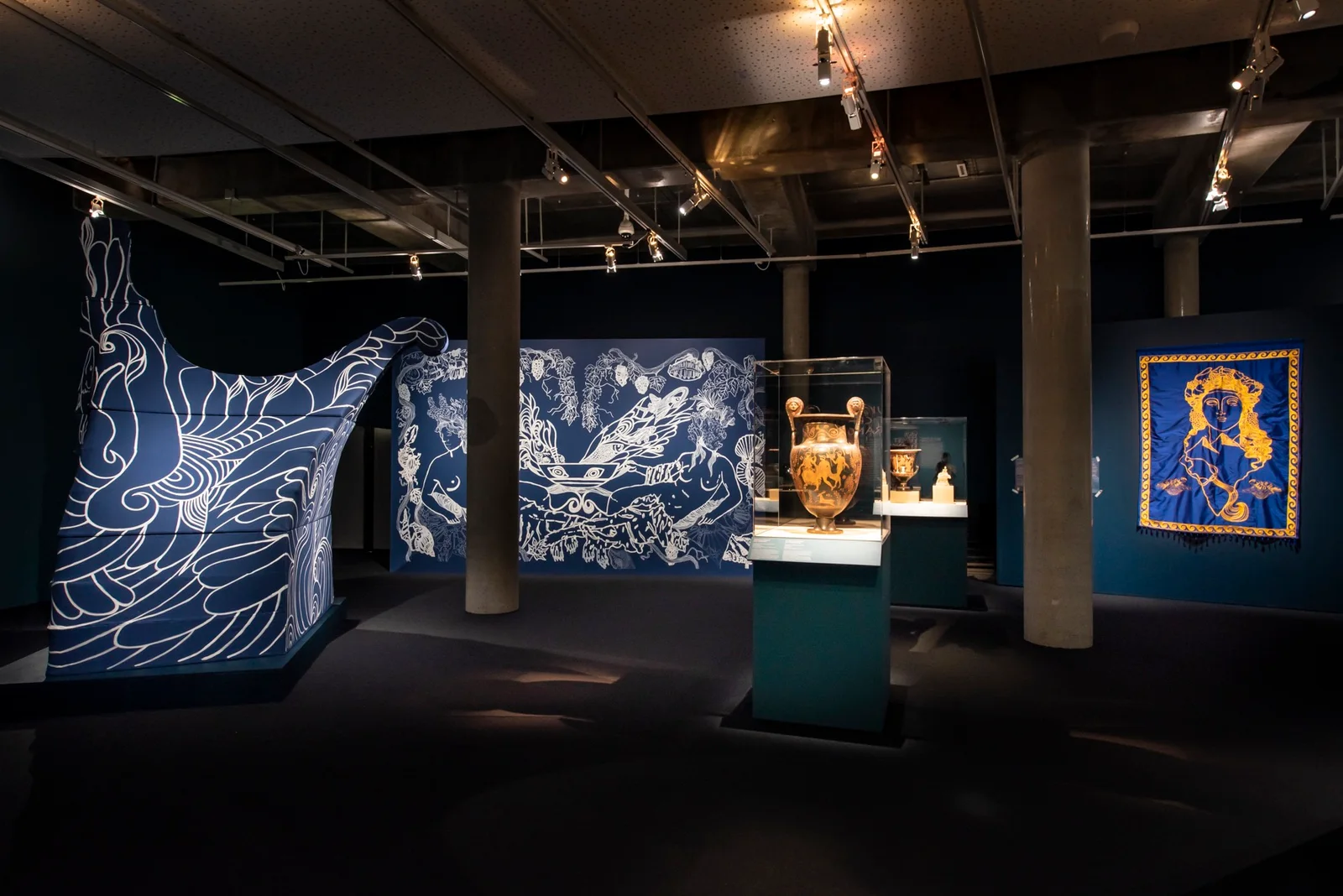
Families may find the interactive format more approachable than a traditional museum, although the overall experience is long and some material is aimed at adults. Younger children are likely to enjoy the movement and visual elements more than the detailed explanations.
Wine specialists may find parts of the exhibition too introductory. The museum is more concerned with cultural breadth than with the technical depth of a serious enology course. That is not a weakness unless you arrive expecting something more narrowly focused.
How long we'd stay
Two hours is enough for a considered visit if you move selectively and include the Belvedere. Three hours gives the exhibition more room to breathe and allows time for the films, interactive displays and a proper pause at the top. A full day is possible, but most travellers will get more from stopping before fatigue sets in and continuing elsewhere in Bordeaux.
The museum can be paired naturally with the surrounding Bassins à Flot area. Depending on your wider itinerary, you could continue towards the Chartrons, walk along the river or make time for another attraction nearby. It is less well suited to a rushed visit squeezed between central Bordeaux landmarks; the journey out is worthwhile when you can give the museum a proper block of time.
Practical notes for planning the visit
The Cité du Vin is at 134 Quai de Bacalan, north of the historic centre. It is served by public transport, and the museum advises allowing more time than a quick drop-in because the permanent exhibition is substantial. Current opening hours vary by season, with later closing during part of the warmer months, so check the official schedule before setting out.
At the time of writing, an adult ticket for the permanent exhibition and Belvedere tasting is listed at €23, with reduced and family rates available. Ticket prices, tasting options and temporary exhibitions can change. Booking ahead is sensible during busy periods, particularly if you want to add a workshop or another timed experience.
There are places to eat within the building, including a brasserie and café options, but you do not need to turn the visit into a full-day programme. The surrounding gardens provide a quieter place to pause, and the museum allows visitors to leave and return later the same day in certain circumstances, subject to the current conditions of entry.
- Check seasonal opening hours before travelling.
- Allow at least two hours if you want to see the exhibition and reach the Belvedere without rushing.
- Confirm the current ticket type if you want one or two tastings.
- Wear comfortable shoes; the exhibition covers a substantial area.
- Consider visiting earlier in your Bordeaux stay if you plan to explore the vineyards afterwards.
What could be skipped?
On a short visit, you do not need to see every screen, listen to every audio segment or spend equal time in every gallery. The museum’s scale can create the impression that you are missing something if you move on, but a selective route is perfectly reasonable.
You can also skip a separate meal at the museum if your schedule is tight. The most distinctive parts of the experience are the permanent exhibition, the building and the Belvedere. Restaurants and cafés are useful for convenience, but they are not the main reason to make the journey.
Likewise, the Cité du Vin does not need to replace a vineyard visit if you have already arranged one that genuinely interests you. If your day is centred on Saint-Émilion or the Médoc, the museum may be better saved for another trip. The choice depends on whether you want breadth or a more specific sense of Bordeaux’s wine country.