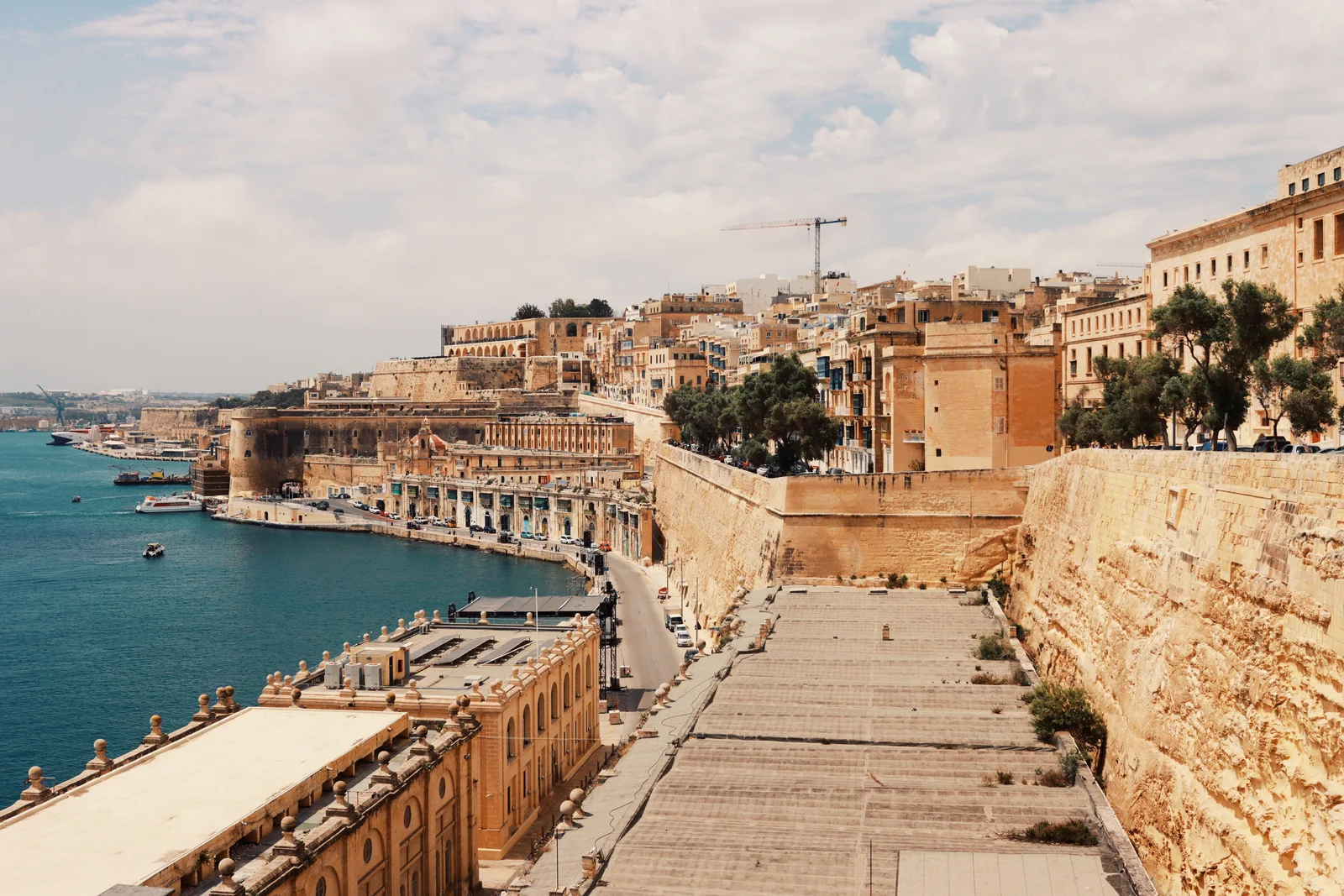
Malta is compact, but its character changes quickly. Valletta’s honey-coloured streets, prehistoric temples, quiet coves and busy seaside towns are close together, yet each offers a distinctly different experience. A short trip can cover a great deal, but trying to see everything usually means spending too much time in traffic or moving between stops.
For a first visit, we would prioritise Valletta, Mdina and one well-chosen day by the sea. Add Gozo if you have enough time to slow the pace. Comino’s Blue Lagoon is visually impressive, but it can feel crowded, particularly in the middle of summer.
Arriving and getting around
Malta International Airport is the island’s only airport, about 9 km from Valletta. The best way onward depends on where you are staying and how much of the island you intend to explore.
- Airport buses: Express routes X1, X2, X3 and X4 connect the airport with different parts of Malta. X4 serves Valletta, while X2 heads towards Sliema and St Julian’s. Check the current route map before travelling.
- Taxis: White taxis operate from outside arrivals, with fixed fares available through a kiosk inside the terminal. The source information gives an indicative cost of €20–€25 to central areas; confirm the current fare for your destination.
- App-based rides: Bolt and Uber operate on the island and can be useful when buses are inconvenient or you are travelling with luggage.
- Car hire: A car is helpful for remote beaches and for combining several parts of the island in one day. Malta drives on the left, and narrow streets and busy urban roads can make driving less relaxing than expected.
Public buses connect most major towns, beaches and sights. They can be good value, although delays are possible at busy times and on weekends. Single-journey fares in the source information are €2 in summer and €1.50 in winter. The Tallinja Explore Card offers unlimited weekly travel; check the current conditions before buying.
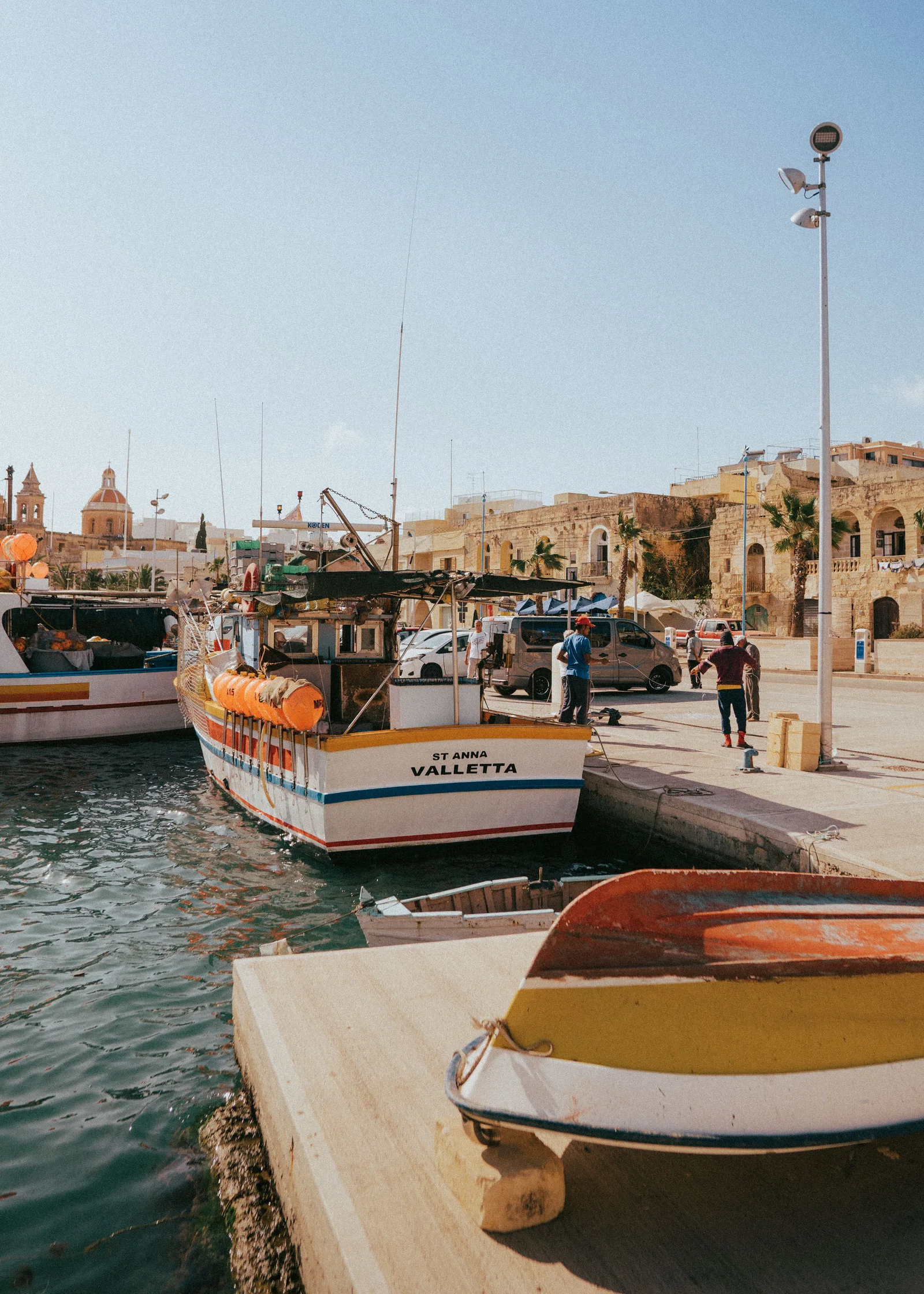
Ferries are useful for travelling between Valletta and Sliema, and for reaching the Three Cities. Services to Gozo and Comino depart from Ċirkewwa in the north of Malta. The Gozo Channel ferry is listed as running every 30–45 minutes, but schedules should be confirmed for your travel date.
Where to spend your time
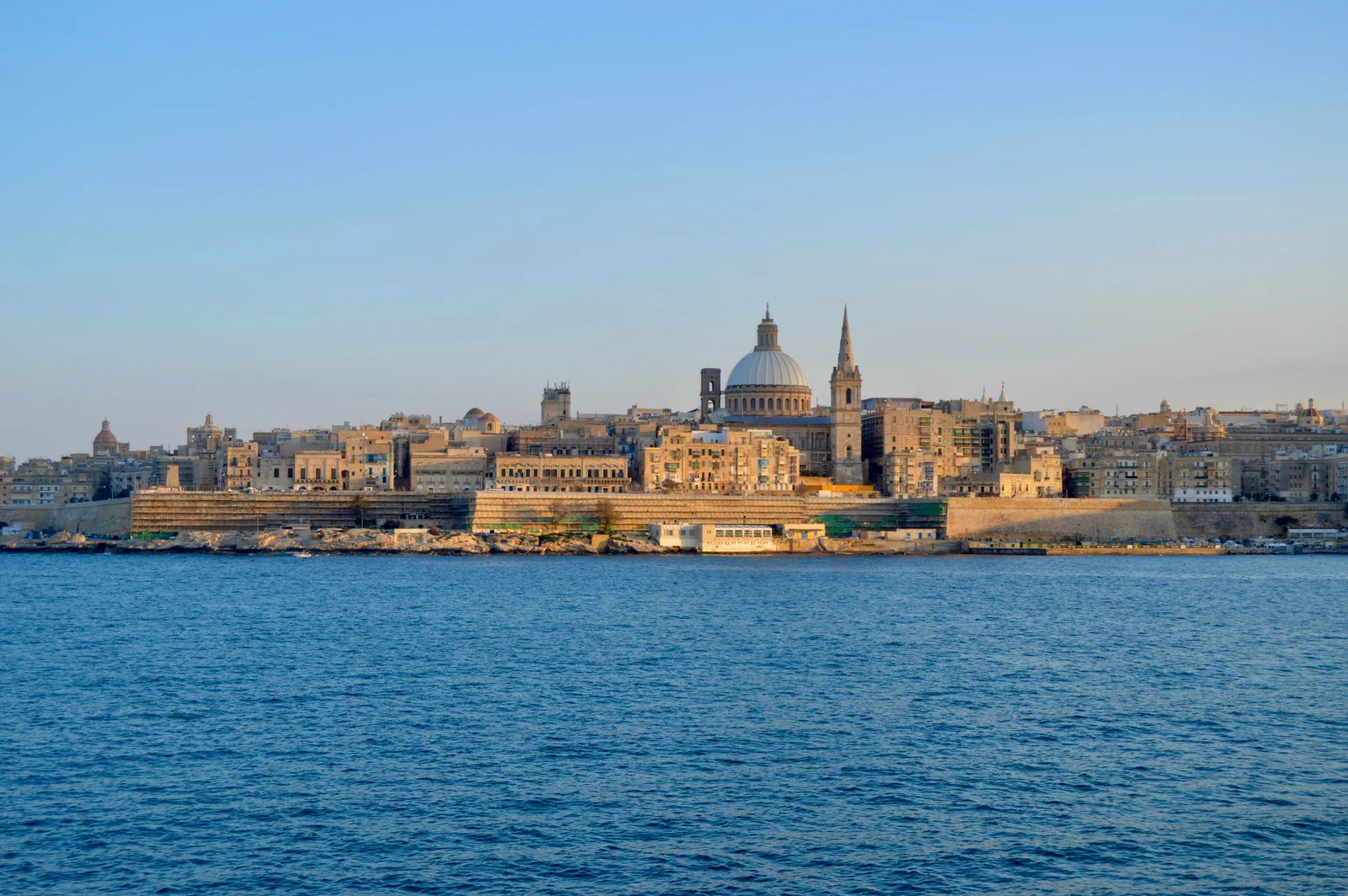
Valletta is the natural starting point. The capital is small enough to explore on foot, with steep streets, limestone façades and views across the harbour. St. John’s Co-Cathedral deserves priority for its carved interior, marble tombs and paintings. Casa Rocca Piccola offers a more intimate view of Malta’s aristocratic history through a guided visit to a 16th-century noble house.
The Valletta Waterfront is pleasant for an evening walk and a meal beside the harbour. It is most appealing when you want an easy end to the day; it does not need to replace time spent in the city’s central streets.
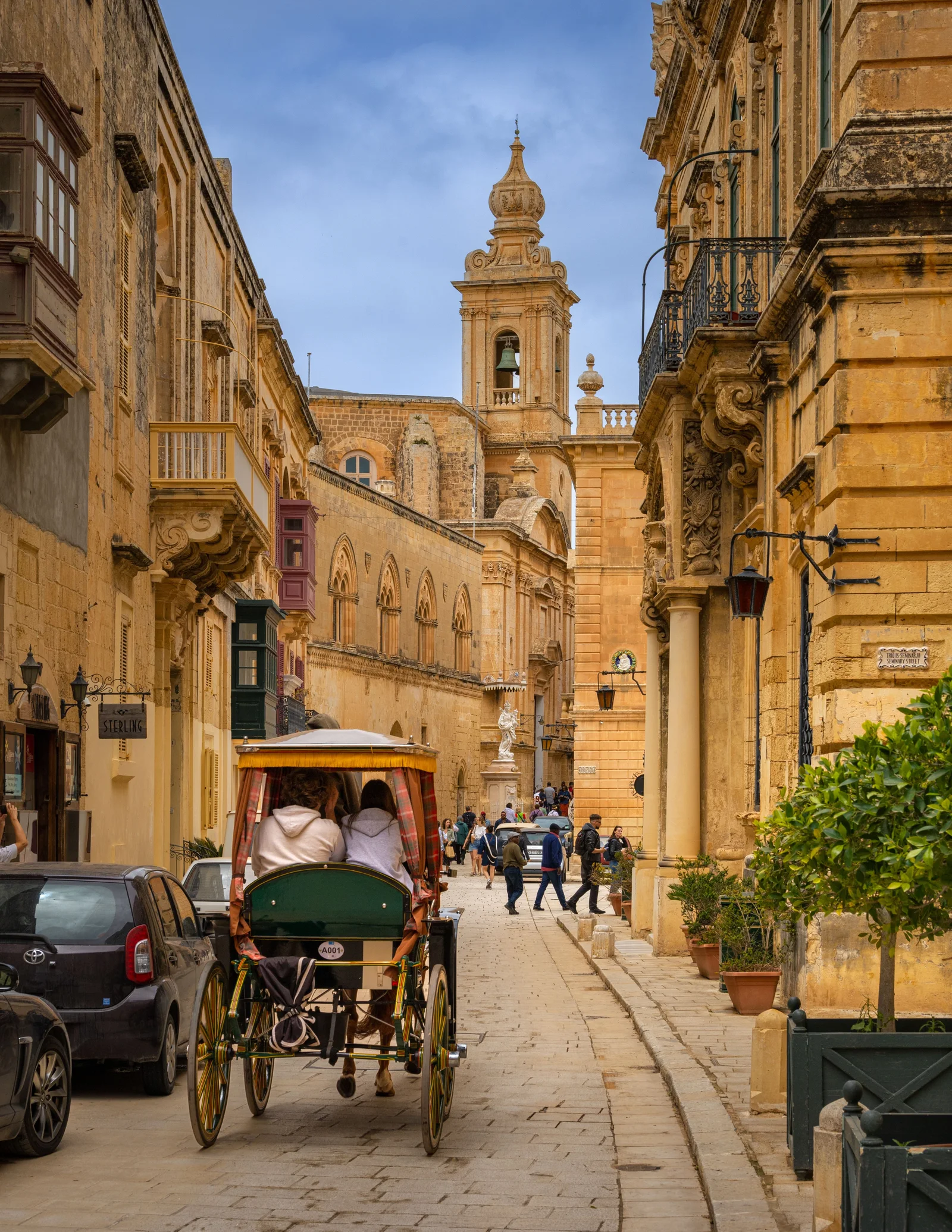
Mdina is best visited for its atmosphere and compact historic centre. The narrow, car-free lanes, palaces and elevated views make it a worthwhile half-day stop, especially when combined with nearby Rabat. Palazzo Falson is the stronger choice for visitors interested in domestic history, art and antiques. Mdina Dungeons offers a darker interpretation of the island’s past.
Rabat feels more lived-in than Mdina and is worth adding if you have an interest in archaeology or religious history. St. Paul’s Catacombs form an underground network of early Christian burial chambers, while the Wignacourt Museum also provides access to wartime shelters and catacombs.
St Julian’s is the practical choice for nightlife, with restaurants around Spinola Bay and the bars and clubs of Paceville. The two areas feel quite different: Spinola Bay is suited to a relaxed meal, while Paceville is deliberately loud and youthful. Choose this part of the island for its energy, not for a quiet stay.
Sliema has a long seafront promenade, shops and easy views towards Valletta. Tigné Point combines retail and dining with one of the better city panoramas. The shoreline is rocky rather than sandy, with flat limestone platforms and ladders into the water. It works well for a quick swim between urban plans.
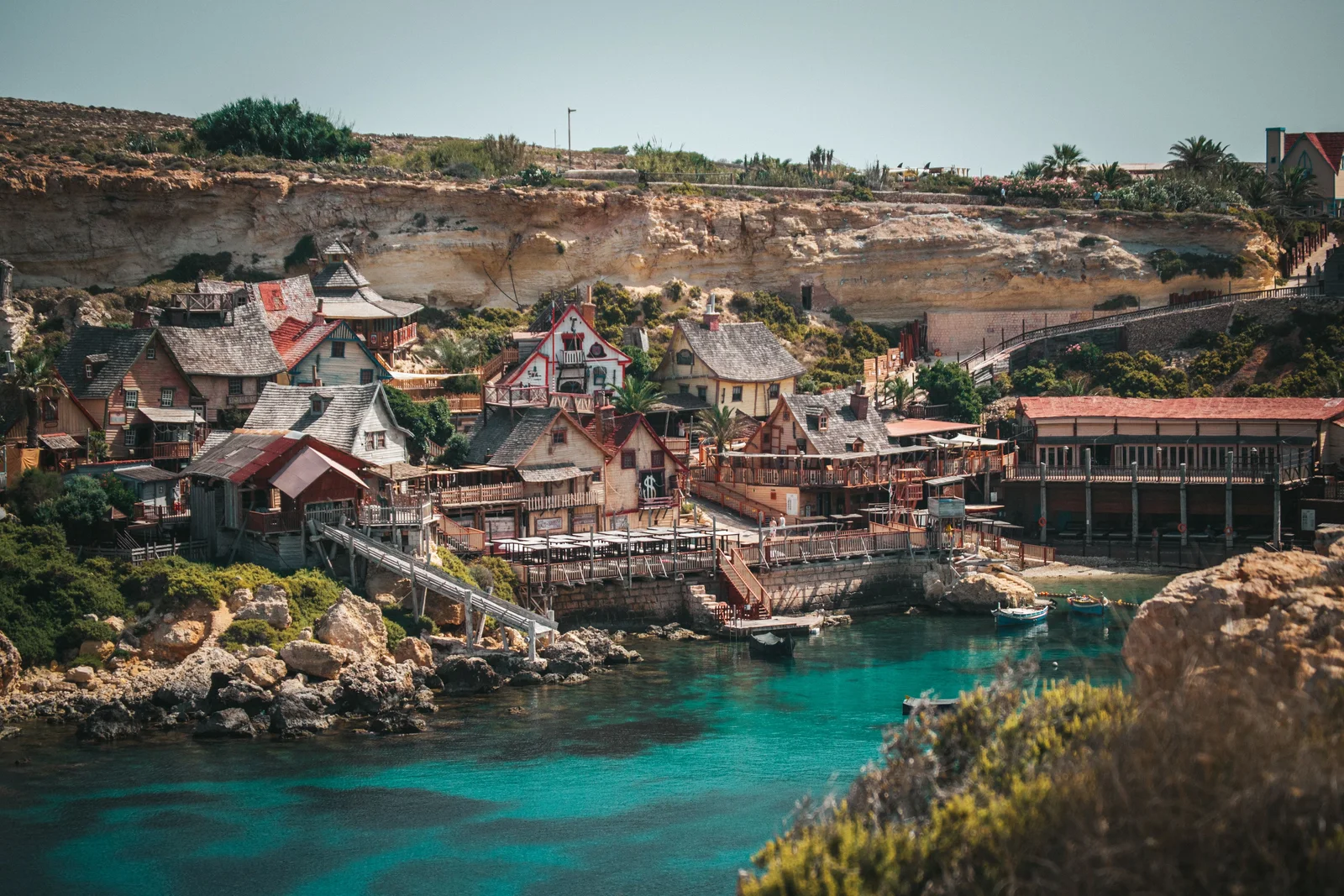
Popeye Village at Anchor Bay was built as the set for the 1980 film starring Robin Williams and now operates as a colourful theme park. It is most relevant for families or visitors who enjoy film-related attractions. Boat rides, a small beach and souvenir shops are part of the experience; allow time for it only if that is the kind of stop you want.
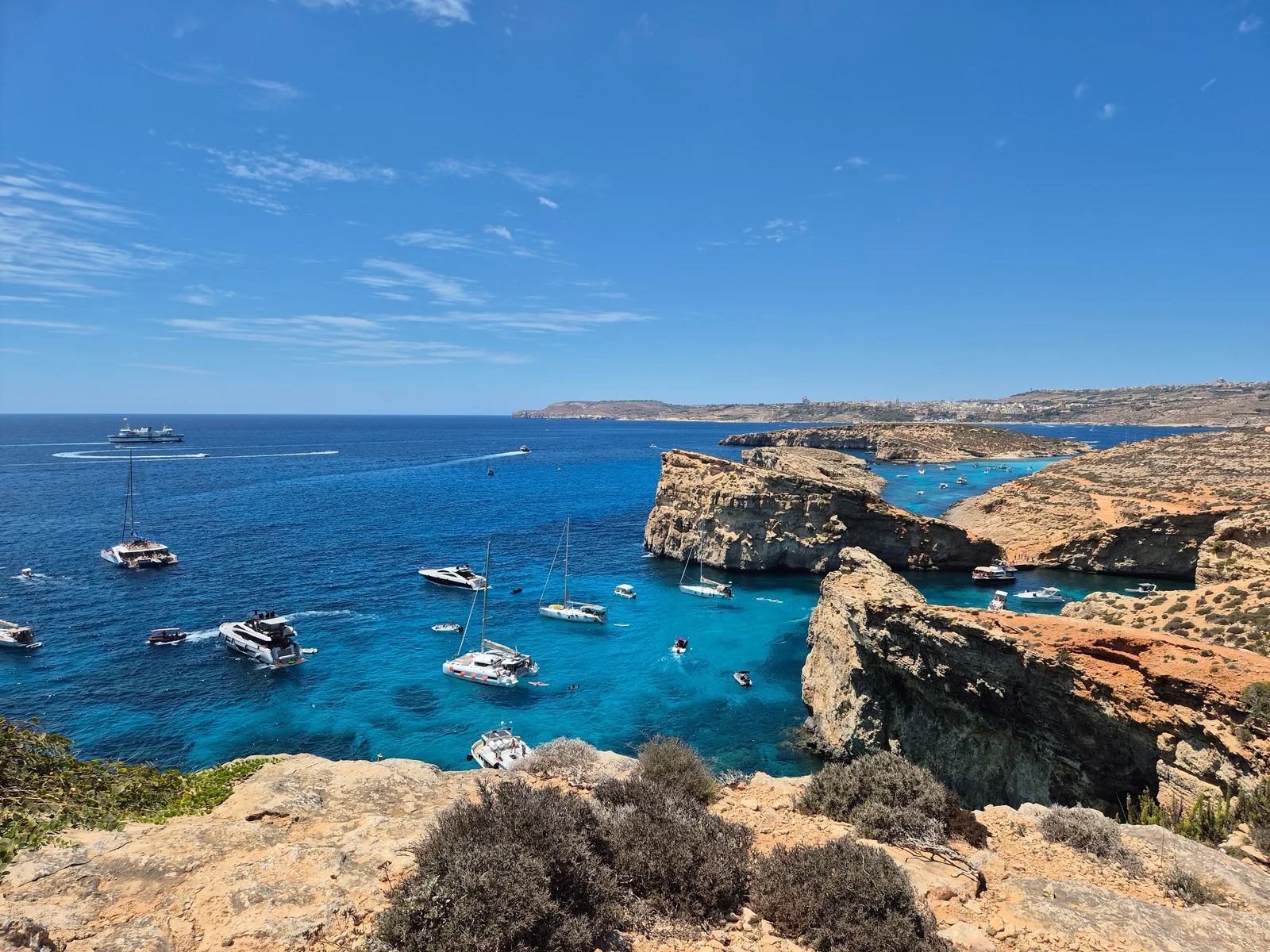
Comino is usually approached as a swimming day. The Blue Lagoon has strikingly clear water and a white seabed, while Crystal Lagoon offers another attractive place to swim nearby. Small trails provide views across the island, but the sense of quiet described in older guides should not be assumed during the busiest summer periods. Go early, travel outside peak season or choose another coast if you prefer space.
Malta’s best places to swim
Malta has sandy beaches, rocky platforms and natural pools. The right choice depends on whether you want facilities, easy access or a more rugged setting.
Blue Lagoon, Comino: The island’s most famous swim, with bright turquoise water and excellent conditions for snorkelling when the sea is calm. Crowds are the main drawback, so timing matters.
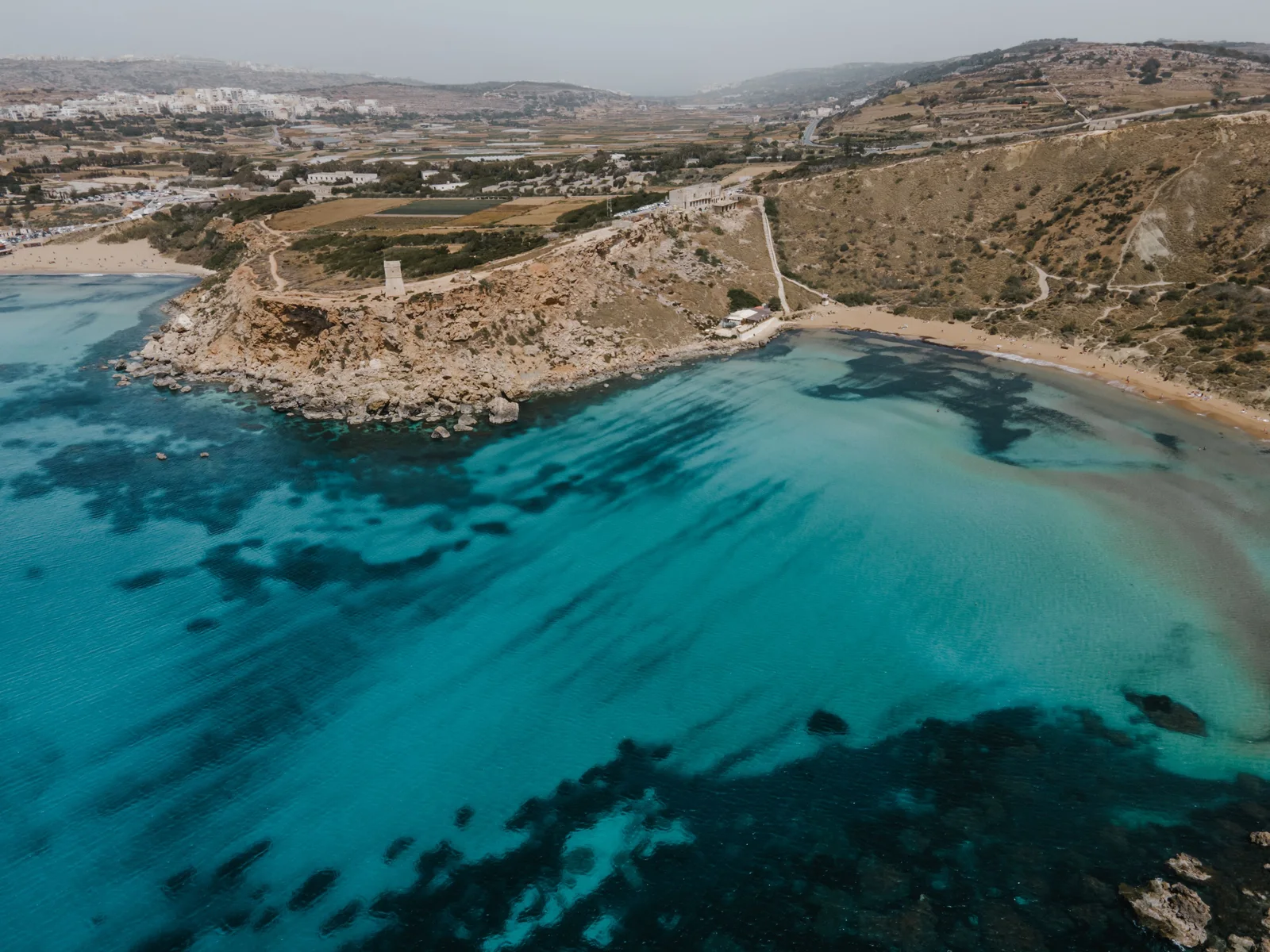
Golden Bay: A convenient sandy beach with sunbeds, beach bars and public toilets. It suits a straightforward beach day and is also popular at sunset.
Mellieħa Bay, or Għadira Bay: Malta’s largest beach, with shallow water, watersports, loungers and snack bars. It is one of the easier choices for families and less confident swimmers.
Għajn Tuffieħa: Close to Golden Bay but reached by a long staircase and generally less developed. The waves can be stronger, so conditions should be checked before swimming.
Paradise Bay: A small sandy cove near the Gozo ferry terminal. It has a beach bar and facilities, although its size means it can feel crowded in summer.
St. Peter’s Pool: A rocky natural pool near Marsaxlokk, known for clear water and cliff-jumping. There is no sand, lifeguard or shop, so bring water and take care around the rocks.
Fond Għadir, Sliema: Flat rock platforms and ladders lead into deep water close to cafés and shops. It is a useful city swim rather than a full beach day.
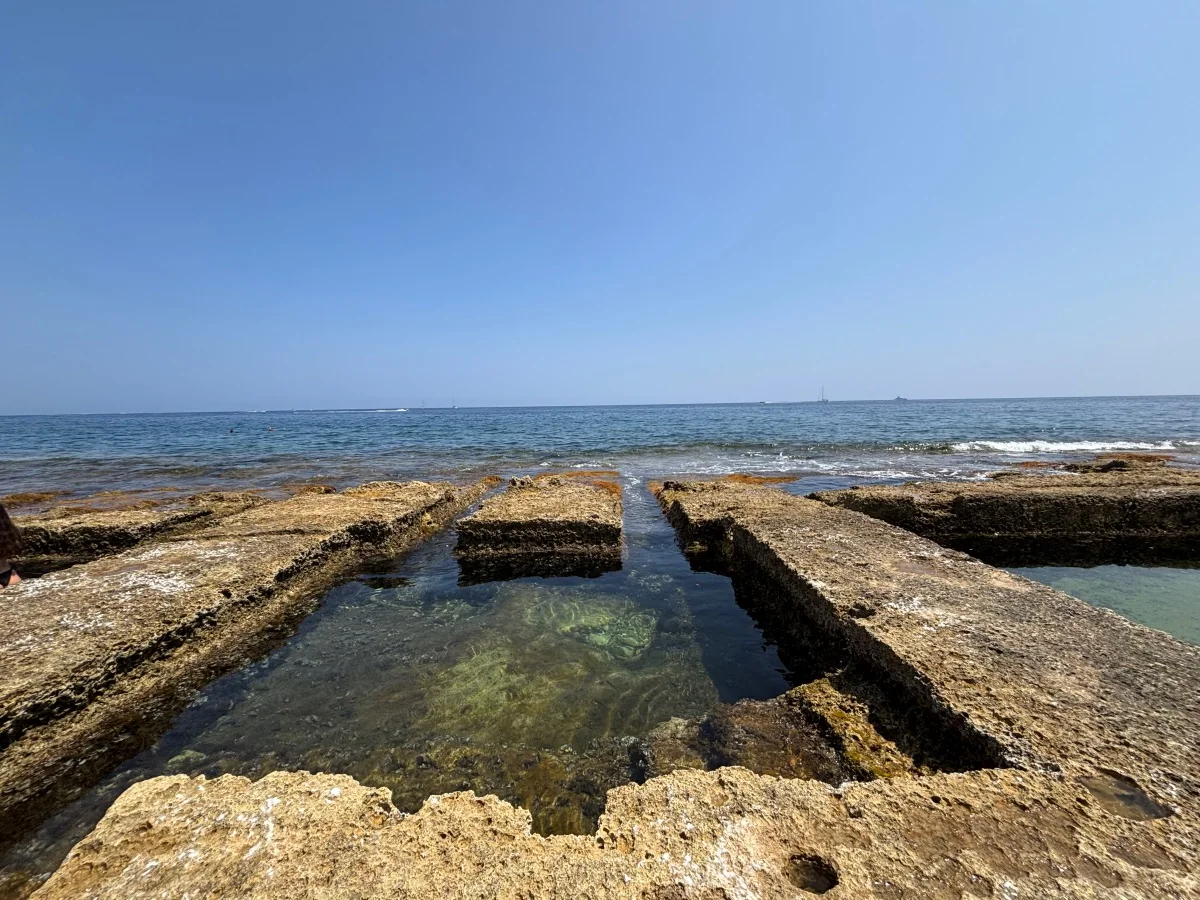
Roman Baths, Qawra: Rectangular rock-cut pools beside the sea make this a distinctive, quieter option. Sunset is a good time for the views, subject to conditions and access.
Manoel Island: The rocky shore around the Gżira and Msida area has views towards Valletta and can suit an early-evening swim or walk away from the main beach crowds.
Experiences worth adding
Diving is one of Malta’s strongest reasons to stay longer. The islands offer caves, reefs and wrecks, including the HMS Maori, with certified dive schools available for beginners and experienced divers. If diving is a priority, give it at least one dedicated day instead of treating it as a spare-hour activity.
Boat trips offer a useful perspective on the limestone coast. A cruise to Comino’s Blue Lagoon is convenient, though often busy. A sunset harbour cruise around Valletta and the Three Cities is the more comfortable choice when you want scenery without committing to a full beach day.
Snorkelling is accessible at Għar Lapsi, St. Peter’s Pool and the Blue Grotto. Water clarity and sea conditions vary, so local advice matters more than a fixed ranking.
Practical notes
Language: Maltese and English are official languages, and English is widely used in hotels, restaurants and transport.
Currency: Malta uses the euro (€). Cards are common, but some cash remains useful for smaller businesses, markets and occasional beach stops.
When to go: April to June and September to October are suggested in the source information as a balance of warm weather and fewer visitors. July and August are hotter and busier, particularly at the most popular beaches and on Comino.
Electricity: Malta uses UK-style Type G plugs with a 230V supply. Visitors from continental Europe or the US will need an adapter.
Tap water: The source information states that tap water is safe to drink, although its mineral-heavy taste means some visitors prefer bottled water. Check current local guidance and consider carrying a refillable bottle.
Summer conditions: Daytime temperatures are described as roughly 30–35°C (86–95°F). Lightweight clothing, a hat, sunscreen and plenty of water are practical essentials, particularly on exposed coastal walks and limestone streets.
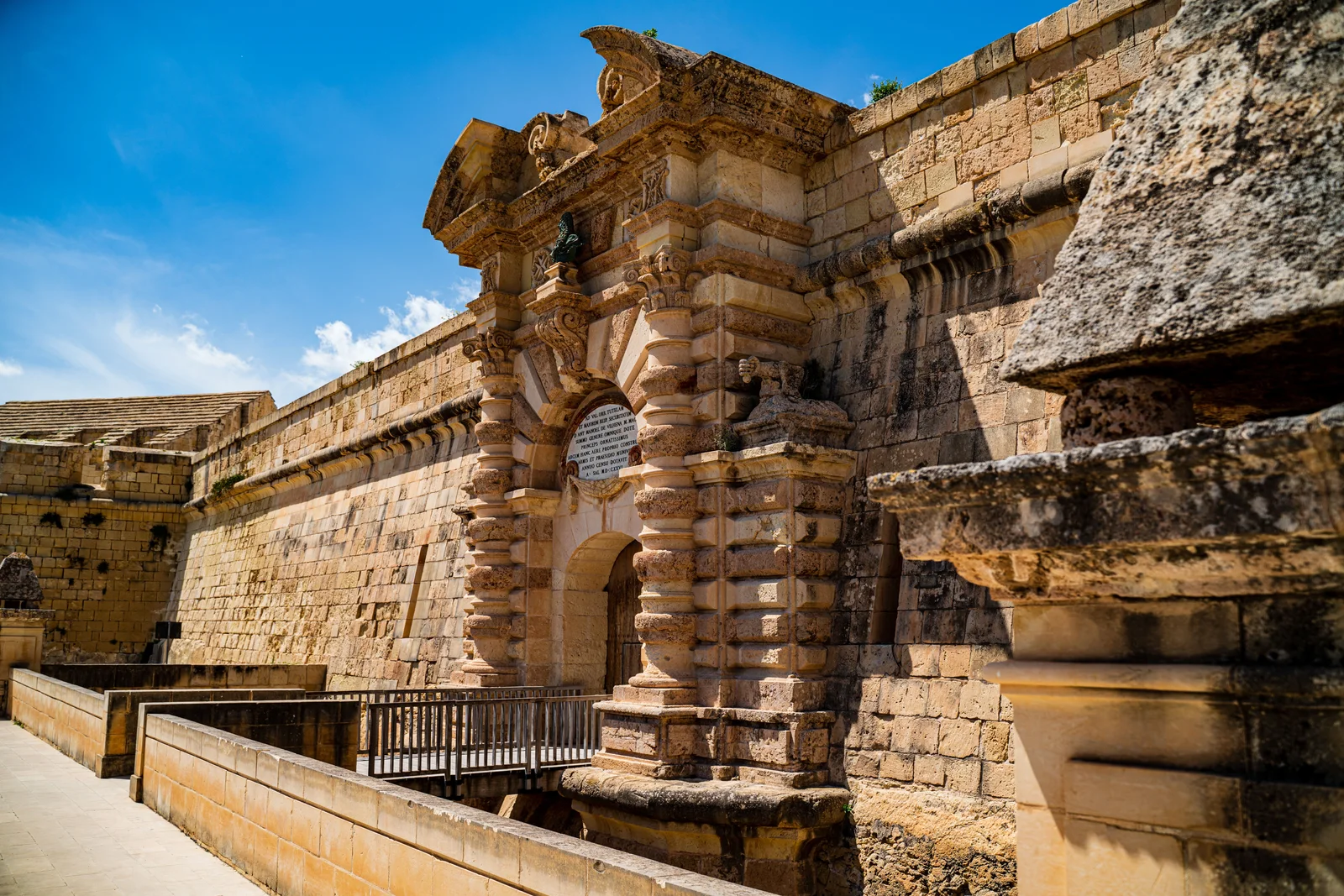
How we would plan a first visit
With three days, we would stay close to Valletta or the harbour and focus on Valletta, Mdina and one beach or swimming day. Add a harbour ferry or evening walk in Sliema if you want to keep the itinerary easy.
With five to seven days, add Gozo and allow more time for the coast. Comino is worth considering for the water, but it is not essential if you dislike crowds. The island is small enough to tempt overplanning; leaving space between major stops will make the trip more enjoyable.
Malta works best when its history and coastline are given equal weight. Choose a few places, check current transport and access conditions, and leave enough time for an unplanned swim or a long meal.