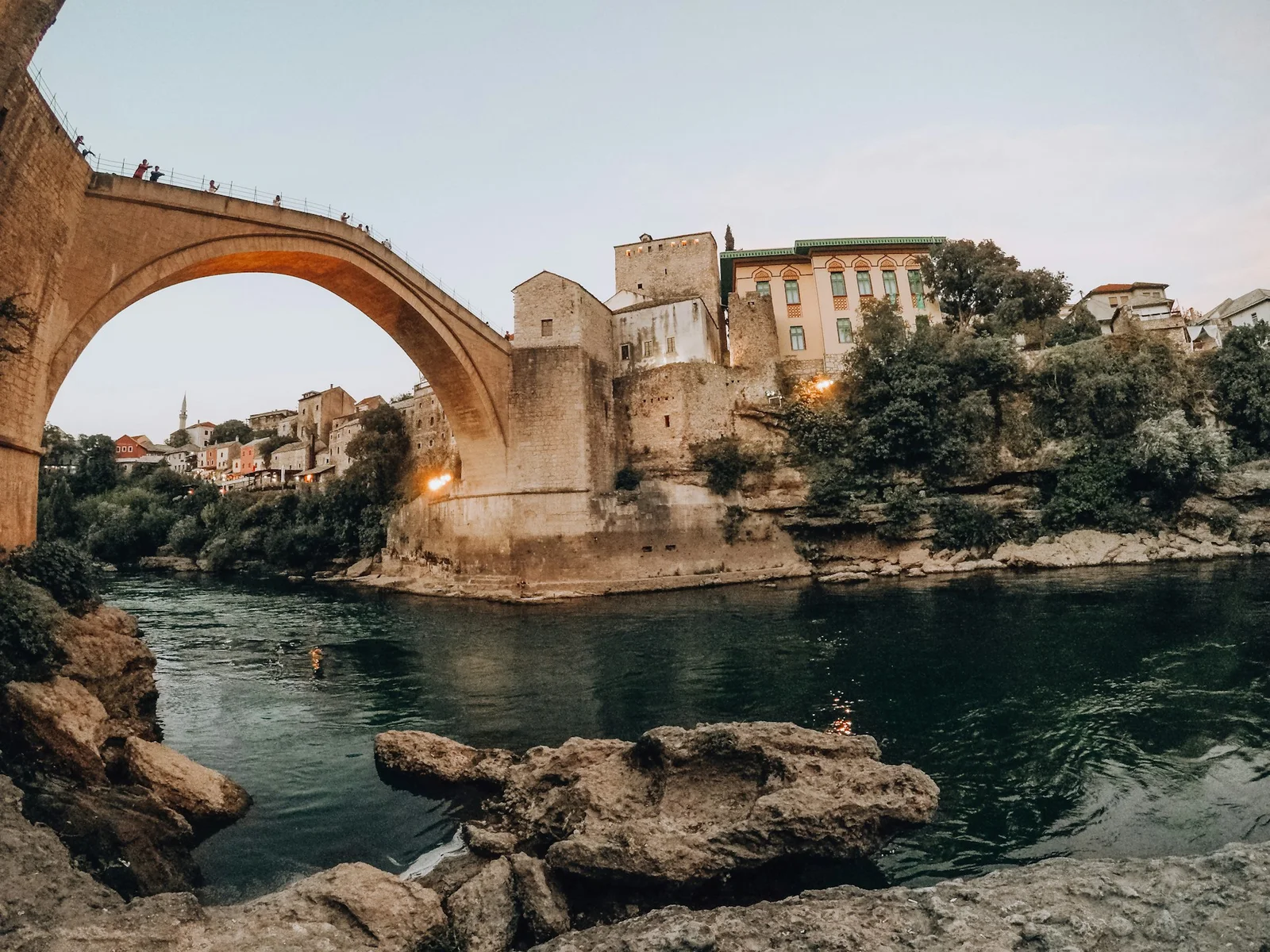
The Old Bridge is the reason most people first come to Mostar. It is also the reason many leave too quickly. Seen from the riverbank, Stari Most appears to tell the whole story: an elegant Ottoman arch, rebuilt after its destruction in 1993 and now framed by the familiar stone lanes of the old town. But the bridge is only the clearest symbol of a city shaped by several eras, communities and ruptures. To understand Mostar, spend time with its museums, courtyards, residential streets and war memorials. The experience is quieter, more complicated and ultimately more rewarding than a quick visit built around one photograph.
Start with the bridge, then look around it
Stari Most deserves its fame. The present bridge follows the form of the 16th-century Ottoman structure designed by Mimar Hajrudin, and the surrounding historic centre brings together Ottoman, Mediterranean and Austro-Hungarian influences in a remarkably small area. UNESCO describes the old town as a multicultural urban settlement whose meaning lies in the relationship between the bridge, the river, religious buildings, residential quarters, market streets and water.
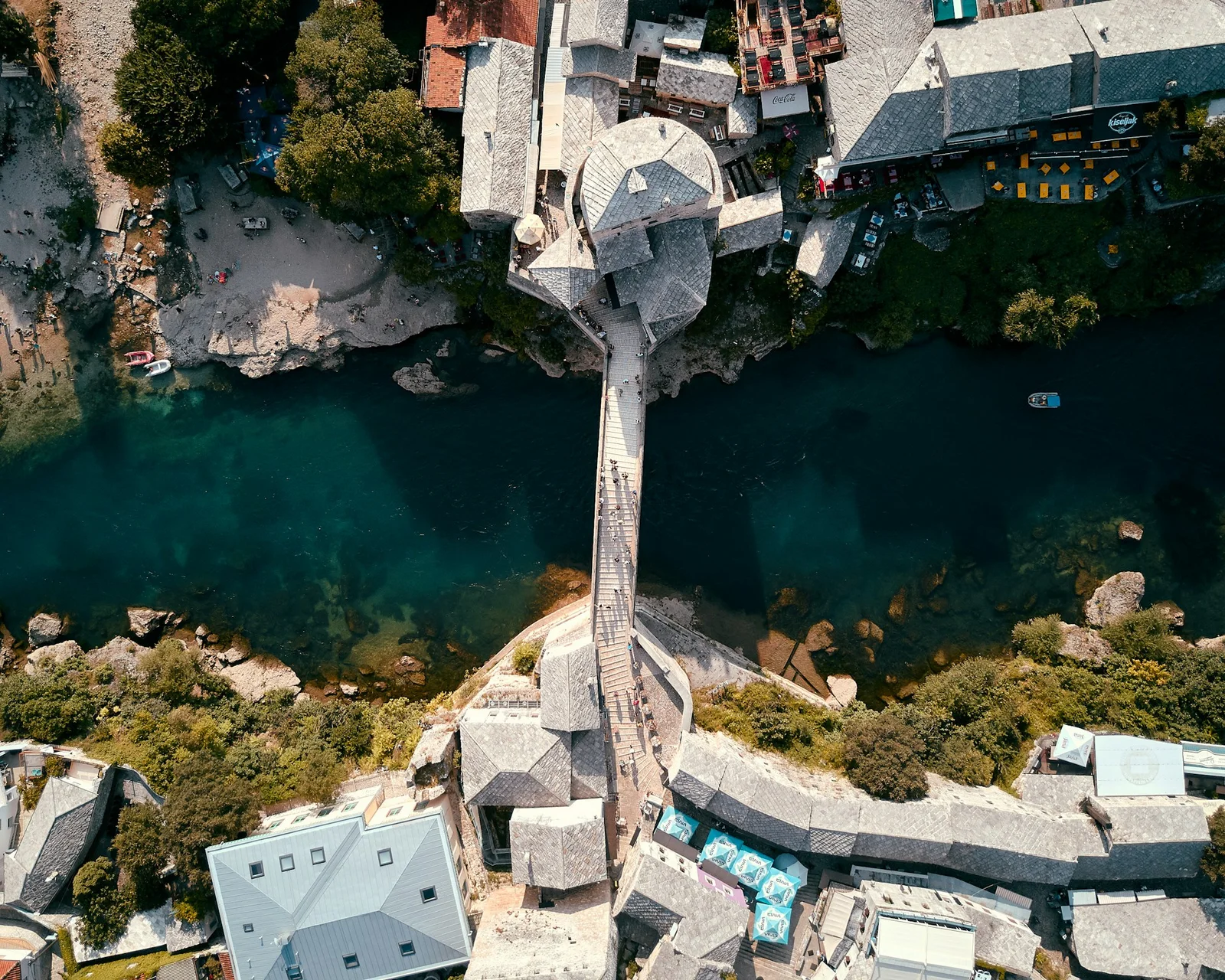
That wider setting matters. The bridge was not an isolated monument placed in an old town; it was part of an urban system. People lived in neighbourhoods connected by narrow lanes, worked in workshops and shops, gathered at mosques, churches and public buildings, and used the river as both a physical presence and a source of movement. The best way to begin is therefore to cross the bridge, look back from both sides and then continue uphill into the residential streets. The commercial lanes around Kujundžiluk are attractive, but they are only the most visible layer.
The rebuilt bridge opened in 2004, after the original was destroyed during the war in November 1993. Its reconstruction became an international heritage project and a symbol of reconciliation, but the symbolism should not flatten the history. Mostar remains a city marked by division, loss and uneven recovery. The bridge is both a restored monument and a reminder of what was destroyed.
The Old Bridge Museum: the structure behind the symbol
The Old Bridge Museum, housed in the Tara tower complex beside the bridge, is the most logical place to learn how Stari Most came to carry so much meaning. The museum focuses on the bridge’s construction, history and reconstruction, including the work undertaken between 1999 and 2004. It also helps explain the relationship between the bridge and the fortified towers that once guarded the crossing.
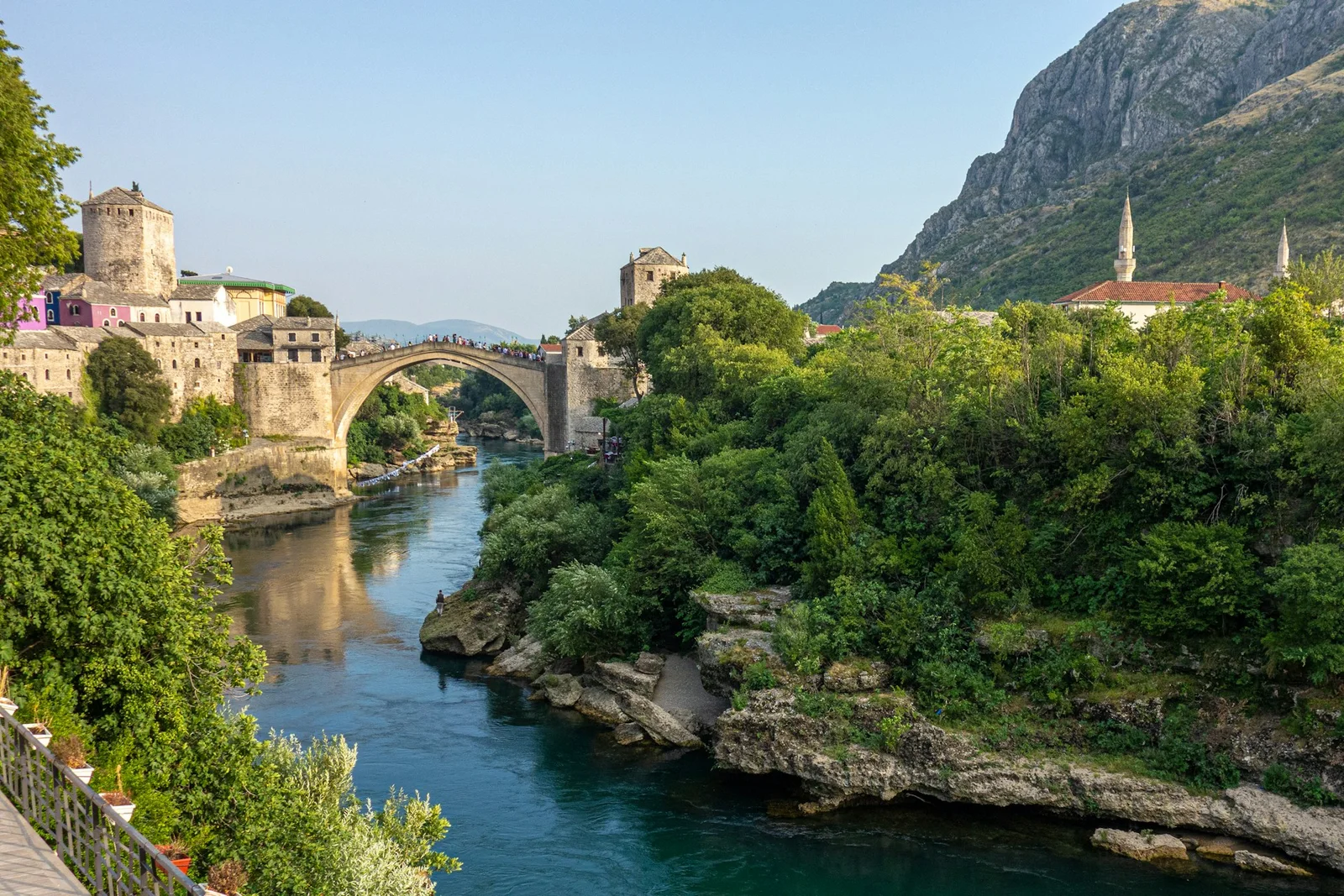
This is a useful visit precisely because it moves away from the postcard view. You see the bridge as a piece of engineering, a strategic crossing and a historic object that survived for centuries before being destroyed in the 1990s. The viewpoint from the tower adds a different perspective on the old town, the Neretva and the dense pattern of roofs and courtyards below.
The Herzegovina Museum for the wider picture
The Herzegovina Museum is the best choice for visitors who want more than a single monument. Its work spans history, archaeology, ethnology and literature, with several departments and memorial houses rather than one large, uniform exhibition. The collections connect Mostar to the wider Herzegovina region, from archaeological remains and traditional household objects to the literary life of the city.
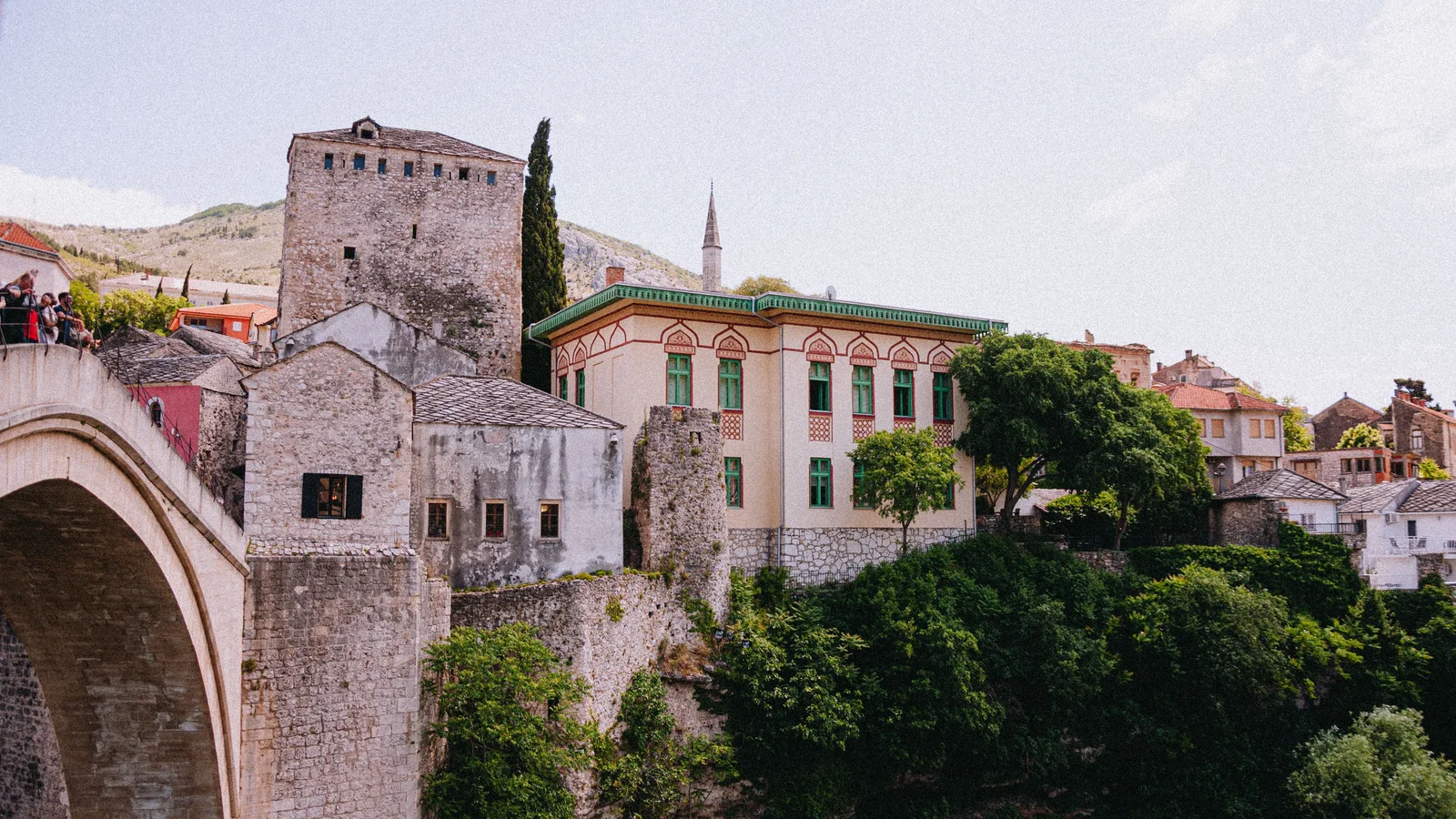
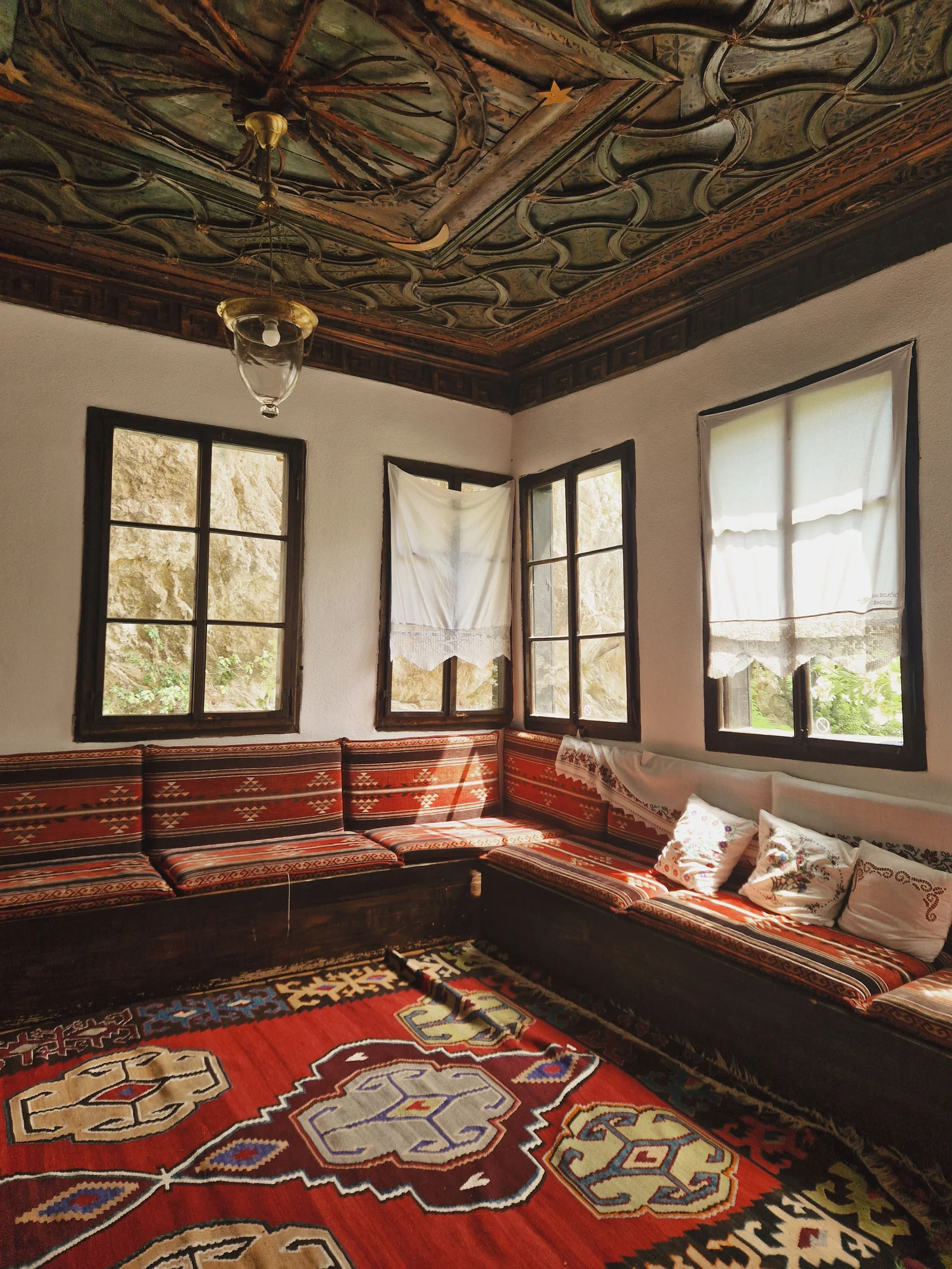
Its ethnological displays are especially useful for reading the domestic spaces you encounter elsewhere. Furniture, carpets, clothing, coffee-making traditions, food culture and household objects show how urban and rural life developed around the region’s climate, materials and social customs. This is the sort of museum that gives context to details easily overlooked on a walk: a carved wooden ceiling, a shaded courtyard, a raised room projecting above a lane or the arrangement of a traditional home behind a high wall.
Look out for the museum’s memorial and literary holdings as well. Mostar’s cultural history is not limited to Ottoman architecture. The institution also preserves material connected with writers and public figures from the city, including Svetozar Ćorović and Aleksa Šantić. Their presence adds a more personal and intellectual dimension to Mostar, particularly for visitors interested in how the city represented itself through literature.
The MuM Interpretation Centre, another part of the Herzegovina Museum, presents local culture and tradition through an ethnological collection and interpretive displays. It is worth considering if you prefer a concise introduction before exploring the city on foot. The museum’s departments may not always operate in exactly the same way, so confirm which locations are open when you arrive.
Choose one Ottoman house and stay with it
Mostar’s historic houses are more revealing than another hour in the market. Their high street walls, inward-facing courtyards and carefully arranged rooms show how privacy, hospitality and climate shaped domestic architecture. The courtyard, or avlija, was not a decorative afterthought. It was part of the daily life of the house: a shaded working space, garden, meeting place and threshold between public and private worlds.
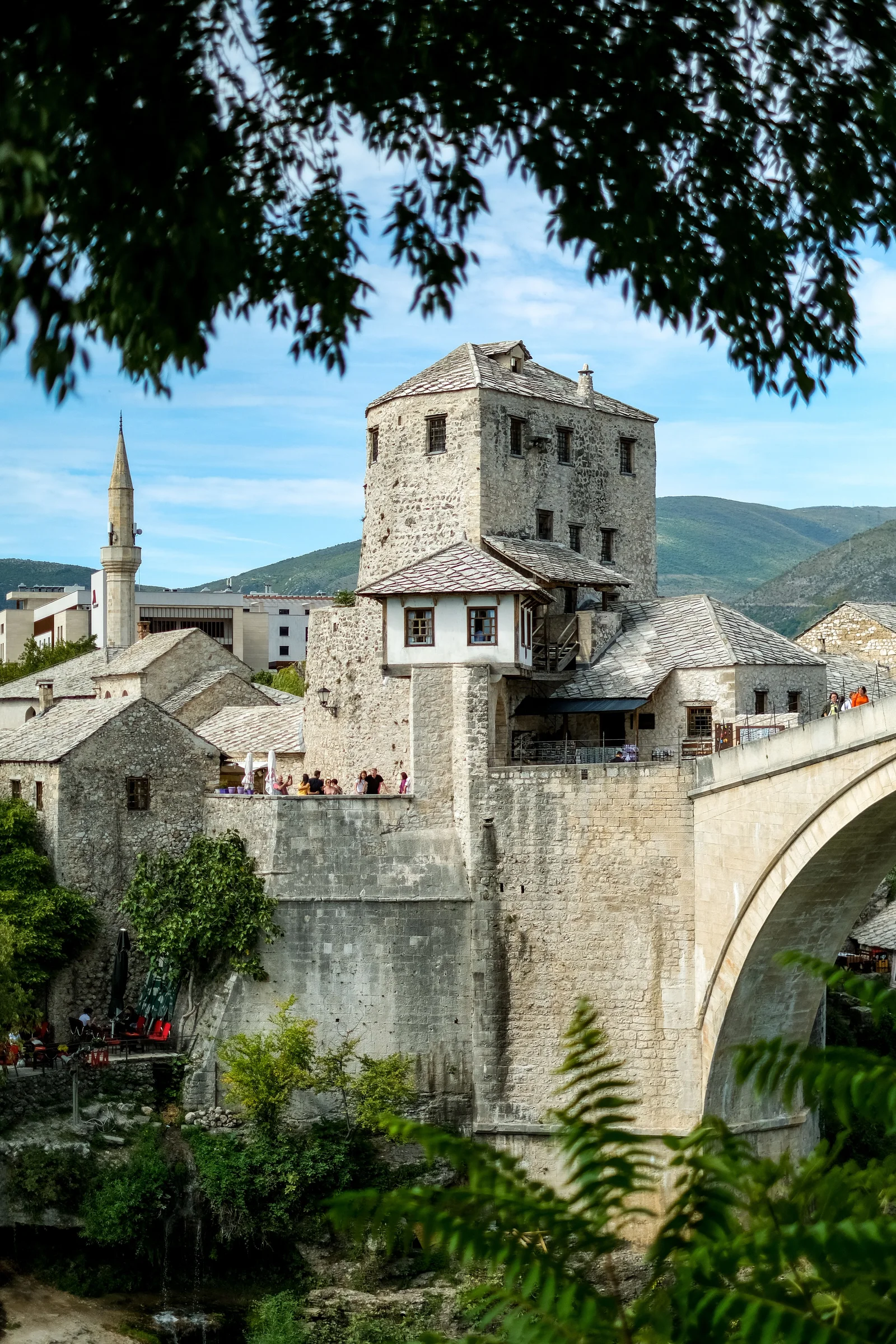
Muslibegović House is the most established choice for visitors. The national monument preserves an Ottoman-period residential complex with courtyards, traditional interiors, woodwork, textiles and household objects. The house is also used as accommodation, which means its rooms retain a more domestic atmosphere than a conventional museum gallery. Its scale and surviving decoration make it one of the clearest introductions to the residential architecture of Ottoman Mostar.
The Bišćević-Lakišić complex offers another perspective, with its division between public and private residential areas. It is a good option for readers drawn to architecture and the social organisation of the traditional home. Kajtaz House is also historically important, though access arrangements can be less predictable. If you have limited time, choose the house that is open and take time to notice the relationship between the rooms, the courtyard, the entrance and the street.
Walk Brankovac and Bjelušine without an itinerary
The neighbourhoods around the old town are where Mostar starts to feel less like a monument and more like a city. Brankovac, Bjelušine and the streets leading away from the river contain old houses, uneven stone lanes, garden walls, small religious buildings and views that appear without warning. They are close to the bridge, but the pace changes quickly once the souvenir shops thin out.
This is where it helps to stop looking for named attractions. Notice the scale of the lanes, the way houses turn inward, the contrast between white walls and dark timber, and the fragments of older buildings incorporated into newer ones. Some streets are residential rather than visitor attractions, so walk quietly and avoid treating private courtyards as part of the sightseeing experience.
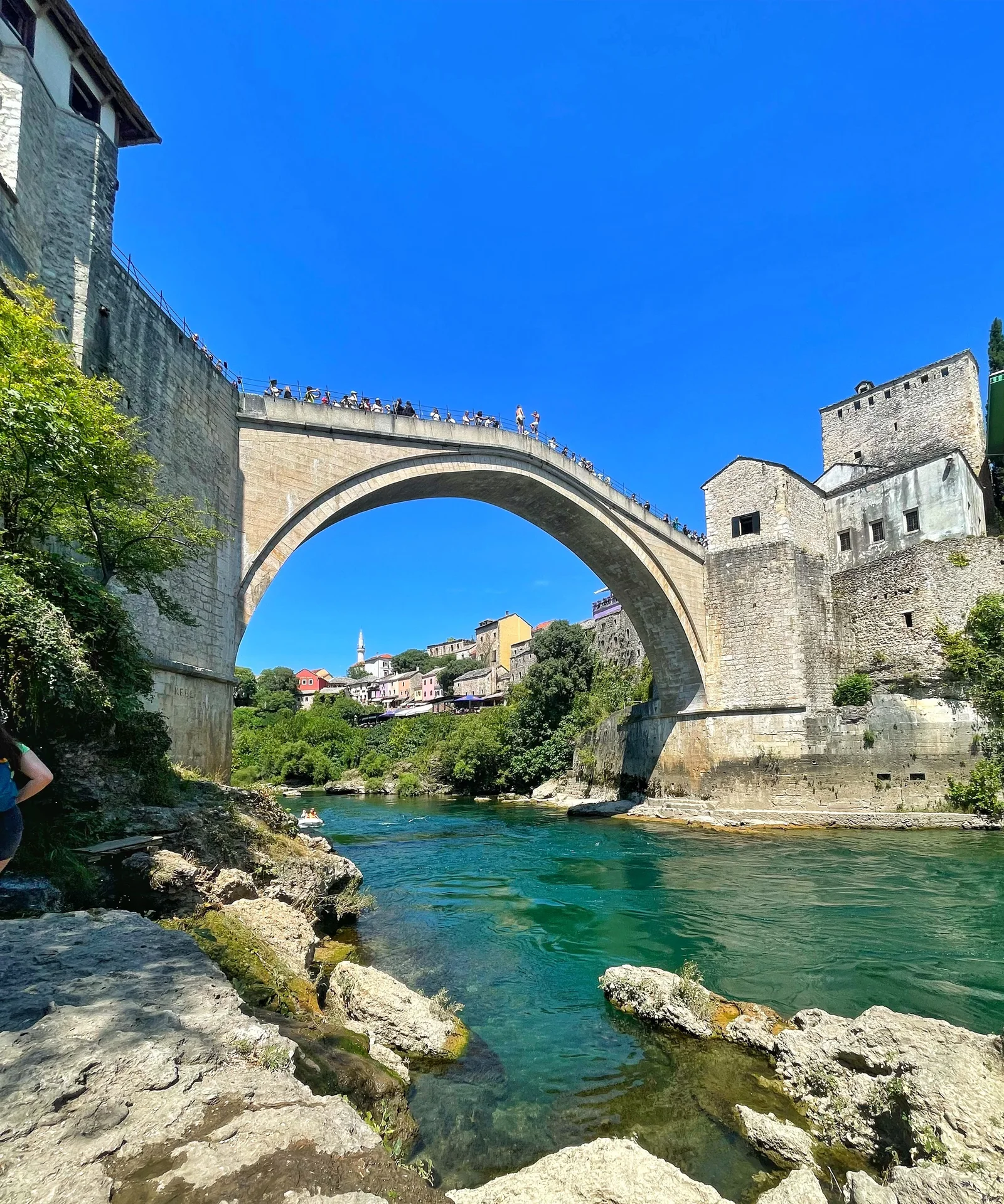
The area also explains why Mostar’s heritage cannot be reduced to the bridge. The old town is a network of small urban relationships: houses beside workshops, religious buildings near residential lanes, stairs rising towards hillside neighbourhoods and bridges that connect more than one bank of the river. Give this part of the city an hour with no fixed destination.
The War Photo Exhibition and the difficult recent past
Mostar’s cultural history needs to include the war of 1992–1995. The War Photo Exhibition presents photographs and documentary material connected with the conflict and its human consequences. It is a compact, direct museum, and it asks for a different kind of attention from the architectural sites.
The exhibition is not a decorative addition to a sightseeing day. It changes the way the rest of Mostar looks. After seeing the photographs, the restored stonework around the bridge, the empty spaces between buildings and the marks still visible on some facades become harder to treat as atmosphere. The city’s recent history is not sealed away in a museum; it remains present in the streets.
Allow enough time to read rather than simply pass through. The subject is painful, and it may not suit every traveller, but avoiding it entirely leaves the city’s present-day identity incomplete. Visitors who prefer a broader account can also look for the Museum of War and Genocide Victims 1992–1995, while checking its current location, hours and exhibition format before going.
Read the Austro-Hungarian layer on foot
Mostar’s Ottoman identity is the most visible, but the city changed again under Austro-Hungarian rule. The later architectural layer appears in civic buildings, schools, churches, roads and more formal streets beyond the old bazaar. It is less concentrated than the Ottoman core, so it works best as a walking route rather than a single museum stop.
Move away from the bridge towards the wider central streets and look for the contrast between Ottoman residential forms and Austro-Hungarian planning. Facades become more regular, streets broader and public buildings more monumental. The Franciscan church and the Austro-Hungarian Gymnasium are useful reference points, though the practical possibility of entering individual buildings varies.
Cernica and the streets around the western side of the river are also worth including. This is a more modern, lived-in part of Mostar, with cafés, shops and a different urban rhythm. The point is not to search for a perfectly preserved historic quarter. It is to see how the city’s architectural languages overlap, sometimes elegantly and sometimes uneasily.
Small details that make the history legible
Mostar is a city of thresholds. Look for the passage from bright stone lanes into shaded courtyards, from market streets to quiet residential alleys, and from restored façades to buildings that still carry visible damage. The transition between spaces often says more than a formal description of architectural style.
Pay attention to local materials as well. River stone, timber, plaster, tiled roofs, carved wood and patterned textiles recur across the museums and historic houses. The city’s architecture is not only a matter of appearance; it developed in response to heat, shade, privacy, water and the practical organisation of family life.
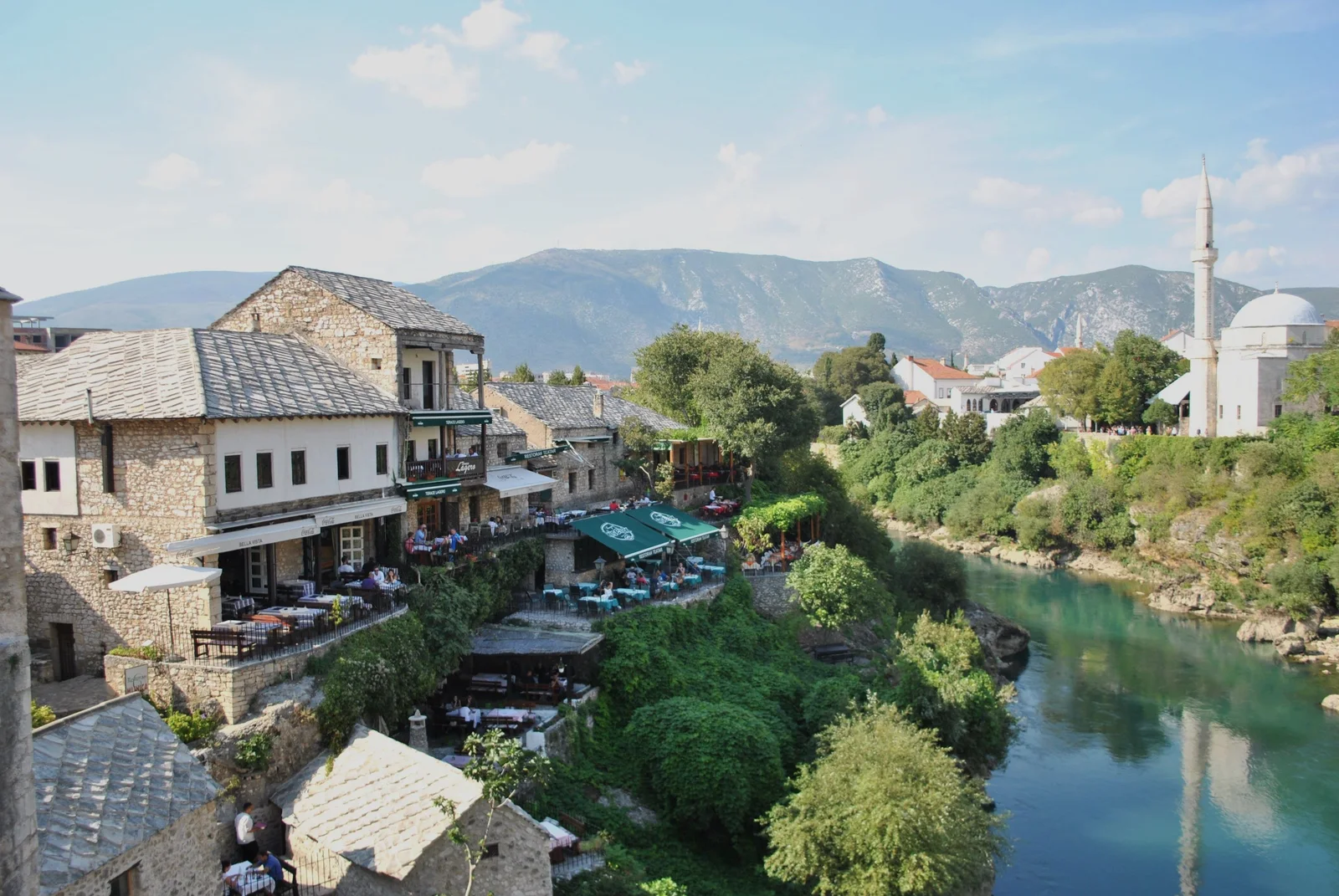
Food can extend this reading of place, especially when approached without turning the meal into a checklist. Look for Herzegovinian ingredients and Bosnian domestic traditions rather than choosing a restaurant only for its bridge view. The best pauses are often simple: coffee in shade, a meal away from the busiest lanes or a late walk beside the Neretva when the day-trippers have left.
A two-day cultural itinerary
- Day one morning: Cross Stari Most early, then visit the Old Bridge Museum and its viewpoint.
- Day one afternoon: Choose Muslibegović House or another accessible Ottoman residence, followed by a slow walk through Brankovac and Bjelušine.
- Day one evening: Return to the river and observe the bridge from both banks after the busiest hours.
- Day two morning: Visit the Herzegovina Museum, including the department or memorial house most relevant to your interests.
- Day two afternoon: Spend time at the War Photo Exhibition or another museum focused on the 1992–1995 conflict.
- Day two late afternoon: Walk towards Cernica and the Austro-Hungarian buildings, allowing time for an unplanned café stop.
How long we’d stay
A day is enough to see the bridge, walk the bazaar and enter one museum. It is not enough for the more considered version of Mostar. Two nights give you time to see the old town at different hours, visit one or two museums, enter a historic house and make room for the city beyond the centre. A third day would suit travellers interested in the wider region, particularly Blagaj, Počitelj or the archaeological and religious heritage around Herzegovina.
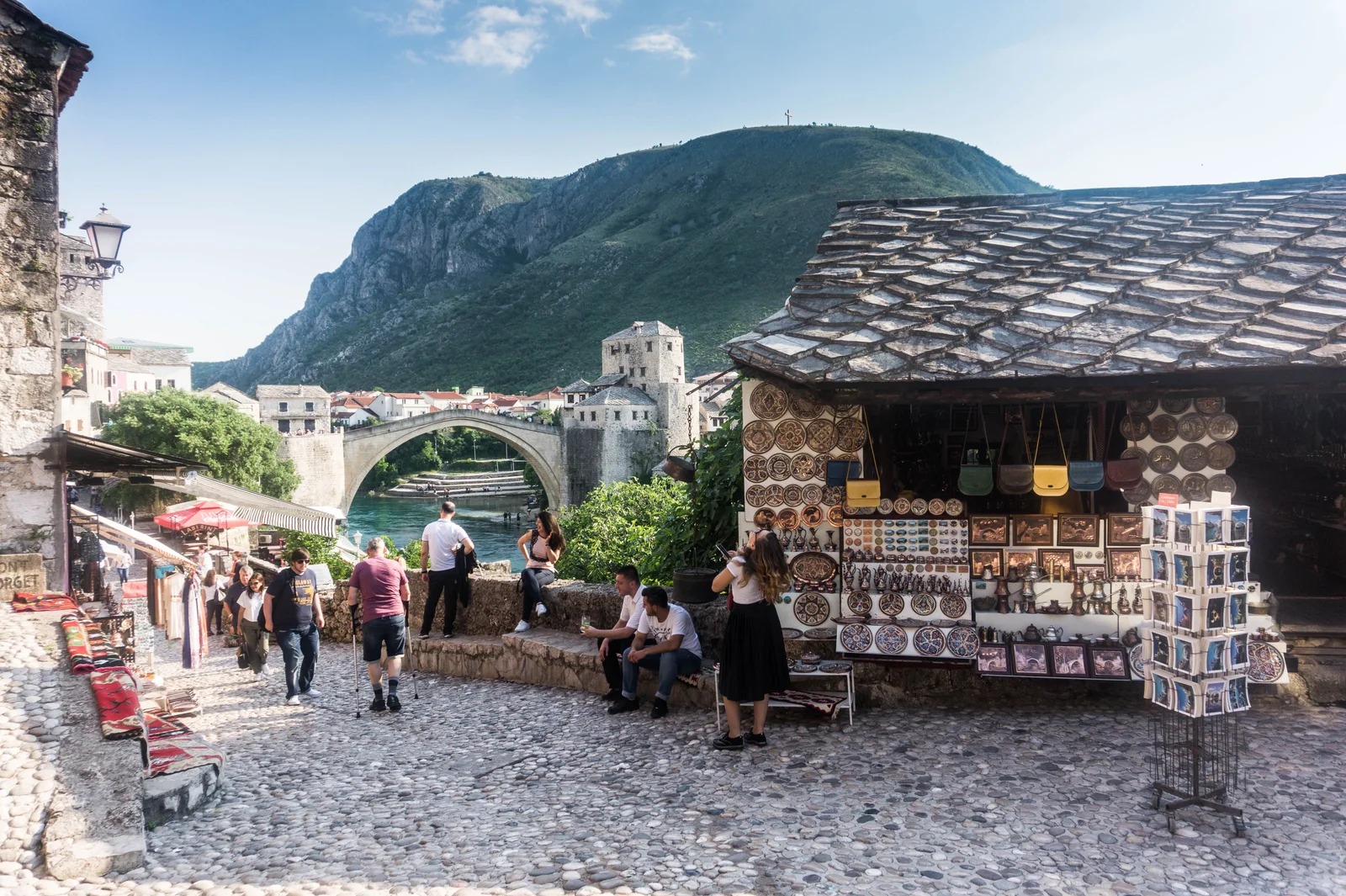
Mostar is often treated as a short stop between Sarajevo and the Adriatic coast. That can work if the bridge is your only aim. For anyone interested in architecture, memory or the history of urban life, staying longer changes the quality of the visit. The city becomes less polished, less easily summarised and far more worth your time.