Graz is the kind of city that becomes more appealing the longer you look at it. Austria’s second-largest city has a handsome historic centre, a strong food culture, serious museums and enough contemporary architecture to keep it from feeling preserved in amber. It is also compact: much of the city centre can be explored on foot, with trams filling the gaps when you want to reach Eggenberg, the railway station or a quieter neighbourhood.
The best way to approach Graz is to leave room for its different moods. Spend one morning among medieval courtyards and Renaissance arcades, another at the farmers’ market, and an afternoon moving between the Schlossberg and the Mur. Graz is well suited to a long weekend, but three nights gives you time for the city’s food scene and at least one excursion beyond the centre.
Start with Graz’s historic centre
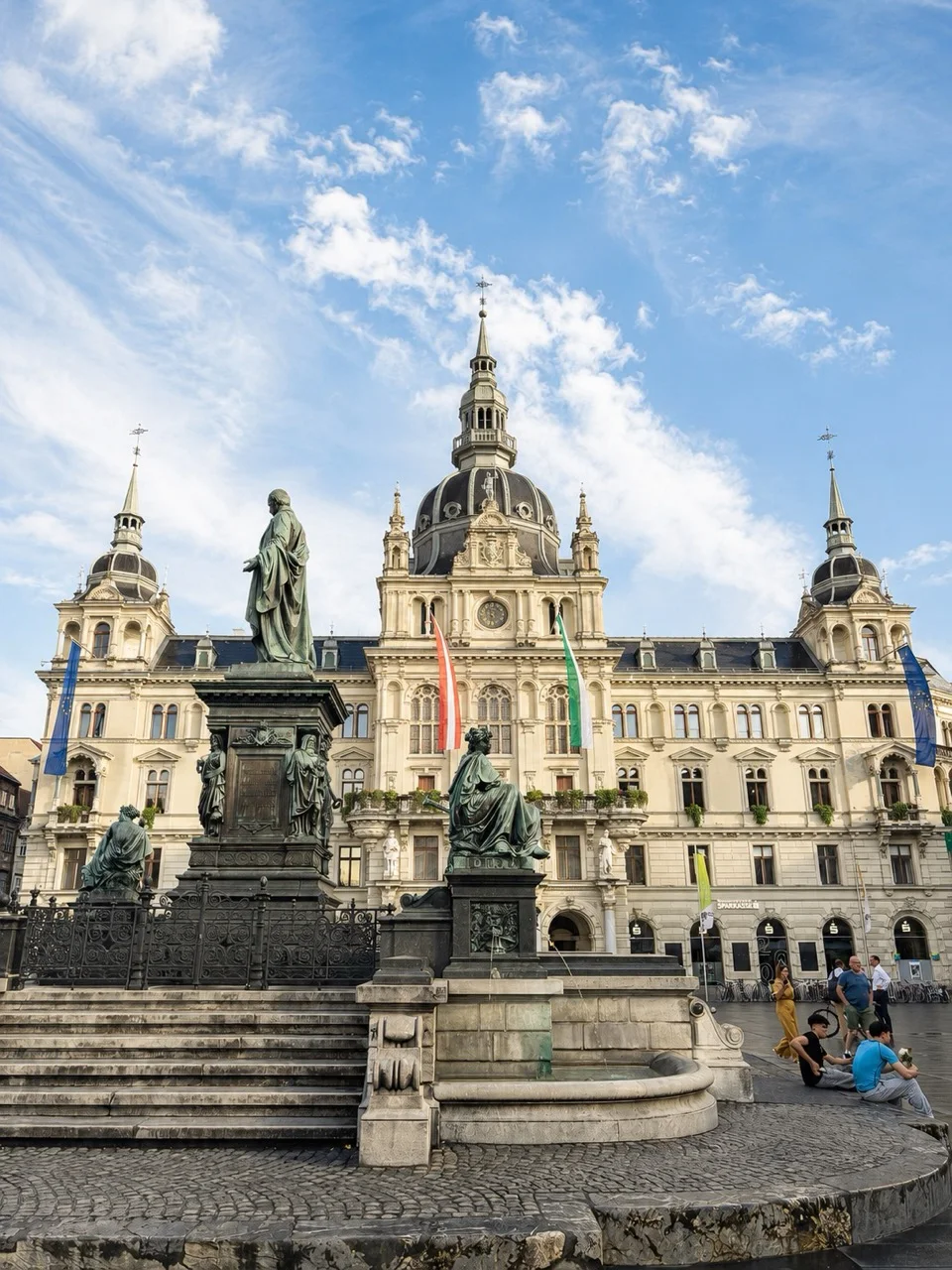
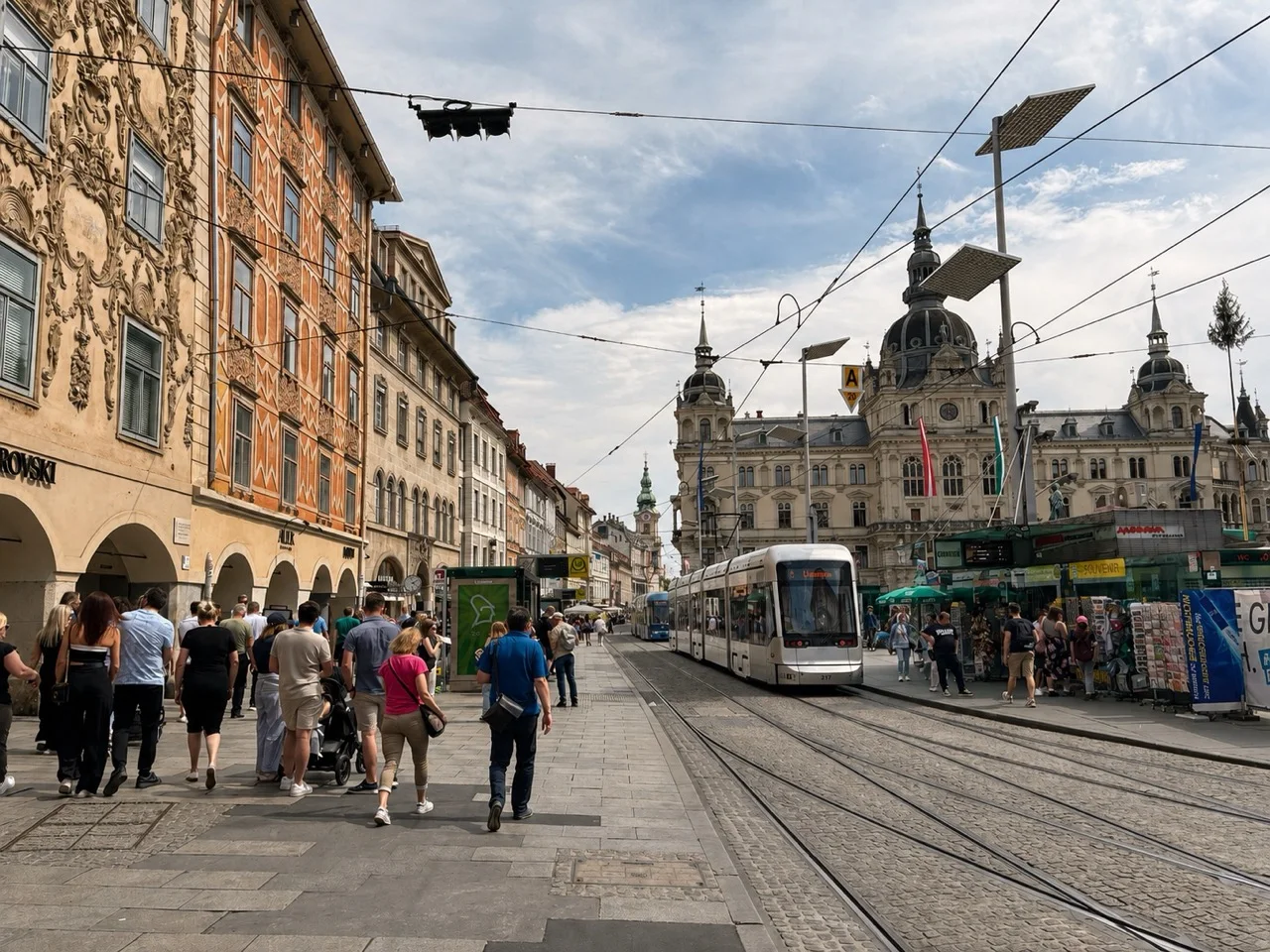
Graz’s old town is the essential first impression. Its streets are not arranged as a single grand set piece; the pleasure lies in moving between squares, courtyards and small changes of scale. Begin at Hauptplatz, the city’s main square, then follow Herrengasse towards the Landhaushof, a refined Renaissance courtyard with elegant arcades. From there, continue towards the cathedral, the mausoleum and the Burg, where the famous double spiral staircase is one of the city’s more unusual architectural details.
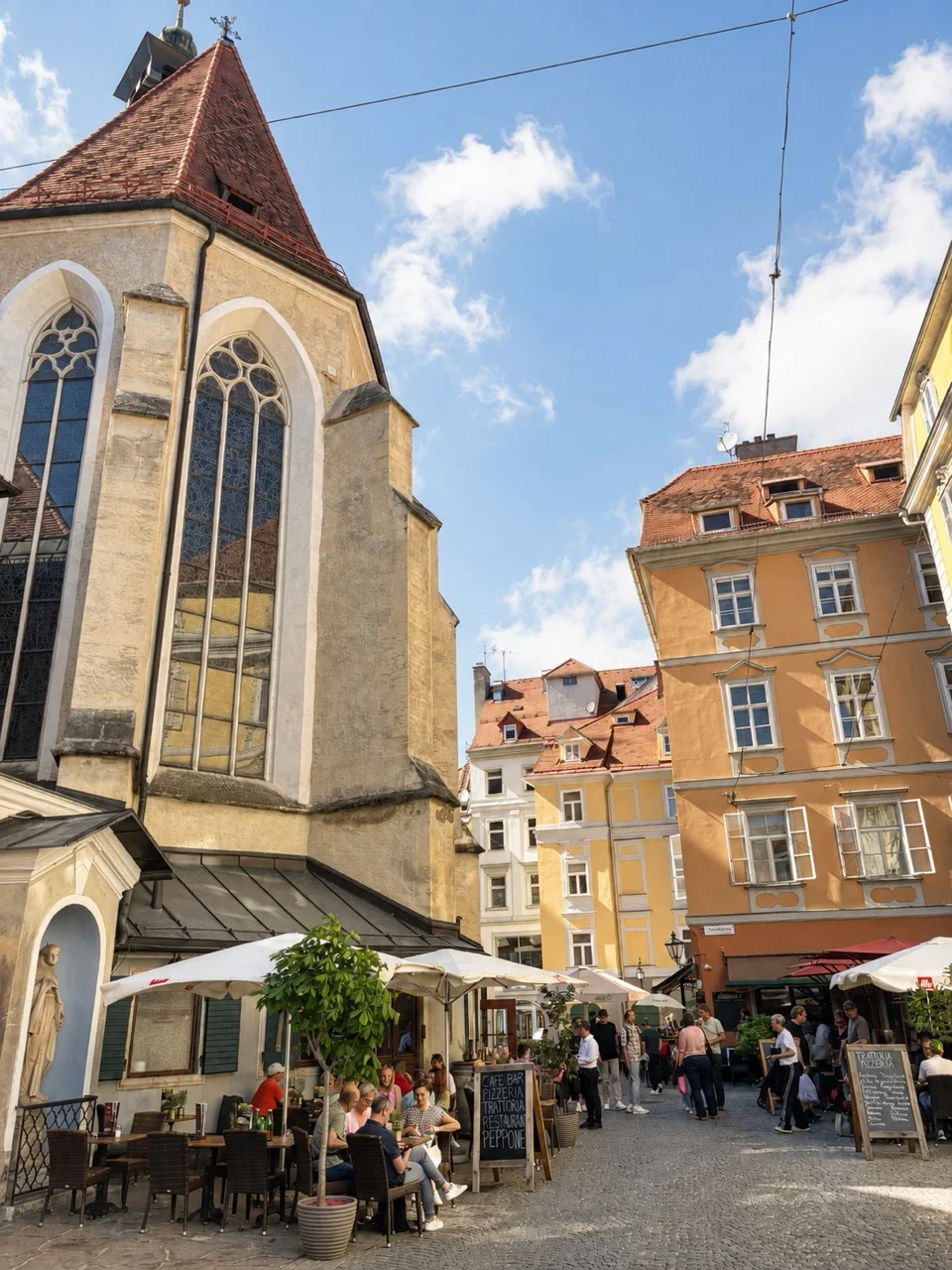
The historic centre forms part of the UNESCO World Heritage property that also includes Schloss Eggenberg. Its character comes from the way different periods sit close together: Gothic religious buildings, Renaissance courtyards, Baroque interiors and later civic architecture. Look up as you walk. Graz’s tiled roofs, decorated façades and enclosed courtyards are easy to miss if you move too quickly.
- Hauptplatz, the natural starting point for a first walk through the centre.
- Landhaushof, one of Graz’s most graceful Renaissance courtyards.
- Graz Cathedral and the nearby mausoleum, which form a concentrated historic ensemble.
- The Burg and its double spiral staircase, worth a short detour even on a tight schedule.
- Glockenspielplatz, best visited when the mechanical figures appear at the windows.
- Herrengasse, the city’s principal shopping and walking street.
Go up the Schlossberg
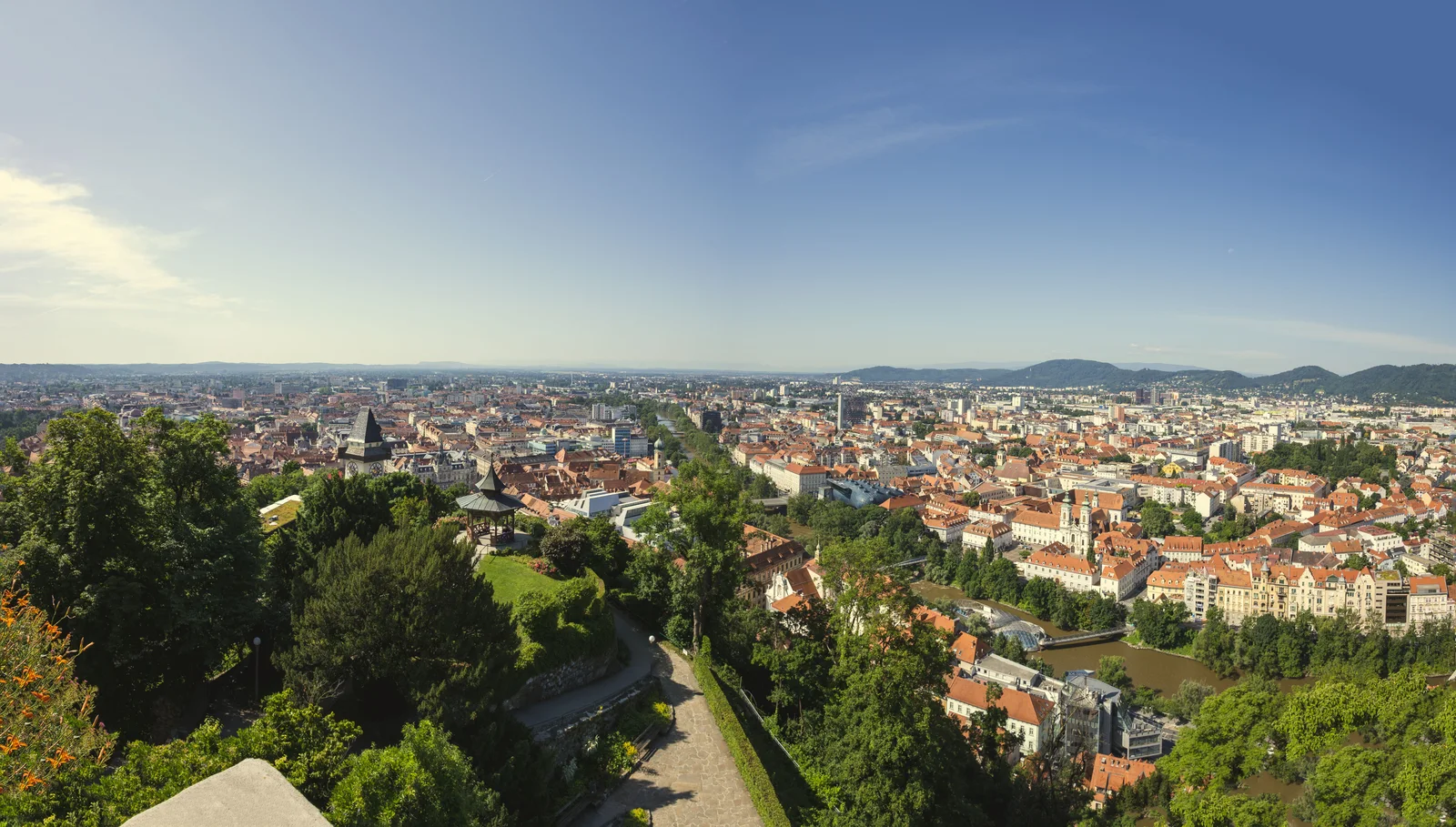
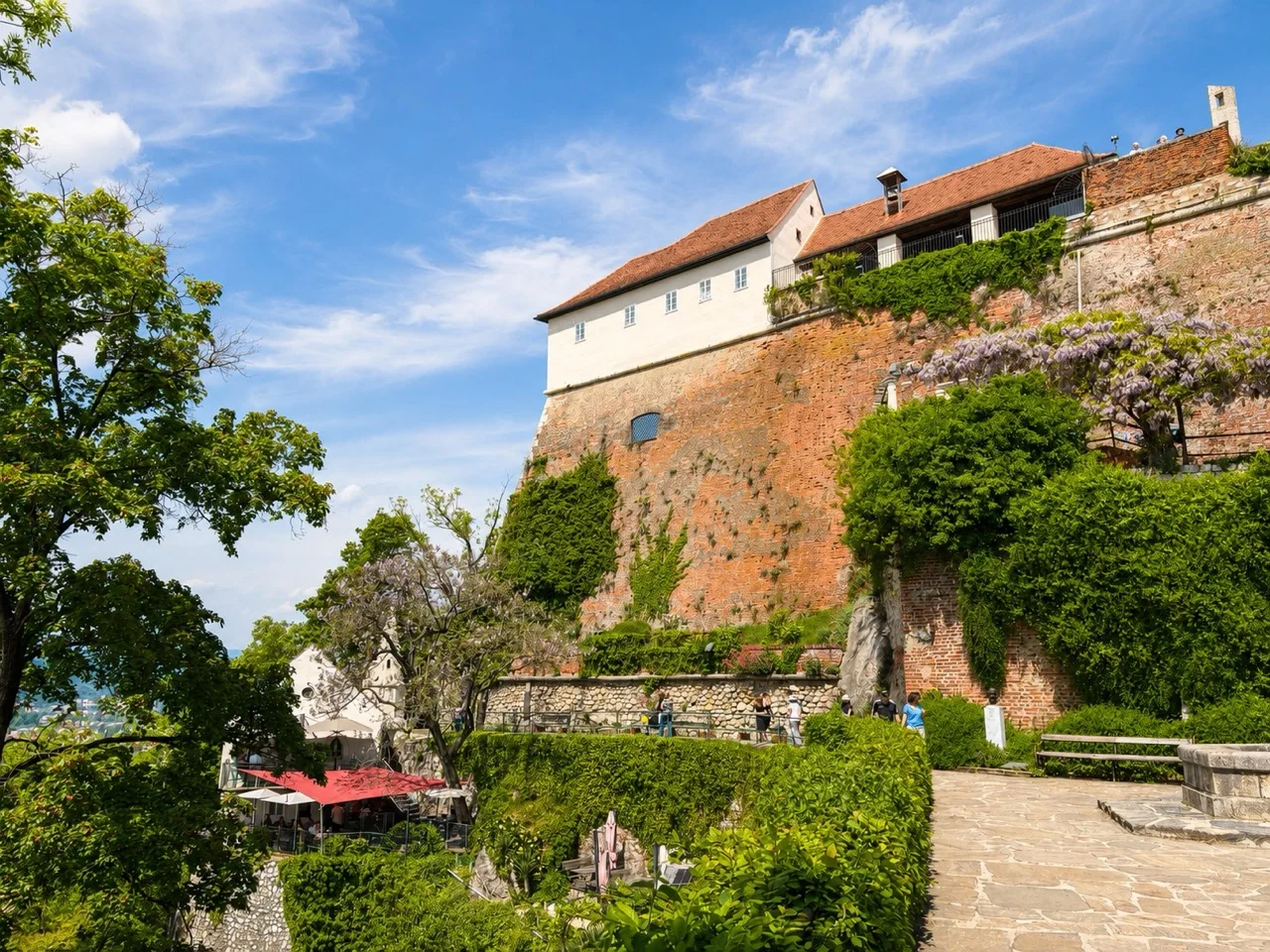
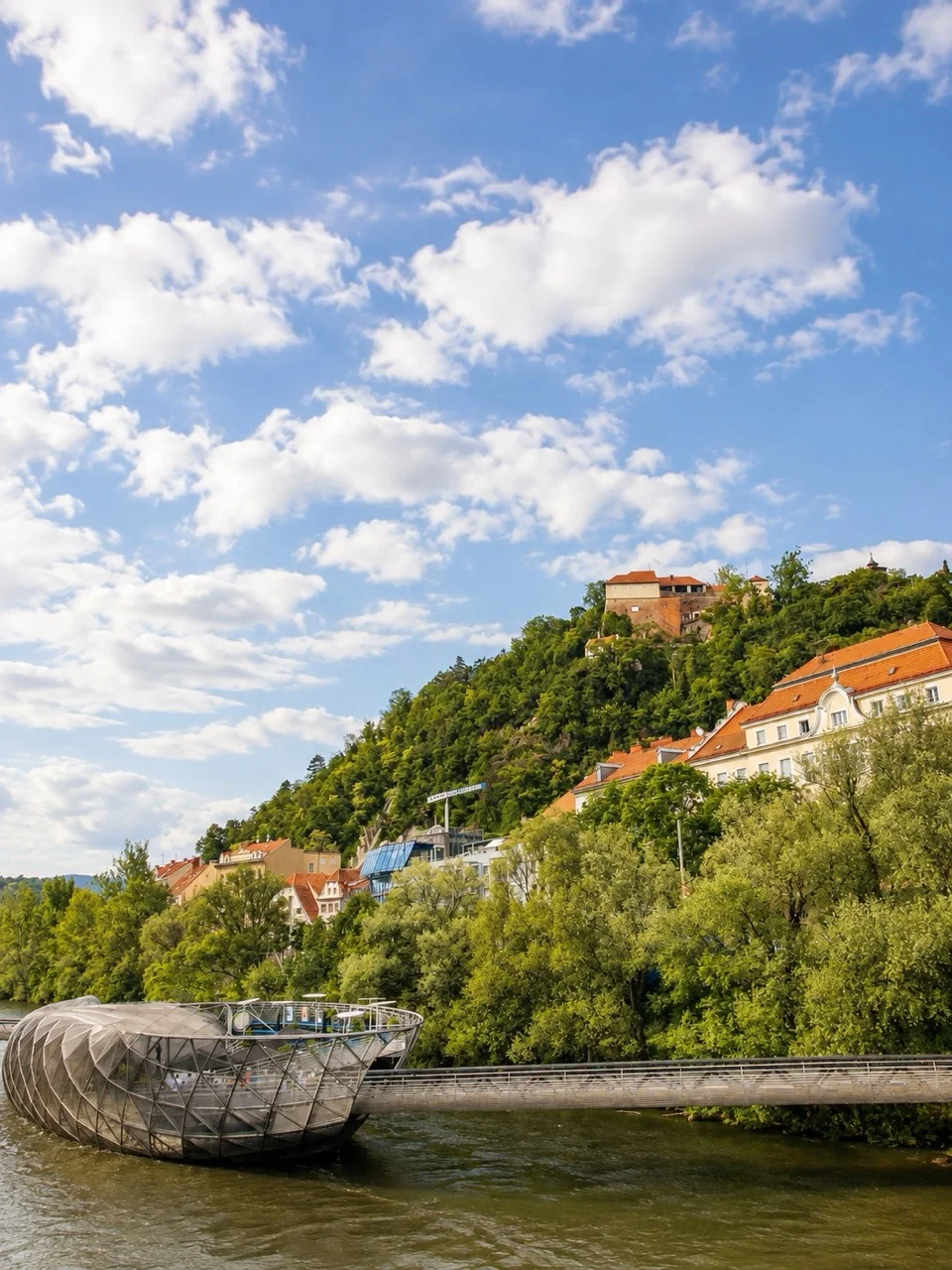
The Schlossberg is Graz’s defining landmark: a wooded hill rising directly above the old town, crowned by the city’s Clock Tower. The former fortress was largely dismantled after the Napoleonic Wars, but the hill still carries traces of its military past in the paths, bastions and surviving structures.
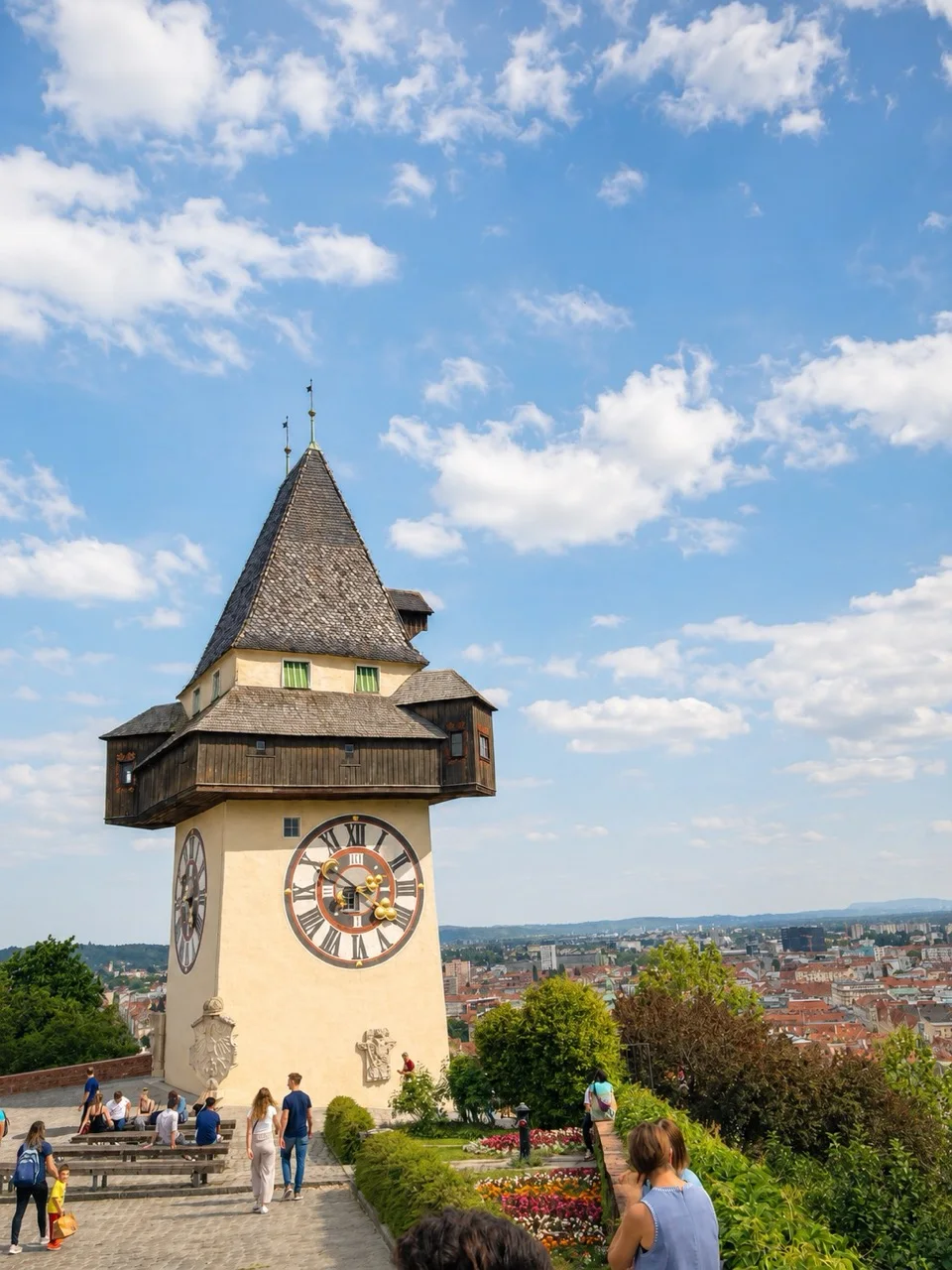
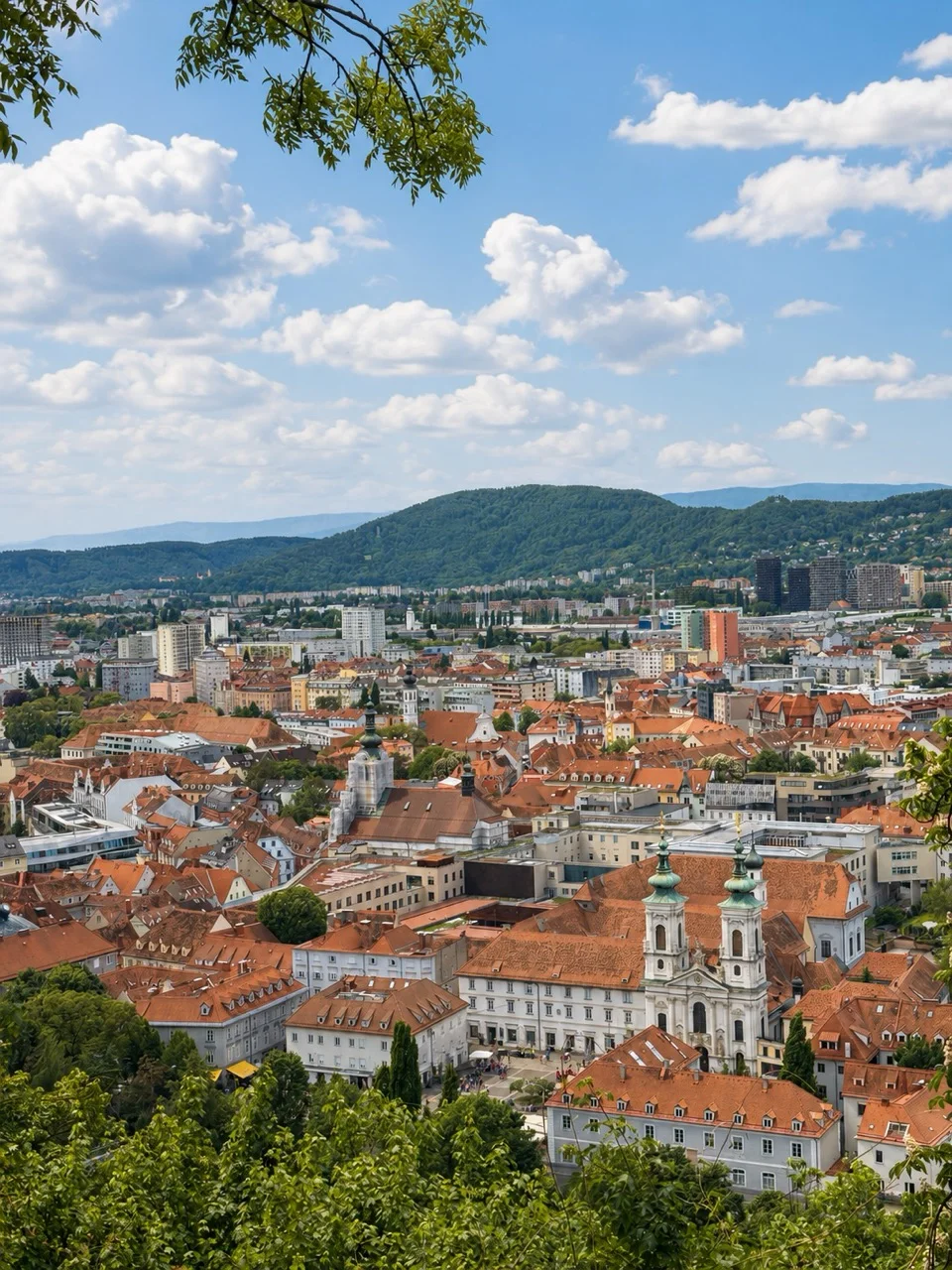
There are several ways up. The Schlossberg stairs provide the most physical approach, while the funicular offers a quick ascent with views across the rooftops. The glass lift travels through the rock itself and is useful if you want to reach the top without climbing. Once there, walk beyond the Clock Tower rather than stopping at the first viewpoint. The paths lead through gardens and quieter corners, with changing views over the Mur and the city’s red roofs.
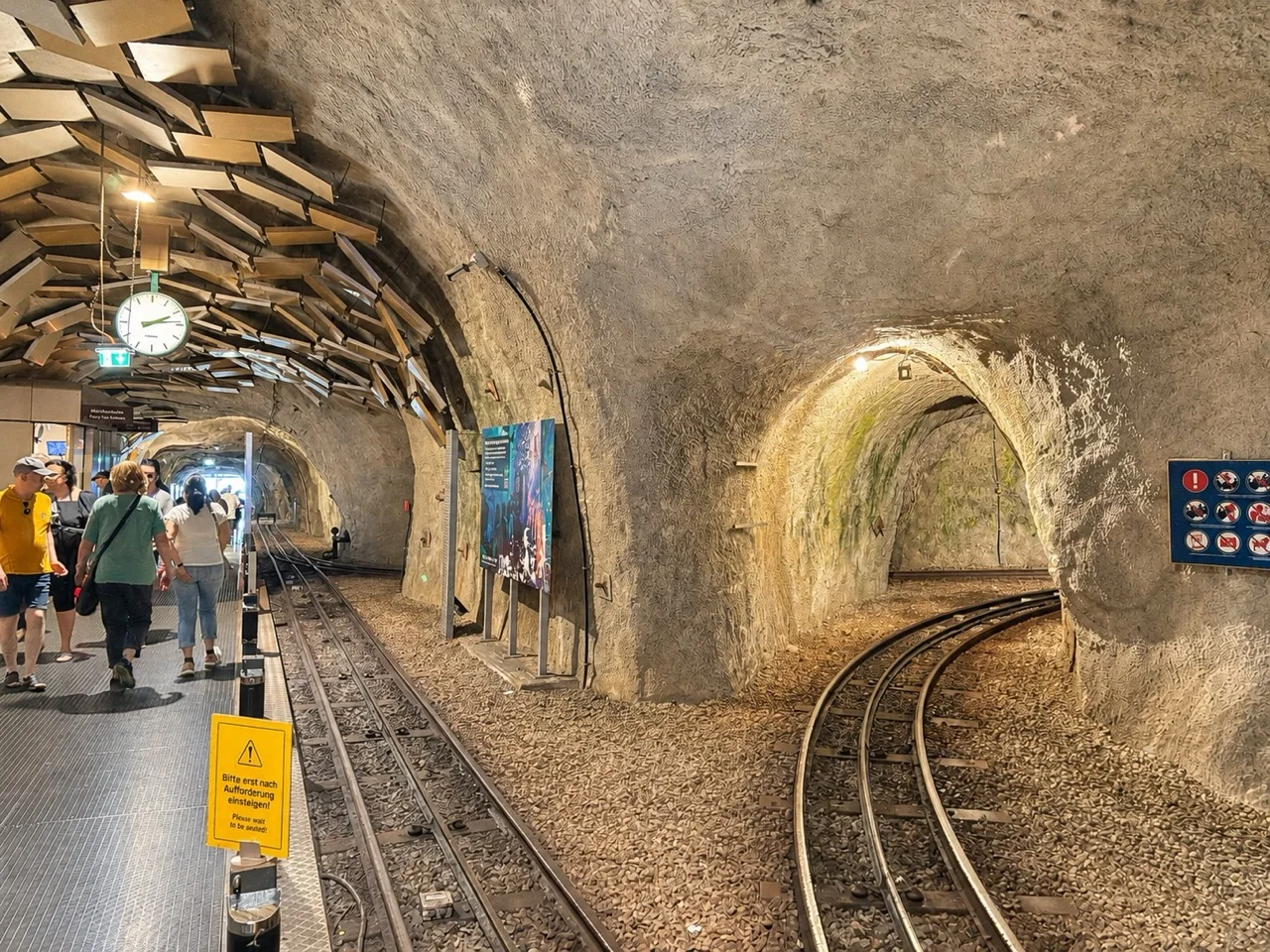
Allow at least two hours if you want to walk, pause for a drink and take in the views. The hill is especially pleasant in the late afternoon, when the old town begins to soften in the light. Restaurants and terraces at the top make it possible to turn the visit into a longer stop, although the main reason to come is the combination of history, greenery and perspective.
See Graz’s modern side at Kunsthaus and Murinsel
Graz’s contemporary identity is concentrated along the Mur. Kunsthaus Graz, known locally and internationally for its rounded blue form, is often nicknamed the Friendly Alien. The building is worth seeing from the outside, but its exhibitions are the reason to go in. The programme focuses on modern and contemporary art, often with temporary exhibitions that make the museum more interesting for repeat visitors than for those seeking a conventional collection.
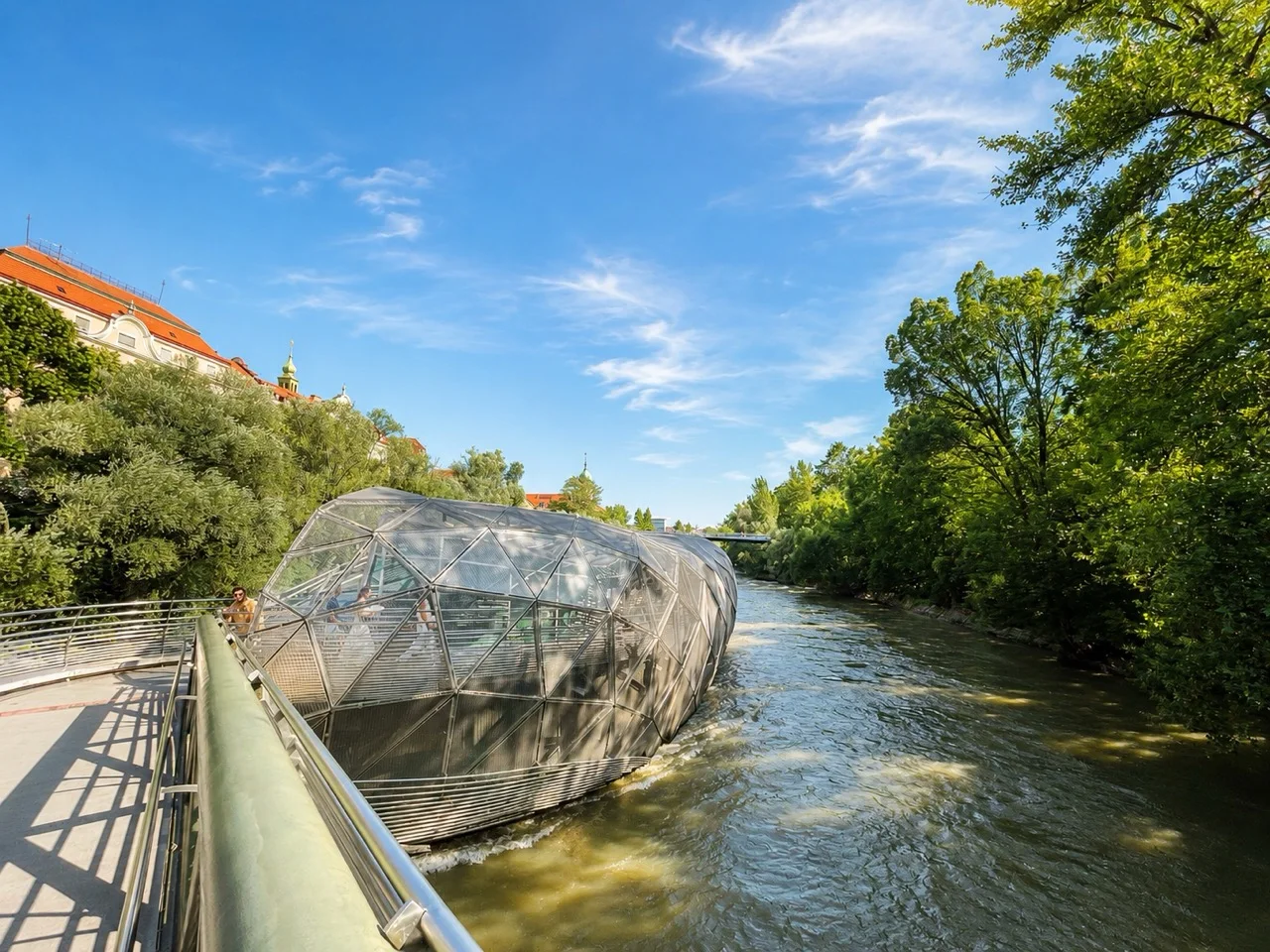
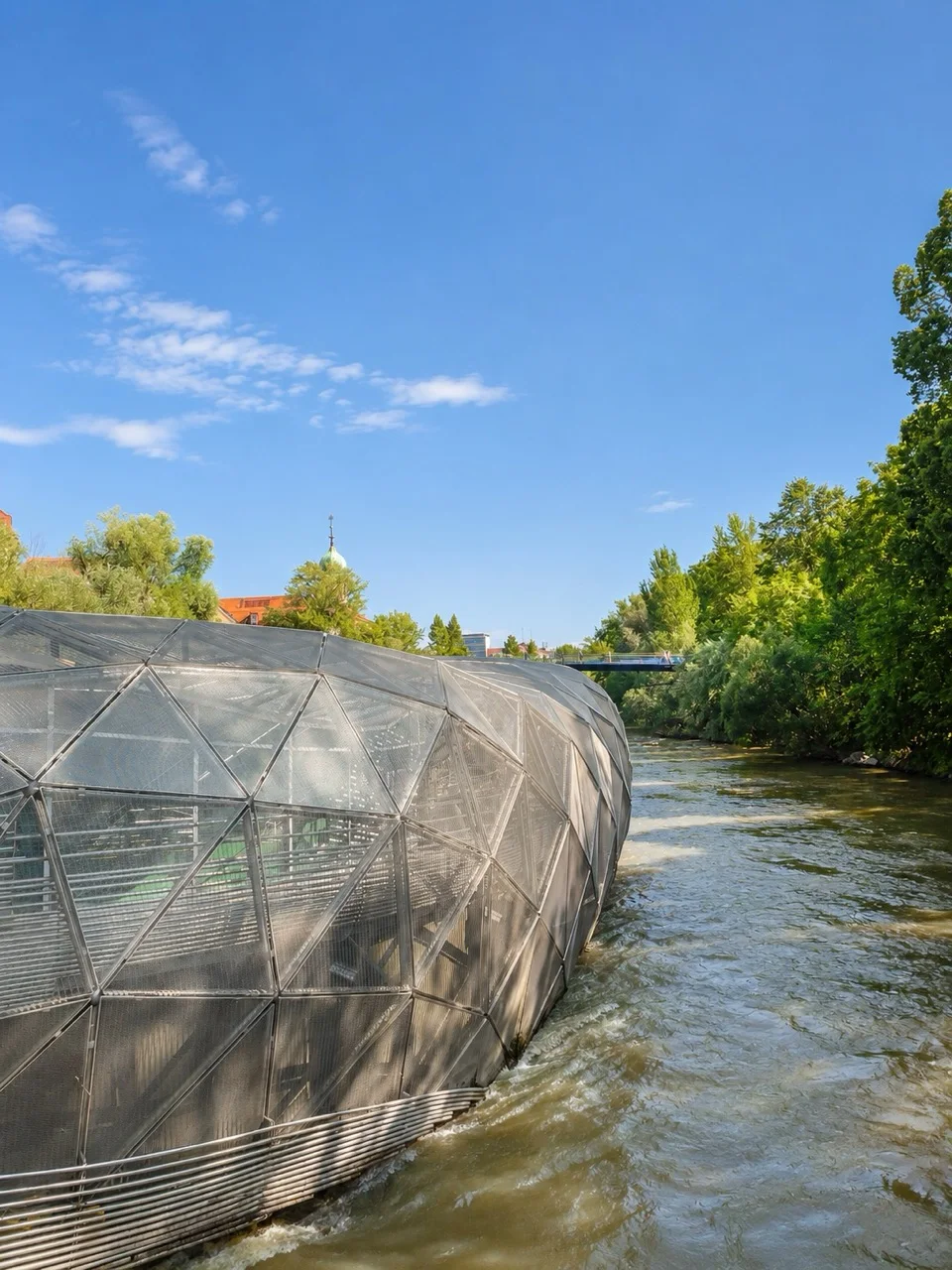
Murinsel sits in the river as a curved steel-and-glass platform designed for Graz’s year as European Capital of Culture in 2003. It contains a café and event space, and the structure is small enough to visit without setting aside much time. Pair it with Kunsthaus and a walk through Lend, the district on the river’s western side.
Choose one serious museum
Graz has enough museums to fill several days, but most visitors will enjoy the city more by choosing one or two rather than collecting them all. The Styrian Armoury is the strongest choice for history. Its rooms are filled with historic armour and weapons, creating an unusually immediate sense of the region’s military past. It is visually memorable even if you are not normally drawn to museums.
Kunsthaus is the better option for contemporary art and architecture. The Graz Museum offers a broader introduction to the city, with exhibitions that place local history, urban development and everyday life in context. The Universalmuseum Joanneum also gives Graz a particularly strong cultural profile, with several venues covering art, natural history, archaeology and regional culture.
- For historic atmosphere: the Styrian Armoury.
- For contemporary art: Kunsthaus Graz.
- For an introduction to the city: Graz Museum.
- For a larger cultural programme: the museums of the Universalmuseum Joanneum.
- For a slower, more architectural visit: Eggenberg Palace and its gardens.
Make time for Eggenberg Palace
Eggenberg Palace is the most important excursion within Graz itself. Set in extensive grounds to the west of the centre, the palace was built in the seventeenth century and is part of Graz’s UNESCO World Heritage listing. Its design is unusually coherent, with a strong emphasis on symmetry, hierarchy and time. The palace’s rooms, collections and gardens reward a slower visit than the average city attraction.
The interiors are the main reason to book a visit, particularly the richly decorated state rooms and the cycle of painted rooms associated with the palace’s ceremonial life. Outside, the gardens provide a welcome change of pace. Their present character reflects later landscape design, and the grounds are as useful for a walk as they are for sightseeing.
Plan on half a day, including the journey from the centre. Tram line 1 is the practical connection, but check current museum schedules before setting out, particularly in the cooler months when opening patterns can change. If your visit to Graz is limited to two nights, Eggenberg is the first major attraction to consider skipping in favour of the old town and Schlossberg. With three nights, it is one of the city’s most worthwhile additions.
Eat your way through the markets
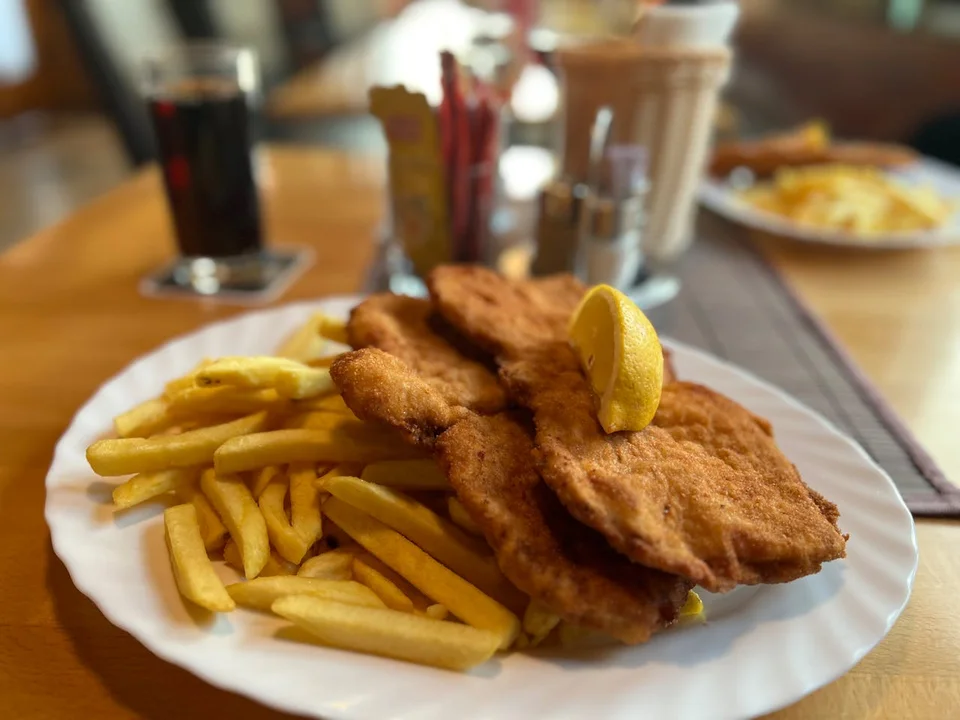
Graz’s food culture is rooted in Styria, whose produce appears everywhere from market stalls to ambitious restaurants. The city is particularly good for travellers who enjoy eating regionally without turning every meal into a formal occasion.
Kaiser-Josef-Markt, behind the opera house, is the largest and most central farmers’ market. It is the best choice for a first visit because it combines location with a broad selection of Styrian produce: pumpkin seed oil, scarlet runner beans, apples, farmhouse bread, smoked meats, pastries, flowers and seasonal vegetables. The market is generally open from Monday to Saturday in the morning and closed on Sundays and public holidays, but check current details before planning around it.
Lendplatz has a slightly more neighbourhood-oriented atmosphere and works well with a walk through the Lend district. Both markets are places to observe everyday Graz as much as to shop. Come early if you want the widest choice and a more local rhythm; later in the morning, linger around the cafés and food stalls.
- Try pumpkin seed oil with bread, salad or regional dishes.
- Look for Käferbohnen, the large scarlet runner beans associated with Styria.
- Buy seasonal fruit, farmhouse bread or pastries for a Schlossberg picnic.
- Ask about regional wines, especially Styrian white varieties.
- Leave room for local dishes that use vegetables, beans, pork, poultry and freshwater fish.
Spend an hour in Lend and Gries
The districts around the old town are where Graz feels least like a collection of sights. Lend, north of the Mur, combines the market at Lendplatz with cafés, restaurants, independent shops and a more relaxed street life. It is a good place for breakfast or an early evening meal, particularly if you have already seen the central landmarks.
Gries, south of the historic centre, is more mixed and less polished. That is part of its interest. The area has a diverse population, small food businesses and streets that show a different side of contemporary Graz. It may not be the first place to prioritise on a very short visit, but it is useful for travellers who want to understand the city beyond its postcard centre.
Slow moments and green spaces
Graz is not only a museum-and-restaurant destination. The city has several places where a short walk can reset the pace of a busy itinerary. Stadtpark is central and convenient, while the Burggarten is useful for a quieter pause near the cathedral and palace complex. The Schlossberg gardens offer the best combination of greenery and views.
For a more local interlude, walk beside the Mur or continue towards Augarten. The riverfront is particularly pleasant when the weather is mild, and the changing views make it a natural way to move between districts. If you have bought food at one of the markets, the Schlossberg or a city park is a better place for a picnic than a restaurant terrace.
Day trips from Graz
Graz works well as a base for exploring Styria, although you should resist filling every day with excursions. The city itself deserves unhurried time. Choose one day trip according to the season and your interests.
- Schöckl: Graz’s local mountain, with walking routes and wide views over the surrounding landscape. Best for a clear-weather day and travellers who want a straightforward escape into nature.
- Austrian Sculpture Park: a modern outdoor art collection near the city, suited to visitors who enjoy combining landscape and contemporary sculpture.
- Lipizzanerheimat: a regional excursion connected with the traditions surrounding Lipizzaner horses and the wider Styrian landscape.
- South Styrian wine country: a longer outing for vineyards, hill roads and regional food. Plan carefully, especially if you intend to taste wine and are not travelling with a designated driver.
- Mariatrost: a quieter Graz district with a notable basilica and a more pastoral atmosphere than the city centre.
For most first visits, Eggenberg Palace is a better use of limited time than a distant day trip. Save the wider region for a fourth night or a return visit.
A practical two- or three-day plan
Graz is easy to organise because its central sights cluster together. The following structure keeps the main attractions in sensible groups without turning the trip into a timetable.
- Day one: walk through Hauptplatz, Herrengasse, Landhaushof, the cathedral, mausoleum and Burg. Continue to Kunsthaus and Murinsel, then finish on the Schlossberg.
- Day two: visit a farmers’ market in the morning, choose one museum, explore Lend or Gries, and allow time for a long lunch or dinner.
- Day three: spend half a day at Eggenberg Palace, then return to the centre for a slower afternoon. Alternatively, use the day for Schöckl or another regional excursion if the weather is good.
Getting around Graz
The centre is highly walkable, and walking is the best way to understand its courtyards, passages and changing architecture. Trams and buses connect the railway station, central districts and attractions farther out. The old town tram zone can be useful for short central journeys, while regular public transport is the practical choice for Eggenberg and the airport.
Graz can be reached by rail from several Austrian and Central European cities, and the main station is connected to the centre by public transport. The airport is also linked to the city by train and bus. If you are considering the Graz Card, compare its cost with your museum plans and the length of your stay. It can make sense when you intend to visit several paid attractions and use public transport frequently; it is less compelling for a trip focused mainly on walking and free sights.
Is Graz worth your time?
Yes, particularly if you want an Austrian city break with substance but without the scale and intensity of Vienna or Salzburg. Graz has fewer headline attractions, yet that is part of its appeal. Its strongest experiences are connected: a market breakfast leads to a museum, a museum leads to a walk across the Mur, and the old town finishes naturally on the Schlossberg.
Two nights are enough to see the essential centre. Three nights feel more balanced and allow time for food, Eggenberg and a slower pace. The city is best for travellers who notice architecture, enjoy regional cooking and prefer choosing a handful of good experiences over trying to complete an exhaustive list.