Vienna does Christmas well because the season fits the city rather than taking it over. Imperial squares, grand concert halls, neighbourhood lanes and traditional cafés all acquire a winter rhythm, while the best experiences remain pleasantly simple: a mug of punch, a warm pastry, a short concert and an evening walk through the lights. Advent in Vienna 2027 should suit travellers who want atmosphere with structure. You can see the famous markets, but you can also choose a quieter neighbourhood, book one excellent performance and leave time for the city itself.
What Advent in Vienna feels like
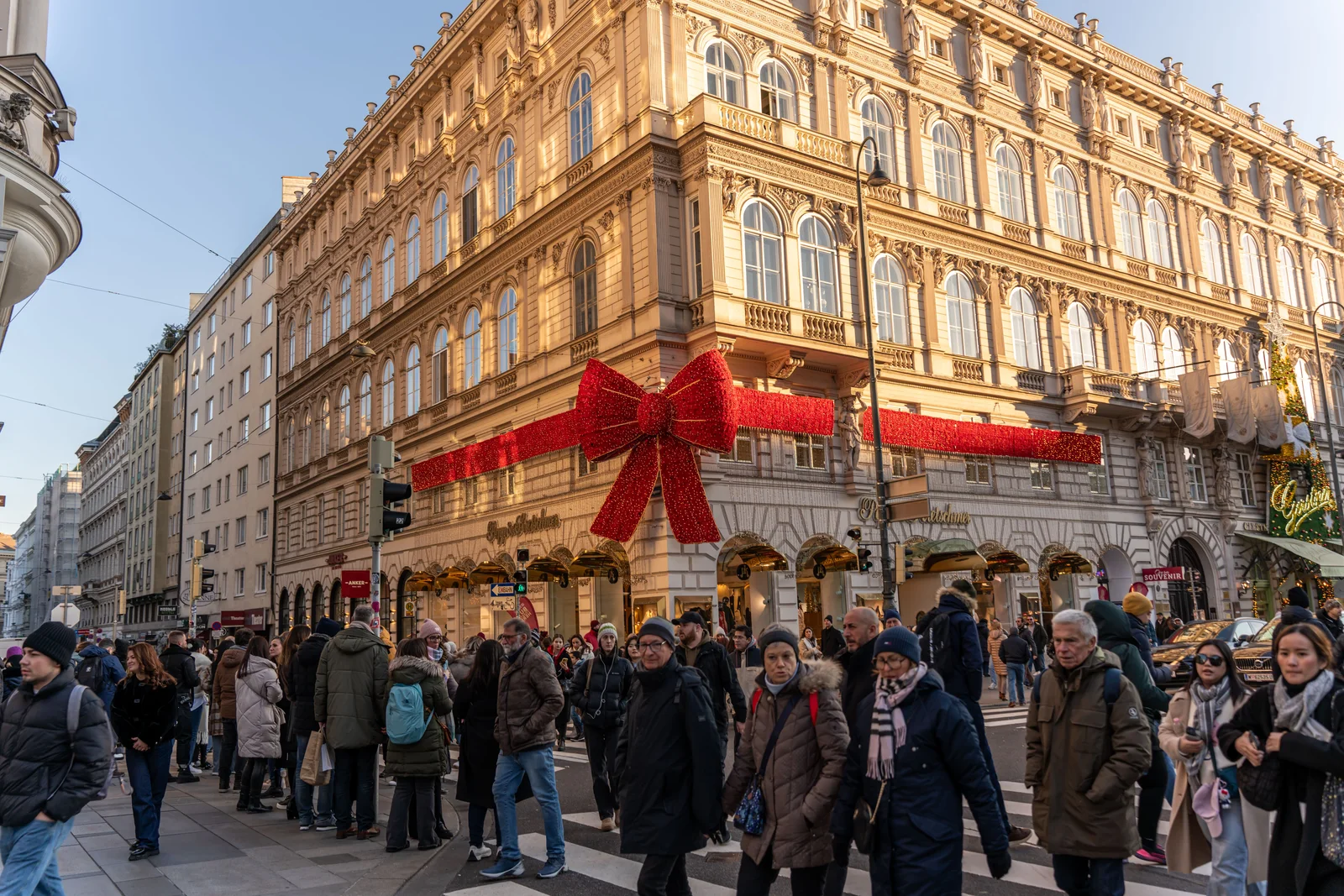
The season usually begins in early or mid-November, with the main markets running through the weeks before Christmas. By late afternoon, the city is at its most atmospheric: shop windows are lit, the air smells of roasted chestnuts and baking, and the squares begin to fill after work. December weekends are the busiest, particularly around Rathausplatz and the central shopping streets.
Vienna is a good choice for travellers who want Christmas markets without spending the entire trip at market stalls. The city’s museums, cafés, palaces and concert venues provide a natural counterpoint to the outdoor programme. Plan one market each afternoon rather than trying to collect them all.
The markets worth your time
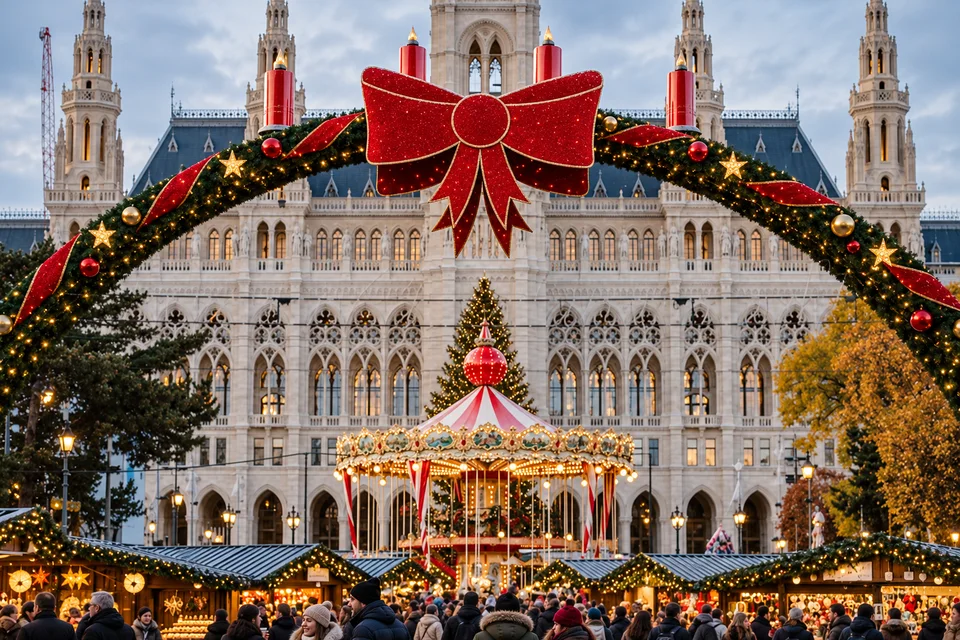
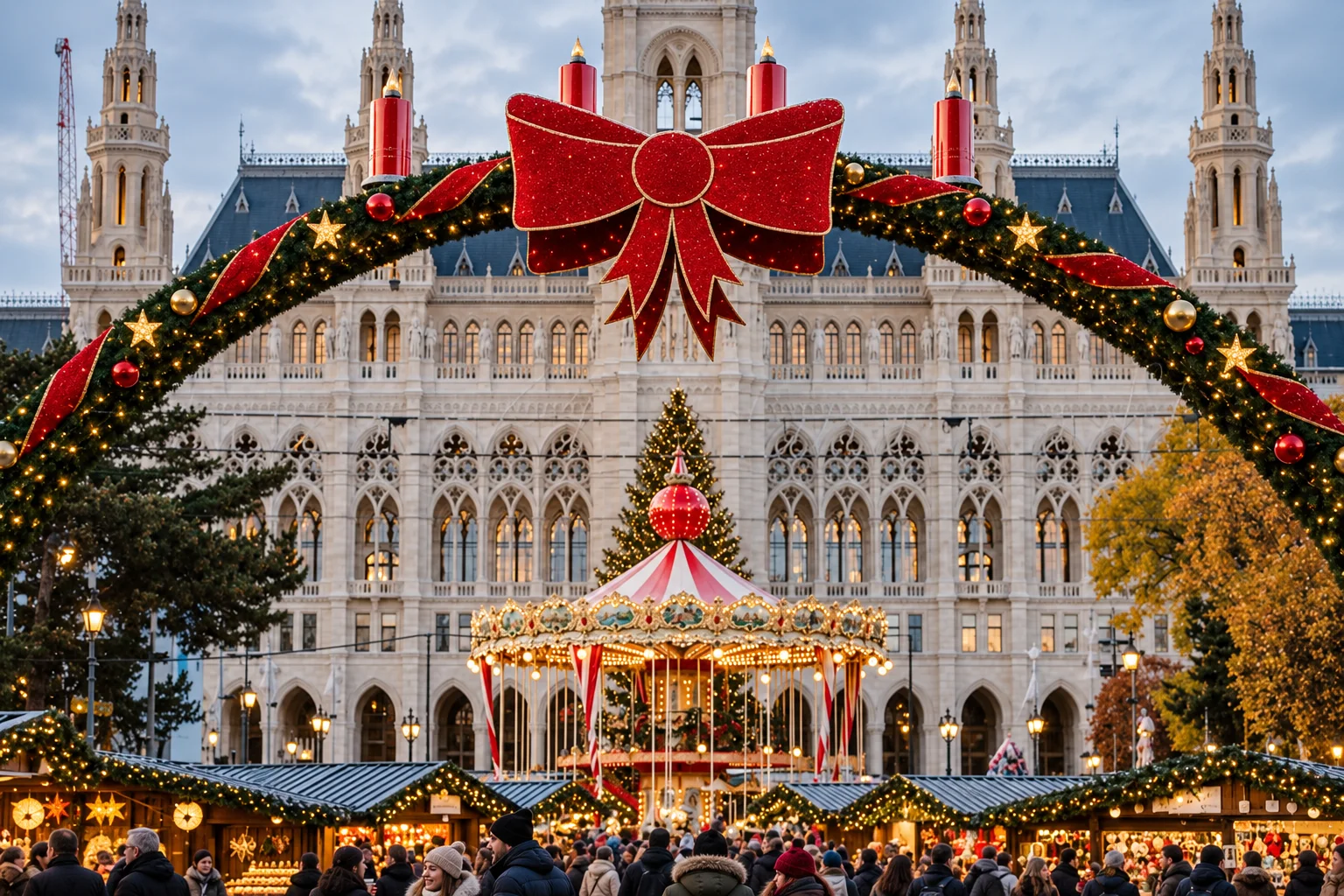
Rathausplatz is the grandest introduction. The Wiener Christkindlmarkt sits in front of the illuminated City Hall, with stalls, seasonal food, decorations and the Vienna Ice World in the adjoining park. It is visually impressive and easy to combine with the Ringstrasse, the Parliament and the MuseumsQuartier. It is also the busiest and least intimate, so go on a weekday or arrive before dusk if you prefer more space.
For atmosphere, we would choose Spittelberg. The market runs through a network of narrow streets in the seventh district, where small bars, restaurants and independent shops make it feel more like a neighbourhood evening than a large seasonal event. It is particularly good for a later stop after visiting the MuseumsQuartier.
Freyung is a calmer central option, set in one of Vienna’s historic squares. It works well for travellers who want a traditional market without the scale of Rathausplatz. Am Hof is nearby and can be combined with it on the same walk, although there is no need to spend a long time at both unless you are especially interested in seasonal shopping.
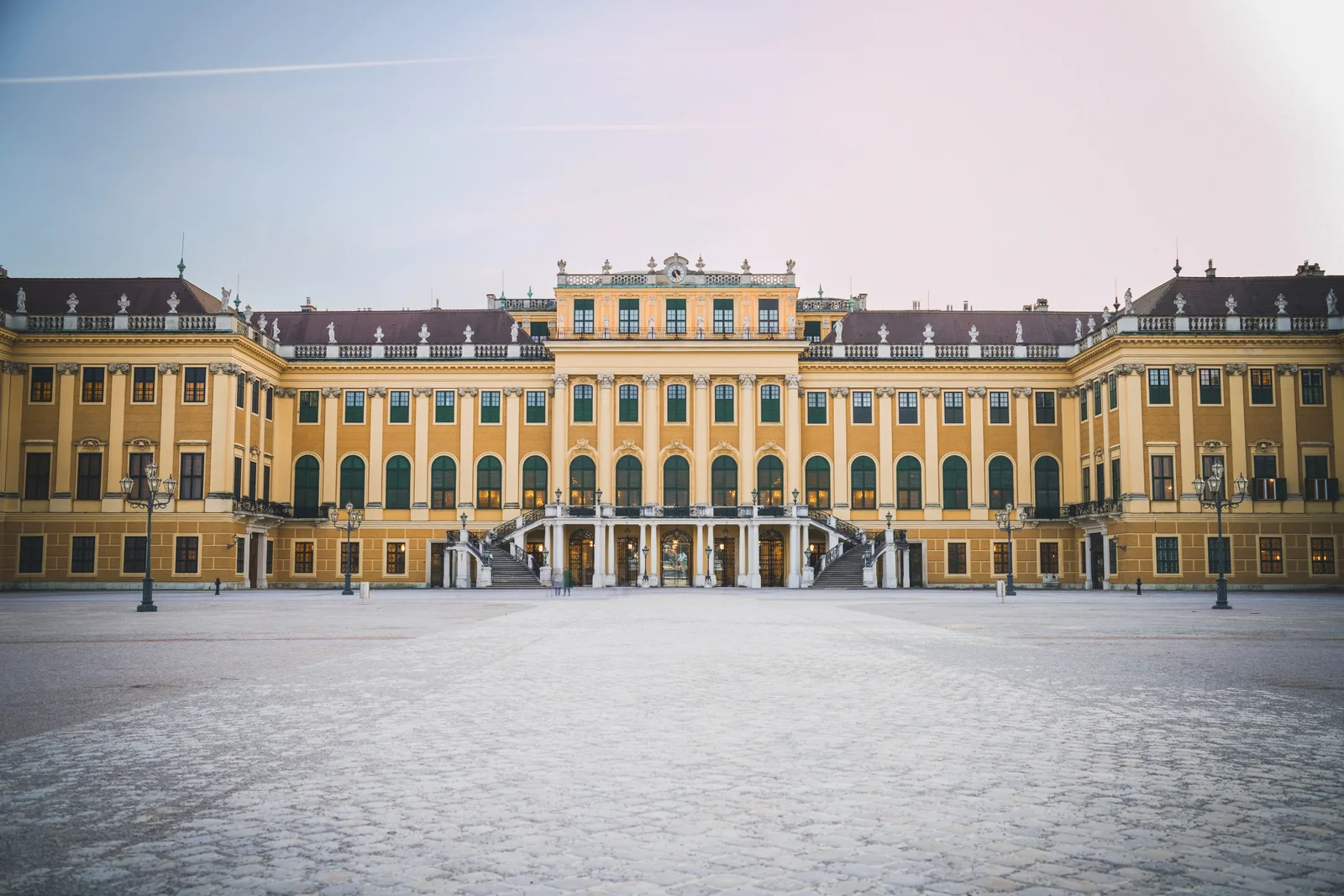
Schönbrunn is worth choosing for the setting. The market takes place in front of the palace, making it one of the more photogenic stops and an easy addition to a palace visit. It is a better use of time than travelling across the city for a market alone: see the palace or grounds, then have a drink and something warm in the square.
Belvedere offers another strong setting, particularly for travellers already planning to visit the museum. The market is smaller in feel than Rathausplatz and benefits from the palace backdrop. Combine it with the Belvedere collection rather than treating it as a separate excursion.
The 2027 programme: what to expect
The detailed Advent programme for 2027 will be released closer to the season. Vienna’s recurring programme usually includes Christmas markets, open-air skating, palace events, family workshops, seasonal exhibitions and a substantial calendar of classical concerts.
The most useful events to watch are the major concerts at the Musikverein and Konzerthaus, performances connected with the Vienna Boys’ Choir, church concerts and the annual Christmas in Vienna gala. The city also programmes gospel, jazz, cabaret and contemporary seasonal shows, so a classical concert is not the only way to spend an evening.
Families should look for the children’s programme at Schönbrunn, where recent seasons have included craft activities, winter-themed palace events and seasonal attractions. The Prater’s Wintermarkt is a livelier alternative, with rides, live music and the Giant Ferris Wheel. It is more festive fairground than historic Christmas market, which makes it best for families or anyone wanting a change of pace.
- Check the official Vienna Tourist Board events calendar before booking a concert.
- Book popular performances as soon as the 2027 programme is announced.
- Choose one major concert and one smaller church or chamber performance rather than filling every evening.
- Look for skating at Rathausplatz and seasonal activities at Schönbrunn if you are travelling with children.
- Check dates carefully: some markets end before Christmas, while others continue into early January.
What to eat and drink
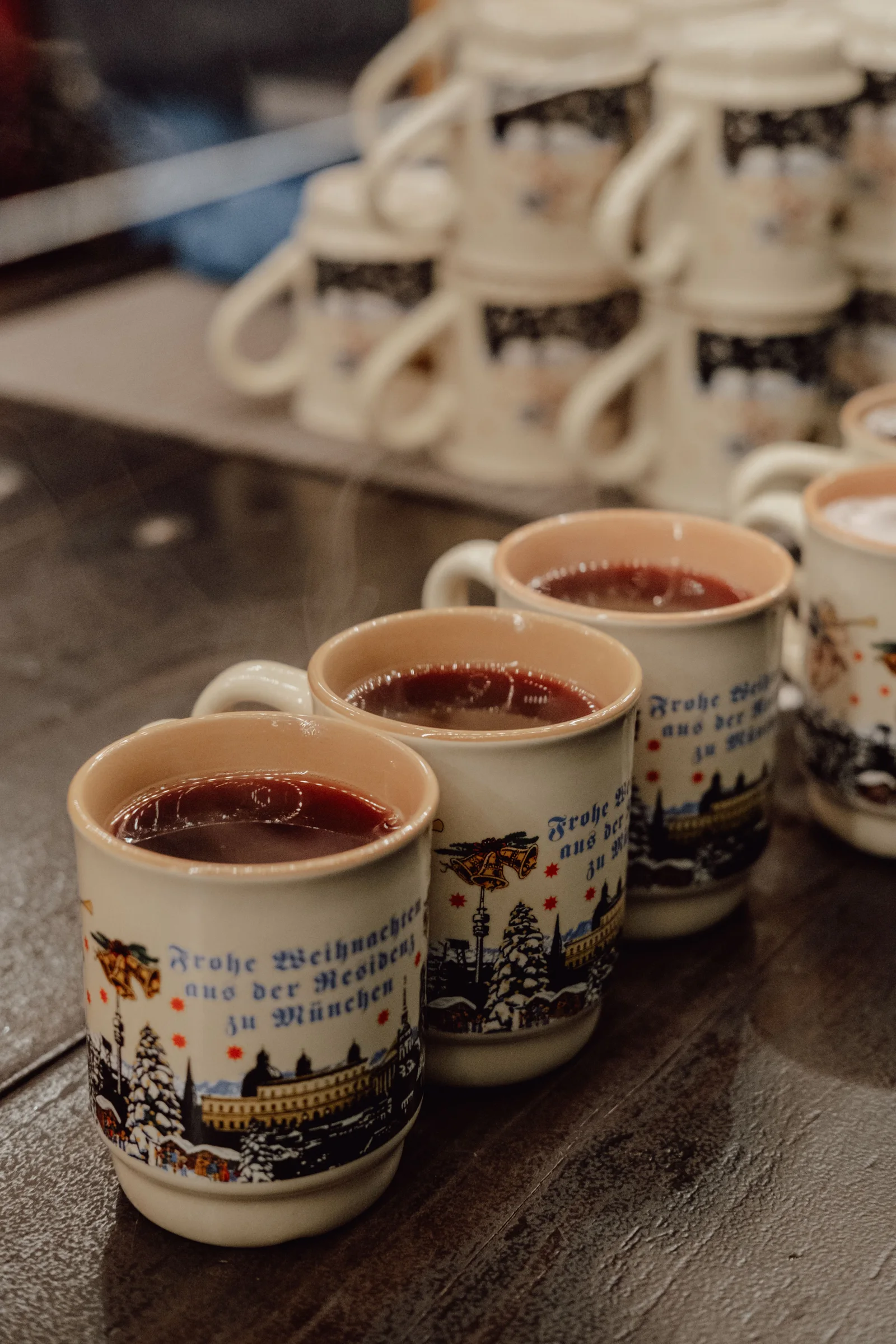
Start with Punsch, the warm fruit-based drink served throughout the markets. Recipes vary from stall to stall, and the flavour can be sweet, spiced, citrusy or wine-based. If you prefer something less sugary, ask about Glühwein or a non-alcoholic Kinderpunsch. Many stalls use reusable mugs, usually with a deposit; return the mug or keep it as a small souvenir.
Roasted chestnuts, or Maroni, are one of Vienna’s most characteristic winter snacks. They are best eaten straight from the paper bag while walking. Look for Vanillekipferl, the crescent-shaped vanilla biscuits associated with Advent, as well as Punschkrapfen, a small pink-glazed punch cake. Stollen, gingerbread and other seasonal baking are also common.
At the markets, try one savoury dish and one sweet item rather than treating the stalls as a complete food tour. For a proper meal, return to a traditional restaurant or choose a warm café. Vienna’s cafés are particularly useful in December: they offer a comfortable pause from the cold and give the day a more local rhythm.
A sensible three-night plan
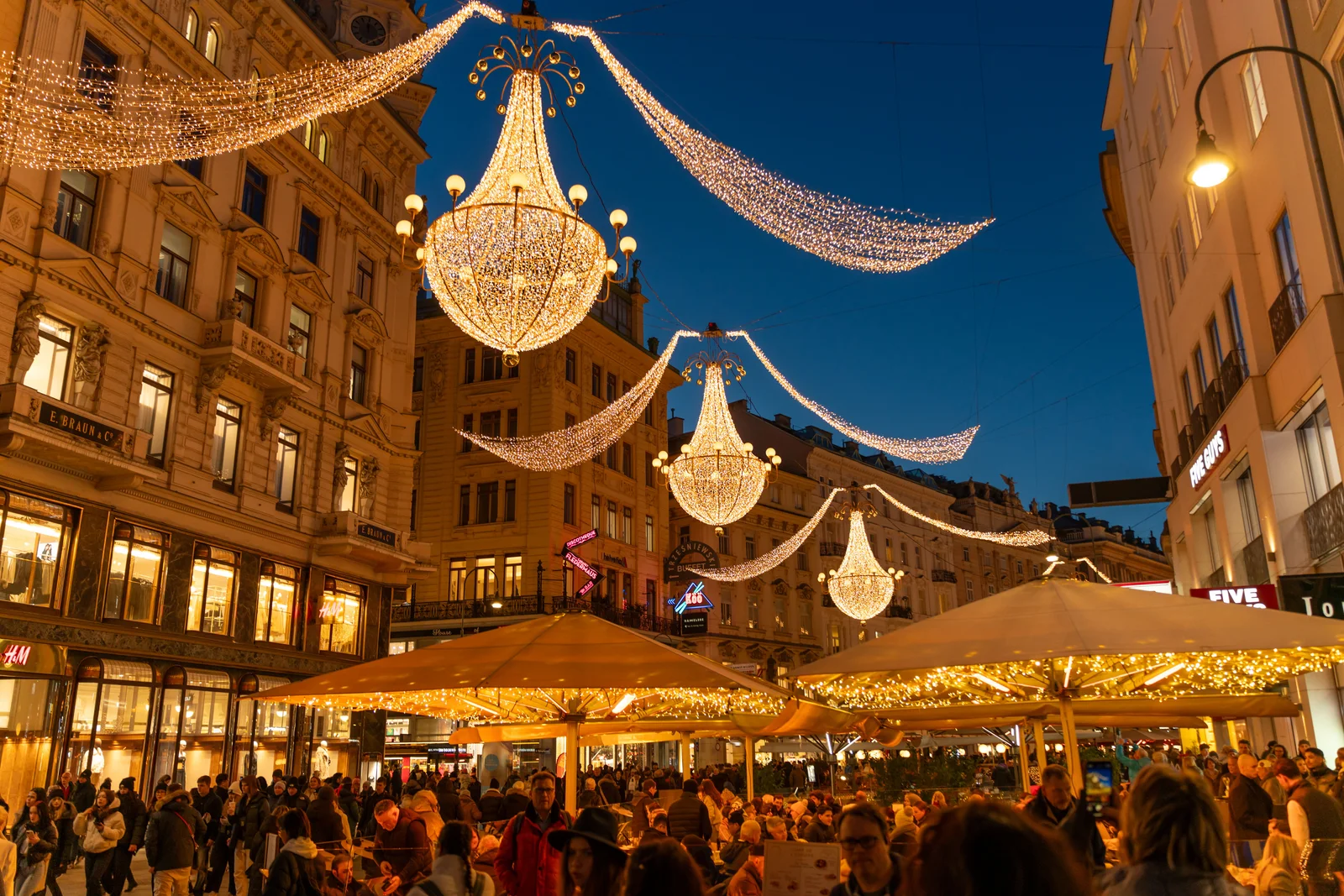
On the first afternoon, settle into the city with a walk through the historic centre. Follow the lights around Graben and Kohlmarkt, continue towards Stephansplatz, then stop at the market around the cathedral. In the evening, visit Rathausplatz when the lights are fully on.
Use the second day for one substantial cultural visit. Schönbrunn works well if you want a palace and market combination; Belvedere is the more compact choice if you are interested in art. Spend the evening in Spittelberg, where the market, restaurants and small streets make it easy to continue without another transfer.
On the third day, choose between a quieter central market and a concert. Freyung and Am Hof can be combined with the Hofburg and the inner city. If your programme includes an evening performance, keep the afternoon light: Vienna is more enjoyable when you are not crossing the city in a hurry from one seasonal attraction to the next.
Practical tips for December
- Stay in or near the first district, the MuseumsQuartier or the seventh district if you want to walk to several markets and restaurants.
- Use Vienna’s public transport for Schönbrunn, Belvedere and the Prater rather than planning every journey on foot.
- Wear proper shoes. Market squares can be uneven, wet or crowded, and you will spend more time standing than expected.
- Carry a small amount of cash, even though many stalls accept cards. Payment options can vary between vendors.
- Visit the most popular markets on weekday afternoons or earlier in the day.
- Reserve restaurants and concerts in advance, especially for Fridays, Saturdays and the period immediately before Christmas.
- Do not assume every market remains open until December 24. Confirm the dates for the specific season.
- If you are visiting after Christmas, check which markets continue into January and which close before the holiday itself.
When to go
The first half of December is usually the best balance between atmosphere and comfort. The markets are fully active, the lights are in place and there is still more room in hotels and restaurants than in the final days before Christmas. The week before December 24 has the strongest festive feeling, but it is also the busiest and requires earlier planning.
Christmas Day and the days immediately afterwards have a different character. Some markets close, while others continue as winter villages or seasonal events. Museums, restaurants and public transport may operate on reduced holiday schedules, so check each venue directly before making plans.
Where to check the official 2027 information
For the confirmed programme, market dates, concerts, family events and current opening hours, use the official Vienna Tourist Board website, Vienna’s city events calendar and the individual market websites. The Rathausplatz market, Schönbrunn, Belvedere, Art Advent and the main concert venues publish their own updates. Recheck all details shortly before travelling: the 2026 listings are a useful guide to the shape of the season, not a confirmed programme for 2027.