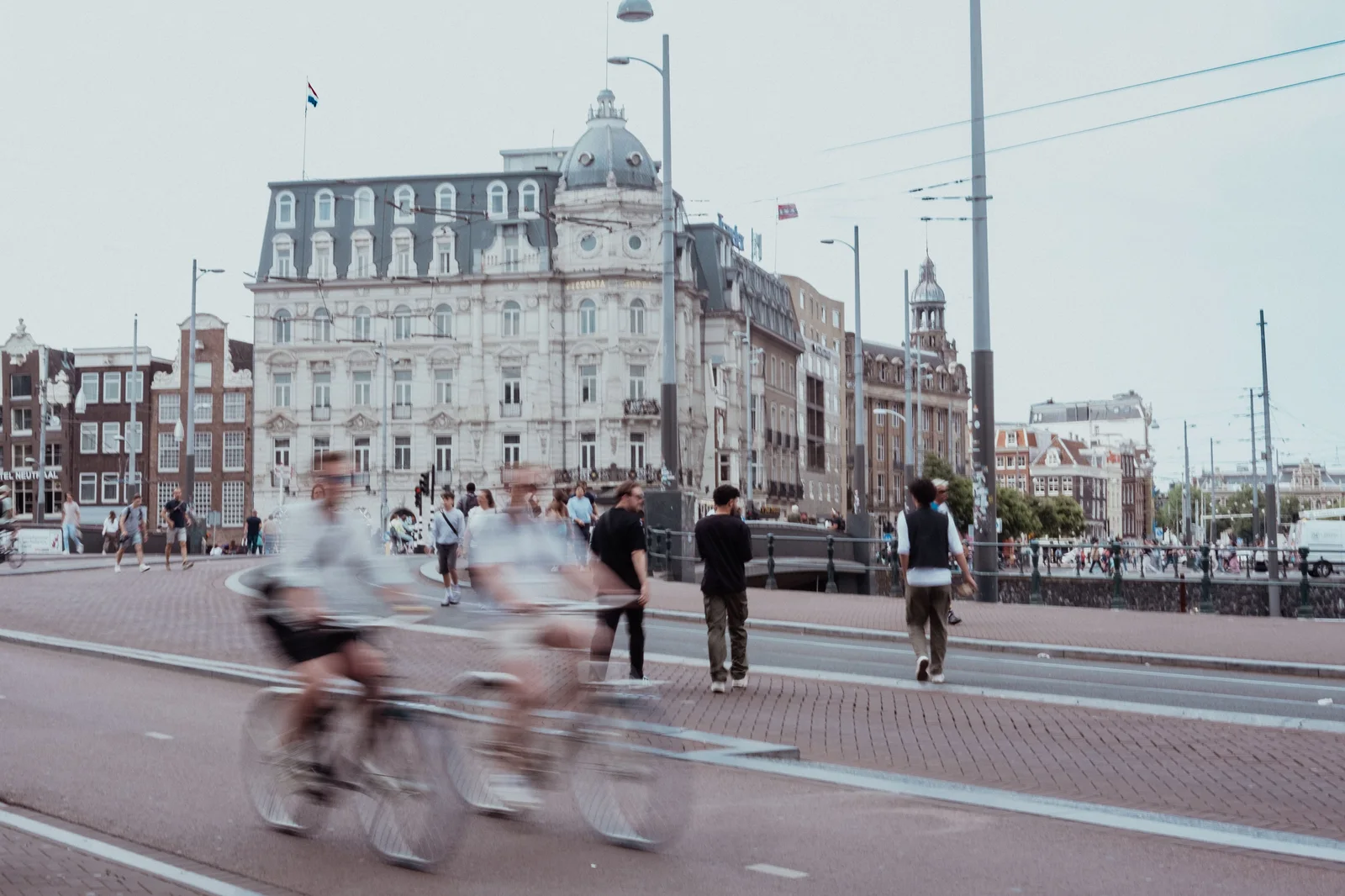
Cycling is one of the best ways to understand Amsterdam. It connects the canals, neighbourhoods and parks at a useful pace, and it is often quicker than walking between the sights. The city is also busier and less forgiving than it first appears. Bike lanes are shared with confident local riders, delivery cyclists, cargo bikes and electric bicycles, while trams, buses and pedestrians create a steady stream of potential obstacles. A few basic rules make the difference between feeling part of the traffic and becoming a hazard in it.
The most important rule: stay in the cycle lane
Where there is a marked cycle path, use it. Amsterdam’s cycle lanes are usually identified by a bicycle symbol, red asphalt or white lane markings. They may run beside the road, along a separate track or through a junction. Follow the direction shown by arrows and signs; some paths are one-way even when the street beside them is not.
Do not ride on the pavement unless signs specifically allow it. Pedestrians have priority there, and cycling through a busy shopping street creates confusion for everyone. If there is no cycle path, use the road and keep as far to the right as is safe. Avoid drifting between the pavement, road and cycle lane simply because one section looks quieter.
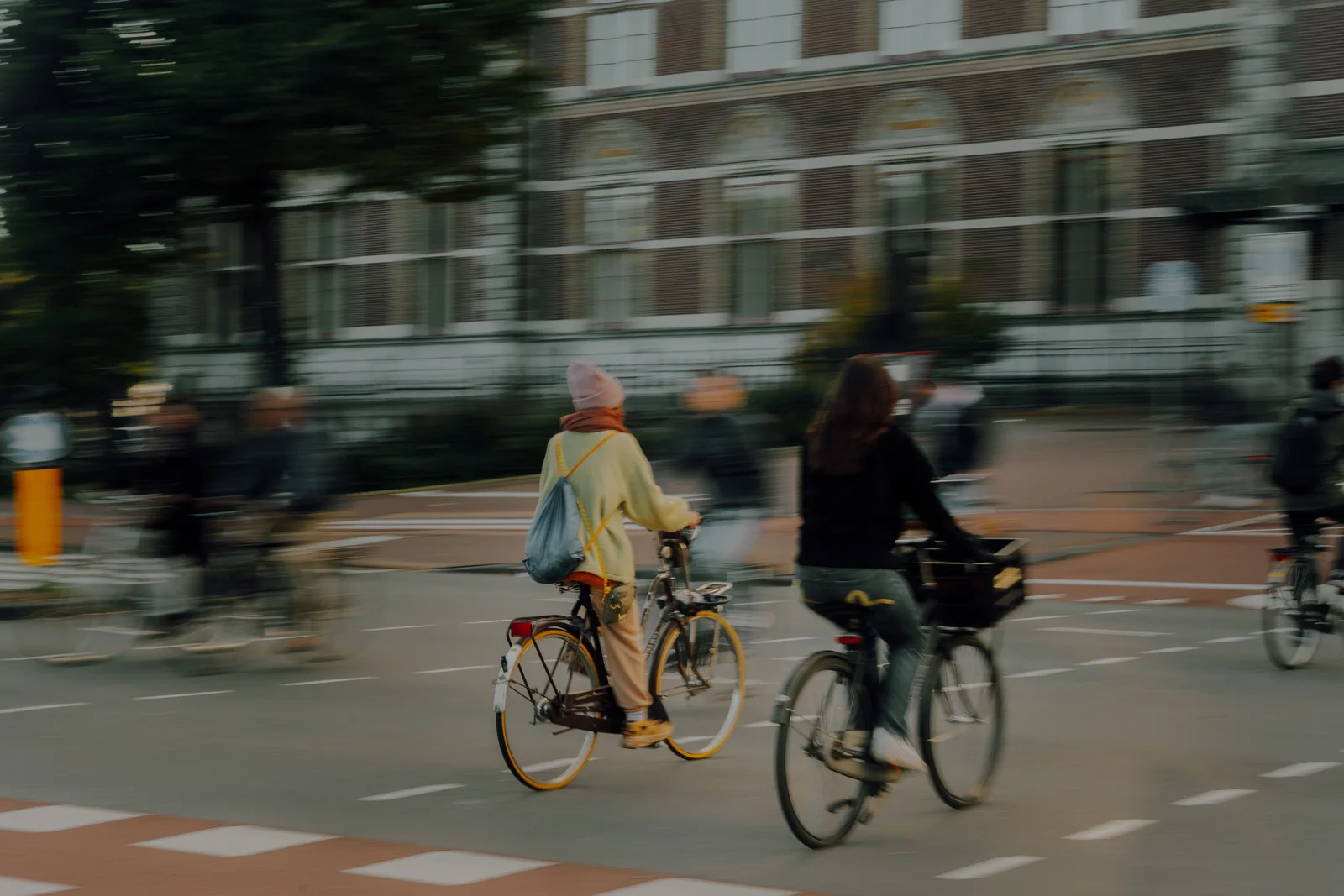
The right-hand side of the cycle lane is generally for steady riding. Overtake on the left, after checking behind you. A quick glance over your shoulder is more useful than ringing your bell repeatedly.
Red lights and priority at junctions
Stop at red lights, including red bicycle signals. Local riders may occasionally continue through an empty junction, but this is not a custom visitors should copy. Amsterdam’s junctions can look quiet while traffic approaches quickly from another direction.
Read the signs rather than relying on assumptions. At some junctions, a supplementary sign allows cyclists to turn right on red after giving way. This is only permitted where the sign is present. Without it, wait for the green signal.
At unsigned junctions, traffic coming from the right generally has priority. Signs and road markings can change that order, so slow down before every unfamiliar crossing. Trams deserve particular attention: give way to them when their tracks cross your route, and never assume that a bicycle signal protects you from a tram approaching on a separate line.
Tram tracks are a real hazard
Amsterdam’s tram rails are easy to underestimate, especially on a rental bike with narrow tyres. When crossing them, approach at as close to a right angle as the road allows. Crossing diagonally can trap a wheel in the rail and send the bike sideways.
Slow down before the tracks rather than braking sharply while crossing them. Look ahead for rails hidden by wet surfaces, shadows or traffic. Where possible, use the raised crossing points designed for bicycles.
Signal clearly and ride predictably
Extend your arm before turning left or right, and do it early enough for the people behind you to react. Check over your shoulder first. A hand signal does not give you priority; it tells others what you intend to do.
Keep your line steady through junctions. Sudden stops, wide turns and last-minute changes are difficult for faster cyclists to anticipate. If you are unsure where to go, continue straight to a safe place and stop there. Do not brake in the centre of a cycle lane to consult a map.
How to ride with other cyclists
Cyclists may ride two abreast when they are not obstructing other traffic. In central Amsterdam, however, even two riders can fill a narrow lane quickly. Move into single file when someone needs to pass, when the path narrows or when approaching a busy junction.
Use your bell sparingly and give people time to respond. A bell is a warning, not a command to clear the entire lane. If you need to stop, pull completely out of the flow and leave space for others to pass.
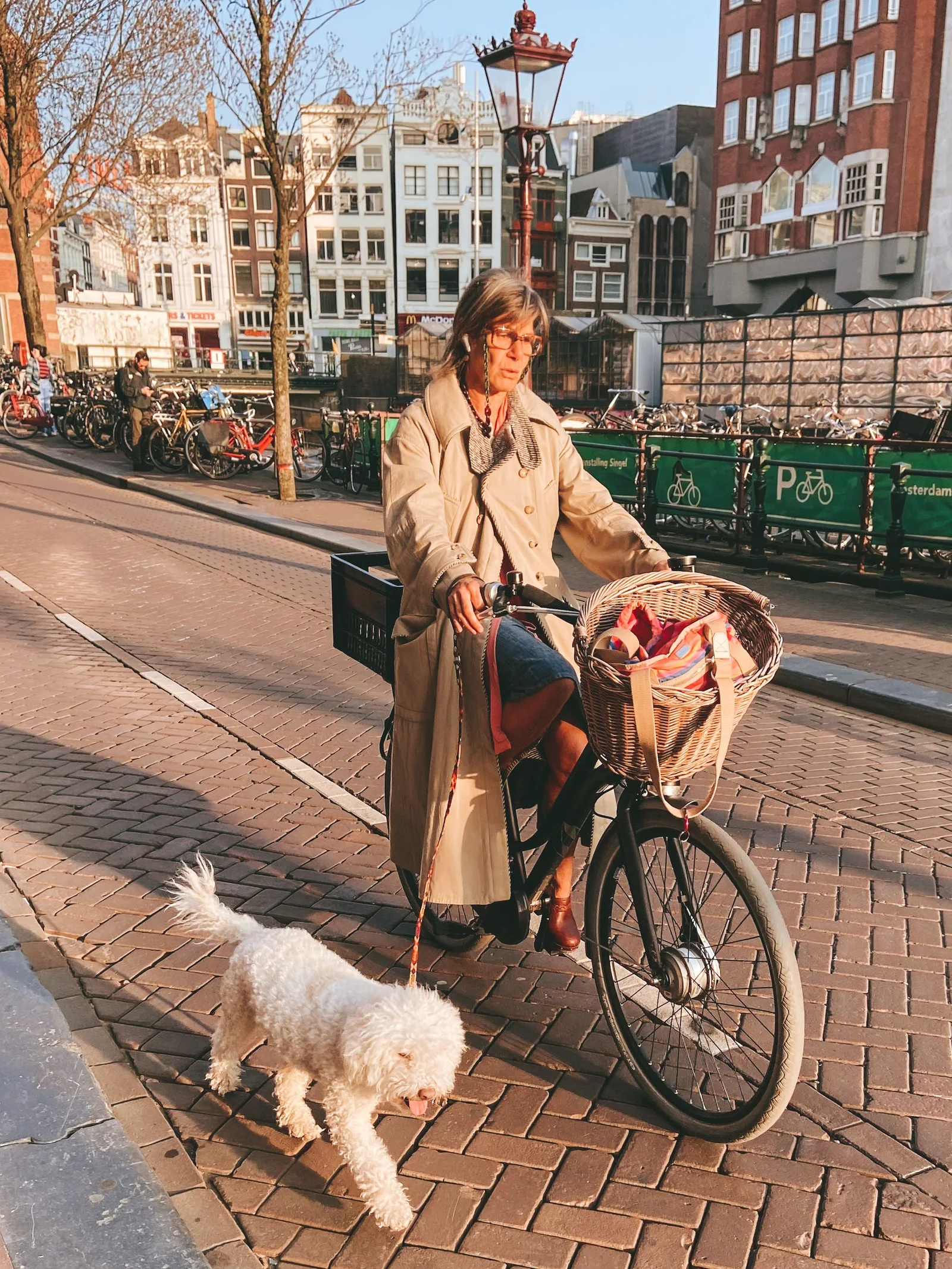
Avoid cycling side by side while looking at a phone, taking photographs or trying to follow a route. If you miss a turn, keep going and find somewhere safe to stop. The extra minute is worth it.
Phones, headphones and alcohol
Do not hold a phone, tablet or other electronic device while cycling. If you need navigation, mount the phone before setting off or use an audio direction system. Even hands-free navigation becomes distracting in the historic centre, so pull over when you need to study the route.
The practical rule for headphones is simple: you should be able to hear bells, trams and traffic around you. Keep the volume low or leave one ear uncovered. More importantly, do not cycle after drinking enough alcohol to affect your judgement. Cycling under the influence is prohibited and can be dangerous on crowded streets.
Lights are required after dark
A bicycle must have a working white or yellow light at the front and a red light at the back when riding in darkness, during dusk or dawn, and when visibility is poor. Check the lights before leaving the rental shop, especially if you are planning to return after dinner.
Small removable lights are common on city bikes, but they need to be visible and properly attached. A light hidden in a bag or pointing at the ground is not much use. Reflective details also help, particularly on darker streets outside the centre.
Do you need a helmet in Amsterdam?
A helmet is not normally required for riding an ordinary bicycle in Amsterdam, and most residents do not wear one. It is still a sensible choice if you are inexperienced, riding an electric bicycle, travelling with children or heading beyond the city on faster roads.
Do not confuse an ordinary electric bicycle with a speed pedelec, moped or scooter. Different vehicle categories can have different rules about helmets, road position and where they may be ridden. If you are hiring anything faster or heavier than a standard city bike, ask the rental company exactly which rules apply.
Where and how to park your bicycle
Parking is part of Amsterdam’s cycling system, not an afterthought. Use a marked bicycle rack, designated parking section or secure bicycle facility. In busy central areas, leaving a bike against a bridge, signpost, lamppost or outside a rack can obstruct pedestrians and may lead to its removal.
The areas around Amsterdam Centraal, Dam Square, Rokin, Beursplein and Leidseplein become especially crowded with bicycles. If you are heading to a museum, restaurant or hotel in the centre, look for a nearby bicycle facility before you arrive. Municipal bicycle garages are often the simplest option; many are free for the first seven days, although conditions vary by facility.
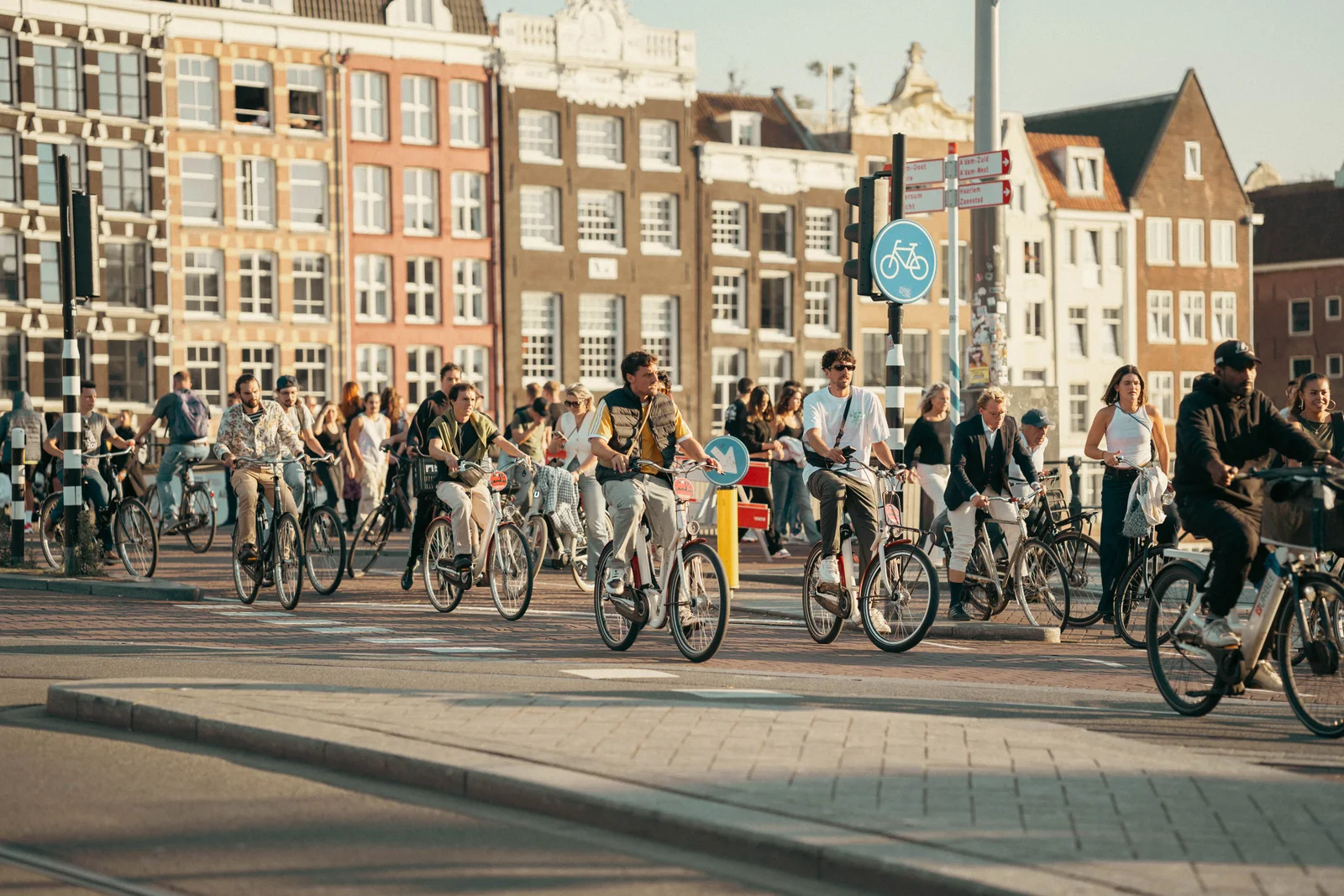
Some public locations have maximum parking periods, commonly two or six weeks depending on the area. That matters more for residents and longer stays than for a short holiday, but it is another reason to read the signs rather than leaving a rented bike wherever there is an empty railing.
Lock the bicycle through the frame and, if possible, to a fixed rack. Rental bikes often have a frame lock, but a second lock gives useful extra protection when you leave the bike for more than a few minutes. Never leave bags, cameras or loose belongings in a bicycle basket.
A note about the Vondelpark and fatbikes
Since May 11, 2026, fatbikes with pedal assistance and tyres wider than seven centimetres have been prohibited from riding through Vondelpark. They may be taken around the park or walked through it. The rule does not apply to ordinary city bicycles, but it is worth checking the signs if you are using a wide-tyred electric model.
Common mistakes visitors make
- Cycling on the pavement because the cycle lane looks busy.
- Stopping suddenly in a cycle lane to take a photograph or check directions.
- Turning without looking behind or signalling with a hand.
- Crossing tram tracks at a shallow angle.
- Assuming a green light means trams and turning traffic have stopped.
- Riding two or three abreast through a narrow central street.
- Leaving a bicycle against a bridge, signpost or doorway.
- Returning a rental bike without checking that its lights and lock work.
- Copying local riders who go through red lights or ride without lights.
How long should you spend cycling in Amsterdam?
For a first visit, a few hours is enough to understand the city by bike without turning the day into a navigation exercise. Begin on quieter streets outside the busiest canal belt, then move towards the centre once you are comfortable with the bike and local signs.
Vondelpark, the Museum Quarter and the eastern waterfront are easier places to settle into the city’s cycling rhythm than the tightest streets around Dam Square. For a longer ride, follow a route beyond the centre into Amsterdam Noord or the surrounding countryside, where the traffic is generally less compressed and the landscape becomes part of the experience.
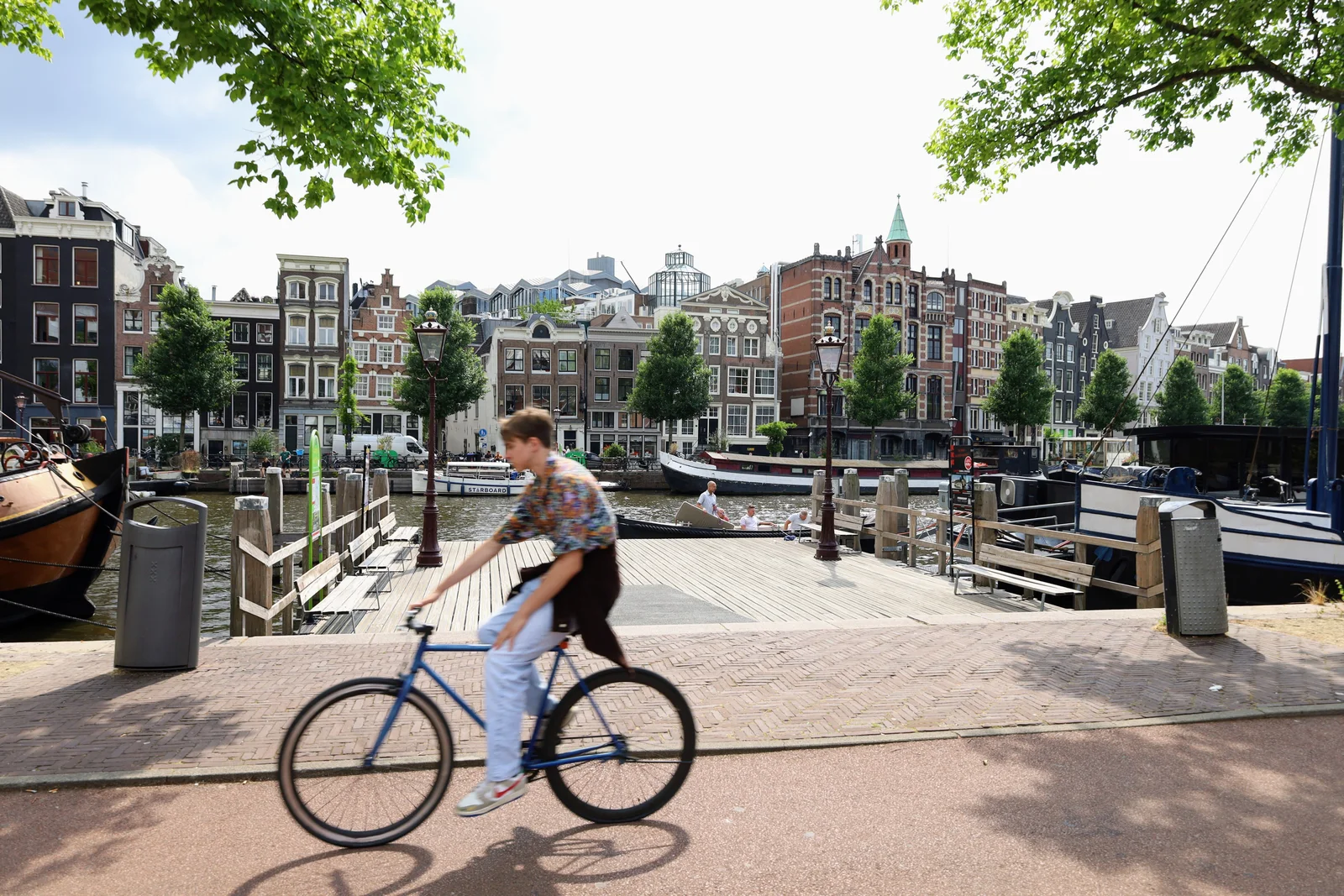
Our preference is to leave the bicycle for the most crowded central sights and walk once you reach them. Amsterdam is at its most enjoyable when cycling connects distinct parts of the city, rather than when it becomes a way to move through every narrow street as quickly as possible.
The short version
Use the cycle path, keep right, signal early and stop at red lights. Give trams plenty of room, cross rails carefully and never use a phone in your hand while riding. After dark, use front and rear lights. Park in a proper rack or facility and pull over whenever you need to stop.
Amsterdam cycling becomes much less intimidating once you stop treating it as a sightseeing activity and start treating it as traffic. Ride calmly, watch the signs and leave space for the people who know exactly where they are going.