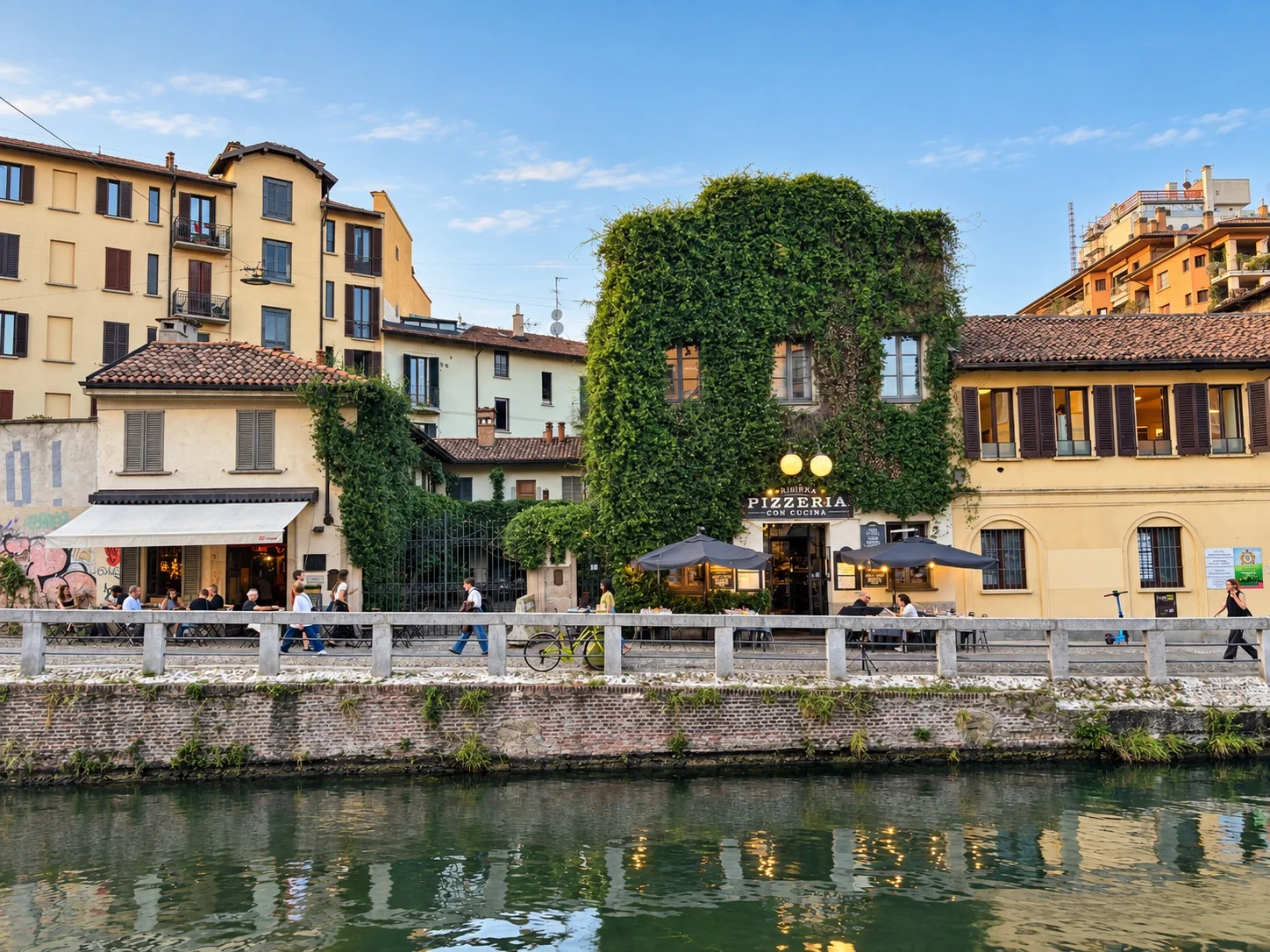
Navigli is one of the few parts of Milan where the pace changes noticeably. The city’s grand streets and polished design districts give way to water, old canal houses, small courtyards, independent shops and a long succession of bars and restaurants. It is lively, especially in the evening, but the neighbourhood is more enjoyable when treated as a walk with a few well-chosen stops rather than a single attraction.
How to get to Navigli from Milan city centre
The easiest metro stop for the main canal area is Porta Genova on the green M2 line. From the station, it is a short walk to the Naviglio Grande. Romolo, also on M2, is useful for the southern end of the district but is less convenient for a first visit.
From the Duomo, walking is often the most pleasant option. Follow Via Torino towards the Colonne di San Lorenzo, continue along Corso di Porta Ticinese and you will reach the Darsena in roughly half an hour, depending on your pace and stops. This route gives you a natural introduction to the area and avoids arriving directly in the busiest canal section.
If you prefer public transport, take the M1 from Duomo to Cadorna and change to the M2 towards Porta Genova. Milan’s transport network changes occasionally, so check the ATM app or current route information on the day, particularly at night.
Begin at the Darsena
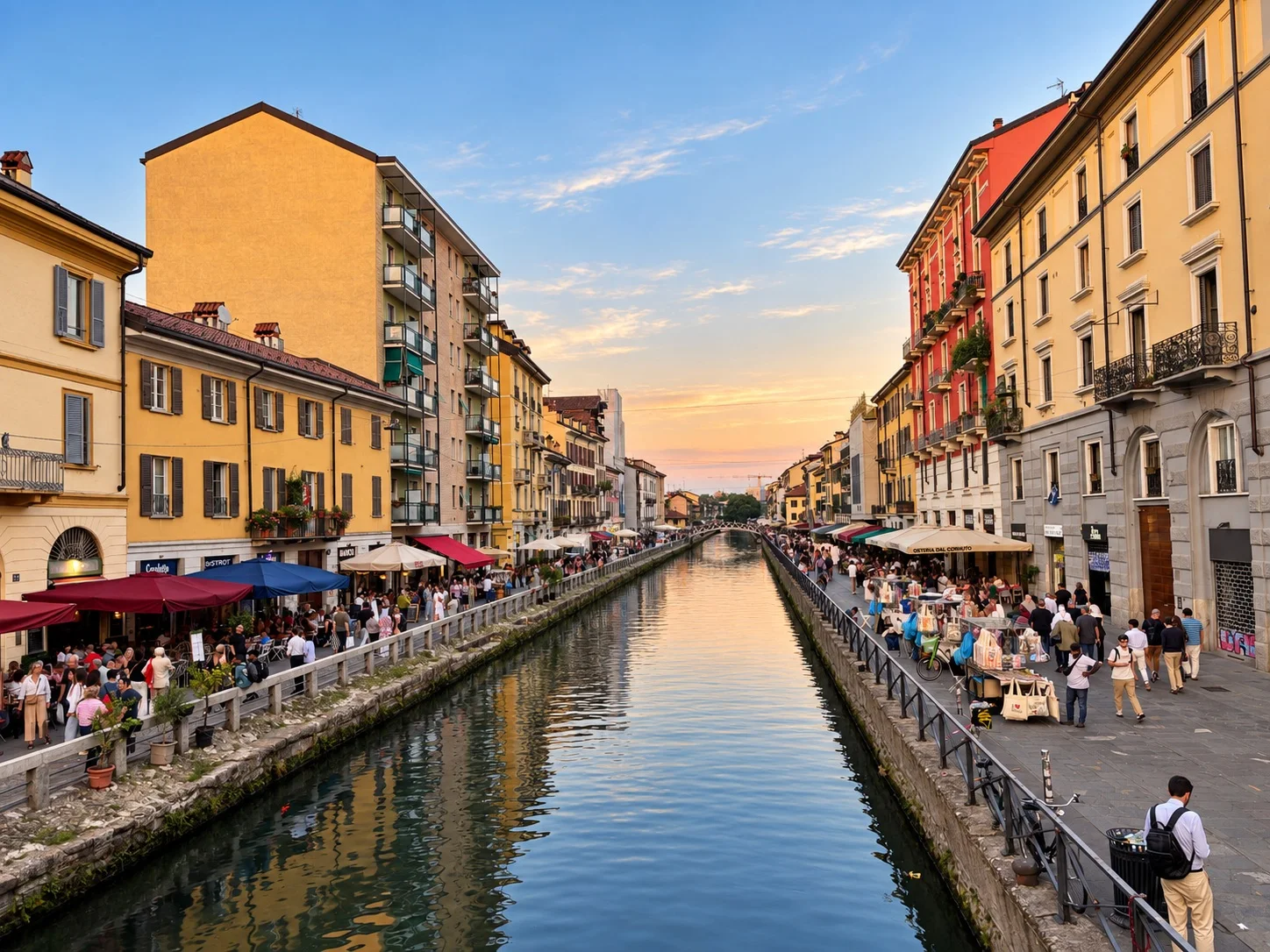
The Darsena is the natural starting point. Milan’s historic dock has been reshaped into an open waterfront with broad walkways, bridges and views across the meeting point of the Naviglio Grande and Naviglio Pavese. It is especially attractive in the late afternoon, before the restaurants and bars become busy.
Take a slow circuit of the water rather than heading straight for the canal terraces. From here, you can see how different Navigli feels from the rest of Milan: less formal, more social and centred on public space. The Darsena is also a convenient place to pause for a coffee or a drink before beginning the main walk.
Walk the Naviglio Grande
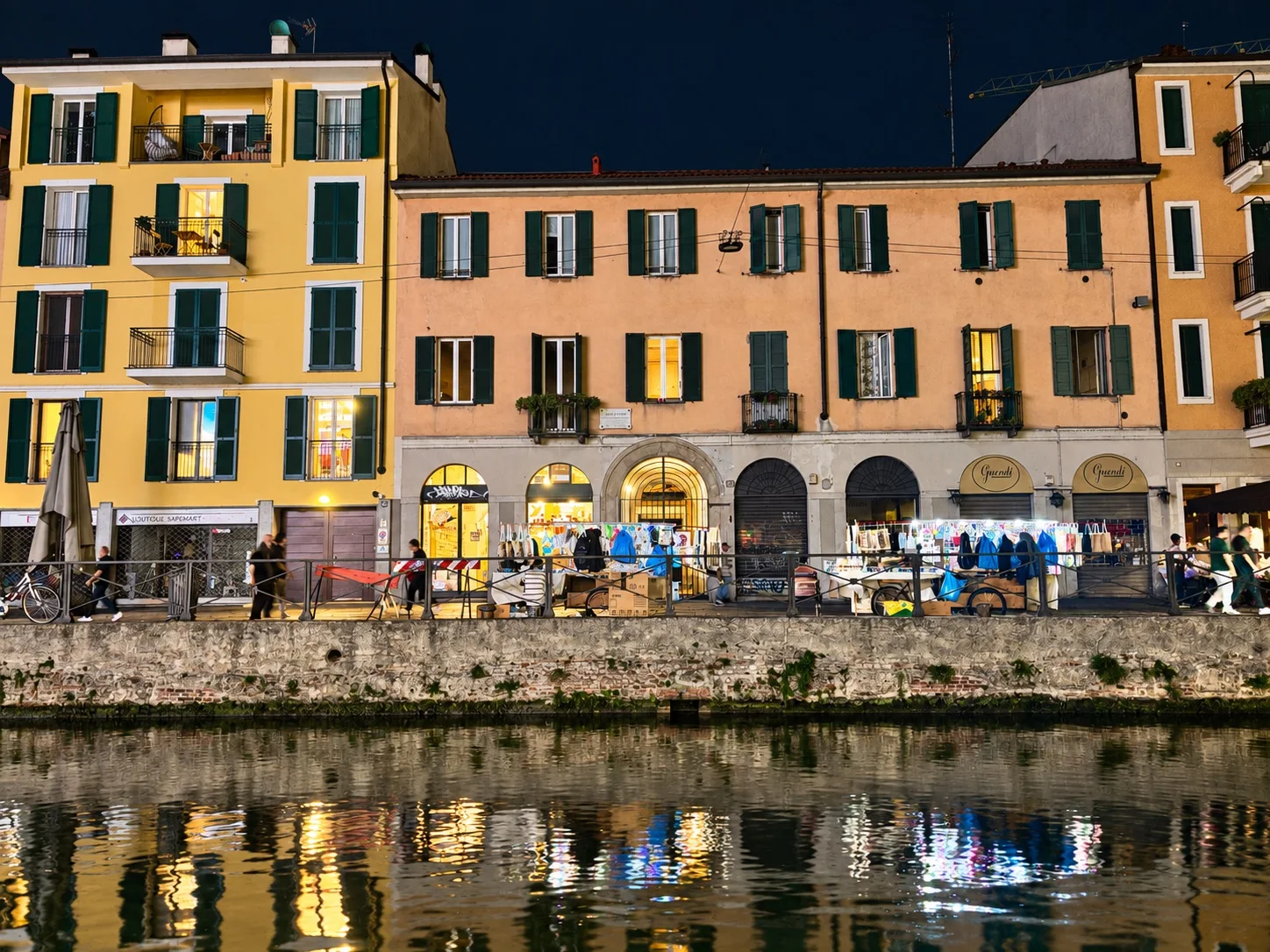
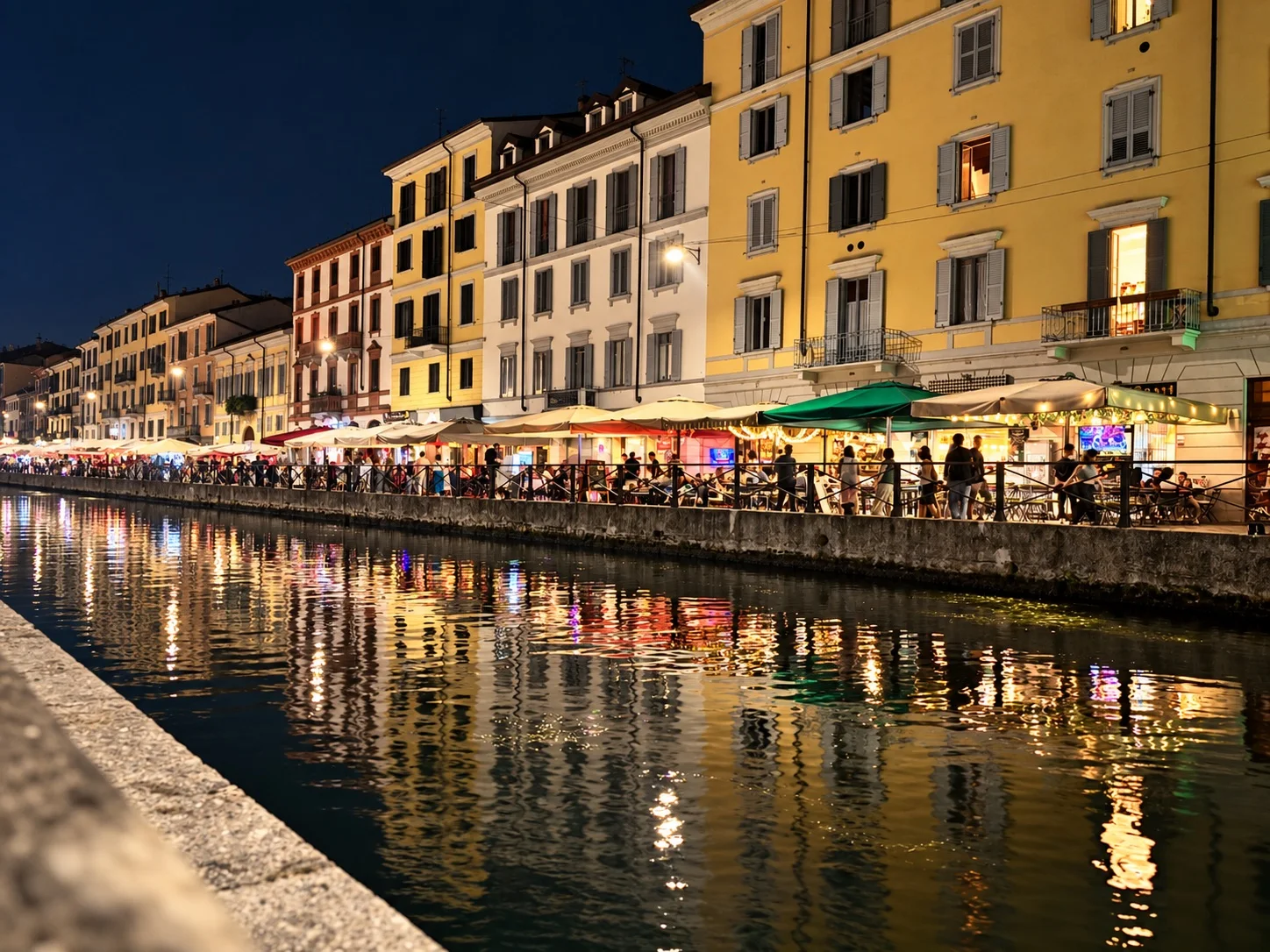
The Naviglio Grande is the more atmospheric of the two canals for a first visit. Its banks are lined with historic houses, balconies, small boutiques, galleries and restaurants, with the water and low bridges providing the visual rhythm. Walk along both sides where possible; the two banks have different views and the quieter side often gives a better sense of the old residential fabric.
The canal is at its most appealing before dinner, when the light catches the façades and the tables begin to fill. Later in the evening it becomes busier and noisier. That atmosphere is part of the appeal for some visitors, but anyone looking for a calmer walk should come earlier.
Make time for Vicolo dei Lavandai
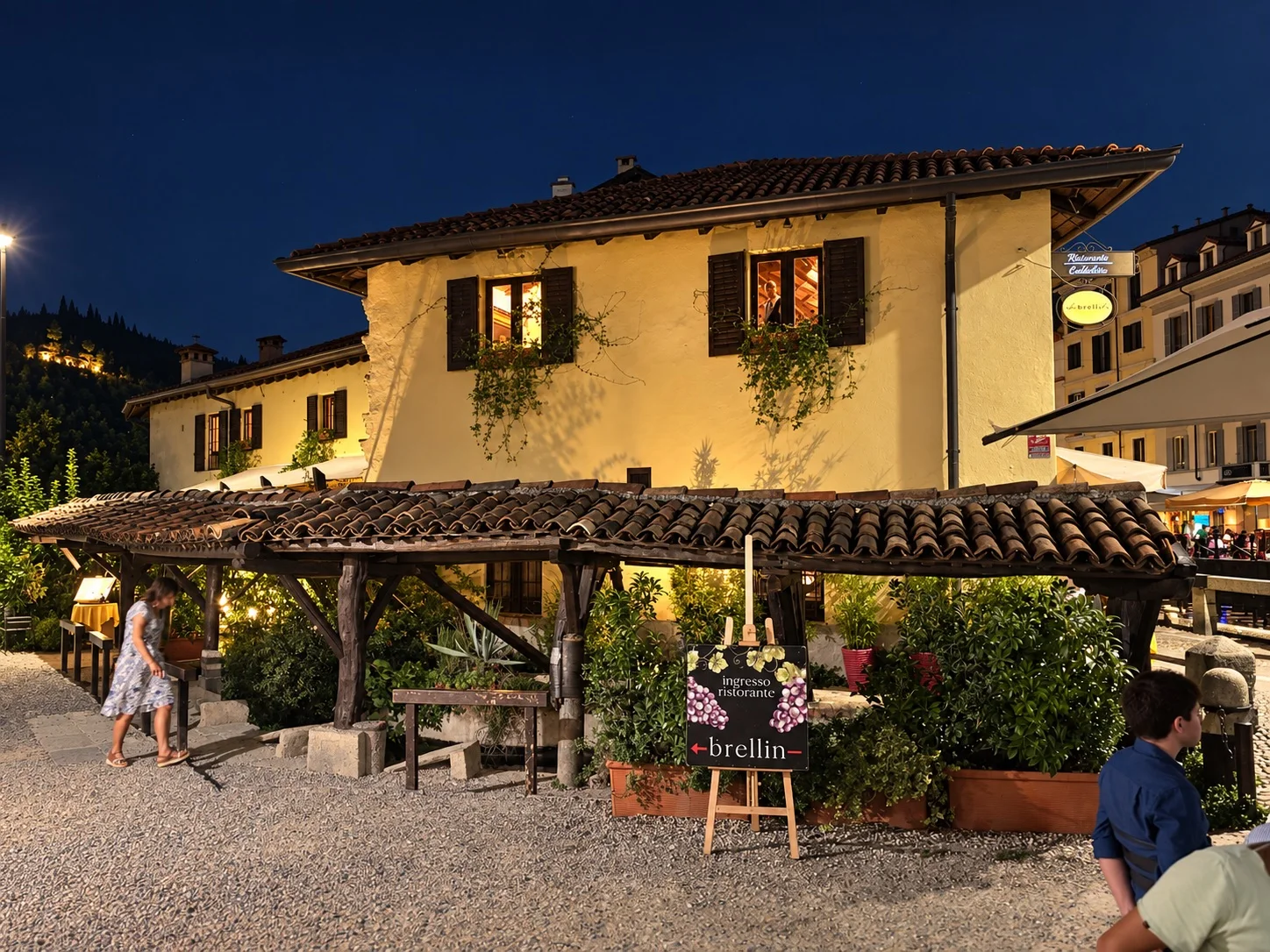
Vicolo dei Lavandai is a small lane just off the Naviglio Grande, with stone wash basins and traces of the canal district’s working past. It takes only a few minutes to see, but it is one of the most distinctive details in Navigli and a useful reminder that the neighbourhood was once shaped by laundry work, trade and industry rather than nightlife.
This is a quick stop, not a separate excursion. Look for it while walking the canal and continue towards the quieter stretch beyond the busiest restaurant terraces.
The Naviglio Pavese has a different mood
The Naviglio Pavese begins at the Darsena and runs south-east. Its atmosphere is generally more informal and youthful, with bars, casual restaurants and a strong evening crowd. It is the better choice if you want drinks, a relaxed meal or a less polished side of the neighbourhood.
We would prioritise the Naviglio Grande for architecture and the Pavese for atmosphere. You do not need to walk a long distance along both canals. A short stretch of each is enough to understand the contrast.
Add the Colonne di San Lorenzo if you have time
The Colonne di San Lorenzo are a short walk from the Darsena along Corso di Porta Ticinese. The ancient Roman columns stand in front of the Basilica of San Lorenzo Maggiore and form one of Milan’s most informal public spaces. In the evening, the area fills with people sitting outside, meeting friends and moving between the bars of Ticinese and Navigli.
This is worth adding if you are walking from the Duomo or want to continue the evening beyond the canals. If your time is limited, however, stay around the Darsena and Naviglio Grande rather than trying to cover every nearby district.
What to do besides walking
- Join a canal boat tour if you would like historical context or want to see the neighbourhood from the water. Availability and departure times vary, so check current schedules before planning around one.
- Browse the independent shops, vintage stores and small galleries along the Naviglio Grande, particularly in the quieter stretches away from the Darsena.
- Visit the monthly antiques market on the last Sunday of the month if your dates coincide. It is popular and crowded, but worthwhile for vintage objects, prints, books and furniture.
- Continue towards Tortona and Via Savona for design studios, showrooms and exhibition spaces. This works best as a separate afternoon, especially during Milan Design Week.
- Use Navigli as the setting for aperitivo rather than trying to fit in too many formal sights. The district is at its most characteristic when the water, tables and evening light become the main event.
Where to eat in Navigli
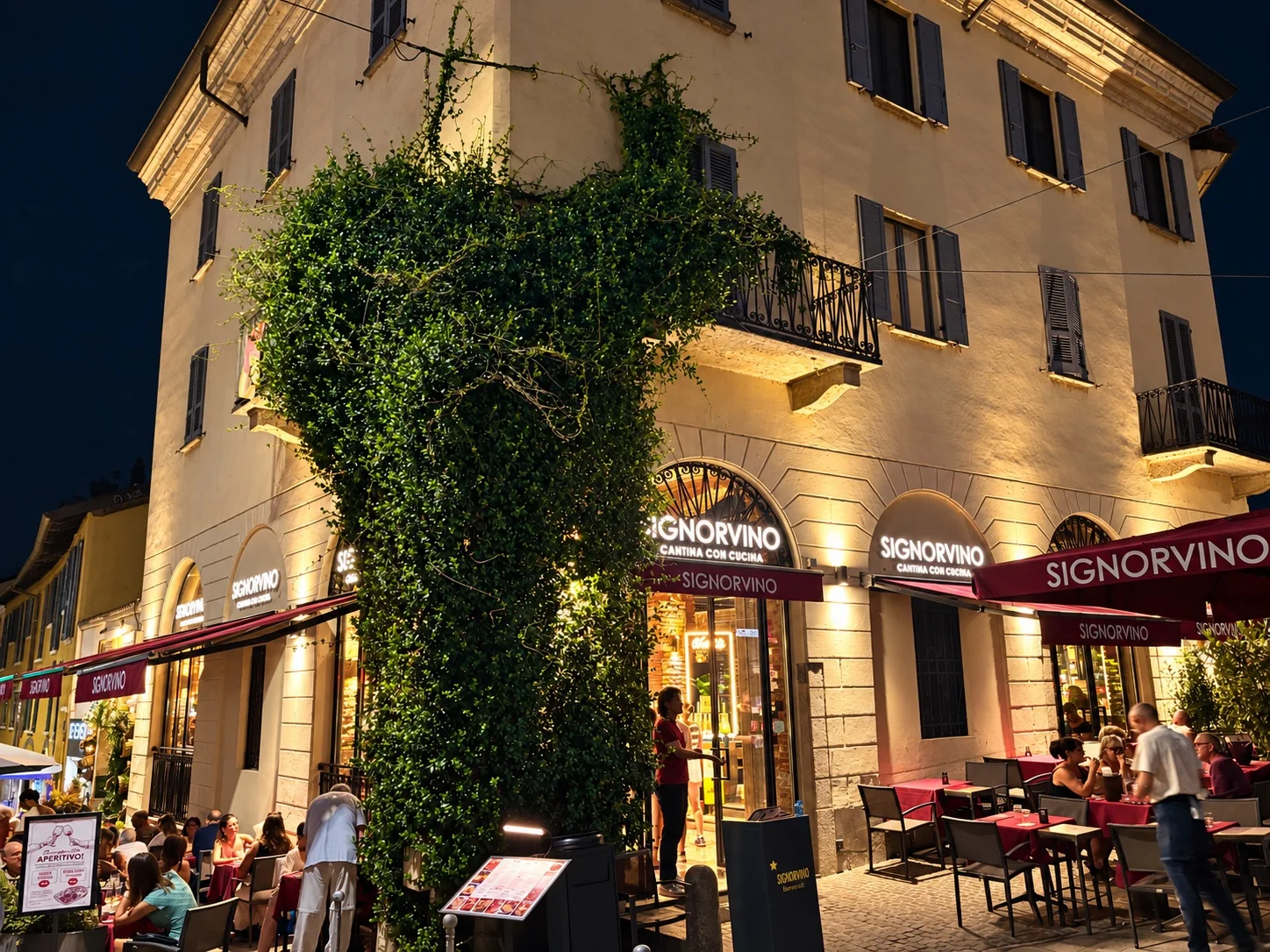
The canals are full of places to eat, but the best choice depends on what kind of evening you want. For the most scenic tables, book ahead and ask about outdoor seating. For a more memorable meal, move one or two streets away from the busiest waterfront rather than choosing the first restaurant with a view.
For contemporary cooking: 28 Posti
28 Posti is the most distinctive option for a serious dinner close to the Naviglio Grande. The intimate restaurant focuses on contemporary cooking, seasonal ingredients, small producers, natural wines and a changing menu. It is a good choice for travellers who want a considered meal rather than a conventional Milanese trattoria.
The room is small and reservations are sensible. This is a destination for dinner, not a casual stop between drinks.
For risotto: Officina del Riso
Officina del Riso is a straightforward choice when you want to make risotto the centre of the meal. The Navigli branch sits directly on the Naviglio Grande and serves variations based on Carnaroli rice, alongside smaller dishes and wine. It is more relaxed than a tasting-menu restaurant and works well for a first Milan dinner when you want something local without too much ceremony.
For Milanese tradition: Osteria del Binari
Osteria del Binari, just beyond the canal area in Tortona, is suited to a longer meal built around Milanese and northern Italian cooking. The setting is more spacious and traditional, with historic rooms and an outdoor area. Choose it for classics such as risotto alla Milanese, ossobuco or cotoletta, and for an evening where food matters more than being directly beside the water.
For drinks and something different: Rita’s Tiki Room
Rita’s Tiki Room is a useful alternative to the standard aperitivo circuit. The Caribbean and Polynesian-inspired bar serves cocktails alongside small plates and Cantonese- and Polynesian-influenced food. The interiors are deliberately theatrical, with bamboo, vegetation and a strong tiki identity. It is best for a late drink or an informal meal when you have already seen the canals and want a change of mood.
When to go
Late afternoon into early evening is the best general timing. Weekday visits are calmer, while Friday and Saturday evenings are the busiest. The last Sunday of the month is particularly lively because of the antiques market. Summer brings longer evenings and more outdoor seating, but also larger crowds and warmer, busier streets.
A few practical notes
- Wear comfortable shoes: the neighbourhood is easy to walk but the most interesting parts are spread along both canals.
- Do not plan Navigli as a quick photo stop. It is best enjoyed with time for a walk, a drink and one proper meal.
- The waterfront becomes loud and crowded at night. If you are travelling with children or prefer quiet streets, visit earlier and eat away from the busiest stretch.
- Book restaurants in advance for Friday and Saturday evenings, especially for small restaurants such as 28 Posti.
- Check current opening hours, transport changes and boat-tour availability before you go. These details can change seasonally.