Sofia is easiest to understand on foot. Within a relatively small central area, the city moves from Roman foundations to medieval churches, Ottoman-era religious buildings, late nineteenth-century national institutions and the broad, formal architecture of socialist Bulgaria. These layers are not arranged in a neat historical sequence. They overlap, interrupt one another and occasionally appear in the same view: a fourth-century rotunda behind a government building, Roman paving beneath a modern square, a mosque beside a market hall and a cathedral rising beyond the remnants of an ancient city.
That unevenness is part of Sofia’s appeal. The city centre is not a preserved museum district, and some of its most interesting places are easy to miss. Sofia suits travellers who like to look twice: at the paving underfoot, at the scale of a square, at the building behind the obvious landmark. Give it two full days for the central layers, and a third if you want to add Boyana Church or spend time in the city’s museums and parks.
Best for: travellers interested in history, architecture, religious art and cities with a visible past.
How long we’d stay: two full days for the centre; three days if including Boyana Church and more of Sofia’s museums.
What we’d prioritise: the Serdica ruins, the St George Rotunda, St Sofia Basilica, the Largo, Alexander Nevsky Cathedral and the cluster of religious buildings around the Central Market Hall.
Worth knowing: Sofia’s history is most legible as a walk, not a checklist. Leave time to move slowly between major sights.
Begin beneath the modern city: ancient Serdica
The best place to start is the archaeological complex around Serdika metro station. Ancient Serdica was the Roman city that occupied the centre of present-day Sofia, developing around mineral springs and an important crossroads. Roman streets, defensive walls, residential buildings and public structures have been uncovered beneath and around the modern centre.
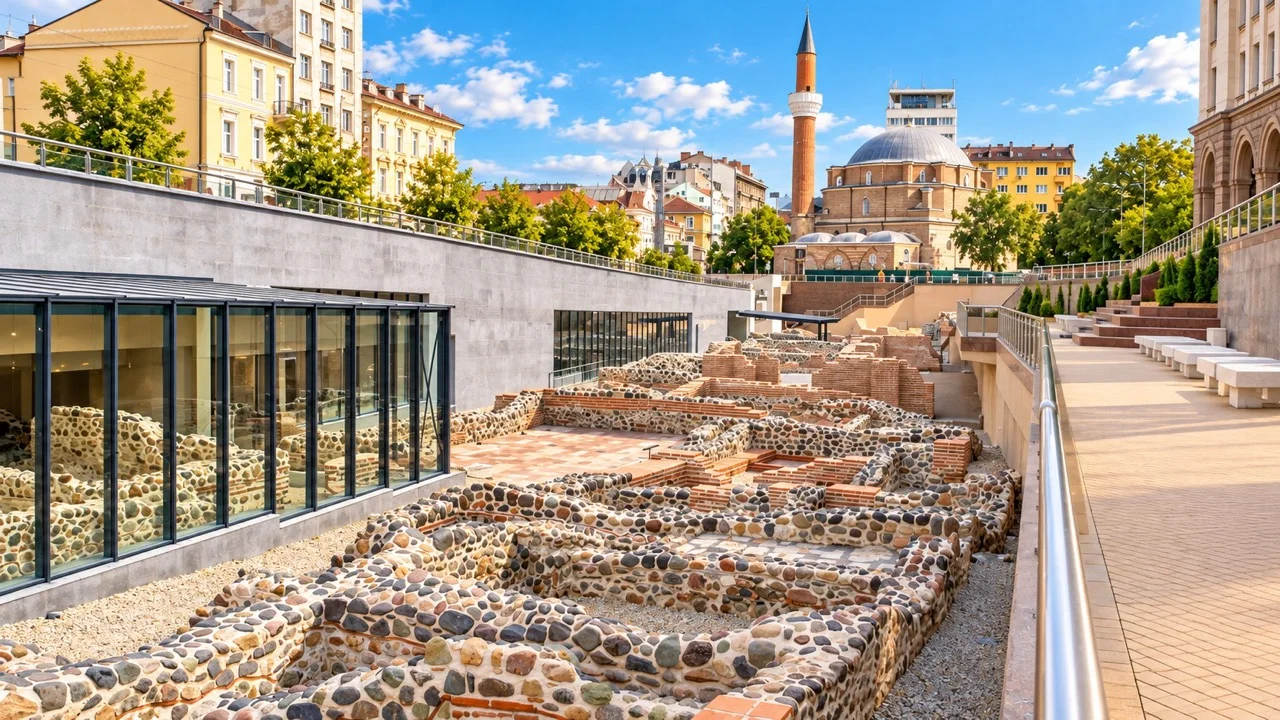
The excavations are especially striking because they are not separated from daily life. People hurry through the metro station, cross between the Presidency and the Council of Ministers, and pass above streets that belonged to a city nearly two thousand years ago. The remains do not feel staged. They are part of Sofia’s current circulation system.
Allow around an hour to walk through the archaeological area and read the displays, then continue towards the Largo. The site is more rewarding when understood as part of a larger urban plan rather than as a collection of isolated ruins. Look for the old street lines, the scale of the fortress and the way the archaeological remains sit beneath the monumental twentieth-century centre.
The St George Rotunda and the city’s oldest surviving centre
The red-brick Church of St George, usually known as the Rotunda, is one of Sofia’s most revealing buildings. It dates from the Roman period and is widely regarded as the oldest surviving building in the city. Its circular form and ancient brickwork are easy to overlook because it stands in a courtyard surrounded by much larger and newer structures.
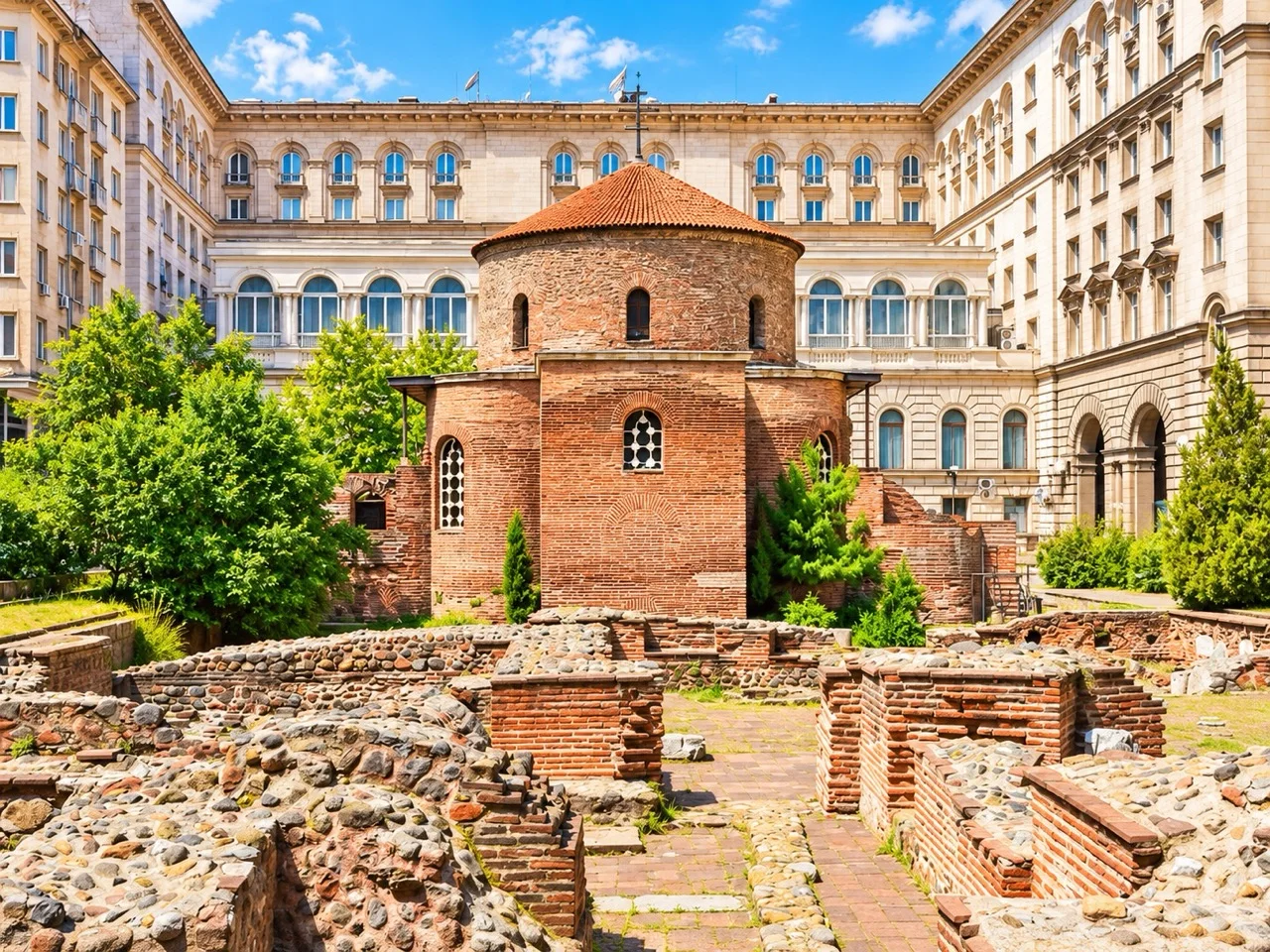
Inside, successive layers of frescoes reflect the building’s long religious history. The structure was used as a church, later adapted as a mosque during the Ottoman period, and returned to Christian use after Bulgaria’s liberation. Outside, archaeological remains extend around the rotunda, including traces of the Roman quarter that once occupied this part of Serdica.
This is one of the few places in Sofia where the city’s layers can be read almost vertically. Roman masonry sits beside medieval and Ottoman history, while the surrounding government complex belongs to a very different political era. The contrast is more useful than any attempt to smooth the story into a single architectural style.
St Sofia Basilica and the Christian city beneath it
A short walk north brings you to St Sofia Basilica, the church that gave the city its modern name. The present building dates principally from the sixth century, although the site contains evidence of earlier churches and an extensive ancient necropolis. The church’s plain brick exterior is quieter than the grander Orthodox buildings nearby, which is precisely why it deserves attention.
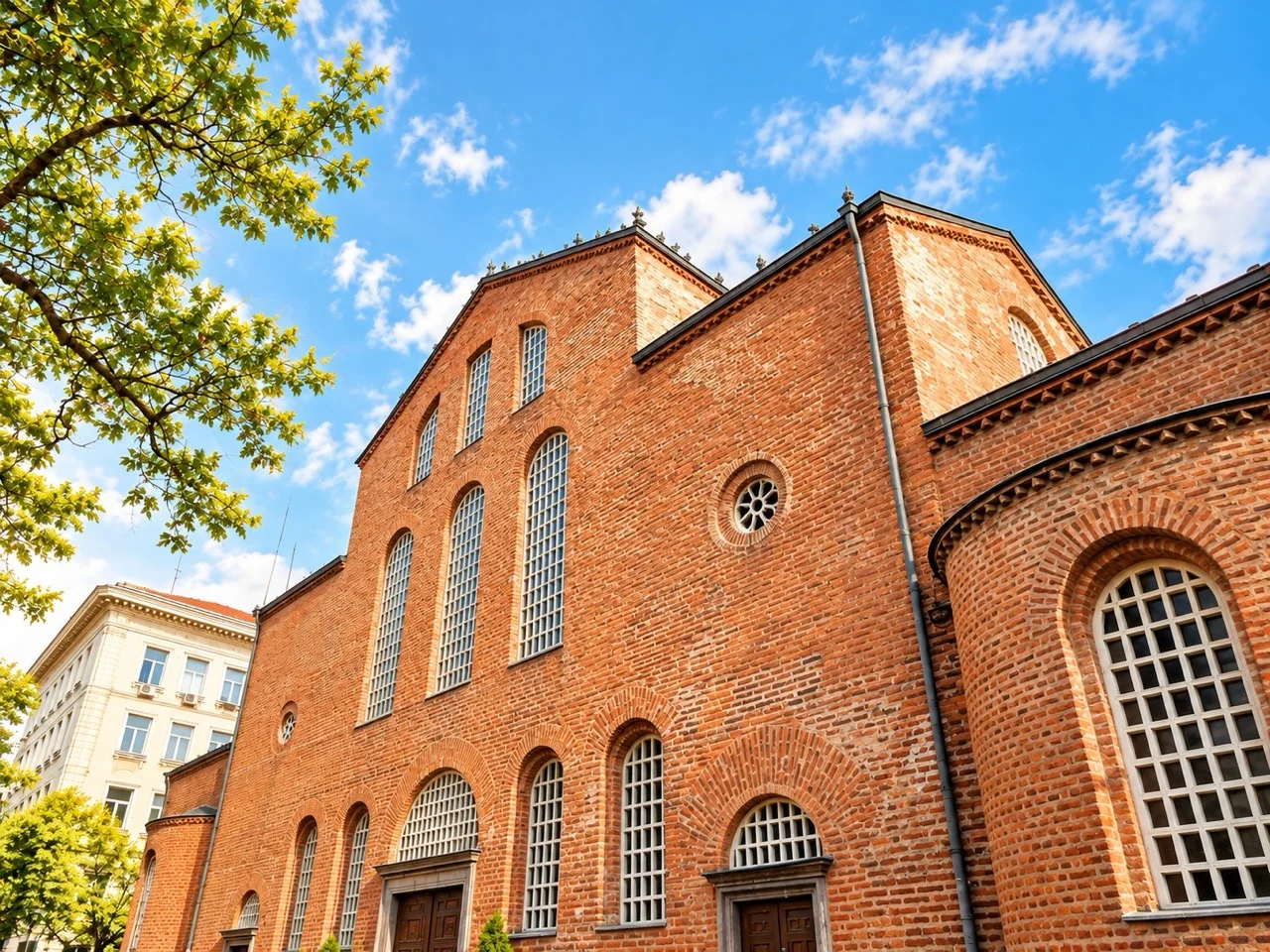
Beneath the basilica, an archaeological museum presents tombs, fragments and remains from ancient Serdica. The underground spaces make the history feel physical rather than theoretical: the city’s Christian past is not only represented in the church above, but preserved in the ground below it.
St Sofia is worth seeing before Alexander Nevsky Cathedral. Its scale is intimate, its history unusually deep and its position helps explain why this area remained central through successive versions of the city. The square outside also offers a useful pause from Sofia’s larger monuments.
The Orthodox skyline: Alexander Nevsky and the churches around it
Alexander Nevsky Cathedral is Sofia’s most recognisable landmark and one of the city’s defining symbols. Its domes, pale stone and richly decorated interior give it a ceremonial presence that is difficult to miss. The cathedral was built in the late nineteenth and early twentieth centuries as a memorial to Russian soldiers who died during the Russo-Turkish War, a reminder that Bulgaria’s national identity was being formed alongside its new capital.
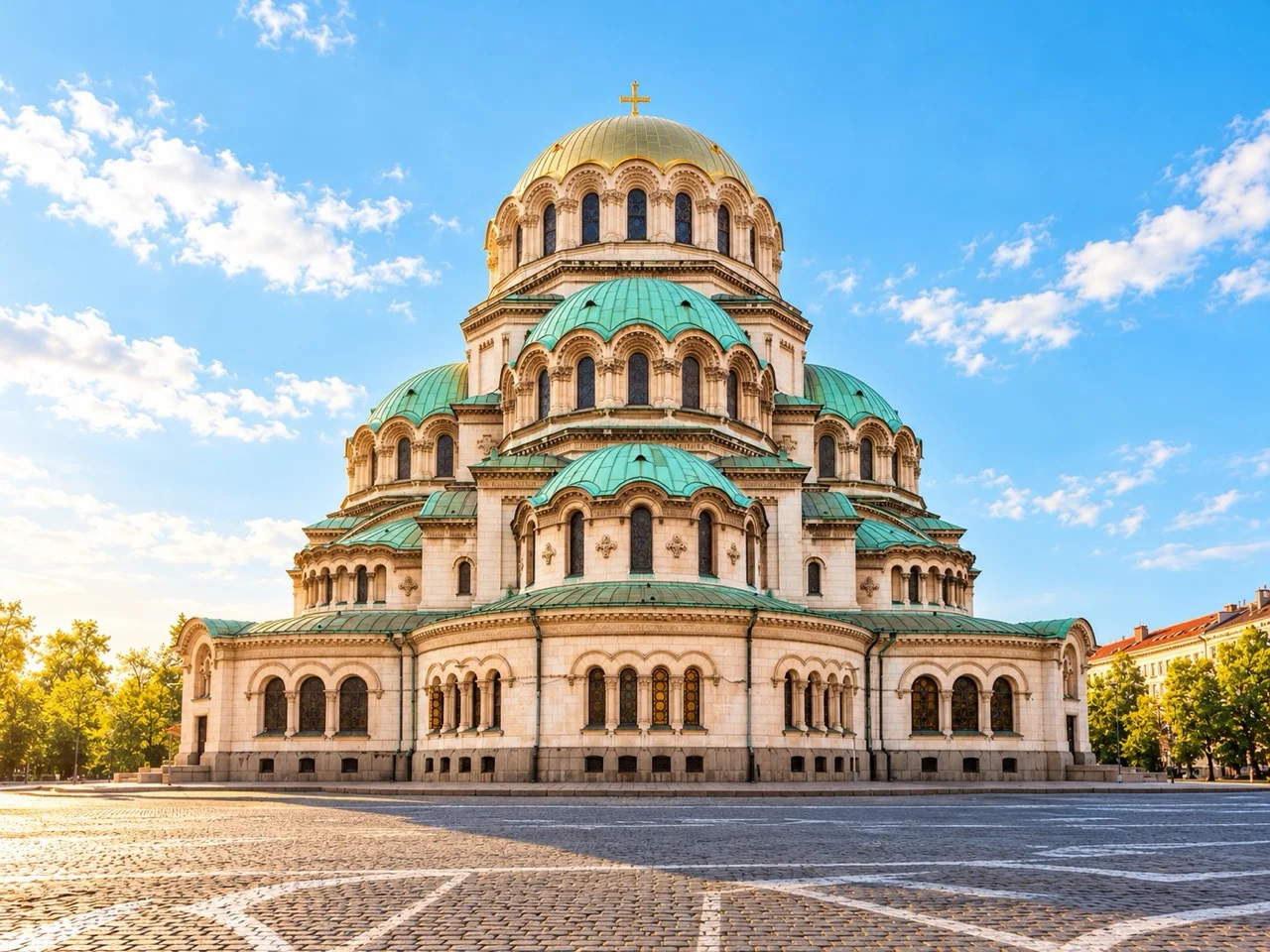
The interior is worth entering for the icons, mosaics and sense of scale, although the exterior and surrounding square are the more memorable parts of the experience. Visit early if you want a quieter look. At busier times, the building becomes more difficult to appreciate as a place of worship rather than a backdrop for photographs.
The cathedral should be treated as the centre of a wider walk. Nearby are St Sofia Basilica, the Russian Church of St Nicholas, the National Assembly and the former royal palace, now associated with the National Art Gallery and the National Ethnographic Museum. The area shows how Sofia changed rapidly after becoming the capital of the restored Bulgarian state in 1879, adopting a more European civic identity while retaining its Orthodox traditions.
The Ottoman layer is quieter, but still visible
Sofia was part of the Ottoman Empire for several centuries, and the period is present in the city centre even though relatively little of the Ottoman urban fabric survives intact. The Banya Bashi Mosque is the clearest surviving landmark. Built in the sixteenth century, it stands near the Central Mineral Baths and the former market area, close to the mineral springs that helped shape the city from its earliest settlement.
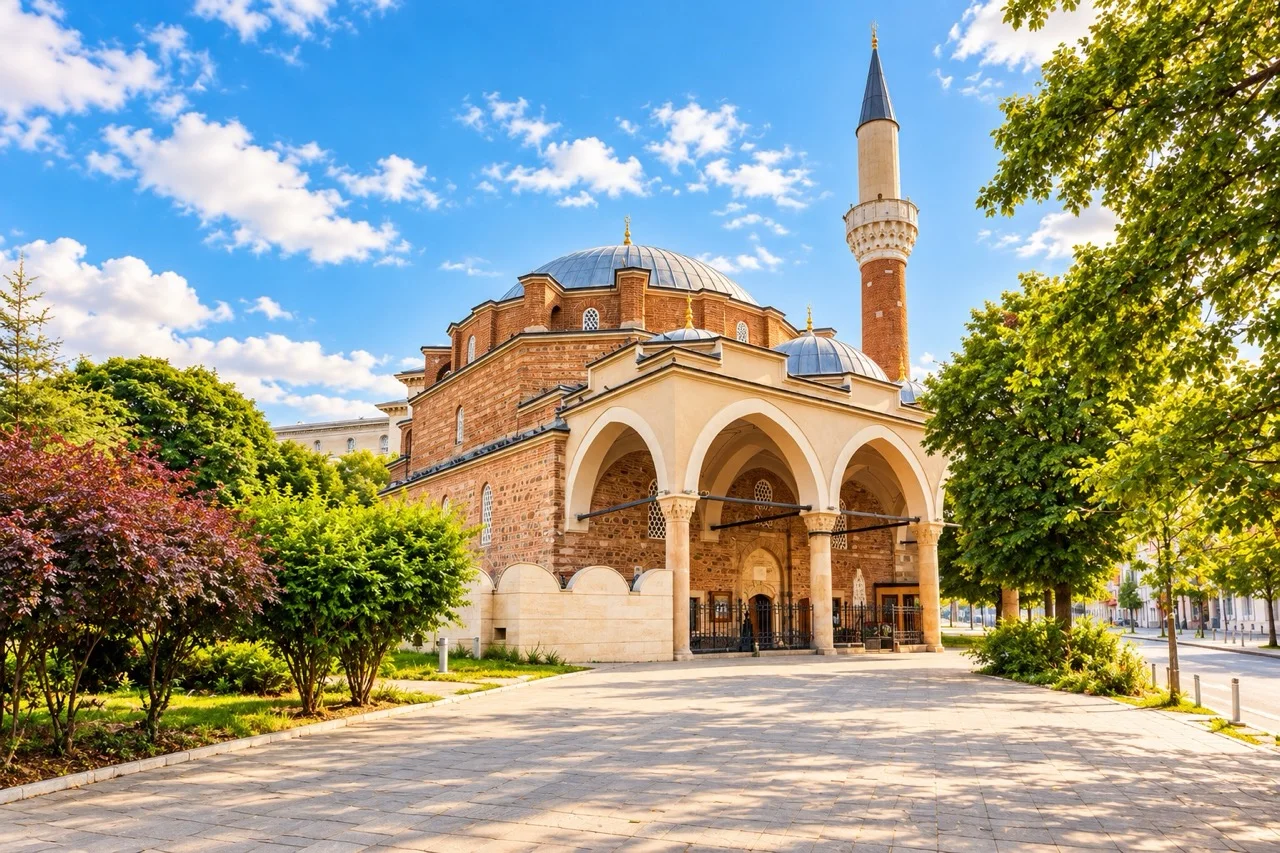
The mosque is associated with the Ottoman architect Mimar Sinan and remains an active place of worship. Its dome and minaret give this part of the centre a different visual rhythm from the Orthodox churches nearby. Visitors should be respectful of prayer times and current access arrangements.
The Central Market Hall and the Sofia Synagogue add further texture to the same walk. Together with the mosque, the Catholic Cathedral of St Joseph and the Orthodox churches around the Largo, they make one of the most concentrated expressions of Sofia’s religious and cultural diversity. The buildings are not identical in age or scale, but their proximity is what matters.
This is also where Sofia’s mineral-water history becomes visible. The former Central Mineral Baths now houses the Regional History Museum, whose collections provide a useful introduction to the city. It is a better use of time than treating the surrounding monuments as disconnected photo stops.
The Largo: socialist classicism in the heart of Sofia
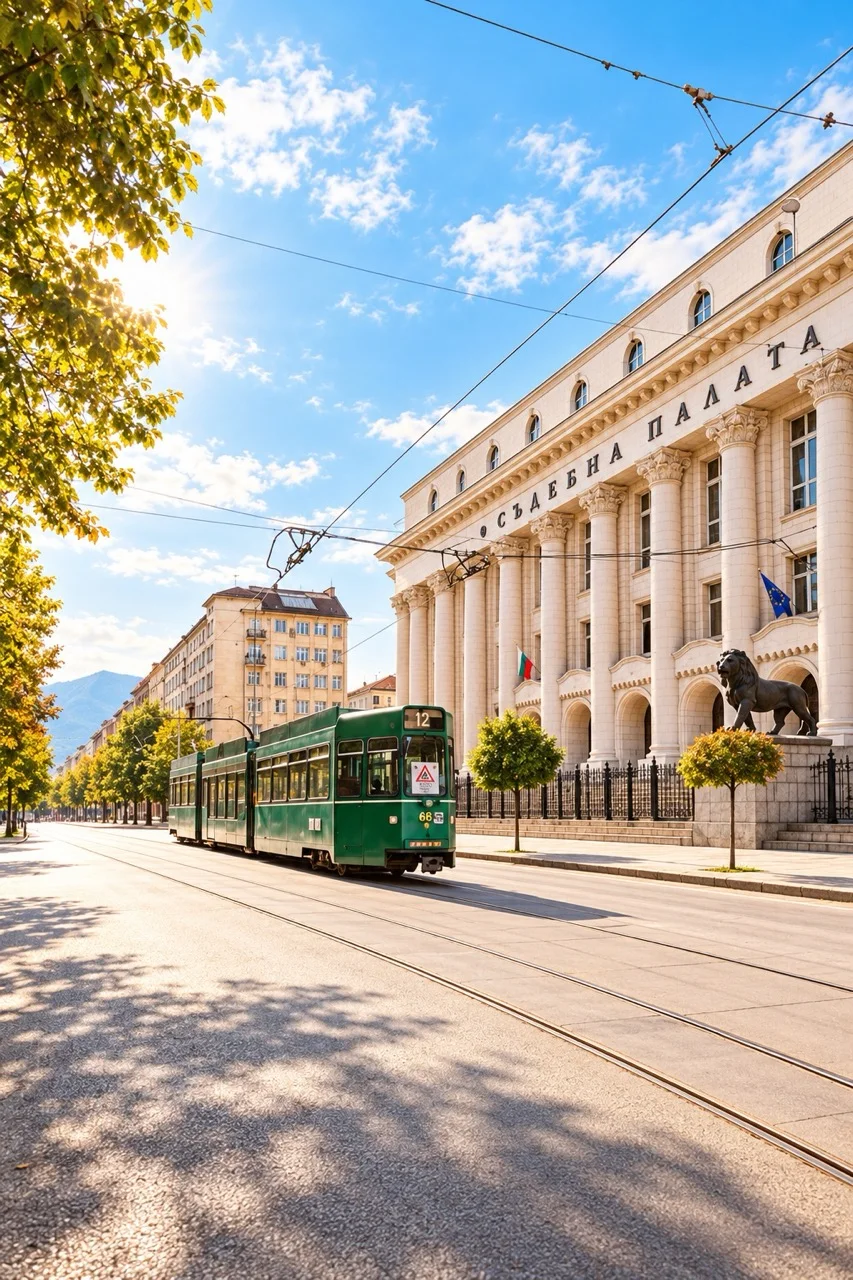
The Largo is the clearest expression of socialist Sofia. Built largely in the 1950s after the destruction and upheaval of the Second World War, the ensemble was designed as a new administrative centre. The broad square is framed by monumental buildings including the former Communist Party headquarters, the Council of Ministers and the Presidency.
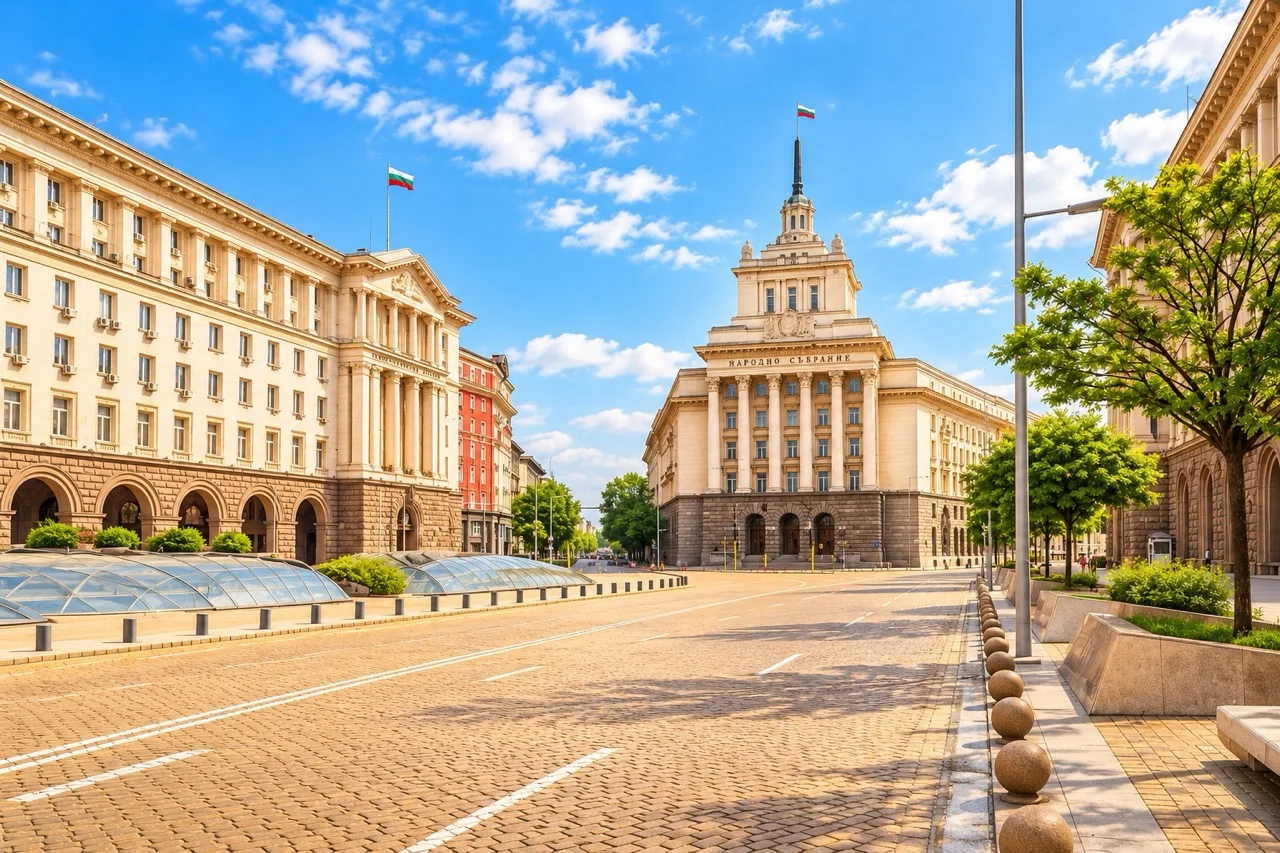
Its architecture is formal, symmetrical and deliberately imposing. The scale was intended to communicate order and state power, and the effect remains visible even though the political symbols have changed. The former Party headquarters now forms part of Bulgaria’s National Assembly complex, while the area continues to serve as a centre of government.
The Largo is most interesting when viewed alongside the Roman ruins below it. The contrast is not subtle: ancient paving and fortress walls sit beneath a twentieth-century vision of the capital. Sofia’s layers do not always harmonise, but the tension gives the centre its character.
Do not expect a separate socialist district with a tidy route through it. The architecture is spread through the centre, and some of the most revealing examples are encountered between major sights. Look at the proportions of the buildings, the width of the public spaces and the relationship between government, commerce and transport.
A short detour for medieval painting: Boyana Church
Boyana Church lies outside the compact central walking route, at the foot of Vitosha Mountain. The small medieval Orthodox church is a UNESCO World Heritage site, best known for its frescoes from 1259. The paintings are celebrated for their expressive faces, careful detail and unusually sophisticated treatment of human character for the period.
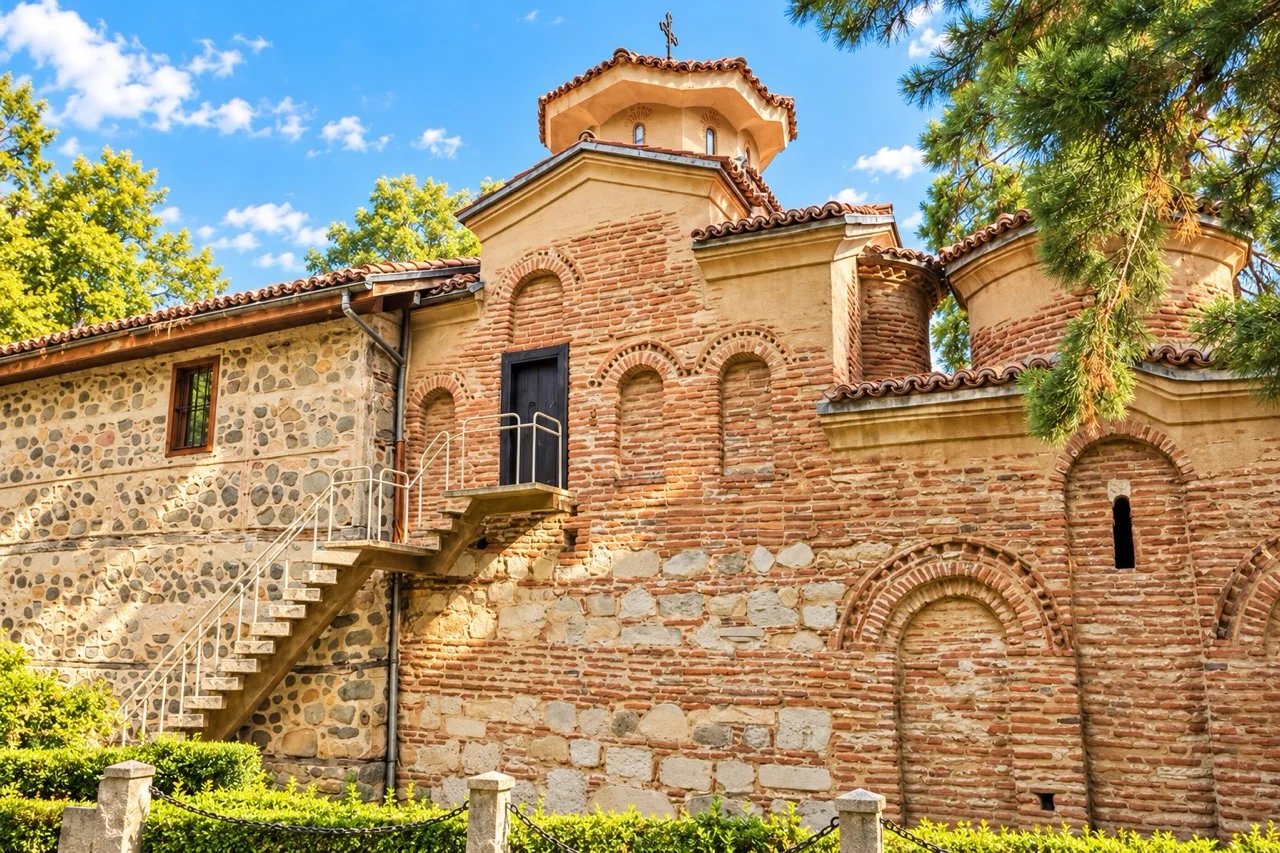
Boyana is worth the detour if medieval art is central to your interests, or if you have three days in Sofia and want to see how the city’s history extends beyond the central monuments. It is less essential on a short first visit than the Serdica complex and the churches within the centre, especially because the visit requires separate transport planning and access may be managed in timed groups.
The church is small, and the visit itself is not long. The value lies in the quality of the frescoes, the survival of the building and the setting near Vitosha. Combine it with time on the mountain only if conditions and transport make the plan comfortable; trying to fit both into a rushed half-day would weaken the experience.
How to read Sofia in two days
On the first morning, begin at the Serdica archaeological complex and walk towards the St George Rotunda. Continue to St Sofia Basilica, then spend time around Alexander Nevsky Cathedral and the nearby churches. This gives you the Roman, early Christian and national-revival layers before the centre becomes busiest.
Use the afternoon for the Largo, the Central Mineral Baths and the cluster around Banya Bashi Mosque, the Central Market Hall and the Sofia Synagogue. The route is short, but the buildings deserve pauses. If you prefer museums to interiors, choose one carefully rather than attempting several in succession.
On the second day, return to the places that interested you most. Sofia is better with some repetition: the Rotunda looks different when approached from the surrounding government buildings, and the Largo makes more sense after seeing the Roman remains below it. Add Boyana Church if medieval art is a priority, or choose the National Art Gallery, the Regional History Museum or a slower walk through the city’s parks.
Practical notes for a more rewarding visit
- Wear comfortable shoes. Much of the centre is easy to cover on foot, but the route includes uneven paving and long periods of standing.
- Check current opening hours and visitor arrangements before entering churches, museums and Boyana Church. Religious buildings may restrict access during services.
- Allow more time for the archaeological sites than their size suggests. Their meaning becomes clearer when read alongside the surrounding streets and buildings.
- Dress respectfully when visiting active churches and the Banya Bashi Mosque. Covering shoulders and knees may be expected.
- Do not treat the Largo as an isolated architectural attraction. Pair it with the Serdica ruins to understand how the socialist centre was built over the older city.
- If you have limited time, prioritise the central layers. Boyana Church is excellent, but it is a separate excursion rather than a quick addition to a walking tour.
Sofia’s history is rarely presented in a single, polished view. It appears in fragments: a Roman road under the metro, a rotunda hidden behind government offices, a mosque beside the market, a basilica beneath the name of the city and a cathedral built to express a modern nation. That is why the Bulgarian capital deserves more than a hurried day between other destinations. Its story is close at hand, and the pleasure lies in learning how to see it.