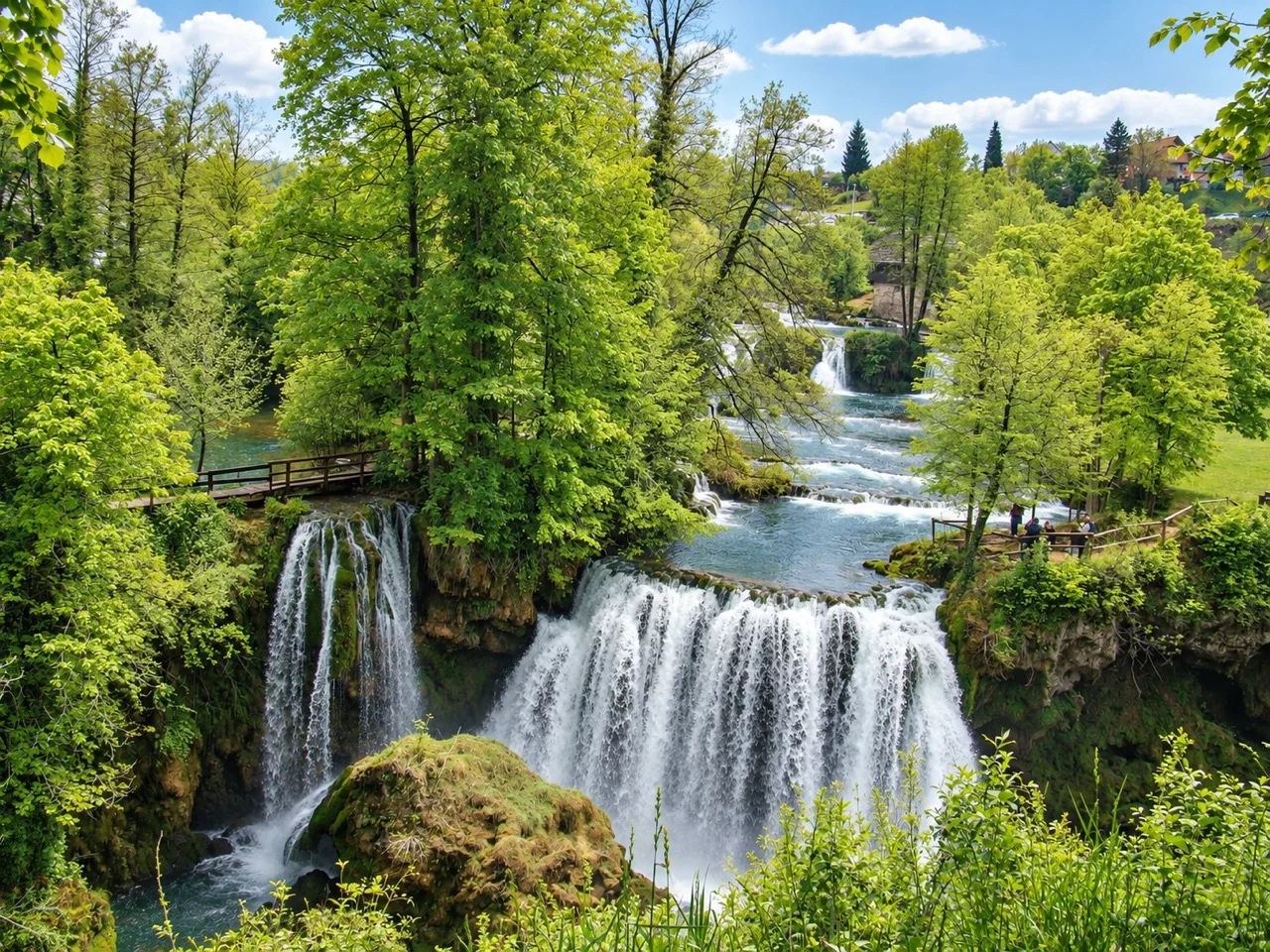
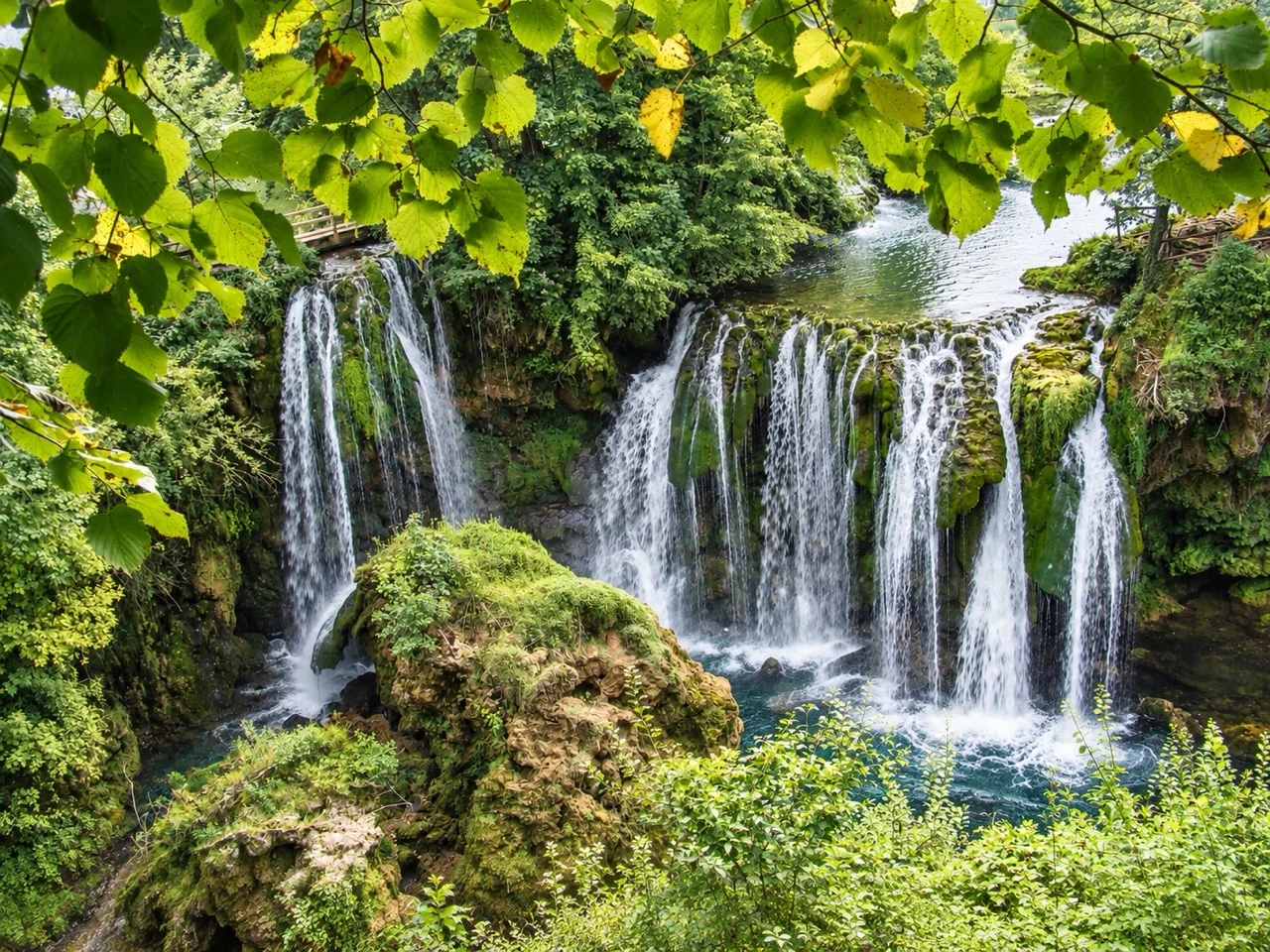
Rastoke is the kind of place that earns a place in a Croatia itinerary without demanding an entire day. At the edge of Slunj, the Slunjčica River runs over travertine barriers and drops into the Korana through a concentrated landscape of waterfalls, wooden bridges and old water mills. The setting is small, atmospheric and easy to explore on foot. Come for the water, stay long enough to understand how closely the village grew around it.
Best for: a scenic half-day, travellers interested in nature and traditional architecture, and anyone driving between Zagreb, Plitvice and the Croatian coast.
How long we'd stay: two to four hours for the main walk; longer if you want lunch, a quieter riverside pause or time in Slunj.
What we'd prioritise: the circular walk through the waterfalls and mills, followed by a simple meal or coffee near the water.
Our take: Rastoke is not a smaller version of Plitvice Lakes. It has a different character — more intimate, more inhabited and more closely tied to local history.
A village shaped by water
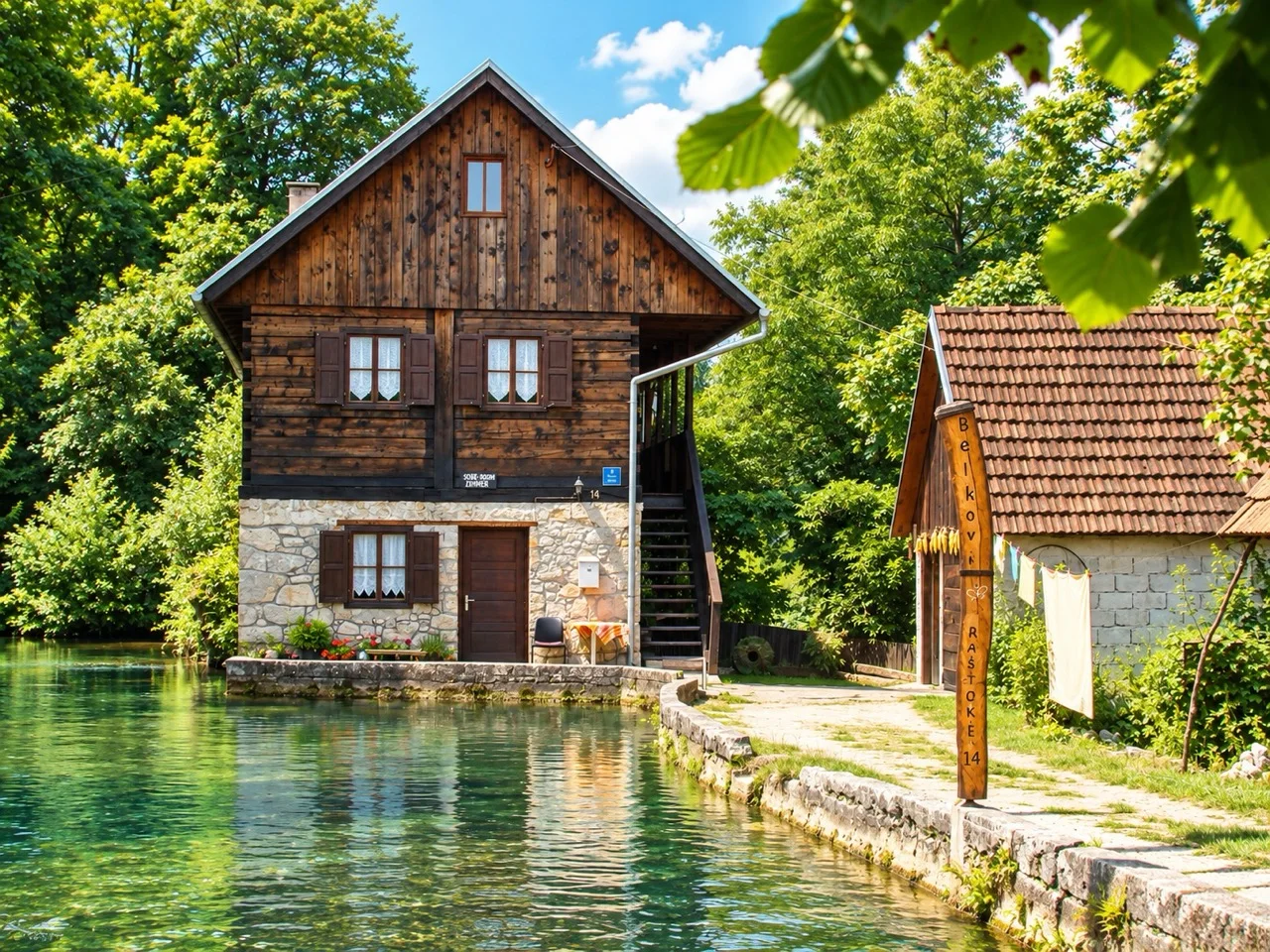
The name Rastoke refers to the way the Slunjčica spreads and breaks apart before meeting the Korana. Over the years, its flow created a network of small falls, channels and pools. People adapted to that landscape by building houses and mills directly beside the water, using the current to power wooden mill wheels and grind grain.
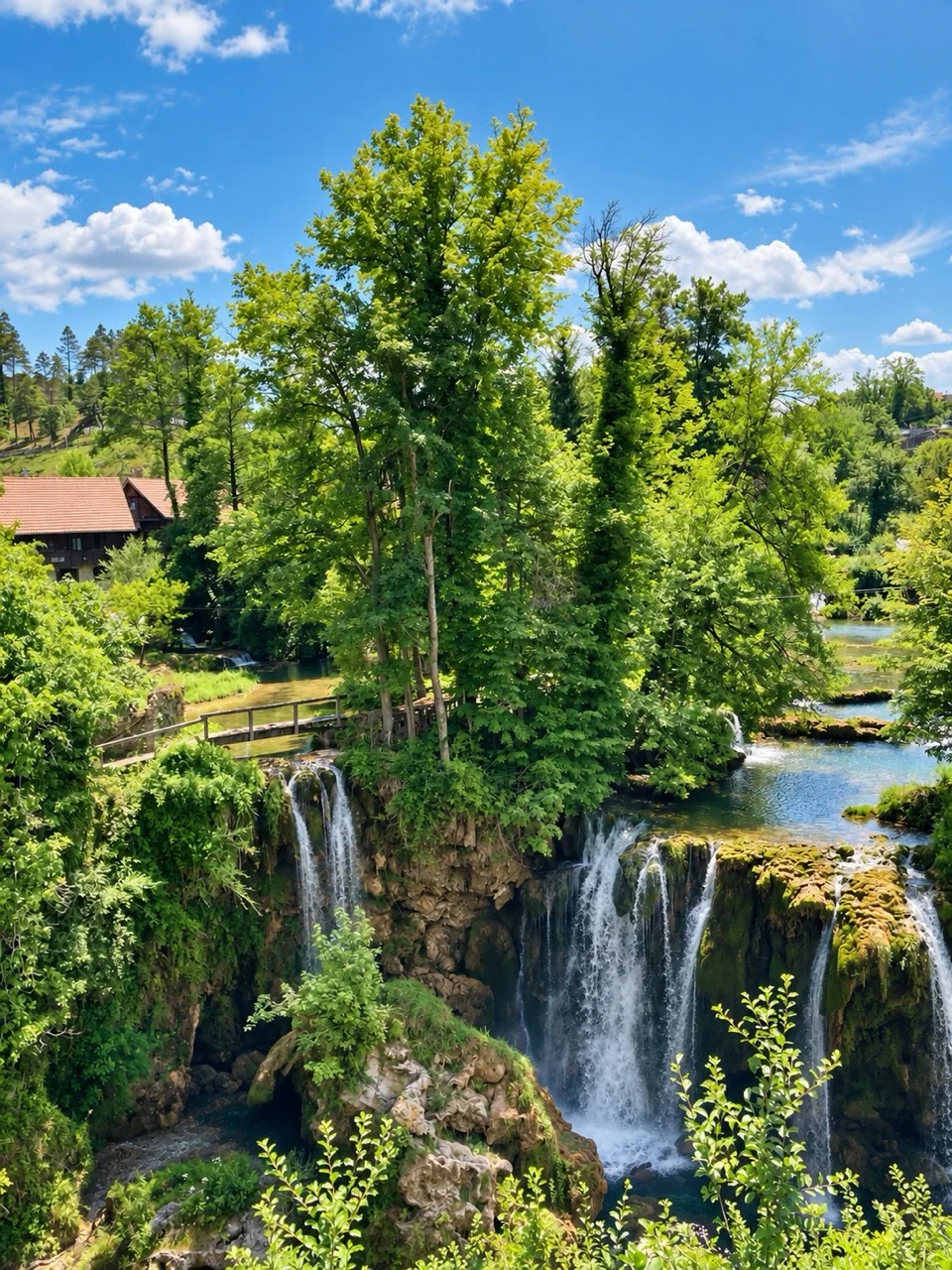
That relationship between river and settlement is what makes Rastoke distinctive. The mills are not isolated museum pieces placed beside a natural attraction. They belong to the landscape. Some are part of private properties, while others can be visited as working or historic sites. The result feels more like a small living settlement than a formal open-air museum.
The walk through the waterfalls
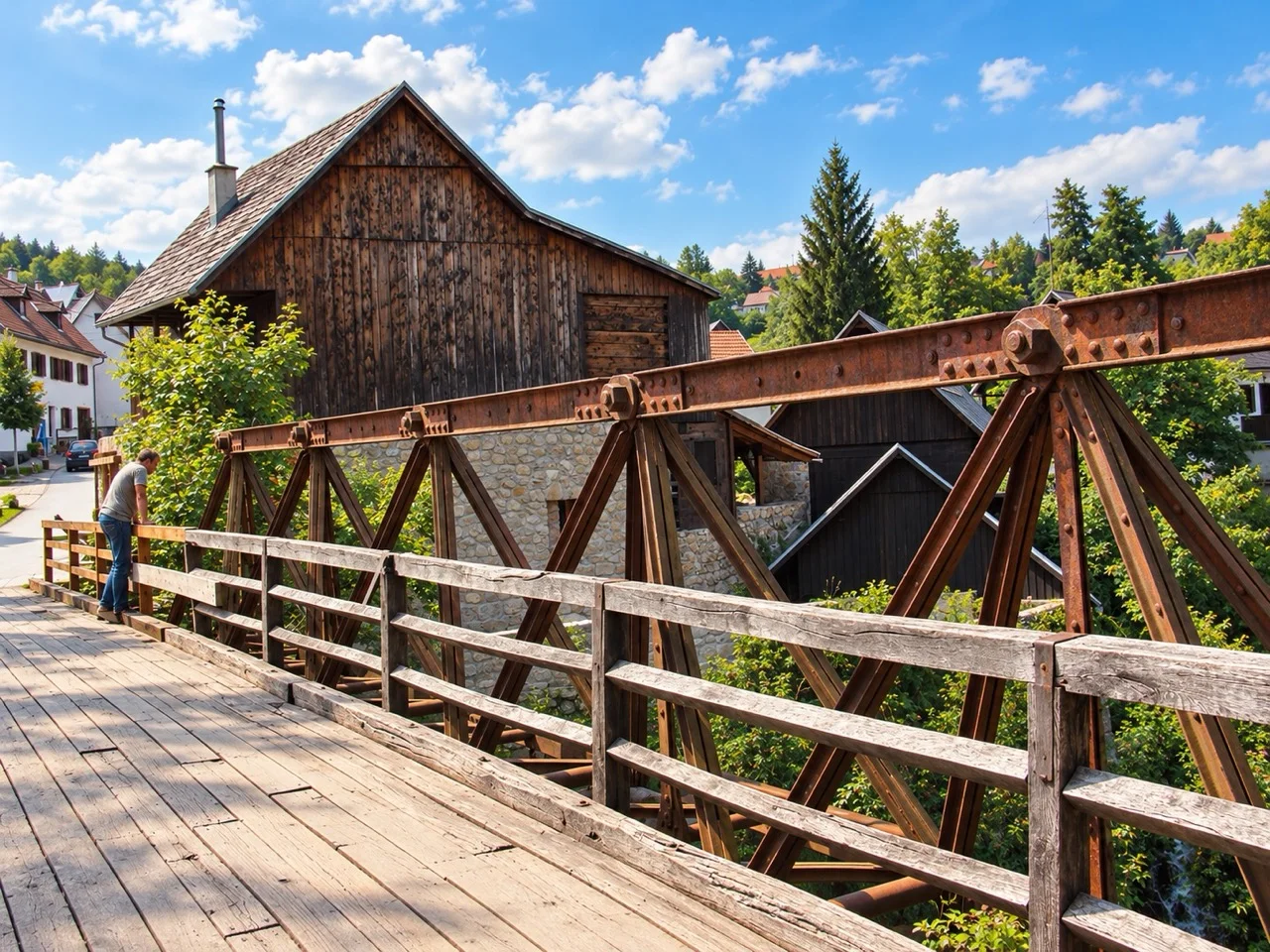
The central visit is a short walking route through the protected area. The circular promenade is around 2.5 kilometres, although the time it takes depends on how often you stop at the viewpoints, bridges and riverside corners. The paths pass close to the cascades, with wooden houses and mill buildings appearing between the trees.
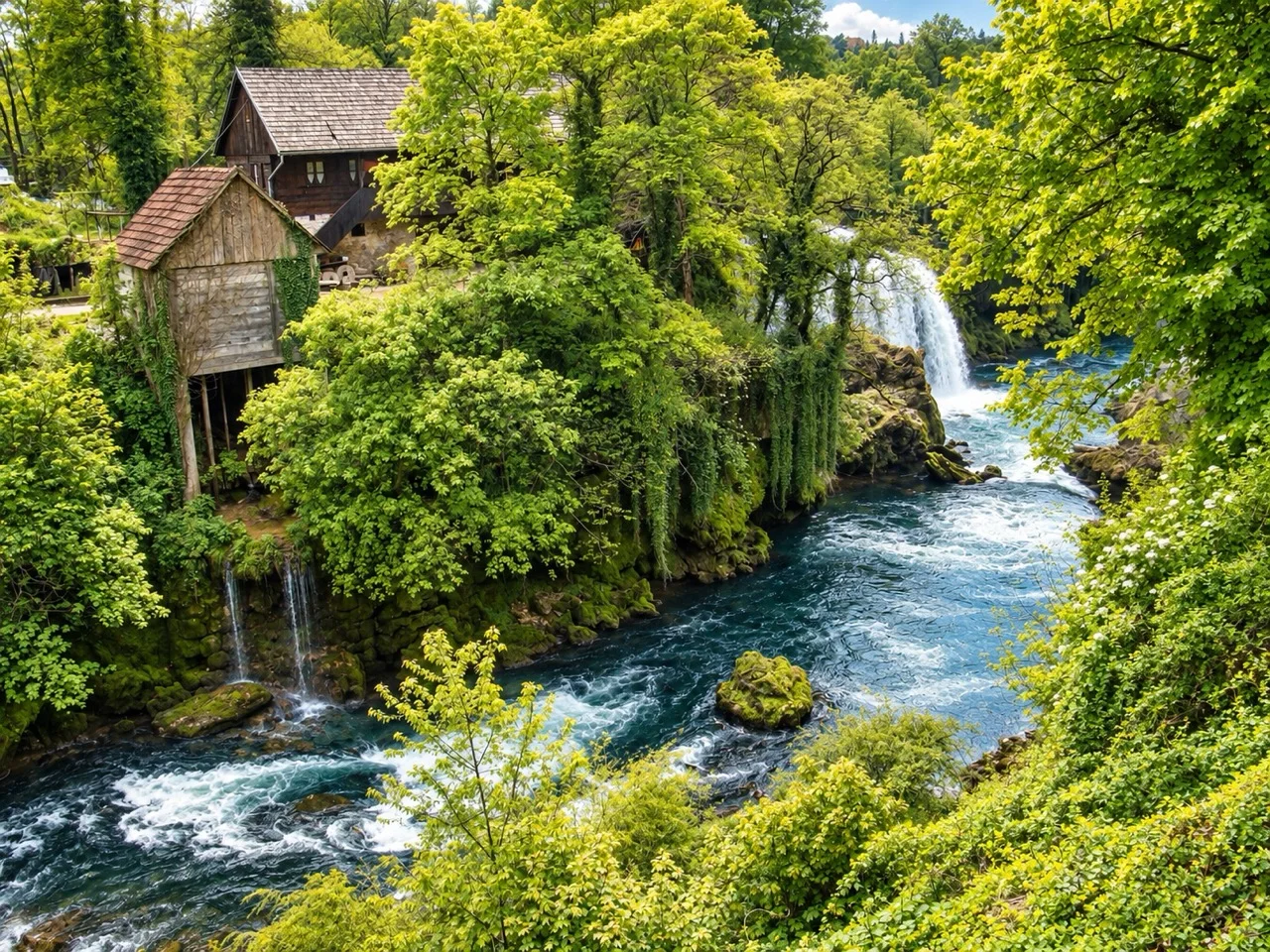
There is no need to hurry. Rastoke is most enjoyable when treated as a landscape walk rather than a checklist of viewpoints. Listen for the change in the water as it moves from narrow channels to wider falls, and look at how the houses sit above the river. After rain or during spring, the flow can be particularly impressive; in drier periods, the village has a gentler, more delicate atmosphere.
- Allow time for the main circular route rather than stopping only at the first viewpoint.
- Wear shoes with a secure sole. Paths and bridges may be damp, and the terrain is uneven in places.
- Stay behind barriers and away from the river edge. The falls and wet rocks are more hazardous than they appear.
- Bring a light waterproof layer if you plan to linger near the larger cascades.
The water mills are the reason to look closer
The waterfalls are immediately photogenic, but the mills give Rastoke its sense of place. Traditional mills once supported the local economy, and the movement of the river determined where they could be built. Their simple mechanisms are a reminder that the landscape was useful as well as beautiful.
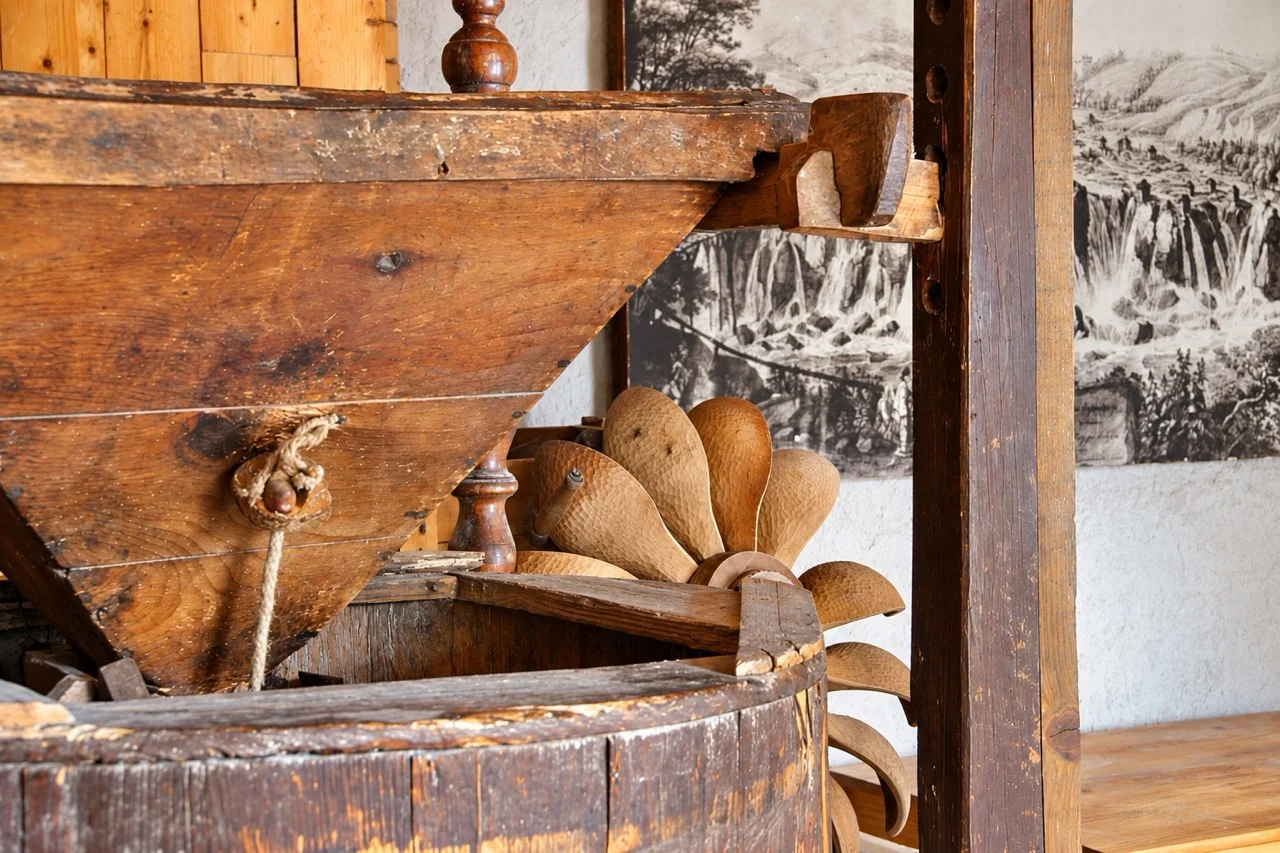
If a mill is open during your visit, it is worth choosing a guided explanation or demonstration over a quick photograph. The details — the millstones, wooden channels and practical ingenuity — make the village easier to understand. The Jareb family mill is one of the places highlighted by the local tourist board for visitors interested in seeing the milling tradition more closely, although access and demonstrations may vary.
When to visit
Rastoke works throughout the year, but each season changes the balance between water and vegetation. Spring usually brings fuller cascades and fresh green growth. Summer is easier for combining the visit with a longer day outdoors, though the paths can be busier. Autumn adds colour around the river and a quieter feel. Winter can be atmospheric, especially after cold weather, but conditions may be slippery and some visitor facilities may operate seasonally.
For a calmer visit, arrive early or later in the afternoon. The village is a popular stop on routes towards Plitvice Lakes, so the middle of the day tends to be the least peaceful. If photography matters, soft morning or late-afternoon light is generally more flattering than strong midday sun.
Is Rastoke worth visiting with Plitvice?
Yes, provided you understand that the two places offer different experiences. Plitvice is the larger, more formal national park, with extensive lakes, boardwalks and a full-day scale. Rastoke is compact and inhabited. Its appeal lies in the combination of waterfalls, mills, homes and local history.
If you have only a few hours, Rastoke is easier to fit into a driving itinerary. It is also a better choice for travellers who prefer a place they can understand without committing to a long trail. If you already plan to visit Plitvice, Rastoke makes a worthwhile addition when your route passes nearby. We would not treat it as a substitute for the national park, but we would gladly make the detour for the change of scale and atmosphere.
Food and a pause by the river
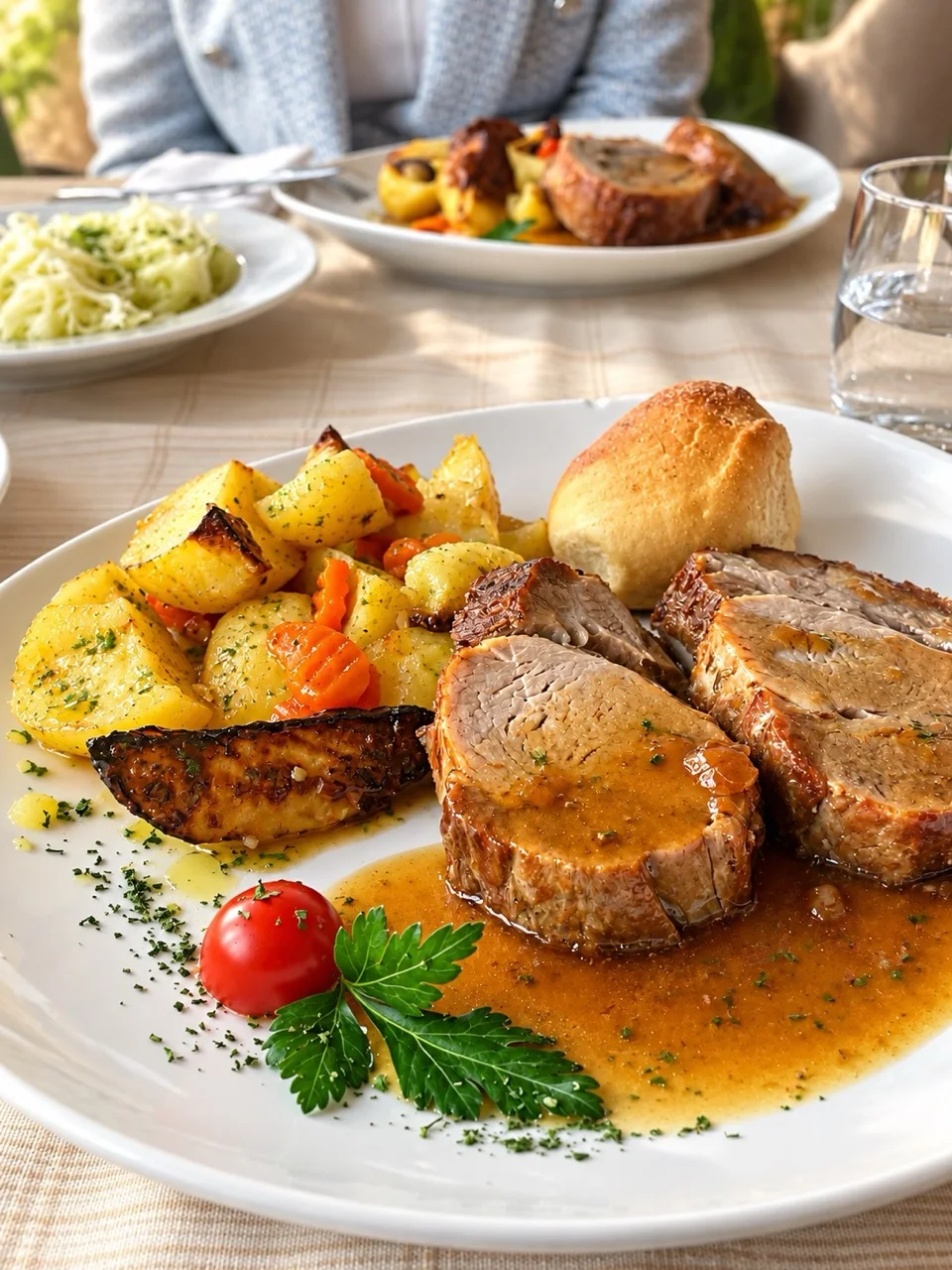
Rastoke is a natural place to stop for lunch rather than trying to combine the walk with a rushed meal elsewhere. Local restaurants and terraces commonly focus on straightforward regional cooking, including freshwater fish such as trout, grilled meat and seasonal dishes. Standards and opening times can change, so it is sensible to check current options before setting out, particularly outside the main summer season.
The best pause is a simple one: sit close enough to hear the water, order something unhurried and allow the landscape to do the work. This is not a destination that needs a long list of activities added to it.
Practical notes
- Rastoke is part of Slunj in Karlovac County, in central Croatia.
- It is most convenient to visit by car, especially when combining it with Slunj, Plitvice Lakes or an overland route through the interior.
- The area includes private homes and properties, so visitors should remain on marked paths and respect residential spaces.
- Some parts of the main sightseeing area require an entry ticket. Ticketing, access arrangements and opening hours can change, so check the official Rastoke or Slunj tourist information websites before travelling.
- The walking route includes bridges, steps and uneven surfaces. It is not an ideal stop for anyone needing completely level, step-free access.
- Swimming, climbing on barriers and approaching the river edge are unsafe and may be prohibited in managed areas.
How much time do you need?
Two hours is enough for the main walk if you are moving steadily and taking only a few photographs. Three or four hours gives the visit a better rhythm: time for the route, a mill or interpretive stop, and lunch or coffee beside the water.
An overnight stay is only necessary if you want to slow down the wider Slunj area or use Rastoke as part of a more relaxed inland Croatia itinerary. For most travellers, a well-timed half-day is the right amount. It leaves an impression without turning a small place into an overplanned excursion.