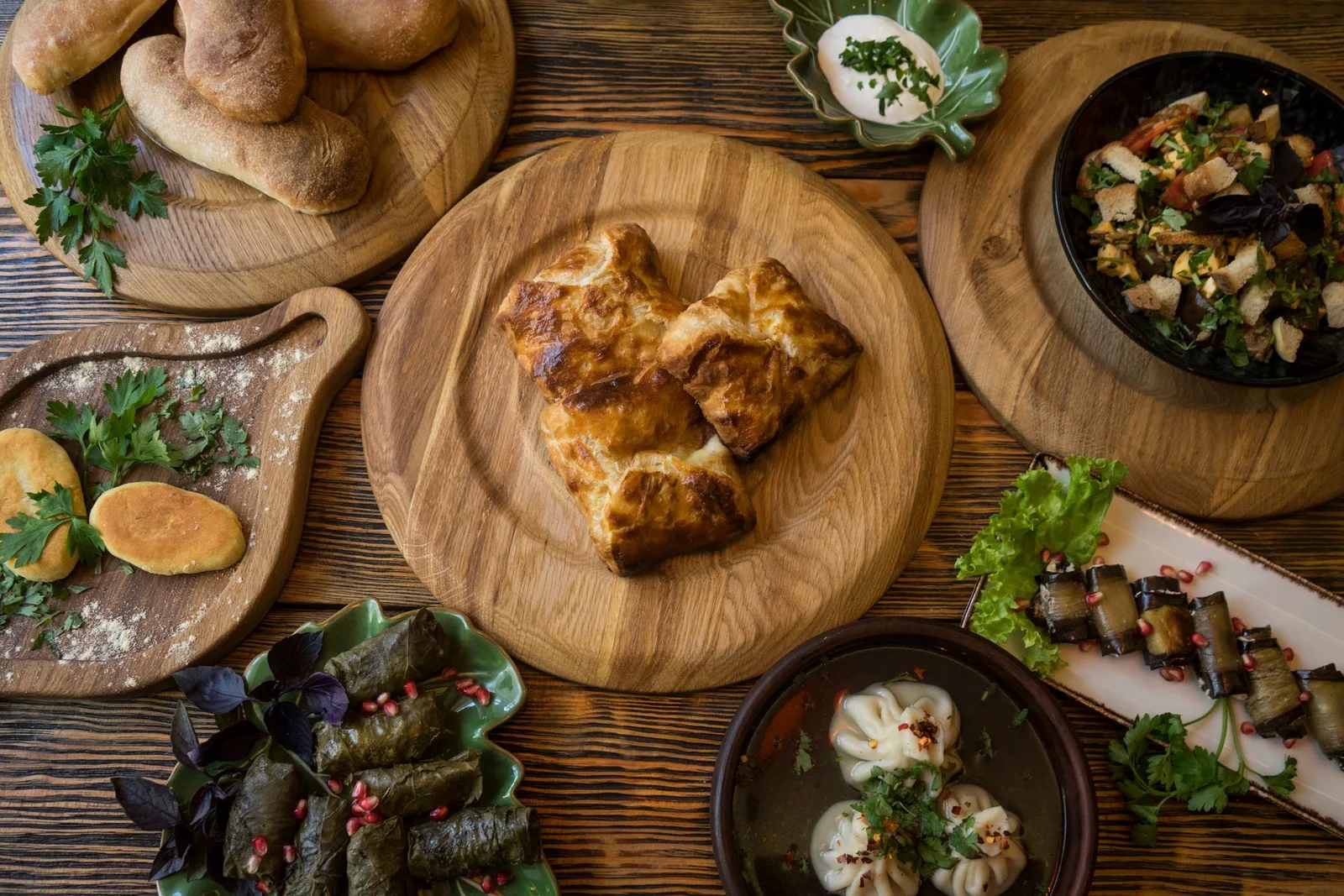
Kutaisi makes the most sense at a table. The city is a useful base for western Georgia, but its food deserves more attention than a quick meal between monasteries and waterfalls. This is Imereti, a region of soft cheeses, cornmeal, walnuts, herbs, tart sauces and generous home cooking. The most rewarding introduction is simple: begin at the Green Bazaar, taste the ingredients before they reach the plate, then sit down for a meal that takes its time.
Begin at the Green Bazaar
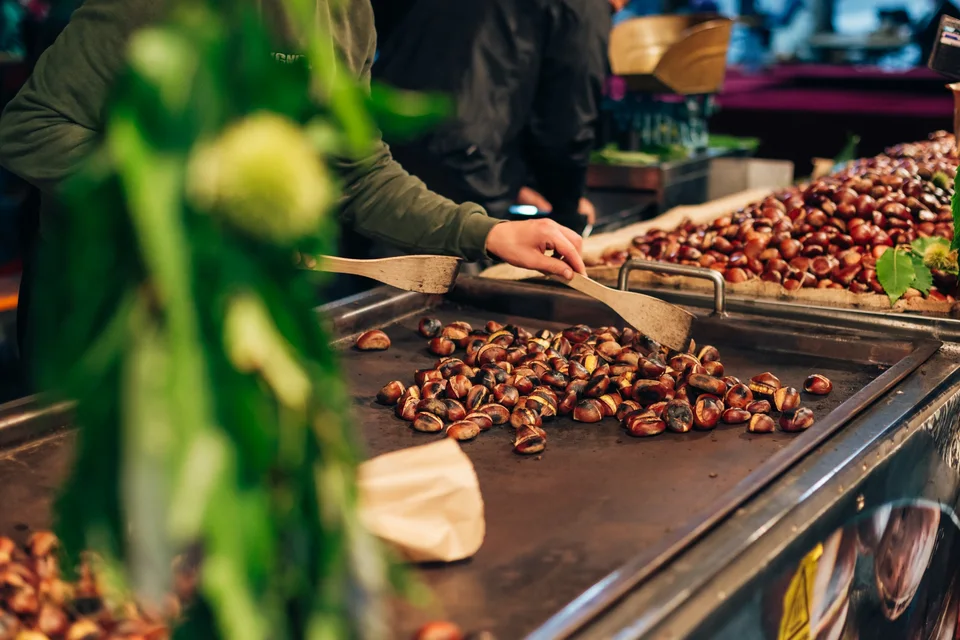
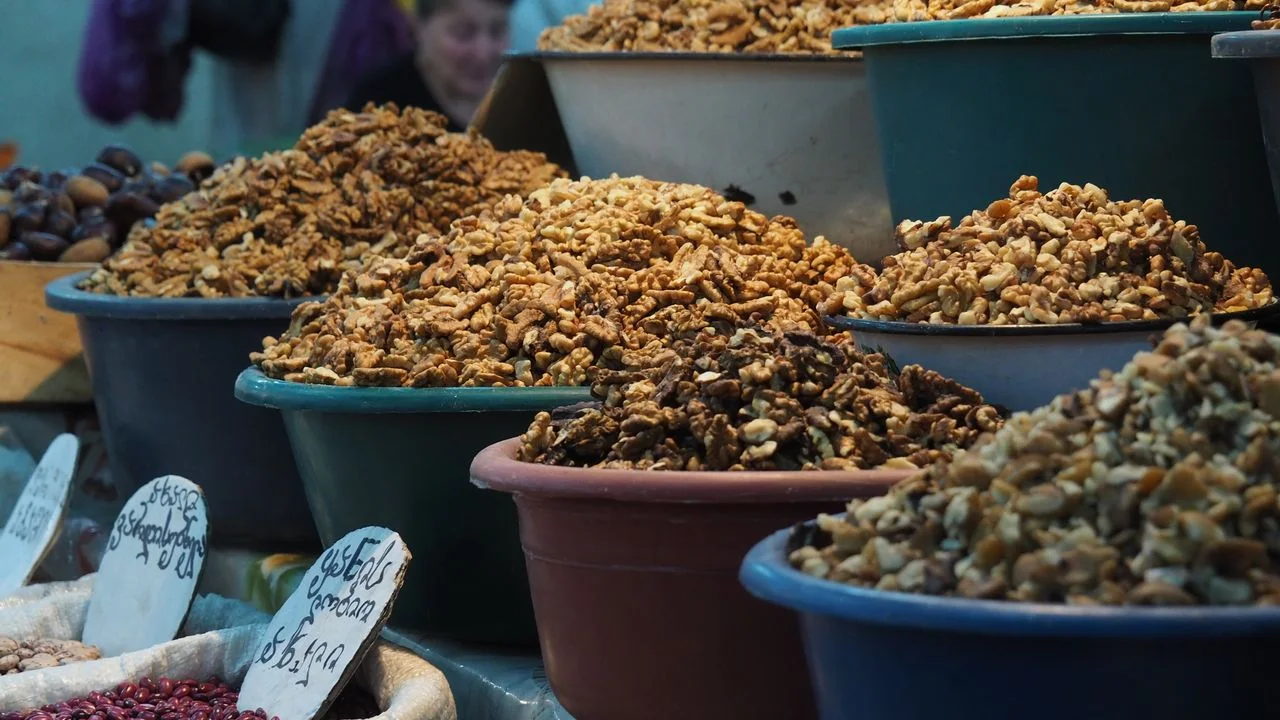
Kutaisi’s Green Bazaar is the clearest place to understand what western Georgian cooking is built around. The market is close to the centre and combines fresh produce with cheese, meat, spices, pickles, nuts, dried fruit, wine and prepared foods. It is practical rather than staged, which is precisely why it is worth your time.
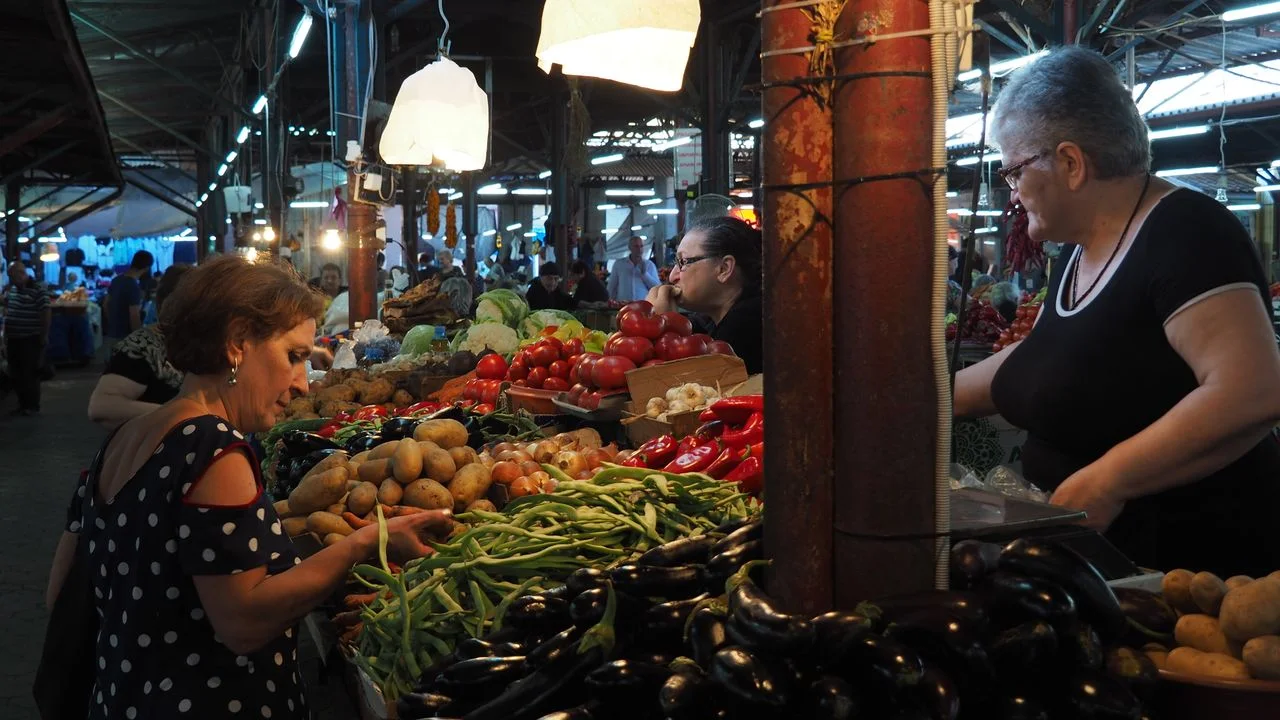
Go early enough to see the market at full pace. Look first at the cheese counters, where Imeruli cheese, sulguni, nadughi and other fresh dairy products appear in different textures and degrees of saltiness. Then move slowly through the herb and vegetable stalls. Coriander, spring onions, garlic, chillies, aubergines, beans and seasonal fruit are central to the everyday table, not decorative additions.
The market is also the right place to taste the sharper side of the region. Ask about tkemali, the sour plum sauce served with meat and potatoes, and adjika, a hot paste whose flavour varies from one household to another. Pickled vegetables and jonjoli, the flower buds of the bladdernut tree, bring acidity and freshness to meals that might otherwise feel rich.
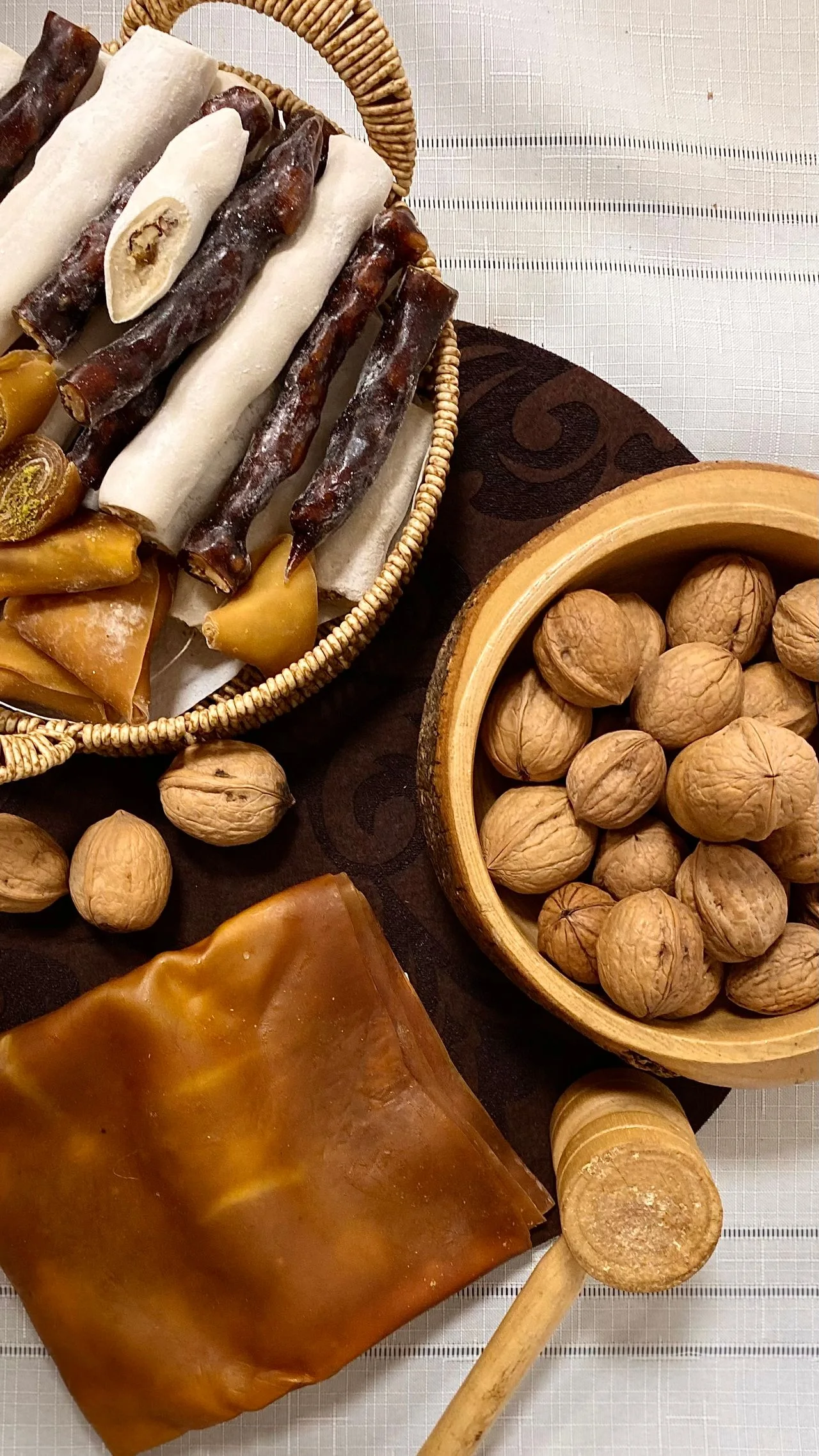
Churchkhela and tklapi are the easiest edible souvenirs. Churchkhela is made by coating threaded nuts in thickened grape juice; tklapi is a sheet of dried fruit purée, often sour and intensely concentrated. Buy from a stall where the seller is happy to explain what is fresh and how the product was made. A little conversation usually leads to a better purchase than choosing the most polished-looking piece.
The food of Imereti, in a few dishes
Imeretian cooking is often described through its best-known dish, Imeruli khachapuri. The round cheese-filled bread is less theatrical than the boat-shaped Adjarian version, but it is a better expression of the region: modest in appearance, dependent on the quality of the dough and cheese, and designed to be eaten while still warm.
Try it at a bakery, market stall or restaurant rather than ordering it automatically with every meal. One good khachapuri is enough for two people when it is part of a wider spread. Lobiani, bread filled with seasoned beans, is another practical choice for breakfast or a quick lunch.
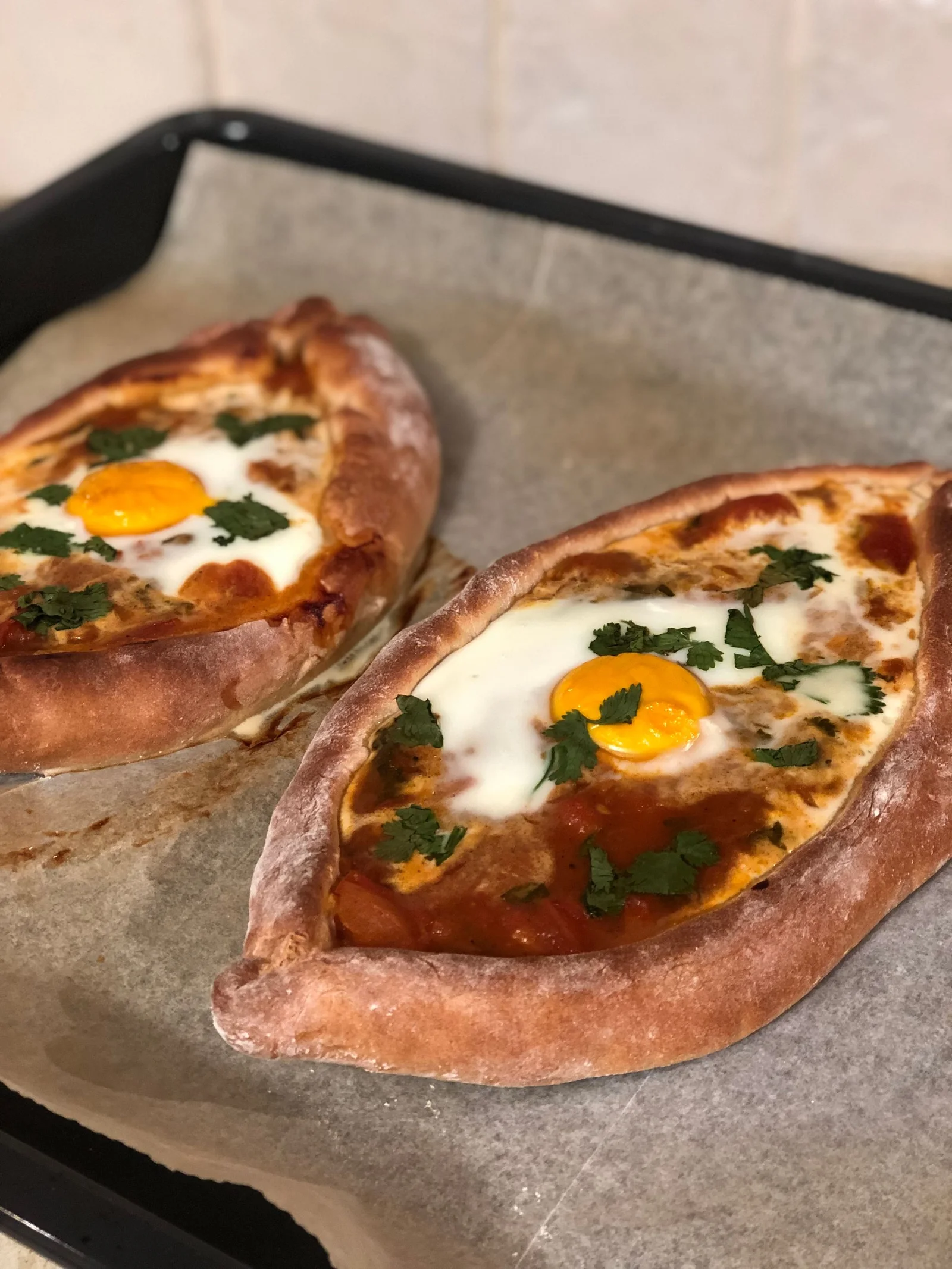
Pkhali is one of the most useful introductions to Georgian food. Vegetables such as aubergine, beetroot, spinach or leeks are mixed with ground walnuts, herbs, garlic and seasoning. It is served cold or at room temperature and works well as part of a shared table. Look for several versions rather than ordering a single portion.
Lobio, a slow-cooked bean dish, can be earthy and comforting, especially with mchadi, the dense Georgian cornbread. Mushrooms, eggplant with walnuts, fresh herbs and salads dressed with walnut paste make western Georgian cooking particularly rewarding for vegetarians. The food is not built around elaborate meat substitutes; vegetables and pulses already have a central place.
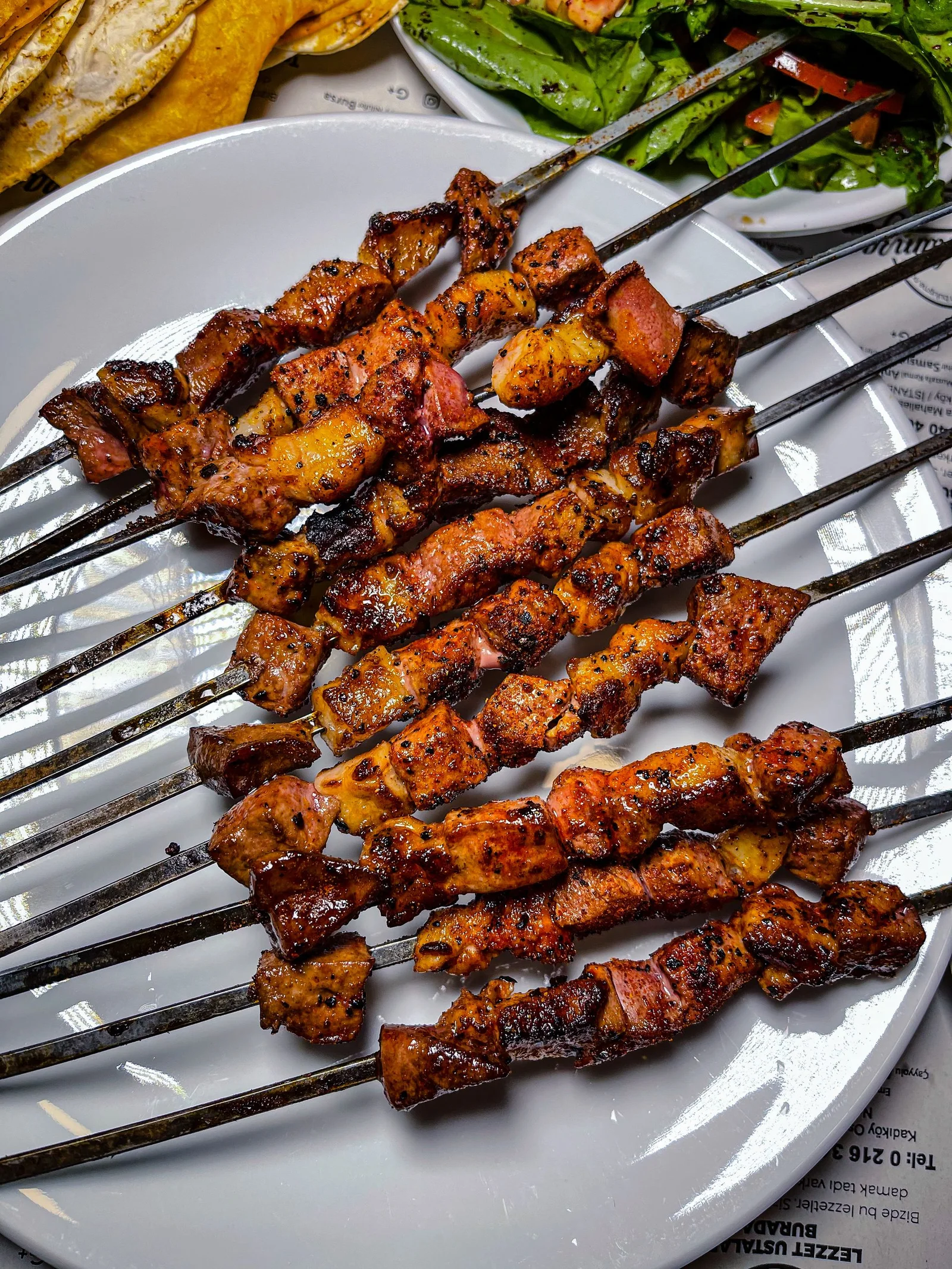
For meat, look beyond khinkali. Mtsvadi is Georgian barbecue, usually served simply with onions and sauce. Kupati is a spiced sausage, while satsivi brings poultry together with a walnut-based sauce. In Imereti, chicken may also appear with tart fruit sauces made from grapes, blackberries or plums. These are dishes to look for when a menu is regional rather than generic.
How to order without over-ordering
Georgian restaurant menus encourage ambition. Portions can be generous, and the table fills quickly once bread, salads, sauces and wine arrive. For two people, begin with two or three vegetable dishes, one bread or cheese dish, and one substantial plate to share. Add more only if the first wave disappears.
A useful order might include pkhali, a tomato and cucumber salad with walnuts or adjika, Imeruli khachapuri, lobio with mchadi and either mushrooms or grilled meat. This gives you a sense of the region without turning dinner into a test of endurance.
Vegetarian food is usually easy to find, but clarify whether a dish contains meat stock, butter or dairy if that matters to you. Georgian menus may use similar names for preparations that vary between restaurants. Asking the staff is more reliable than assuming that a familiar dish will be made in the same way everywhere.
For a family-style evening: Toma’s Wine Cellar
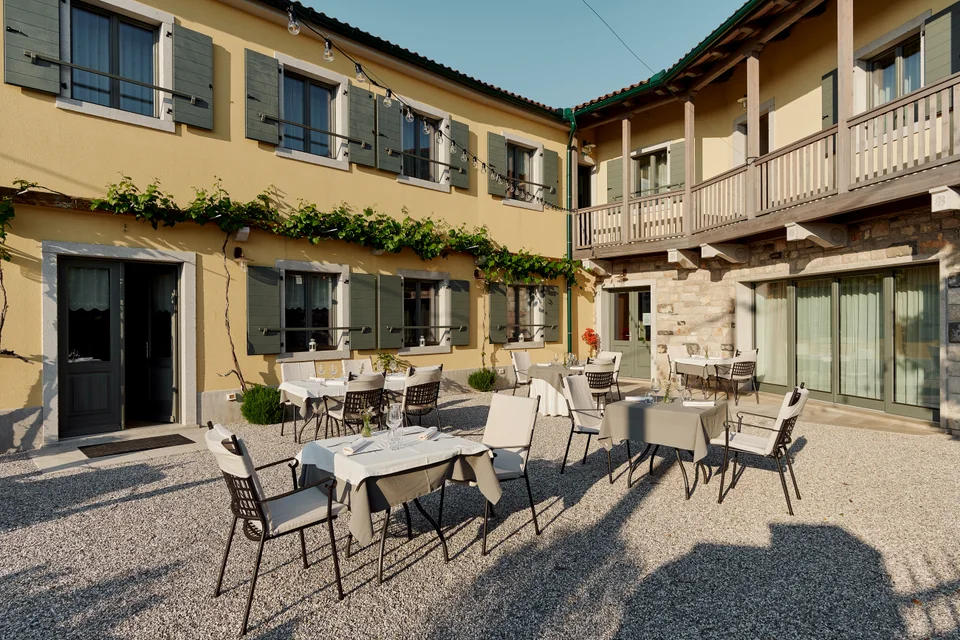
Toma’s Wine Cellar is the kind of place to choose when you want dinner to feel like an introduction to a household rather than a sequence of menu decisions. The restaurant presents itself as a small family operation serving home-style regional food and homemade wine. There is no conventional à la carte experience in the usual sense; the meal is arranged around what the kitchen is preparing.
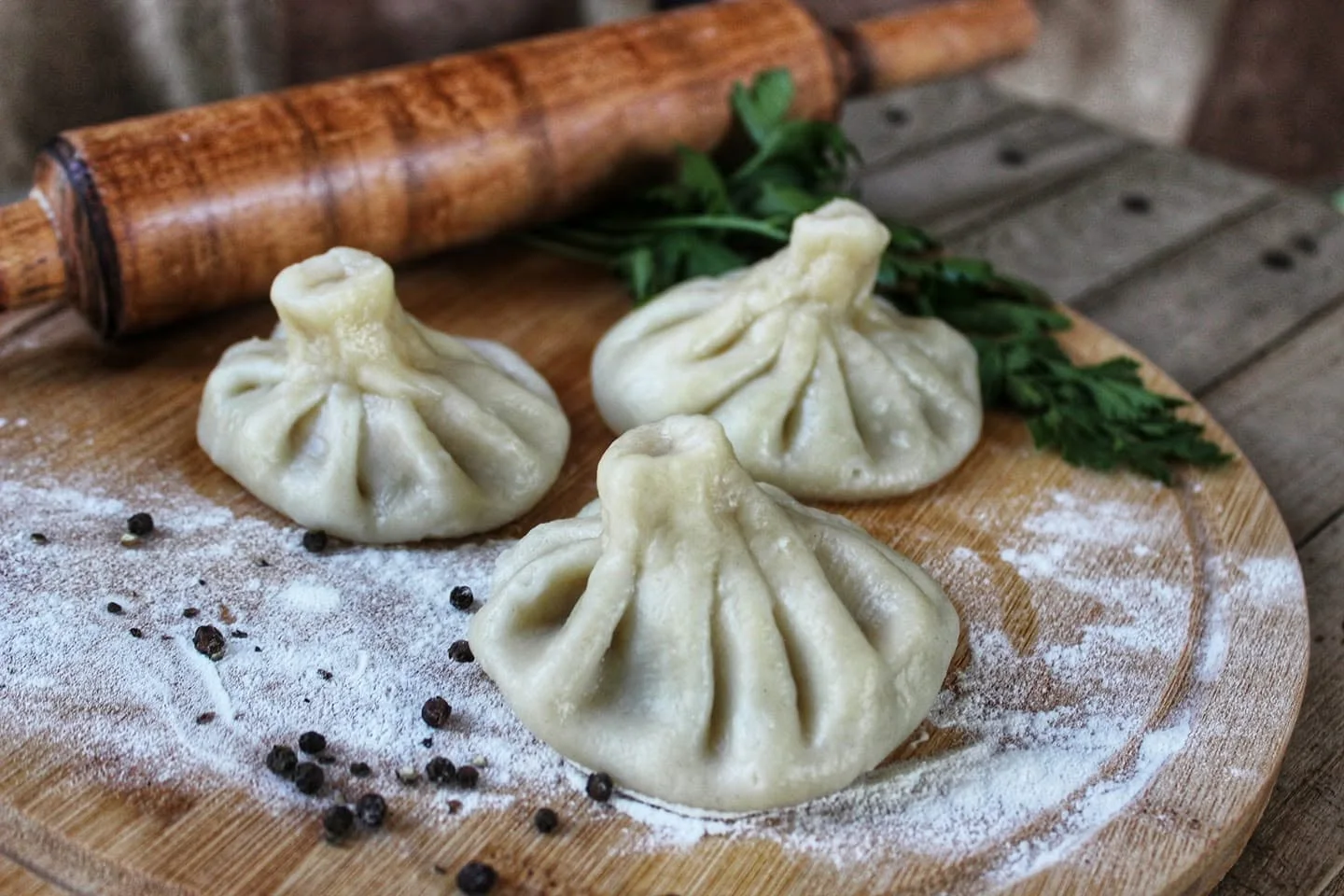
That format suits travellers who want to try several dishes and are happy to let the hosts guide the evening. Expect a spread that may include salads, eggplant with walnuts, fresh cheese, khachapuri and other regional preparations, accompanied by wine or chacha. The appeal is the rhythm of the meal: several plates arriving gradually, with explanations and conversation along the way.
This is not the place to visit when you need a fast dinner or complete control over every dish. It is better for a relaxed evening and should be booked ahead, particularly because the restaurant is small. Confirm the current arrangements directly before going, as opening days and dining formats can change.
For a more polished regional menu: Doli
Doli offers a more structured version of western Georgian cooking, with a menu influenced by Imeretian and Samegrelo traditions. It is a useful choice when you want regional dishes in a comfortable contemporary setting, with more attention to presentation and a considered Georgian wine list.
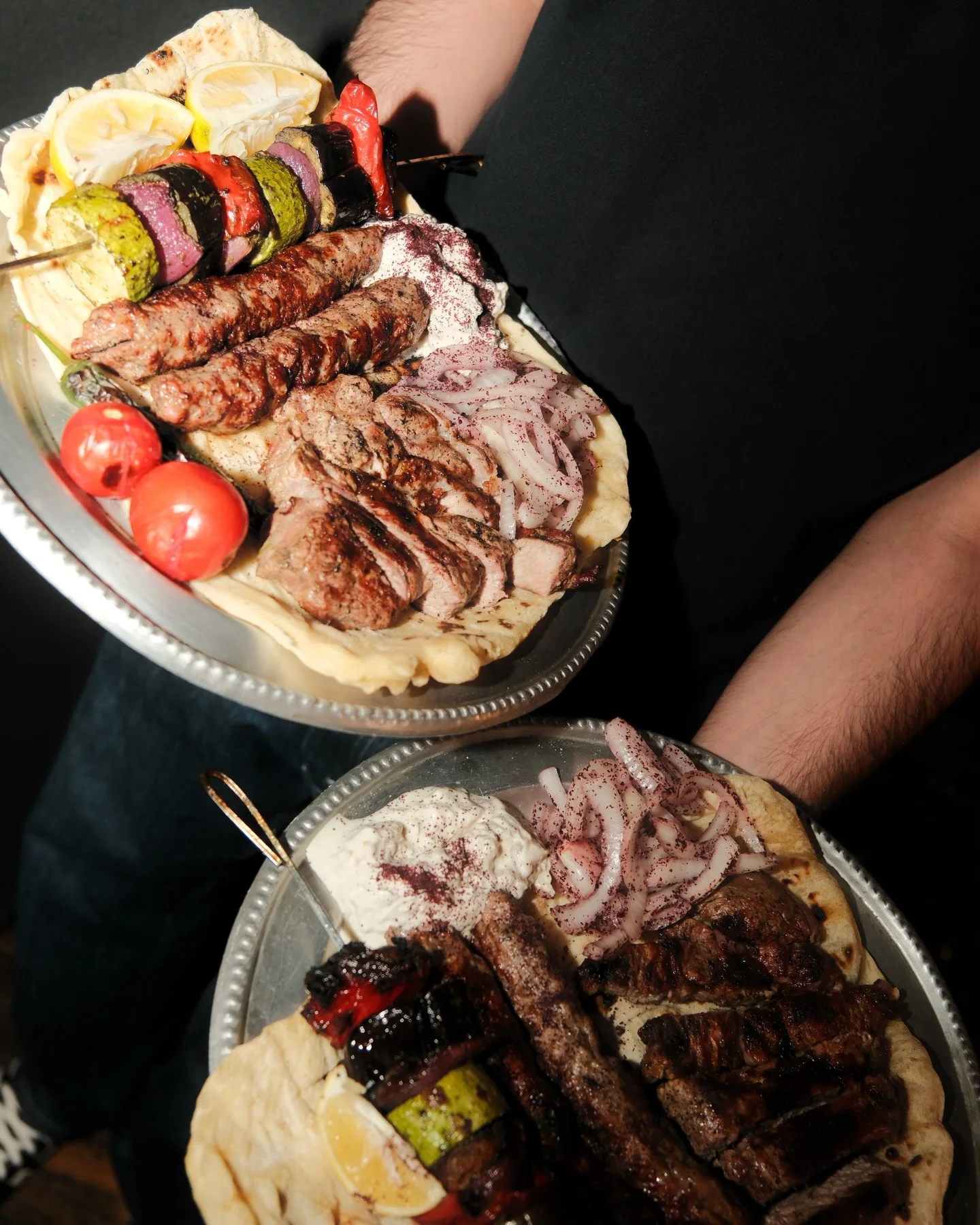
The menu includes seasonal pkhali, fresh nadughi, Imeruli khachapuri, mchadi, mushrooms, kharcho, kupati, mtsvadi and other dishes associated with western Georgia. Several plates are designed for sharing, which makes it possible to explore more widely without committing to a single large main course.
Doli is not a substitute for a market lunch or a family dinner. Its strength is different: it gives you a clear, accessible introduction to regional flavours in a setting that works well for a longer dinner. It is also a sensible option when you are travelling with someone who prefers a more familiar restaurant environment.
The dishes worth seeking out
- Imeruli khachapuri: the round, cheese-filled bread associated with Imereti. Order one to share while it is hot.
- Pkhali: walnut-based vegetable preparations, usually served as a selection rather than a single dish.
- Lobio with mchadi: seasoned beans with Georgian cornbread, ideal for a filling vegetarian lunch.
- Nadughi: fresh curd or cottage cheese, often served with herbs and sometimes with a sharper sauce.
- Mtsvadi: Georgian barbecue, best balanced with onions, tkemali and fresh salad.
- Chicken or poultry with walnut sauce: a richer dish that shows the importance of walnuts in western Georgian cooking.
- Mushrooms with herbs or pomegranate: a good choice when local produce is at its best.
- Churchkhela and tklapi: compact, practical sweets to buy at the market rather than as a restaurant dessert.
A quick meal has its place
Not every meal in Kutaisi needs to become a supra. The city is well suited to eating in smaller increments: a warm pastry in the morning, fruit and cheese from the market, coffee and a late lunch, then a longer dinner. This is particularly useful if you are combining the city with day trips and do not want every meal to take two hours.
Look for fresh bread, lobiani, khachapuri and simple grilled food in busy local spots. A crowded counter is often more useful than a beautifully photographed menu when you want to see what residents are actually eating. For a very casual stop, Kutaisi’s older kebab and canteen-style places can be more revealing than a polished restaurant, although the atmosphere is functional and the food may be limited to a few specialities.
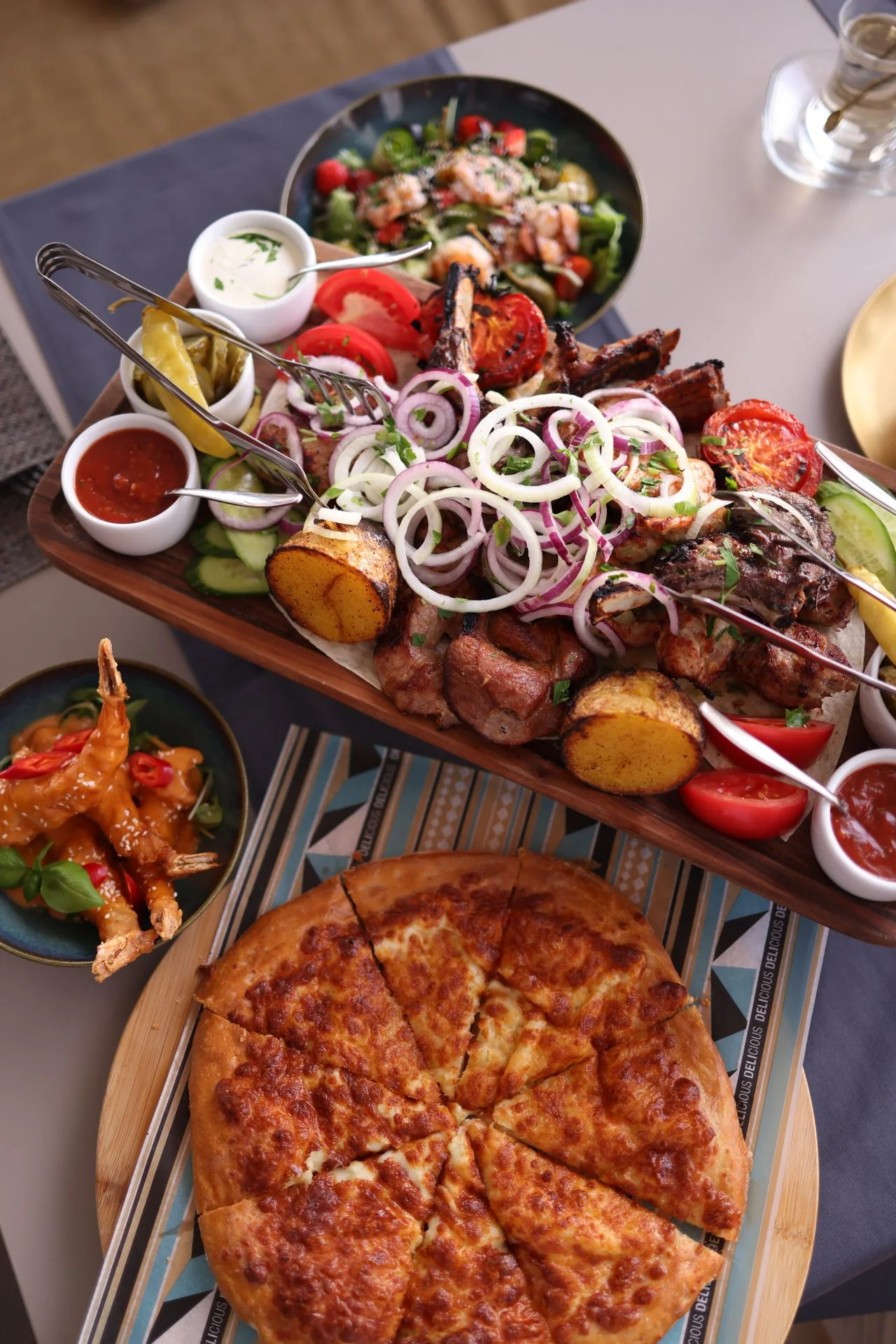
The best time for a market-style lunch is usually earlier in the day, while there is still a full choice of prepared food. Small independent restaurants may keep different hours from the larger central venues, so check locally on the day rather than relying on an old listing.
The wider table of western Georgia
Kutaisi is a good place to notice how close culinary traditions sit beside one another. Imereti is known for cheese, khachapuri, beans, herbs and walnut-based vegetable dishes. Samegrelo brings more heat and bolder sauces, including ajika and dishes built around cornmeal, cheese and rich spice. Guria has its own poultry, bean and pastry traditions, while Racha is associated with cured meats, beans and mountain cooking.
You will not always find strict regional boundaries on a city menu. Restaurants borrow, adapt and combine dishes, and family recipes travel with people. That is part of the pleasure. Ask where a preparation comes from, especially when you see unfamiliar names such as elarji, gebzhalia, kuchmachi or a regional lobiani.
If you are planning a longer western Georgian itinerary, use Kutaisi as a culinary starting point rather than trying to experience every region in one day. A meal in the city can give you the vocabulary to understand what changes as you travel towards Samegrelo, Guria, Racha or the mountain areas.
Wine, chacha and the pace of dinner
Western Georgian meals are often accompanied by local wine, homemade wine or chacha, the grape spirit traditionally served in small measures. Imereti is known for white and amber wines, including styles made in qvevri, the buried clay vessels used in Georgian winemaking. You do not need to become a wine expert to enjoy this part of the meal. Ask what is local, whether the wine is dry or off-dry, and whether a smaller pour is available.
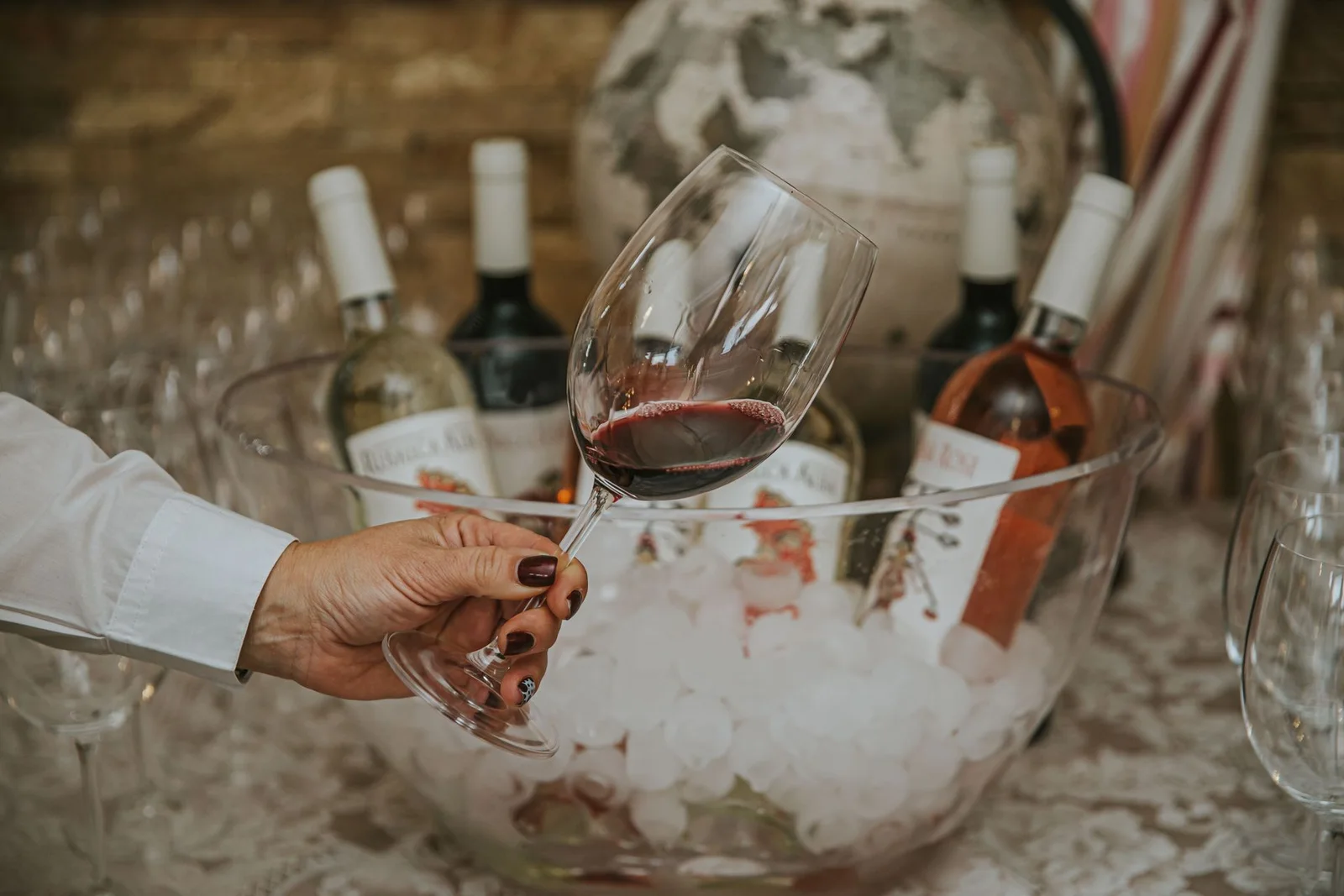
The Georgian table can become generous very quickly. If you are not used to frequent toasts or strong spirits, take the evening at your own pace. A good host will usually understand a polite refusal, and there is no reason to accept every glass simply because it has been offered.
A practical food itinerary for one day
- Morning: walk through the Green Bazaar and taste or buy Imeruli cheese, nadughi, seasonal fruit, pickles and churchkhela.
- Late morning: share a fresh Imeruli khachapuri or lobiani rather than ordering a full restaurant breakfast.
- Afternoon: keep lunch light, with fruit, cheese, bread or a simple soup, especially if dinner will be family-style.
- Early evening: choose between Toma’s Wine Cellar for a hosted home-style meal and Doli for a more structured regional menu.
- Before leaving: buy a small amount of tklapi, churchkhela, spices or tkemali. Choose products you will actually use rather than filling a suitcase with souvenirs.
How long we’d stay
For a food-led introduction, two nights is the minimum that feels comfortable. One day gives you the market and one proper dinner, but a second day allows the city to slow down: another market visit, a different style of restaurant, or a short excursion into the surrounding region.
Three nights makes sense if you are using Kutaisi as a base for Imereti. It gives you room for a market morning, a family-style dinner, a more contemporary restaurant and one carefully chosen detour. More than that depends on your wider route and how interested you are in exploring the region beyond the city.
Our take
Kutaisi’s food is most memorable when the meal has a sense of place. The Green Bazaar matters because it shows the ingredients before they are arranged into familiar dishes. A family restaurant matters because it explains how those ingredients become a shared table. A polished regional restaurant has its place too, especially when you want comfort, clarity and a good introduction.
If time is limited, skip the attempt to eat everywhere. Choose the market, one long dinner and one dish you have not tried before. In Kutaisi, that is usually enough to understand why western Georgian cooking deserves more than a passing stop.