Over four days, I recommend exploring Brussels through distinct neighborhoods rather than consuming the city from a single center. The walkable texture of the historic center, Sablon and Marolles pairs well with Saint-Gilles’s Art Nouveau houses and the dining and nightlife of Sainte-Catherine and Dansaert.
Atomium and the European Quarter complete two other sides of Brussels, both reachable by a short public-transport ride from the center. The days are full, but each includes a long lunch break and room for unplanned discoveries.
DAY 1
Historic center, chocolate and evening lights
Grand-Place, Bourse and Sainte-Catherine
Breakfast
Breakfast around Grand-Place
Start directly at Grand-Place; morning is the best time to see its ornate façades more peacefully. Have breakfast at a nearby café or bakery, then begin walking without rushing.
Combine Grand-Place, Galeries Royales Saint-Hubert, Bourse and the small side streets in one walk. Make a brief stop at Manneken-Pis, but focus on the city’s urban fabric rather than lingering there.
Choose a classic lunch of fries, beer pairings or seafood. Looking for a table on the side streets between Bourse and Sainte-Catherine offers a better balance than eating on a tourist square.
Walk from around Sainte-Catherine Church toward the old harbor quays. The area’s fish-market heritage continues today through seafood restaurants, cafés and open spaces.
On the way from Sainte-Catherine toward Dansaert, take a small tasting break at a chocolatier. Comparing two or three styles is more enjoyable than turning the stop into a shopping tour.
Spend the evening around Sainte-Catherine or Rue de Flandre. Start with a long dinner, then choose a small beer bar or cocktail spot depending on the crowds; restaurants and bars are easy to combine here.
Plan BIn the rain, shorten the historic-center walk and focus on Galeries Royales Saint-Hubert and covered chocolate and coffee stops.
DAY 2
Magritte, Sablon and Marolles
Mont des Arts, Sablon and Marolles
Breakfast
Mont des Arts and breakfast
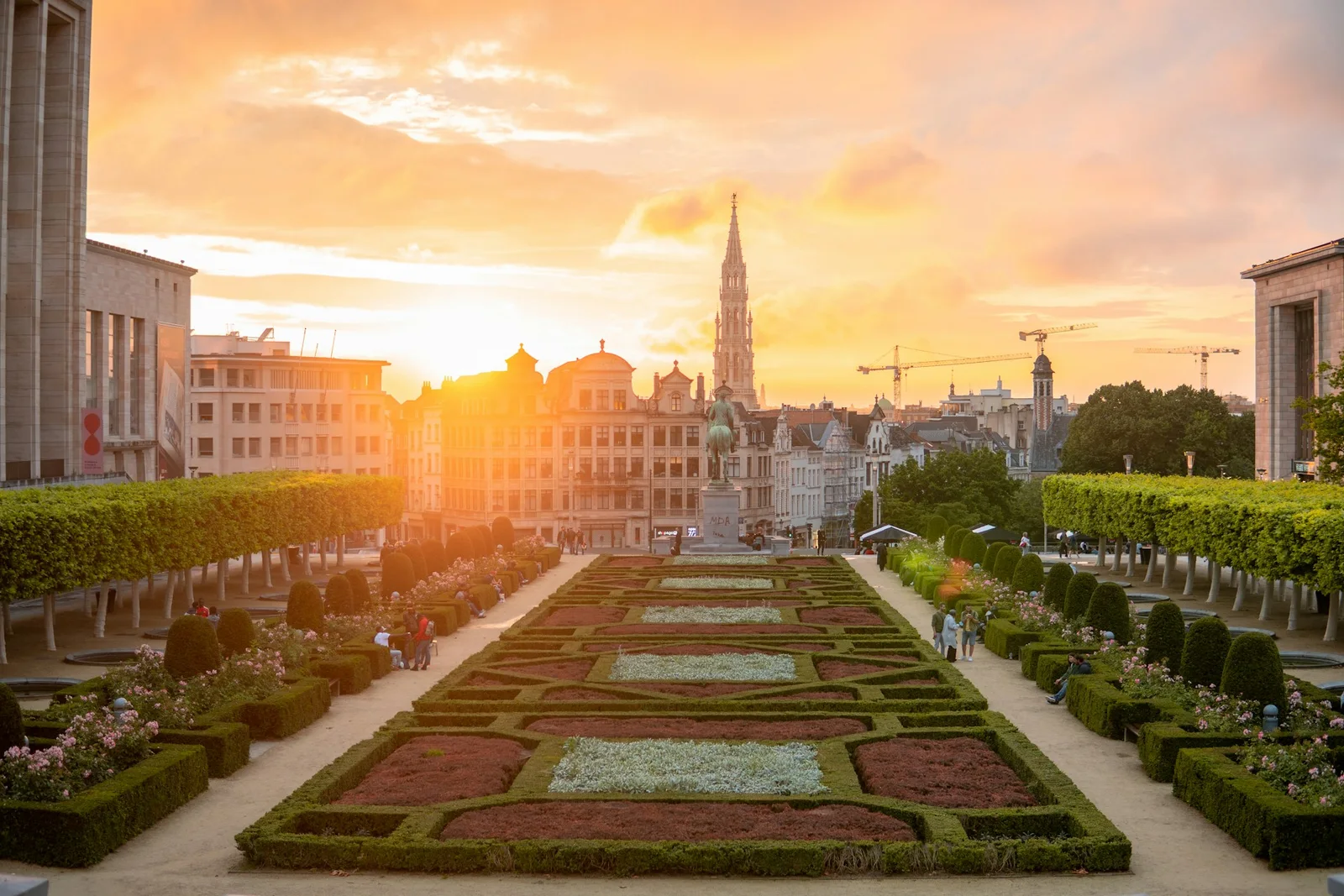
Begin with a brief city-view pause in the Mont des Arts gardens. Then have a light breakfast toward Place Royale, keeping the morning calm so you can enter the museum early.
Allow at least two hours to experience Brussels’s strongest encounter with Surrealism. Check tickets and entry conditions in advance, especially on busy days.
Choose a refined brasserie serving classic Belgian cuisine around Notre-Dame du Sablon. Sablon’s elegant atmosphere suits the romantic, food-focused side of the trip.
Browse the chocolatiers around Grand Sablon and take time to choose a single box. Then walk to Egmont Park for a quieter counterpoint to the museum-heavy morning.
Go down Rue Haute into Marolles, leaving time for antiques, vintage shops and small cafés. The flea market is liveliest in the morning and early afternoon, so visit earlier if possible.
Choose a restaurant that preserves Marolles’s more local, relaxed character. If you have a reservation-worthy place in mind, book ahead for Friday and Saturday nights.
Plan BIn the rain, replace Egmont Park with one of the collections at the Royal Museums of Fine Arts of Belgium and keep the Marolles walk brief.
DAY 3
Art Nouveau and the neighborhood rhythm of Saint-Gilles
Saint-Gilles and Ixelles
Breakfast
Breakfast in Saint-Gilles
Start at a neighborhood café in Saint-Gilles. Unlike the monumental buildings in the center, the early hours here offer a more everyday Brussels atmosphere.
Victor Horta’s former home and studio is a powerful place to understand Art Nouveau as a whole of façades, stairs, light and interiors. Capacity can be limited, so check online booking in advance.
Stay in the neighborhood for modern Belgian cuisine, baked goods or seasonal plates. Since a long architectural walk follows, several lighter sharing plates may suit you better than a heavy meal.
Walk through Saint-Gilles and onward toward Ixelles, comparing different Art Nouveau façades. Do not lock yourself to a fixed building list; the pleasure lies in seeing architecture alongside everyday residential life.
Choose a café or wine bar around Place du Châtelain for a rest. This pause is especially valuable for observing the neighborhood before returning to the center.
Have dinner in the same area, then look for a small concert, cocktail bar or lively neighborhood venue. Since schedules change quickly, check that week’s events calendar.
Plan BIn rainy weather, shorten the outdoor architecture walk and visit Design Museum Brussels or another city museum after the Horta Museum.
DAY 4
Atomium, design and everyday Europe
Heysel and the European Quarter
Other
Travel to Heysel by public transport
Set aside the first part of the day for Heysel, outside the city center. Atomium is often more comfortable near opening time; check current special closures and ticket availability before traveling.
A legacy of the 1958 World’s Fair, Atomium is Brussels’s most distinctive architectural experience. Allow about two hours for the five accessible spheres and panorama; online tickets may reduce queuing but cannot eliminate crowds.
Often included with an Atomium ticket, Design Museum Brussels offers a calmer second museum experience through modern design and everyday objects. It is only a short walk from Atomium.
Take a light lunch in Heysel or after returning to the center. In the afternoon, choose a shorter, selective program in the European Quarter rather than adding another full museum.
The European Parliament’s visitor center explores the institutions through multimedia storytelling rather than a dry building tour. Visits usually take about 90 minutes; entry is free, but advance booking is recommended.
Take a brief walk in Leopold Park after Parlamentarium. Depending on the weather and your energy, have an aperitif around Schuman before returning to the center.
Return to your favorite area for the final night: Dansaert is more design- and cocktail-focused, while Sainte-Catherine offers more restaurants and seafood. Revisiting a place you enjoyed on the first day can be a better finale than starting a new search.