

Hungary
Hungary is a compact Central European country where Budapest’s grand boulevards, thermal-water culture and late-night food halls sit alongside vineyard towns, river landscapes and quiet villages. It suits travelers who prefer a flexible pace: spend a few days in the capital, then use the rail network to reach lake country, historic towns and the Great Plain.
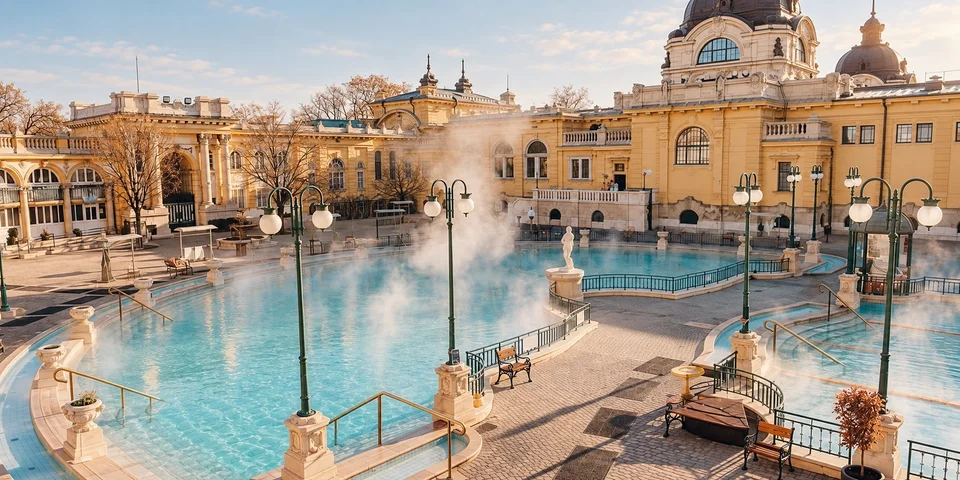
Széchenyi Baths in Budapest: what to know before you go
Budapest’s most famous thermal bath is grand, atmospheric and easy to recommend when you know what to expect. This guide covers the 2026 prices, history, practical details and the kind of visit Széchenyi suits best.
Read the story →Budapest rewards unhurried wandering. Cross the Danube on foot, use the historic trams, and leave time for a thermal bath rather than treating it as a quick photo stop. Buda’s hills feel quieter; Pest is better for cafés, markets and evening walks.
Look for everyday Hungarian cooking: goulash, lángos, stuffed cabbage, seasonal soups and excellent pastries. Markets are useful for breakfast and local orientation, while contemporary bistros reinterpret traditional dishes without turning every meal into a tasting menu.
Rail travel is practical for day trips to Szentendre, Eger, Pécs or Lake Balaton. Check return schedules before leaving Budapest, especially outside summer. Smaller towns often reward an overnight stay more than a rushed circuit of several destinations.
Hungary’s thermal culture is social but quiet by design. Bring sandals, follow each bath’s age and hygiene rules, and avoid assuming every pool has the same temperature or purpose. Reserve spa treatments ahead during weekends and holidays.
One thoughtful way to experience Hungary.

Useful context, without the checklist overload.
Trains, buses, city transit
Schengen 90/180-day rule
10–15%; service charge common
Generally safe
230V, Type C/F
Useful phrases



Frequently asked questions.
No visa is needed for tourism stays of up to 90 days in any 180-day Schengen period. Check passport validity and current entry rules before departure.