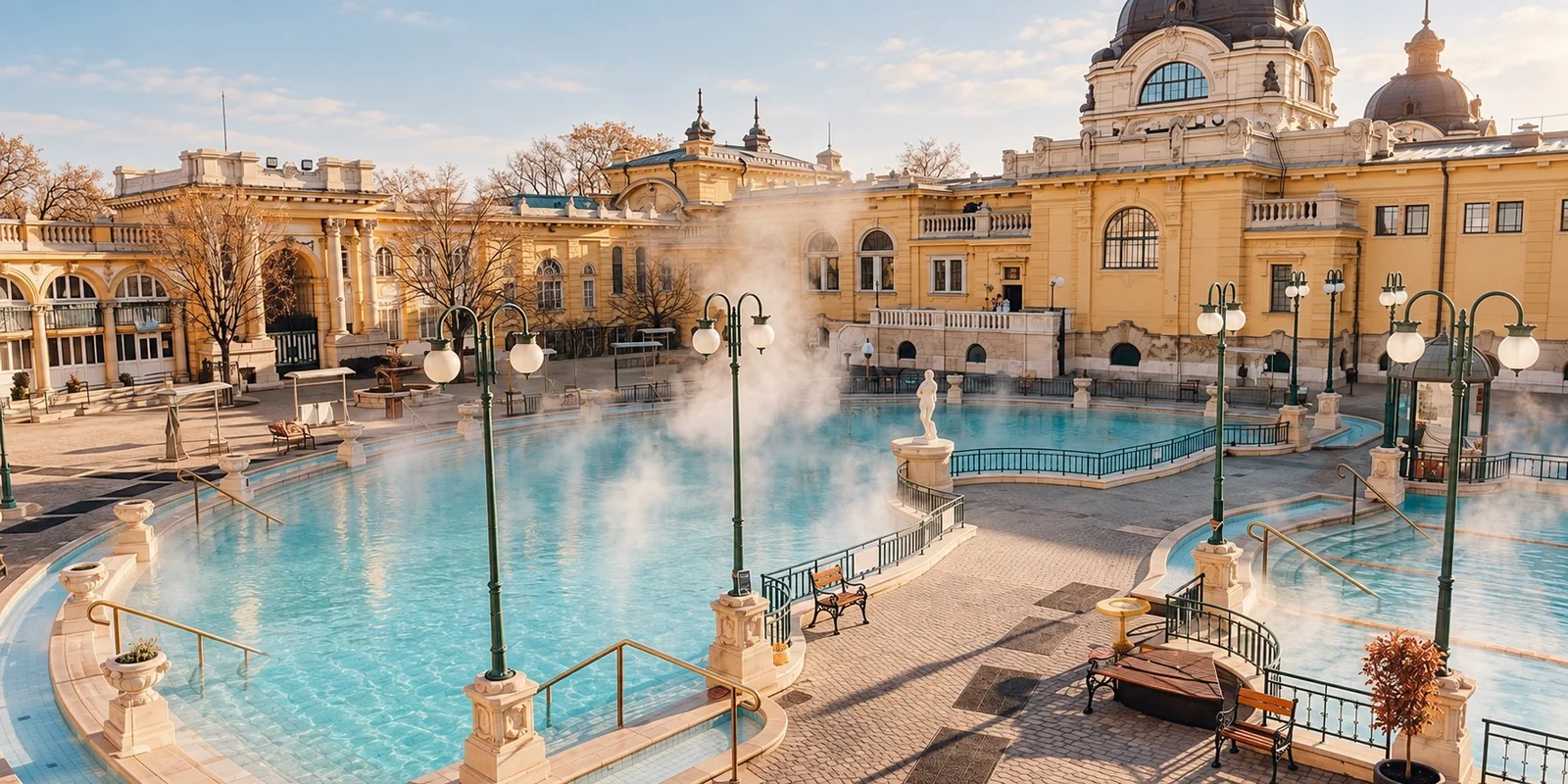
Széchenyi is the Budapest thermal bath most visitors picture first: grand yellow façades, broad outdoor pools and steam rising above the water on cooler days. It is also the city’s largest bathing complex, so the experience is impressive and varied rather than intimate.
Give it a few hours and you can move between indoor thermal pools, saunas and the outdoor courtyard, with time to pause in the warm water and take in the architecture. The main drawback is visitor numbers, particularly at the most photographed times of day. Széchenyi is best approached as a public cultural experience with bathing, not as a quiet contemporary spa.
Why Széchenyi is worth your time
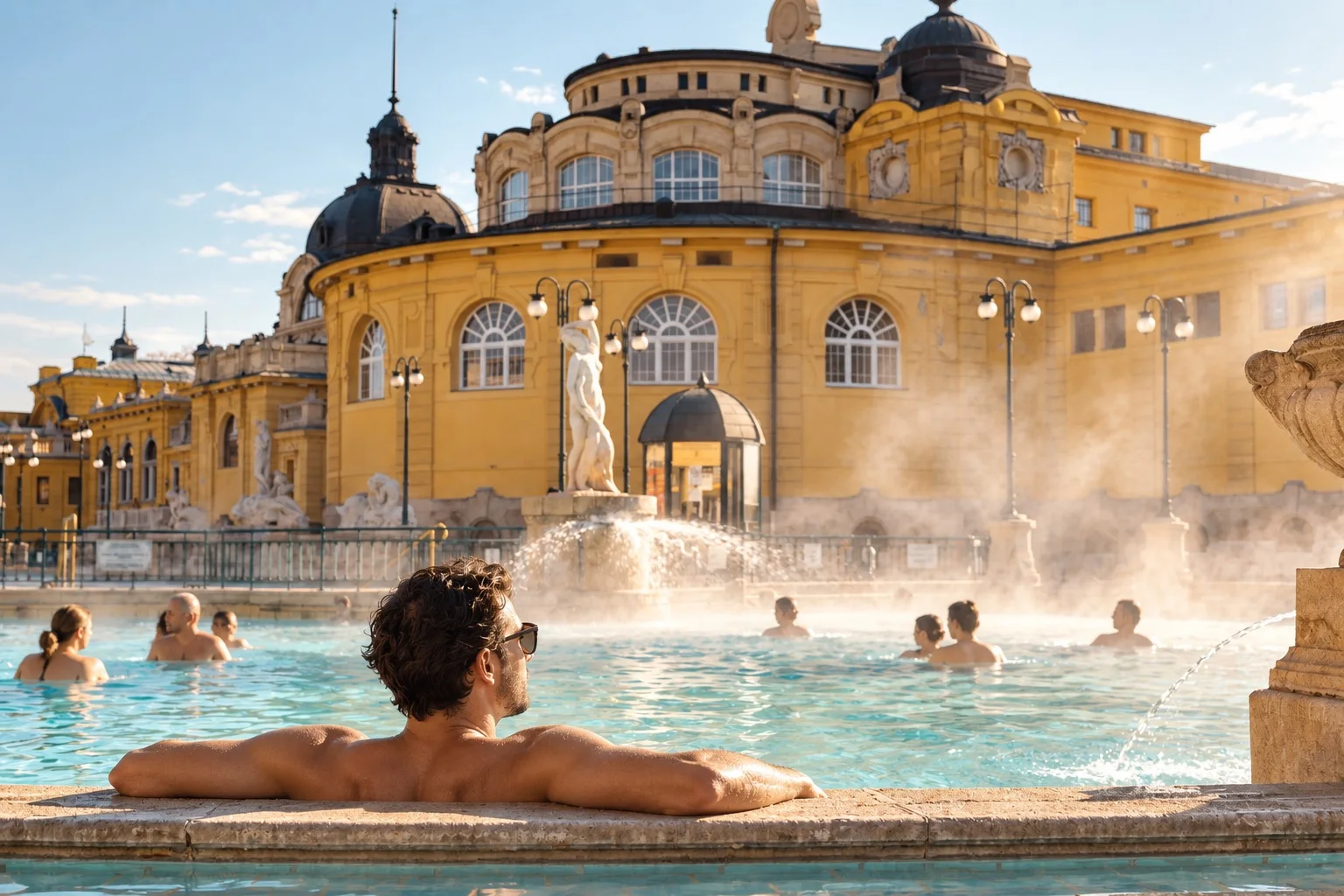
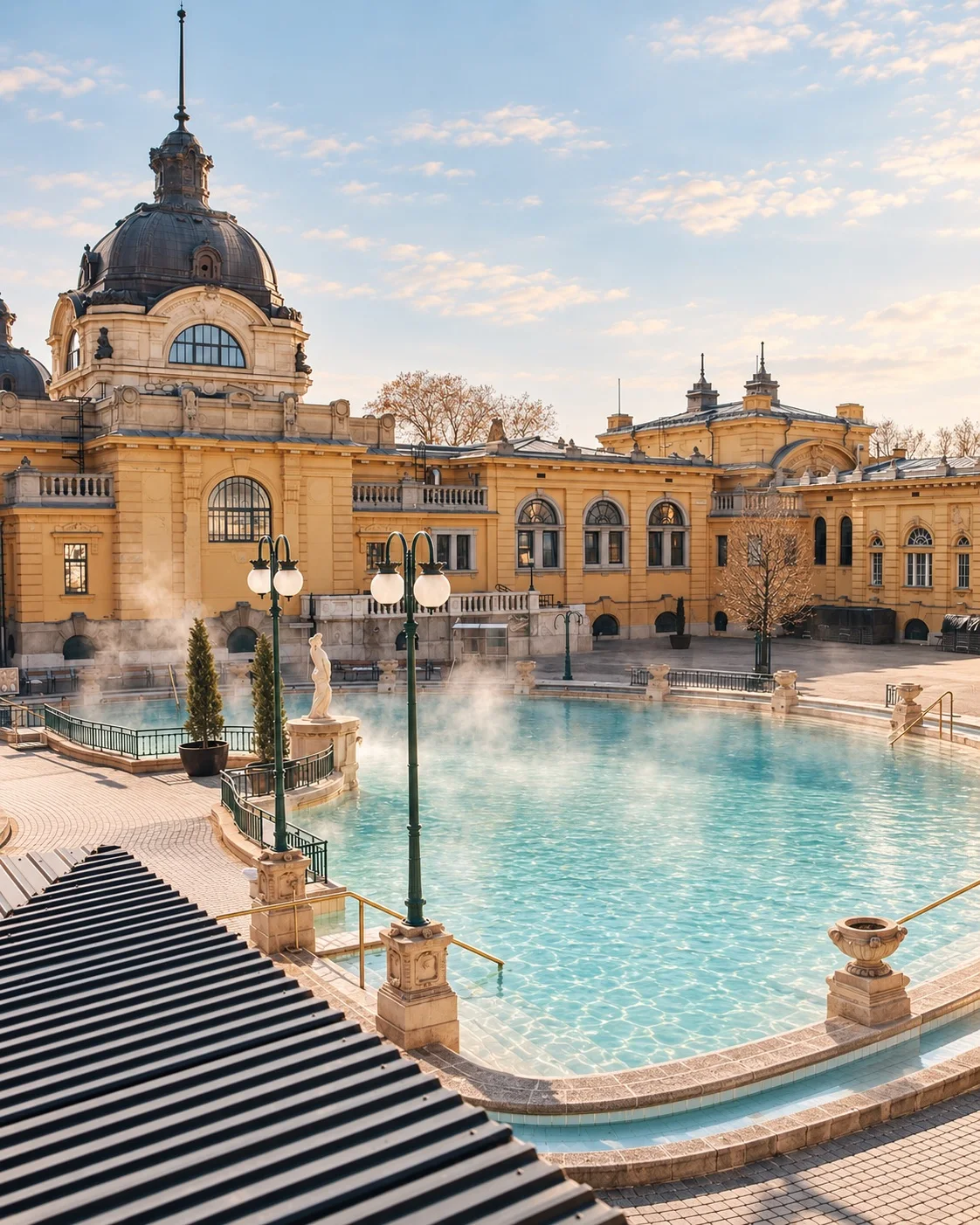
The appeal comes from the setting as much as the water. Széchenyi occupies a monumental Neo-Baroque complex in City Park, with high courtyards, long colonnades and a series of indoor rooms that feel more architectural than spa-like. Outside, the warm thermal pool is the social centre of the visit. People sit along the edges, move between the water and the surrounding deck, or simply stay still for a while.
This is a public bath with a strong sense of history. You may see tourists taking photographs, groups making their way through the building and regular bathers following their usual routines. That mixture gives the place its character, although travellers looking for polished calm may prefer a hotel spa.
For a first introduction to the role of thermal bathing in Budapest, Széchenyi is the clearest choice. Its scale makes it easy to understand, even if it also makes the experience busier than some of the city’s smaller baths.
A short history of the bath
Széchenyi was the first thermal bath in Pest. Its origins lie in deep drilling carried out in City Park on the initiative of mining engineer Vilmos Zsigmondy. An artesian bath was already operating there in 1881, but the temporary facilities soon became insufficient. The present bath was built in 1913 to designs by Győző Czigler.
The complex expanded in 1927, when the outdoor section and public bathing departments were added. Further changes followed in the 1960s, and the swimming section was modernised in the 1990s. The result is a place shaped by several periods: formal historic architecture surrounds pools and interiors that have continued to evolve with Budapest’s bathing culture.
What the visit is actually like
The outdoor thermal pool is the obvious starting point, but it should not be your only stop. The indoor thermal area contains pools at different temperatures, along with steam rooms and saunas. Some rooms have more atmosphere than others, so allow time to wander instead of settling immediately in the first pool you see.
Bring a swimsuit, towel and flip-flops if possible. Towels and other essentials are available to buy, but purchasing everything on site adds unnecessary expense. A locker is sufficient for a small bag. If you are carrying a suitcase or larger luggage, the bath recommends choosing a private changing cabin, which provides more space and a lockable area for the duration of your visit.
The swimming pool has its own rules, including the use of a swimming cap. The thermal pools do not create the same requirement, but check the signs when you arrive. The bath uses a wristband system for lockers and access, and cashless payment is used for purchases inside the complex.
Széchenyi prices
The current 2026 adult daily ticket with locker access is 13,200 HUF from Monday to Thursday and 14,800 HUF on Fridays and weekends. During holidays and designated peak periods, the price rises to 15,800 HUF. Fast Track tickets with locker access cost 15,200 HUF on weekdays, 16,800 HUF on Fridays and weekends, and 17,800 HUF during peak periods.
There is also a Good Morning Budapest ticket for entry by 9am: 10,500 HUF from Monday to Thursday and 11,800 HUF on Fridays. It is sold on site and is not available at weekends or on holidays. A private changing cabin costs an additional 1,000 HUF. Towels, robes, swimsuits, caps and slippers are sold separately.
Prices can change, and the definition of a peak period is not always intuitive, so check the official Széchenyi website before booking. Advance purchase is recommended, especially when visitor numbers are high. Online tickets are treated as priority if the complex reaches capacity.
When to go
A weekday morning offers the best balance of atmosphere and comfort. The early ticket is useful if you are happy to arrive promptly; a standard weekday ticket gives you more flexibility. Friday evenings have longer opening hours, but they are not the quietest option.
The bath is currently open from 7am to 8pm Monday to Thursday, from 7am to 10pm on Fridays, and from 8am to 8pm on Saturdays and Sundays. Pool areas close 20 minutes before the building, and the last entry is one hour before closing. Holiday schedules and maintenance closures can differ, so confirm the hours for your date.
How Széchenyi compares with Budapest’s other baths
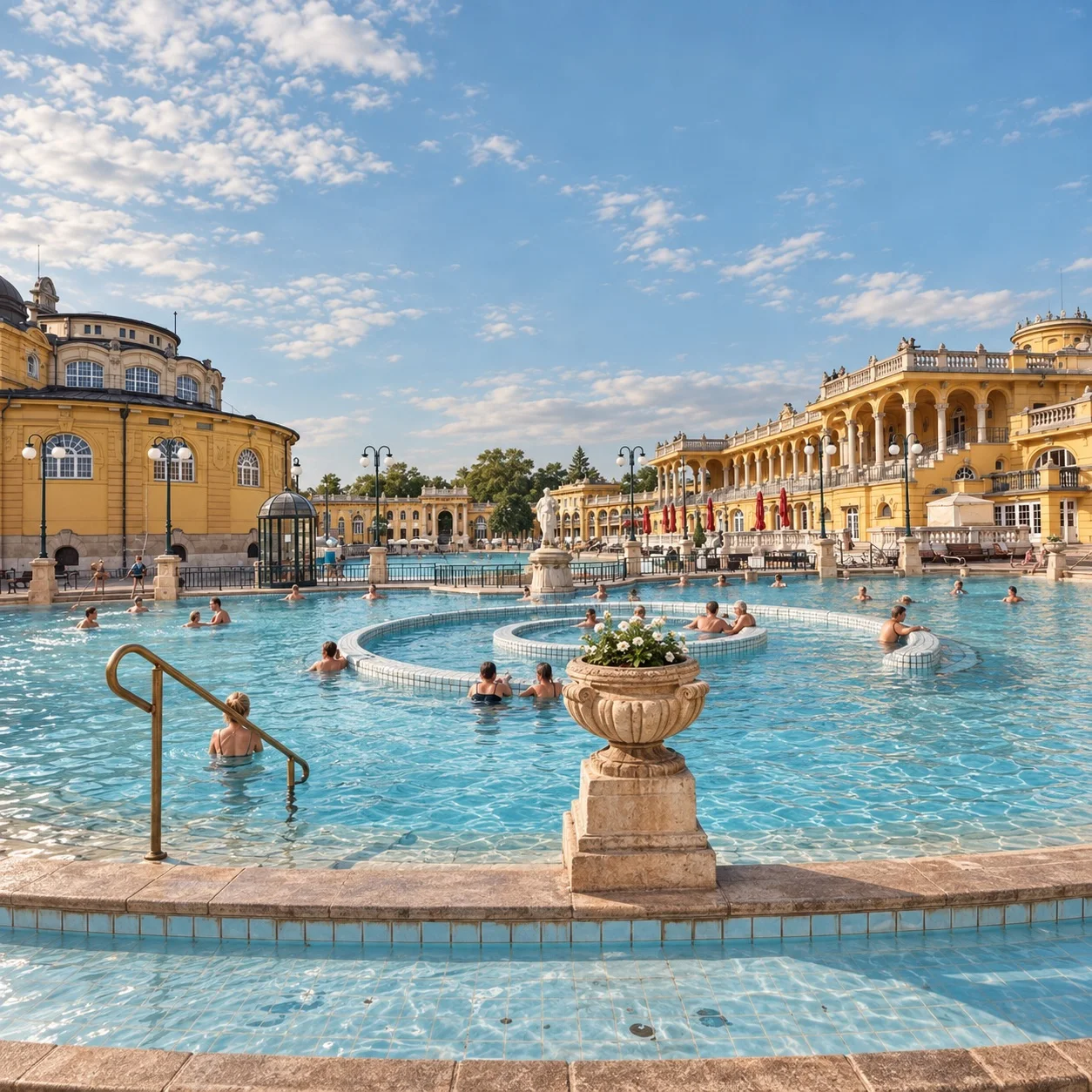
Széchenyi is the easiest choice for a first visit because it brings together grand architecture, outdoor pools and enough variety to fill several hours. It is also the bath most exposed to visitor traffic.
Choose Rudas if Ottoman-era bathing and a concentrated historic atmosphere matter most. Lukács is a better fit if you want to see a less monumental, more local side of Budapest’s bath culture. For the classic image of the city, Széchenyi remains the strongest option. If atmosphere matters more than scale, a smaller bath may suit you better.
A few practical details
- The address is Állatkerti körút 9–11 in City Park, near the Millennium Underground and trolleybus route 72.
- Guests under 14 are not admitted to Széchenyi, including the outdoor pools.
- There is no family ticket, half-day ticket or general senior ticket.
- The standard daily ticket allows you to stay until closing time, subject to the published pool and entrance rules.
- The bath does not have its own car park, and nearby street parking is subject to local restrictions and time limits.
- Take a waterproof bag for small items and avoid leaving valuables in lockers. The official guidance recommends using the safety deposit service for important belongings.
Our recommendation
Széchenyi is worth including if you want to understand Budapest through its bathing culture. Book a weekday morning if possible, bring your own towel and swimwear, and allow around three hours. Start outside, explore the indoor pools without rushing, then leave time to sit in the water and take in the surroundings.
It does not need half a day of your Budapest itinerary, and an expensive massage or premium package is not necessary for a worthwhile visit. The architecture, warm water and everyday atmosphere are enough. If you have time for only one thermal bath in Hungary, Széchenyi is the sensible first choice. If you have already been and want something quieter or more historically specific, choose another bath next time.
Visit www.szechenyibath.hu for more information.