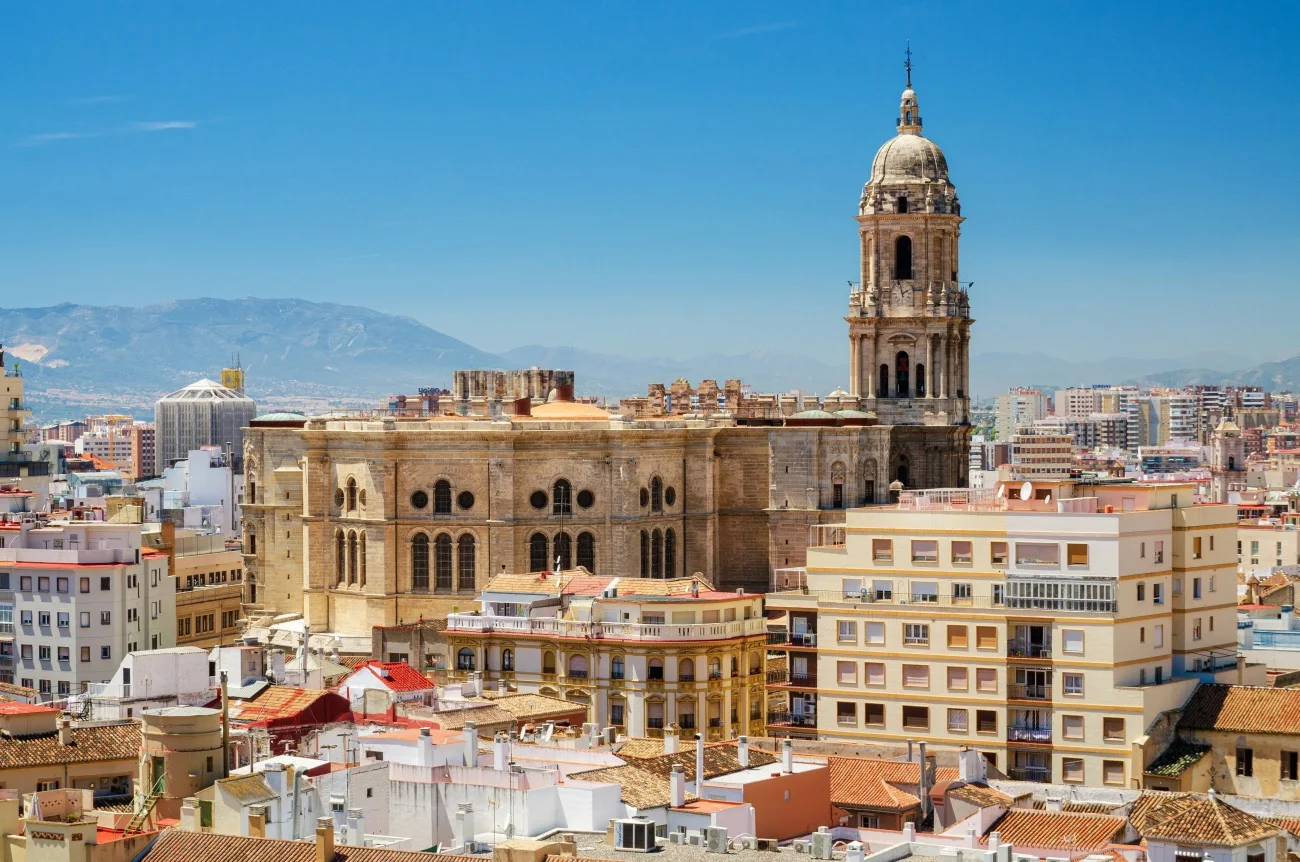
Málaga works well as a compact three-day city break: most of the historic centre is walkable, the main monuments sit close together, and the coast is easy to reach by bus. This plan keeps the first two days active and leaves the final day more spacious.
The emphasis is on Málaga’s layered history, a well-chosen museum visit, neighbourhood wandering and time by the water. Meals are treated as part of the itinerary rather than gaps to fill, with enough room to pause between the larger sights.
DAY 1
The historic centre, from Roman Málaga to Picasso
Centro Histórico
BreakfastMindful Pick
Breakfast in the historic centre
Start around Plaza de la Constitución or the streets just north of it. Choose something simple and local—coffee, toast with tomato and olive oil, or a pastry—before the centre becomes busier.
Give the cathedral your first proper look, both inside and from the surrounding streets. Its unfinished south tower is part of the city’s visual character, so notice how it appears from different angles as you walk on.
Allow enough time for a focused visit rather than trying to absorb every room. The museum is housed in the Palacio de Buenavista and sits close to the cathedral, Alcazaba and Roman Theatre, making it an efficient centrepiece for the day.
Walk west through the centre for lunch around the market and surrounding streets. Look for a relaxed place serving Málaga-style seafood, grilled dishes or small plates; the market is better treated as a glimpse of local food culture than a rushed lunch stop.
Take a slower walk through the tree-lined Parque de Málaga toward Muelle Uno. This is a useful reset after the morning’s interiors and gives you a first sense of how closely the city and bay are connected.
Pause near the harbour or return to the old centre. Keep this hour deliberately open for a bookshop, a small gallery, or simply sitting in a square rather than adding another major attraction.
Stay central tonight so the evening remains easy on foot. Book ahead if you have a particular restaurant in mind, but leave room for a post-dinner walk through Calle Granada and the smaller lanes around Plaza de la Merced.
Plan BReplace the harbour walk with the Museo de Málaga or a longer museum visit if rain or strong heat makes the afternoon uncomfortable.
DAY 2
Fortifications, viewpoints and the city’s creative side
Alcazaba, Gibralfaro and Soho
Breakfast
Breakfast before the climb
Eat early and carry water: the route to Gibralfaro involves sustained uphill walking and exposed sections. Comfortable shoes matter more than dressing up today.
Begin at the Roman Theatre, then enter the Alcazaba while the morning is still relatively fresh. The sequence makes historical sense: Roman remains at street level, followed by the layered courtyards, walls and gardens of the palace-fortress.
Active travellers can continue uphill toward the castle, while taking a local bus up and walking down is the more sensible choice in hot weather. The castle’s elevated position gives a different reading of the city from the Alcazaba below.
Descend toward Plaza de la Merced for a late, relaxed lunch. This is a good point to choose something substantial and take a proper break before exploring further.
Wander through the streets around Plaza de la Merced and Calle Victoria without following a strict checklist. Look for the city’s mixture of older residential buildings, small businesses and busy everyday squares.
Cross the Guadalmedina into Soho for a change of atmosphere. The neighbourhood is best enjoyed as a brief, low-pressure walk through its public art, independent spaces and broad streets rather than as a separate sightseeing circuit.
Choose between Soho’s contemporary restaurants and the more traditional lanes of the centre. After a hill-heavy day, keep the evening close to your accommodation and avoid planning nightlife that requires crossing the city.
Plan BIf the weather is poor, shorten the castle visit and spend the afternoon at the Museo de Málaga, followed by coffee and galleries around the centre.
DAY 3
A slower coastal day in Pedregalejo
Malagueta and Pedregalejo
Breakfast
Breakfast near the water
Start with coffee and something light near La Malagueta or the eastern edge of the centre. The day is intentionally less structured, so there is no need to make breakfast a long detour.
Walk east along the promenade and take in the changing relationship between the city, the bullring, the port and the beach. In warmer weather, this is best done before midday.
Use a local bus toward Pedregalejo rather than walking the entire coastal road. Save your energy for the old fishing quarter, small coves and the long seafront stretch around the former fishing houses.
Make lunch the day’s main event and look for espetos—sardines grilled over open fire—as well as other seafood. Choose a place with a setting you enjoy and allow time for a slow meal rather than moving on quickly.
Spend the afternoon on the promenade or by the water. Swimming conditions, shade and comfort vary by season, so treat this as flexible downtime rather than a fixed beach session.
Return by bus when you have had enough sun, or walk part of the promenade before taking transport back. A final drink near the port or Plaza de la Constitución makes an easy transition into the evening.
Keep the final dinner close to the centre and choose a restaurant you can reach without another long journey. A last walk around the illuminated cathedral and Alcazabilla is a fitting close to the trip.
Plan BOn a cool or wet day, replace beach time with the Centre Pompidou Málaga or Museo Carmen Thyssen, then return to Pedregalejo only for lunch if conditions improve.
Mindful Vacation
Want a trip built around you?
Tell us where you are going, what matters to you and how you like to travel. We will build a personal itinerary around you.