
San Marino
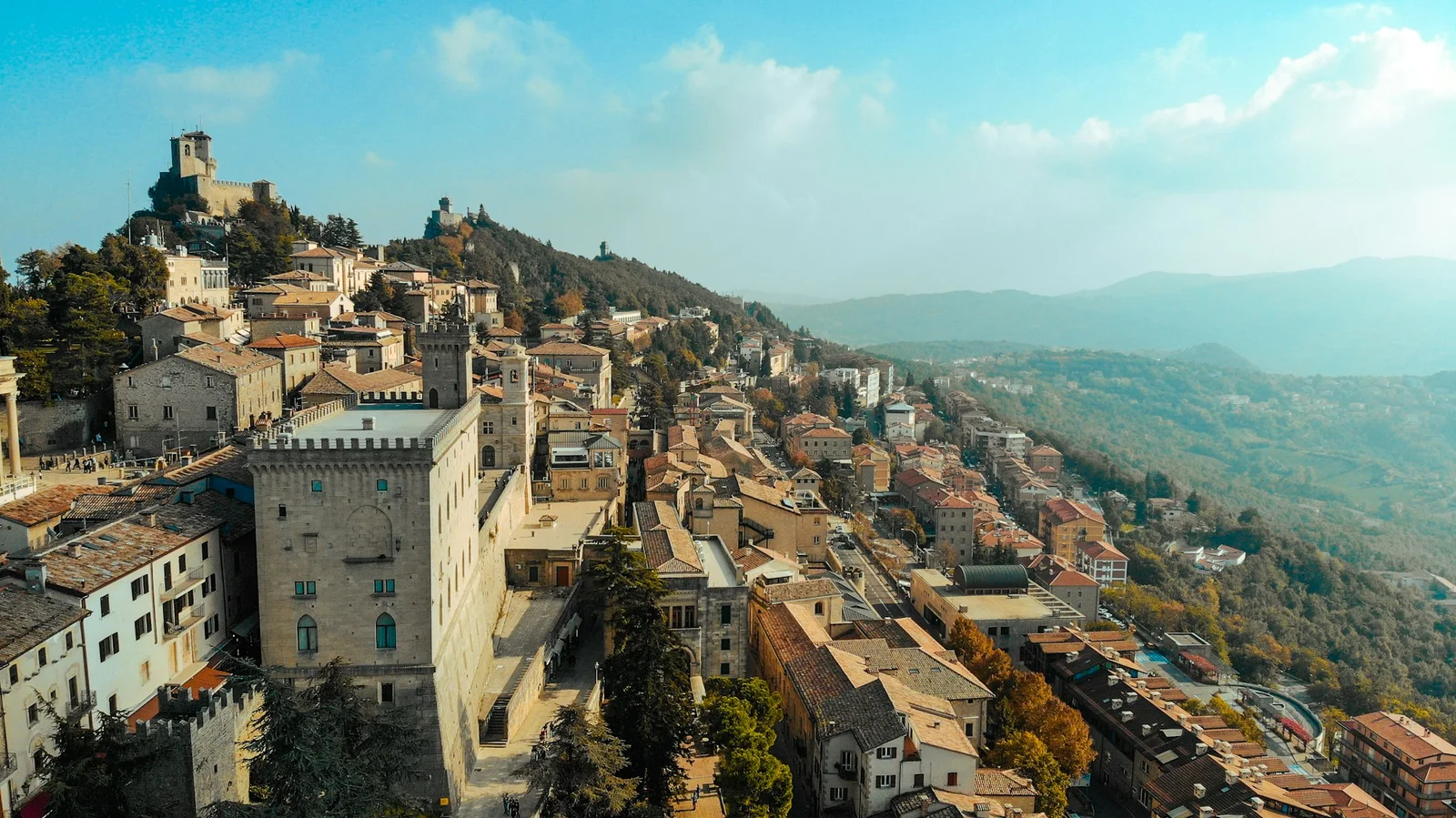
San Marino is a compact, mountainous republic surrounded by Italy, best approached as a slow, walkable escape rather than a checklist stop. Its UNESCO-listed historic centre rises along Mount Titano, with stone lanes, defensive towers and broad Apennine views. Stay overnight to experience quieter evenings after day-trippers leave, and use the lower towns for a more everyday perspective.
San Marino’s appeal is concentrated rather than sprawling. The capital’s historic centre occupies the upper slopes of Mount Titano, where the Three Towers, city walls, Basilica and government buildings can be linked on foot. The streets are picturesque but steep, and the stone paving rewards sturdy shoes rather than hurried sightseeing.
Views are central to the experience: on clear days, the landscape opens across Emilia-Romagna toward the Adriatic. The lower castelli, including Borgo Maggiore and Serravalle, offer cafés, shops and a less theatrical sense of daily life. A cable car connects Borgo Maggiore with the old town, while buses and the on-demand SMUVI service help with longer distances.
Summer brings the warmest weather but also the heaviest midday crowds. Spring and early autumn are more comfortable for walking, while an overnight stay changes the rhythm of the visit, leaving the centre noticeably calmer in the morning and after dinner. San Marino works best when treated as a small place to explore attentively, not as a hurried border tick.
Useful context, without the checklist overload.
Walk historic centre; buses, cable car and SMUVI elsewhere.
San Marino is reached through Italy and follows Schengen entry rules in practice. Visa-required travelers should obtain a Schengen visa before travel; visa-free visitors generally have 90 days in 180.
Service is generally included; round up or leave 5–10% for good service.
Tap water is drinkable. Carrying a refillable bottle is practical.
230V, 50Hz; C, F and L plugs. US travelers need an adapter and voltage-compatible devices.
Useful phrases
Frequently asked questions.
No. It is an independent microstate surrounded by Italy, but it uses the euro and is closely integrated with Italy for travel.