
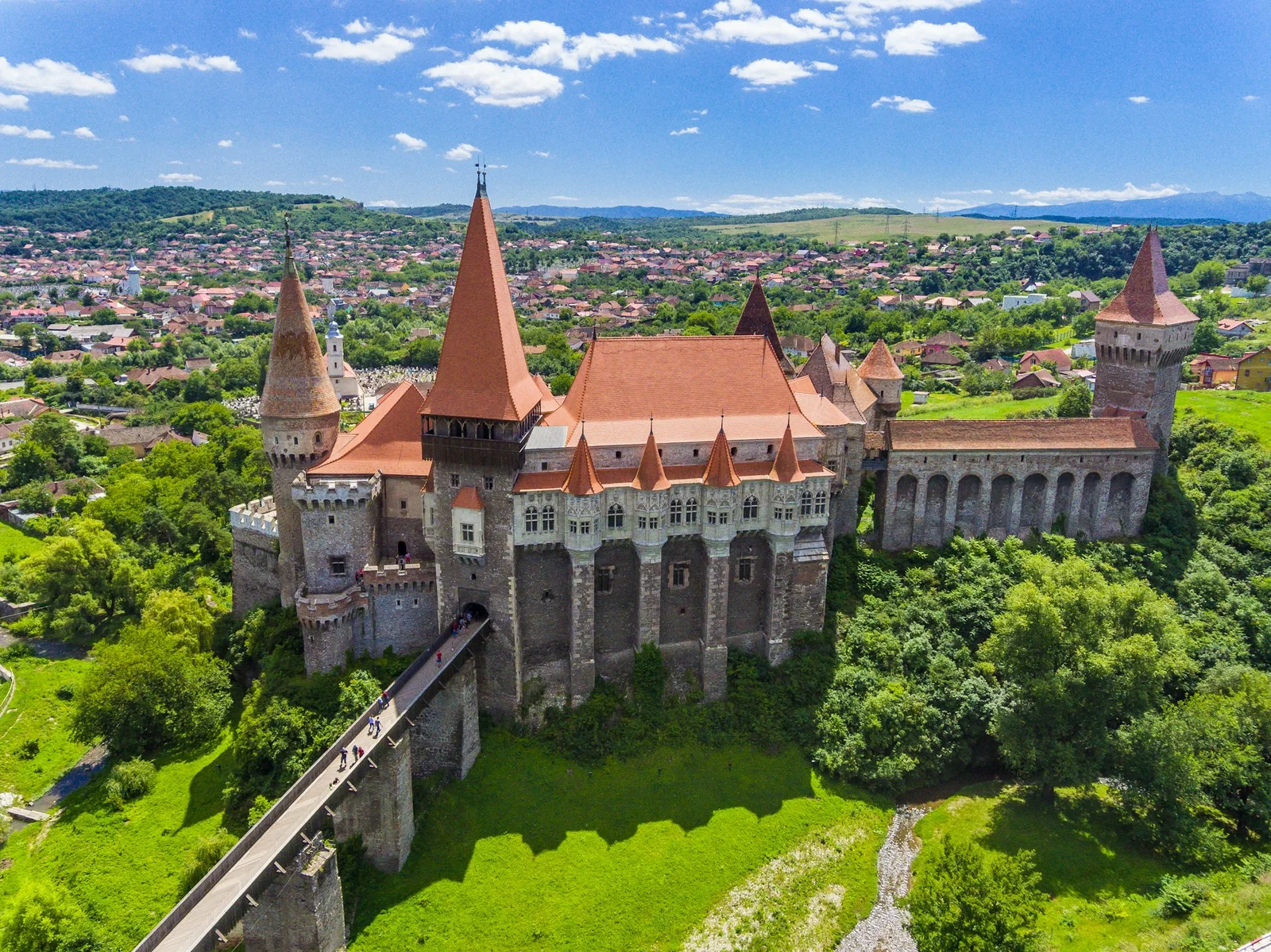
Romania
Romania rewards travelers who leave room for contrast: medieval towns, forested Carpathian valleys, Black Sea wetlands, and a capital that feels more improvised than polished. It suits curious, independent trips rather than tightly managed itineraries. Distances are manageable, but trains can be slow, so the best journeys balance patience with a willingness to change plans.
Romania is easiest to understand as several journeys sharing one border. Bucharest is a large, busy capital of museums, parks, cafés and layered architecture; Transylvania brings fortified towns, Saxon villages and the Carpathians; Moldavia offers painted monasteries; Dobrogea opens toward the Danube Delta and the Black Sea. You do not need to choose between culture and landscape, but you should allow more time than distances on the map suggest.
Travel here rewards a flexible rhythm. Intercity trains are useful and inexpensive, though delays and slow routes are part of the calculation. A car reaches mountain passes, villages and smaller monasteries more easily, while buses fill many gaps. Food is regional rather than uniform, and a few Romanian words make daily interactions warmer. Romania works particularly well for travelers who enjoy walking, local meals, imperfect edges and gradual discoveries rather than a checklist of attractions.
Useful context, without the checklist overload.
Trains connect major cities, but can be slow. Buses and rental cars are useful for rural areas; Bucharest has a metro.
Romania is in the Schengen Area. Visa rules depend on nationality; visa-exempt visitors generally follow the 90/180-day rule.
Usually 5–10% for good service
Generally safe in cities
230V, 50Hz; C and F plugs
Useful phrases
Frequently asked questions.
May, June, September and October usually offer the best balance of comfortable weather, open attractions and fewer crowds. Summer is lively but can be hot, while mountain weather changes quickly.