
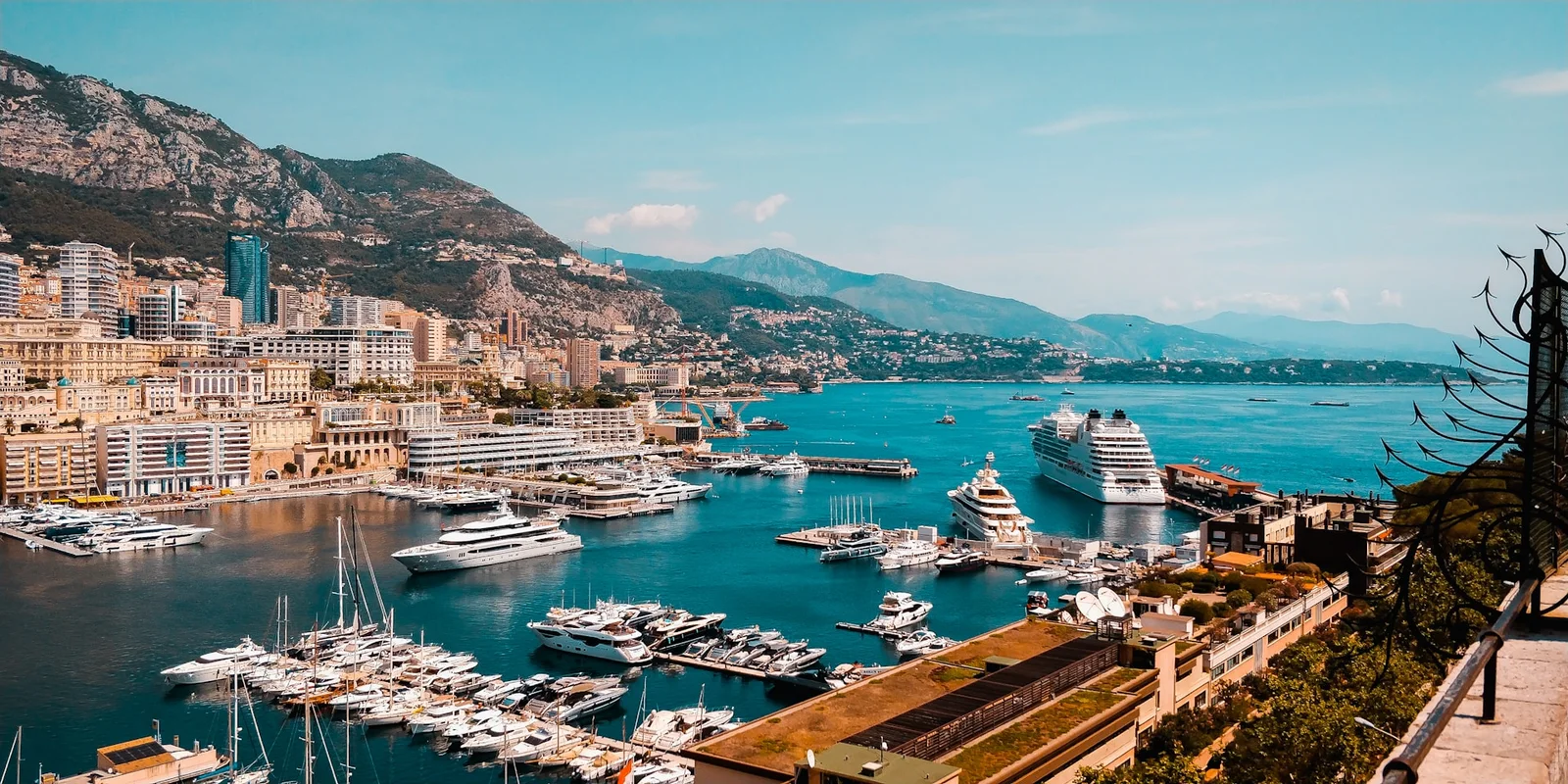
Monaco
Monaco is a compact Mediterranean city-state where grand palaces, steep streets, superyacht harbours and public gardens share very little space. It works well as a carefully paced day trip from Nice, but staying overnight reveals a quieter side: early waterfront walks, local markets, museums and neighbourhoods beyond the casino façade.
Monaco is easy to underestimate because it is small enough to cross on foot, yet its districts feel distinct. Monaco-Ville sits on the Rock above the harbour, La Condamine centres on the market and Port Hercule, while Monte-Carlo brings the casino, Belle Époque architecture and polished shopping. Fontvieille and Larvotto offer a more modern waterfront rhythm. The slopes are real, so comfortable shoes matter more than glamour for daytime exploring.
Treat Monaco as a place for looking closely rather than rushing through a checklist. The Oceanographic Museum, palace surroundings, gardens, public lifts and coastal paths reward a slower sequence, especially outside peak event periods. Local buses are practical, trains link the principality with the French and Italian Rivieras, and the compact centre is highly walkable. Prices rise quickly around headline events, so shoulder-season visits and accommodation in nearby France can make the experience more manageable.
Useful context, without the checklist overload.
Walk, buses, lifts, trains
Same short-stay rules as France and the Schengen area. Visa-free travelers to mainland France can enter Monaco, and a Schengen visa valid for France is accepted; check nationality-specific requirements before departure.
Round up; service often included.
Safe to drink
230 V, Type C/E
Useful phrases
Frequently asked questions.
Yes. Monaco is a sovereign principality and city-state on the Mediterranean coast, bordered almost entirely by France.