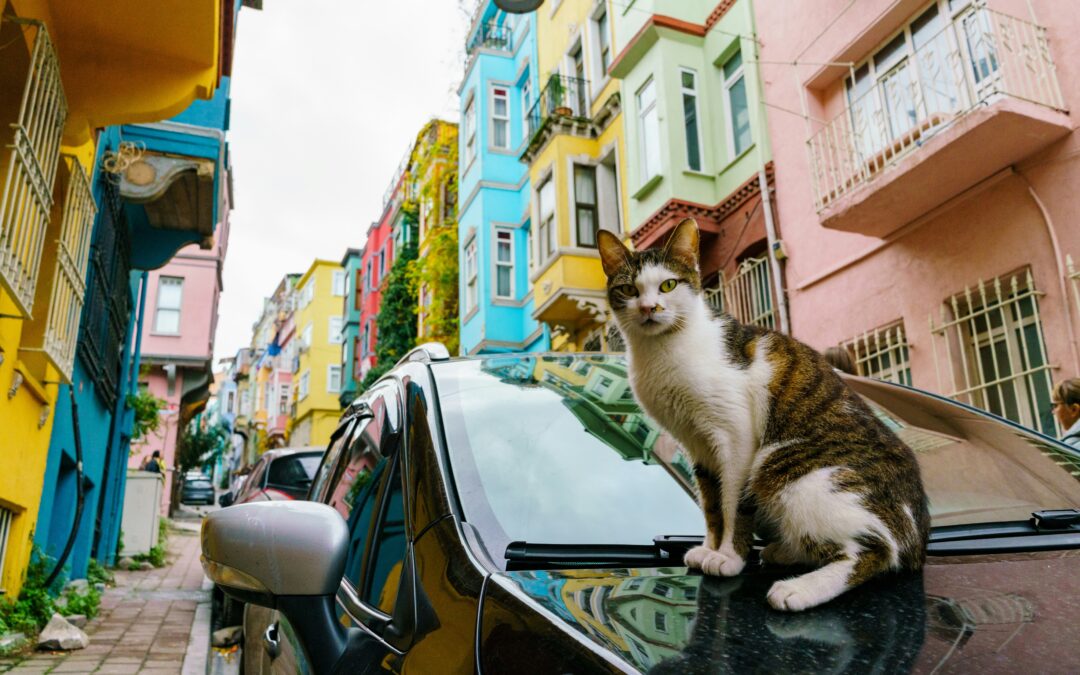
Getting lost in Venice is almost inevitable — and often the best part of visiting. But next time you cross one of its hundreds of bridges, look at the name before moving on. Some of Venice’s most famous bridges were named after fist fights, hay deliveries, merchants and prisoners rather than grand politicians or noble families.
Venice is one of those cities where taking a wrong turn rarely feels like a mistake. Leave the busiest route for a few minutes and you quickly find yourself between narrow passageways, tiny squares and quiet canals that seem remarkably removed from the crowds around St Mark’s Square.
One detail we think is easy to overlook is the names painted onto the city’s bridges, streets and waterways. They are not simply labels for navigation. In many cases, they preserve small pieces of Venice’s social history — the people who lived there, the trades they practised and sometimes the rather strange things that happened on the spot.
In this story
Venice did not always have so many bridges
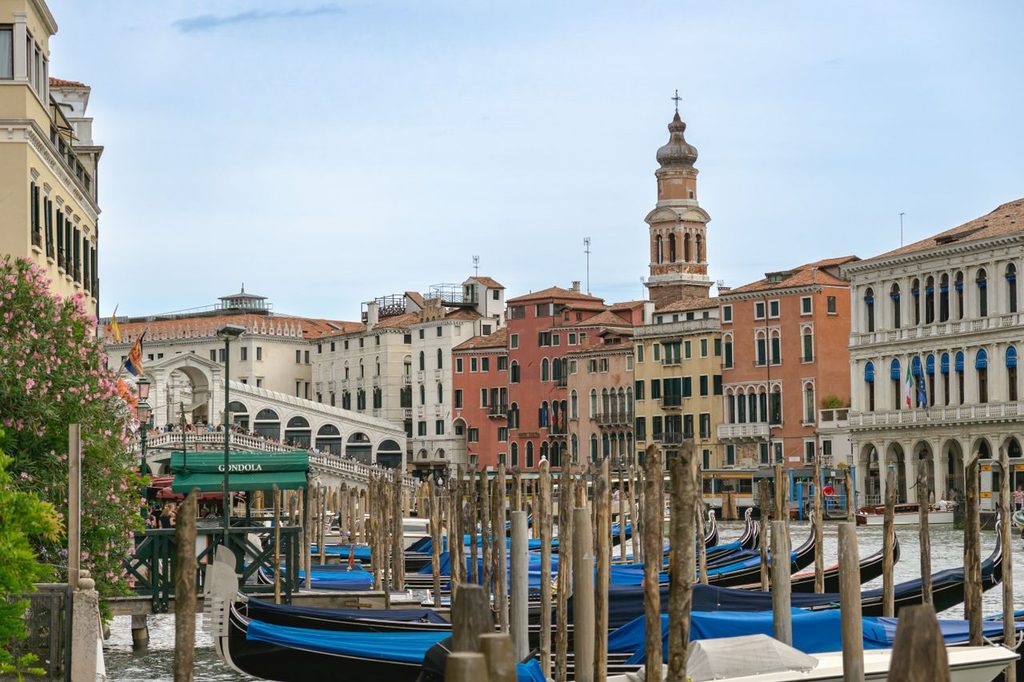
It is difficult to imagine Venice without its maze of pedestrian bridges, but boats once played an even greater role in everyday movement around the city. Over time, waterways were altered and more pedestrian connections were created, gradually producing the Venice we walk through today.
The historic centre now contains more than 400 bridges connecting its islands, which means you can cross dozens of them during a single day without giving their names much thought.
Some, however, are worth stopping for.
Ponte dei Pugni: the bridge where Venetians fought with their fists
One of our favourite Venice stories belongs to Ponte dei Pugni, literally the Bridge of Fists.
Its name is surprisingly literal.
For centuries, rival Venetian factions known as the Nicolotti and Castellani met here for organised fights. The objective was to knock opponents off the bridge and into the canal below. At the time, the bridge did not have the protective railing you see today, making falling into the water a very real part of the contest.
Look down while standing on the bridge and you can still spot stone footprints marking the positions from which fighters supposedly began their battles.
It is one of those small details that completely changes a place. Without knowing the story, Ponte dei Pugni is simply another pretty Venetian bridge. Once you know it, it becomes difficult not to imagine the chaos that once happened here.
The Bridge of Sighs has nothing to do with romance
Few bridges in Venice are as photographed as the Ponte dei Sospiri, or Bridge of Sighs.
The name sounds romantic enough to belong in a city associated with gondolas and honeymoons, but its origins are considerably darker.
The enclosed bridge connects the Doge’s Palace with the former prison. According to the traditional story, prisoners sighed as they caught one of their final views of Venice through the small windows before being taken to their cells. The English name was later popularised by poet Lord Byron.
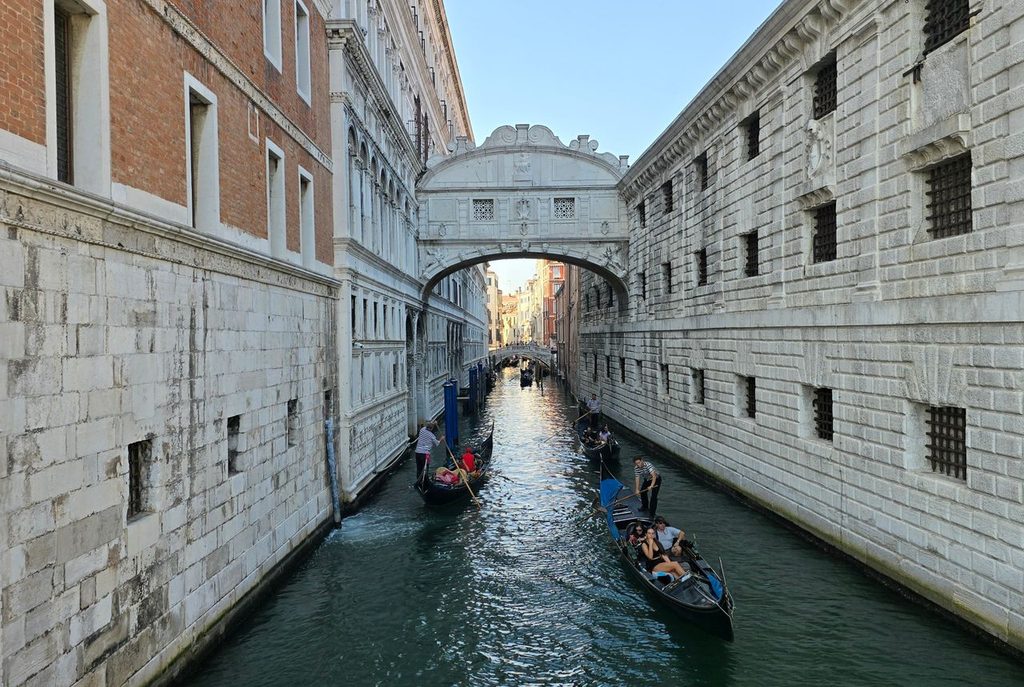
Knowing this makes the bridge feel very different when you see it.
Our tip is not to rush straight toward it for a photograph. First look at it from Ponte della Paglia, then visit the Doge’s Palace if you want to understand why this short covered passage became such a powerful symbol of Venice.
And Ponte della Paglia literally means the Hay Bridge
The bridge from which millions of visitors photograph the Bridge of Sighs has an unexpectedly ordinary name.
Ponte della Paglia translates as Hay Bridge.
According to the traditional explanation, boats once stopped nearby to unload bales of hay intended for horses and other animals in the city. The practical activity taking place around the bridge eventually became its name.
We love details like this because they strip away the romantic version of historic Venice for a moment. This was not built as a beautiful backdrop for tourism. It was a working city filled with deliveries, markets, trades and everyday logistics.
Rialto tells the story of Venice as a trading power
Then there is the bridge everybody knows.
The Rialto Bridge is now one of Venice’s defining landmarks, but the surrounding Rialto district was once the commercial heart of the city.
Goods arriving from across the Mediterranean and beyond were bought and sold here, including spices, silk and precious materials. The importance of the trading district eventually made Rialto one of the names most closely associated with Venice itself.
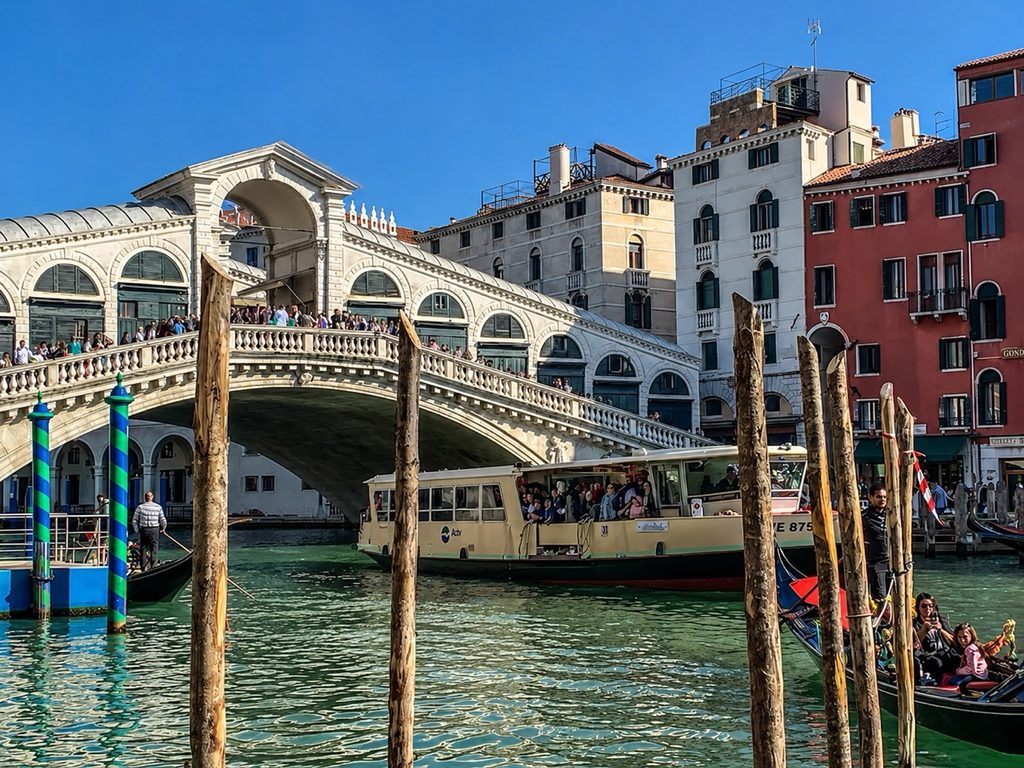
When we are around Rialto, we prefer wandering through the surrounding streets and market area rather than simply crossing the bridge, taking a photograph and leaving. The bridge makes far more sense when you think about the neighbourhood as a historic commercial centre rather than an isolated monument.
Venice’s canals were once part of its address system
The same principle applies to canal names.
Many waterways were named after the families who lived beside them or the professions associated with a particular area. Before modern street numbering and navigation apps, these names helped Venetians understand where people lived and how to find them.
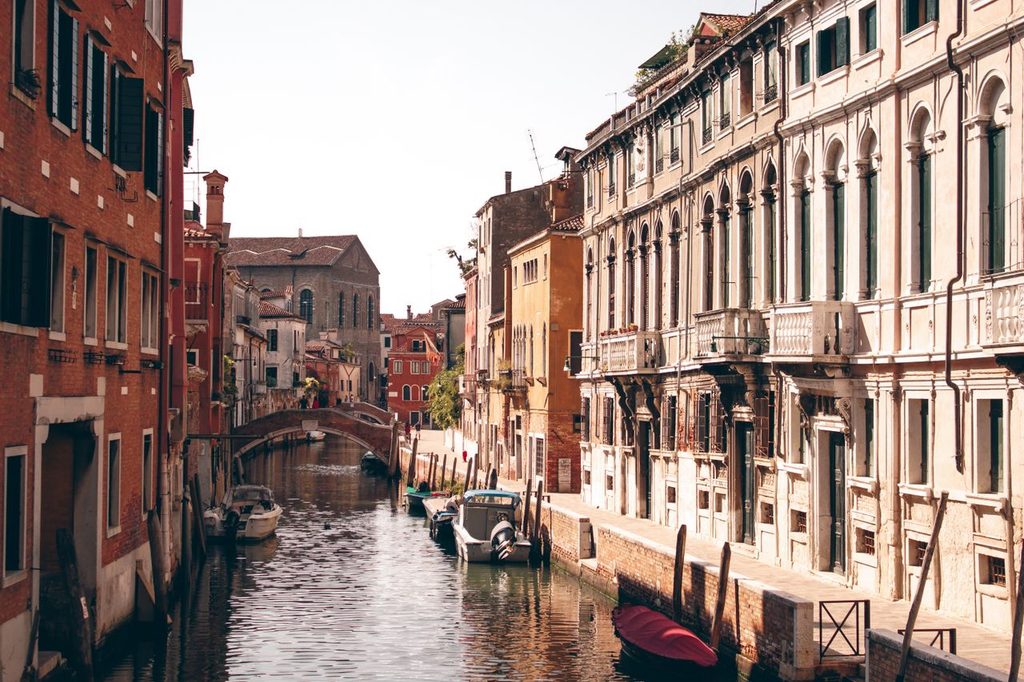
That is one reason Venice rewards slow exploration so well.
A bridge may reveal an old rivalry. A street name can preserve a forgotten profession. A canal can carry the name of a family that disappeared centuries ago.
You do not need another museum ticket to find these stories. They are written directly into the city.
The best way to explore Venice? Get slightly lost
Venice becomes much more interesting once you stop treating every wrong turn as something that needs correcting.
Of course, use your map when you actually need to reach the train station or catch a reservation. But when you have an hour without plans, put the phone away and follow whichever street looks interesting.
Cross the small bridge nobody is photographing. Look at its name. Notice what the surrounding buildings were once used for.
Because in Venice, the route between the famous attractions can sometimes tell you more about the city than the attractions themselves.
Mindful Vacation tip
Next time you cross a bridge in Venice, take five seconds to read its name before moving on. Search for the story behind one or two of them rather than trying to memorise dozens.
It is a simple habit, but it turns an ordinary walk through Venice into a completely different way of seeing the city.