Just over an hour from Turkey’s Mediterranean resorts, the sea disappears, the temperature drops, and stone houses held together by pieces of cedar begin appearing beside the road. Ormana feels almost impossibly far from Antalya — and that is exactly why we loved it.
When most people think about Antalya, they picture the Mediterranean.
Large resorts. Beach clubs. Ancient ruins baking in the summer heat. Long hotel breakfasts followed by an afternoon somewhere beside impossibly blue water.
Ormana is none of those things.
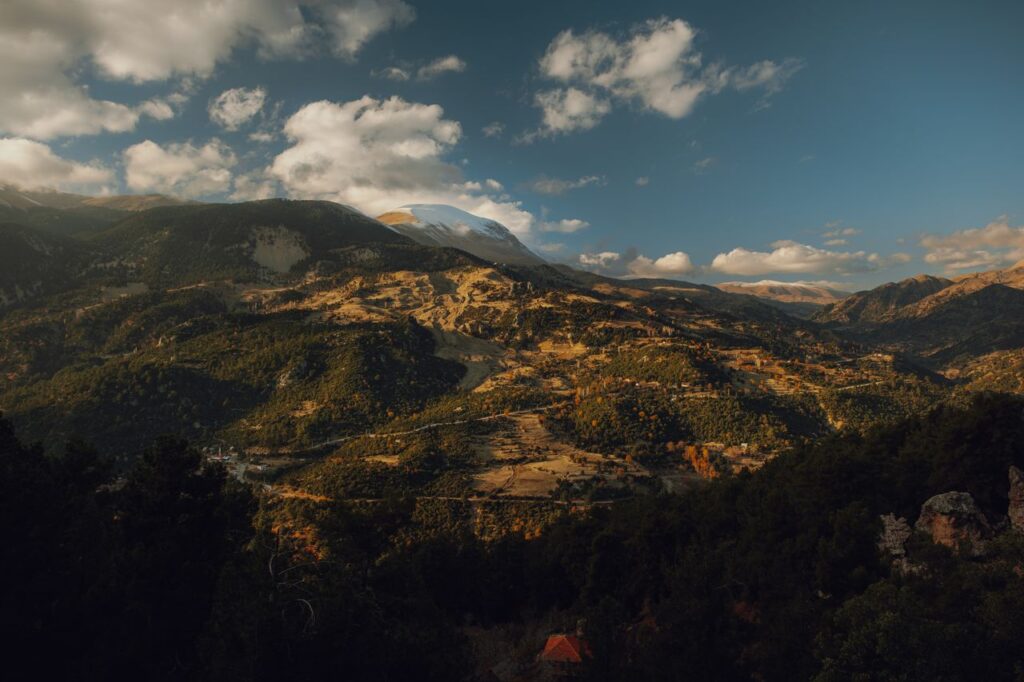
We left the coast and started climbing into the Taurus Mountains, and somewhere along the way Turkey changed completely.
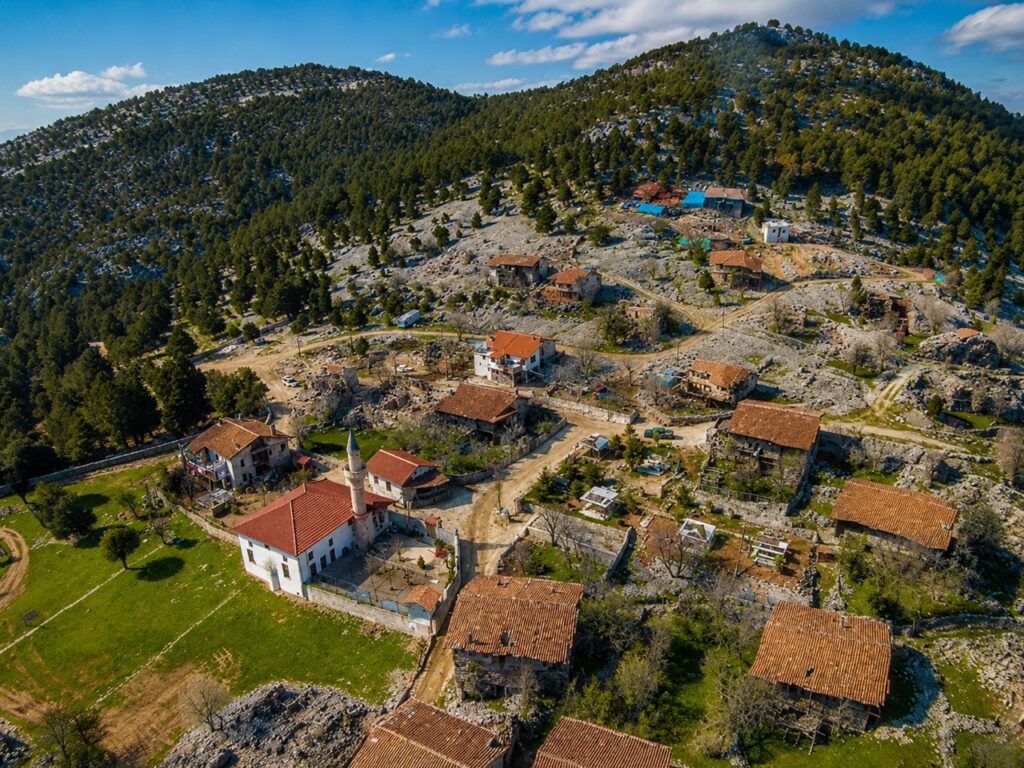
The roads became quieter. Pine and cedar replaced palm trees. Villages appeared between the mountains, and by the time we reached Ormana, at roughly 1,000 metres above sea level, it was difficult to believe that the Mediterranean coast was only around 70 kilometres away.
There was no dramatic attraction announcing our arrival.
Just a small village, a few people sitting outside, narrow streets and old stone houses with pieces of wood sticking strangely from their walls.
And those houses were exactly why we had come.
In this story
The houses that look as though they shouldn’t still be standing
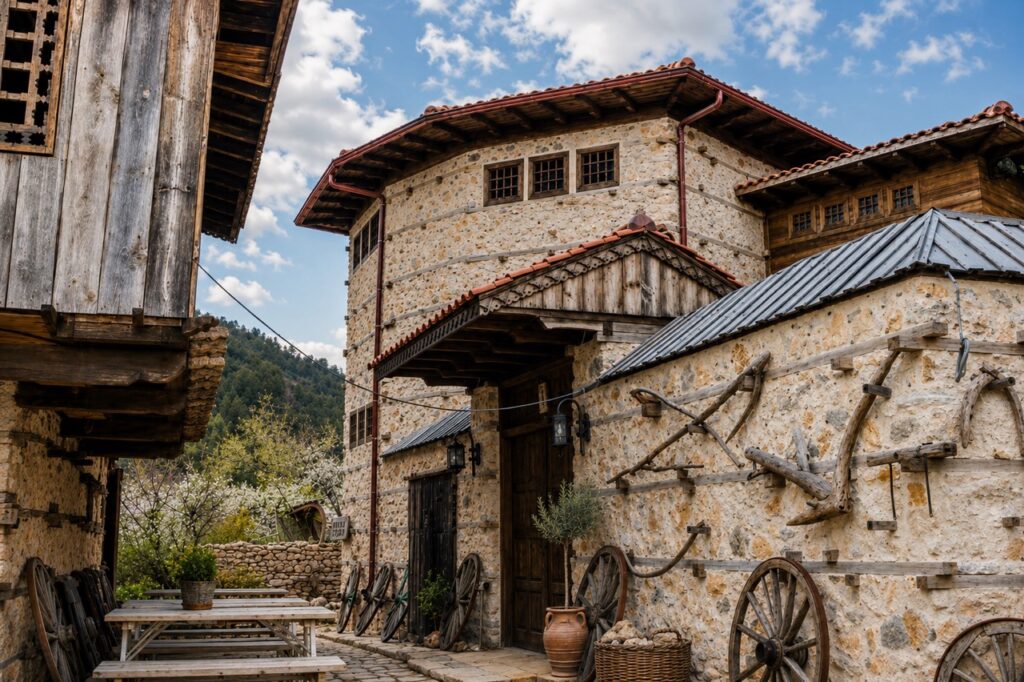
Ormana is famous for its düğmeli evler, usually translated into English as Button Houses.
At first, the name sounds slightly ridiculous.
Then you see one.
Horizontal cedar beams run through thick stone walls, while shorter pieces of wood protrude from the exterior like buttons. The traditional houses were constructed using stone and timber rather than conventional mortar, with the wooden structure helping to bind and stabilize the walls.
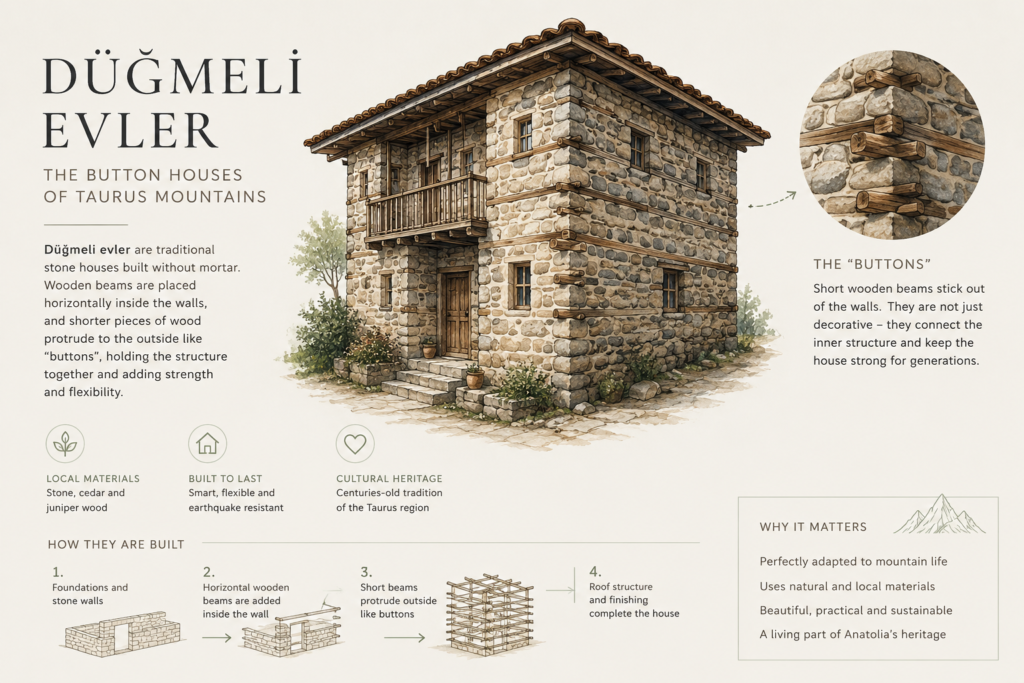
More than 300 examples remain around Ormana, according to Türkiye’s official tourism information.
What photographs don’t really communicate is how organic they look.
Some are beautifully restored. Others lean slightly, with weathered timber, uneven stones and plants growing around them. A modern concrete house may sit a few metres away from one that looks centuries old.
That contrast was probably what we liked most.
Ormana doesn’t feel like somebody emptied a village and turned it into an open-air museum.
People still live here.
You see washing on balconies, doors left open, tractors squeezed into old streets and elderly residents sitting outside houses that travelers now come halfway across the world to photograph.
If we visited again, we wouldn’t rush through Ormana.
This is one of those places where an hour is technically enough to see the main streets but completely misses the point.
We would give ourselves at least half a day.
The detail we kept stopping to photograph
Once you understand how the houses are built, you start noticing the wooden beams everywhere.
They become almost addictive.
One house has perfectly exposed timber running through the stone. Another has been plastered over, leaving only sections visible. Around a corner, an old wall looks as though someone has pushed dozens of wooden blocks straight through it.
The construction isn’t decorative.
It developed from materials available in the Taurus Mountains, particularly stone and cedar or juniper timber. The wood reinforces the masonry and gives the structure flexibility.
It is the sort of architectural detail we love finding while travelling because you don’t really need a museum or a guide to enjoy it.
Once somebody explains it to you, the entire village becomes the exhibition.
Then we discovered Ormana isn’t even the strangest part of this landscape
If you come this far, don’t turn around after seeing the village.
The area surrounding Ormana is arguably even more surprising.
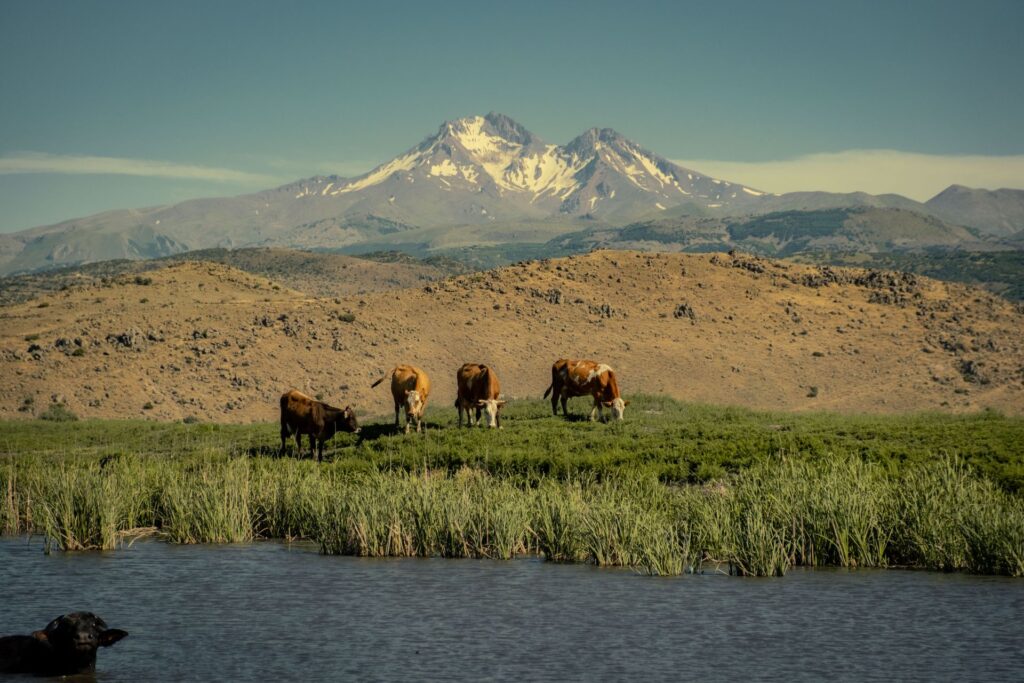
A short drive away lies the enormous Eynif Plain, enclosed by the Taurus Mountains.
And this is where you may encounter one of the area’s most unexpected sights: free-roaming yılkı horses.
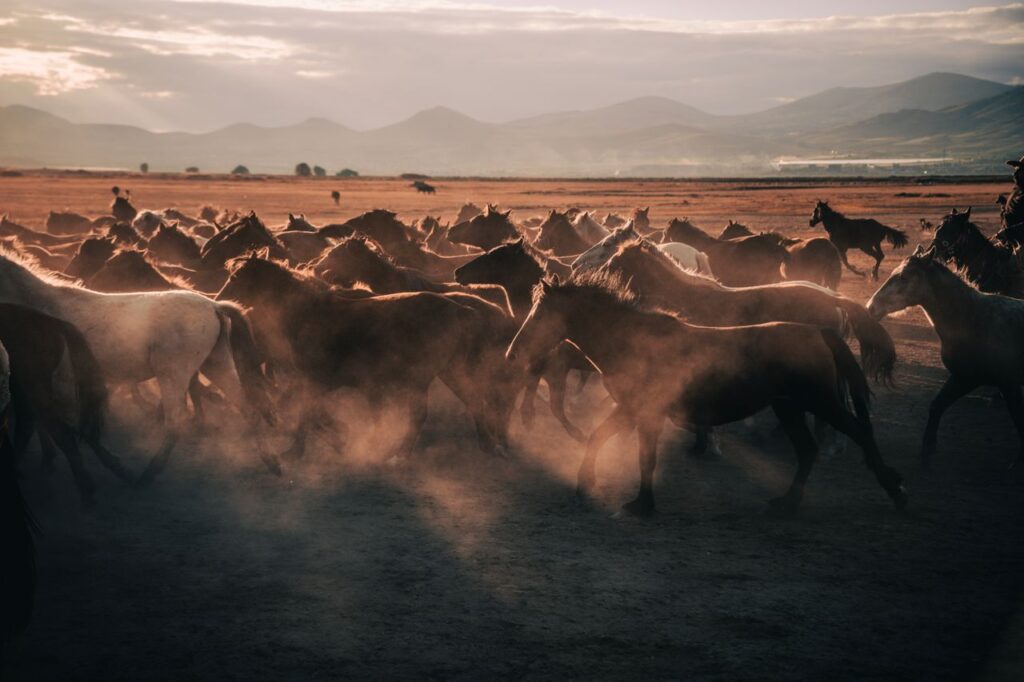
These semi-wild horses have become one of the symbols of the region. The landscape around them is broad, dry and dramatic, particularly when compared with the densely developed Mediterranean coast you may have left behind that same morning.
This was the moment the trip stopped feeling like an excursion from Antalya.
It felt like we had driven into another region entirely.
There is something particularly strange about remembering that people are lying beside swimming pools in Side and Manavgat while horses are roaming a mountain plain not terribly far away.
Add Altınbeşik Cave and this becomes a full-day trip
Another reason Ormana works so well is that you don’t have to build an entire day around one village.
Nearby Altınbeşik Cave National Park gives you a completely different experience.
Altınbeşik is known for its huge cave system and underground lake, and the wider national park contains remarkably rich plant and wildlife diversity.
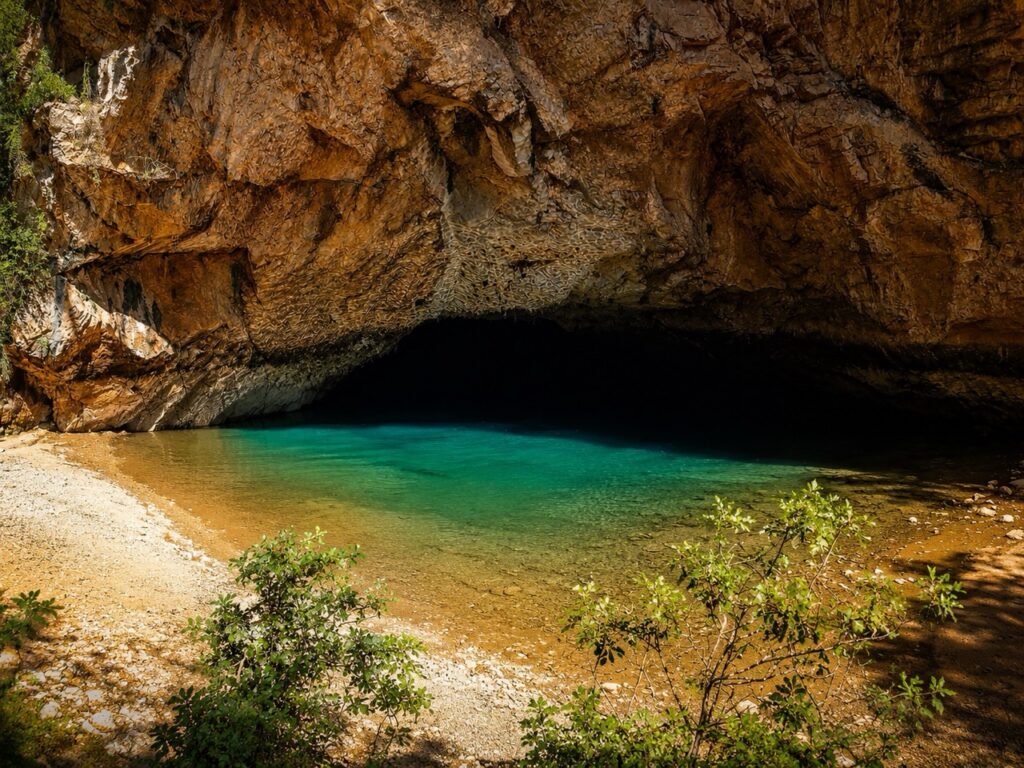
The combination is what makes this part of Antalya Province special.
Within one day you can move between:
old Ottoman-era mountain architecture,
a Taurus village,
a vast karst landscape,
wild horses,
forest,
and an underground cave system.
That is not the Antalya most international visitors are shown.
Have lunch here, not back on the coast
We would absolutely plan lunch in or around Ormana rather than treating the village simply as a sightseeing stop.
The local food reflects the mountain environment.
Goat meat and goat cheese are particularly associated with the area, alongside village bread, wild herbs, grapes and pekmez, the thick grape molasses found throughout Turkey.
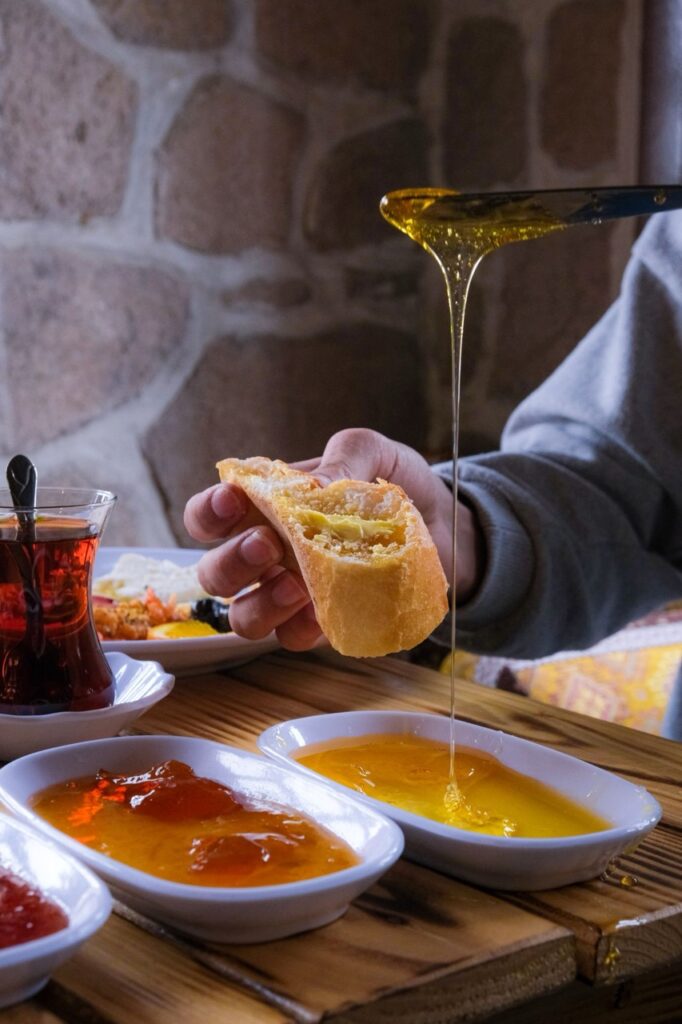

Ormana also has a long grape-growing tradition, with a local grape festival traditionally held around the beginning of September.
This is exactly the kind of place where we wouldn’t over-plan the restaurant.
Find somewhere local, ask what they are cooking that day and order that.
When travelling through smaller Turkish towns and villages, our best meals have rarely been the dishes we researched beforehand.
They are usually whatever somebody tells us we should eat.
The village square might be more memorable than the attractions
There is another reason we would recommend slowing down.
Eventually, after photographing enough houses, you stop looking for things to see.
And Ormana becomes much more interesting.
Sit down.
Order a tea.
Watch people coming and going.
The village’s coffee houses are still part of everyday social life, and Türkiye’s tourism authority specifically encourages visitors to spend time around the village square rather than simply moving between landmarks.
We think that’s good advice.
There are destinations where you should arrive with a checklist.
Ormana isn’t one of them.
The best part is realizing that you have nowhere particularly important to be for the next hour.
There is another village we would add next time
One thing we would do differently on another trip is continue exploring the surrounding Button House villages rather than concentrating only on Ormana.
Nearby Sarıhacılar is particularly interesting.
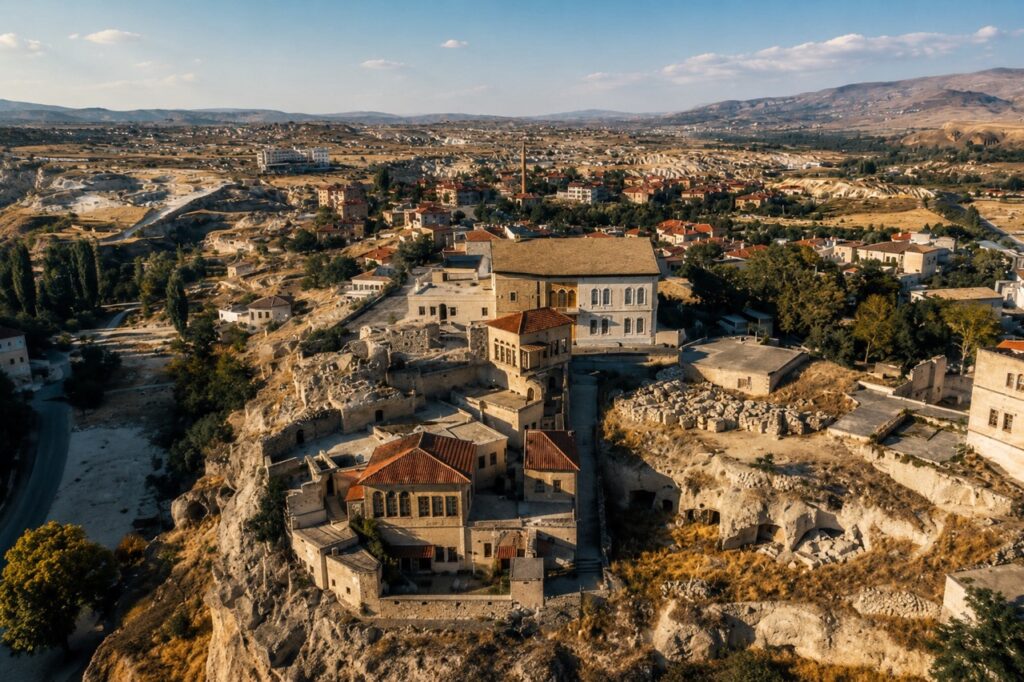
It sits along an old Roman and Seljuk caravan route and contains additional examples of the regional architectural style. Architectural researchers studying the Button Houses have documented Ormana, Sarıhacılar and Akseki together because each settlement shows a different stage in the survival — or disappearance — of this building tradition.
That makes the region much more interesting than a single Instagram-famous village.
You are looking at an architectural tradition that is still alive in some places, carefully restored in others and slowly being lost elsewhere.
Ormana has started receiving attention — but it still feels overlooked internationally
Ormana isn’t completely unknown.
In 2024, UN Tourism included it in its Best Tourism Villages initiative, recognizing its cultural heritage, traditional architecture and rural tourism efforts.
But compared with destinations such as Cappadocia, Safranbolu, Antalya’s coast or even nearby Side, international coverage remains remarkably limited.
That probably won’t last forever.
Places like this fit almost perfectly with the direction travel is moving: smaller communities, traditional architecture, local food, slower itineraries and experiences that feel genuinely different.
Which is another reason we’d go sooner rather than later.
When should you visit Ormana?
We would choose late spring or September.
Summer on the Turkish coast can be brutally hot, while Ormana’s elevation makes the mountains noticeably more comfortable.
September has another advantage: grapes.
The area traditionally celebrates its grape harvest around the beginning of the month, making early autumn particularly appropriate if food and local culture are part of the reason you’re visiting.
Autumn should also make the entire drive more enjoyable.
You don’t come here for beach weather.
You come because you want to escape it for a day.
How we would plan the perfect Ormana day
We’d leave the Antalya or Side area reasonably early and make the journey itself part of the experience.
Our ideal route would look something like this:
Morning: drive into the Taurus Mountains and explore Ormana slowly.
Late morning: coffee or tea in the village and more Button House wandering.
Lunch: traditional local food in Ormana.
Afternoon: Altınbeşik Cave.
Late afternoon: drive toward the Eynif Plain and look for the yılkı horses.
Then head back toward the Mediterranean before dark.
If staying overnight, we’d seriously consider sleeping in one of the restored traditional houses.
That’s probably the best way to experience the architecture rather than simply photographing it.
Is Ormana actually worth leaving the coast for?
Yes.
But perhaps not for the reason you expect.
There isn’t one enormous landmark here that makes you say, “This alone was worth the drive.”
It’s the transformation that makes the journey memorable.
You start somewhere that feels unmistakably Mediterranean.
Then the road climbs.
The resorts disappear.
The vegetation changes.
Stone houses begin appearing.
Someone pours tea in a mountain village.
And a little later you find yourself watching horses crossing a huge plain surrounded by the Taurus Mountains.
Our strongest memory wouldn’t be one attraction. It would be the feeling that we had somehow travelled much farther than we actually had.
For us, those are usually the best travel days.
Mindful Vacation tip
Don’t visit Ormana as a rushed stop on a large organized sightseeing checklist if you can avoid it.
Give the village some empty time.
Walk without Google Maps for a while, look at the construction details, have a tea, eat locally and then continue deeper into the surrounding mountains.
Ormana isn’t impressive because it has been polished for tourism.
It’s impressive because, despite tourism discovering it, it still feels like a real place.
And in this part of Turkey, that may be the biggest luxury of all.