
Working from a laptop on deck, waking up to the sound of water against the hull and changing your view whenever you feel like raising the anchor — living on a sailboat has become one of those lifestyles that looks almost impossibly appealing online.
What was once associated mostly with retirees and lifelong sailors is increasingly attracting digital nomads, couples and even families looking for a simpler, more flexible way of living.
There is also an obvious financial question behind the dream: could living on a boat actually be cheaper than living in a house or apartment?
At first, the maths seems promising. There is no conventional rent, no mortgage on a city apartment, and your home doubles as a means of transport. But the reality of full-time boat living is more complicated.
The answer depends on the boat, the country, your sailing habits and, perhaps most importantly, how much comfort and convenience you expect.
In this story
A boat has no rent – but it has plenty of bills
One of the biggest misconceptions about living aboard is that once you own the boat, your housing expenses more or less disappear.
They don’t.
“People often assume that living on a sailboat is much cheaper because you don’t have rent or a mortgage, but they forget that a boat comes with plenty of its own expenses,” explains Marija Mimica Špoljar, a yacht hostess who has spent a large part of her life at sea.
Unlike an apartment, a boat is continuously exposed to salt water, sun, wind and humidity. Engines need servicing, sails eventually need replacing, ropes wear out, electronics become outdated and the hull requires regular protection.
Then there is insurance, safety equipment, marina fees and the inevitable unexpected repair.

“The biggest saving, in my opinion, comes if you already own a boat that has been paid off,” says Marija. “Then your marina berth effectively replaces rent. But what people often don’t see are maintenance costs, servicing, insurance, antifouling, the engine, sails, ropes and electronics. A boat constantly needs attention and investment.”
It is not difficult to understand why sailors joke that a boat will always find a new way to spend your money.
Where you live aboard makes a huge difference
Living on a boat in Croatia is financially very different from doing the same thing in Greece or Turkey.
Croatia remains one of Europe’s most desirable sailing destinations, but long-term marina berths can also be expensive. For a sailboat measuring approximately 10 to 12 metres, an annual berth can cost several thousand euros, particularly in the most popular parts of the Adriatic.

For people planning to live aboard rather than simply spend a few summer weeks sailing, location can therefore completely change the financial equation.
Greece has long been popular among sailors looking for relatively affordable long-term options, particularly around smaller ports and municipal harbours.
Turkey can be attractive for similar reasons. Coastal destinations such as Marmaris, Bodrum and Fethiye have strong sailing communities, while everyday expenses and many boat-related services may be lower than in parts of Western and Central Europe. Some European sailors therefore choose the Turkish coast as a place to spend the winter.
So, how much does it cost to live on a sailboat?
There is no universal monthly budget.
According to the estimates in our original discussion, the owner of an average sailboat of around ten metres could spend roughly €5,000 to €15,000 per year on marina fees, maintenance, insurance and servicing.
That translates to approximately €400 to €1,200 per month, although expenses can vary significantly depending on where the boat is kept and how it is used.
And that is before considering the purchase price of the boat itself.
For someone who already owns a paid-off sailboat, spends part of the year at anchor and is comfortable with a relatively simple lifestyle, living aboard can potentially be cheaper than renting a desirable apartment on the coast.
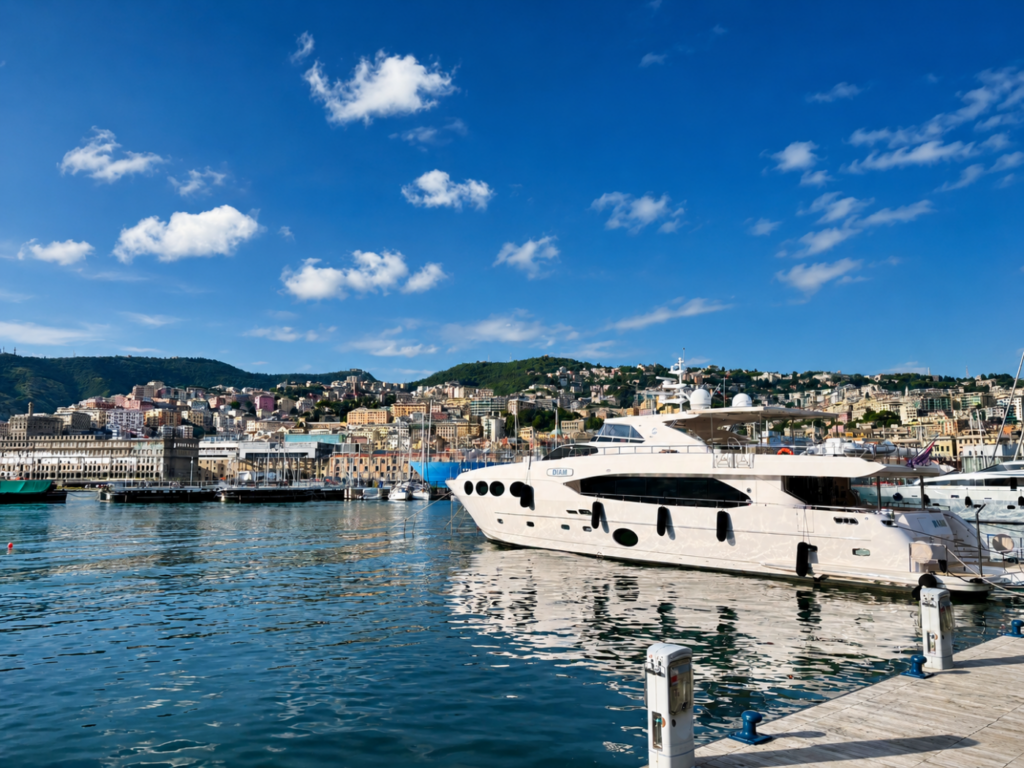
Someone who buys a newer or larger boat, stays mainly in premium marinas and regularly pays professionals for repairs may discover exactly the opposite.
In other words, a sailboat is not necessarily an escape from expensive housing. It simply replaces one set of expenses with another.
The real appeal has surprisingly little to do with money
Perhaps the more interesting question is not whether boat life is cheaper, but why so many people are drawn to it even when it isn’t.
Living aboard naturally creates limits.
There is little room for unnecessary furniture, overflowing wardrobes or cupboards filled with things that are rarely used. Everything you bring aboard occupies valuable space, so possessions slowly become more intentional.
“Food isn’t really more expensive than living in an apartment because most people simply cook on the boat,” says Marija. “What really changes is that you don’t have space to accumulate things, so you often end up living more simply.”
For many people, this becomes one of the unexpected benefits of life at sea.
You buy less. You store less. You spend more time outdoors.
And gradually, the definition of what constitutes a comfortable life can change.

A different kind of slow living
Boat life is often romanticised on social media, and the reality certainly includes maintenance, bad weather, limited space and complicated logistics.
But it also encourages something that has become increasingly difficult to find in conventional everyday life: a slower relationship with time.
Weather suddenly matters.
Daylight matters.
The direction of the wind matters.
Instead of automatically moving according to appointments, traffic and routines, daily life becomes more closely connected to natural conditions.
There can be frustrating days when something breaks or the sea refuses to cooperate. Yet there are also mornings when the only decision is whether to stay where you are or sail somewhere new.
That freedom, rather than financial savings, appears to be the strongest motivation for many long-term sailors.
“Most people I’ve met who live on boats didn’t choose it because it was cheaper,” Marija says. “They chose it because they love the sea, the freedom and the fact that their backyard changes every time they raise the anchor.”
Is living on a boat worth it?
If the main goal is simply to reduce living costs, buying a sailboat is unlikely to be a guaranteed shortcut.
But if the goal is to live with fewer possessions, spend more time outdoors, travel slowly and build everyday life around the sea, the calculation becomes much less about money.
Perhaps that is ultimately why the idea continues to attract people.
Living aboard doesn’t necessarily give you a cheaper home.
It gives you a home you can move.