What secrets hide behind Budapest’s elegant facades and grand architecture? The Hungarian capital, set gracefully along the Danube River, is full of surprises.
Here are some interesting facts about Budapest that reveal why it’s one of Europe’s most beautiful and intriguing cities, a place worth visiting again and again.
Architecture built on the power of number 96
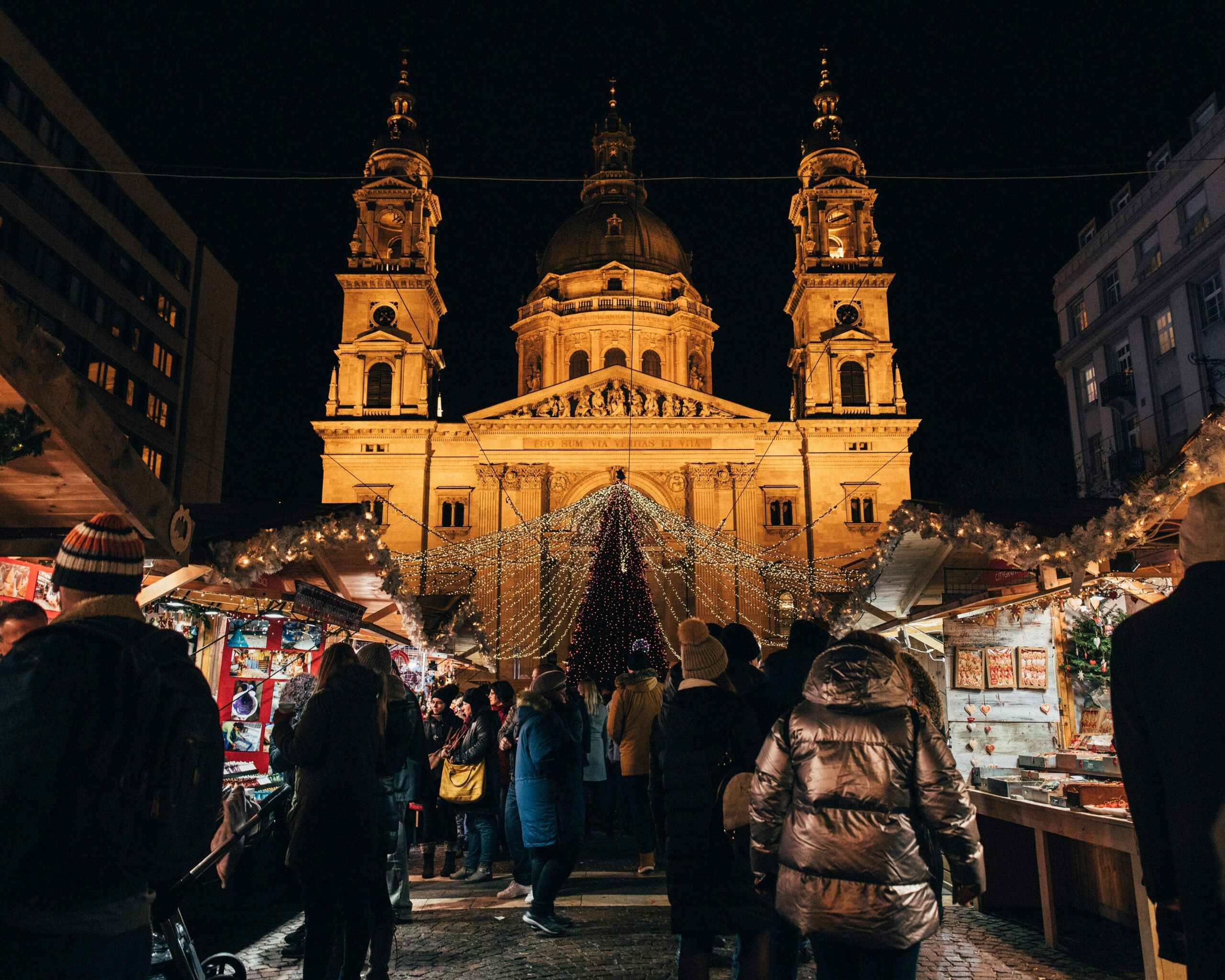
Anyone who has walked the streets of Budapest knows it’s one of Europe’s architectural gems, a city where old meets new and history blends seamlessly with modern life. The two tallest buildings in the city, St. Stephen’s Basilica and the Hungarian Parliament, both stand exactly 96 meters high.
The equal height symbolizes the balance between religion and government in Hungary. Even more fascinating, no building in Budapest is allowed to exceed that height.
But what’s behind the number 96? It represents the year 896, when the Hungarians settled in the Carpathian Basin, a foundational moment in the nation’s history. You’ll see this number repeated across Hungarian architecture as a quiet tribute to the country’s origins.
Europe’s oldest metro outside London
Did you know that Budapest has the oldest underground railway in continental Europe, and the only one on the UNESCO World Heritage list?
Opened in 1896, the Millennium Underground (M1) was built to celebrate Hungary’s 1000th anniversary and quickly became a symbol of progress. It still operates today, connecting Heroes’ Square and Vörösmarty Square beneath Andrássy Avenue.
Riding the small yellow M1 cars feels like stepping back in time, proof that good design can last for centuries.

Free transport for EU seniors
Here’s a practical (and generous) fact: Hungarian citizens and all EU seniors over 65 can travel free of charge on Budapest’s public transport.
The offer covers buses, trolleys, trams, and trains within the city limits, all you need is an ID or passport proving your age and EU citizenship. Just note that funicular rides and boat trips on the Danube are not included in the free fare.
A secret world beneath the city
Under Budapest lies a mysterious underground labyrinth of more than 200 natural caves formed by thermal springs. Many of them are open to visitors for guided tours and even caving adventures.

The most famous is the Buda Castle Labyrinth (Budavári Labirintus), stretching nearly 10 kilometers under the Castle District. Its story is as fascinating as it is eerie – once used as a prehistoric shelter, later a medieval prison, then a World War II air raid shelter and military hospital, and even a Cold War command center.
Today, it serves as a museum where visitors can explore the city’s underground history – candlelit corridors included.
The statue that gives you writing talent
In City Park (Városliget) stands one of Budapest’s most mysterious statues – Anonymous, the hooded chronicler from the 13th century. According to legend, if you touch his pen, you’ll be blessed with great writing skills.
Judging by the shiny, polished surface of the pen, it’s clear that many visitors still believe in its magic. Whether you’re a writer or just curious, it’s one of those must-visit spots that adds a touch of myth to your Budapest adventure.
Ready to explore Budapest’s secrets?
From symbolic architecture and ancient metros to mysterious caves and magical legends, Budapest is a city that never runs out of stories.
Next time you visit, look beyond the famous bridges and thermal baths – and explore the details that make this city so endlessly fascinating.